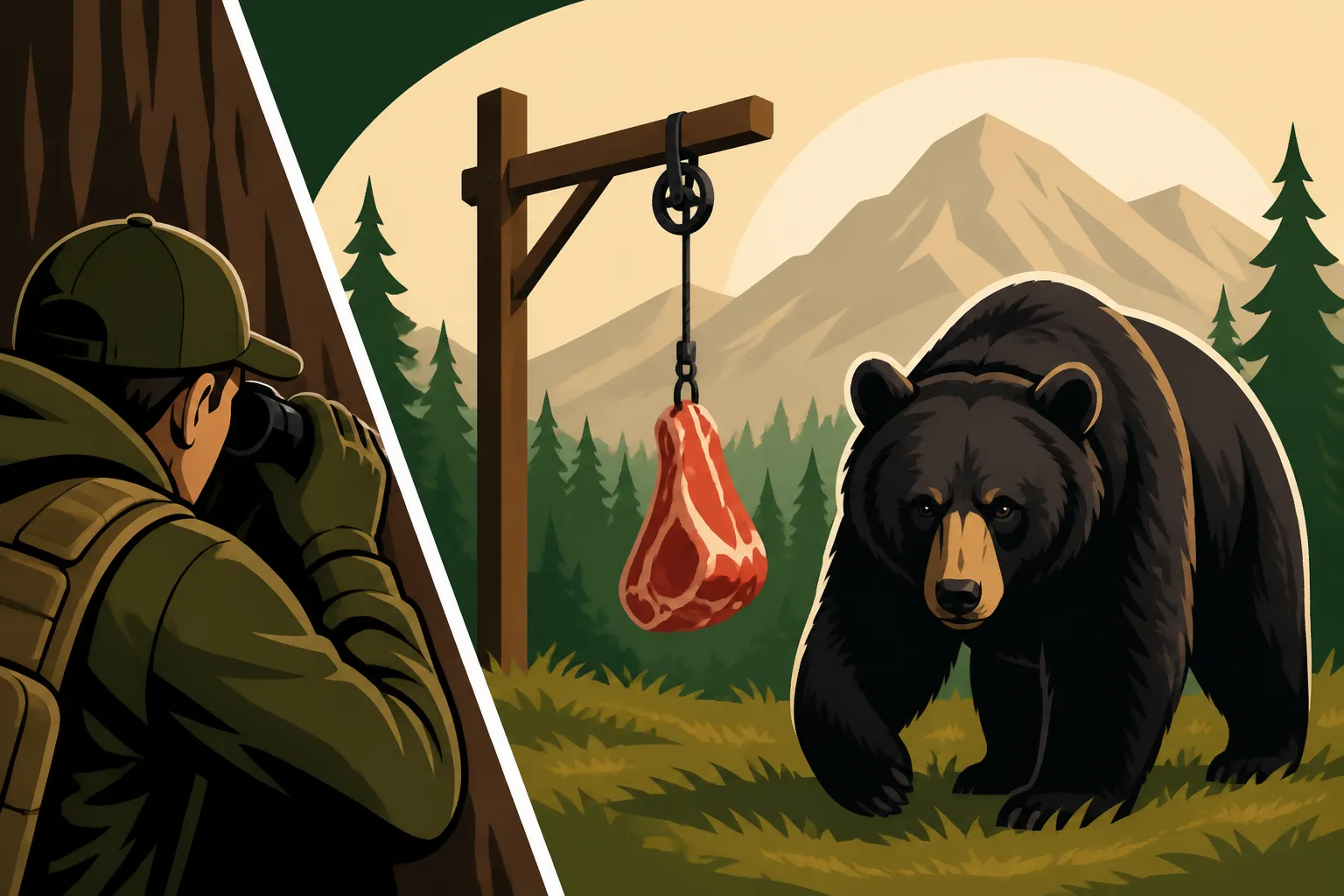
How Bear Baiting Works in Idaho
For many hunters, the thought of pursuing black bears in Idaho brings to mind images of vast, dense timber and endless miles of rugged country where spotting these elusive animals can feel like finding a needle in a haystack. This challenge often leads hunters to consider various strategies, and one of the most effective, albeit sometimes misunderstood, is bear baiting. If you're wondering how to legally and ethically use bait to draw in black bears, this guide will walk you through the specifics of setting up and managing a successful bait site in Idaho, adhering to all the regulations.
The Basics of Bear Baiting in Idaho: What You Need to Know First
Hunting black bears can be an incredible adventure, but let's be real – these animals are masters of concealment. Their dark coats blend seamlessly with the shadows of the timber, and they have an uncanny ability to disappear into the thickest cover the moment they sense your presence. This makes traditional spot-and-stalk or still-hunting methods incredibly demanding, often requiring immense patience, sharp optics, and a good dose of luck, especially if you're targeting a specific bear or looking for a consistent opportunity.
For many, the sheer scale of Idaho's bear habitat, from the timbered mountainsides of the Panhandle to the rugged breaks further south, makes finding bears a daunting task. You might spend days covering ground, only to catch a fleeting glimpse or find old sign. Baiting, when done correctly and legally, offers a different approach, one that allows hunters to bring the bears to them, increasing the chances for a clean, ethical shot opportunity. It’s a tool, not a guarantee, but it certainly shifts the odds.
Why Baiting is a Common Strategy for Black Bears
Imagine spending days trying to pick out a black bear through dense brush or across a distant hillside. It's a fantastic challenge, but not always the most productive for every hunter, particularly those with limited time or physical mobility. This is where baiting steps in. By establishing a consistent food source, you encourage bears in the area to alter their natural travel patterns, bringing them to a predictable location. This predictability allows a hunter to set up a stand, assess the bear, and take a well-aimed shot, often at closer ranges than might be possible with other methods.
This method isn't about being "easy"; it's about controlling variables. It lets you evaluate the animal, ensuring it's a legal bear and giving you the chance for a perfect broadside shot, which is crucial for a clean harvest and minimizing suffering. Plus, it offers a unique opportunity to observe bear behavior up close, which is an incredible experience in itself. You learn their routines, their hierarchy, and sometimes, even their personalities. For more context, you can read about Baited Against Spot and Stalk Bear Hunting.
Idaho's Stance on Bear Baiting: Is It Legal?
Let's cut right to the chase: yes, bear baiting is absolutely legal in Idaho, but with very strict rules and in specific hunting units and seasons. It's not a free-for-all, nor is it permitted statewide. The Idaho Department of Fish and Game (IDFG) regulates it meticulously to ensure it's managed ethically and doesn't negatively impact bear populations or public safety. This careful regulation is a significant reason why Idaho maintains baiting as a viable hunting strategy, unlike some other states where it has been entirely prohibited.
Understanding these regulations is paramount. Ignoring them can lead to serious fines, loss of hunting privileges, and even criminal charges. Idaho treats all hunting regulations seriously, and baiting, due to its specific nature, often comes under extra scrutiny. Always remember that privilege comes with responsibility. If you're going to bait, you need to know the rules inside and out. We'll dive into those specifics next.
Setting Up a Legal Bear Bait Site in Idaho
So, you've decided to explore bear baiting. Great! Now comes the real work: finding a suitable location and getting everything set up legally. This isn't just about dumping out a pile of donuts; it's a strategic process that requires scouting, careful planning, and adherence to Idaho's regulations.
Selecting Your Bait Site: Location, Location, Location
Just like in real estate, the success of your bear bait site hinges heavily on its location. You can have the best bait in the world, but if it's in an area devoid of bears or too difficult for them to access, you're wasting your time. Start by identifying areas with good black bear habitat. This typically means dense timber, thick brush, and proximity to water sources. Bears love cover and feel safe traveling within it. Look for areas that show recent bear activity: tracks in mud, scat on trails, rub trees, and overturned rocks or logs where they've been foraging.
Consider accessibility for yourself. You'll need to replenish the bait regularly, so a site that requires a multi-day trek might not be sustainable. However, you also don't want a site that's too easily accessed by the general public or other hunters, which could lead to conflicts or disturbance. Aim for a spot that's remote enough to offer seclusion but still manageable for your visits. This often means finding a sweet spot a bit off a lesser-used logging road or trail.
Crucially, always verify land ownership. Idaho has a mix of public and private lands, and knowing exactly where you are is non-negotiable. Using mapping tools like GoHunt can be invaluable here. These platforms allow you to overlay private land boundaries, Forest Service roads, and even topographic maps, helping you identify prime areas for your bait site that are on public land and within legal hunting units. You don't want to inadvertently set up on private property without permission.
The Right Bait and How to Use It
Once you've picked a spot, it's time to think about what you'll use to attract those bears. Bears are omnivores with a powerful sense of smell and a penchant for high-calorie foods. While some hunters use specialized commercial attractants, many rely on readily available, affordable items. Sweets are a classic choice: stale donuts, pastries, cookies, and candy (without wrappers, of course). Used cooking oil, often collected from restaurants, can also be a fantastic scent attractant. Some hunters mix in dog food, cracked corn, or meat scraps (check specific regulations on meat, as rules can vary). The key is a strong, appealing scent that carries far and a consistent food source.
Securing your bait is vital. Bears are strong and will walk off with an entire bucket if it's not chained or cabled to a sturdy tree or stump. Use heavy-duty chains, cables, or rebar stakes driven deep into the ground. This forces the bear to stay at the site to eat, giving you the viewing and shot opportunity you need. Don't just pile bait on the ground; consider using barrels or secure containers that make the bear work for it a little, keeping them at the site longer. Ensure your bait is replenished regularly – a fresh, active bait site is far more effective than a stale, abandoned one.
Registering Your Bear Bait Site
This is perhaps the single most important legal step in bear baiting in Idaho. You must register your bait site with IDFG. This isn't optional; it's a non-negotiable requirement. The registration process serves several purposes: it helps IDFG manage baiting pressure, prevents multiple hunters from unknowingly setting up on top of each other, and ensures accountability. Think of it like claiming your stake.
The process typically involves obtaining a unique bait site ID number and physically posting a sign at the site. This sign must clearly display your ID number and often includes your name and contact information. There are usually specific dates when registration opens and closes, and deadlines for removing your bait site after the season ends. Missing these deadlines can lead to penalties. Always consult the current Idaho hunting regulations booklet or the IDFG website for the most up-to-date information on how and when to register. It's a small step that makes all the difference in staying legal and avoiding trouble. For more details on the exact steps, refer to Registering a Bear Bait Site in Idaho.
Managing Your Bait Site and Hunting Strategy
Once your bait site is established and legally registered, the real work of attracting and hunting bears begins. It’s a process that demands patience, consistent effort, and a keen understanding of both bear behavior and the law.
Regular Visits and Replenishment
Bears are creatures of habit and opportunity. A consistent, easy food source will draw them in. This means you need to visit your bait site regularly – typically every 2-3 days, depending on how quickly the bait is consumed. If you let the bait run out, bears will quickly lose interest and move on to other food sources. Frequent visits ensure the bait is fresh and appealing, and it also allows you to monitor activity.
Many successful bait hunters use trail cameras to monitor their sites. These cameras are invaluable for understanding which bears are visiting, at what times, and how frequently. You might discover a large boar is hitting the bait mostly at night, or a sow with cubs is frequenting it during daylight hours. This information helps you tailor your hunting schedule. Just be sure you're aware of Trail Camera Rules on Idaho Public Land before deploying them. Cameras help you confirm bear presence without having to physically be there constantly, minimizing human disturbance while maximizing intelligence gathering.
Stand Placement and Safety
When you're ready to hunt, your stand placement is critical for success and safety. The goal is to position yourself for an ethical shot while remaining undetected by the bear. Wind direction is paramount; bears have an incredible sense of smell, far superior to their eyesight. You must be consistently downwind of your bait site. This means having multiple stand options or being prepared to adjust based on prevailing winds.
Consider your shooting lanes. Clear any branches or brush that might deflect an arrow or bullet. Ensure you have a safe backdrop for your shot. Most hunters prefer an elevated stand, such as a sturdy tree stand or a ground blind. An elevated position helps disperse your scent more effectively, puts you above the bear's immediate line of sight, and often provides a clearer shooting angle. For bowhunters, getting close enough for a high-percentage shot (typically within 20-30 yards) is crucial. Always practice shooting from your chosen stand setup before the hunt. Remember that you also need to follow Idaho's Motorized Hunting Rule Keeps You on the Road when accessing your stand and bait site.
Rules and Regulations You Can't Afford to Miss
Idaho has very specific rules that govern not only how you set up your bait site, but also how you hunt over it. Ignorance of the law is no excuse, and violating these rules can lead to severe consequences. Here are some key areas to pay attention to:
- Hunting Hours: There are strict legal shooting hours for big game in Idaho. You cannot hunt outside of these hours. Check the current regulations for sunrise/sunset times, as these shift throughout the season.
- Weapon Restrictions: Your choice of weapon (archery, rifle, muzzleloader) must align with the specific season and unit you are hunting. Make sure your weapon is legal for the season you're participating in. For example, some units may have archery-only bear seasons.
- Proximity to Roads, Trails, and Dwellings: There are regulations regarding how close a bait site can be to public roads, established trails, or inhabited dwellings. These are in place for safety and to minimize conflicts with other recreational users or residents.
- Bear Baiting Rule Specifics: Idaho has detailed rules about what constitutes legal bait, how far from a bait site you must be to shoot, and how long after the last bait is placed you can hunt. For a comprehensive overview, read The Black Bear Baiting Rules Idaho Applies. Always get the most current regulations directly from the Idaho Department of Fish and Game. Using resources like GoHunt can help you quickly pull up specific unit regulations and season dates, but always double-check with the official IDFG publications.
Hunting in the spring is a popular time for baiting. To learn more about those specific dates, check out Idaho Spring Bear Runs From April Into Summer.
| Action Item | Description | Legal Requirement? | Best Practice? |
|---|---|---|---|
| Verify Land Ownership | Ensure your chosen site is on public land or with explicit permission. | Yes | Yes |
| Scout for Bear Sign | Look for tracks, scat, rub trees, and dense cover. | No | Yes |
| Choose Appropriate Bait | Use high-calorie, strong-scented foods, adhering to any specific restrictions. | Yes | Yes |
| Secure Bait Properly | Chain or cable bait to prevent bears from carrying it off. | No | Yes |
| Register Bait Site | Obtain an IDFG bait site ID and post required signage. | Yes | Yes |
| Visit & Replenish Regularly | Keep bait fresh and present to maintain bear interest. | No | Yes |
| Use Trail Cameras | Monitor bear activity, identify patterns and specific bears. | No (but regulated) | Yes |
| Place Stand Downwind | Always hunt with the wind in your favor to avoid detection. | No | Yes |
| Clear Shooting Lanes | Ensure unobstructed shot opportunities and a safe backdrop. | No | Yes |
| Remove All Bait & Gear | Clean up your site entirely after the season. | Yes | Yes |
Ethical Considerations and Responsible Baiting
Bear baiting, like any hunting method, carries a responsibility beyond simply following the law. It’s about being a good steward of the land and respecting the wildlife you pursue. Responsible baiting contributes to a positive image of hunters and ensures the continued privilege of using this method.
Respecting Wildlife and the Land
When you bait, you're interacting directly with wildlife in a very intentional way. This means you need to be extra mindful of your impact. A crucial ethical practice is cleaning up your bait site completely after the season. This means removing all containers, chains, signs, and any non-biodegradable bait materials. Leaving trash behind is not only illegal in many areas but also harmful to the environment and creates a negative impression of hunters. The idea is to leave no trace that a bait site was ever there.
Another consideration is minimizing the habituation of bears to human food sources outside of the bait site. While baiting does intentionally draw bears to a human-supplied food source, the goal isn't to create nuisance bears that associate all humans with food. Responsible baiting practices, such as choosing remote locations and cleaning up thoroughly, help mitigate this risk. Also, avoid allowing non-target species (like deer or small game) to become overly reliant on your bait; while some visitation is inevitable, focusing your bait on strong bear attractants can help.
Idaho has a healthy Idaho Black Bear Population and Density, and ethical hunting helps maintain that balance.
The Broader View: Debates Around Bear Baiting
It's no secret that bear baiting can be a contentious topic, even among hunters. There are passionate arguments on both sides, and it's important for anyone participating to understand the broader context.
Proponents often highlight several key benefits:
- Increased Selectivity: Baiting allows hunters more time to evaluate a bear, distinguishing between boars and sows, or identifying specific animals if a quota or trophy goal is in mind. This leads to more selective harvesting.
- Ethical Shot Opportunities: Because bears are often stationary and relaxed at a bait site, hunters can wait for the ideal broadside shot, leading to a quicker, cleaner kill and less wounded game.
- Management Tool: In areas with high bear populations, baiting can be an effective management tool to help control numbers, especially in remote regions where other methods are less practical.
Conversely, detractors sometimes raise concerns about:
- Fair Chase: Some argue that baiting reduces the "fairness" of the hunt, making it too easy or removing the challenge of tracking and stalking a wild animal.
- Public Perception: The visual of a bear at a bait site can sometimes be off-putting to non-hunters or even some hunters, leading to negative perceptions of the sport.
- Habituation Concerns: While mitigated by regulations, the risk of bears associating human activity with food is sometimes cited as a concern.
As a responsible hunter, it's good to be aware of these discussions. The key is that in Idaho, under strict regulations, baiting is a legal and accepted method. By adhering to the rules and practicing strong ethics, you contribute to its continued viability.
Staying Current with Regulations
Idaho's hunting regulations are dynamic. They can change from year to year, and sometimes even mid-season, based on wildlife management needs, population assessments, and public input. What was legal last year might have changed this year. This is particularly true for specific methods like bear baiting, which are often subject to detailed unit-by-unit rules and season dates.
Therefore, it is absolutely essential to always consult the current Idaho hunting regulations before you plan your hunt. Don't rely on outdated information from a few years ago or anecdotal advice. The Idaho Department of Fish and Game publishes a new rulebook annually, which is available online and at license vendors. This official document is your definitive source for all legal requirements, season dates, unit boundaries, and specific bear baiting stipulations. When in doubt, call IDFG directly. Their staff are there to help clarify any confusion. Staying informed is your responsibility as a hunter, and it's the best way to ensure a legal and enjoyable experience in the field. You can always find the latest information at Where the Current Idaho Regulations Are Posted.
Disclaimer
This article is for general informational purposes only and does not constitute professional advice. Laws, prices and regulations vary by location and change over time. Consult a qualified professional for guidance on your specific situation.