Spring Against Fall Turkey Seasons in Idaho
Deciding when to chase gobblers in the Gem State can feel like a toss-up, with both the vibrant spring and the crisp fall offering distinct adventures. Many hunters struggle to pick which season best suits their style, or perhaps they just aren't sure how different the experiences truly are. This guide is here to untangle the intricacies of Idaho's spring and fall turkey seasons, helping you understand the unique appeal, challenges, and strategies for each, so you can plan your next successful hunt.
Understanding Idaho's Turkey Hunting Seasons: A Tale of Two Approaches
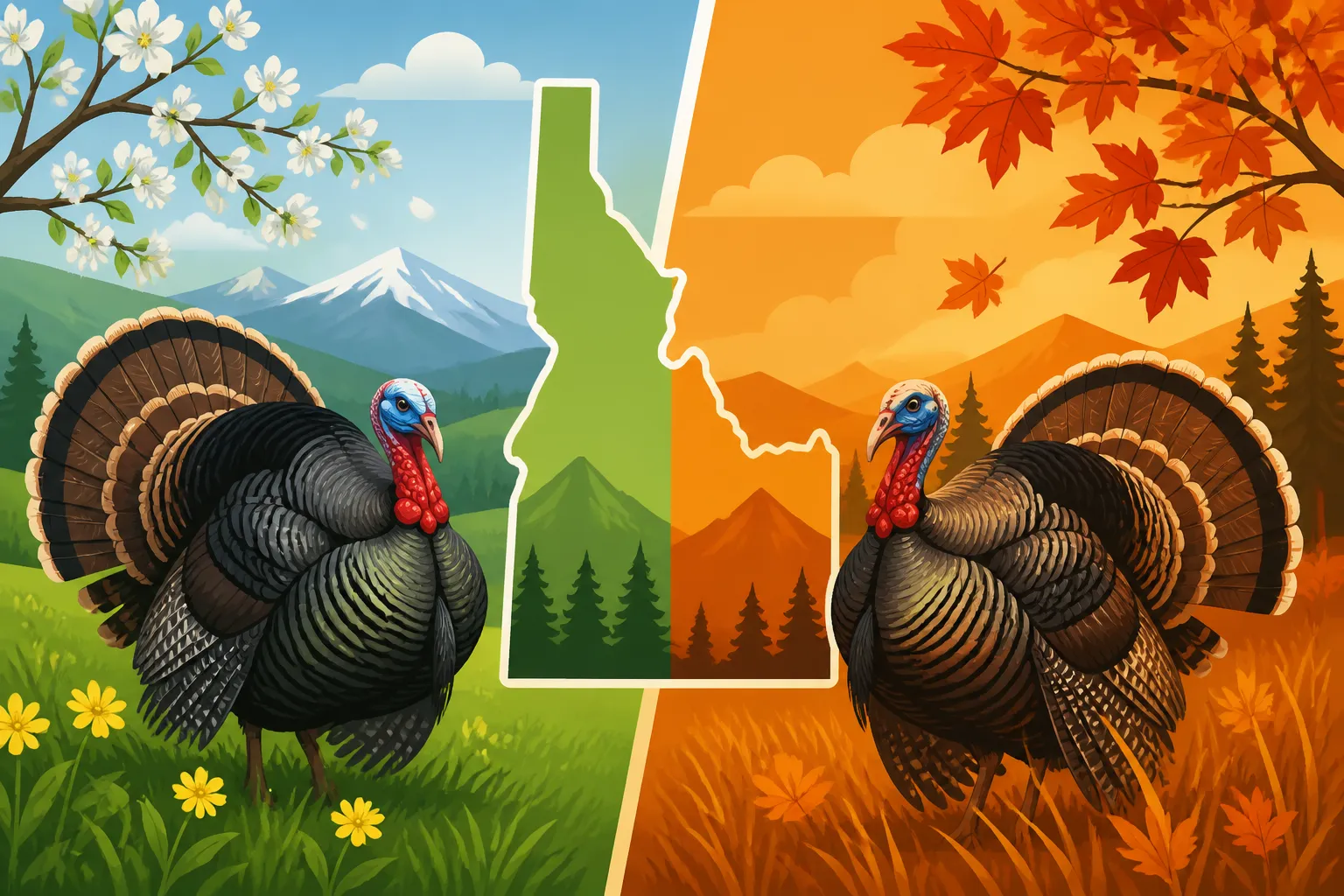
Idaho is one of those fantastic places that offers hunters the chance to pursue wild turkeys in both the spring and the fall. While the target animal is the same magnificent bird, the experience, tactics, and even the atmosphere of the hunt couldn't be more different. It's not just a matter of weather; it's about understanding the turkeys themselves and how their behavior shifts dramatically between these two periods of the year. This duality provides incredible flexibility for hunters, allowing them to engage with the species in varied and exciting ways.
Why Idaho Offers Both Spring and Fall Opportunities
The decision to open both spring and fall turkey seasons isn't arbitrary; it's rooted in wildlife management and the distinct biological cycles of wild turkeys. Spring seasons, typically focused on gobblers, capitalize on the breeding season. This is when toms are most vocal, visible, and susceptible to calling strategies, making for an exciting, interactive hunt. It's a time of abundance, showcasing the health and vigor of the population. Fall seasons, on the other hand, often allow for the harvest of any turkey, reflecting a different management goal: population control and harvesting birds that have matured over the summer. This provides opportunities for hunters after the breeding season, often focusing on flock dynamics. Offering both seasons allows for a more comprehensive approach to managing the turkey population, ensuring healthy numbers while providing diverse hunting experiences.
The Fundamental Differences in Turkey Behavior
The core distinction between spring and fall turkey hunting in Idaho lies squarely in the birds' behavior. In spring, especially from late April through May, the world revolves around breeding. Gobblers are driven by the urge to find hens, displaying elaborate strutting rituals, puffing up their feathers, and, most famously, letting out those thunderous gobble calls that echo through the timber. Hens are also highly vocal, using a variety of yelps, clucks, and purrs to communicate. This makes for a very vocal and interactive hunt where calling plays a paramount role.
Come fall, that breeding urgency has long passed. Turkeys transition into a more survival-oriented mode, focusing intensely on foraging and flock cohesion as they prepare for winter. They are often found in larger, mixed-gender flocks, moving through the landscape in search of acorns, seeds, and insects. While they still communicate, their vocalizations are generally softer and less frequent, driven by maintaining contact within the flock rather than attracting mates. Understanding this fundamental shift in motivation and social structure is the first step to successful hunting in either season. It’s like comparing two entirely different sports, even though you’re using the same ball.
Diving Deep into Spring Turkey Hunting: The Gobble and Strut Spectacle
For many, spring turkey hunting is the pinnacle of the pursuit. There's nothing quite like the sound of a distant gobble breaking the morning silence, or watching a majestic tom strutting in full display, hoping to catch a glimpse of the hen he thinks he's calling to. It's a game of wits, patience, and often, quick decisions, all centered around the powerful instinct of procreation. This season offers a truly immersive and thrilling experience that keeps hunters coming back year after year.
Spring's Focus: Toms and the Breeding Season
Idaho's spring turkey season is primarily designed to target male turkeys, or "toms," during their breeding peak. This focus is intentional; harvesting a limited number of male birds during this time has a minimal impact on overall population health, as one dominant tom can breed with many hens. What this means for the hunter is a high-stakes, high-reward game. You're trying to convince an animal whose primary drive is to find a mate that you are that mate. The adrenaline rush of calling in a bird, hearing it get closer and closer, and then seeing that iridescent fan emerge from the underbrush is an experience few other hunts can match. It requires a keen ear, a good understanding of turkey vocalizations, and the ability to set up in a way that allows for a clean, ethical shot once the bird is in range.
Calling Tactics and Decoy Strategies for Spring
Calling is the absolute cornerstone of spring turkey hunting. Your goal is to mimic the sounds of a hen to draw in an inquisitive tom. There's a whole symphony of calls to master: yelps, clucks, purrs, and cutts, each with its own meaning and application. Friction calls (slate or box calls) are excellent for beginners, producing realistic hen sounds with relative ease. Mouth calls (diaphragm calls) offer hands-free operation, which is critical for staying ready to shoot as a bird approaches. When a gobbler responds, it’s a direct conversation, and you're trying to lead him to your position.
Decoys can also be incredibly effective, especially when paired with convincing calling. A hen decoy, sometimes with a jake or sub-dominant tom decoy, can present a visual target that seals the deal for a dominant gobbler. The key is placement: position them where an approaching tom can see them from a distance, drawing his attention away from your hiding spot. However, be mindful of other hunters; safe and ethical decoy use is paramount. Some hunters might consult resources like GoHunt or other online communities to learn about advanced calling techniques or specific decoy setups that have worked for others in similar Idaho terrain.
Licenses, Tags, and Specific Spring Season Rules
Before you even think about calling in that gobbler, you need to be properly licensed and tagged. For spring turkey, Idaho generally requires a valid hunting license and a separate turkey tag. Unlike big game, turkey tags are typically over-the-counter. The season usually opens in mid-April and runs through May, but exact dates can vary by unit, so always check the current regulations carefully. Most often, the limit is one male turkey (tom or jake) per tag, and you might be able to purchase more than one tag depending on the unit and overall regulations.
It's also crucial to understand legal shooting hours, which typically begin a half-hour before sunrise and extend to sunset. Always be aware of any weapon restrictions that might apply, though shotguns and archery equipment are standard for spring turkey. Remember, hunter education is a requirement for many, and Anyone Born After 1974 Needs Idaho Hunter Education. Knowing these rules inside and out ensures your hunt is not only successful but also legal and responsible.
Navigating the Nuances of Fall Turkey Hunting in Idaho
While spring hunting is about the spectacle of the gobble, fall turkey hunting is a different beast entirely. It's often more about stealth, woodcraft, and understanding the social structure of turkey flocks. The vibrant greens of spring have given way to autumn's golden hues, and the woods feel quieter, more subtle. This season offers a fantastic opportunity to fill the freezer and enjoy the outdoors without the intense calling pressure of the spring.
Fall's Focus: Flocks, Food, and Broods
In the fall, wild turkeys have shed their breeding-season priorities. Their main objectives are now survival, finding food, and staying together as a flock. This means you'll often encounter larger groups of birds, frequently hens with their broods of poults from the spring, sometimes joined by adult gobblers. They spend their days meticulously foraging through timber and open areas, scratching for acorns, berries, and insects.
The key to fall hunting is often locating these flocks. Scout areas rich in mast crops like oak flats or areas with abundant berry bushes. Fresh tracks, droppings, and dusting bowls are all signs that turkeys are in the vicinity. Because they're less vocal, you'll rely more on your eyes and ability to read the landscape. Once you find them, the tactics shift dramatically from enticing a lone tom to interacting with an entire social unit. Idaho Fall Turkey Controlled Hunt Timing is an important date to mark on your calendar if you're planning a fall hunt.
Locating and Breaking Up Fall Flocks
One of the most classic and effective fall turkey hunting tactics is the "scatter and call." Once you've located a flock, the goal is to intentionally break them up. This often involves a fast, aggressive rush into their midst, yelling and creating commotion to send birds flying and running in every direction. While it sounds counterintuitive, turkeys are highly social animals, and once scattered, their instinct is to regroup.
After scattering, you'll want to quickly find a concealed spot and wait. After 15-30 minutes, the scattered birds will usually start to make "assembly calls"—yelps and kee-kees (the lost call of a young turkey). This is your cue to start calling back, mimicking these sounds. Your goal is to sound like a lost turkey trying to reassemble the flock, drawing birds back into shooting range. It's a method that plays directly into their strong social bonds and can be incredibly rewarding.
Regulations and the Broader Fall Landscape
Idaho's fall turkey seasons often run from mid-September through December, sometimes with split seasons or different rules depending on the specific Idaho Turkey Hunting Units. A significant difference from spring is that fall tags often allow the harvest of "any turkey," meaning you can take a tom, hen, or jake. This offers more flexibility and makes it a great opportunity to put meat on the table. However, always double-check the regulations for the specific unit you plan to hunt, as some areas might have restrictions on hen harvests or specific season dates.
Just like in spring, you'll need a valid hunting license and a fall turkey tag. These are generally available over-the-counter. Fall hunting often coincides with other big game seasons, so you might find yourself in the woods with deer or elk hunters. This means exercising extra caution, wearing hunter orange if required for other species you're pursuing (though not typically for turkey-only hunts), and being aware of your surroundings. Utilizing tools like the Using the Idaho Hunt Planner Map Center can help you scout units, understand specific regulations, and even check public land percentages, which is invaluable for planning a successful fall hunt.
Choosing Your Season: A Comparative Look at Spring vs. Fall Turkey Hunting
Deciding between a spring or fall turkey hunt isn't about which is "better," but rather which experience you're seeking, and which aligns with your personal hunting style and schedule. Both offer fantastic opportunities, but they deliver them in very different ways.
| Feature | Spring Turkey Season | Fall Turkey Season |
|---|---|---|
| Primary Target | Toms (gobblers/jakes) | Any Turkey (toms, hens, jakes, poults) |
| Turkey Behavior | Breeding focus, vocal, strutting | Foraging, flock cohesion, less vocal |
| Key Tactic | Calling to attract males, decoying | Locating flocks, scattering, re-calling assembly calls |
| Calling Style | Aggressive hen yelps, clucks to entice males | Softer assembly yelps, kee-kees to reunite flocks |
| Hunter Noise | Must be silent, concealed, wait for approach | Can be noisy during scatter, then silent for call-ins |
| Season Dates | Typically April-May | Typically September-December (can vary) |
| Experience | High-adrenaline, interactive, conversational hunt | More woodcraft, stealth, social understanding of birds |
| Meat Harvest | Often one tom, can be tough/gamey | Often any bird, poults and jakes are tender |
Success Rates and Hunter Experience Expectations
Success rates can fluctuate wildly between spring and fall, and even from year to year, depending on weather, pressure, and the turkey population. Generally, spring hunting is perceived as more challenging due because you're trying to outsmart a specific, driven bird, but it offers the thrill of the "cat and mouse" game. Beginners might find the calling aspect a bit daunting at first, but with practice, it becomes incredibly rewarding. The excitement of a gobbler charging into your setup is unparalleled.
Fall hunting, while requiring different skills, can sometimes feel more accessible for meat harvesting, especially with the "any turkey" regulations. Breaking up a flock and then calling them back in can lead to multiple birds approaching, offering more shot opportunities. However, finding those flocks in the first place requires diligent scouting and patience. If you're after a specific type of experience—the heart-pounding gobble or the subtle art of flock dynamics—that will heavily influence your choice.
Gear Considerations and Environmental Factors
Your basic gear for turkey hunting remains largely the same: shotgun (or bow), appropriate choke/broadheads, camo clothing, and comfortable boots. However, there are nuances. For spring, a good seat cushion for sitting still for extended periods and high-quality calls are essential. Bug spray is often a necessity as the woods come alive. For fall, mobility might be more critical, as you're often covering more ground to locate flocks. A good pair of binoculars can be very useful for spotting birds from a distance before you make your move.
Environmental factors also play a huge role. Spring weather in Idaho can be highly variable, ranging from warm, sunny days to late-season snowstorms. Being prepared for anything is key. The foliage is often less dense in early spring, offering longer sightlines, but as green-up progresses, cover increases. Fall, on the other hand, typically brings cooler, more stable weather, but falling leaves can make silent stalking a challenge. The landscape you're hunting can also impact your choice; areas with dense timber may favor different tactics than more open, broken country where Merriam's Turkey Through the Northern Timber are often found. Using resources that integrate mapping and satellite imagery can really give you an edge in scouting these diverse habitats. Many hunters find platforms like GoHunt invaluable for this kind of detailed pre-hunt planning.
Making the Most of Both Seasons (or picking one)
Ultimately, the best approach for many Idaho hunters is to embrace both seasons. Each offers a unique challenge and reward, sharpening different hunting skills and providing more time afield. If your schedule only allows for one, consider what drives you. Is it the intense interaction and vocal challenge of spring? Or the strategic, observant nature of a fall hunt aimed at filling the freezer?
Regardless of the season, preparation is key. This includes not just scouting and practicing your calls, but also ensuring you're up-to-date on your hunter education. If you're a new hunter or looking to get certified, remember that Online and Classroom Hunter Education Compared offers different pathways to meet the requirements. For those new to hunting entirely, Idaho even has The Idaho Hunting Passport Lets You Try Before You Certify, which can be a fantastic way to experience hunting under the guidance of an experienced mentor before committing to full certification. Each season provides a rich, authentic Idaho hunting experience, and with the right approach, you're sure to have a memorable time.
Disclaimer
This article is for general informational purposes only and does not constitute professional advice. Laws, prices and regulations vary by location and change over time. Consult a qualified professional for guidance on your specific situation.