Idaho Black Bear Population and Density
Navigating the vast landscapes of Idaho in pursuit of black bear can be an incredibly rewarding experience, but it often comes with the frustration of wondering where these elusive animals actually are. It’s not enough to simply know bears exist; understanding their population numbers and where they concentrate is paramount to a successful hunt. This guide will meticulously break down the intricate world of Idaho's black bear population and density, providing you with the insights needed to approach your next hunt with confidence and strategic focus.
Understanding Idaho's Black Bear Population Dynamics
Idaho is a stronghold for black bears, with a robust and well-managed population that offers fantastic opportunities for hunters. However, these aren't static numbers; bear populations are dynamic, influenced by a complex interplay of environmental factors and management strategies.
The Numbers: How Many Bears Call Idaho Home?
Idaho boasts a healthy and thriving black bear population, often estimated to be around 20,000 to 30,000 bears across the state. Now, before you start picturing a bear around every corner, it's crucial to understand that this is an estimate. Wildlife biologists arrive at these figures through a variety of methods, including population modeling based on harvest data, research studies involving tracking and tagging, and habitat assessments. These numbers aren't fixed; they can fluctuate year to year based on cub survival rates, food availability, and even hunting pressure.
What this generally means for hunters is that Idaho maintains a population healthy enough to sustain regulated hunting seasons, which is a testament to effective wildlife management. Unlike some states where bear populations might be struggling, Idaho's black bears are doing quite well, providing consistent opportunities for those willing to put in the effort. This robust population is part of what makes Idaho an attractive destination for bear hunters.
Factors Influencing Bear Numbers
Bear populations, like any wildlife species, are highly sensitive to their environment. Several key factors dictate not just how many bears there are, but where they choose to live and how successfully they reproduce.
One of the most critical elements is habitat quality and availability. Black bears thrive in diverse forested environments that offer a mix of dense cover for bedding and security, open areas for foraging, and access to water. Areas with mature timber, thick brush, and rugged topography are prime real estate for bears. If a region loses forest cover due to logging or wildfires without adequate regeneration, bear numbers in that specific spot will inevitably decline. Conversely, a healthy, diverse forest ecosystem will support more bears.
Food availability is arguably the biggest driver of population health and density fluctuations. Bears are omnivores, and their diet changes with the seasons. In spring, they rely on tender green grasses, forbs, and any winter-killed carrion. As summer progresses, they shift to berries—huckleberries, serviceberries, and chokecherries being particularly important. Come fall, acorns and other hard mast crops become crucial for bears to pack on the fat reserves needed for hibernation. Years with abundant mast crops generally lead to higher cub survival rates and healthier, more productive sows, contributing to overall population growth. Drought years or late frosts that wipe out berry crops can lead to bears ranging wider in search of food and potentially lower cub survival.
Hunting pressure also plays a significant role, though it’s a managed one. Regulated hunting seasons are designed to keep populations in check, ensuring they don't overpopulate and become a nuisance or face widespread disease. Idaho Fish and Game carefully monitors harvest numbers and adjusts seasons or quotas as needed to maintain a balance. This ensures sustainable hunting opportunities for future generations.
Finally, while less impactful on overall populations, natural predation and disease do occur. Young cubs can fall prey to larger predators like wolves or mountain lions, and bears can succumb to various illnesses. Increased human-wildlife conflict, often due to improper food storage or attractants near human settlements, can also lead to bears being relocated or euthanized, which locally impacts numbers. It's a complex picture, but understanding these drivers helps us appreciate the health of Idaho's bear population.
Where Black Bear Density Runs Highest in Idaho
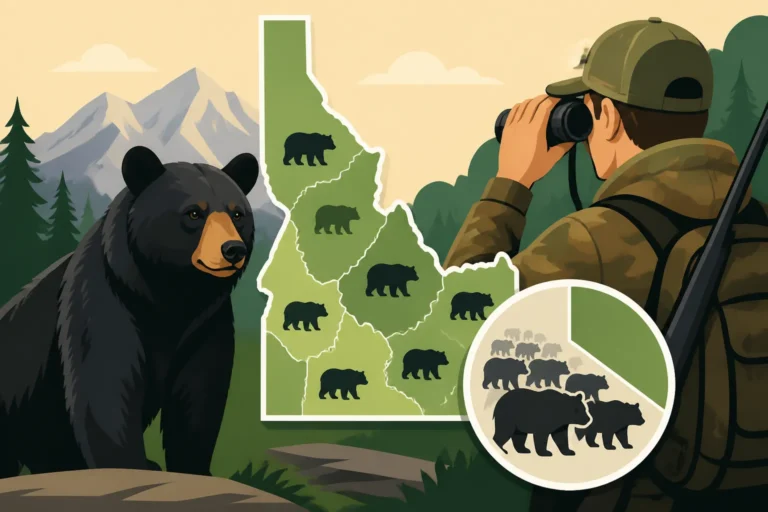
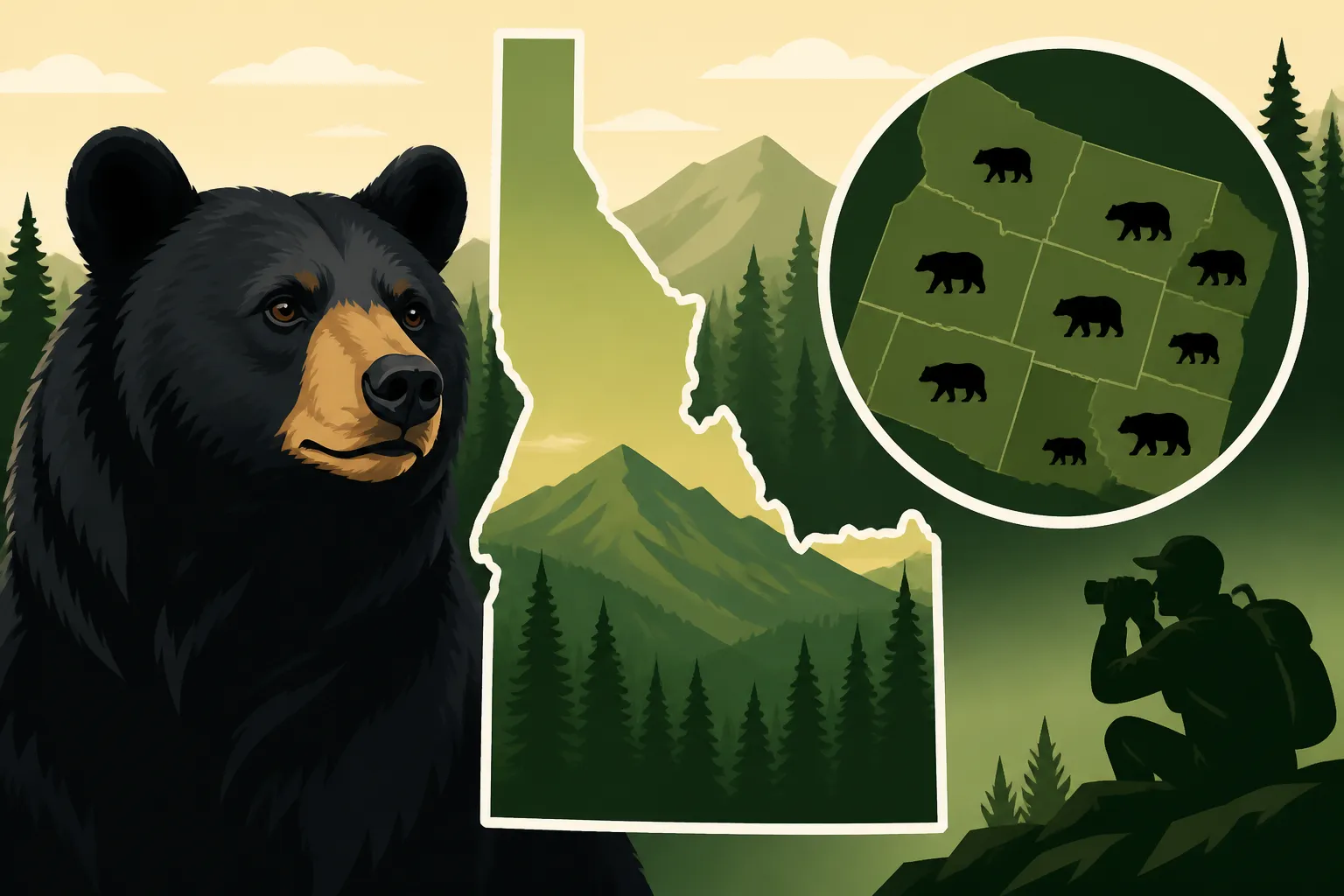
When you're planning an Idaho bear hunt, knowing where to go is half the battle. While black bears are widely distributed across the state, their density isn't uniform. Certain regions and specific Game Management Units (GMUs) consistently hold higher concentrations of bears, offering better odds for hunters.
General Distribution Across the State
Generally speaking, if you're looking for black bears in Idaho, you'll want to focus on the more heavily forested and mountainous regions. The northern Panhandle is renowned for its dense timber, rugged terrain, and abundant huckleberry patches, making it a prime black bear habitat. Areas within the Panhandle, Clearwater, and Salmon-Challis regions consistently support strong bear populations.
As you move south, the distribution becomes a bit more patchy. Bears are still present in the central mountains, including the vast wilderness areas like the Frank Church-River of No Return, where expansive tracts of forest provide excellent habitat. However, as you get into the drier, more open sagebrush-dominated landscapes of southern Idaho, bear populations become much sparser, primarily confined to island mountain ranges or riparian zones. They are rarely found in the Snake River Plain's agricultural areas. The key takeaway is that the greener and more rugged the country, the more likely you are to find bears.
Hotspots and High-Density Units
For hunters serious about targeting black bears, certain GMUs stand out as consistent performers in terms of density and harvest success. While specific units can shift in productivity year to year, the general trends hold. Units in the Panhandle (e.g., 1, 2, 3, 4, 5, 6) and the Clearwater region (e.g., 8, 8A, 10A, 12, 16, 17) are often highlighted for their excellent bear hunting. These areas are characterized by extensive national forest land, dense timber, abundant food sources, and rugged topography that provides plenty of refuge for bears.
For instance, the Selway-Bitterroot Wilderness and surrounding national forests offer vast tracts of undeveloped habitat. The Lolo Zone, while primarily known for elk, also has healthy bear numbers due to its dense forests and steep canyons. Websites like GoHunt often compile data and provide insights into these high-potential units, drawing from historical harvest records. The Idaho Fish and Game website's harvest reports are another invaluable resource for identifying units with consistently high bear take. When you're e-scouting, look for areas with north-facing slopes, dense stands of timber, and proximity to water sources and berry patches – these are the natural magnets for bears.
Lower Density Areas and Their Challenges
While bears are widespread, some areas present a much greater challenge for bear hunters due to lower population densities. These typically include the more open, arid, or agricultural areas of southwestern and southeastern Idaho. Units in the Owyhee country, or those dominated by sagebrush steppe and irrigated farmlands, simply don't offer the consistent cover and diverse food sources that black bears require to thrive in high numbers.
Hunting in these lower-density areas requires a different approach. You'll likely need to cover significantly more ground, focusing on very specific pockets of suitable habitat such as mountain riparian corridors, isolated timbered draws, or areas bordering larger wilderness. The challenges here are obvious: fewer bears mean lower odds of encounter, and the bears present may be warier due to less cover. While not impossible, these areas are typically not recommended for a first-time bear hunter or someone looking for a higher probability of success. It's about adjusting expectations and tactics to the habitat at hand.
Using Data to Inform Your Idaho Bear Hunt
In today's hunting world, data is king. The Idaho Fish and Game Department provides a wealth of information that, when properly utilized, can significantly improve your chances of locating black bears. Learning to analyze these resources is a crucial step in preparing for your hunt.
Analyzing Harvest Statistics
The Idaho Fish and Game website is a treasure trove of harvest statistics. They break down hunter success rates, total animals harvested, and even the weapon choice by Game Management Unit (GMU) and season. For bear hunting, this data can be incredibly revealing. You're looking for units that consistently show higher bear harvests and good success rates. Don't just look at one year; analyze trends over the past three to five years. A unit with consistently high numbers suggests a robust and stable bear population.
When looking at the data, pay attention to the harvest methods. Are most bears taken via "Baited Against Spot and Stalk Bear Hunting"? Or is there a strong harvest from spot-and-stalk methods? This can inform your own strategy. If a unit shows high numbers from baiting, it might indicate areas where bears are more scattered, making traditional spot-and-stalk tougher. Conversely, high spot-and-stalk numbers suggest more visible bears or more concentrated food sources.
Here's a simplified example of how harvest data might look, focusing on what you'd typically seek out:
| GMU | Bear Harvest (Avg. Last 3 Yrs) | Hunter Success Rate (Avg.) | Primary Method (Harvest) | Key Habitat Notes |
|---|---|---|---|---|
| 1 | 150 | 30% | Spot-and-Stalk | Dense Timber, Berries |
| 6 | 120 | 25% | Baiting/Spot-and-Stalk | Rugged Mtn. Basins |
| 10A | 90 | 20% | Spot-and-Stalk | Old Growth, Huckleberries |
| 17 | 75 | 18% | Spot-and-Stalk | Wilderness Access |
| 39 | 20 | 5% | Opportunistic | Limited Forest Cover |
This table highlights how different units offer varying opportunities. GMU 1, with a high harvest and success rate, indicates a strong population, likely in good spot-and-stalk country. GMU 39, by contrast, shows very low numbers, suggesting a tougher hunt. This kind of comparative analysis is invaluable before you even step foot in the woods.
Leveraging E-Scouting and Mapping Tools
Once you've identified potential GMUs using harvest data, it's time to dive into e-scouting with modern mapping tools. Platforms like onX Hunt, Gaia GPS, or even the Idaho Hunt Planner are indispensable. You're looking for terrain features that scream "bear habitat."
Start by identifying areas with extensive public land – National Forests and BLM ground are your friend. Zoom in and look for dense, dark timber on north-facing slopes. These areas often retain snow longer in spring, providing new growth, and offer cooler bedding cover in summer. Look for patches of what appears to be dense brush or regenerating clearcuts; these are often prime spots for berry bushes. Trace riparian corridors, as bears often use these as travel routes and for water. Identify areas with varied topography – benches, saddles, and drainages – as these create natural funnels and feeding areas.
Don't forget to check layers for seasonal road closures Across Idaho Forests. In spring, many forest roads are still closed, impacting access. Similarly, be aware of winter range closures That Affect Scouting, as these areas are off-limits to protect critical wintering big game, which might include some bear habitat. By combining these digital tools with your harvest data analysis, you can pinpoint specific drainages or basins that have high potential, saving you countless hours of unproductive boots-on-the-ground scouting.
Seasonal Influences on Bear Density and Behavior
Black bears are creatures of habit, but their habits shift dramatically with the seasons. Understanding these seasonal changes is crucial for predicting where they'll be and how concentrated their numbers might be in a given area.
Spring Bear Hunting: Post-Den Emergence and Food Sources
When spring arrives in Idaho, black bears emerge from their dens, often lean and hungry after months of hibernation. Their immediate priority is finding food, and this dictates their movement and density. In early spring, you'll find bears primarily at lower elevations, especially on south-facing slopes. Why? Because these areas receive the most sunlight, melting snow faster and causing vegetation to green up first. New grasses, clover, dandelions, and emerging forbs are among the first food sources available. Bears will often congregate in these "green-up" areas, making them relatively more concentrated.
Another key food source in early spring is winter-killed carrion. Any elk, deer, or moose that didn't survive the winter becomes a magnet for hungry bears. Hunters often focus their efforts on glassing these south-facing slopes, particularly in the mornings and evenings when bears are most active.
This is also a popular time for baiting. If legal in your unit, setting up a bait site can be an effective strategy because bears are actively seeking calorie-rich food. However, understanding "The Black Bear Baiting Rules Idaho Applies" and potentially even registering a bear bait site is critical. Whether you're baiting or spot-and-stalking, the primary draw in spring is the earliest available nutrition, and bears will be denser where that food is found. This makes "Spring Against Fall Bear Hunting Compared" a fascinating study in seasonal adaptation.
Fall Bear Hunting: Hyperphagia and Pre-Denning
As summer fades into fall, a black bear's behavior shifts dramatically into what's known as hyperphagia. This is an intense, almost insatiable feeding period where bears consume enormous quantities of food to build up critical fat reserves for the upcoming winter hibernation. Their location and density become directly tied to the availability of high-calorie fall foods.
In the early fall, bears will be heavily focused on berries, especially huckleberries, serviceberries, and chokecherries, which can be found in abundance across Idaho's forested regions. As these sources dry up or are consumed, bears shift their attention to hard mast crops, like acorns, if available in specific areas. Bears might travel considerable distances to find productive patches of these foods. This often leads to bears being more dispersed across the landscape than in spring, but they can still be highly concentrated in specific food-rich drainages or mountain faces. For example, a ridge loaded with ripe huckleberries can be a temporary "hotspot" of bear activity.
The "Fall Black Bear Controlled Hunt Timing in Idaho" often coincides with this hyperphagia period, making it a productive time to hunt. As the weather cools and denning approaches, bears become even more focused on feeding, sometimes even into the early winter, depending on snow levels. Understanding these seasonal food preferences and mapping them out using e-scouting tools can be the difference between a successful fall hunt and a frustrating one. You might even spot some "Color Phase Bears in Idaho" during this time, as their fur is typically at its prime before denning.
Responsible Bear Hunting and Conservation
Hunting black bears in Idaho isn't just about the thrill of the chase; it's a vital component of wildlife management and a practice that comes with significant responsibilities.
The Role of Hunting in Bear Management
Regulated black bear hunting plays a critical role in maintaining healthy and balanced ecosystems across Idaho. Without natural predators to keep their numbers consistently in check, black bear populations could potentially grow to levels that strain available food resources, lead to increased disease, or exacerbate human-wildlife conflicts. Hunting acts as a primary management tool, ensuring that populations remain within ecological carrying capacities.
Idaho Fish and Game biologists set season lengths, bag limits, and specific unit regulations based on scientific data, harvest trends, and population estimates. This adaptive management approach ensures that hunting is sustainable and that bears continue to thrive. For hunters, this means adhering strictly to all regulations, reporting harvests promptly, and understanding specific rules, such as "Two-Bear Limits in Some Idaho Units" if you're hunting in a designated area. By participating in regulated hunting, you're not just pursuing an animal; you're contributing to the long-term health and conservation of Idaho's black bear population.
Bear Safety and Encounter Preparedness
Hunting bears means being in bear country, and that means being prepared for encounters, whether intentional or accidental. While Idaho's black bears are generally not aggressive, they are powerful wild animals, and caution is always warranted.
One of the most important pieces of advice, particularly for anyone venturing into remote or grizzly-populated areas, is carrying "Bear Spray Against a Sidearm in Grizzly Country". Even though most bears in Idaho are black bears, grizzlies exist in certain regions, and bear spray is often considered the most effective deterrent in an aggressive encounter. Know how to access it quickly and use it effectively.
Beyond personal protection, proper camp hygiene is paramount. This includes diligent "Food Storage Rules in Grizzly Country", even if you believe you're only in black bear country. All food, scented items, and garbage should be stored in bear-resistant containers, hung from trees, or secured in a vehicle to prevent attracting bears to your campsite. An ounce of prevention is worth a pound of cure. If you do encounter a bear, remain calm, speak in a low voice, and avoid direct eye contact. Never run. Understand bear behavior and always give them ample space. Being prepared isn't about fear; it's about respect for the wildlife and ensuring a safe experience for everyone.
Disclaimer
Please note: Hunting regulations, season dates, and tag requirements are subject to change. Always consult the most current Idaho Fish and Game regulations brochure before planning any hunting activity. This content is for informational purposes only and does not constitute legal or professional advice.