Idaho’s Motorized Hunting Rule Keeps You on the Road
It can be incredibly frustrating to be out in Idaho's vast backcountry, maybe miles from the nearest paved road, and second-guess whether that faint two-track is a legal path or a ticket waiting to happen. Hunters often grapple with the complex rules surrounding motorized vehicle use, especially when it comes to scouting, accessing hunting areas, or the dreaded task of retrieving a downed animal. This guide is here to untangle the nuances of Idaho's motorized hunting rule, helping you navigate the wilderness responsibly and legally, ensuring your hunt is about the thrill of the chase, not the stress of regulations.
Understanding Idaho's Motorized Hunting Rule
Idaho's approach to motorized vehicle use in hunting isn't about making things difficult for the sake of it; it's deeply rooted in the state's wildlife management philosophy. The rules are designed to balance access for hunters with the need to protect wildlife habitat, maintain fair chase principles, and preserve the wild character of public lands. It’s a common frustration for hunters who just want to get to their spot or haul out a hard-earned elk, but understanding the underlying intent can help make compliance a little less painful.
The Philosophy Behind the Restriction
At its core, Idaho Fish and Game, alongside federal land management agencies like the Forest Service and Bureau of Land Management (BLM), implements these restrictions to protect critical wildlife habitats from degradation. Vehicle travel, especially off-road, can cause soil erosion, disturb sensitive plant communities, and fragment vital winter range or calving grounds. Imagine the impact if every hunter drove straight to their game; the landscape would quickly become a spiderweb of tire tracks, making vast areas less hospitable for wildlife. Beyond habitat protection, the rule promotes a fair chase hunting experience. It ensures that hunters aren't simply driving up to animals, but are putting in the legwork and skill to find and stalk game. This maintains the challenge and ethical standards that many hunters value. It also helps manage hunting pressure, as areas inaccessible by vehicle naturally experience less human intrusion, providing sanctuaries for game. The rule is a cornerstone of responsible land stewardship, ensuring that Idaho’s wild places remain wild for future generations of both wildlife and hunters.
Defining "Motorized Vehicle" in Idaho Hunting
When we talk about "motorized vehicles" in the context of Idaho's hunting regulations, it’s not just your pickup truck on a paved road. The definition is broad and encompasses a wide range of conveyances. This includes your standard full-sized trucks and SUVs, but also ATVs (All-Terrain Vehicles), UTVs (Utility Terrain Vehicles or side-by-sides), motorcycles, snowmobiles, and any other self-propelled device designed for land travel. The key here is "self-propelled." Even electric bicycles, often referred to as e-bikes, can fall under motorized vehicle definitions on certain public lands or within specific regulations, especially if they operate above a certain speed or power output without pedaling. This is a point of increasing confusion, so always check the specific land management agency rules for your hunting area regarding e-bike use. Essentially, if it has an engine or a motor and moves you along the ground, it's very likely considered a motorized vehicle under these rules. This comprehensive definition ensures consistency in how access and impact are regulated across different types of motorized transportation, preventing loopholes that could undermine the rule's intent.
Where the Motorized Rule Applies
The "motorized hunting rule" isn't a blanket restriction across every inch of Idaho. It's applied strategically, often varying by specific Game Management Units (GMUs), land ownership (state, federal, private), and even the time of year. Knowing where and when these rules are in effect is paramount to staying on the right side of the law and respecting the land you're hunting. It's not enough to know the general rule; you need to dig into the specifics of your chosen hunting area.
Game Management Units and Specific Closures
Idaho is carved into 99 Game Management Units, and within these units, various types of motorized travel restrictions can exist. Some GMUs or portions thereof might be entirely closed to motorized vehicles off established roads and trails, while others might have more lenient rules. These closures are typically outlined in the Idaho Fish and Game regulations and are often tied to specific wildlife management objectives, such as protecting crucial winter range, limiting pressure during sensitive breeding seasons, or safeguarding designated wilderness areas. For instance, a unit known for its elk calving grounds might have stricter summer and early fall restrictions on vehicle access to prevent disturbance to cows and calves. Understanding these unit-specific nuances is critical. You might find that a two-track perfectly legal in one unit is strictly off-limits just across a unit boundary. This is where tools like the Idaho Hunt Planner become invaluable, allowing you to visually inspect unit boundaries and associated regulations. Beyond GMU regulations, it’s crucial to remember that federal lands (Forest Service, BLM) have their own sets of travel management rules, often dictating what routes are open or closed to different types of vehicles. These federal regulations can sometimes be more restrictive than the state's general hunting rules.
Seasonal Enforcement: When the Rules Are Active
Many motorized restrictions in Idaho are not year-round; they are seasonal, aligning with periods when wildlife is most vulnerable or when habitat is most susceptible to damage. While the specific dates can vary, Idaho's Motorized Hunting Rule generally runs from August into December, covering the primary big game hunting seasons. This period encompasses much of the archery, muzzleloader, and rifle seasons for deer and elk. During these months, the impact of off-road travel can be most detrimental, as hunters are actively pursuing game, and ground conditions might be dry and dusty or wet and muddy, both of which can lead to significant erosion. However, it’s important to note that specific wildlife management areas (WMAs) or particular federal land closures can have different seasonal frameworks, sometimes extending into the spring for shed hunting or summer for general recreational use. For example, some critical big game winter ranges might have year-round closures to all motorized vehicles, or at least from December through May, to protect animals during their most vulnerable period. Before you even head out to scout, much less hunt, always check the current year's Idaho hunting regulations and the travel management plans for the specific land you intend to traverse. This can mean the difference between a successful, legal trip and a hefty fine or worse.
What Counts as an Established Roadway
This is arguably one of the most confusing aspects of Idaho's motorized hunting rule. What constitutes an "established roadway" can feel ambiguous when you’re looking at a barely visible two-track disappearing into the sagebrush or timber. The common frustration is that what looks like a well-used path to a hunter might be considered cross-country travel by law enforcement, leading to unintentional violations. The distinction isn't always obvious, and relying on visual cues alone can be a risky gamble.
Differentiating Roads, Trails, and Cross-Country Travel
An "established roadway" in Idaho is generally understood as a route that is maintained and designated for motor vehicle use. This usually means it appears on official maps, like Forest Service Motor Vehicle Use Maps (MVUMs) or BLM travel plans, and is clearly distinguishable from the surrounding terrain. It might be graveled, paved, or simply an improved dirt road. The key is that it's managed for vehicles. A "trail," on the other hand, can be a designated hiking or equestrian path where motorized vehicles are explicitly prohibited, even if it looks like it could accommodate an ATV. These distinctions are critical.
Cross-country travel is where the real trouble often begins. This refers to driving a motorized vehicle directly over undeveloped terrain, creating new paths, disturbing vegetation, and causing erosion. Even following a faint game trail or a track left by a previous hunter can be considered cross-country travel if it's not a designated, mapped route. The temptation to take a "shortcut" or follow what appears to be an old logging track can be strong, especially when you see tire marks already there. However, those marks might be old, from an illegal excursion, or left by equipment doing approved work. You can't assume that because others have driven there, it's legal. This is where the rule often clashes with a hunter's intuition, as many old, unmaintained tracks might look perfectly viable but are, in fact, illegal to traverse with a motor vehicle.
Navigating Designated Motor Vehicle Use Maps (MVUMs)
The absolute best way to avoid confusion and stay compliant with Idaho's motorized hunting rule is to consult official Motor Vehicle Use Maps (MVUMs) for federal lands (National Forests, BLM) and relevant state or local travel plans for other areas. These maps are the ultimate authority on what routes are open to motorized travel. MVUMs specifically show which roads, trails, and areas are open or closed to different vehicle types, typically color-coded or clearly marked. For instance, a solid black line might indicate a road open to full-sized vehicles, while a dashed line might denote an ATV-only trail. Crucially, if a road or trail isn't on the MVUM as open for motorized use, then it is considered closed. This "closed unless designated open" principle is fundamental.
These maps are often available for free from Forest Service or BLM offices, or they can be downloaded digitally. Many modern hunting apps, like GoHunt, integrate these MVUM layers directly into their mapping systems, making them incredibly user-friendly in the field. Before any trip, especially for scouting new areas or hunting unfamiliar units, take the time to download or acquire the relevant MVUMs. Plot your routes, identify your access points, and know exactly where you can and cannot drive. Don't rely on general topo maps or older maps that might not reflect current travel restrictions. The consequences of not doing your homework could be severe, not just for your wallet, but for the wild places we all cherish.
The "No Off-Road Retrieval" Mandate
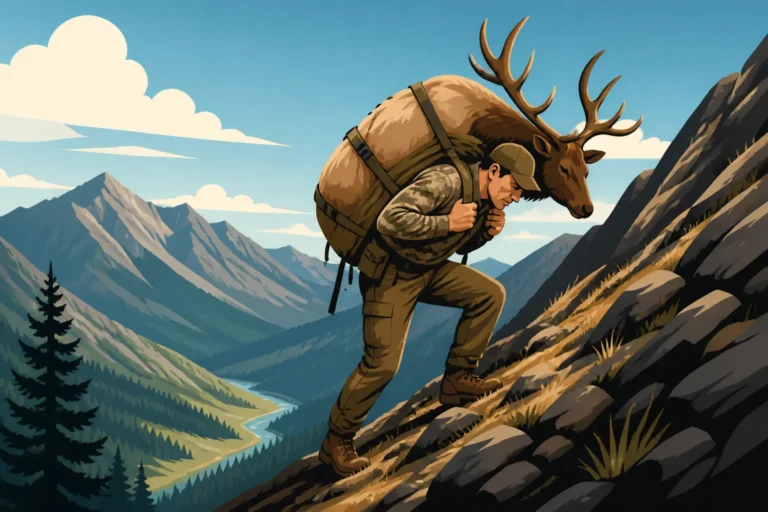
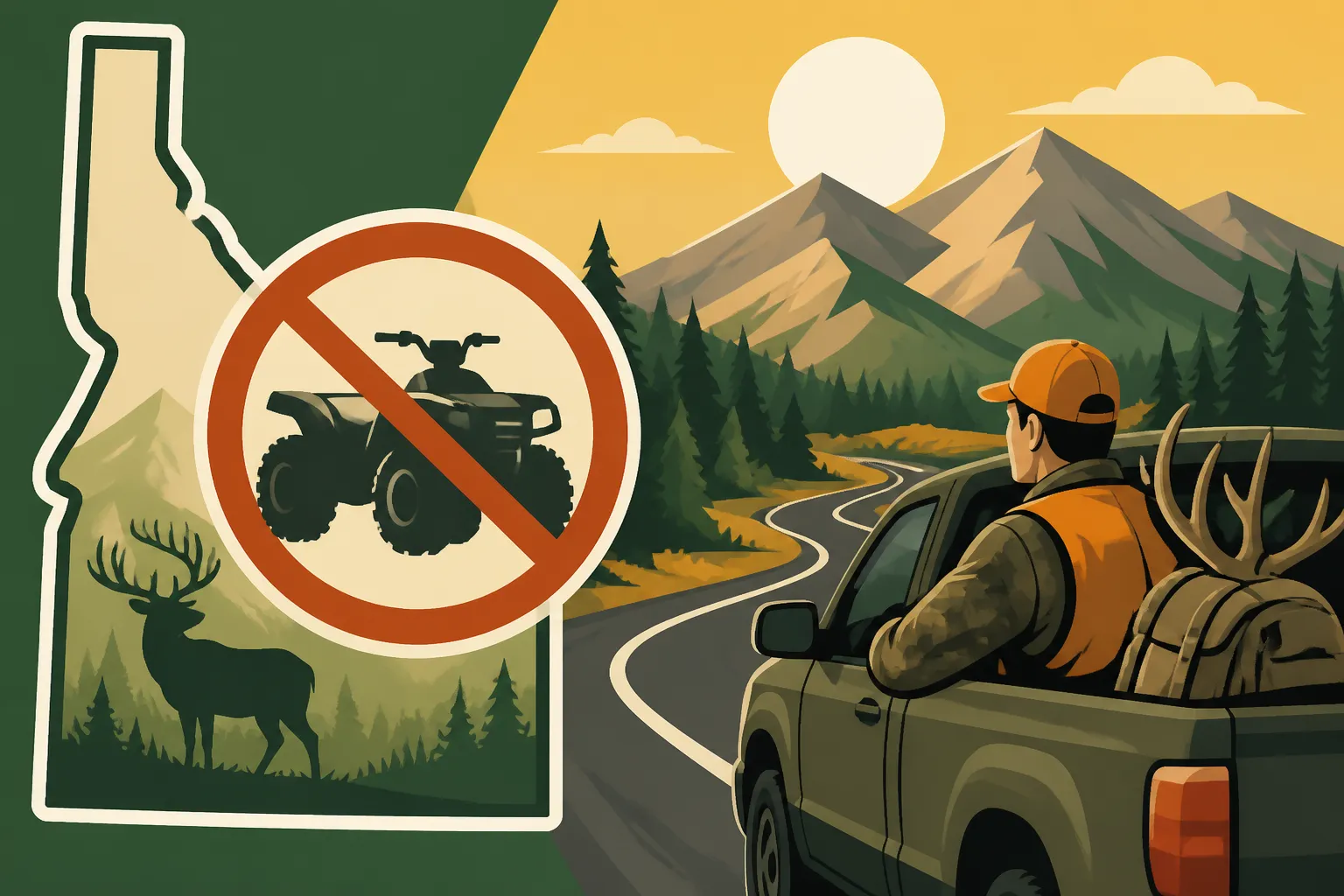
This specific aspect of Idaho's motorized hunting rule causes perhaps the most anguish and ethical debate among hunters. You've just made a perfect shot on a magnificent elk, and it's down, but it's 300 yards off the nearest designated road, down a steep draw. The thought of quartering and packing out hundreds of pounds of meat through tough terrain fills you with dread, and the temptation to just "slip the truck down there real quick" is immense. However, Idaho is very clear: you cannot drive off an established road to retrieve a downed animal, even if it's "just a little ways."
Why You Can't Drive to Retrieve Downed Game
The rationale behind the strict "no off-road retrieval" rule is multi-faceted and ties back to the core principles of wildlife management and ethical hunting. Firstly, allowing exceptions for game retrieval would create a massive loophole in the motorized travel rule. If every hunter could drive off-road to retrieve game, the cumulative impact on habitat would be identical to general off-road travel. It would quickly lead to the proliferation of new, illegal "game retrieval roads" that further fragment habitats, cause erosion, and permanently alter the landscape. Land management agencies would face an impossible task trying to enforce "purposeful" off-road travel versus "retrieval" travel.
Secondly, it reinforces the concept of fair chase. The challenge of getting an animal out of the backcountry is an integral part of the experience, especially for larger game like elk. It emphasizes that a successful hunt isn't just about pulling the trigger; it's about the entire process, including the physically demanding and often arduous task of packing out meat. This reality encourages hunters to think strategically about shot placement, the animal's likely travel path, and retrieval logistics before they even take a shot. It makes you consider if you are truly prepared for the full commitment of the hunt. Finally, it's about public perception. An image of a truck driving cross-country to pick up an animal can easily be misconstrued by the non-hunting public, potentially harming the image of ethical hunting and conservation efforts. By adhering to this strict rule, hunters demonstrate respect for wildlife, habitat, and the hunting tradition.
Planning for Game Retrieval in Roadless Areas
Given this strict rule, proactive planning for game retrieval becomes an absolutely non-negotiable part of any Idaho hunting trip, especially when venturing into roadless areas or deep backcountry. Here's how to approach it:
- Physical Conditioning: This is the most critical element. Being in excellent physical shape for packing heavy loads over challenging terrain will make a world of difference. Many unsuccessful hunts end not because an animal wasn't found, but because the hunter wasn't physically capable of getting it out.
- Gear Up: Invest in quality game bags, a sturdy pack frame designed for heavy loads, a sharp knife and game processing tools. Some hunters even carry a lightweight gambrel for hanging quarters. Consider a portable saw for breaking down the animal. Knowing how to field dress and quarter an animal efficiently is a skill that directly translates into easier retrieval.
- Teamwork and Communication: Hunting with a partner or a group significantly eases the burden of packing out. Establish clear communication plans before you split up. If you're hunting solo, you must be even more prepared for multiple trips and self-sufficiency.
- Scout Retrieval Routes: When e-scouting or physically scouting an area, don't just look for game sign; identify potential retrieval routes. Are there old pack trails? Gradual slopes? Can you identify the closest legal access point where you can meet a vehicle? Tools like GoHunt's mapping features, which often show topography and potential routes, can be invaluable here. Always consider how far you are from the nearest legal road or trail.
- Pack Animals: For truly remote areas, especially for elk, consider utilizing pack animals. Many outfitters offer drop camp services or pack-out assistance, even if you’re doing a DIY hunt. This can be a game-changer for getting large animals out intact and efficiently. Even if you're not riding in, having horses or mules available for extraction greatly expands your hunting range and reduces the physical toll.
- "Spike-Only Bull Rules Inside Idaho A Tag Seasons": While not directly about motorized rules, this reference is a good reminder that regulations are multifaceted. Just as you must know antler point restrictions, you must know your travel rules.
- Practice: Practice packing heavy loads at home. Load your pack frame with sandbags or weights and hike uneven terrain to simulate the real thing. This will build confidence and condition your body.
| Scenario | Motorized Vehicle Use | Legality Under Rule |
|---|---|---|
| Driving on a clearly marked, open Forest Service road | Truck, ATV, UTV | Legal: As long as the road is shown as open for your vehicle type on the current Motor Vehicle Use Map (MVUM) or other official land management map. |
| Driving down a faint two-track not on any official map | Truck, ATV, UTV | Illegal: If it's not designated and mapped as an open route, it's considered cross-country travel. Even if it looks like an old road, assume it's closed unless explicitly shown as open. |
| Driving across an open field to reach a tree line | Truck, ATV, UTV | Illegal: This is classic cross-country travel, regardless of land ownership (unless specific private land permission allows it, but even then, Idaho Fish and Game rules may apply to hunting activities). |
| Using an e-bike on a designated non-motorized trail | E-bike | Potentially Illegal: Many non-motorized trails (hiking, equestrian) prohibit e-bikes. Check specific land management agency rules for the area, as e-bike classifications are still evolving and vary. |
| Driving off an open road to retrieve a downed elk 100 yards away | Truck, ATV, UTV | Illegal: This is a clear violation of the "no off-road retrieval" mandate. You must pack the animal out by human power or non-motorized means (e.g., horse, game cart on open trail). |
| Parking your vehicle off the main road but within 10 feet of the road shoulder | Truck | Generally Legal: This is typically allowed for parking, as long as you're not blocking the road or damaging resources, and it's not in an explicitly closed area. However, always verify local regulations as some areas may have specific parking restrictions. |
| Driving on private land with landowner permission | Truck, ATV, UTV | Depends: While the landowner can grant permission to drive on their property, Idaho Fish and Game's motorized hunting regulations might still apply in certain contexts, particularly if the land falls under specific GMU restrictions that govern hunter conduct. Always clarify with both the landowner and Idaho Fish and Game if there's any ambiguity about hunting-related motorized use on private ground. |
| Using an ATV on a trail specifically designated "ATV Only" | ATV | Legal: If the trail is clearly marked and designated for ATV use on official maps. |
| Driving an ATV on a trail designated for "non-motorized use" | ATV | Illegal: Violates the specific designation of the trail. |
This table illustrates common situations, but always consult current official regulations and maps for the most accurate information for your specific hunting area.
Consequences of Violating the Rule
Ignoring Idaho's motorized hunting rules isn't just about bending a suggestion; it's breaking a law with tangible consequences. Many hunters, especially those new to the state or those who haven't delved deeply into the regulations, might mistakenly believe these are minor infractions. However, the penalties can be significant, extending beyond simple fines to impact your ability to hunt in Idaho and other states for years to come. It’s a harsh reality, but an important one to understand before you decide to take that "quick shortcut."
Fines and Penalties for Motorized Offenses
The immediate consequence of a motorized hunting rule violation is typically a citation and a fine. These fines can vary widely depending on the severity of the offense, whether it's a first-time violation, and the specific circumstances. A minor infraction, such as parking slightly off a designated pull-off in a sensitive area, might result in a moderate fine. However, more egregious offenses, like driving an ATV deep into a closed wilderness study area or causing significant habitat damage with your vehicle, can lead to much larger fines, potentially hundreds or even thousands of dollars. Idaho takes resource damage seriously, and penalties often reflect the potential long-term impact on the land.
Beyond the monetary fines, you might also face additional costs, such as court fees and restitution for any environmental damage caused. In some cases, your vehicle could even be impounded, leading to towing and storage fees that quickly add up. Law enforcement, including Idaho Fish and Game officers, Forest Service rangers, and BLM agents, actively patrol areas known for motorized violations, especially during hunting season. They are well-versed in identifying illegal tracks and often work with aerial surveillance to spot violations in remote areas. The idea that you "won't get caught" is a dangerous gamble that few experienced hunters are willing to take.
Potential Loss of Hunting Privileges
Perhaps the most devastating consequence for any passionate hunter is the potential loss of hunting privileges. Motorized hunting violations, especially repeated offenses or those deemed severe, can lead to the suspension or revocation of your hunting license and tags. This doesn't just apply to Idaho; thanks to the Wildlife Violator Compact, an agreement among most states, a hunting license revocation in Idaho can result in the suspension of your hunting privileges in all other member states. Imagine being unable to hunt anywhere for several years because of a single lapse in judgment with a vehicle. This can be a crushing blow, costing you not only the financial investment in licenses and gear but also the cherished tradition and passion of hunting.
Furthermore, a violation can complicate future tag applications. While Idaho doesn't have a preference point system in the traditional sense, a history of violations can be viewed unfavorably by wildlife agencies, potentially impacting certain permits or applications. Beyond the official penalties, there's also the reputational damage within the hunting community. Ethical hunters hold a high standard for responsible behavior, and being known for disregarding regulations can erode trust and respect. The long-term implications for a hunter's ability to participate in the sport they love far outweigh the convenience of an illegal shortcut. As such, understanding the "Penalties for Breaking the Motorized Rule" is not just about legality, but about protecting your future as a hunter.
Tools and Resources for Staying Compliant
Navigating Idaho's motorized hunting rules can feel like a labyrinth, but thankfully, there are excellent tools and resources available to help you stay compliant. Modern technology, combined with traditional knowledge sources, can empower you to confidently explore and hunt without fear of accidental violations. The key is knowing where to look and how to use these invaluable aids.
Utilizing the Idaho Hunt Planner and OnX Maps
The Idaho Department of Fish and Game's (IDFG) online Idaho Hunt Planner is an indispensable tool for every hunter. It's a treasure trove of information, providing detailed maps of Game Management Units, Elk Zones, and crucial regulatory overlays. Within the planner, you can often find specific information regarding motorized vehicle restrictions for various areas. The map center within the Hunt Planner allows you to zoom in on your intended hunting grounds and visually identify regulated access points, boundaries, and potentially restricted zones. While it’s excellent for general planning and understanding unit rules, its motorized use layers might not be as granular as federal MVUMs for specific roads and trails.
This is where third-party mapping applications, such as OnX Hunt, become absolutely essential. OnX has revolutionized how hunters navigate public lands by integrating critical layers like property boundaries, public land ownership (Forest Service, BLM, State, Private), and, crucially, Motor Vehicle Use Maps (MVUMs) directly into its platform. With OnX, you can download maps for offline use—a must-have when cell service vanishes in the backcountry. You can then toggle on MVUM layers which clearly show open roads and trails for various vehicle types. If a track isn't shown as open on the MVUM layer, you know it's off-limits. Using onX Layers for Idaho Public Land provides a detailed, real-time map in your hand that explicitly tells you where you can and cannot drive a motorized vehicle. This level of detail is critical for preventing accidental violations and planning your approach, scouting, and retrieval routes with precision.
Learning About Seasonal and Unit-Specific Regulations
Beyond the maps, a deep dive into the written regulations is non-negotiable. Idaho Fish and Game publishes annual hunting regulations booklets that are available online and at licensed vendors. These booklets provide the legal framework for all hunting activities, including detailed sections on motorized vehicle use. Pay close attention to the general rules that apply statewide, and then hone in on the specific regulations for the Game Management Unit(s) you plan to hunt. These unit-specific rules often contain caveats or additional restrictions beyond the general statewide guidelines.
It's also crucial to remember that land management agencies (Forest Service, BLM) have their own sets of regulations that can supersede or add to state hunting rules. For example, a particular National Forest might have specific seasonal road closures that are not directly related to hunting regulations but still impact your access. Checking their local offices or websites for travel management plans, forest orders, and winter range closures is vital. Websites like GoHunt also often compile and simplify these regulations, offering summaries and direct links to official sources, which can be a valuable starting point. Ultimately, the responsibility falls on the hunter to be informed. Ignorance of the law is not an excuse. Taking the time to read the full regulations, cross-referencing with MVUMs and the Idaho Hunt Planner, and even contacting IDFG or local land management offices with specific questions, will ensure you're a responsible and compliant hunter.
Impact on Hunting Strategy and Ethics
Idaho's motorized hunting rule profoundly influences how successful hunters plan their trips and execute their strategies. It's not just a minor inconvenience; it's a foundational element that shapes how you scout, approach, hunt, and retrieve game. Embracing these rules isn't just about legality; it's about adopting an ethical approach that respects wildlife and preserves the integrity of the hunting experience.
Adapting Your Scouting and Hunting Tactics
The motorized rule immediately dictates a shift in scouting methods. You can't simply drive every two-track looking for sign. Instead, it forces a more boots-on-the-ground or even horse-back approach to scouting. This means identifying legal access points, parking your vehicle, and then covering ground on foot to find game. This often leads to discovering less-pressured areas that other hunters might overlook because they're too far from vehicle access. E-scouting becomes even more critical, using satellite imagery and topographic maps to identify potential bedding areas, feeding zones, and water sources, long before you ever step foot in the unit. The "Road and Trail Layers for Scouting Idaho Access" offered by many mapping apps become a critical first step.
During the actual hunt, the motorized rule directly influences your approach to game. It encourages longer stalks and a willingness to venture deeper into roadless terrain. You must be prepared to hike several miles from a road to find undisturbed animals. This can mean setting up spike camps or even packing into remote areas for multi-day hunts, transforming your experience into a truly immersive backcountry adventure. The rule subtly pushes hunters towards more challenging, yet often more rewarding, endeavors. It shifts the focus from convenience to commitment, rewarding those who are willing to put in the effort required to truly immerse themselves in the hunt. For instance, when you're considering "How Far to Stalk a Bedded Mule Deer," the motorized rule might push you to go even further, knowing the animal is less likely to be disturbed by vehicle traffic.
Promoting Fair Chase and Resource Preservation
The very essence of Idaho's motorized rule is deeply intertwined with promoting fair chase hunting and ensuring resource preservation. Fair chase dictates that hunters should not have an unfair advantage over the game. Driving directly to an animal or using a vehicle to push game towards other hunters undermines this principle. By limiting motorized access, the rule ensures that hunters rely on their skill, physical endurance, and knowledge of the animal's behavior rather than mechanical advantage. This results in a more challenging, and ultimately, more satisfying hunting experience where the hunter truly earns their harvest.
From a resource preservation standpoint, the benefits are undeniable. Restricting off-road travel dramatically reduces habitat destruction, soil erosion, and disturbance to wildlife. Areas that are off-limits to vehicles become de facto sanctuaries, providing critical refuge for game, especially during sensitive times of the year. It protects the fragile ecosystems of Idaho's vast public lands, from high alpine meadows to desert sagebrush country. This long-term commitment to habitat health ensures that future generations will also have the opportunity to hunt in wild, undisturbed settings. When you understand that "Planning a DIY Public Land Hunt in Idaho" involves not just finding game, but also preserving the very land you hunt on, the rules feel less like obstacles and more like guidelines for responsible stewardship. Ultimately, the motorized hunting rule serves as a constant reminder that our privilege to hunt comes with a profound responsibility to respect and conserve the natural world.
Disclaimer
Please remember that hunting regulations can change annually, and specific rules may vary depending on the Game Management Unit, species, and land ownership (e.g., Forest Service, BLM, State Lands, private property). Always consult the most current Idaho Fish and Game regulations and the specific land management agency rules for your intended hunting area before heading afield. This guide provides general information and should not be considered a substitute for official sources.