Late Season Whitetail Hunting in the Timber
Hunting whitetail deer in Idaho's timber during the late season can feel like you're playing a completely different game than early archers or even rifle hunters in the peak of the rut. The cold has settled in, deer have been pressured for weeks, and their patterns have often shifted dramatically. It can be incredibly frustrating to hit the woods when the bucks seem to have vanished, or when the snow makes silent stalking impossible. This guide is here to walk you through the nuances of late season whitetail hunting in Idaho's dense timber, helping you understand deer behavior, adapt your tactics, and increase your chances of success when conditions are tough.
Understanding Late Season Whitetail Behavior in Timber
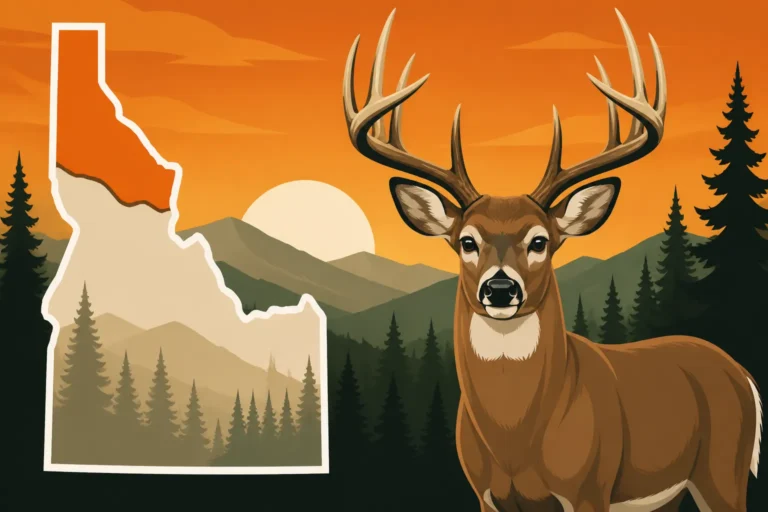
As winter truly sets in and hunting pressure mounts, whitetail deer in Idaho's timbered regions, especially up in the Whitetail Range Through Idaho's Panhandle where they're most prevalent, undergo significant behavioral changes. Gone are the days of chasing does haphazardly during the peak of the rut. Now, their priorities shift dramatically to survival: finding food, conserving energy, and seeking thermal cover to escape the biting cold. Understanding these shifts is paramount to locating and ultimately harvesting a late season buck.
Post-Rut Recovery and Energy Conservation
After the grueling demands of the rut, bucks are often depleted, having lost a significant amount of body mass. Their focus immediately pivots to replenishing those reserves. This means they'll be seeking out high-energy food sources that are still available, even if they're sparse. But it's not just about eating; it's also about moving as little as possible to conserve precious energy. You won't find them running miles across open country; instead, they'll favor smaller, secure areas. They become incredibly wary, using every bit of dense cover to their advantage, often moving only during low light conditions or when absolutely necessary. This makes still hunting or setting up ambush points near known food sources or thick bedding a critical strategy.
The Importance of Thermal Cover
When temperatures plummet and snow piles up, thermal cover becomes a deer's best friend. This isn't just any timber; it's usually dense stands of conifers like cedar, spruce, or young pines that block the wind and hold residual ground warmth. South-facing slopes, which catch more sunlight, can also be prime locations for these thermal havens. Deer will bed down in these thickets, often just inside the edge where they can still see and smell approaching danger. They might not move far from these bedding areas to feed, sometimes only a few hundred yards to a nearby browse patch. Identifying these specific types of timber and understanding why they're attractive to deer is a key part of effective late season scouting and hunting. Remember, deer are trying to stay warm and dry, and these thick stands offer the best protection.
Food Source Prioritization
Late in the season, preferred food sources become extremely limited. Acorns might be long gone, and lush browse has dried up. Whitetails will shift to whatever high-energy forage remains. In Idaho's timber, this often means things like evergreen browse (cedar, hemlock, fir tips), residual agricultural crops on the fringes of public land, or even woody stems and twigs that other animals wouldn't touch earlier in the year. Areas with natural spring seeps that keep some vegetation green longer, or pockets of unharvested timber where certain plants might persist, become magnets. Smart hunters will use tools like the GoHunt app to identify these transition zones and potential food plots near dense timber, focusing their scouting efforts where these crucial resources overlap with suitable cover. Knowing what deer are actually eating at this time of year is a game-changer.
Strategies and Tactics for Late Season Timber Hunts
The open fields and long-range shooting opportunities often associated with early season hunting are largely irrelevant in the late season timber of Idaho. This is a game of patience, stealth, and adapting to the deer's heightened sense of survival. Your approach needs to be calculated, methodical, and often slow.
Still Hunting Dense Timber
Still hunting is arguably one of the most effective methods for late season whitetails in the timber. It's a slow, deliberate process of moving through the woods, taking one or two steps, then stopping to scan, listen, and observe for several minutes. Think of it less as walking and more as a series of long, silent pauses. You're not trying to cover ground quickly; you're trying to move through the deer's world without being detected, hoping to spot a bedded deer before it sees you, or catch one moving stealthily between bedding and feeding areas. Snow on the ground can be both a blessing and a curse; it makes tracking easier, but also makes quiet movement more challenging. When still hunting, prioritize areas that offer both dense cover and potential food, paying close attention to the wind direction. You'll want the wind in your face or quartering, so your scent isn't blowing ahead of you. This is a tactic that rewards observation, patience, and silent movement, similar to how one might approach Still Hunting Timber for Bedded Mule Deer, just with a focus on different deer behaviors.
Tracking in the Snow
When snow blankets the ground, tracking becomes an invaluable skill. Fresh tracks tell a story: how recently a deer passed, its direction of travel, and sometimes even its gait (walking, trotting, bounding). For a seasoned hunter, fresh tracks leading into a thicket are an invitation to slow down even further. Focus on discerning the difference between a buck track and a doe track – larger, deeper imprints often indicate a heavier animal. Pay attention to stride length, drag marks, and where the deer is headed. Is it making a beeline for a known bedding area, or is it meandering, possibly feeding along the way? The challenge, of course, is that deer are moving silently through their environment, and you're moving through it with less stealth. The wind becomes even more crucial when tracking; always try to stay downwind of the tracks, as deer will often circle back or bed facing their backtrail. This is where a good navigation app like GoHunt can really help, allowing you to mark tracks and plan your approach while constantly checking wind direction and terrain.
Ambush Points Near Bedding and Food
With deer trying to conserve energy and minimize movement, finding their preferred bedding areas and connecting them to reliable food sources is key. The transition zones between these two points become prime ambush locations. Scout for game trails that are heavily used, especially those entering and exiting dense thermal cover or leading to a hidden food plot. These setups often require a stand, whether a ladder stand, a climbing stand, or a mobile saddle setup. Consider using a trail camera to confirm movement patterns before committing to a stand location, keeping in mind Trail Camera Rules on Idaho Public Land. You'll want to be in your stand well before daylight, and plan to stay until after dark, as late season deer often move only at dawn and dusk. This means being prepared for extended periods in the bitter cold. Think about natural funnels in the timber—ravines, saddlebacks, or distinct changes in vegetation that channel deer movement.
Table: Late Season Whitetail Tactics Comparison
| Tactic | Best Conditions | Required Skills | Advantages | Disadvantages |
|---|---|---|---|---|
| Still Hunting | Light snow, calm wind, varied terrain | Stealth, patience, keen observation | Highly adaptable, covers ground, direct encounter | Physically demanding, requires extreme quietness |
| Tracking | Fresh snow, moderate wind | Interpreting sign, silent movement | Follows deer directly, increases encounter odds | Can be slow, deer may circle back, wind critical |
| Ambush from Stand | Consistent deer movement, known bedding/feeding | Patience, cold weather endurance | High probability of deer passing a specific spot | Fixed location, weather dependent, less adaptable |
Gear and Preparation for Cold Weather Timber Hunting
Late season hunting in Idaho's timber is not for the faint of heart, or for the unprepared. The weather can be brutal, and being comfortable and functional is crucial for success and safety. Your gear choices will directly impact your ability to stay in the woods and remain effective.
Layering for Extreme Cold
Staying warm and dry is your number one priority when hunting in late season timber. Forget bulky, single-layer coats. The key is a comprehensive layering system. Start with a moisture-wicking base layer against your skin to pull sweat away. Next, add an insulating mid-layer, like a fleece or down jacket, to trap warmth. Your outer layer should be waterproof, windproof, and breathable, protecting you from snow, rain, and bitter winds while allowing moisture to escape. Don't forget extremities: quality insulated gloves or mittens (with finger access for shooting), a warm hat that covers your ears, and insulated, waterproof boots are non-negotiable. Chemical hand warmers and toe warmers can be a lifesaver, especially if you're in a stand for hours. Remember, even a slight chill can compromise your focus and endurance. You're going to be spending a lot of time sitting and waiting, so maximum warmth with minimal bulk is the goal.
Essential Navigation and Communication Tools
The timber can be disorienting, especially under a blanket of snow or in heavy fog. A reliable GPS device or a smartphone app with downloaded maps is essential. Services like GoHunt provide excellent topographical maps and public land boundaries, allowing you to navigate confidently and stay aware of your location relative to roads, private property, and game unit boundaries. Always carry a physical compass and map as a backup, and know how to use them. For communication, a satellite messenger or a two-way radio can be critical, especially if you're hunting solo or in areas with no cell service. Let someone know your plans, your route, and when you expect to return. Being prepared for an unexpected night out is also wise, carrying extra layers, a fire starter, and some high-energy snacks. This kind of preparation goes hand-in-hand with ensuring you're aware of things like Idaho's Motorized Hunting Rule Keeps You on the Road so you don't inadvertently get yourself stuck or violate regulations trying to retrieve game.
Weapon Choice and Sighting in the Timber
For late season whitetails in Idaho's timber, close-quarters encounters are common. Shots are often quick and at relatively short ranges. A rifle that handles well in tight spaces is a huge advantage. Consider lever actions, short-barreled bolt actions, or even a good shotgun with slugs in areas designated for Which Weapons Qualify as Short-Range in Idaho. Caliber choice should prioritize knockdown power for quick, ethical kills, but also consider bullet construction that performs well at shorter distances without excessive fragmentation. Practice shooting from various positions – kneeling, sitting, and offhand – as you might not always have time for a perfect prone setup. Low-light conditions are common in the timber, so an optic with good light gathering capabilities is beneficial. Ensure your scope is zeroed for the distances you expect to shoot, and understand how quickly the bullet drops if you do get a slightly longer shot opportunity through a lane in the trees. Being able to quickly acquire a target in the dense woods is often more important than extreme long-range precision here.
Locating and Interpreting Whitetail Sign
Late season deer sign might not be as abundant or obvious as during the rut, but it's often more concentrated and tells a clearer story about deer activity. Learning to read these subtle cues is paramount to finding success.
Identifying Fresh Rubs and Scrapes
While the most intense rubbing and scraping activity typically occurs during the peak of the rut, you can still find fresh sign late in the season. Bucks might still make rubs, albeit less frequently, as they move through cover or to relieve an itch. Fresh rubs will show bright, exposed wood, whereas older rubs will be darkened and weathered. Similarly, while scrapes might not be actively pawed and urinated in as much, you might find residual scrapes near food sources or travel corridors. The key is freshness. A freshly disturbed scrape or a rub with sap still weeping from it tells you a buck was in that area very recently. These signs, especially if found along a heavily used trail between thick cover and a food source, confirm current deer presence and can indicate a preferred travel route. This is similar to how you would approach Reading Fresh Elk Sign in Dark Timber, just with different species-specific indicators.
Recognizing Bedding Areas
Finding bedding areas in late season timber is critical. Look for flattened depressions in dense cover, particularly on south-facing slopes, under heavy conifer boughs, or in thick brush that offers protection from wind and weather. Often, you'll find beds in clusters, indicating a small group of deer or a buck that has moved around within a small area. These spots will often have fresh droppings nearby, and sometimes even a faint deer scent lingering in the cold air. Remember, deer will often bed with the wind at their back, facing downwind to catch anything approaching from the front. Approach these areas with extreme caution, always observing the wind. If you jump a deer from its bed, pay attention to its escape route; it might reveal another hidden trail or a direction of travel to its next safe haven. Using maps from services like GoHunt to identify south-facing slopes and dense timber patches can help narrow down your search for these crucial bedding locations.
Decoding Travel Corridors and Funnels
Deer are creatures of habit, and they will consistently use the easiest and safest routes between bedding, feeding, and water. In late season timber, these routes become even more defined. Look for worn trails that funnel deer through natural pinch points like narrow strips of timber between open areas, saddles in ridgelines, or along the edges of clear cuts. Any feature that restricts deer movement and concentrates them into a smaller area is a funnel. These are prime locations for ambush points. Pay attention to how deer navigate specific terrain, such as using benches and draws to get around obstacles or to stay out of sight. Using Benches and Draws to Close Distance is a skill that applies not only to stalking but also to understanding how deer themselves move through the landscape. The more you can read the terrain and anticipate deer movement, the better your chances of intercepting a buck.
Maximizing Your Chances in Idaho's Timber
Hunting late season whitetails in the timber is a unique challenge, but by combining a deep understanding of deer behavior with thoughtful tactics and proper preparation, you can turn a tough hunt into a successful one. It's about being smarter, stealthier, and more persistent than the deer.
The Critical Role of Wind and Thermals
In dense timber, understanding wind and thermals is not just important; it's absolutely critical. Even a slight shift in wind direction can alert deer to your presence. Cold air sinks, meaning in the mornings, thermals will typically pull your scent downhill. As the sun rises and warms the earth, thermals reverse, carrying your scent uphill. This creates predictable patterns you can exploit. For example, hunting uphill in the morning and downhill in the afternoon might keep your scent away from deer. Always be aware of the prevailing wind, and actively check it with a wind checker. When Playing Wind Direction on a Timbered Stalk, this knowledge is your most powerful tool. Deer rely heavily on their nose, and a single whiff of human scent will send them into high alert, ruining your hunt before it even begins.
Patient and Persistent Scouting
Success in the late season often boils down to thorough, patient scouting, even in the snow. Don't just show up on opening day. Spend time before the hunt, and even during it, looking for fresh sign, identifying thermal cover, and locating remaining food sources. E-Scouting an Idaho Unit Before the Season with online maps can help you pinpoint promising areas from home, but boots on the ground are irreplaceable. Walk the transition areas between thick cover and potential feeding sites. Look for tracks in the snow, fresh droppings, and recent rubs. Don't be afraid to try different areas, especially if you're not finding fresh sign where you expected. The deer are constantly adapting to pressure and conditions, and you need to adapt with them. Persistence often pays off big time when others have given up.
Hunting Low Pressure Areas
By late season, many prime spots have been heavily pressured, pushing deer into overlooked pockets. These low-pressure areas might be harder to access, deeper in the woods, or simply less obvious. Hunters who are willing to put in the extra effort to hike further, cross a stream, or navigate tougher terrain often find unpressured deer. Look for areas on maps that show limited road access or complex terrain, as these often deter other hunters. Even within heavily hunted units, there are always honey holes that see less traffic. Using mapping tools to visualize public land boundaries and access points, like those offered by GoHunt, can reveal these hidden gems. Understanding Finding Low Pressure Ground on Opening Weekend principles and applying them to late season hunting can make all the difference, as deer that haven't been constantly harassed are more likely to stick to their patterns and offer shot opportunities.
Disclaimer
This article is for general informational purposes only and does not constitute professional advice. Laws, prices and regulations vary by location and change over time. Consult a qualified professional for guidance on your specific situation.