Whitetail Range Through Idaho’s Panhandle
If you've spent any time researching Idaho hunting, you might feel like the mule deer and elk get all the glory, often leaving the humble whitetail in the shadows. But for those of us who appreciate the challenge and reward of pursuing a cagey whitetail, Idaho's northern Panhandle offers some truly fantastic opportunities. This guide will walk you through where to find these elusive deer, what their preferred habitat looks like, and how to successfully hunt them in the unique landscape of North Idaho.
Understanding Idaho's Whitetail Deer Distribution
It's easy to think of Idaho as big, open sagebrush country, but the northern reaches tell a completely different story. This region, often overlooked by those chasing antlers in more famous western states, is a gem for whitetail enthusiasts, presenting a different kind of hunting puzzle than its mule deer counterparts further south.
The Northern Panhandle: A Whitetail Stronghold
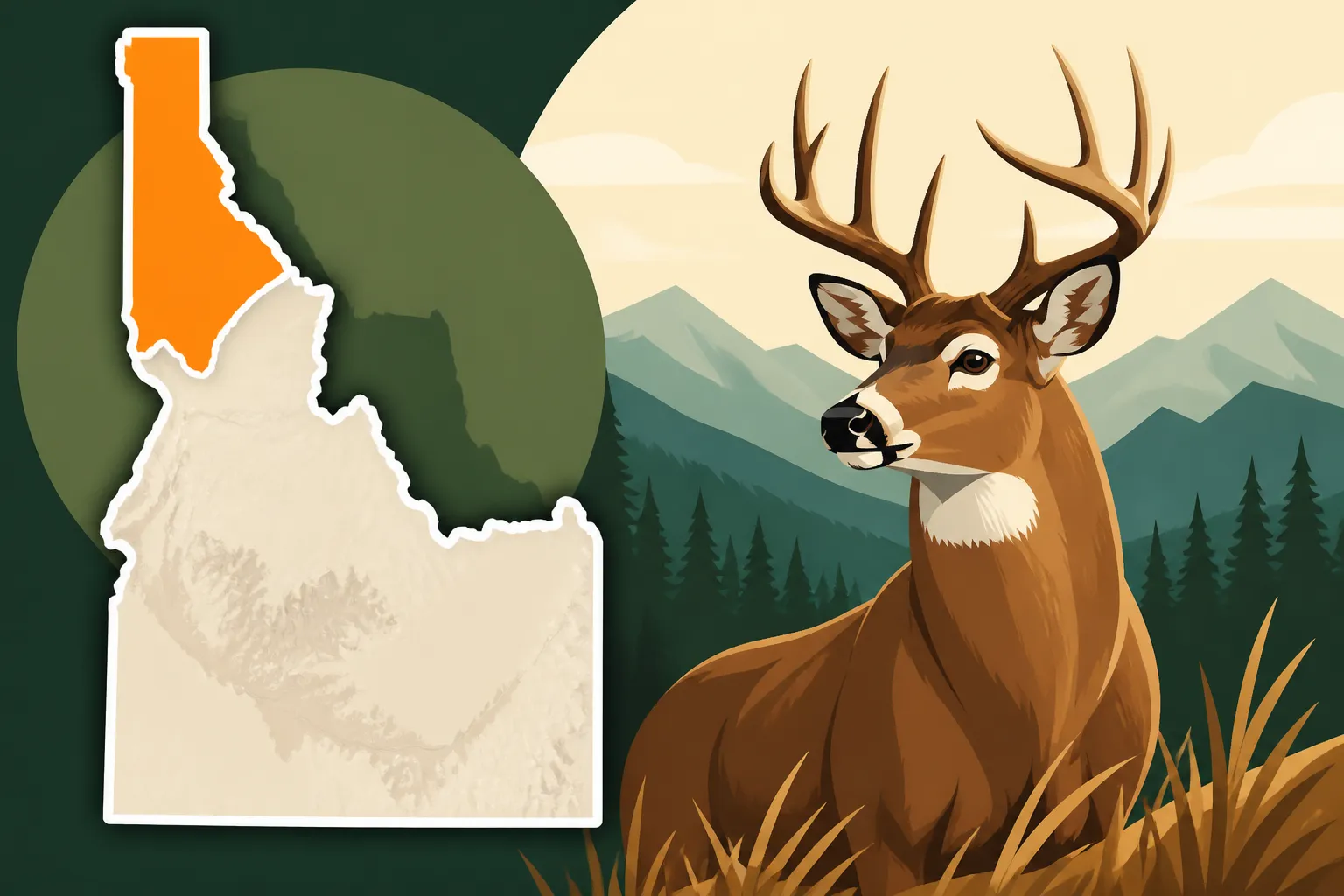
The northern Panhandle is truly where Idaho's whitetail population thrives, boasting some of the best whitetail hunting in the entire West. This isn't by accident; the landscape here is perfectly sculpted for these adaptable deer. We're talking about a mix of dense, old-growth timber, recovering clear-cuts, and a surprising amount of small, tucked-away agricultural fields. These features combine to create an ideal environment that offers both abundant food and crucial escape cover.
Counties like Boundary, Bonner, Kootenai, Shoshone, Benewah, and Latah are particularly known for their robust whitetail numbers. If you look at a map, you'll see a tapestry of heavily forested mountains, crisscrossed by river bottoms and smaller drainages. These river corridors, often lush with deciduous trees and thick undergrowth, act as natural highways for deer, providing cover and forage. Many hunters find that focusing on the transition zones between dense timber and the smaller agricultural pockets can be incredibly productive, especially during the colder months when deer are drawn to accessible food sources. This area experiences distinct seasons, with significant snowfall often pushing deer into these lower, food-rich areas, which can concentrate them and make scouting easier, albeit sometimes more challenging to access. The hunting pressure, while present, often feels less intense than in some of the more renowned elk or mule deer units, allowing for a more serene experience for the dedicated whitetail hunter.
Southward Expansion and Habitat Transitions
While the Panhandle is the traditional heartland, whitetail deer are certainly not static, and their populations have shown a tendency to expand southward into areas that historically might have been considered primarily mule deer or elk country. This expansion is often subtle, occurring in pockets where habitat conditions align with their preferences, even if the broader landscape looks different.
You'll find these whitetail outposts in river drainages and creek bottoms further south, particularly in regions bordering the Clearwater National Forest. These areas, while predominantly home to mule deer and elk, can offer unique opportunities for hunters willing to scout thoroughly. The whitetails in these transitional zones tend to stick to the thickest cover available, often preferring the dense riparian areas along rivers like the Salmon or Clearwater, where they can find sanctuary amidst a more open, rugged landscape. They utilize these dense, brushy corridors as safe havens and travel routes, rarely venturing far into the exposed slopes favored by mule deer.
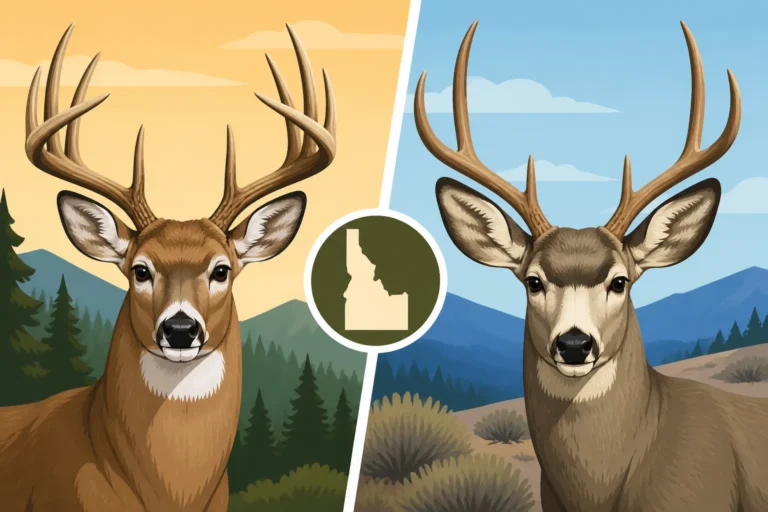
Hunting these fringe areas presents a different kind of challenge. You might be glassing wide-open hillsides for mule deer, only to stumble upon a whitetail buck slinking through a brushy draw near a water source. It requires a mental shift, reminding yourself that not every set of tracks or glimpse of a deer is necessarily a mule deer. The opportunities are there for the adaptable hunter who understands that Whitetail and Mule Deer Tags Are Not Interchangeable, and who is willing to put in the time to understand the micro-habitats that attract whitetails in an otherwise "mule deer" landscape. Using detailed mapping tools, like those offered by GoHunt, can be invaluable for identifying these nuanced habitat features, pinpointing small pockets of dense cover or water sources that might hold whitetails even outside their primary range.
Prime Habitat Characteristics for Idaho Whitetails
Understanding the whitetail's preferred habitat is paramount to finding success in the field. These aren't creatures of wide-open spaces; they are masters of concealment and thrive where cover, food, and water are abundant and intermingled.
Dense Cover and Escape Routes
Whitetails are inherently security-minded animals, and their lives revolve around dense cover. In the Idaho Panhandle, this means they often call the thickest, nastiest timber and brushy draws their home. Imagine impenetrable cedar thickets, dense stands of fir and pine, and riparian zones choked with dogwood, alder, and willow. These aren't just places to hide; they are sanctuaries where deer feel safe from predators like wolves and mountain lions, as well as from human hunters.
These dense areas provide thermal cover, protecting deer from harsh winter winds and heavy snow, and offering cool shade during warm early-season days. Beyond just hiding, this cover creates intricate networks of escape routes. A whitetail, when spooked, won't just run across an open field; it will vanish into a labyrinth of brush, using every twig and branch to break up its outline and evade detection. Hunters focusing on still hunting or setting up stands often prioritize identifying these dense bedding areas and the narrow funnels of cover that connect them to feeding grounds. Knowing that whitetails will stick to the timber, rather than venturing into more exposed areas, is key to developing effective Hunting Whitetails in Northern Timber Country strategies. For example, focusing on saddles or benches within these thick forests, where deer might naturally pause or change direction, can be incredibly effective.
Food Sources and Agricultural Influence
While cover provides security, consistent food sources are what truly anchor whitetail populations to an area. Idaho Panhandle whitetails have a diverse diet, adapting to what's available throughout the year. During spring and summer, they feast on lush forbs, succulent grasses, and the new growth of various browse species. As fall approaches and into winter, their diet shifts to more woody browse, mast crops like acorns (where available), and any lingering herbaceous plants.
The presence of agriculture within or bordering these timbered landscapes is a game-changer. Small-scale farms growing alfalfa, winter wheat, or other grain crops create irresistible magnets for whitetails. These agricultural fields offer a concentrated, highly nutritious food source that deer will travel to, especially under the cover of darkness. The edges where these fields meet dense timber are absolute hotspots for scouting and hunting. Deer will often stage just inside the timber, waiting for dusk before venturing out to feed, and then retreat back to the safety of the trees at dawn. Identifying these timber-to-ag interfaces, particularly those with good cover leading in and out, can dramatically increase your chances of success. Old logging cuts also provide a buffet of new growth and regenerating browse that whitetails absolutely relish, making these areas worth exploring, especially a few years after the initial harvest when the undergrowth is dense and palatable.
Navigating Idaho's Panhandle for Whitetails
Successfully hunting whitetails in Idaho's Panhandle isn't just about understanding the deer; it's about understanding the land itself. From selecting the right unit to knowing how to access public and private ground, strategic navigation is crucial.
Key Game Management Units (GMUs) to Consider
Idaho operates under a system of Game Management Units (GMUs), and understanding which ones are known for strong whitetail populations is your first step. While Idaho Runs 99 Game Management Units across the state, for whitetails, your focus should narrow significantly to the northern reaches.
Units 1, 2, 3, 4, 5, 6, 7, 9, and 10A are typically considered prime whitetail country in the Panhandle. These units often feature the ideal mix of dense timber, varied topography, and pockets of agricultural land that whitetails favor. Units like 1 and 2, up near the Canadian border, are renowned for their rugged, heavily timbered terrain and consistently produce good numbers of deer. Units 3, 4, and 5, while still heavily forested, also integrate more agricultural interfaces. Units 6 and 7, particularly along the St. Joe River, offer diverse habitats. Unit 10A, further south in the Clearwater Region but still bordering the Panhandle, represents a transition zone where whitetails are present in good numbers within the river drainages.
When evaluating these units, look beyond just the boundary lines. Dive into the topography, the public vs. private land breakdown, and the road access. Tools like GoHunt's advanced mapping system can be incredibly helpful here. You can overlay public land data, identify drainages, pinpoint timber blocks, and even research historical harvest success rates for specific units. This allows you to really get a feel for an area before you ever set foot in it, narrowing down your choices to units that best match your hunting style and expectations for whitetail encounters.
Accessing Whitetail Country: Public and Private Land
One of the biggest hurdles, and sometimes advantages, in Idaho whitetail hunting is navigating land ownership. The Panhandle is a patchwork of public and private ground, and understanding how to access both is vital.
National Forests, such as the Idaho Panhandle National Forests, make up a significant portion of public land in the region. These lands offer vast expanses for hunting, but they can be rugged, remote, and often require significant effort to access, whether on foot or with an ATV on designated trails. Learning Hunting Idaho's National Forests and BLM Ground is essential. While these areas can be challenging, they also tend to hold less hunting pressure in their deeper reaches, offering a more wilderness-like experience. When planning to hunt National Forest lands, always check motor vehicle use maps (MVUMs) to understand which roads are open or closed seasonally, as these can drastically affect access, especially later in the season.
Private timber company lands are also prevalent in the Panhandle. Many of these companies allow public access, sometimes for a fee or through a permit system, while others require explicit permission. It's crucial to research the specific company and its policies before venturing onto their land. Respecting posted signs and company regulations is paramount to maintaining these access opportunities for all hunters.
Finally, Idaho's "Access Yes" program is a fantastic resource that connects hunters with private landowners willing to open their property for hunting, often in exchange for a lease payment from the state. Access Yes Opens 328,000 Private Acres in Idaho and can provide excellent opportunities, especially on lands bordering agricultural fields that might otherwise be inaccessible. Checking the Idaho Fish and Game website for updated Access Yes properties each year is a smart move, as these parcels can change. Always remember to secure proper permission for any private land, whether through Access Yes or directly from a landowner. This not only keeps you legal but also builds goodwill and ensures future opportunities.
| Panhandle County | Primary Habitat | Public Land Percentage (Approx.) | Key Whitetail Features |
|---|---|---|---|
| Boundary | Dense Timber, River Bottoms, Agriculture | 60-70% | High density, rugged terrain, cold weather |
| Bonner | Mixed Timber, Lakes, Agriculture | 50-60% | Good mixture of public/private, varied terrain |
| Kootenai | Timber Pockets, Urban Fringe, Agriculture | 30-40% | More private, but strong numbers on fringes |
| Shoshone | Steep Timbered Mountains, River Valleys | 80-90% | Very rugged, remote, strong timber deer |
| Benewah | Rolling Hills, Timber, Agriculture | 40-50% | Good opportunities on private land edges |
| Latah | Mixed Forest, Agriculture | 30-40% | Strong numbers in timbered draws near farms |
Whitetail Hunting Strategies Tailored for Idaho's Panhandle
Hunting whitetails in the dense, often steep, terrain of Idaho's Panhandle requires a different approach than what you might be used to in flatter, more open country. It's less about long-range glassing and more about intimate knowledge of the deer's habits and habitat.
Still Hunting and Stand Hunting in Timber
Still hunting is an art form when pursuing whitetails in the Panhandle's thick timber. It's about moving incredibly slowly, pausing frequently, and using your eyes and ears to detect the slightest sign of a deer. Think of it as stalking, but with a more deliberate, patient pace, covering ground in a way that minimizes disturbance. The goal is to spot the deer before it spots you, often catching just a flicker of an ear, a patch of hide, or a horizontal line in a vertical world. This method is particularly effective when working into the wind through known bedding areas or along heavily used travel corridors. You'll be constantly on the lookout for fresh tracks, rubs, and scrapes, which are all indicators of recent deer activity. When you encounter fresh sign, slow down even further, becoming hyper-aware of your surroundings. Still Hunting Timber for Bedded Mule Deer principles can be easily adapted here, focusing on the distinct cover whitetails prefer.
Stand hunting, whether from a tree stand or a ground blind, is another highly effective strategy, especially around food sources or natural funnels. Identifying strategic locations means scouting for areas where deer movement is concentrated. This could be a narrow saddle between two ridges, a timbered pinch point between agricultural fields, or a thicket bordering a water source. Many hunters use trail cameras to pattern deer movement to and from these areas, helping them determine the best time to be on stand. It's often most productive during the early morning and late evening hours when deer are most active, or during the rut when bucks are cruising for does. Remember, the dense cover in the Panhandle means your shooting lanes will often be very limited, so practice shooting in tight quarters and at varying distances beforehand.
Rut Timing and Activity Patterns
The whitetail rut is a magical time for hunters, and understanding its timing and associated activity patterns is crucial for success. In Northern Idaho, the whitetail rut typically kicks off in early to mid-November, often peaking around the second or third week of the month. However, like any natural event, it can fluctuate slightly based on weather conditions, with cold snaps sometimes intensifying activity. Knowing When Whitetail Rut Dates Fall Up North allows you to plan your hunt for the optimal period.
During the pre-rut, bucks become more active, making scrapes and rubs to mark their territory and communicate with does. This is an excellent time to focus on travel corridors and the edges of bedding areas. As the rut intensifies, bucks will be actively cruising for does, often covering significant ground. This means they are more vulnerable to being seen during daylight hours, making still hunting through timber or sitting on a well-placed stand near doe bedding areas highly effective. Bucks can become so focused on breeding that they let their guard down, presenting opportunities you wouldn't get at other times of the season. Pay close attention to subtle deer sign, even if it's not a fresh scrape. Knowing how to interpret Reading Fresh Elk Sign in Dark Timber for deer can give you an edge, as deer, much like elk, leave behind a story in their tracks, droppings, and browse lines. The key is patience and persistence; be in the woods when the deer are moving, and often that means being there all day during the peak of the rut.
Challenges and Considerations for Panhandle Whitetail Hunters
Hunting whitetails in the Idaho Panhandle is a rewarding experience, but it's not without its unique set of challenges. Being prepared for these obstacles can mean the difference between a successful hunt and a frustrating one.
Predator Presence and Management
Idaho is home to a robust population of large predators, and the Panhandle is certainly no exception. Wolves, mountain lions, and black bears all share the same habitat as whitetail deer, and their presence significantly influences deer behavior and populations. Wolves, in particular, have a well-documented impact on ungulate populations. Just as How Wolves Changed Idaho Elk Numbers over the years, they also exert pressure on deer, making them more wary and often more nocturnal.
This elevated predator pressure means whitetails in the Panhandle are often exceptionally spooky. They rely heavily on their dense cover, moving cautiously and being quick to vanish at the first sign of danger. Hunters need to adjust their tactics accordingly, emphasizing stealth, wind management, and patience. You might find deer bedding in even thicker, nastier spots than you'd expect, simply because they feel the constant threat from predators. While predator management efforts are ongoing in Idaho, as a hunter, understanding that deer are constantly on alert due to these threats will shape your approach to tracking, calling, and stand placement. It reinforces the need to make every move deliberate and calculated, knowing that the deer's survival instincts are finely tuned.
Weather and Terrain Difficulties
The Idaho Panhandle's weather and terrain are formidable partners in creating a challenging hunting experience. The region is known for its rugged, mountainous landscape, characterized by steep slopes, deep canyons, and dense timber that can be incredibly difficult to navigate. This isn't flat farm country; expect to climb, descend, and traverse uneven, often brush-choked ground. A single day of hunting can involve thousands of feet of elevation gain and loss. This kind of terrain demands serious Physical Conditioning for Idaho Backcountry.
Beyond the physical demands of the land, the weather can be equally unforgiving. Hunting season, particularly into late fall and early winter for whitetails, often brings cold temperatures, frequent rain, and significant snowfall. Wet snow can quickly soak through gear, and icy conditions can make steep trails treacherous. Being prepared for rapidly changing weather is non-negotiable. This means investing in high-quality, waterproof, and breathable outerwear, layering effectively, and having reliable navigation tools. Hypothermia is a real concern in this environment if you're not properly equipped and prepared for the conditions. Additionally, snow can make tracking easier but also make travel more difficult, sometimes limiting access to certain areas entirely as roads become impassable. Always check local weather forecasts and road conditions before heading out, and be ready to adapt your plans.
Disclaimer
Please note: Hunting regulations, seasons, and access rules in Idaho are subject to change. Always consult the most current Idaho Fish and Game regulations and local land management agency rules before planning and engaging in any hunting activities. This content is for informational purposes only and does not constitute legal advice or an official interpretation of hunting laws.