Still Hunting Timber for Bedded Mule Deer
Hunting bedded mule deer in Idaho’s dense timber can feel like an impossible task, a constant battle against noise, scent, and the deer’s uncanny ability to vanish. Many hunters focus solely on glassing open hillsides, only to be frustrated when those visible deer melt into the shadows. This guide will help you understand the art of still hunting, a patient and methodical approach to finding those elusive bedded bucks hidden deep within the forest, turning what seems like an impenetrable fortress into your hunting ground.
The Elusive Nature of Bedded Mule Deer in Idaho Timber
When you think of mule deer, often the image that comes to mind is a buck silhouetted on a sagebrush ridge. But in Idaho, especially once hunting pressure starts or the weather changes, many mule deer bucks seek refuge in the thick, often steep, timbered areas. This preference isn't arbitrary; it's a calculated survival strategy.
Why Mule Deer Choose the Dark Timber
Mule deer bed in timber for a combination of security, thermal regulation, and escape cover. Unlike elk, which might openly graze in clearings, mule deer, especially mature bucks, are masters of concealment. The dense canopy offers a visual barrier from aerial predators and distant hunters. It also acts as a natural insulator. In the early archery seasons, thick timber provides shade and cooler temperatures during the heat of the day. As the season progresses into colder rifle hunts, these same stands of trees offer shelter from biting winds and falling snow, helping deer conserve energy. This is a stark contrast to the high-desert glassing opportunities often associated with mule deer, demanding a completely different approach from hunters.
Identifying Prime Bedding Locations
Not all timber is created equal when it comes to bedding. Mule deer are particular, seeking spots that offer both maximum concealment and strategic advantages for escape. You'll often find them on ridge fingers or points that offer a commanding view of the terrain below, allowing them to see danger approaching from a distance. Saddles, especially those that act as natural travel corridors between drainages, are also key. North-facing slopes, with their typically denser vegetation and cooler microclimates, are favored during warmer periods. Look for pockets of old-growth timber, blowdown thickets, or areas with dense underbrush – these are the natural fortresses where a buck feels safest. Understanding how elevation plays a role is crucial; deer will often bed higher up to catch thermals or to simply put more terrain between themselves and potential threats.
Reading the Sign and Interpreting Deer Behavior
Before you even begin to still hunt a piece of timber, you need to know if deer are using it. Fresh sign is your roadmap. Old beds, distinct depressions in the leaves or pine needles, tell you deer have been there, but a truly fresh bed, still warm or with undisturbed dew around it, means a deer was recently there, and could still be close. Look for fresh tracks, especially larger ones, which can indicate a buck. Rubs on small trees and scrapes in the dirt are clear indicators of a buck's presence, particularly during the pre-rut and rut phases. The condition and location of these signs can help you interpret deer behavior – are they just passing through, or are they living in this timber? By studying these clues, you can determine if a particular timber patch warrants a slow, methodical still hunt or if you should move on.
Mastering the Fundamentals of the Still Hunt
Still hunting is a practice in patience and acute observation. It’s not about covering ground quickly; it’s about moving so slowly and deliberately that you become part of the environment, giving yourself the best chance to spot a deer before it spots you.
The "Stop, Look, and Listen" Mantra
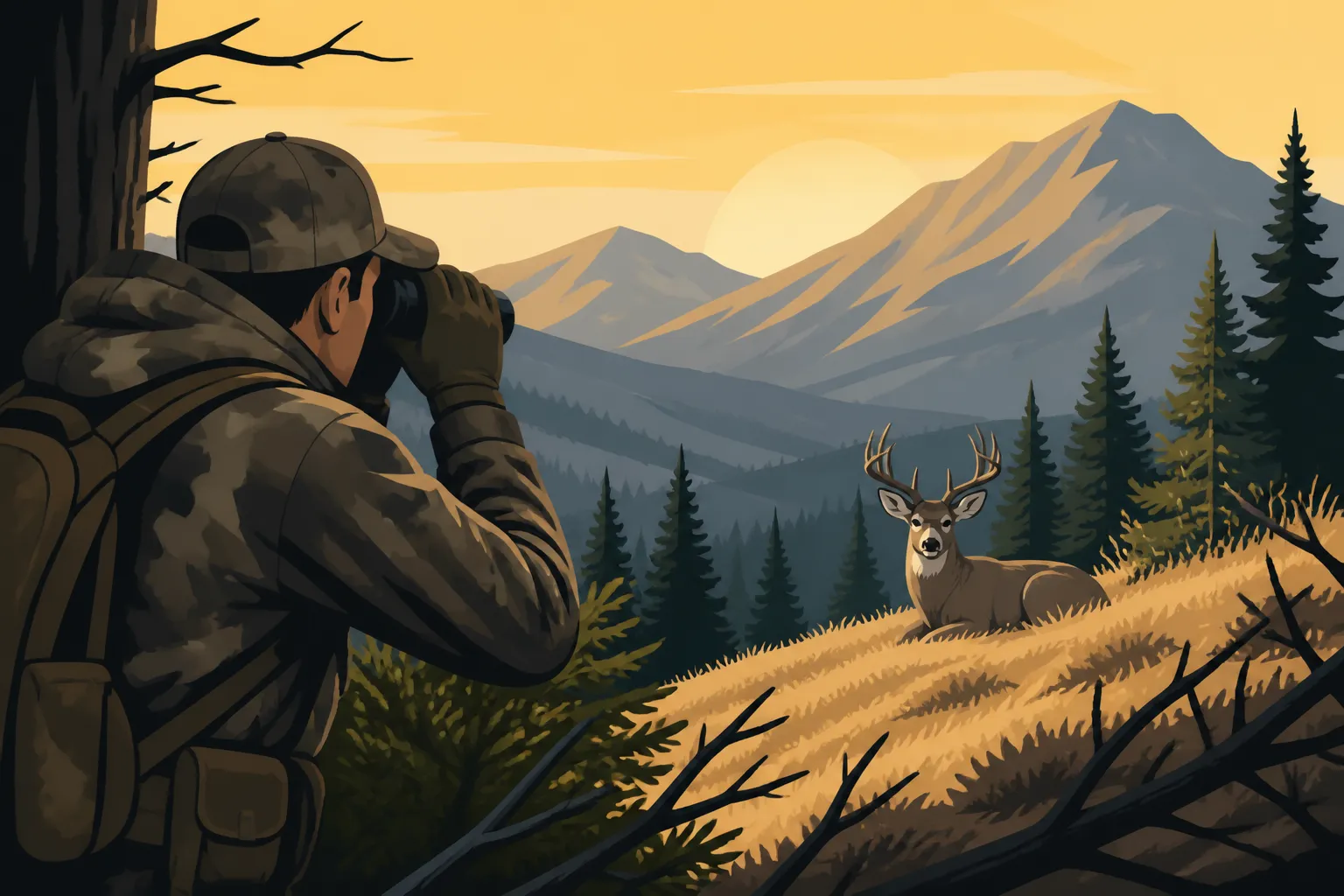
This is the golden rule of still hunting. The process is simple: take five to ten slow, deliberate steps, then stop. Stand motionless for at least three to five minutes, sometimes even ten, and sometimes longer. During this time, don’t just casually glance around. Actively scan every inch of your surroundings. Train your eyes to look for unnatural shapes: a horizontal line in a vertical forest, the flick of an ear, a patch of dark hide contrasting with the bark, or the subtle curve of an antler. Use your binoculars – yes, even in thick timber, they are invaluable for picking apart shadows and dense cover. Listen for the faintest sounds: a twig snapping, a squirrel chattering, a raven’s call. These seemingly small details can often betray the presence of a bedded animal. It's about letting your brain process the forest in layers, not just seeing a wall of trees.
The Critical Role of Wind and Thermals
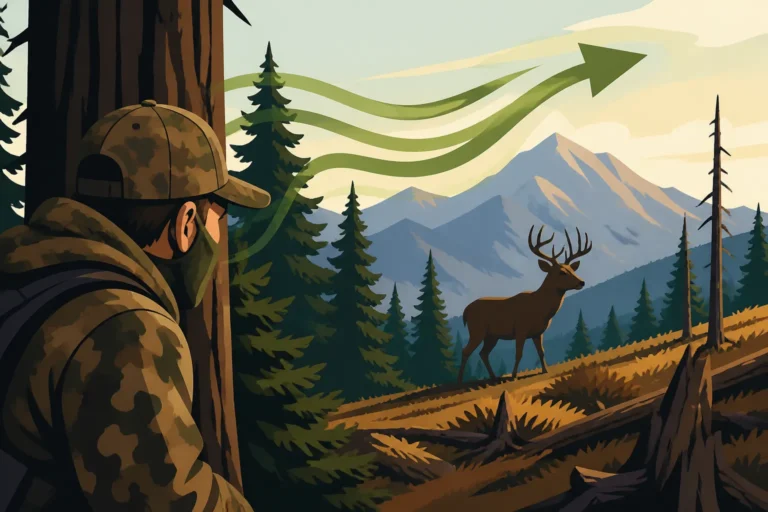
Of all the senses a mule deer possesses, its sense of smell is arguably the most potent. Ignore the wind, and your hunt is over before it begins. Always hunt into or across the wind. In Idaho's steep, broken country, wind can be incredibly tricky. Mornings often see thermals (air currents) rising as the sun warms the slopes, pulling your scent uphill. In the evenings, as the air cools, thermals will fall, carrying your scent downhill. This means that if you’re hunting uphill in the morning, your scent could be rising directly towards bedded deer above you. Conversely, in the evening, hunting downhill means your scent is falling ahead of you. Understanding and actively using these wind and thermal patterns is paramount. Carry a small squeeze bottle of powder or a milkweed pod to frequently check the subtle air currents, especially when navigating terrain features. Ignoring these environmental cues is a common mistake that leads to busted animals. If you want to dive deeper into this, check out our piece on Reading Wind in Steep Timbered Country.
Equipping Yourself for Silent Movement
Your gear can make or break a still hunt. The goal is to be as quiet as possible. This means choosing clothing made of soft, quiet fabrics like wool or fleece, avoiding noisy synthetics that rustle with every step. Layering is key for adaptability to changing temperatures without excess bulk. Footwear should be quiet and offer good grip for navigating uneven terrain; soft-soled boots are often preferred over stiff, heavy hiking boots. Beyond clothing, consider how you carry your rifle or bow. Slings can rub and make noise, so practice carrying your weapon in a way that minimizes sound while allowing for a quick, silent shot. Minimize anything that dangles or clanks on your pack or clothing. Even a zipper pull can be a loud giveaway in the quiet woods.
Advanced Tactics for Idaho's Varied Timberlands
Idaho's timber isn't uniform. From the vastness of the Panhandle National Forests to the high-elevation stands in the Salmon-Challis, each forest type presents unique challenges and opportunities for the still hunter.
Navigating Different Forest Types
Idaho offers a diverse tapestry of timber, each requiring a slightly different approach. In more open Ponderosa pine forests, visibility is often better, but the ground can be covered in noisy pine needles. Your "stop and stare" sessions might need to be longer, and your steps even more careful. Lodgepole pine stands, on the other hand, can be incredibly dense, with limited visibility and often a lot of downed timber. Here, patience is a virtue, and your ability to pick apart shadows with your binoculars becomes critical. Thick fir stands and aspen groves also present their own challenges, with dense foliage in the fir and often noisy dry leaves in the aspen. Identifying areas with heavy blowdowns can be a goldmine, as deer love the cover, but moving through them silently requires immense effort and often a willingness to crawl. On mapping applications like those from GoHunt, you can often discern different timber densities, guiding your e-scouting process.
Leveraging Topography and Natural Funnels
Understanding how deer use the terrain in timbered country is key to effective still hunting. Draws and small ravines often act as natural travel corridors, especially when deer are moving between feeding and bedding areas. Benches along steep hillsides are favored bedding spots, offering a flat surface within steep terrain. Ridges provide high ground and often easier travel. When still hunting, try to use these features to your advantage. For instance, hunting into the wind up a draw in the morning can put you in a prime position as deer may be dropping down to feed or water. Conversely, hunting down a ridge in the evening with falling thermals can be effective. Consider how to use these natural funnels to predict where a deer might be bedded or moving, minimizing the ground you have to cover blindly. For more insights on this, read up on Playing Wind Direction on a Timbered Stalk.
The Power of Persistent Glassing Even in Timber
Many hunters reserve their binoculars for open country, but this is a critical oversight in timbered terrain. Even in dense timber, judicious use of optics is a game-changer. Rather than just scanning, pick apart every dark shadow, every tangle of branches, every patch of dense cover. Look for the subtle details: the horizontal line of a back, the deep brown of an eye, the outline of an ear, or the glint of an antler. A good pair of 10x binoculars, like those from Kowa or Vortex, used methodically, can reveal a bedded deer that would be completely invisible to the naked eye. Scan an area, then rest your eyes, then scan again. Sometimes, it’s the third or fourth pass that reveals the animal. Remember, you're not looking for a whole deer, but rather pieces of a deer that don't quite fit the natural environment.
| Timber Type | Characteristics | Still Hunting Strategy | Key Challenge |
|---|---|---|---|
| Ponderosa Pine | Open understory, noisy needle floor, sparse cover | Longer stops, meticulous scanning, focus on shadows, quiet foot placement. | Noise on pine needles, limited dense cover |
| Lodgepole Pine | Dense growth, often thick underbrush, blowdowns | Very slow movement, binoculars for picking apart details, navigate blowdowns carefully. | Extreme density, poor visibility, tangled obstacles |
| Fir/Spruce | Dense canopy, dark, often steep terrain | Focus on benches and ridge fingers, utilize thermals, look for contrasting colors. | Low light, steepness, deep shadows |
| Aspen Groves | Open understory, noisy dry leaves, uniform trees | Even slower steps, listen for movement, scan for vertical lines that break uniformity. | Noisy leaf litter, uniform visual pattern |
| Blowdowns | Extreme cover, tangled logs, difficult movement | Cautious crawling/climbing, pinpoint approach, use wind to your advantage. | Navigating obstacles silently, limited line of sight |
Strategic Considerations and Common Pitfalls
Successful still hunting isn't just about technique in the woods; it starts long before you set foot on the trail. Strategic planning and avoiding common errors can significantly increase your odds.
E-Scouting and Planning Your Route
The best still hunt begins in front of a computer screen. Use advanced mapping tools, such as those integrated into platforms like GoHunt, to e-scout potential timbered bedding areas. Look for the "dark spots" on satellite imagery that indicate dense, mature timber, especially on north-facing slopes or along ridge lines. Pay attention to how these timber patches relate to open feeding areas or water sources. Identify natural funnels, pinch points, and potential escape routes. Plot your approach and exit strategies, always considering the prevailing wind patterns and thermals. Understanding the terrain, public land boundaries, and potential access points before you go saves invaluable time and energy in the field. This systematic approach, similar to what's covered in E-Scouting an Idaho Unit Before the Season, is crucial for targeting your still hunting efforts.
Managing Human and Predator Pressure
Mule deer are incredibly adaptable, and they learn quickly. In units with high hunting pressure, deer will often seek out the nastiest, thickest timber they can find, areas most hunters are unwilling to penetrate. These are precisely the zones where a patient still hunter can find success. Recognize that deer in pressured areas will be even more wary. Their bedding choices will reflect a heightened need for security. Additionally, the presence of predators, particularly wolves, can influence deer behavior, pushing them into even denser cover for protection. While wolf predation typically impacts elk more severely, as discussed in How Wolf Predation Affects Elk Calf Survival, deer are also affected. When still hunting, be acutely aware of your surroundings, moving slowly enough to react to a deer that might be on high alert due to previous encounters with hunters or predators.
Knowing When to Give Up and Move On
One of the hardest lessons to learn in still hunting is knowing when to cut your losses. Not every patch of timber holds a deer, and sometimes, despite your best efforts, the conditions just aren't right. Spending an entire day still hunting a barren piece of woods is a wasted opportunity. If you've been meticulously still hunting for hours, conditions are good, and you've found absolutely no fresh sign, it might be time to move. Having backup plans is essential. Use your e-scouting intel to identify multiple potential timber pockets in your hunting area. Don't be afraid to leave one and try another. Persistence is key, but so is adaptability. Sometimes, the best strategy is to be patient with your movement in a spot, but impatient enough to change spots if the sign isn't there.
Disclaimer
Hunting is an inherently dangerous activity. This information is provided for educational purposes only and is not a substitute for professional guidance, thorough research of Idaho's current hunting regulations, or hands-on training. Always prioritize safety, respect wildlife, and adhere to all local, state, and federal laws.