Idaho Turkey Hunting Units
One of the biggest head-scratchers for us turkey hunters is figuring out where to even begin in a state as diverse as Idaho. It's not like every square mile holds a flock of Merriam's just waiting for a call. Understanding Idaho's specific turkey hunting units and how they differ is absolutely critical to putting a gobbler in your vest, and this guide is here to break down the ins and outs of deciphering those units to find your next bird.
Understanding Idaho's Turkey Zones and Units
Idaho's hunting regulations can feel like a labyrinth, especially when you're trying to pinpoint where to chase a wily tom. For turkey hunters, it's not as simple as drawing a line across the state and saying "go for it." The state is carved up into Game Management Units (GMUs), and while many of these units are open for general turkey seasons, others might have specific controlled hunts, different season dates, or particular weapon restrictions. Missing these details can mean a wasted trip or, worse, a violation.
The Basics of Idaho's Unit System for Turkey
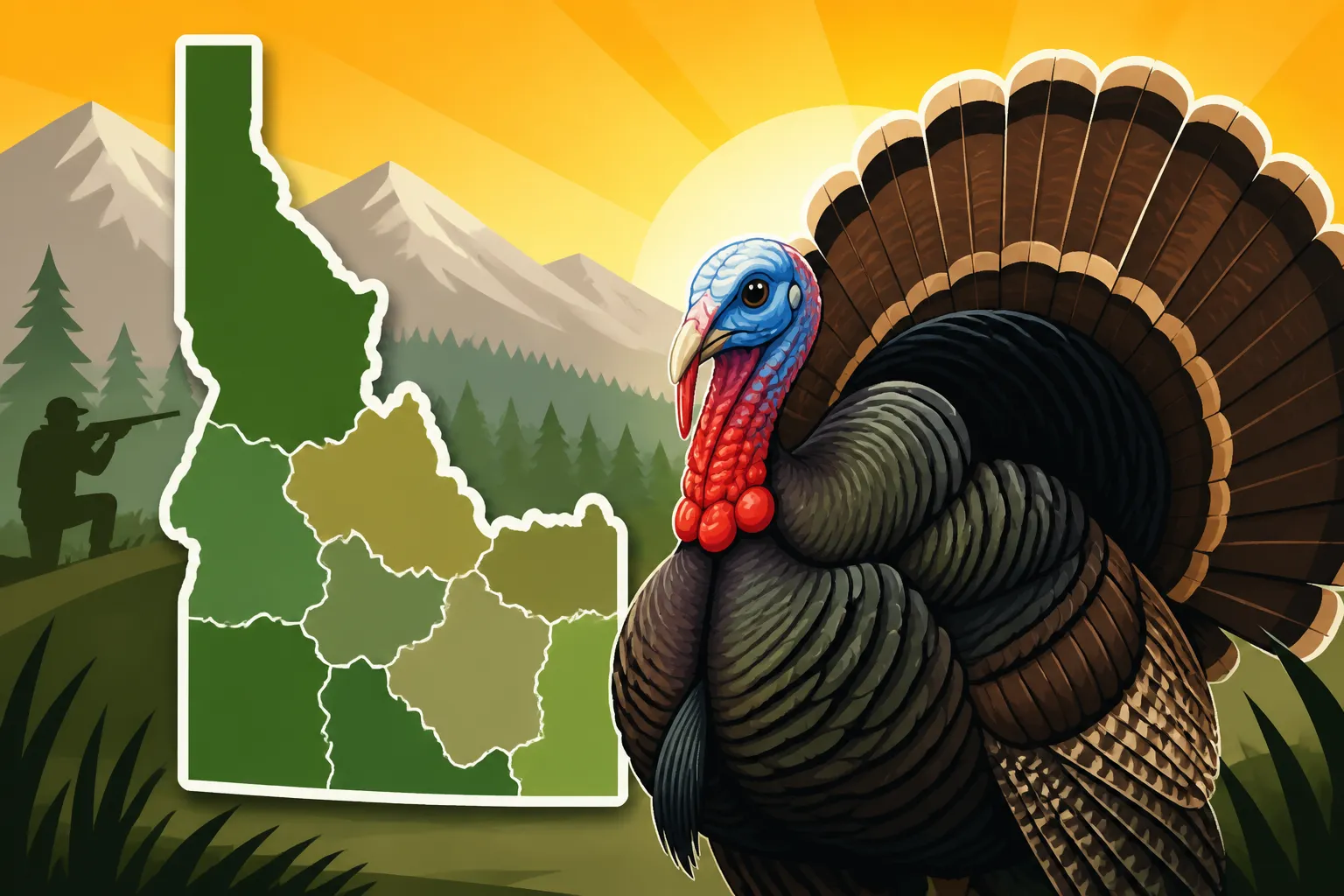
Idaho breaks down its turkey hunting areas into a combination of zones and individual Game Management Units (GMUs). Think of zones as larger, umbrella regions, often encompassing several GMUs, and these zones usually have a broad set of regulations. However, within those zones, individual GMUs can have their own nuances. What's legal or open in one GMU might be different just across a road or river. This system allows the Idaho Department of Fish and Game (IDFG) to manage turkey populations more precisely, responding to local conditions like population density, habitat health, and hunting pressure. You might find units that are general season, meaning you can buy an over-the-counter tag and hunt during the specified dates. Then there are controlled hunt units, which often require an application and a drawing, typically offering better odds or a more exclusive experience, sometimes even longer seasons in specific, high-demand areas. It's truly a puzzle you need to solve before you ever step foot in the woods.
When you're looking at turkey units, it's also vital to consider the turkey subspecies that inhabit them. Idaho is primarily known for its Merriam's turkeys, especially in the timbered mountains of the north. However, you'll find pockets of Rio Grandes in the river bottoms and agricultural interfaces, particularly in southern Idaho. There are even rumors of Eastern-Merriam's hybrids in some areas, though these are less common. Understanding which subspecies you're likely to encounter can influence your calling tactics and scouting approach. A Merriam's in vast national forest timber behaves differently than a Rio Grande roosting over a creek bottom adjacent to a hayfield. The unit boundary lines often reflect these ecological distinctions, guiding you to the right habitat for your target bird.
Navigating the Idaho Hunt Planner for Turkey Units
The Idaho Fish and Game website is your first and most important stop. They have a fantastic, albeit sometimes overwhelming, resource called the Idaho Hunt Planner. This tool is where you can dive deep into the specific units. You'll want to start by selecting "Turkey" as your species and then narrow it down by season (spring or fall). Once you do, you'll see a map of Idaho highlighting all the units, often color-coded to indicate general seasons versus controlled hunts. Clicking on an individual unit will bring up a wealth of information: the specific dates, legal weapons, bag limits, and any special restrictions that apply to that particular piece of ground.
This is also where a tool like GoHunt can really shine, integrating a lot of this public data into a more user-friendly interface that can help you cross-reference unit information with historical harvest data and public land percentages. It’s about leveraging every available resource to paint a complete picture. You’ll be able to see not just if a unit is open, but what the typical success rates are, how much public land is available, and even road access points. Remember, the regulations can change year to year, so always check the most current year's proclamation before planning your trip. A unit that was a general season last year might be a controlled hunt this year, or vice versa, and getting caught unaware is a surefire way to ruin your hunt. The Idaho Hunt Planner Is the Tool to Start With for all your planning needs, and it will be your best friend in preparing for any Idaho hunt.
| Region | Primary Turkey Subspecies | Typical Habitat | Common Challenges |
|---|---|---|---|
| Northern Idaho | Merriam's | Dense timber, mountainous terrain | Vastness, timbered stalks, weather |
| Central Idaho | Merriam's / Hybrid | Mixed timber, riparian areas | Varied terrain, scattered populations |
| Southern/Eastern | Rio Grande | River bottoms, agricultural edges | Private land access, wary birds |
Key Idaho Regions for Turkey Hunting
Idaho's landscape is incredibly diverse, and so are its turkey habitats. What works for finding a gobbler in the panhandle might be completely different from chasing one in the southeastern river bottoms. Knowing the general characteristics of these regions can help you narrow down your unit choices and tailor your hunting approach before you even leave the driveway.
Northern Idaho's Timbered Merriam's Territory
When most folks think about Idaho turkey hunting, their minds often drift to the expansive timberlands of northern Idaho, encompassing regions like the Panhandle and Clearwater. This is prime Merriam's country, where the gobblers often roost high in towering Ponderosa pines and roam through mixed conifer forests. The units up here are characterized by dense tree cover, steep topography, and vast tracts of national forest land. You'll find yourself navigating deep draws, climbing ridge lines, and calling across canyons that echo with potential answers. The challenge here isn't necessarily finding a turkey, but finding one that's willing to commit in such vast, often rugged, terrain.
Hunting in these northern units demands a good pair of boots and a willingness to cover ground. Turkeys here are often widely dispersed, requiring a lot of walking, listening, and locator calling. They can be incredibly responsive on the roost but might travel significant distances once on the ground. You'll often be working through dark timber, and clearings can be few and far between, which makes setting up for a shot critical. Scouting often involves driving forest service roads, listening for distant gobblers at dawn, and looking for signs like tracks, droppings, and dusting bowls. Understanding the behavior of Merriam's Turkey Through the Northern Timber is absolutely essential for success in this region, as their patterns differ greatly from other subspecies.
Central Idaho's Mixed Habitat and Potential Hybrid Zones
Moving south into central Idaho, you encounter a transition zone that offers a unique blend of habitats and, potentially, different turkey dynamics. Units in this region might feature a mix of conifer forests, aspen groves, sagebrush hillsides, and riparian corridors along rivers and streams. This varied landscape can be home to Merriam's turkeys, but there's also the possibility of encountering hybrid birds, especially where their ranges might overlap with Rio Grandes pushing north or spreading from other drainages. This mix can create unpredictable patterns, but also exciting opportunities for hunters who are adaptable.
The hunting experience in central Idaho units often requires a more versatile approach. You might find yourself calling across open sagebrush flats in the morning and then pursuing a gobbler through dense timber in the afternoon. Access can be a mix of public and private land, so having a good mapping application like one found through GoHunt is invaluable for identifying land boundaries. Turkeys in these areas might utilize different food sources depending on the season and local conditions, from Ponderosa seeds to insects in open meadows. Success often hinges on being able to read the terrain and adapt your calling and stalking strategies to whatever habitat the birds are currently using.
Southern and Eastern Idaho's River Bottoms and Agricultural Edges
Head further south and east in Idaho, and the landscape shifts dramatically towards arid plains, but major river systems like the Snake River, and irrigated agricultural lands, create vital oases for turkeys. Here, you're more likely to find Rio Grande turkeys, though some Merriam's populations can still exist in higher elevation timbered areas. These birds thrive in the cottonwood bottoms, dense willow thickets, and brushy draws adjacent to fields of corn, alfalfa, or wheat. These units can be highly productive, but they also come with their own set of challenges, primarily related to access.
Much of the prime turkey habitat in southern and eastern Idaho is on private land, which means securing landowner permission is often the key to a successful hunt. Even on public lands, such as Bureau of Land Management (BLM) ground or state lands, access can be spotty or limited to narrow strips along river corridors. You'll spend less time climbing mountains and more time navigating thick cover, trying to get in front of birds that often have their routines tied to agricultural cycles and river systems. Hunting these areas often involves patiently scouting for roost sites, observing patterns of movement from fields to river bottoms, and being prepared for sharp-eyed birds that are accustomed to human activity. Remember, programs like Access Yes Opens 328,000 Private Acres in Idaho can be a huge benefit for finding huntable ground, though it's always critical to respect private property boundaries and regulations when Hunting Idaho's National Forests and BLM Ground.
Drawing and Tagging Strategies for Idaho Turkey Units
Once you've wrapped your head around Idaho's diverse turkey habitats, the next step is to understand how to actually get a tag and which type of tag is best for your hunting goals. Idaho offers both general season tags and controlled hunt opportunities for turkeys, and choosing the right one can make all the difference in your hunt plan.
General Season Tags vs. Controlled Hunt Applications
For most turkey hunters, especially those new to the state or just looking for a straightforward hunt, a general season tag is the way to go. These are typically available over-the-counter and allow you to hunt a wide array of units during specified spring or fall seasons. The beauty of a general tag is its flexibility; you buy it, consult the current regulations for the units you're interested in, and you're good to go. This is ideal for those who prefer to scout on the fly or have a limited window to hunt, as you don't have to worry about draw odds or application deadlines. However, general units can also see more hunting pressure, especially on easily accessible public lands.
On the other hand, Idaho also offers controlled hunts for turkey in specific units. These hunts usually have limited tag quotas and require an application and participation in a drawing, often through a lottery system. Why would you go through all that hassle? Controlled hunts often offer a chance at higher quality hunting, potentially in areas with larger or less pressured turkey populations, or extended seasons. The trade-off is the uncertainty of drawing a tag and the strict application deadlines. If you're eyeing a particular unit known for exceptional turkey hunting, or looking for a hunt with fewer hunters, applying for a controlled hunt might be worth the effort. Always check the Idaho Controlled Hunt Calendar, April Through August for important dates if you decide to go this route. Remember, understanding whether you need a general or controlled hunt tag is paramount.
Factors to Consider When Choosing a Unit
Selecting the right unit involves more than just looking at a map and seeing a lot of green for public land. You need to dig deeper into several key factors to maximize your chances of success.
First, consider the balance between public and private land access. While vast tracts of national forest in northern Idaho offer seemingly endless public ground, much of the prime turkey habitat in other regions might be on private property. If you're committed to public land, you'll want to focus on units with a high percentage of national forest or BLM ground. However, don't dismiss private land entirely; if you're willing to do the legwork to secure permission, some of the best hunting can be found there.
Next, think about hunting pressure. Units that are easily accessible, close to population centers, or historically known for high success rates tend to draw more hunters. If you prefer a more solitary experience, you might need to look at more remote units or be willing to hike further into public land. Tools like GoHunt or the IDFG's own harvest statistics reports can give you insights into historical success rates and hunter numbers for specific units. Reading an Idaho Harvest Statistics Report can be invaluable for this, helping you understand where hunters are finding success and where the pressure might be concentrated. Also, consider the terrain. Are you physically prepared for steep, timbered mountains, or do you prefer the flatter, albeit thicker, river bottoms?
Finally, don't overlook logistics. How far are you willing to travel? What kind of camping options are available? Can you access the unit with your vehicle, or will it require a significant hike or even pack animals? All these considerations play into your overall hunting experience. The Idaho Hunt Planner, and specifically The Idaho Hunt Planner Map Center, can provide crucial information on roads, trails, and land ownership, which can be critical for E-Scouting an Idaho Unit Before the Season.
Season Timing and Turkey Behavior in Idaho Units
Timing is everything in turkey hunting, and Idaho's seasons, both spring and fall, offer different experiences. Understanding these differences and how turkey behavior changes with the calendar can dramatically improve your chances of success, no matter which unit you choose.
Spring vs. Fall Turkey Seasons
Idaho typically offers both spring and fall turkey seasons, each with its own character and challenges. The spring season, generally running from mid-April through May, is by far the most popular. This is when gobblers are actively breeding, strutting, and, most importantly for hunters, gobbling their heads off. The calls and decoys you use during the spring are designed to mimic hens or rival gobblers, exploiting the male bird's instinct to breed or defend his territory. This is the classic, run-and-gun, calling-intensive hunt that most turkey hunters dream about.
Fall turkey hunting, while less common, offers a completely different experience. Fall seasons usually open in September or October, and sometimes run through December, often coinciding with other Idaho Upland Bird Season Opening Dates. During the fall, the breeding season is over, and turkeys are primarily focused on feeding and regrouping into large flocks. Gobblers are less vocal, and calling strategies shift from breeding calls to more social, flock-reunion sounds like hen yelps and kee-kees. Instead of trying to attract a lonesome tom, you're often trying to locate a flock and then break them up, hoping to call them back together. This often involves more "still hunting" or stalking, similar to hunting deer. The choice between Spring Against Fall Turkey Seasons in Idaho depends entirely on your preferred hunting style and what you're hoping to experience.
Adapting Tactics to Different Unit Habitats
The habitat within your chosen unit will largely dictate your hunting tactics. This is where local knowledge, or good pre-season scouting, pays dividends. In the vast, timbered units of northern Idaho, you might find yourself employing a very mobile, "run and gun" approach. You'll move frequently, stopping to listen and broadcast locator calls (like a crow or owl call), hoping to elicit a shock gobble. Once you hear a bird, the challenge becomes closing the distance discreetly and setting up for a shot in the often-dense cover. This often means long hikes, careful navigation, and being ready to move quickly to cut off a bird that's on the move.
In contrast, units dominated by river bottoms and agricultural fields, particularly in southern Idaho, might call for a more patient, ambush-style hunt. Turkeys here often follow predictable patterns, moving from roost trees along the river to feeding areas in nearby fields. Your strategy might involve scouting heavily for roost trees, setting up before dawn, and waiting for the birds to pitch down. Or, if you've patterned them feeding, you might set up along a travel corridor between the feeding area and their roost. Decoys can be particularly effective in these more open settings. Understanding how terrain and vegetation shape turkey movement within a specific unit is key to putting yourself in the right place at the right time. Always consult the official regulations for specific Idaho Legal Shooting Hours for Big Game and turkey.
Disclaimer
This article is for general informational purposes only and does not constitute professional advice. Laws, prices and regulations vary by location and change over time. Consult a qualified professional for guidance on your specific situation.