Whitetail Harvest Numbers by Region
It's incredibly frustrating when you're trying to plan an Idaho whitetail hunt and all you hear are vague stories about "good hunting up north," without any real data to back it up. We all want to put in our time where it counts, and having a clear picture of whitetail harvest numbers by region can make all the difference. This guide is going to break down how to understand and use these regional statistics, helping you pinpoint potential hotspots and avoid unproductive areas, so you can make more informed decisions for your next season in the field.
Why Regional Harvest Data Matters for Your Idaho Whitetail Hunt
Just hearing that Idaho has whitetail deer isn't enough when you're spending your hard-earned time and money on a hunt. You need to know where those deer are most prevalent, and perhaps more importantly, where hunters are actually finding success. Regional harvest data provides a crucial layer of insight beyond general statewide trends, giving you a more granular view of whitetail populations and hunting opportunities.
Beyond Just "Good Hunting": Understanding Regional Trends
When you delve into regional harvest numbers, you're not just getting a tally of deer taken; you're gaining a window into population health, distribution, and even hunter pressure. For instance, a region with consistently high harvest numbers over several years likely indicates a robust whitetail population that is either growing or stable. This kind of consistent data can help you identify areas that are perennial producers, rather than just relying on a single season's anomaly. Conversely, if you see a significant dip in harvest in a particular region, it might signal an issue like severe winterkill, increased predation, or habitat loss, prompting you to re-evaluate your hunting plans for that area.
Moreover, understanding these trends allows you to differentiate between a healthy deer population and one that is simply experiencing high hunter effort. Sometimes, a high harvest number might just mean a lot of hunters are concentrated in an accessible area, not necessarily that the deer density is exceptional. By looking at harvest success rates alongside total numbers, you start to paint a more accurate picture. Are a lot of hunters taking a few deer, or are a few hunters taking a lot of deer? This distinction is vital for a realistic assessment of your own chances.
Predicting Whitetail Hotspots and Pressure Points
Regional harvest statistics are invaluable for identifying genuine whitetail hotspots, areas where deer densities are consistently higher and hunter success is more reliable. For example, knowing that the Panhandle region consistently yields the vast majority of Idaho's whitetail harvest immediately tells you where to focus your initial research. This is where you might expect to find the highest concentrations of deer, particularly those northern timbered units.
However, high harvest numbers often come hand-in-hand with higher hunter pressure. A region known for excellent whitetail hunting might also be a magnet for other hunters, leading to more crowded woods, spookier deer, and a more challenging experience. By studying these numbers, you can start to anticipate where you might encounter more competition. Perhaps a unit adjacent to a historically high-performing one, but with slightly lower harvest numbers, offers a balance of decent deer population and less hunter traffic. Sites like GoHunt often compile this kind of regional data, making it easier for you to quickly assess potential hotspots and pressure points, allowing you to weigh the pros and cons of different areas based on your hunting style and preferences. Understanding Units With the Highest Public Land Percentage can also help you anticipate where hunters might concentrate, even within a productive whitetail region.
Deciphering Idaho's Whitetail Harvest Across Key Regions
Idaho is a vast state with incredibly diverse landscapes, and its whitetail deer populations reflect that variety. While mule deer tend to dominate the drier, sagebrush-steppe country, whitetails thrive in specific habitats, primarily concentrated in certain regions. Breaking down the harvest by these key regions gives you a much clearer idea of where to hang your hat – or your tree stand – for these elusive deer.
The Panhandle: Idaho's Whitetail Stronghold
When you talk about whitetail deer in Idaho, the conversation almost always starts and ends with the Panhandle region. This northernmost part of the state, encompassing many units, is without a doubt Idaho's whitetail stronghold. The dense, mixed-conifer forests, river bottoms, and diverse undergrowth provide ideal habitat for whitetails to thrive. Because of this prime environment, the Panhandle consistently produces the highest whitetail harvest numbers in the state, year after year. Hunters here can expect to find a healthier and more widespread whitetail population compared to other regions.
The terrain here can be rugged, with steep timbered slopes and thick cover, which whitetails absolutely love. This habitat not only provides excellent forage and bedding areas but also offers fantastic sanctuary from predators and hunters alike. Hunting here often involves still-hunting through thick timber, hunting edges, or setting up stands overlooking natural funnels or pinch points. The Whitetail Range Through Idaho's Panhandle is expansive, and understanding the specific units within this region that show strong, consistent harvest numbers can help you narrow down your focus to areas with the highest potential. Even within the Panhandle, some units will outperform others due to differences in habitat quality, access, and hunting pressure.
Clearwater and Central Idaho: Emerging Opportunities
Moving south from the Panhandle, into the Clearwater and portions of central Idaho, whitetail populations become a bit more scattered, but significant harvest opportunities still exist. Areas like the lower elevation river corridors and adjacent timberlands within the Clearwater region hold good numbers of whitetails. While the overall regional harvest might not rival the sheer volume of the Panhandle, these areas often present fantastic hunting, sometimes with less overall pressure in certain pockets.
Here, whitetails tend to occupy the transitional zones where timber meets agricultural fields, or along the major river systems like the Clearwater, Salmon, and Snake. The habitat might be a mix of dense forest, riparian zones, and small clearings or private agricultural lands. Hunters in these areas might find success targeting river bottoms, or focusing on areas where whitetails are known to transition between feeding and bedding areas. The harvest numbers here are typically moderate, indicating a respectable population, but one that is often more tied to specific microhabitats rather than being uniformly distributed throughout the entire landscape. Learning to effectively Hunt Whitetails in Northern Timber Country will be particularly beneficial in these mixed-habitat areas, where deer can be harder to pattern.
Southern Idaho and Beyond: Scattered Whitetail Presence
As you venture further south into Idaho, particularly into the dryer, sagebrush-dominated landscapes that characterize much of the southern and eastern parts of the state, whitetail populations become considerably smaller and far more localized. While you might occasionally find whitetails in certain river drainages, irrigated agricultural areas, or isolated pockets of riparian habitat, they are generally not the primary deer species.
The harvest numbers in these southern regions for whitetails are typically quite low, often representing opportunistic takes rather than concentrated whitetail hunting efforts. Mule deer are overwhelmingly the more prevalent and sought-after species here. If you're specifically targeting whitetails in southern Idaho, you'll need to do extensive scouting, focusing almost exclusively on river corridors, creek bottoms, and areas with dense, protective cover and reliable water sources. The small, isolated nature of these populations means that success can be highly variable and often relies on intimate knowledge of very specific local terrain. While exciting to find a whitetail in these unexpected locales, it's not where you'd typically recommend someone go for high-volume whitetail harvest opportunities.
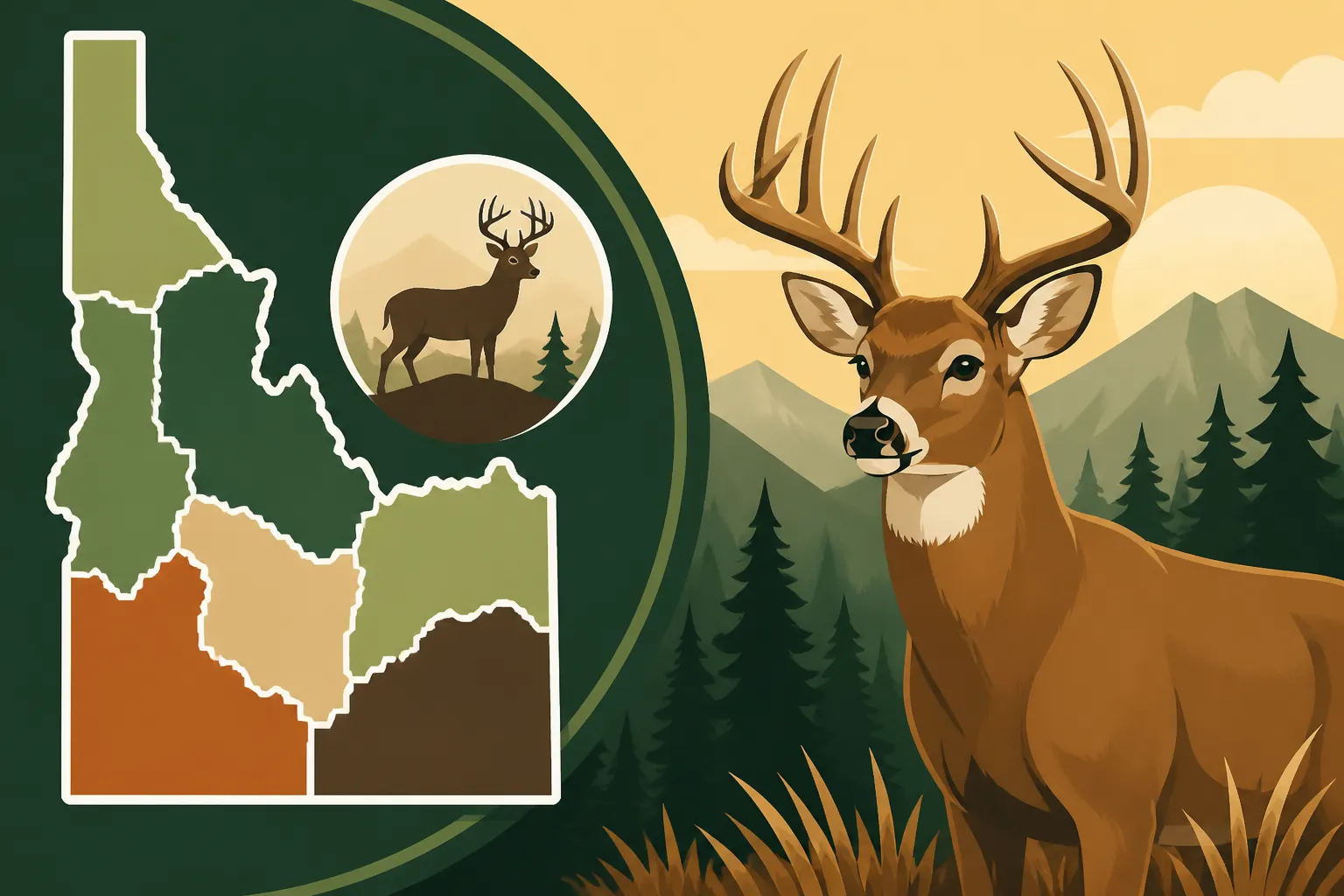
Here's a quick overview of how whitetail harvest generally stacks up across Idaho's regions:
| Region | Typical Whitetail Harvest Volume | Average Hunter Success | Primary Habitat Types | Notes |
|---|---|---|---|---|
| Idaho Panhandle | Highest (Majority of state's harvest) | Generally Good | Dense timber, mixed conifer, river bottoms | The undeniable hub for Idaho whitetails |
| Clearwater/Central | Moderate | Varies, often good | Steep timber, river corridors, agriculture | Good pockets, often tied to riparian zones |
| Southern Idaho | Low/Opportunistic | Variable, often low | River drainages, agricultural fringes, isolated | Whitetails are scarce, highly localized |
How to Find and Interpret Idaho's Whitetail Harvest Statistics
So, you're convinced that regional harvest data is key. Now, how do you actually get your hands on it and, more importantly, make sense of what you find? The good news is that the Idaho Fish and Game Department makes a wealth of information available, and with a little digging, you can unlock some powerful insights for your hunting strategy.
Utilizing Official Idaho Fish and Game Reports
The best place to start your deep dive into Idaho's whitetail harvest numbers is the official Idaho Fish and Game website. They typically publish comprehensive harvest statistics annually, often broken down by species, weapon type, and even individual game management unit (GMU). You'll want to navigate to their "Hunting" or "Statistics" section and look for reports titled "Deer Harvest Statistics" or similar. Once there, you can usually filter the data to specifically look at whitetail deer harvest.
These reports often include crucial metrics beyond just the total number of animals harvested. You might find information on hunter numbers, hunter success rates (the percentage of hunters who tagged a deer), and sometimes even buck-to-doe ratios for certain areas. Paying close attention to the success rate is incredibly important. A unit might have a high total harvest, but if the success rate is very low, it indicates a lot of hunters are putting in time for only a few deer. Conversely, a moderate total harvest with a higher success rate could point to a more productive area where hunters are finding deer more consistently. Platforms like GoHunt also consolidate and visualize this data, making it easier to digest and compare units without having to crunch all the raw numbers yourself. These tools can be invaluable when you're trying to E-Scout an Idaho Unit Before the Season and narrow down your options.
Comparing Annual Data for Long-Term Insights
Looking at just one year's harvest report can be misleading. Deer populations, hunting pressure, and environmental conditions can fluctuate significantly from one season to the next. For instance, a particularly harsh winter could lead to a dip in harvest numbers the following fall, or an exceptionally mild winter might see a temporary boom. To truly understand the health and trends of a regional whitetail population, you need to look at data over multiple years—ideally, five years or more.
By comparing annual data, you can identify long-term trends: Is the harvest consistently increasing in a certain region? Is it declining steadily? Or is it fluctuating within a predictable range? A consistent upward trend might suggest a growing population or expanding whitetail range, making it a promising area to explore. A persistent decline, however, might signal underlying issues that could make for a tougher hunt. This multi-year perspective helps you filter out the noise of single-season anomalies and focus on regions with genuinely stable or improving whitetail opportunities. The Idaho Fish and Game's Harvest Statistics by Idaho Unit reports are your best friend here, as they often compile this historical data in an accessible format, helping you to make sense of the ebb and flow of whitetail populations.
Factors Influencing Regional Whitetail Harvest Numbers
It's not just about how many deer are running around; it's about why those numbers are what they are, and what factors might change them. Understanding the underlying drivers of regional whitetail harvest can give you an edge in predicting future success and adapting your hunting strategy. Idaho's diverse geography and ecosystems mean that different regions face different challenges and opportunities for whitetail deer.
Habitat and Environmental Conditions
The quality and availability of suitable habitat are arguably the most critical factors influencing regional whitetail harvest. Whitetails, especially in Idaho, thrive in areas with dense cover, varied forage, and reliable water sources. This is precisely why the timbered lands and river bottoms of the Panhandle and Clearwater regions are so productive. Areas with extensive, mature timber provide excellent bedding and security cover, while clearcuts, burns, or agricultural fringes offer browse and foraging opportunities. When these elements are present in close proximity, whitetails flourish, leading to higher populations and, consequently, higher harvest numbers.
Conversely, regions with sparse cover, limited water, or monoculture landscapes will naturally support fewer whitetails. Environmental conditions also play a huge role. Severe winters with deep, persistent snow can lead to winterkill, reducing deer numbers and impacting subsequent harvests. Drought conditions can limit forage and water, stressing populations. The specific Whitetail Rut Timing in Northern Idaho can also influence hunter success, as harvest numbers often peak during this period of increased deer movement. Understanding these dynamics is crucial; a great spot last year might be less productive if a harsh winter hit the area hard, or if logging changed the landscape.
Hunting Pressure and Access
Even in areas with excellent habitat and healthy whitetail populations, hunting pressure can significantly impact regional harvest numbers and hunter success. Areas with easy road access, extensive public land, or a history of high success often attract more hunters. This increased pressure can make deer more nocturnal, push them into thicker cover, or simply spread them out, making them harder to find and harvest. A unit might have high whitetail numbers, but if every two-track road has a truck parked on it opening weekend, your personal success might be lower despite the overall harvest remaining high.
Conversely, units or areas within units that are more remote, require longer hikes, or have challenging terrain often see less pressure. While these areas might require more effort, they can sometimes offer higher success rates for those willing to put in the work, as the deer are less disturbed. It's a delicate balance: you want to hunt where the deer are, but you also want to avoid being in a crowd. Leveraging tools like the Idaho Hunt Planner can help you research specific units, check public land percentages, and even look at road systems to gauge potential access and pressure. Apps that use onX Layers for Idaho Public Land can also be invaluable for identifying secluded pockets.
Predation and Disease
While often less immediate in their visible impact than habitat or hunting pressure, predation and disease are significant, long-term factors that can shape regional whitetail harvest numbers. Idaho is home to various predators that prey on deer, including mountain lions, bears, and wolves. In regions with high predator populations, like parts of northern Idaho, fawn recruitment (the number of fawns that survive to adulthood) can be affected, which eventually impacts the overall deer population and harvest. While the specific impact of How Wolves Changed Idaho Elk Numbers is more studied for elk, similar principles can apply to deer, particularly in areas where whitetail fawns are vulnerable.
Disease outbreaks can also decimate local deer populations, leading to sharp declines in harvest. Diseases like epizootic hemorrhagic disease (EHD) or adenovirus hemorrhagic disease (AHD) can cause significant die-offs in localized areas, particularly during hot, dry summers. While often not widespread across the entire state, an outbreak in a specific region can drastically reduce the deer available for harvest. Furthermore, the specter of Chronic Wasting Disease (CWD) is always a concern for deer managers. Idaho has been proactive with Chronic Wasting Disease Testing in Idaho, and any detection in a region would certainly lead to heightened management strategies that could influence future harvest. Keeping an eye on Idaho Fish and Game updates regarding disease activity in your target region is a smart move for any serious whitetail hunter.
Disclaimer
This article is for general informational purposes only and does not constitute professional advice. Laws, prices and regulations vary by location and change over time. Consult a qualified professional for guidance on your specific situation.