Reading Fresh Elk Sign in Dark Timber
There's a unique challenge in Idaho elk hunting that veterans and newcomers alike grapple with: locating those elusive animals in the dense, often unforgiving dark timber. You know the feeling—you've been busting your butt up a steep incline, the forest floor is a tangle of downed logs and thick undergrowth, and visibility is maybe 30 yards if you're lucky. It's easy to feel utterly lost and discouraged, wondering if there are even any elk around. But here's the thing: those elk are there. They thrive in that cover. The secret isn't just to wander aimlessly; it's to become a detective, learning to read the subtle, often overlooked clues they leave behind. This guide is all about sharpening your senses and teaching you how to decipher fresh elk sign in the heart of Idaho's dark timber, turning your frustration into focused, strategic hunting.
Why Dark Timber Holds Elk and Why It's So Tough to Hunt
Hunting in dark timber often feels like stepping into another world—a world of shadows, damp earth, and muffled sounds. It's tough on the hunter, physically and mentally, but for elk, it's paradise. Understanding why they love it can give you a significant edge in finding them.
Understanding Elk Behavior in Thick Cover
Elk aren't just hiding in the timber; they're living there, intentionally using the dense cover to their advantage. First and foremost, dark timber provides unparalleled security. It’s incredibly difficult for predators—both two-legged and four-legged—to spot them, stalk them, or get a clear shot. When you're constantly on alert, thick timber is like a fortress. They can move silently through the maze of trees and escape routes, often disappearing before you even know they were there.
Beyond security, dark timber offers crucial thermal regulation. On hot, sunny days, the shade provides a cool refuge, helping them conserve energy. Conversely, during bitter cold snaps or heavy snow, the thick canopy and dense understory act as a natural insulator, breaking the wind and holding in warmth. This means you'll find them in the timber during all sorts of weather extremes.
Their bedding habits are deeply tied to this cover. Elk will often bed down on benches or slight rises within the timber, using the wind to detect threats coming from below and their keen eyesight and hearing to pick up movement from above. They might even bed in thickets of young fir or dense dog-hair stands where you can barely crawl through, let alone see an animal. Think about it: if it’s hard for you to navigate, it's even harder for a predator to sneak up on them.
The Hunter's Disadvantage in the Timber
Now, for us hunters, this same environment presents a unique set of challenges that can make timber hunting feel like a futile exercise. The most obvious issue is limited visibility. Forget those wide-open basin views you get from a high ridge; in dark timber, you're lucky to see 40-50 yards, sometimes even less. This drastically shortens your effective shooting range and forces you to move incredibly slowly and deliberately. You have to anticipate where an animal might be, rather than just reacting to what you see.
Then there's the sound travel. In open country, sounds carry for miles. In dense timber, sounds are absorbed and distorted, making it incredibly difficult to pinpoint the source of a distant bugle or even estimate how far away that snap of a twig was. Every step you take echoes, and the rustle of your clothes against branches can feel deafening, making it tough to stay quiet. This forces you to focus heavily on your approach and minimize noise.
Scent control becomes even more critical. With limited visibility, elk are often on you before you see them, and their sense of smell is their primary defense. A swirling wind in a canyon can be your worst enemy, carrying your scent directly to a bedded bull just out of sight. You need to be hyper-aware of wind direction and thermals, knowing that during the morning, thermals usually rise, carrying your scent uphill, while in the evening, they fall, carrying your scent downhill.
Lastly, the physical demands of hunting dark timber are no joke. Navigating fallen logs, steep, brushy slopes, and uneven terrain for hours on end is exhausting. It tests your patience, your endurance, and your mental fortitude. It’s not a place for the faint of heart, but those who learn its secrets often find the biggest rewards.
Essential Elk Sign to Look For in Dark Timber
Okay, so you understand why elk are in the timber and why it's so hard to hunt them there. Now, how do you find them? It all comes down to becoming a master interpreter of the signs they leave behind. Each piece of sign tells a part of the story; put enough pieces together, and you can practically visualize the elk's movements.
Tracks: The Most Obvious Clue
Tracks are often the first thing we look for, and for good reason—they tell you where an animal has been and how recently. In dark timber, tracks can be harder to spot due to leaf litter or rocky ground, but when you find them, they are gold.
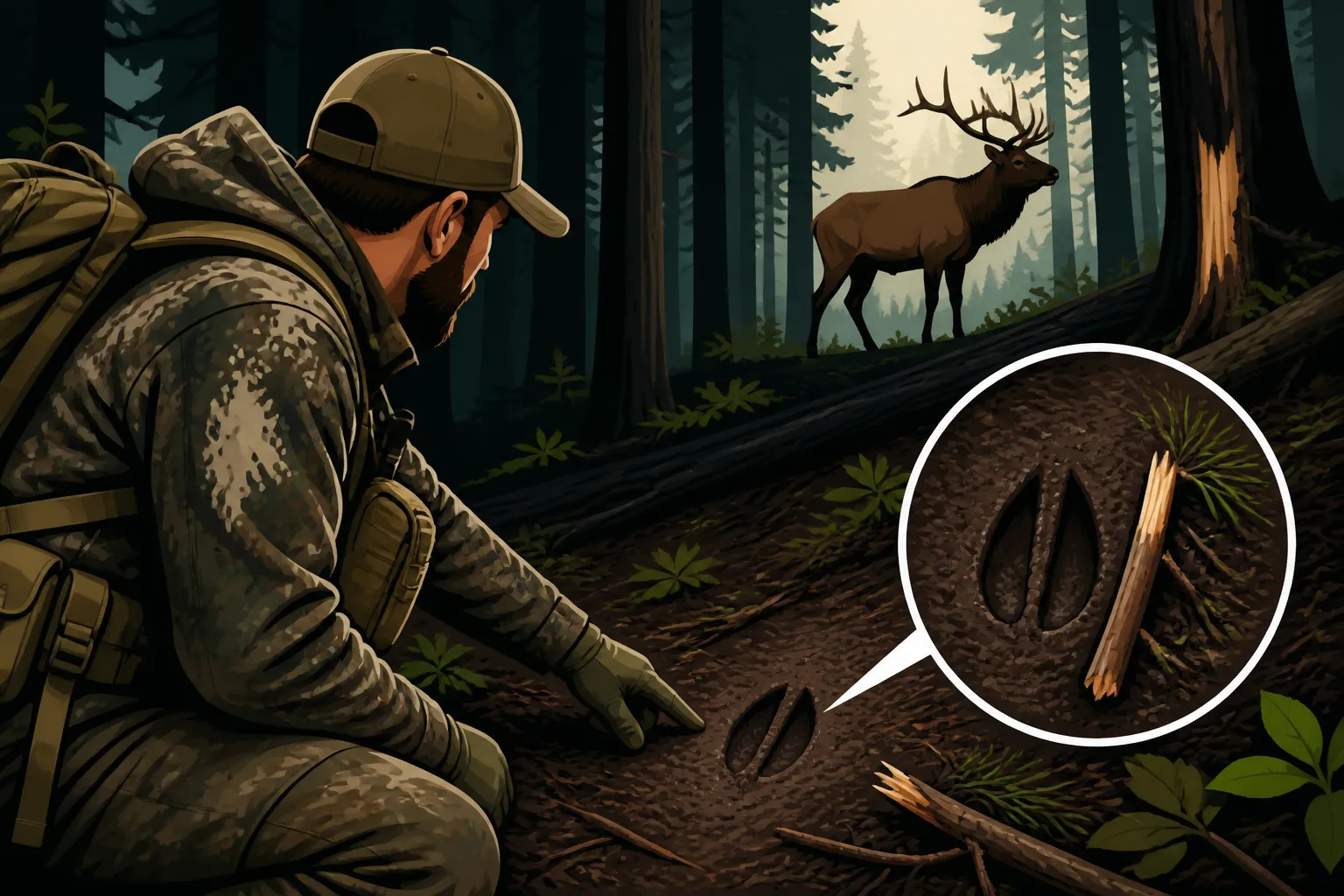
Fresh vs. Old Tracks: A fresh track will have crisp edges, without debris or dry leaves fallen into the print. If it's muddy, fresh mud will still be moist and possibly glistening. An older track will have dried-out mud, dulled edges, and often debris in the bottom. In soft dirt or mud, you might even see the imprint of the dewclaws (the smaller, upper hooves) if the elk was moving fast or heavily loaded. Pay attention to the track's depth, too; a deep track indicates a heavy animal or one carrying a lot of momentum.
Size and Direction: Elk tracks are generally larger and more elongated than deer tracks. A bull's track will be broader and more blunt at the toe, especially if it's a mature bull, while a cow's will be narrower and more pointed. Always try to determine the direction of travel by looking at the toe (which points forward) and the slight drag marks from the hoof, if visible. Are they moving uphill, downhill, or along a contour? This can reveal their likely bedding or feeding areas. For more details on tracking and still hunting, check out our guide on Still Hunting Timber for Bedded Mule Deer.
Droppings: Telling Time and Diet
Droppings, while not as exciting as a giant track, are incredibly informative. They can tell you about the freshness of the sign, the elk's diet, and even roughly how many animals were in the area.
Freshness Indicators: Fresh elk droppings are typically moist, shiny, and dark in color. They might still be warm to the touch in cold weather. As they age, they dry out, become duller, and eventually crumble. If you find a pile of steaming fresh droppings, you know an elk isn't far! The consistency also varies with diet: softer, clumped droppings usually mean they've been feeding on lush, green forage, while harder, more pelletized droppings suggest a drier, more fibrous diet. Finding a concentration of fresh droppings in one spot often indicates a feeding area or a place where they've spent a significant amount of time.
Rubs and Scrapes: Seasonal Hotspots
These signs are particularly exciting because they scream "bull elk!" Rubs are made by bulls rubbing their antlers on trees, usually saplings or smaller trees, stripping off the bark. Scrapes are areas where bulls paw at the ground, often urinating or scent-checking the area.
Reading Rubs: Rubs are primarily a sign of the rut or pre-rut activity. Look for fresh wood exposed, with wood chips on the ground below. The height of the rub can give you an idea of the bull's size, and the fresh sap indicates recent activity. A series of rubs leading in a certain direction can be a "rub line," indicating a travel corridor a bull is using during the rut.
Interpreting Scrapes: While more common with deer, elk bulls will also make scrapes, usually larger and less defined. They're typically found in areas where bulls are actively looking for cows. If you find fresh rubs and scrapes, especially in September, you're likely in an area where a bull is staking his claim or actively pursuing cows. This is a prime time to be in the timber! To understand more about the rut's timing, consider reading When the Elk Rut Actually Peaks Out West.
Beds: Freshness and Size
Finding an actual bed where an elk has rested is a powerful piece of evidence. It tells you exactly where they were and often, how long ago.
Identifying Fresh Beds: A fresh bed will show matted-down grass or flattened leaves and pine needles. In colder weather, you might even feel residual body heat in the depression. Look for hair left behind in the bed, which can indicate the animal's color and condition. Multiple beds in a cluster suggest a small herd or cow group, while a single, large bed could indicate a lone bull. Pay attention to the direction the bed faces; elk often bed facing downhill or into the wind to catch scent or sight of approaching danger.
Trails and Wallows: High Traffic Areas
Elk are creatures of habit, and their well-worn trails are undeniable proof of their regular movements. Wallows, on the other hand, indicate a more specific, seasonal activity.
Elk Trails: Unlike faint deer trails, elk trails are often deep, worn paths, sometimes a foot or more wide, showing heavy use. Look for fresh tracks in muddy sections. These trails connect bedding areas to feeding grounds, water sources, and escape routes. They'll often follow contours, ridge lines, or the path of least resistance through thick timber. Finding a fresh, heavily used trail is like finding an elk highway.
Wallows: An elk wallow is a muddy, often crater-like depression where elk roll in the mud, typically to cool off, get rid of insects, or spread their scent during the rut. A fresh wallow will be wet and muddy, with fresh tracks around it and possibly elk hair stuck to the edges or nearby trees. The strong, musky odor of a bull is often present. Bulls especially love to wallow, leaving their scent for cows and challenging other bulls. If you find a fresh wallow, especially with rubs nearby, it's a strong indicator of a bull in the area. Learning How to Hunt an Elk Wallow in September can be a game-changer for your timber strategy.
Chews and Browsing: Feeding Evidence
Elk are grazers and browsers, meaning they eat both grasses and the leaves, twigs, and bark of woody plants. Their feeding sign can tell you they're in an area and what they've been eating.
Distinguishing Elk Browse: Elk browse differently than deer. Being taller, they'll break branches higher up. Deer tend to nip off twigs cleanly, while elk often tear or twist them, leaving ragged ends. Look for fresh nips on preferred forage like willow, aspen, or various shrubs. Freshly chewed bark on young trees is another indicator. If you find concentrated browsing in a thick patch of timber, you've likely found a temporary feeding area or a place they frequent on their way to a larger feed.
Interpreting the Sign: Putting It All Together
Finding individual pieces of elk sign is great, but the real skill lies in interpreting the combination of signs to build a picture of elk activity and presence. Think of yourself as putting together a puzzle, where each clue adds to the overall understanding.
Freshness is Key: Time is of the Essence
The number one rule in reading elk sign in dark timber is freshness. Old sign tells you elk were here, but fresh sign tells you they are here, or were very recently. A week-old track in dry dirt might as well be a month old; the elk could be miles away. But a track with crisp edges, a still-wet dropping, or a wallow with fresh mud—that's a whole different story.
Look for multiple fresh signs in proximity. One old track might mean nothing, but a fresh track leading to a patch of fresh droppings, near a recently used bed, and a fresh rub on a sapling? That's a high-confidence indicator that elk are actively using that specific patch of timber right now. Their movements are fluid, and what was fresh yesterday might be stale today, so you need to be constantly evaluating.
Density and Distribution: Identifying Core Areas
It's not just about finding a track; it's about finding a lot of tracks. When you start encountering a high density of fresh elk sign—multiple tracks, several beds, concentrations of droppings, rub lines, or active wallows—you've likely stumbled into a core use area. This could be a primary bedding area, a preferred travel corridor, or a feeding hotspot within the timber.
These areas are where you need to slow down, become incredibly deliberate in your movements, and apply your hunting tactics. This is where your efforts will pay off. Tools like GoHunt's mapping features can be incredibly useful here. You can drop pins for every piece of fresh sign you find, allowing you to visualize the density and distribution of elk activity. Over time, you'll start to see patterns emerge, helping you identify these critical core areas more effectively.
Wind, Thermals, and Topography: The Environmental Context
Elk don't just randomly appear; their presence is heavily influenced by the environment. Understanding wind, thermals, and topography is paramount when interpreting where and why elk leave their sign.
Elk almost always use the wind to their advantage, especially when bedding. They'll position themselves so the wind carries scent from potential threats toward them. In steep country, thermals also play a huge role. In the morning, warm air rises, carrying scent uphill. In the evening, cool air falls, carrying scent downhill. If you find fresh sign in a timber patch, consider the wind and thermals at that time of day. Were the elk moving into or out of the wind? Were they using a thermal current to mask their approach or detect yours? This insight helps you predict their future movements. Mastering Reading Wind in Steep Timbered Country is a critical skill for any timber hunter.
Using Technology to Aid Your Search
While elk sign is physical, modern technology can be a powerful ally in documenting and interpreting it. Don't leave your phone or GPS in your pack.
GPS and Mapping Apps: Use a reliable GPS unit or a hunting app like GoHunt to mark every significant piece of fresh sign you find. Pin tracks, droppings, rubs, beds, and wallows. This creates a digital breadcrumb trail of elk activity. Over time, this data will highlight high-traffic areas, reveal travel patterns, and help you identify specific timber pockets that consistently hold elk. You can even use satellite imagery on these apps to identify potential bedding ridges or escape routes before you even step foot in the woods. To get started with pre-hunt planning, read up on E-Scouting an Idaho Unit Before the Season. This allows you to plan your approach routes to maintain the wind advantage.
Tactics for Hunting Timber Once You Find Sign
So, you've done your detective work, you've found fresh sign, and you're confident there are elk nearby in that dark timber. Now what? This is where your hunting strategy comes into play.
Still Hunting and Stalking: Slow and Deliberate
In dark timber, speed is your enemy. The best tactic is almost always to still hunt—move incredibly slowly, stop often, and use your eyes and ears. Take a few steps, then freeze. Look, listen, and scan. Use your binoculars, even in thick cover, to pick apart shadows, identify horizontal lines (the back of an elk), or catch a flicker of an ear or tail.
When you find a bedded animal or hear a movement, the stalk becomes critical. Move even slower. Use every piece of cover—trees, boulders, downed logs—to break up your outline. Test every footfall to avoid snapping twigs. If the wind is right and you're moving carefully, you might be able to close the distance for a shot. For a deeper dive into moving silently and effectively, review our guide on Still Hunting Timber for Bedded Mule Deer.
Calling in the Timber: Adapt Your Approach
Calling in thick timber requires a different approach than calling across open meadows. The sound doesn't travel as far, and judging distance is much harder.
Subtle Calls: In close quarters, loud, aggressive bugles can often spook a nearby bull. Instead, focus on soft cow calls—mews and chirps—to entice curious elk to come closer without feeling pressured. A soft, inquisitive call can be incredibly effective when you suspect elk are bedded nearby.
Locator Bugles: If you're trying to locate elk in vast timber, a locator bugle can be useful, but use it sparingly and strategically. A single, short bugle might get a response from a bull without giving away your exact location. Once you get a response, don't keep bugling him; try to get into a good position, let him think you're a cow, and allow him to come to you. The key is subtlety. Learn more about optimal calling times and techniques in Bugle and Cow Call Timing Through September or specific locator strategies in Locator Bugles for Finding Bulls at Dawn.
Playing the Wind: Crucial for Success
We've touched on this repeatedly, but it bears repeating: the wind is everything in dark timber. An elk's nose is their primary defense, and if your scent hits them, they're gone.
Before you make any move, always check the wind. Use a wind checker bottle to see exactly what the air currents are doing. Plan your approach route to ensure the wind is in your favor, blowing your scent away from where you expect the elk to be. This might mean making a long loop or waiting for thermals to shift. Never, ever push into the wind in dark timber, especially if you've found fresh sign. If the wind swirls or shifts unfavorably, either adjust your position immediately or back out and try again later. For detailed tactics on this, refer to Playing Wind Direction on a Timbered Stalk.
Decoding Elk Sign in Dark Timber: A Quick Reference
| Sign Type | Fresh Characteristics | Old Characteristics | Implication of Fresh Sign |
|---|---|---|---|
| Tracks | Crisp edges, moist mud/dirt, visible dewclaws | Blurred edges, dry/cracked mud, debris in print | Elk passed recently, direction and gait indicate activity |
| Droppings | Moist, shiny, dark, soft/clumped (lush diet) | Dry, dull, crumbly, hard/pelletized (dry diet) | Elk feeding/resting nearby, diet can indicate forage type |
| Rubs | Freshly exposed wood, sap, wood chips on ground | Weathered wood, no sap, bark regrowing | Bull actively marking territory during rut/pre-rut |
| Scrapes | Freshly pawed earth, strong musky odor, fresh urine | Dried earth, faint odor, no fresh urine | Bull actively searching for cows or asserting dominance |
| Beds | Matted vegetation, residual body heat, fresh hair | Flattened but recovering vegetation, no heat, weathered hair | Elk rested recently, size/number indicate individual/herd |
| Wallows | Wet, muddy, fresh tracks, strong musky odor, fresh hair | Dry, cracked mud, faint odor, no fresh tracks | Bull actively cooling or scent-marking, especially in rut |
| Browsing | Freshly broken/torn twigs, visible sap, clean nips | Dried, discolored breaks, no sap | Elk feeding on preferred forage, height indicates animal size |
Disclaimer
Hunting regulations and conditions can change rapidly. Always consult the latest Idaho Fish and Game regulations before planning any hunt. This guide is for informational purposes only and does not constitute professional hunting advice. Hunt safely, ethically, and responsibly.