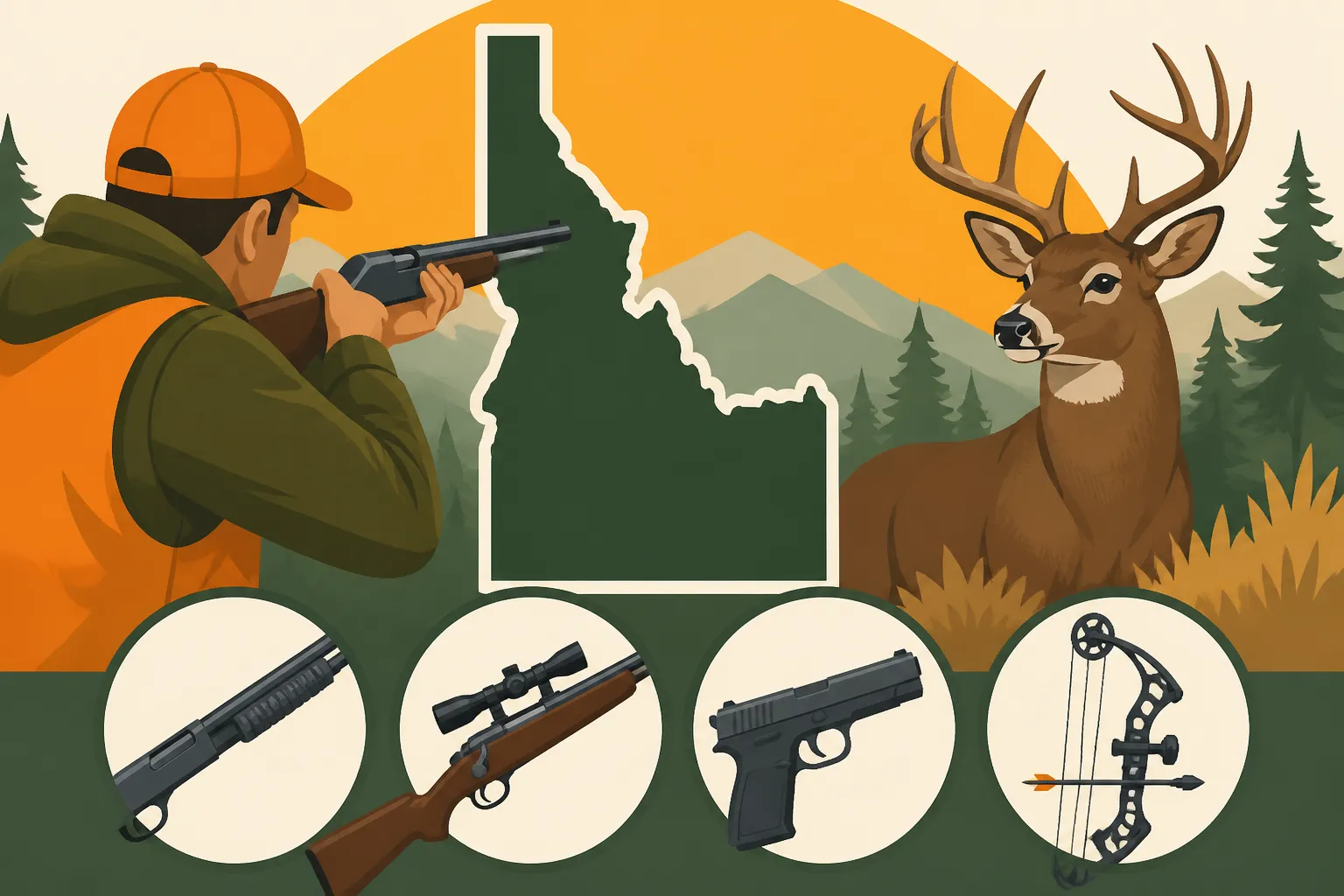
Which Weapons Qualify as Short-Range in Idaho
Navigating the myriad of hunting regulations can feel like trying to solve a complex puzzle, especially when it comes to understanding specific weapon classifications like "short-range" in Idaho. It's a common frustration for hunters, whether you're a seasoned veteran or just starting out, trying to ensure you're compliant while still maximizing your opportunities in the field. This guide aims to clear up all that confusion, giving you a detailed breakdown of which weapons qualify as short-range in Idaho and what that really means for your hunt.
Unraveling Idaho's Short-Range Weapon Seasons
Idaho's short-range weapon seasons are designed to provide additional hunting opportunities while also managing hunter pressure and maintaining a more traditional hunting experience in certain areas or during specific times of the year. It’s not just about limiting what you can use; it’s a strategic approach to wildlife management that often broadens the window for ethical harvest.
Why Short-Range Seasons Exist
You might wonder why Idaho Fish and Game would even bother with such specific classifications when many other states simply have general rifle or archery seasons. The truth is, short-range weapon seasons serve a few key purposes. Firstly, they often extend hunting opportunities into areas or times where a general centerfire rifle season might be deemed too disruptive or simply too efficient, leading to overharvest. Think about areas closer to towns or properties, or during periods when animals are more concentrated. By limiting the range of the weapons, it requires hunters to get closer, promoting a more challenging and often more traditional hunting experience. This also helps to spread out hunting pressure across different seasons and weapon types, preventing certain areas from being overwhelmed. Moreover, it can be a tool for managing specific game populations, offering targeted harvest opportunities without impacting the broader herd too severely. It’s a nuanced approach to ensuring sustainable hunting for generations to come.
General Regulations for Short-Range Weapons
When you're looking at a short-range weapon season, there are some overarching themes you'll consistently find in the regulations. The primary goal is to limit the effective range of the projectile, meaning you generally won't be flinging lead across vast canyons. Instead, these seasons encourage more intimate encounters with game. This often translates to restrictions on optics, propellant types, and the design of the weapon itself. For instance, in many short-range muzzleloader seasons, scopes are strictly prohibited, forcing you to rely on open or peep sights. The idea is to make the hunt more challenging, demanding greater stalking skills and a deeper understanding of animal behavior. It’s important to remember that these rules are in addition to general hunting regulations regarding licensing, tag requirements, and species-specific rules. Always double-check the current Idaho hunting regulations booklet for the unit and season you plan to hunt, as these can sometimes vary slightly from year to year. A resource like The Idaho Hunt Planner Is the Tool to Start With can be invaluable for pinpointing specific regulations.
Specific Weapons That Qualify as Short-Range
Alright, let's get down to the nitty-gritty of what actually counts. Idaho has pretty clear definitions, but sometimes the devil's in the details, especially with evolving technology.
Archery Equipment
When it comes to archery, Idaho defines "short-range" quite broadly, essentially encompassing most traditional and modern archery equipment. This includes compound bows, recurves, and longbows. For any bow, there's a minimum peak draw weight requirement, which can often be found under topics like Idaho's Minimum Peak Draw Weight for Any Bow. This ensures that the equipment is capable of delivering a lethal blow to big game. Arrows must be fitted with broadheads, and there are specific rules about these as well. Generally, broadheads for big game must be non-barbed and have a minimum cutting diameter. Whether you prefer Fixed Blade Against Mechanical Broadheads on Elk is usually a personal choice, as long as they meet the minimum cutting width and are non-barbed. Lighted nocks are generally legal, as are mechanical release aids, which is good news for many modern bowhunters. The essence here is that if you're using a bow that meets the minimum draw weight and your arrows are tipped with legal broadheads, you're good to go in Idaho's archery-specific seasons, which are inherently short-range.
Muzzleloaders and Their Limitations
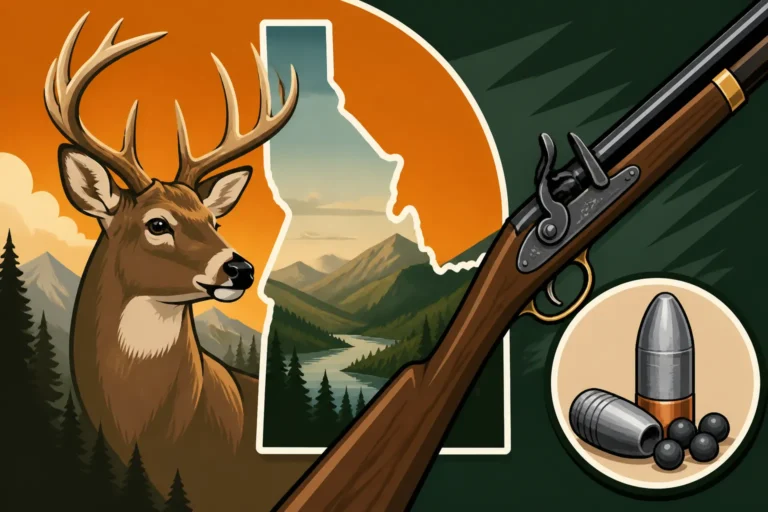
Muzzleloaders are a unique beast in Idaho's short-range world, often carrying the most specific and sometimes confusing regulations. To qualify as a short-range muzzleloader in Idaho, the firearm must be loaded from the muzzle. This means no breech-loading muzzleloaders or "inline" systems that use modern primers in a sealed breech. Specifically, Idaho often enforces The Exposed-Cap Ignition Rule Idaho Enforces, meaning the percussion cap or flint must be exposed to the elements, truly replicating traditional muzzleloading. Furthermore, scopes are strictly prohibited during muzzleloader-only seasons. You're limited to Open and Peep Sights Only in Muzzleloader-Only Hunts, which significantly reduces your effective range and demands greater skill. This rule is a core reason Why Idaho Muzzleloader-Only Hunts Ban Scopes and Inline Ignition. As for caliber, there are specific minimums for different species. For deer, the Minimum Muzzleloader Caliber for Idaho Deer is typically .45 caliber, while for elk, you'll need at least a Minimum Muzzleloader Caliber for Idaho Elk of .50 caliber. You also cannot use sabots that fully enclose a bullet—meaning the projectile itself must be in full contact with the rifling. Black powder or approved black powder substitutes are the only legal propellants; smokeless powder is absolutely out. These restrictions are all designed to keep the muzzleloader hunt a truly short-range, traditional experience, testing the hunter’s ability to close the distance.
Shotguns and Their Ammunition
Shotguns are also a viable short-range weapon in Idaho, but again, there are important caveats, particularly regarding ammunition. For big game, you are typically limited to slugs. This means you can't use buckshot or birdshot, even if it might seem effective at extremely close ranges. Specifically, Shotgun Slugs and 00 Buck as Short-Range Weapons clarifies that while slugs are in, buckshot is generally out for big game. So, if you're hunting deer or elk with a shotgun, it needs to be loaded with a single projectile, like a rifled slug or a sabot slug, appropriate for the game you're pursuing. For upland birds and small game, traditional shot sizes are, of course, legal, but we're talking big game short-range seasons here. Shotguns used for big game must also be smoothbore, meaning no rifled barrels. The effective range of a slug is much shorter than a centerfire rifle, naturally placing it in the short-range category. This restriction makes shotgun hunting a close-quarters affair, often favored in dense cover or agricultural areas where longer shots might be unsafe or impossible.
Crossbows in Short-Range Seasons
Ah, crossbows – the topic that always seems to spark a spirited debate among hunters! In Idaho, crossbows have a specific place within the short-range weapon framework, but it's not a blanket acceptance across all seasons. Generally, Does a Crossbow Count as a Short-Range Weapon? in Idaho, they are not considered legal during general archery-only seasons. This is a critical distinction many hunters miss. However, crossbows are permitted during short-range weapon seasons, often alongside muzzleloaders and shotguns. This means if the regulations specifically state "Short-Range Weapon Season," a crossbow is typically a go. They must meet certain specifications, much like traditional bows, regarding draw weight and broadhead types. This inclusion in short-range seasons provides an accessible option for hunters who might have physical limitations that prevent them from drawing a traditional bow or those who simply prefer the crossbow. Always confirm the specific regulations for the unit and species you're targeting, as exceptions or special provisions can apply, but generally, when a season is explicitly labeled "short-range weapon," your crossbow is likely a legal option.
Here’s a quick overview of what constitutes a short-range weapon in Idaho:
| Weapon Type | Big Game Legal Ammunition/Projectile | Key Limitations/Rules | Primary Sight Type |
|---|---|---|---|
| Archery | Broadheads (non-barbed, minimum cutting diameter) | Minimum draw weight applies (e.g., Idaho Minimum Peak Draw Weight for Any Bow) | Pin sights, single or multiple; no magnification |
| Muzzleloader | Single projectile (e.g., round ball, conical bullet) | Loaded from muzzle, exposed cap ignition, no scopes, no inline ignition, minimum caliber (.45 deer, .50 elk) | Open sights, peep sights only |
| Shotgun | Slugs only (no buckshot for big game) | Smoothbore barrel required | Iron sights or low-magnification scope |
| Crossbow | Broadheads (non-barbed, minimum cutting diameter) | Legal only in designated short-range weapon seasons, not general archery; minimum draw weight applies | Scopes generally allowed, but check specific season rules |
Navigating Short-Range Weapon Seasons in Practice
Understanding the legal definitions is one thing, but knowing how to apply that knowledge in your actual hunt is where the rubber meets the road. These seasons often require a different approach and mindset than a general rifle season.
When and Where These Seasons Apply
Short-range weapon seasons are not universal across all of Idaho; they're strategically placed throughout the state and the hunting calendar. You'll often find them in specific Game Management Units (GMUs) or within particular elk zones. They might be offered as early seasons, late seasons, or as a way to provide additional opportunities in areas with high game populations or where proximity to private land necessitates a shorter-range approach. For example, some units might have a general archery season, followed by a general rifle season, and then a dedicated short-range weapon season for those using muzzleloaders, shotguns, or crossbows. This staggered approach helps distribute hunting pressure and offers more chances for success across different equipment types. To pinpoint these opportunities, you'll absolutely need to dive deep into the Idaho Fish and Game regulations specific to the year and species you're interested in. The Idaho Hunt Planner on the Fish and Game website, or a mapping tool like GoHunt, is your best friend here, as they allow you to filter seasons by weapon type and unit, making it much easier to find these specific windows.
Planning Your Hunt Around Short-Range Rules
Planning a short-range weapon hunt demands a different strategy. Since your effective range is inherently limited, scouting becomes even more critical. You're not just looking for game; you're looking for game in places where you can get within your weapon's effective range. This means focusing on dense cover, natural choke points, water sources, and bedding areas. You need to identify terrain features that allow for a silent stalk or an ambush. This might mean spending more time on the ground, learning the intricate movements of animals in a specific drainage. For instance, if you're hunting with a muzzleloader, understanding the Effective Range of a Muzzleloader on Elk is paramount. You need to practice regularly with your chosen short-range weapon, not just for accuracy, but for proficiency under field conditions. Can you load your muzzleloader quietly and quickly? Can you draw your bow smoothly after a long stalk? Are you confident in your ability to make a clean shot with a shotgun slug at 75 yards? Remember, these seasons often mean closer encounters, which can be thrilling but also require more precise execution. Don't underestimate the physical demands of getting into these closer positions.
Common Misconceptions to Avoid
There are a few pitfalls hunters often fall into when it comes to Idaho's short-range weapon seasons. One of the biggest is assuming that because a weapon is "legal" for one short-range season, it's legal for all. As discussed, crossbows are a prime example – legal in some short-range seasons, but not general archery. Another common mistake is misinterpreting muzzleloader rules, particularly around inline ignition or optics. Just because your modern inline muzzleloader uses black powder, it doesn't mean it's automatically legal in a muzzleloader-only short-range season if it doesn't have an exposed cap or allows a scope. Always, always check the exact wording for the specific season and unit. Don't rely on hearsay or what was legal five years ago. Idaho Fish and Game regulations can and do change, sometimes subtly. Another misconception is that these seasons are "easier" because there's less competition or more animals. While there can be great opportunities, the inherent limitations of the weapons mean the hunt itself often requires more skill and patience, not less. It's about trading range for a different kind of challenge and reward.
Choosing the Right Short-Range Weapon for Your Hunt
Deciding which short-range weapon to wield can be a tough choice, as each offers a distinct experience and set of challenges. It really boils down to personal preference, skill set, and the specific type of hunt you envision.
Pros and Cons of Each Weapon Type
Archery Equipment (Compound, Recurve, Longbow):
- Pros: Generally the quietest hunting method, offering the potential for extremely close and personal encounters. Archery seasons often start earliest, taking advantage of the rut or pre-rut activity, providing unique opportunities. It's a deeply engaging and rewarding challenge.
- Cons: Requires intense physical conditioning, precise shooting form, and extensive practice to be proficient and ethical. The effective range is the most limited, demanding exceptional stalking skills. Recovering game can sometimes be more challenging due to less immediately apparent impact.
Muzzleloaders:
- Pros: Offers a unique blend of historical tradition and modern hunting opportunity. Muzzleloader seasons often fall into prime periods, like the tail end of the rut or early winter, providing great chances. The boom and cloud of smoke are undeniably nostalgic.
- Cons: Reloading is slow, making follow-up shots difficult or impossible. Cleaning can be more involved due to corrosive black powder. Accuracy can be challenging to master, especially with open sights and slower projectiles. Effective range is limited compared to modern rifles.
Shotguns with Slugs:
- Pros: Familiarity for many hunters who may already own a shotgun. Can be very effective in dense timber or brush where shots are inherently close. Allows for quick target acquisition.
- Cons: Limited effective range, generally less accurate than rifles at longer distances. Recoil can be significant, especially with larger slugs. Not always the best choice for open country.
Crossbows:
- Pros: Easier to master for many hunters compared to traditional archery, especially for those with physical limitations. Can achieve higher velocities and flatter trajectories than many traditional bows. Often allows for scope use, increasing precision.
- Cons: Not legal in all archery seasons, creating confusion. Can be bulky to carry through dense brush. Some hunters feel it removes part of the traditional archery challenge.
Ultimately, the "best" weapon is the one you are most proficient and comfortable with, and which aligns with the season and terrain you'll be hunting. Tools like GoHunt can help you overlay public land, terrain features, and season dates to visualize where each weapon type might shine.
Factors to Consider Beyond Legality
Beyond simply knowing what's legal, a responsible hunter considers several other factors when choosing a short-range weapon. Ethical shot distance is paramount. Just because your weapon can hit a target at a certain range doesn't mean it's an ethical shot under hunting conditions. Wind, animal movement, and your own nerves all play a role. For archery, this might mean limiting yourself to 40 yards, even if you can hit a target at 60. For muzzleloaders, knowing the true maximum effective range of your load and sight setup is crucial.
Terrain and cover should heavily influence your choice. In thick timber or dense brush, a shotgun or a bow might be ideal, as you're unlikely to get a long shot anyway. In more open country with pockets of cover, a muzzleloader might offer a bit more reach while still adhering to the short-range ethos.
Finally, personal proficiency is non-negotiable. There's no substitute for practice. Spend time at the range, in varying conditions, building confidence with your chosen short-range weapon. Can you load your muzzleloader under pressure? Are you consistently grouping arrows? Can you hit a vital zone with your shotgun slug from various field positions? Your ability to place a shot accurately and ethically is the most important factor, far outweighing any perceived advantage one weapon might have over another. Taking a look at Reading an Idaho Harvest Statistics Report for various units and weapon types can also give you some insight into historical success rates, though past performance is never a guarantee.
Disclaimer
The information provided in this guide is for general informational purposes only and does not constitute legal advice. Hunting regulations in Idaho are subject to change, and it is the hunter's sole responsibility to consult the most current Idaho Fish and Game regulations proclamation before engaging in any hunting activity. Always confirm season dates, legal weapons, and unit-specific rules with the official Idaho Department of Fish and Game resources.