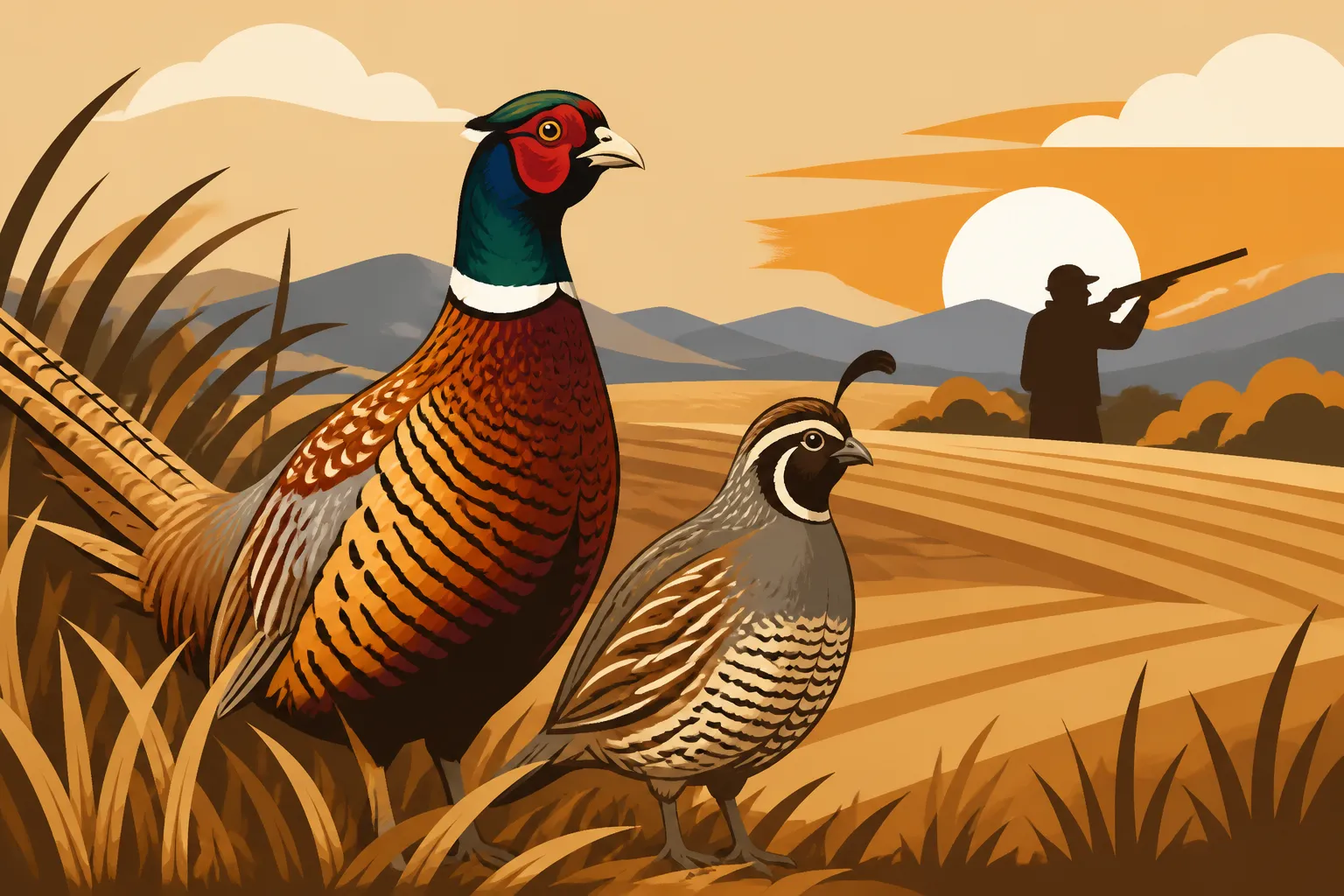
Pheasant and Quail on Idaho Farmland
It can be incredibly frustrating to dream of those classic wingshooting days, only to hit public land that's been hammered, or stare longingly at endless private farm fields wondering how you'll ever get access. Many of us have been there, scouting tirelessly, hoping to stumble upon that perfect patch of cover holding a rooster pheasant or a bustling covey of quail. This guide is here to cut through that frustration, offering a deep dive into finding and successfully hunting pheasant and quail on Idaho's diverse farmlands.
The Thrill of Upland Bird Hunting on Idaho Farmland
There’s just something undeniably special about walking through crisp fall air, the rustle of dry weeds underfoot, and the anticipation of a sudden explosion of feathers. For many hunters, especially those of us with a good dog by our side, chasing upland birds across Idaho's farmlands is a quintessential autumn experience. It's a blend of hard work, keen observation, and the pure joy of watching a well-trained dog do what they love best.
Why We Chase Pheasants and Quail
Pheasants, with their iridescent plumage and explosive flush, are often the star of the show for many upland hunters. The sheer challenge of getting close enough to a wily rooster, the thunder of its wings as it bursts from cover, and the subsequent retrieval by a proud dog are moments etched into a hunter's memory. But beyond the thrill, pheasants offer some truly delicious table fare, making the effort even more rewarding. It's not always easy though; wild pheasant populations can be elusive, often found in dense cover that tests both hunter and dog. The pressure on easily accessible public lands can be intense, leading to days where birds seem to vanish, and you're left wondering if you chose the right spot.
Quail, while smaller, offer their own unique excitement. Hearing the distinct "Bob-white!" call or the whir of wings from a large covey rise is a sound that gets any upland hunter's heart racing. They are fast, often preferring to run or hold incredibly tight, which makes them a fantastic challenge for pointing dogs. Unlike pheasants, which are often solitary or in small groups outside of breeding season, quail are almost always found in coveys. This means when you find one, you often find a dozen or more, leading to exciting flushes and fast-paced shooting. However, once a covey breaks up, those individual birds can be even harder to locate, testing a dog's nose and a hunter's patience.
Differentiating Idaho's Upland Species on Farmland
Idaho is home to a few different quail species, but for most farmland hunters, the California Quail (often called Valley Quail) is the most common encounter. These birds thrive in areas where agricultural fields meet brushy draws, riparian corridors, and dense thickets. They love the cover provided by hawthorn bushes, wild roses, and overgrown fence lines, especially near a reliable water source. You'll find them using these areas for protection, foraging on seeds and insects from the nearby fields, and nesting. They are highly social, and their distinctive calls are a tell-tale sign of their presence.
While less common on strictly farmland, it's worth noting Idaho also has Mountain Quail, which, as their name suggests, prefer higher elevations and denser, often mountainous, forest cover. They are rarely encountered in the typical agricultural landscapes we're discussing today. Occasionally, you might hear whispers of Bobwhite Quail, but these are generally restricted to isolated, often managed, populations, sometimes from past releases. For the most part, if you're hunting quail on Idaho's farmland, you're targeting California Quail. Understanding these preferences helps narrow down your search and improves your chances of success. They need that combination of food from fields and robust escape cover to thrive, something that many Idaho farms, with their ditch banks and shelterbelts, provide perfectly.
Decoding Idaho's Farmland for Bird Hotspots
Finding good bird hunting isn't about luck; it's about understanding the habitat and knowing where to look. Idaho's farmland offers a patchwork of opportunities, but you need to know how to read the landscape.
The Importance of Habitat Features on Agricultural Ground
Pheasants and quail don't just hang out in the middle of a barren field. They are incredibly reliant on specific habitat features that provide food, water, and most critically, cover from predators and the elements. When you're scouting, whether in person or using digital tools like GoHunt, look for the edges. These are the transitional zones where different types of vegetation or land use meet. Think about where a harvested cornfield borders a dense strip of cattails along a ditch, or where a wheat stubble field runs alongside a shelterbelt of trees and brush. These "edge habitats" are gold.
Specifically, focus on:
- Field Edges and Fence Rows: These provide linear strips of cover and often accumulate seeds and insects. Overgrown fence rows, especially those with thorny bushes, are pheasant magnets.
- Ditch Banks and Riparian Zones: Waterways, even small irrigation ditches, often have dense, undisturbed vegetation like cattails, willows, and tall grasses. These offer excellent thermal cover and escape routes for both pheasants and quail.
- Shelterbelts and Tree Rows: Planted rows of trees, often found around farmsteads or as windbreaks, create fantastic refuge. The undergrowth beneath these trees can be quite dense, holding birds tight.
- CRP (Conservation Reserve Program) Lands: These are private agricultural lands that farmers enroll in programs to plant native grasses and other cover, often to prevent erosion. They are prime upland bird habitat and, if accessible, offer incredible hunting.
- Crop Type and Stage: While birds will use any crop, some are better than others. Standing corn or sorghum fields offer fantastic cover. Harvested wheat or barley fields (stubble) provide food, but birds will often quickly move to adjacent heavier cover if available.
Idaho Fish and Game's Pheasant Release Programs
One of the most reliable ways to find pheasants in Idaho, especially if you're concerned about finding wild birds, is through the Idaho Fish and Game's (IDFG) pheasant release program. Each fall, IDFG stocks pheasants on various Wildlife Management Areas (WMAs) and other publicly accessible sites across the state. This program is a huge boon for hunters, ensuring there are birds to pursue, often on lands specifically managed for public hunting.
You can find the schedule and locations for these releases on the IDFG website, and it's something you should absolutely look into every season. These sites are designed to offer a consistent opportunity, perfect for new hunters, youth hunters, or anyone looking for a more predictable hunt. Do keep in mind, these areas can get crowded, especially on opening weekends or holidays. Additionally, some release sites may have specific rules, like mandatory blaze orange requirements or different bag limits for hens, so always check the current regulations. Knowing about these locations is key to maximizing your chances, and you'll find much of this information when checking out topics like Idaho Releases Pheasants Each Fall or by looking at the specific rules when researching Hunting Rules Specific to Idaho WMAs. These areas are often adjacent to or integrated into agricultural landscapes, making them relevant to our focus on farmland.
Navigating Private vs. Public Farmland Access
This is where the rubber meets the road for many upland hunters in Idaho. The vast majority of prime pheasant and quail habitat lies on private farmland, which can feel like an impenetrable fortress. The frustration of seeing birds flying into a private field you can't access is a common lament.
However, there are strategies to gain access:
- Asking Permission: This is old-school, but it's still the most effective method. Approach landowners respectfully, well in advance of the season, and offer to help with chores or provide references. A polite, clean-cut hunter who asks permission is far more likely to get it than someone who trespasses. Always leave the land better than you found it.
- Idaho's Access Yes Program: This is a fantastic initiative by IDFG that leases private land from landowners to open it up for public hunting access. These lands are often prime habitat, and the program helps bridge the gap between private property and public hunting opportunities. It's a critical resource for anyone seeking access to private ground. You can use tools like GoHunt to overlay Access Yes properties on maps, making it easy to identify potential hunting spots. Understanding The Idaho Access Yes Program Explained is crucial for any hunter in Idaho.
- Wildlife Management Areas (WMAs): While some WMAs are strictly public land, many are managed with a mix of habitat types, including agricultural fields or food plots designed to attract upland birds. These areas are specifically for public use and are a reliable option. It's worth looking up How Many Wildlife Management Areas Idaho Runs and then diving into the details of specific WMAs in agricultural regions.
- State Endowment Lands: Some state endowment lands are open to hunting, and certain parcels may include agricultural leases or borders that offer upland bird opportunities. Always verify access and rules, as they can differ from federal public lands. Understanding Idaho State Endowment Land Access Rules can open up additional opportunities.
Successfully gaining access requires effort, research, and a commitment to ethical hunting and respectful landowner relations.
Strategic Approaches for Successful Upland Hunts
Once you've found a promising piece of ground, the real fun begins. Upland bird hunting is dynamic, requiring both strategy and adaptability.
The Invaluable Role of a Good Bird Dog
Let's be honest, hunting pheasants and quail without a good dog is like eating a burger without fries – you can do it, but you're missing a huge part of the experience! A well-trained bird dog isn't just a companion; they are an essential tool. Pointers, flushers, and retrievers each bring their unique skills to the field, making the hunt more effective and infinitely more enjoyable.
- Pointers (e.g., German Shorthaired Pointers, English Pointers): These dogs work ahead, using their superior nose to locate birds and then "lock up" on point, holding the bird's location until you arrive. This allows the hunter to position themselves for the flush and shot. Pointers are fantastic for methodical coverage of fields and pinpointing quail coveys.
- Flushers (e.g., Springer Spaniels, Labrador Retrievers): These dogs work closer to the hunter, systematically quartering the ground and flushing birds within gun range. They are relentless in pushing dense cover, ideal for pheasants that prefer to run or hide deep.
- Retrievers (e.g., Labradors, Goldens): Regardless of breed, a dog that can reliably retrieve downed birds is critical. Pheasants especially can be runners after the shot, and a good retriever minimizes lost game.
Training is paramount. A dog that is "steady to wing and shot" (meaning they don't chase flushing birds until commanded to retrieve) and responds to commands makes the hunt safer and more productive. Their ability to cover ground and find scent that our human noses miss is unparalleled, transforming a walk in the field into an active, engaging partnership.
Stalking Strategies for Ringnecks and Quail
Hunting pheasants and quail isn't just about walking; it's about strategy. These birds are smart, and they use the cover to their advantage.
- For Pheasants:
- Working Edges: Always work field edges, fence rows, and ditch banks. Pheasants will often run along these linear strips before flushing. If hunting with a partner, have one person walk the edge and the other walk parallel about 20-30 yards inside the field, or have "blockers" at the end of a long cover strip to intercept running birds.
- Pushing Cover: Don't be afraid to get into the thick stuff. Pheasants love dense cattails, thorny patches, and heavy brush. Be methodical, walk slowly, and pause frequently – sometimes a momentary stop will make a hiding bird nervous enough to flush.
- Wind Direction: Try to hunt into the wind. This allows your dog to pick up scent more effectively and helps to hold the birds, preventing them from scenting you and running before you get close.
- For Quail:
- Identify Coverts: Quail are social and stick to "coveys." Learn to identify their preferred coverts – dense brush, thorny thickets, and riparian areas.
- Break Up the Covey: When a covey flushes, try to mark where individual birds fly to. After the initial flurry, take a break, then go back and hunt for those singles. Single quail will often hold incredibly tight, offering excellent dog work and closer shots.
- Slow and Steady: Quail often prefer to run rather than fly. Work slowly and meticulously through their preferred cover, letting your dog work thoroughly. They may not flush until you're almost on top of them.
Essential Gear and Field Safety
Beyond your shotgun and dog, a few pieces of gear are non-negotiable for a safe and successful upland hunt on Idaho's farmlands:
- Shotgun Choice: A 12 or 20 gauge shotgun is ideal. For pheasants, many hunters prefer a modified or improved cylinder choke for better pattern density at longer ranges, while for quail, a more open choke like improved cylinder or skeet might be preferred for closer, faster shots.
- Ammunition: For pheasants, #4, #5, or #6 shot is common, with larger shot sizes (e.g., #4) being good for those big roosters. For quail, smaller shot, like #7.5 or #8, is typically used. Always match your load to the species and conditions.
- Blaze Orange: This isn't just a suggestion; it's often a legal requirement on Idaho's public hunting lands, especially during seasons when other hunters might be present. Wearing plenty of blaze orange, including a hat and vest, significantly increases your visibility to other hunters and can literally save your life. Make sure you understand Blaze Orange Requirements Through the Season.
- Good Boots and Clothing: You'll be covering miles, often through thorny brush, muddy fields, and uneven terrain. Comfortable, waterproof boots with good ankle support are crucial. Layered clothing is also key, as temperatures can change quickly in the fall.
- Dog First-Aid Kit: Carry essentials for your canine partner – tweezers for thorns, paw balm, antiseptic, and bandages.
- Hydration: For both yourself and your dog, especially on warmer days or after long walks.
- Landowner Etiquette: If hunting on private land, be hyper-vigilant about closing gates, not driving on wet fields, staying out of livestock areas, and respecting crops. Always pick up your spent shell casings.
Mastering Idaho's Upland Bird Regulations
Understanding the rules and regulations is just as important as knowing how to find birds. Idaho Fish and Game sets specific seasons, bag limits, and licensing requirements to ensure sustainable hunting opportunities.
Season Dates, Bag Limits, and Special Rules
Idaho's upland bird seasons typically open in the fall, often in October, and run through December or even January for some species. However, these dates can vary by species, location, and even whether you're hunting on a WMA with a release program versus general public land.
- Pheasant Season: Generally, Idaho's pheasant season runs from around mid-October through the end of December. The daily bag limit is usually two roosters, with a possession limit of six. On some pheasant release sites, there might be specific rules regarding hen pheasants or a slightly different daily limit, often requiring a pheasant validation tag for each bird harvested. Always double-check the current regulations for the specific area you plan to hunt. You can find general opening dates by looking up Idaho Upland Bird Season Opening Dates.
- Quail Season: Quail seasons often open concurrently with pheasants and typically run through January. The daily bag limit for California Quail is usually ten, with a possession limit of thirty.
- Youth Hunts: IDFG often offers special youth-only pheasant hunts before the general season opens, providing a fantastic opportunity for young hunters to experience the thrill of the chase in a less pressured environment. These are often held on designated pheasant release sites.
- Important Note: Regulations change! Always consult the current Idaho Upland Game, Furbearer, and Turkey Seasons & Rules brochure from IDFG before heading afield. A tool like GoHunt can also help you quickly verify regulations for specific units.
Licensing and Validation Requirements
Before you even step foot in the field, you need to make sure your paperwork is in order. Idaho has clear licensing requirements for all hunters, including those pursuing upland birds.
- Hunting License: Every hunter, resident or nonresident, needs a valid Idaho hunting license. For residents, you'll need the Idaho Resident Hunting License Price. Nonresidents also need a nonresident hunting license, though the cost will be higher.
- Upland Bird Validation: In addition to your general hunting license, you'll need to purchase an upland game bird validation. This is a separate stamp or endorsement that signifies you are legal to hunt species like pheasants and quail.
- Pheasant Release Permit: If you plan to hunt on designated pheasant release sites, you might also need a specific pheasant release permit or validation. This permit typically covers the cost of stocking the birds.
- Hunter Education: If you were born on or after January 1, 1975, you are required to complete an approved hunter education course to purchase an Idaho hunting license. This applies to both residents and nonresidents. There are options for Online and Classroom Hunter Education Compared, and knowing about the Idaho Hunter Education Birth Year Cutoff is key.
- Junior Hunters: Special rules and pricing apply to junior hunters. If you're bringing a young person, ensure they meet all requirements, including potentially needing a specific Idaho Junior Hunting License Price and adhering to supervision rules if they are very young.
- Proof in the Field: It's absolutely crucial to carry proof of all your valid licenses, validations, and permits while hunting. You can't just say you have them; you need to be able to present them to a conservation officer if requested. Make sure you know about Proving Your Certification Out in the Field.
Contributing to Conservation and Habitat Enhancement
When you purchase your hunting license and upland bird validations in Idaho, you're doing more than just gaining access to the field; you're directly contributing to the conservation of these incredible game species and their habitats. The funds generated from license sales go towards:
- Habitat Management: IDFG actively manages Wildlife Management Areas, creating and enhancing habitat for pheasants, quail, and other wildlife. This includes planting food plots, maintaining diverse cover, and improving water sources.
- Pheasant Stocking Programs: A significant portion of these funds supports the pheasant release programs, ensuring a consistent supply of birds for hunters and acting as a crucial conservation tool by sometimes expanding bird ranges.
- Research and Monitoring: Funds also support ongoing research into bird populations, disease monitoring, and habitat needs, allowing IDFG to make informed management decisions.
- Enforcement: A portion of your fees goes to wildlife law enforcement, ensuring fair chase and adherence to regulations, which protects the resource for everyone.
Programs like the Conservation Reserve Program (CRP) also play a vital role. These federal programs incentivize farmers to convert marginal cropland into perennial grasses and legumes, creating invaluable nesting, brooding, and winter cover for pheasants and quail on private lands. Hunters and landowners, through these initiatives, are truly partners in conservation.
Here's a quick comparison of pheasant and quail hunting in Idaho:
| Feature | Pheasant Hunting | Quail Hunting |
|---|---|---|
| Typical Habitat | Dense grasslands, cattails, field edges, crop stubble, shelterbelts, riparian zones. | Brushy draws, thorny thickets, dense riparian corridors, chaparral, edges of irrigated farmland. |
| Bird Behavior | Often runs before flushing, holds tight in dense cover, strong, fast flush. | Tends to run, holds very tight, covey rises, breaks into singles. |
| Dog Work | Requires good nose for runners, strong flusher/retriever, persistent. | Excellent for pointing dogs, good nose for singles, quick retrieving. |
| Shotgun Gauge | 12 or 20 gauge commonly used. | 20 or 28 gauge, or 12 gauge with open choke. |
| Shot Size (Common) | #4, #5, #6 lead; #2, #3 steel. | #7.5, #8 lead. |
| Bag Limit (Typical) | 2 roosters daily, 6 possession. (Varies by site) | 10 daily, 30 possession. |
| Season Length (General) | Mid-October to December. | Mid-October to January. |
| Primary Challenge | Finding birds that evade pressure, getting them to flush in range. | Locating coveys, breaking them up, finding singles. |
Disclaimer
Please remember that hunting regulations, season dates, and access rules can and do change frequently in Idaho. This guide provides general information for educational purposes only. It is the responsibility of every hunter to consult the most current Idaho Fish and Game hunting regulations brochure and any specific WMA or Access Yes rules before heading into the field.