Where Grizzlies Overlap Idaho Hunting Units
Alright, fellow hunters, let's talk about something that can add a real knot to your stomach when you're deep in Idaho's breathtaking backcountry: grizzly bears. The thought of running into one of these magnificent, yet undeniably formidable, creatures when you're focused on spotting deer or bugling in an elk can be downright unsettling. Knowing where these grizzlies roam and how their territories overlap with our hunting units isn't just a matter of curiosity; it's a critical component of responsible and safe hunting. This guide aims to clear up the confusion and give you a realistic picture of where you might encounter grizzlies in Idaho and how to prepare for such an eventuality.
Pinpointing Idaho's Designated Grizzly Bear Recovery Zones
Idaho is a big state, and while grizzlies aren't everywhere, they certainly have established strongholds, as well as areas where they are gradually expanding their range. Understanding these core recovery zones is your first step in identifying potential grizzly country.
The Greater Yellowstone Ecosystem Link
For many years, when people thought of grizzlies in Idaho, their minds immediately jumped to the southeastern part of the state. This is because a significant portion of Idaho falls within the influence of the Greater Yellowstone Ecosystem (GYE), which extends beyond Yellowstone and Grand Teton National Parks. This ecosystem is one of the most robust grizzly recovery areas in the lower 48, and the bears within it are well-established.
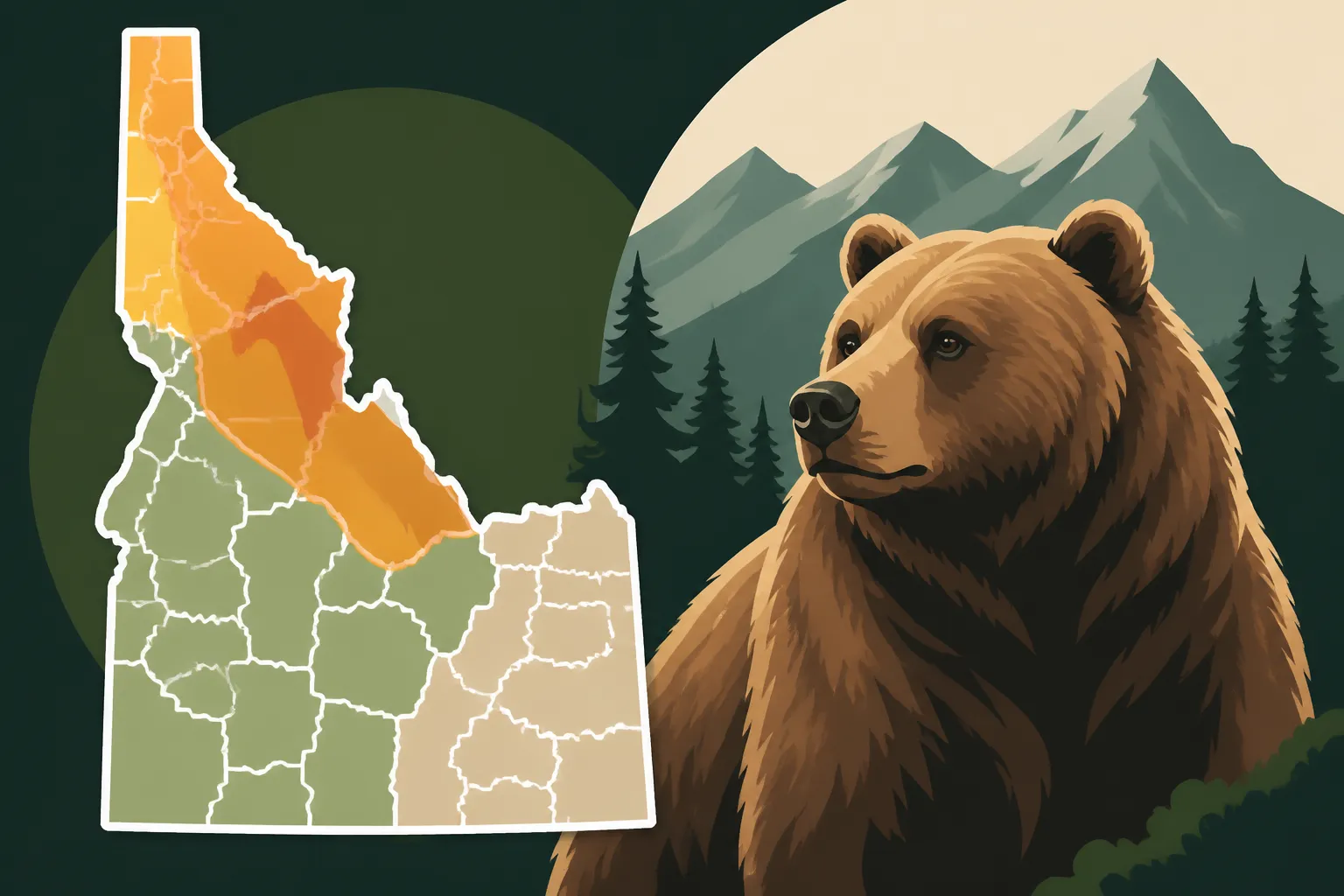
When you're looking at hunting units in southeastern Idaho, particularly those bordering Wyoming or Montana, you are absolutely in grizzly country. Units like 60, 60A, 62, 62A, 66, 66A, and 67, for instance, are directly adjacent to or contain areas recognized as part of the GYE grizzly habitat. This means that if you're planning an elk hunt in the Caribou-Targhee National Forest, or pursuing mule deer in the high country near the Wyoming border, you must operate under the assumption that a grizzly could be present. These bears have been managed for decades here, and they are a constant part of the landscape, often utilizing the same prime hunting areas for forage and denning. It's not uncommon for hunters here to see fresh sign or even have direct encounters.
Selkirk and Cabinet-Yaak Areas
Moving to the far north of the state, Idaho also shares borders with two other important grizzly recovery zones: the Selkirk Ecosystem and the Cabinet-Yaak Ecosystem. These are smaller, more fragmented populations than the GYE, but they are equally vital to grizzly recovery efforts. The Selkirk Mountains, spanning parts of northern Idaho, Washington, and British Columbia, hold a small but persistent grizzly population.
Hunting units like 1, 2, and 3, in Idaho's Panhandle, fall within or directly adjacent to these northern recovery zones. This area is characterized by dense forests, rugged mountains, and abundant huckleberry patches, which are prime grizzly forage. Hunters venturing into the Kaniksu National Forest for whitetail deer or bear often find themselves sharing the woods with grizzlies. While encounters might be less frequent than in the GYE simply due to lower bear densities, the potential is very real, and vigilance is just as crucial. Understanding that these two distinct geographical areas – the extreme southeast and the extreme north – are Idaho's primary grizzly strongholds is foundational for your hunt planning.
The Expanding Range and Dispersing Bears
Here’s where it gets a little more complex and, for some hunters, a bit more unnerving. While grizzlies have established recovery zones, they are not strictly confined to these lines drawn on a map. Grizzlies are intelligent, adaptable, and mobile creatures, especially younger males seeking new territories. This means bears can and do disperse beyond the traditional boundaries of the GYE, Selkirk, and Cabinet-Yaak ecosystems.
We've seen evidence of grizzlies moving into units further west in central Idaho, sometimes hundreds of miles from their natal ranges. These dispersal events are natural, but they add a layer of unpredictability to hunting. A unit that historically had no grizzly presence might now occasionally host a transient bear. This isn't to say every unit in Idaho is now grizzly country, but it means that areas adjacent to known recovery zones, particularly those with good habitat and movement corridors, could see a grizzly pop up. This expansion can be alarming for hunters who thought they were in "safe" territory, and it highlights the need for constant awareness and checking the latest information from Idaho Fish and Game. It's no longer just about the core areas; it's about understanding the dynamic nature of these populations.
Practical Ways to Identify Grizzly Presence in Your Hunt Unit
Knowing that grizzlies can be in a unit is one thing, but figuring out if they are there, or if signs suggest their recent presence, is another. Thankfully, there are several practical steps you can take.
Checking Official Idaho Fish and Game Resources
The Idaho Department of Fish and Game (IDFG) is your absolute best source for up-to-date information on grizzly distribution and management. Before you finalize any hunt plans, make it a point to check their website for grizzly bear updates, known sightings, and specific advisories for the units you intend to hunt. Often, they will publish maps or text that indicate units or areas with known grizzly activity.
These resources are invaluable, as they reflect ongoing monitoring efforts and real-time data. Don't just glance at the hunting regulations; dig deeper into the wildlife management sections. Tools like The Idaho Hunt Planner Is the Tool to Start With on the IDFG website can be incredibly helpful for this, allowing you to cross-reference unit boundaries with potential grizzly zones. Many hunters also use sophisticated e-scouting platforms like GoHunt, which can often integrate public land data and sometimes even layers reflecting wildlife distribution or habitat types. By combining IDFG's direct information with the mapping capabilities of a tool like GoHunt, you can get a clearer picture of your unit's grizzly risk profile long before you hit the trailhead. It's all about being proactive rather than reactive.
Interpreting Bear Sign and Habitat
Once you're actually in the field, knowing how to interpret bear sign becomes critical. Grizzlies leave distinct clues that, once recognized, can tell you if you're in active grizzly country. Look for large tracks – grizzlies typically have a more pronounced toe spread and longer claw marks than black bears, especially on the front paws. Their stride is also often wider and more deliberate. Fresh scat can indicate recent presence; grizzly scat frequently contains large amounts of vegetation, berries, or even hair/bone fragments.
Beyond direct sign, pay attention to the habitat itself. Grizzlies favor certain areas, especially during specific times of the year. Dense huckleberry patches in late summer and fall are massive attractants. Riparian areas, where water and green forage are abundant, are also common haunts. They'll also aggressively dig for roots, tubers, and ground squirrels, leaving significant excavations. Old rub trees, where bears scratch and scent mark, can tell you that bears frequent an area, even if not specifically grizzlies. By understanding Grizzly Identification for Idaho Bear Hunters, you'll be better equipped to distinguish between a black bear and a grizzly encounter, which can sometimes make a difference in your response. Always be on the lookout for any of these indicators; they are nature's warning signs.
Utilizing Local Knowledge and Scouting
Never underestimate the power of local knowledge. Talking to forest service rangers, local Idaho Fish and Game personnel, and seasoned hunters who frequent your chosen units can provide insights that online maps simply can't. They can tell you about recent sightings, problem areas, or unusual bear activity that might not yet be widely publicized. They might also share information about specific drainage systems or high-country basins where they consistently see grizzly activity.
Furthermore, diligent e-scouting and on-the-ground scouting before the season are vital. While platforms like GoHunt allow you to scrutinize terrain from your living room, there's no substitute for walking the ground. Look for game trails heavily used by large animals, water sources, and potential feeding areas. If you find fresh sign during your scouting trips, you know exactly what you're dealing with. Knowing the terrain also helps you identify escape routes or defensible positions should you have an unexpected close encounter. Combine the latest satellite imagery and topographic maps with boots on the ground to get the full picture.
Essential Preparedness for Hunting in Grizzly Country
Knowing grizzlies are in your unit is only half the battle; the other half is being prepared for a potential encounter. This isn't about fear, but about respect and readiness.
Arming Yourself: Bear Spray and Firearms
This is a hot topic among hunters, and for good reason. When you're in grizzly country, you need a plan for defense. The consensus among wildlife experts, and a stance I strongly advocate for, is that bear spray is your primary defense. It's highly effective at deterring aggressive bears and has a better track record of stopping charges without injury to the bear or human. Carry it in an accessible holster – not in your pack – and know how to deploy it rapidly. Practice drawing it so it becomes second nature.
However, many hunters also choose to carry a firearm, and there's a strong argument for that as well. The discussion around Bear Spray Against a Sidearm in Grizzly Country often comes down to personal comfort and skill. If you choose to carry a firearm for bear defense, it should be a powerful caliber (like a 10mm pistol, .44 Magnum, or a rifle you're already hunting with) that you are proficient with under stress. The key word here is proficient. A sidearm is a last-ditch option, and you must be able to deploy it quickly and accurately in a terrifying, high-stakes situation. Many hunters prefer a combination: bear spray for most deterrence situations, and a firearm as a backup for the absolute worst-case scenario. Whatever you choose, it needs to be accessible, and you need to be practiced with it.
Camp and Carcass Management
One of the most critical aspects of safety in grizzly country, especially during an extended backcountry hunt, is proper food and carcass management. Bears are incredibly smart and have an uncanny ability to smell food from miles away. When you set up camp, choose a site away from heavy game trails and avoid setting up next to dense cover. All food, trash, and scented items (like toothpaste or deodorant) must be stored properly. This means using bear-resistant canisters, hanging food from a tree at least 10 feet off the ground and 4 feet from the trunk, or storing it in a vehicle if possible. These are critical Food Storage Rules in Grizzly Country that prevent habituating bears to human food.
If you are fortunate enough to harvest an animal, the situation becomes even more complex. A downed elk or deer is a massive attractant. Field dress your animal quickly and get the meat cooled. If possible, quarter the animal and hang the meat to cool, then plan to get it out of the backcountry as quickly as you safely can. This is where the challenge of Packing an Elk Out of Steep Country Alone becomes even more pronounced. Consider boning out the meat to reduce weight and speed up the process. If you have to leave a carcass overnight, especially in high-density grizzly areas, ensure it's not near your camp, and consider taking extra precautions like hanging reflective material or even setting up a temporary electric fence around the meat cache. Your goal is to minimize the time a bear has to find and claim your hard-earned harvest.
Group Dynamics and Situational Awareness
Hunting with a partner or in a small group significantly increases safety in grizzly country. Two sets of eyes and ears are always better than one, and the noise generated by a group can often alert bears to your presence, giving them time to move off before a surprise encounter. If you choose to embark on Hunting Solo Against Hiring a Guide, your situational awareness needs to be dialed up to an 11.
Make noise, especially when moving through dense timber or around blind corners where visibility is limited. Talking, singing, or periodically calling out can give a bear notice. Pay constant attention to your surroundings: look for fresh sign, scan ridges and draws, and be aware of wind direction. If you see a bear at a distance, give it a wide berth and change your route. Never approach a bear, especially a sow with cubs or a bear on a carcass. Knowing when to back off and reroute is a sign of respect for the wildlife and smart backcountry travel. Your entire demeanor in grizzly country should be one of alertness and respect.
Navigating Specific Idaho Units with Grizzly Overlap
Let's get a bit more granular about the units where you're most likely to encounter a grizzly. While dispersal means no unit is entirely immune, some units consistently show more activity.
Units in the Greater Yellowstone Ecosystem Influence
In the southeastern corner of Idaho, the units most directly influenced by the Greater Yellowstone Ecosystem are primarily within the Salmon-Challis, Caribou-Targhee, and Bridger-Teton National Forests. These include units like:
- Unit 60/60A: These units sit on the eastern edge of the state, bordering Wyoming. The rugged terrain here is classic high-country elk and mule deer habitat, but it's also prime grizzly territory.
- Unit 62/62A: Further north along the Wyoming border, these units offer fantastic hunting but come with a very real possibility of grizzly encounters. Think deep timber and vast wilderness areas.
- Unit 66/66A: Nestled further west, these units are still very much within the GYE's sphere of influence. Hunters here should be acutely aware of grizzly presence, particularly near active game and berry patches.
- Unit 67: This unit is perhaps one of the most well-known for grizzly activity in Idaho, bordering the Yellowstone National Park itself. Any hunting trip into Unit 67 requires extreme grizzly awareness and preparedness.
These units share characteristics of expansive wilderness, high elevations, and a blend of timber, open parks, and brushy draws that provide ideal grizzly habitat. Hunters pursuing elk during the rut or mule deer in the high country during late seasons will be spending considerable time in these areas.
Northern Panhandle Units to Be Aware Of
Up in the northern reaches of Idaho, particularly around the Selkirk Mountains, the units with the highest likelihood of grizzly encounters include:
- Unit 1: This unit in the extreme north is part of the Selkirk Mountains ecosystem and has a known grizzly presence. It’s dense, rugged, and remote, offering both challenge and opportunity for hunters.
- Unit 2: Just south of Unit 1, this unit also falls within the general range of the Selkirk grizzlies. Bear activity here, though perhaps less frequent than in Unit 1, is still a distinct possibility.
- Unit 3: Extending further east and south, Unit 3 shares some habitat characteristics with the other northern units. While potentially on the fringes of the core grizzly habitat, vigilance is still key.
The terrain in these northern units is typically steep, heavily timbered, and receives significant precipitation, fostering dense undergrowth and abundant berry crops. Whitetail deer are the primary big game species here, alongside black bear, and hunters focusing on these animals will often be in ideal grizzly habitat.
Adjacent Units and Dispersal Corridors
It’s crucial to remember that grizzlies aren't always confined to these specific unit numbers. Their dispersal habits mean that units adjacent to these core areas, or those that serve as natural travel corridors, can also see occasional grizzly activity. For example, units immediately surrounding the GYE core (like parts of 61, 65, 69) or those around the Selkirks (like parts of 4, 5) could experience transient bears.
Often, major river drainages or large, contiguous wilderness areas act as highways for dispersing bears. For instance, a bear might travel along the Salmon River drainage or through large tracts of National Forest land to explore new territories. This highlights why checking the very latest IDFG updates is always essential, even if your chosen unit isn't listed as a "primary" grizzly zone. Being informed and prepared is your best defense.
| Region/Ecosystem | Primary Units Affected (Examples) | Grizzly Presence Level | Key Considerations for Hunters |
|---|---|---|---|
| Greater Yellowstone (GYE) | 60, 60A, 62, 62A, 66, 66A, 67 | High | Assume grizzlies are present; extreme caution with food/carcasses. |
| Selkirk Mountains | 1, 2, 3 | Moderate-High | Dense timber, high berry production; increased vigilance in summer/fall. |
| Cabinet-Yaak | Very limited Idaho overlap, near Unit 1 | Moderate | Similar to Selkirk, though less common; remote, rugged terrain. |
| Adjacent/Dispersal Areas | Units bordering core zones (e.g., 61, 65, 69, 4, 5) | Low-Moderate | Be aware of transient bears, especially along river corridors and wilderness fringes. |
Disclaimer
This article is for general informational purposes only and does not constitute professional advice. Laws, prices and regulations vary by location and change over time. Consult a qualified professional for guidance on your specific situation.