Forest Grouse Through Idaho’s Timber
There's something uniquely satisfying about slipping through Idaho's vast timber, the crisp mountain air filling your lungs, in pursuit of forest grouse. It's not the high-octane chase of an elk or the strategic long-range shot at a mule deer, but a quieter, more intimate dance with the woods. Yet, many hunters find themselves wondering where to even begin in such expansive country, or how to reliably locate these elusive feathered gems. This guide is here to unravel the mysteries of hunting ruffed and blue grouse across Idaho's diverse timbered landscapes, giving you the knowledge and confidence to make your next upland adventure a resounding success.
Identifying Idaho's Forest Grouse Species
Before you can effectively hunt forest grouse, you need to understand who you're looking for! Idaho is home to a few different species that fall under the "forest grouse" umbrella, each with its own preferred habitat and subtle behaviors. Knowing the difference can really help you pinpoint where to focus your efforts in the sprawling timber.
Ruffed Grouse: The Drumming King of the Lowlands
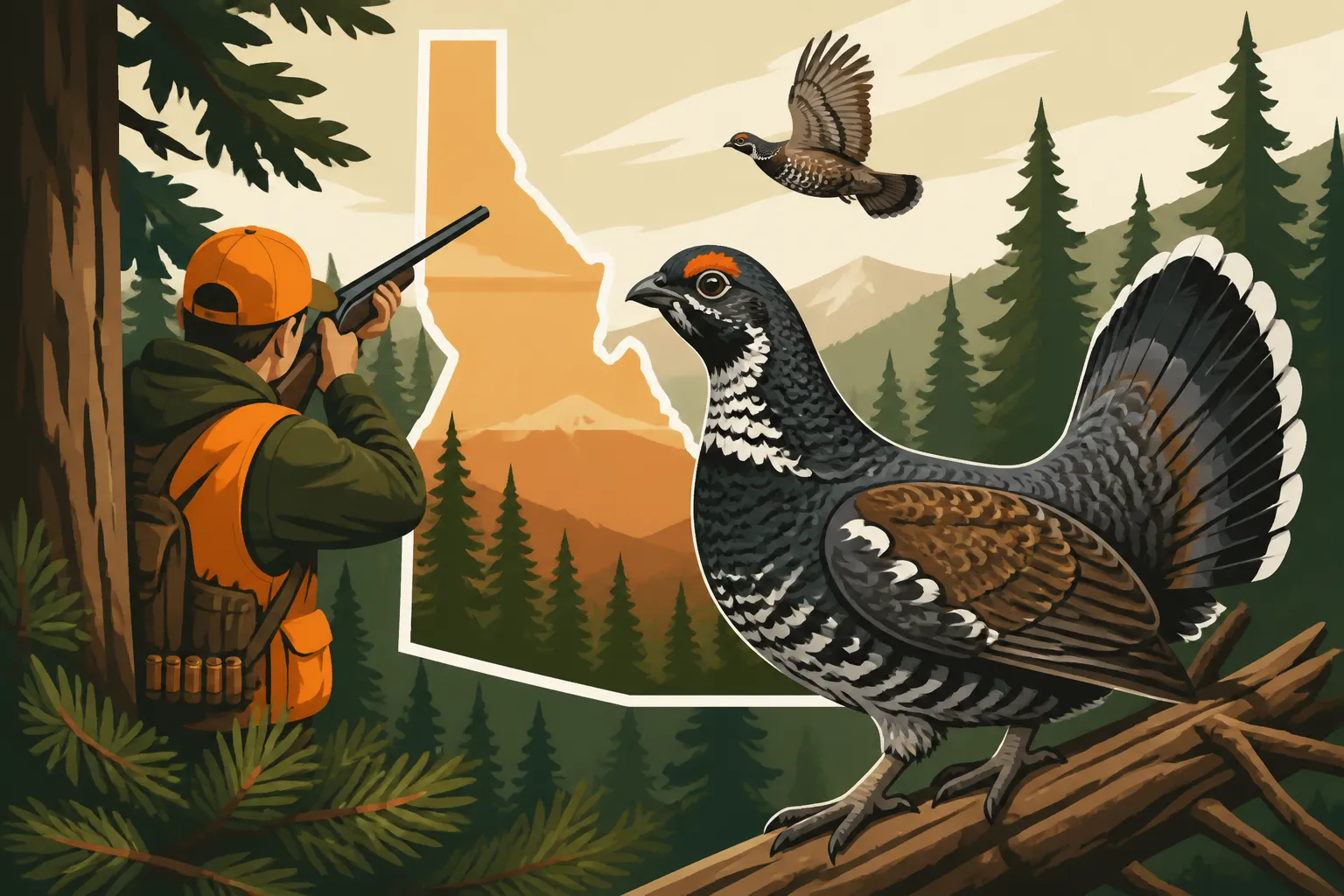
The ruffed grouse, often affectionately called "ruffies," are perhaps the most widespread and recognizable forest grouse in Idaho. You'll find them in the younger, denser timber, often near creek bottoms, old logging roads, or thick stands of alder and willow. Their plumage is a beautiful mosaic of browns, grays, and black, providing incredible camouflage against the forest floor and tree bark. What truly sets them apart, though, is the male's drumming display – a rapid wing beat against the air that sounds remarkably like a distant engine trying to start up, used to attract mates and mark territory. It's a sound that instantly transports you to the heart of the wild.
These birds are masters of explosive flight. When flushed, they burst from cover with a startling whir of wings, often darting behind trees in an instant, leaving many a hunter startled and empty-handed. Their diet consists of buds, twigs, catkins, and berries, which is why you'll often find them foraging near aspens, birches, and fruit-bearing shrubs. Targeting areas with a mix of dense cover and these food sources is key. Knowing their preferred low-elevation, dense timber habitats can help you narrow down your search significantly, especially when scouting potential areas using tools like GoHunt maps.
Blue Grouse: High Country Timber Dwellers
When we talk about "blue grouse" in Idaho, we're typically referring to two subspecies: the Dusky Grouse and the Sooty Grouse. While historically grouped, the Sooty Grouse (found mostly in coastal and western regions) and Dusky Grouse (more widespread in interior mountain ranges like Idaho) are genetically distinct but share similar habits for hunters. In Idaho, you'll mainly be encountering Dusky Grouse, often just called "dusky" or "blue grouse." Unlike their ruffed cousins, blue grouse are true denizens of the high country. As the seasons progress, you'll find them moving from lower, brushy areas in spring to higher elevation coniferous forests, especially during the fall.
They're larger than ruffed grouse and have a much more subdued flush, often flying silently into a dense fir or pine tree, relying on their excellent camouflage to remain hidden. Their coloration is a mottled gray and black, blending perfectly with the shadows and bark of mature timber. Males perform a unique hooting call that carries surprisingly far through the mountains, a deep, resonant sound that can be tough to pinpoint. Look for them in mature timber stands, especially those with Douglas fir, grand fir, and ponderosa pine, often near ridge tops and north-facing slopes. Their diet includes conifer needles, berries, and insects, making those dense forest pockets prime real estate. Understanding this upward migration throughout the year is critical for success, as hunters will need to shift their focus from creek bottoms to higher ridges. More details about these specific species can be found in our guide on Blue and Ruffed Grouse in High Timber.
Where to Find Grouse in Idaho's Expansive Timber
Idaho's timbered landscapes are vast and can feel overwhelming when you're trying to locate a bird the size of a chicken. But don't despair! By understanding the specific habitat preferences and seasonal movements of ruffed and blue grouse, you can drastically increase your odds of success. It's all about playing detective and looking for the right clues.
Focusing on Ruffed Grouse Hotspots
For ruffed grouse, think "edge habitat" and "early successional forests." They absolutely love areas where different types of cover meet, offering them both food and protection from predators. This means you should be looking for the following:
- Young Forest Stands: Areas that have been logged 10-20 years ago, resulting in a dense regrowth of saplings, shrubs, and brush. These thickets provide excellent cover.
- Creek Bottoms and Riparian Zones: The moist ground along creeks and small rivers often supports a lush growth of alders, willows, and other broadleaf shrubs that provide both food and escape cover. The cooler temperatures here are also attractive.
- Old Logging Roads and Trails: These offer open lanes for walking but are often bordered by dense cover. Grouse will use these edges for dusting, feeding, and crossing. The disturbed ground along these routes often promotes the growth of their preferred food plants.
- Mixed Aspen and Conifer Stands: Aspen groves provide critical food sources like buds, while the nearby conifers offer thermal cover, especially as the weather turns colder. A mix of tree types is a major draw.
- Berry Patches: Later in the season, grouse will key in on patches of huckleberries, serviceberries, and other forest fruits. If you find a productive berry patch, chances are good grouse will be nearby.
When you're out there, pay attention to the small details. Are there catkins on the aspens? Are there fresh droppings under a berry bush? These are all signs that grouse are in the vicinity. The panhandle region of Idaho, with its abundant mixed timber and riparian zones, is particularly well-known for its ruffed grouse populations.
Locating Blue Grouse at Higher Elevations
Blue grouse, as mentioned, are creatures of the higher elevations and mature forests. Their haunts require a bit more legwork, often involving hiking into steeper terrain, but the reward of a big, beautiful blue grouse is well worth the effort.
- Mature Coniferous Forests: Focus on stands of Douglas fir, grand fir, ponderosa pine, and subalpine fir. These trees provide both food (needles) and excellent roosting/thermal cover. Look for stands with a good understory of shrubs and forbs.
- Ridge Tops and North-Facing Slopes: Blue grouse often prefer ridge tops for sunning and visibility, especially early and late in the day. North-facing slopes tend to retain moisture longer, leading to more lush vegetation and cooler temperatures, which grouse appreciate.
- Forest Openings and Edges: While they love dense timber, blue grouse will also utilize small clearings, natural openings, or the edges of recent burns for feeding on grasses, forbs, and insects. These transition zones between dense cover and open feeding areas are prime locations.
- Proximity to Water: Like all game, grouse need water. While high-country birds might get much of their moisture from dew or vegetation, finding areas near seeps, springs, or small trickles of water can increase your chances, especially in drier periods.
- Elevation Changes: As the season progresses from early fall into later autumn, blue grouse tend to move to higher elevations, sometimes even above the timberline before significant snow pushes them down. Their diet shifts to conifer needles during these colder months, so keying in on dense stands of fir becomes paramount.
Utilizing topographical maps or digital scouting tools can be immensely helpful in identifying these features before you even step foot in the woods. Pay attention to contour lines and forest cover types. Our resource on Glassing Idaho Breaks for Mule Deer might focus on different game, but the principles of using terrain to your advantage translate well to finding blue grouse in similar high-country environments.
Effective Tactics for Timber Grouse Hunting
Hunting forest grouse isn't about covering miles in an open field; it's a more methodical, almost meditative process of moving through dense cover. The key is to be prepared for those explosive flushes and to maximize your chances of getting a shot off. There are a few distinct approaches, and often, the most successful hunters blend them depending on the terrain and the birds' behavior.
Still Hunting and Flush Hunting
These two tactics are often intertwined and rely on your ability to move quietly and observe your surroundings.
-
Still Hunting: This is perhaps the most traditional way to hunt grouse in the timber. It involves moving slowly, taking a few steps, then pausing to scan and listen. Grouse are often heard before they're seen – a rustle in the leaves, a soft cluck, or the tell-tale "thump-thump-thump" of a ruffed grouse drumming. The goal is to spot the bird on the ground or in a tree before it flushes, giving you a chance for a standing shot. Pay close attention to logs, brush piles, and the base of trees. Wear quiet clothing that won't snag on branches. This method requires patience and a keen eye, often rewarding those who spend more time looking and listening than walking. It's a bit like Still Hunting Timber for Bedded Mule Deer, but for much smaller game.
-
Flush Hunting: This is more about actively pushing through cover to make birds fly. It's often done in conjunction with still hunting. When you're moving through dense thickets, berry patches, or along old logging roads, you're essentially trying to "kick up" grouse. The challenge here is to be ready for the sudden flush and to get your shotgun mounted quickly. Walk with your shotgun at the ready, eyes scanning for movement. If you're hunting with a partner, walking abreast about 20-30 yards apart can help cover more ground and potentially push birds towards one another, increasing shot opportunities. Be aware of safe shooting lanes and your partner's position at all times.
Both methods benefit from understanding typical grouse escape routes. When flushed, ruffed grouse often fly low and hard into the thickest cover, while blue grouse might fly up into a nearby conifer. Knowing this can help you anticipate their flight path and position yourself for a better shot.
Hunting with a Dog
For many upland hunters, a good bird dog is an indispensable partner, and nowhere is this more true than in the dense, often difficult terrain of Idaho's timber.
- Pointing Dogs: Breeds like English Setters, German Shorthaired Pointers, or Brittany Spaniels excel at finding and holding grouse. A pointing dog will "lock up" when it scents a bird, allowing you to walk in, flush the grouse, and take a shot. This is especially advantageous for blue grouse, which tend to hold tight in trees. The dog's nose can find birds you would walk right past, and their pointing stance gives you precious seconds to prepare for the shot. Training a pointing dog for grouse requires exposure to these specific birds and their habits, as a bird that runs can be frustrating.
- Flushing Dogs: Labs, Springer Spaniels, or even some versatile pointing breeds that are trained to flush, can also be effective. These dogs work closer to the hunter, actively pushing birds from cover. While you lose the advantage of a solid point, a good flushing dog will often retrieve downed birds, which is invaluable in thick brush where a lost bird is easily a lost meal.
Regardless of the breed, a well-trained dog dramatically increases your success rate and adds an incredible dimension to the hunt. A dog’s ability to find and retrieve game, especially in thick cover, is paramount. They help ensure ethical hunting by minimizing lost birds. When working with a dog, communication and understanding their body language are key. Remember, a dog needs conditioning for mountain hunts just like you do!
Essential Gear for Idaho Timber Grouse
Heading into Idaho's timber for grouse requires some specific gear considerations. The right equipment can make the difference between a frustrating trek and a successful, enjoyable hunt. Forget the heavy packs for big game; grouse hunting is typically a lighter affair, but durability and practicality are key.
Shotguns and Ammunition
Your choice of firearm is critical for these fast-flying birds.
- Shotgun Gauge: The most popular gauges for grouse are 12-gauge, 20-gauge, and 28-gauge.
- 12-gauge: Offers the widest variety of loads and a dense pattern, but can be heavier to carry through dense cover.
- 20-gauge: A fantastic all-around choice, lighter than a 12-gauge with less recoil, but still delivering plenty of punch for grouse. It's often the preferred choice for its balance of power and portability.
- 28-gauge: A delightful and elegant choice, very light and nimble, perfect for quick swings in tight cover. It requires a bit more precision due to the smaller pattern, but it's an absolute joy to carry.
- .410 bore: While some experienced hunters use a .410, it's generally considered underpowered and challenging for new grouse hunters due to its very small pattern.
- Choke: An Improved Cylinder or Modified choke is generally ideal. Grouse flushes are often close-range affairs in thick cover, so a wider pattern is beneficial. A Full choke will lead to blown-up birds at close range and missed birds in thick timber.
- Ammunition: Light game loads with shot sizes #6, #7.5, or #8 are perfect for grouse. #7.5 is a very popular all-around choice. You want enough pellets to create a dense pattern but not so much power that it destroys the bird. Look for loads designed for upland birds.
Remember, a lightweight, fast-handling shotgun is a major asset in the timber. Over/unders, side-by-sides, and semi-automatics are all popular choices.
Clothing, Footwear, and Navigation
Comfort and safety are paramount when navigating Idaho's challenging terrain.
- Clothing: Layers are your friend. You'll be doing a lot of walking, so you'll heat up, but the timber can be cool and damp. A good base layer, a fleece mid-layer, and a durable, brush-resistant outer layer are ideal. Many hunters opt for briar-proof pants or chaps to protect against thorns and thick brush. Blaze orange is often a good idea for visibility, even if not strictly required for all upland seasons, especially if hunting with partners.
- Footwear: Sturdy, waterproof hiking boots are essential. You'll be traversing uneven terrain, wet leaves, and potentially stream crossings. Good ankle support is critical to prevent twists and sprains.
- Navigation: You must carry a reliable navigation system. Idaho's timber can be disorienting, and it's easy to get turned around, even on a familiar trail.
- GPS Unit: A dedicated handheld GPS is rugged and reliable.
- Smartphone App: Apps like GoHunt are excellent for mapping and navigation. Download offline maps before you go, as cell service is often nonexistent in the backcountry.
- Physical Map and Compass: Always carry these as a backup, and know how to use them. Batteries die; paper doesn't.
- Other Essentials:
- Game Vest or Bag: For carrying your birds, shells, and other small items. Many vests have integrated blood-proof pouches.
- Water: Staying hydrated is crucial.
- Snacks: Energy bars or other quick snacks for sustained effort.
- First-Aid Kit: Basic supplies for cuts, scrapes, and blisters.
- Whistle: For communication with partners or your dog, and as a signaling device if lost.
- Bear Spray: If hunting in bear country (which much of Idaho is), this is a non-negotiable safety item.
- Knife: For field dressing birds.
Being prepared with the right gear ensures a safer and more enjoyable experience, allowing you to focus on the hunt itself.
Seasons, Regulations, and Ethical Considerations
Understanding the specific rules and acting responsibly are just as important as knowing where to find the birds. Idaho Fish and Game sets clear guidelines to ensure sustainable populations and safe hunting for everyone. Our detailed guide on Idaho Upland Bird Season Opening Dates offers a great overview to help you plan.
Season Dates and Bag Limits
Idaho's forest grouse season typically runs for an extended period, generally from late August or early September well into December, depending on the unit. This long season offers opportunities from warm early-fall hunts to challenging late-season excursions in the snow.
- Statewide General Season: Usually, the season opens in late summer and extends through fall, allowing hunters ample time to pursue grouse.
- Daily Bag Limit: For Ruffed, Spruce, and Dusky (Blue) Grouse combined, the daily bag limit is typically four birds per day.
- Possession Limit: The possession limit is usually 12 birds, meaning you can have up to 12 grouse in your possession (e.g., at your camp or home) at any given time.
These regulations are designed to manage harvest pressure and ensure healthy populations for future generations. It's crucial to consult the most current Idaho Upland Game, Furbearer, and Turkey Seasons and Rules brochure before each hunting season, as dates and limits can change annually. This brochure is available online through the Idaho Department of Fish and Game website.
Ethical Hunting Practices and Safety
Ethical hunting goes beyond simply following the rules; it's about respecting the game, the land, and your fellow hunters.
- Positive Identification: Always be 100% sure of your target before you shoot. Avoid "sound shooting" or "snap shooting" at indistinct shapes in the dense timber. Make sure it's a grouse and not another protected species or a non-game bird.
- Clean Kills: Strive for clean, humane kills. Take responsible shots within your effective range. If you wound a bird, make every effort to recover it. This is where a good dog truly shines.
- Leave No Trace: Pack out everything you pack in, including spent shell casings. Leave the woods cleaner than you found them.
- Respect Private Land: Idaho has a mix of public and private land. Always know where you are. If hunting on private land, ensure you have explicit permission from the landowner. Trespassing is illegal and gives all hunters a bad name. Information on Getting Landowner Permission in Idaho is vital for this.
- Firearm Safety: Always treat every firearm as if it's loaded. Keep the muzzle pointed in a safe direction, keep your finger off the trigger until you're ready to shoot, and be sure of your target and what's beyond it. In dense timber, this means being acutely aware of your hunting partners and any potential hikers or other outdoor enthusiasts.
- Visibility: Wearing blaze orange, even when not legally required for upland birds, is highly recommended, especially when hunting with others. It significantly increases your visibility to other hunters and can prevent accidents. Our guide on Blaze Orange Requirements Through the Season provides further insight into mandatory use for big game, but the principle applies.
- Know Your Location: The vastness of Idaho's national forests and BLM ground offers incredible opportunities, but also the potential to get lost. Always tell someone where you're going and when you expect to return. Our guide on Hunting Idaho's National Forests and BLM Ground provides more insights into accessing these public lands.
By adhering to these principles, you not only ensure a safer and more successful hunt for yourself but also contribute positively to the image of hunting and conservation in Idaho.
The Role of Technology in Grouse Hunting
In today's world, technology has undeniably changed how we approach hunting, even for something as traditional as forest grouse. While nothing replaces time spent in the woods, modern tools can significantly enhance your scouting, navigation, and overall strategy.
Digital Mapping and Scouting
Gone are the days when a paper map and compass were your only allies (though you should still carry them as backup!). Digital mapping applications have revolutionized how hunters interact with the landscape.
- Layered Maps: Apps like GoHunt offer incredibly detailed topographical maps with layers for public/private land ownership, forest service roads, wilderness boundaries, and even historical burn areas. These layers are goldmines for grouse hunters. You can pinpoint young forest regrowth, identify creek bottoms, locate ridge tops, and understand access points – all from your couch.
- Identifying Prime Habitat: Before you even leave home, you can use these tools to scout for those "edge habitats" and "early successional forests" that ruffed grouse love, or the mature conifer stands and high-country ridges favored by blue grouse. Look for areas with a mosaic of timber types, varying elevations, and proximity to water.
- Saving Waypoints and Tracks: Once in the field, you can mark hot spots, vehicle parking locations, downed birds, or even areas where you flushed birds but didn't get a shot. Tracking your path helps you avoid getting lost and allows you to analyze your most productive routes later.
- Offline Capability: Crucially, always download your maps for offline use. Cell service is notoriously spotty in many of Idaho's prime grouse hunting areas. Relying solely on a live internet connection will leave you stranded and potentially lost. This is where a platform like GoHunt truly shines, allowing you to prepare thoroughly.
By leveraging these digital tools, you can enter the timber with a much clearer understanding of the terrain and where to focus your efforts, saving you time and energy in the field.
Weather and Game Activity Tracking
Modern technology can also help you anticipate grouse behavior by tracking environmental factors.
- Weather Forecasts: Keeping an eye on the weather is important for any hunt. Grouse activity can be influenced by temperature, precipitation, and wind. A bluebird day after a cold snap might get birds moving, while a blustery, rainy day might keep them hunkered down.
- Solunar Tables (Less Critical for Grouse): While more commonly used for big game, some hunters check solunar tables for general wildlife activity periods. For grouse, it's less about specific feeding times and more about daily comfort and weather conditions.
- Trail Cameras (Limited Use for Grouse): Trail cameras are primarily used for big game and are generally not effective for scouting grouse due to their small size and unpredictable movements. However, if you're scouting for big game and happen to capture grouse activity, it can be a bonus.
- Harvest Statistics and Drawing Odds: While not directly related to real-time hunting, understanding broader harvest statistics (available from Idaho Fish and Game) can give you insights into general population health and where successful hunts are more common. Although grouse hunting is generally over-the-counter, knowing overall game trends for other species in an area can give you a feel for habitat quality.
Remember, technology is a tool, not a replacement for good old-fashioned woodsman skills. It enhances your ability to hunt effectively, but ultimately, success comes from spending time in the field, observing, learning, and adapting to the birds and their environment.
Here's a quick comparison of the three primary forest grouse species found in Idaho:
| Feature | Ruffed Grouse | Dusky (Blue) Grouse | Spruce Grouse (Limited) |
|---|---|---|---|
| Primary Habitat | Young, dense deciduous/mixed forests, creek bottoms, edges, aspens | Mature coniferous forests, high elevation, ridges, fir/pine | Dense spruce/lodgepole pine forests, bogs, typically higher latitude |
| Typical Size | Medium (1.2-1.8 lbs) | Large (2-3 lbs) | Medium (1.2-1.8 lbs) |
| Flush Behavior | Explosive, loud wing beats, often behind cover | Quiet, often flies into a nearby tree, relies on camouflage | Very tame, often allows close approach, "fool hen" |
| Male Sound | Distinctive "drumming" | Deep "hooting" | Hissing, low cooing |
| Primary Diet | Buds, twigs, catkins, berries, leaves | Conifer needles, berries, insects, forbs | Conifer needles, buds, berries |
| Distribution | Widespread throughout Idaho's timbered areas | Widespread in Idaho's mountain ranges | Limited to specific high-elevation northern Idaho conifer forests |
Disclaimer
The information provided in this guide is for general informational purposes only and does not constitute legal advice. Hunting regulations and seasons in Idaho are subject to change. Always consult the official Idaho Department of Fish and Game regulations brochure for the most current and accurate information before planning any hunting trip. It is the hunter's responsibility to understand and comply with all applicable laws and regulations.