Idaho State Endowment Land Access Rules
You've seen them on your mapping app, those patchwork blocks of land marked distinctly from National Forest or BLM, often labeled "State Endowment Land." It's a common source of confusion for many Idaho hunters, wondering if these parcels are truly public access or just another barrier. Trying to figure out where you can legally step foot and hunt without risking a trespass citation can be a real headache. This guide is here to unravel the mysteries of Idaho's State Endowment Lands, breaking down the access rules so you can hunt these areas with confidence and peace of mind.
Understanding Idaho's State Endowment Lands
Idaho's State Endowment Lands aren't your typical public lands like the vast tracts managed by the Bureau of Land Management (BLM) or the U.S. Forest Service. They have a unique purpose and a distinct set of management directives that impact how and when you can access them. It's a crucial distinction that many hunters, especially those new to Idaho or visiting from out of state, often overlook.
These lands were granted to Idaho by the federal government at statehood, specifically to generate revenue for particular public institutions, primarily schools. Think of it like a trust fund: the land is managed to produce income through various activities such as timber harvesting, grazing leases, mining, and commercial leases. This revenue then goes directly to support beneficiaries like public schools, universities, and other state institutions. Because of this financial mandate, the Idaho Department of Lands (IDL) manages these parcels with an eye toward maximizing long-term returns, which sometimes means balancing public recreation with revenue-generating operations. This is often where the perceived "grey area" of access comes from – unlike National Forests, where recreation is often a primary goal, on endowment lands it's often secondary to the financial purpose.
The frustrating part for hunters is that these lands can sometimes look identical to adjacent national forest or BLM ground. The trees are the same, the terrain might be just as wild, and the wildlife certainly doesn't recognize property lines. You might see a promising ridge or a dense timber pocket on your map and assume it's fair game, only to discover later that specific rules apply. Understanding this fundamental difference in management philosophy is the first step to navigating access confidently.
General Access Rules for State Endowment Lands
Here's the good news: generally speaking, Idaho State Endowment Lands are open for public recreation, including hunting, fishing, and hiking, unless they are explicitly posted closed. This "open unless posted" policy is a lifeline for many hunters, providing extensive opportunities across the state. However, that critical "unless posted" clause is where hunters need to pay close attention. It's not a blanket free-for-all, and specific parcels can and do have temporary or permanent restrictions.
Identifying State Endowment Lands on Your Map
Knowing precisely where you are and what type of land you're standing on is paramount. This is where modern mapping applications become an indispensable tool for any hunter in Idaho. Gone are the days of guessing based on paper maps or vague descriptions.
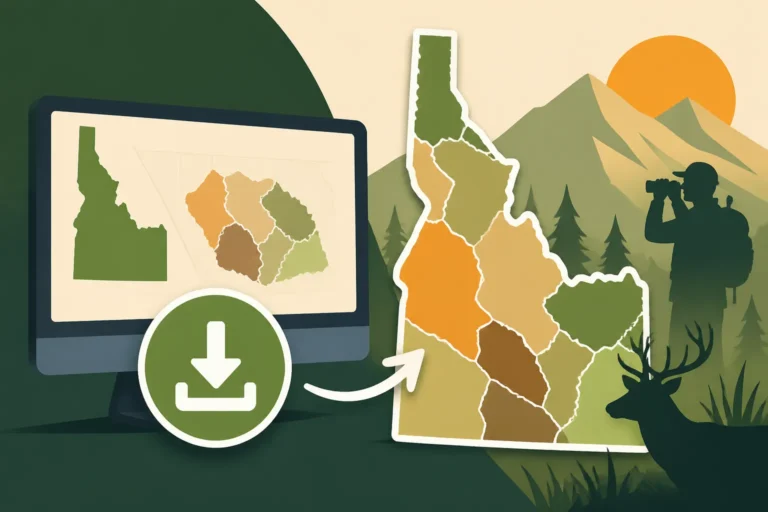
Tools like onX Hunt have become the gold standard for mapping public and private land ownership, and they excel at differentiating State Endowment Lands. When you open your mapping app, you'll see these parcels highlighted with a distinct color, often a light blue or green, and clearly labeled. This visual cue is your first indication that while the land may be publicly accessible, it falls under the jurisdiction of the IDL, not the Forest Service or BLM. It's not just about knowing the boundary; it's about understanding the type of land. Imagine planning a multi-day backcountry hunt, only to realize half your intended route is across land with different rules. Using a reliable mapping app can prevent those heart-sinking moments and save you countless hours of scouting time or, worse, a potential trespass citation. Learning to use these layers effectively is crucial for Reading a Land Ownership Layer Correctly. For more in-depth pre-season planning, many hunters also leverage GoHunt to cross-reference unit boundaries, hunt statistics, and land ownership overlays, giving them a comprehensive picture before they ever set foot in the field.
"Unless Otherwise Posted": The Critical Caveat
This phrase is the linchpin of endowment land access. While open access is the default, the IDL can and does close specific areas or restrict certain activities for a variety of reasons. These closures are not arbitrary; they're directly tied to the land's primary purpose of generating revenue or protecting resources.
Common reasons for closures include active timber harvesting operations, which can be incredibly dangerous with heavy machinery, falling trees, and active hauling roads. Imagine a logging truck speeding around a blind corner while you're focused on tracking an elk; it's a recipe for disaster. Other closures might be due to road construction, fire rehabilitation efforts, or even temporary closures to protect wildlife during sensitive periods, such as calving or fawning. The IDL often uses signs on the ground at access points, gates, and major junctions to indicate these closures. Sometimes, particularly in areas with significant commercial activity, entire access roads might be gated and locked, or signs might explicitly state "No Public Access." Hunters must respect these signs without exception. Failure to do so isn't just a minor infraction; it's trespass and can carry significant penalties. Always be on the lookout for physical signs when you arrive at a potential access point.
Specific Hunting Considerations on Endowment Lands
Beyond general access, there are specific nuances to consider when hunting on Idaho State Endowment Lands that differ from other public lands. These often revolve around how you can travel within these parcels and what other activities are permitted.
Motorized Access and Roads
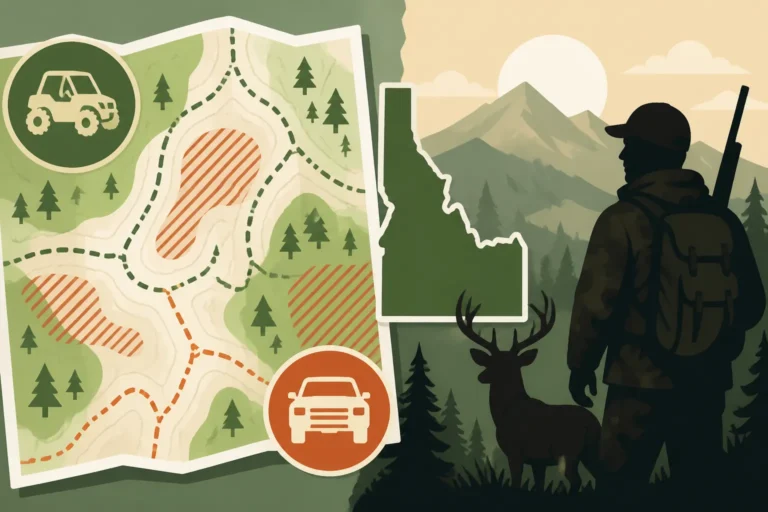
One of the most frequent points of contention and confusion for hunters on any public land is motorized access. On State Endowment Lands, the general rule of thumb mirrors much of Idaho's public land: established roads are typically open, but off-road travel is almost universally prohibited. This aligns with the broader Idaho's Motorized Hunting Rule Keeps You on the Road that governs much of the state's public hunting ground.
You might find a network of logging roads traversing an endowment parcel. Many of these roads are open to public vehicle travel, allowing you to get deeper into hunting areas. However, pay close attention to signs. Some roads may be active haul roads for timber operations, making them dangerous or requiring specific permits to use. Others might be temporarily closed or permanently gated due to erosion concerns, wildlife habitat protection, or simply to prevent damage to roads not built for public thoroughfare. It's a huge frustration to scout a promising area only to find your access route gated. You absolutely cannot drive off an established road to retrieve downed game, scout new areas, or set up camp. Not only can it cause significant environmental damage, but it's a direct violation of land use rules and can lead to hefty fines. Remember Why You Cannot Drive to Retrieve Downed Game is a statewide rule, and it's particularly enforced on lands with specific management goals. Always assume off-road travel is forbidden unless explicitly stated otherwise by a sign or official map.
Camping, Fires, and Other Recreational Use
While hunting is generally permitted, other recreational activities on State Endowment Lands can have slightly different rules than those on National Forests or BLM land. Because these lands are managed for revenue, they aren't always set up for extensive recreational infrastructure like developed campgrounds or picnic areas.
Dispersed camping, where you simply pitch a tent away from developed sites, is often allowed on State Endowment Lands, but it's vital to check for local restrictions. Fire restrictions can also be more stringent, especially during dry seasons or in areas with active timber operations where a wildfire could be catastrophic. Always check current fire danger ratings and any specific prohibitions for the area. The overarching principle is to practice extreme caution and adhere to Leave No Trace principles. Pack out everything you pack in, minimize your impact, and respect the natural resources. Activities like collecting firewood, cutting boughs, or even setting up permanent stands might require special permits, as these activities could impact the land's commercial value or resource management plans. Always assume permission is required for anything that might alter the land or its resources. For more general guidelines on various public lands, it's often helpful to compare with Hunting Rules Specific to Idaho WMAs, as they also have unique management objectives.
Staying Informed and Avoiding Trespass
The best way to ensure a successful and legal hunt on Idaho State Endowment Lands is to be proactive and informed. Don't rely on assumptions; verify access before you go.
Checking Official Sources for Current Information
The primary source for information on Idaho State Endowment Lands is the Idaho Department of Lands (IDL). Their website is an invaluable resource for hunters, providing maps, contact information for local land managers, and, most importantly, notifications of closures or specific restrictions. It might not be as user-friendly as a hunting-specific app, but it's the definitive authority.
Before you plan a hunt on or near State Endowment Land, make it a habit to visit the IDL website. Look for press releases, interactive maps, or contact information for the local IDL office responsible for the area you intend to hunt. These offices can provide up-to-the-minute details on active logging operations, fire closures, or other temporary restrictions that might impact your hunt. Sometimes, these closures aren't always clearly marked on an onX Hunt map if they're very recent or temporary, so double-checking official sources is a critical step. While the Idaho Hunt Planner Is the Tool to Start With for overall hunt planning, it's the IDL website that holds the specific, granular details about these unique parcels. Don't let the extra legwork deter you; an hour of research can save you a week of frustration or a costly ticket.
The Role of Responsible Hunting and Ethics
Ultimately, access to Idaho's State Endowment Lands for hunting and other recreation depends heavily on the responsible behavior of those who use them. The "open unless posted" policy is a privilege, not an inherent right, and it can be revoked if public use conflicts too heavily with the IDL's primary mandate or results in damage or misuse.
Every time you venture onto State Endowment Land, you are a representative of the hunting community. Leaving gates as you found them (closed if they were closed, open if they were open), packing out all trash, adhering to fire restrictions, and respecting any posted signage helps ensure that these lands remain accessible for future generations of hunters. If gates are cut, trash is dumped, or rules are flaunted, the IDL has every reason to implement more restrictive policies, including widespread closures. Your actions directly impact the collective hunting opportunity. It’s a bit like Getting Landowner Permission in Idaho – mutual respect and responsible behavior are key to continued access, even if the "landowner" is the state itself with its specific mandates. Being a good steward is not just an ethical choice; it's a strategic one that preserves hunting access for everyone.
| Land Type | General Hunting Access | Motorized Off-Road Travel | Camping Regulations | Primary Management Goal |
|---|---|---|---|---|
| State Endowment Land | Generally allowed (unless posted) | Generally prohibited | Often dispersed (check local rules) | Revenue generation for state beneficiaries |
| National Forest/BLM | Generally allowed | Restricted to designated routes | Often dispersed & designated | Multiple use (recreation, timber, grazing, wildlife) |
| Private Land | Requires permission | Requires permission | Requires permission | Owner's discretion |
Disclaimer
This article is for general informational purposes only and does not constitute professional advice. Laws, prices and regulations vary by location and change over time. Consult a qualified professional for guidance on your specific situation.