Idaho Requires a 40-Pound Bow at a 28-Inch Draw
It’s incredibly frustrating when you’re planning an exciting bow hunt in a new state, or even just trying to stay compliant in your home state, only to be met with a dense rulebook full of confusing jargon. One particular regulation that often trips up bowhunters in Idaho is the specific minimum draw weight requirement: 40 pounds, measured precisely at a 28-inch draw. It’s not just a suggestion; it’s a strict rule designed to ensure ethical hunting, but understanding exactly what it means for your setup and how to confirm compliance can feel like deciphering an ancient scroll. This comprehensive guide is here to unravel that specific regulation, breaking down why it exists, how to accurately measure your bow, and what it means for your next Idaho archery adventure.
Understanding Idaho's Minimum Draw Weight Requirement
Stepping into the Idaho wilderness with a bow in hand is a dream for many, but before you ever nock an arrow, you need to ensure your equipment meets the state's ethical and legal standards. The 40-pound draw weight rule is paramount for archers pursuing big game in Idaho, and it’s critical to understand it fully to avoid potential issues.
The 40-Pound Rule Explained
When Idaho Fish and Game states a minimum draw weight of 40 pounds, they're not just pulling a number out of thin air. This threshold is scientifically and ethically determined to ensure that an arrow launched from your bow carries sufficient kinetic energy and momentum to achieve a swift, humane kill on big game animals like deer and elk. An underpowered bow simply cannot deliver the penetration needed, leading to wounded animals and prolonged suffering, which goes against every principle of fair chase and responsible hunting. This regulation applies universally to all bow types used for big game, whether it's a modern compound, a traditional recurve, or a classic longbow. It's a foundational requirement that underscores the state's commitment to animal welfare and the integrity of the hunt.
For many experienced archers, 40 pounds might seem relatively low, as many hunt with bows pulling 60, 70, or even 80 pounds. However, this minimum is designed to be inclusive, allowing hunters of varying physical capabilities to participate while still upholding ethical standards. It acknowledges that not everyone can pull a heavy bow, but everyone must be able to deliver a lethal shot. A common misconception is that simply having a bow capable of 40 pounds is enough. The crucial part is that your bow must be set to and actually pull at least 40 pounds when measured at your draw length. If your bow has adjustable limb bolts, you need to ensure it's cranked up to the appropriate poundage. Just because a bow can be 70 pounds doesn't mean it is 70 pounds if you’ve backed the bolts out to make it easier to draw.
The 28-Inch Draw Measurement Standard
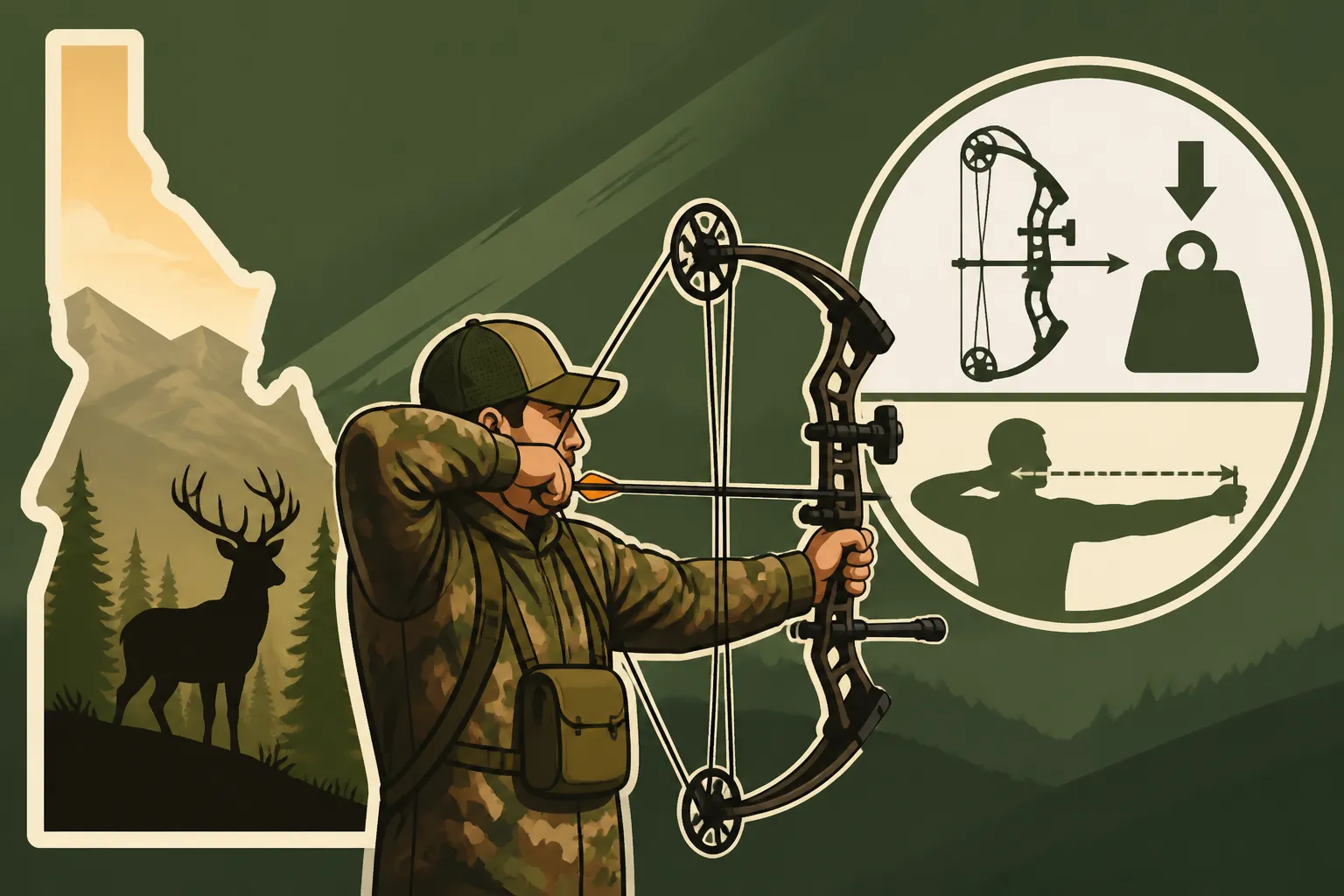
Now, here’s where things often get a little nuanced: the 40-pound minimum isn't just a static number; it's specifically measured at a 28-inch draw length. This 28-inch standard is a widely accepted industry benchmark, providing a consistent point of reference across different bow manufacturers and designs. Think of it like a standardized test: it allows Idaho Fish and Game to apply a uniform metric to all bows, regardless of a hunter's individual physical attributes. Your personal draw length might be shorter or longer than 28 inches, and this will absolutely affect the actual peak weight you feel when you draw your bow. A bow set to 40 pounds at a 28-inch draw will typically feel lighter if your draw length is shorter (say, 26 inches) and heavier if your draw length is longer (say, 30 inches).
This variability means that if your draw length is significantly different from 28 inches, you need to pay extra close attention. If you have a 30-inch draw, a bow rated 40 pounds at 28 inches will likely be pulling more than 40 pounds at your full draw, putting you well within compliance. However, if you have a short draw length, say 26 inches, a bow set to exactly 40 pounds at 28 inches might only be pulling 36 or 37 pounds at your actual full draw. In this scenario, you would need to adjust your bow’s draw weight upwards to ensure it meets the 40-pound threshold when measured at the 28-inch standard, even if it feels heavier to you. This is why accurately measuring your draw length and then using a reliable bow scale is so important. Ignoring this detail can lead to an unknowingly non-compliant setup, potentially putting your entire hunt in jeopardy. For a deeper dive into how Idaho consistently applies this specific measurement, check out our guide on How Idaho Measures Draw Weight at 28 Inches.
Why Idaho Sets Draw Weight Minimums
Understanding that there's a 40-pound minimum is one thing, but knowing why it exists gives you a deeper appreciation for Idaho's hunting regulations. These rules aren't arbitrary; they are deeply rooted in ethical considerations and a commitment to responsible wildlife management.
Ethical Hunting and Animal Welfare
At its core, the 40-pound draw weight minimum is about ethical hunting and minimizing the potential for animal suffering. As hunters, we have a profound responsibility to ensure that any animal we pursue is taken as quickly and humanely as possible. An arrow, unlike a bullet, relies on sharpness and kinetic energy to cut through tissue and cause massive hemorrhaging, leading to a rapid, ethical dispatch. If a bow is underpowered, the arrow simply won't penetrate deep enough to reach vital organs effectively, even with a perfectly placed shot. This can result in a wounded animal that suffers unnecessarily, struggles to survive, and may never be recovered.
Think about it this way: imagine shooting an arrow at a target. If your bow is too light, the arrow might just bounce off, or penetrate only superficially. For a living, breathing animal, this outcome is unacceptable. Big game animals like elk and mule deer are robust creatures with thick hides, strong bones, and dense muscle structures. The 40-pound minimum is established to provide a baseline of kinetic energy that, when combined with a sharp broadhead and proper shot placement, offers the best chance for a clean, ethical kill. It’s a standard that helps us live up to our commitment as conservationists and ethical participants in the outdoor world. Idaho's approach ensures that the pursuit of big game is conducted with respect for the animal and the hunting tradition itself.
Ensuring Fair Chase and Hunter Responsibility
Beyond animal welfare, minimum draw weights also play a role in ensuring fair chase and fostering a sense of hunter responsibility. A strong, powerful bow is just one component of a successful hunter's arsenal; proficiency, patience, and ethical decision-making are equally, if not more, important. By setting a minimum, Idaho Fish and Game encourages hunters to develop the physical strength and skill required to handle appropriate equipment. It’s not just about pulling the weight, but being able to hold it steadily and execute a precise shot under pressure.
This regulation subtly nudges hunters towards practicing more, understanding their equipment better, and ultimately becoming more effective and responsible in the field. It helps prevent situations where hunters might attempt shots they are not adequately equipped for, thereby reducing the chances of wounding and losing game. Hunting is a privilege, and with that privilege comes the responsibility to be prepared, to use appropriate tools, and to respect the regulations designed to protect both the wildlife and the integrity of the sport. It's about maintaining high standards for the entire hunting community, ensuring that every participant is capable of fulfilling their role in the conservation cycle responsibly.
How to Measure and Verify Your Bow's Draw Weight
You might feel a little nervous about getting your bow's draw weight just right, especially with these specific regulations. But honestly, it's not as complicated as it sounds, and with the right tools, you can confirm your compliance with confidence.
For Compound Bows
Compound bows, with their cam systems and adjustable limb bolts, offer a bit more flexibility in adjusting draw weight. However, this also means you need to be diligent in verifying your setting. The most straightforward way to measure your compound bow’s draw weight is by using a specialized bow scale. These scales are designed to hook onto your bowstring and measure the peak weight as you draw the bow back to your anchor point, or more specifically, to the 28-inch mark for Idaho’s regulations. You'll typically find two types: digital scales, which give a precise numerical readout, and mechanical scales, which use a sliding indicator. Both work well, but digital scales are often preferred for their accuracy and ease of reading.
To measure correctly, attach the scale to the bowstring, draw the bow back smoothly, and hold it at the point where your arrow rest would normally sit at a 28-inch draw length. If you're drawing it to your own full draw, make sure you know what your actual draw length is. If your draw length is 30 inches, and the bow is set to 40 pounds at 28 inches, you will likely be pulling more than 40 pounds. If your bow has adjustable limb bolts, you can typically increase or decrease the draw weight by turning these bolts. A general rule of thumb is that one full turn of the limb bolt usually equates to a few pounds of draw weight adjustment, but always consult your bow's manual for specific instructions. Remember to adjust both top and bottom limb bolts equally to maintain proper cam timing and bow alignment. Also, understanding your compound bow’s let-off is crucial, as the 40-pound minimum refers to the peak draw weight, not the holding weight once you're at full draw. Our guide on Compound Bow Let-Off and Measured Draw Weight delves into this in detail.
For Traditional Bows Recurve and Longbow
Measuring the draw weight for traditional bows like recurves and longbows is a bit different from compounds, mainly because their draw weight increases linearly with draw length. There's no "let-off" or adjustable limb bolts in the same way. The bow's stated poundage is usually a rating at a specific draw length, most commonly 28 inches. So, a recurve bow labeled "45# @ 28 inches" means it pulls 45 pounds when drawn back 28 inches. If your personal draw length is longer than 28 inches, the bow will pull more than its stated weight at your full draw. Conversely, if your draw length is shorter than 28 inches, it will pull less than its stated weight.
To accurately verify compliance for Idaho, you'll still need a bow scale. Hook the scale onto the bowstring, and then draw the string back exactly 28 inches while watching the scale. Note the peak reading at that 28-inch mark. This is the number Idaho cares about. It's often helpful to have a friend assist you by holding a tape measure or ruler to the riser, marking the 28-inch point from the throat of the grip (the deepest part of the grip where your hand sits). If your recurve or longbow doesn't meet the 40-pound minimum at 28 inches, then unfortunately, it’s not legal for big game in Idaho. This might mean investing in a new set of limbs for your recurve or a new bow entirely. Many traditional bowhunters aiming for larger game like elk will opt for bows in the 50-60 pound range at 28 inches to ensure ample power and a clean kill. If you're curious about what poundage is generally recommended, check out our piece on Recurve Poundage That Will Kill an Elk.
Professional Shop Verification
If all this talk of scales, draw lengths, and limb bolts feels a bit overwhelming, or if you simply want absolute peace of mind, visiting a professional archery pro shop is your best bet. These shops are staffed by experts who have the specialized tools and experience to precisely measure your bow's draw weight, confirm your draw length, and make any necessary adjustments to ensure you are fully compliant with Idaho's regulations. They can even provide you with a printout or certification of your bow's specific setup, which can be invaluable for your confidence and, in rare circumstances, for proving compliance in the field.
Beyond just meeting the minimums, a good pro shop can also help you optimize your entire setup. They can assist with paper tuning your bow, checking cam timing, and even recommending the best arrow weight and broadhead combination for the game you’re pursuing in Idaho. This level of expert setup ensures not only legality but also peak performance, maximizing your chances for an ethical and successful hunt. Think of it as investing in your success and in the well-being of the animals you hunt. Before your next big Idaho adventure, a trip to a trusted archery technician is a small price to pay for confidence and compliance.
Impact on Bow Selection and Setup for Idaho Hunts
The 40-pound draw weight minimum isn't just a legal hurdle; it genuinely influences your gear choices and how you prepare for an Idaho hunt. It forces you to think critically about your equipment and ensure it's up to the task.
Choosing the Right Bow for Idaho Big Game
When you're dreaming of chasing elk across Idaho's timbered slopes or spotting mule deer in the high desert breaks, your bow is your primary tool. Given the 40-pound minimum, selecting the right bow becomes a fundamental decision. For those just starting out or considering a lighter setup, this means ensuring the bow you choose can comfortably be set at or above that 40-pound mark at 28 inches. It's often wise to aim for a bow that can easily achieve 45-50 pounds, giving you a comfortable buffer over the minimum. This margin of safety isn't just about legality; it provides a bit more kinetic energy and momentum, which can be invaluable for deeper penetration on tough-skinned animals, especially if your shot angle isn't absolutely perfect.
Many reputable bow manufacturers, like Hoyt, Bowtech, PSE, and Bear Archery, produce models that are highly adjustable and can easily meet or exceed Idaho's draw weight requirements. These companies understand the diverse needs of hunters and often design bows with wide poundage adjustment ranges. For example, a compound bow might come with limbs rated 60-70 pounds but can be backed down to 50 pounds, or even lower, while still comfortably exceeding the 40-pound threshold. The key is to check the manufacturer's specifications and perhaps even speak with a pro shop technician when making your purchase. Don’t just assume; verify that your chosen bow, whether new or used, is capable of meeting Idaho's standards at your specific draw length. The last thing you want is to arrive in Idaho with a tag in your pocket and realize your bow isn't legal.
Arrow Weight and Kinetic Energy
Meeting the 40-pound draw weight minimum is only half the equation for an ethical setup; the other half is the arrow itself. The interaction between your bow's draw weight (and speed) and your arrow's weight is what ultimately determines kinetic energy and momentum – the two critical factors for effective broadhead penetration. A lighter arrow might fly faster, but it carries less momentum, which is crucial for punching through bone and dense muscle. A heavier arrow might fly slower, but it retains more energy and momentum downrange, often resulting in superior penetration. Idaho's regulations are designed to ensure your bow provides the initial power, but it's your arrow choice that delivers that power efficiently.
For big game like Idaho elk, many seasoned bowhunters aim for an arrow setup that generates at least 50-60 foot-pounds of kinetic energy, though some push for even more. While 40 pounds of draw weight can be sufficient with a perfectly tuned bow and a heavy, well-constructed arrow, opting for a slightly heavier draw weight (if you can comfortably and accurately shoot it) and a well-matched arrow will give you more margin for error. Think about the total system: a moderately heavy arrow (400-550 grains for elk, for example) paired with a good broadhead and launched from a bow pulling 45-55 pounds at your draw length will often out-penetrate a super-fast, light arrow from a heavier bow. This synergy is vital, and our guide on Arrow Weight That Gets Through an Elk offers excellent insights into balancing these factors for optimal performance. Remember, it's not just about speed or poundage; it's about putting a lethal package into the vitals.
Practice and Proficiency: Beyond the Minimums
Meeting the minimum draw weight is a legal and ethical starting point, but it's proficiency that truly makes a responsible bowhunter. No amount of equipment capability can replace consistent practice and skill development.
Realistic Practice Distances and Scenarios
It's one thing to consistently hit a target at 20 yards in your backyard, but it's an entirely different beast to make an ethical shot at a live animal in the field. Idaho's wild landscapes aren't flat, manicured ranges. You'll encounter steep terrain, fluctuating winds, varying light conditions, and the adrenaline-fueled pressure of a shot opportunity. This is why realistic practice is paramount. Don't just shoot from a static position; practice shooting uphill, downhill, from kneeling, sitting, or even from one knee. Simulate scenarios where you might have to shoot around branches or through small openings. Practice quickly ranging a target and drawing your bow without spooking imaginary game.
For many hunters, the "max ethical range" is far shorter than their "max target range." Just because you can hit a target at 60 yards doesn't mean you should attempt that shot on a deer or elk, especially in challenging hunting conditions. Most experienced bowhunters will tell you that they limit their shots to 30-40 yards, sometimes pushing to 50 if conditions are perfect and they've practiced extensively at that distance. Consider the impact of weather: how does the wind affect your arrow at 40 yards? How do colder temperatures affect your muscles and hold? Incorporate these variables into your practice routine. It's not about being able to hit a target once, but being able to consistently place an arrow where it needs to go, every single time. Our article on Realistic Archery Practice Distance for Big Game provides excellent strategies for preparing for real-world hunting conditions.
Tuning Your Bow for Optimal Performance
Even if you're pulling 70 pounds and practicing daily, an untuned bow can be a liability. Bow tuning is the process of adjusting your bow and arrow components to ensure maximum accuracy, consistent arrow flight, and efficient energy transfer. A perfectly tuned bow means your arrow flies straight and true, with minimal paradox (the flexing of the arrow as it leaves the bow). This is especially critical when using broadheads, which can amplify any inconsistencies in arrow flight due to their larger surface area. An untuned bow might shoot field points perfectly but send broadheads wildly off target, leading to missed opportunities or, worse, wounded animals.
There are several tuning methods you can employ, from basic paper tuning (shooting through paper to analyze tears) to bare shaft tuning (shooting an arrow without fletching to match its flight to a fletched arrow). Many hunters also perform walk-back tuning and broadhead tuning, which involves shooting at various distances to ensure your field points and broadheads impact the same spot. While a pro shop can certainly help with this, many resources are available online for DIY tuning. Investing the time to properly tune your bow system will not only increase your accuracy and confidence but also maximize the ethical effectiveness of your setup. Remember, your bow is a finely-tuned machine, and taking the time to understand its nuances before a mountain hunt is a commitment to ethical hunting. We cover this extensively in Bow Tuning Worth Doing Before a Mountain Hunt.
What Happens if You Don't Meet the Requirements?
Ignoring Idaho's draw weight minimums isn't just a minor oversight; it's a serious violation that carries real consequences, both legal and ethical. It's crucial to understand the gravity of non-compliance.
Legal Consequences and Penalties
Idaho Fish and Game takes its regulations very seriously, and for good reason. Violating the minimum draw weight requirement can lead to significant legal repercussions. Depending on the specific circumstances and the discretion of the game warden, you could face hefty fines, ranging from several hundred to potentially over a thousand dollars. In more severe cases, or if combined with other violations, you could also face confiscation of your hunting equipment, including your bow, and the suspension or revocation of your hunting privileges for a period of time, or even permanently. This means no more hunting in Idaho, and potentially in other states that honor Idaho's suspensions.
Game wardens are well-versed in Idaho's hunting laws and can, and do, check for compliance in the field. While they might not carry a bow scale with them for every encounter, they can ask you to demonstrate your bow's capabilities or take you to a location where it can be properly measured. Ignorance of the law is never an excuse, and attempting to hide an underpowered bow or an unethical shot will only exacerbate the situation. The state's goal isn't just to punish, but to ensure that everyone participating in the hunt respects the wildlife and the rules designed to protect it. It’s a stark reminder that hunting is a privilege, not a right, and maintaining that privilege requires adherence to the established laws.
Ethical Considerations and Personal Responsibility
Beyond the legal penalties, there's a profound ethical dimension to meeting Idaho's draw weight requirements. As hunters, we hold a moral obligation to ensure the quickest, most humane death possible for any animal we pursue. Using an underpowered bow directly compromises this principle. If your arrow lacks the necessary kinetic energy and momentum, even a well-placed shot might not achieve the deep penetration required to reach vital organs, leading to a prolonged and painful death for the animal. This is not only a failure of responsibility to the animal but also a disservice to the entire hunting community.
The hunting community relies on a strong ethical foundation. When individuals fail to uphold these standards, it can cast a negative shadow on all hunters, fueling anti-hunting sentiments and threatening the future of our sport. Every hunter has a personal responsibility to assess their equipment honestly, practice diligently, and ensure they are fully prepared to make an ethical shot. If you find your bow is not meeting the 40-pound minimum at a 28-inch draw, the responsible action is to adjust your equipment, seek professional help, or acquire a compliant bow. It’s far better to delay a hunt or invest in new gear than to take an unethical shot and potentially wound an animal, knowing your equipment was insufficient. Your integrity as a hunter is on the line, and that's a far greater cost than any fine.
Related Idaho Archery Regulations to Keep in Mind
While the 40-pound draw weight rule is a big one, it's just one piece of the puzzle. Idaho has a suite of archery-specific regulations that every bowhunter needs to be familiar with to ensure a legal and ethical hunt.
Broadhead Rules and Restrictions
Once your bow is pulling the right weight, your broadhead choice becomes the next critical component. Idaho has specific requirements for broadheads used for big game, designed to ensure maximum lethality and prevent unnecessary wounding. Generally, broadheads must have at least two sharpened edges and a minimum cutting diameter of 7/8 inch. This rule aims to ensure the broadhead creates a sufficiently large wound channel to cause rapid blood loss and a humane kill. You'll find a wide variety of fixed blade and mechanical (expandable) broadheads on the market, and both types are generally legal in Idaho as long as they meet the cutting diameter and sharpened edge requirements.
However, certain broadhead designs are explicitly prohibited. For instance, broadheads that contain explosives or chemicals, or those with barbed components designed to keep the arrow in the animal, are illegal. Additionally, broadheads with an overall width greater than the arrow shaft are often scrutinized or prohibited if they impede flight or could be deemed unethical. The debate between fixed blade and mechanical broadheads is a perennial one among archers, each having its pros and cons. Fixed blades are known for their robust construction and deep penetration, while mechanicals offer field-point accuracy at higher speeds and wider cutting diameters upon expansion. For a detailed breakdown of what's allowed and popular choices, be sure to read our guide on Fixed Blade Against Mechanical Broadheads on Elk. Ultimately, choosing the right broadhead is about matching it to your bow setup, your target animal, and your confidence in its performance.
Other Archery Equipment Rules
Beyond draw weight and broadheads, Idaho has other specific regulations concerning auxiliary archery equipment that you should be aware of. For instance, questions often arise about the legality of lighted nocks. These small lights attached to the end of your arrow illuminate upon release, making it easier to track your arrow's flight and locate it after the shot, especially in low light. In Idaho, lighted nocks are generally legal for hunting big game, as they do not aid in the aiming process. This is a common misconception, as some states do restrict their use. If you're wondering about Idaho's stance on this popular accessory, our post on Whether Lighted Nocks Are Legal for Bowhunters clarifies the current rules.
Another crucial piece of equipment for many compound bowhunters is the release aid. These devices help hunters achieve a more consistent and precise release of the bowstring. Fortunately, release aids are absolutely legal for archery hunting in Idaho. They are considered an enhancement to accuracy and do not provide an unfair advantage or violate the spirit of archery hunting. You can find more details about this in Are Release Aids Allowed for Archery Hunting?. However, it’s worth noting that while release aids are allowed, other devices like laser sights, scopes, or electronic rangefinders mounted directly on the bow that project a light or image onto the target are generally prohibited during archery-only seasons. The intention of archery season is to maintain the challenge of traditional archery. While crossbows are becoming more prevalent, they typically fall under "short-range weapon" regulations rather than general archery rules for specific seasons. If you're considering a crossbow, it's a completely different set of rules, which we cover in Crossbows Inside Idaho Short-Range Weapon Seasons. Always consult the current Idaho Fish and Game regulations specific to the season and species you are hunting to ensure all your equipment is compliant. Checking resources like the official Idaho Fish and Game website or even using powerful mapping tools like GoHunt to cross-reference unit-specific regulations can prevent unwelcome surprises in the field.
Comparison of Bow Types and Draw Weight Compliance
To help visualize some of these points, here’s a quick comparison of bow types and how they typically relate to Idaho’s 40-pound minimum draw weight at 28 inches.
| Bow Type | Typical Draw Weight Range (at 28") | Adjustable? | Common Hunter Use (Idaho) | Key Compliance Check Point |
|---|---|---|---|---|
| Compound | 40-80 lbs | Yes | Deer, Elk, Bear | Must be set to and measure ≥ 40 lbs at your draw length/28" standard |
| Recurve | 35-60 lbs | No (limbs are fixed) | Deer, Elk, Bear | Bow's inherent rating at 28" must be ≥ 40 lbs |
| Longbow | 35-70 lbs | No (fixed) | Deer, Elk, Bear | Bow's inherent rating at 28" must be ≥ 40 lbs |
| Crossbow | 150-220 lbs (often higher) | N/A | Short-Range Seasons | Separate category, generally not used in archery-only seasons |
Disclaimer: Hunting regulations are subject to change. While we strive to provide the most accurate and up-to-date information, it is always your responsibility to consult the current Idaho Fish and Game regulations before participating in any hunting activity. This guide is for informational purposes only and should not be considered legal advice.