Arrow Weight That Gets Through an Elk
One of the most nerve-wracking parts of preparing for an Idaho elk hunt with a bow is knowing if your arrow setup has enough punch to ethically harvest such a magnificent, tough animal. It's a common worry, and frankly, a valid one. You invest so much time, money, and emotional energy into these hunts, and the last thing anyone wants is to wound an animal due to an inadequate setup. This guide is here to cut through the noise, helping you understand the critical role of arrow weight in achieving maximum penetration on elk, and how to dial in a setup you can truly trust.
The Physics of Penetration: Kinetic Energy vs. Momentum for Elk
When we talk about an arrow "getting through an elk," what we're really discussing is penetration. And when it comes to penetration, there's often a lot of confusion between kinetic energy and momentum. Both are important in archery, but for big game like elk, understanding which one plays the starring role is crucial.
Kinetic Energy vs. Momentum: What Truly Matters
Let's break it down simply. Kinetic energy (KE) is the energy an arrow possesses due to its motion. It's often expressed in foot-pounds and is largely influenced by arrow speed. The faster your arrow, the higher its kinetic energy. Many bow manufacturers and archers initially chase high KE numbers, thinking it directly correlates to penetration. While some KE is necessary, it's not the ultimate driver of deep penetration through tough hide and bone.
This is where momentum steps in. Momentum is a measure of the "mass in motion" and is calculated by multiplying an object's mass (arrow weight) by its velocity (arrow speed). For an arrow, momentum reflects its ability to keep moving forward once it encounters resistance, like an elk's rib cage. Think of it this way: a light, fast arrow might have high kinetic energy, but if it hits something dense, it can shed that energy quickly and stop. A heavier arrow, even at a slightly slower speed, carries more momentum and is much more efficient at pushing through obstacles. It's like comparing a ping-pong ball hitting a wall versus a bowling ball; the bowling ball, despite moving slower, will exert far more force and continue its path due to its mass.
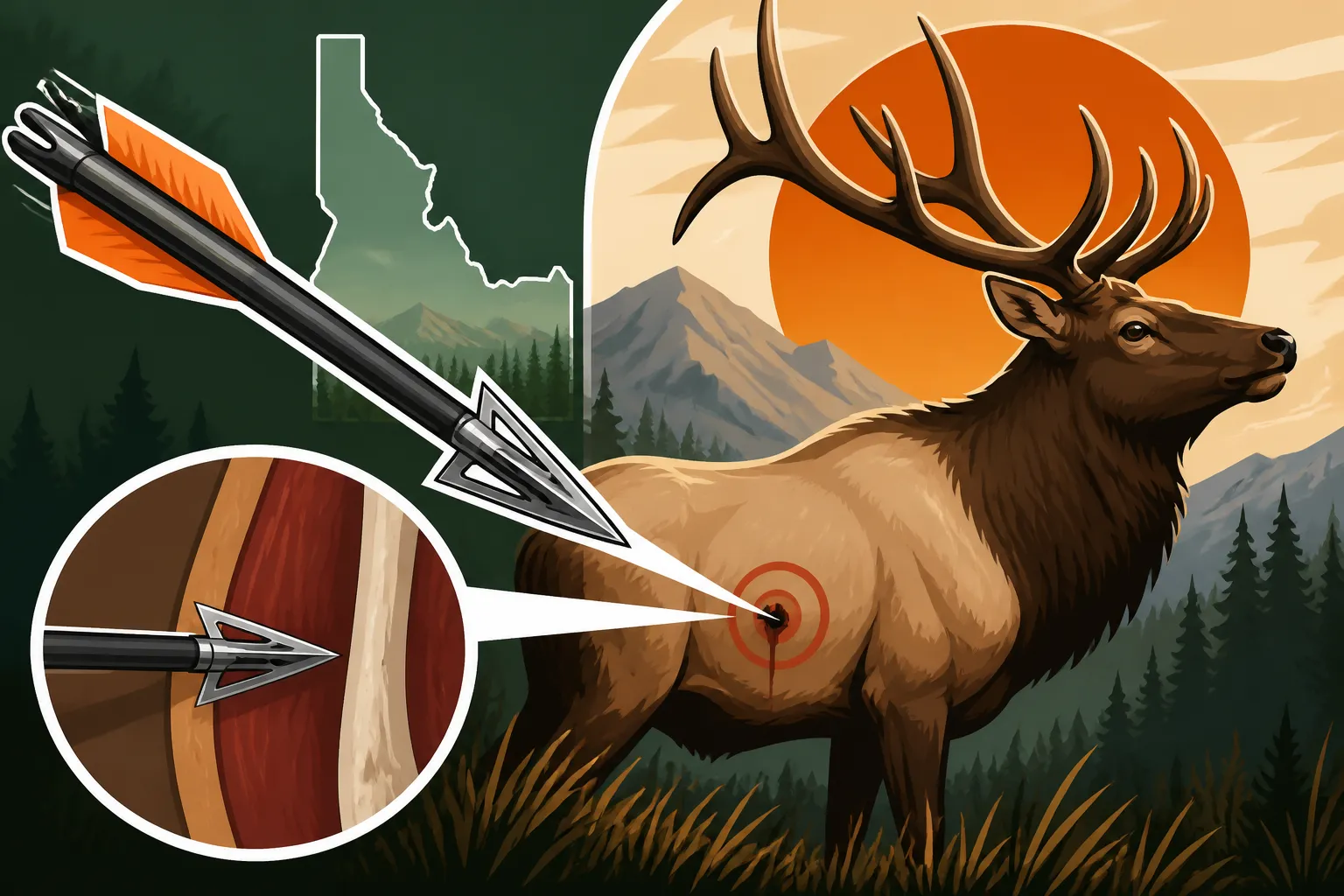
For elk, which are large-bodied animals with thick hides, dense muscle, and sturdy bone structures, momentum is your best friend. A heavier arrow retains more of its momentum upon impact, allowing the broadhead to do its job more effectively and drive deeper into the vitals.
Factors Influencing Arrow Penetration Beyond Weight
While arrow weight is a primary factor, it's not the only piece of the puzzle. Several other elements work in conjunction with arrow weight to determine overall penetration. Ignoring these can significantly hinder even a perfectly weighted arrow.
Firstly, your broadhead choice is paramount. A fixed-blade broadhead with a sharp, cut-on-contact tip and a compact design generally offers superior penetration compared to many mechanical broadheads, especially when bone might be encountered. While some mechanicals are designed for deep penetration, the cutting diameter and deployment mechanism can sometimes create too much resistance for a less-than-perfect shot. If you're serious about elk, you need to understand the nuances of various designs, a topic deeply explored in a guide like this one on Fixed Blade Against Mechanical Broadheads on Elk. The sharpness of your broadhead blades cannot be overstated; dull blades will tear and push, while razor-sharp edges will slice effortlessly.
Secondly, shot placement is, of course, critical. Even the most perfectly weighted arrow and sharpest broadhead won't guarantee a clean kill if you hit the animal in a non-vital area. A perfectly placed arrow with less-than-ideal weight will still be more effective than a poorly placed arrow with optimal weight. Understanding elk anatomy and waiting for the right angle is crucial for success.
Thirdly, your bow tuning plays a huge role. An arrow that flies true and straight, without oscillation or wobbling, retains all its energy and momentum for forward penetration. A poorly tuned bow that causes the arrow to porpoise or fish-tail in flight will lose significant energy and momentum, drastically reducing penetration potential. This is why a guide on Bow Tuning Worth Doing Before a Mountain Hunt is invaluable before you ever head afield. Factors like proper rest alignment, cam timing, and nock point adjustment all contribute to perfect arrow flight.
Finally, your bow's draw weight and arrow speed certainly factor in. While we're not chasing speed above all else, having sufficient draw weight to propel your chosen arrow weight effectively is important. An arrow that's too heavy for your bow's draw weight or your personal Compound Bow Let-Off and Measured Draw Weight will be too slow, making trajectory difficult to manage and reducing the effective range. Finding that sweet spot where you can comfortably draw your bow, achieve good arrow speed, and maintain a heavy enough arrow for momentum is the ultimate goal. For those using traditional setups, even knowing something like the Recurve Poundage That Will Kill an Elk can guide your choices.
Recommended Arrow Weight Ranges for Idaho Elk
Alright, let's get down to brass tacks: what kind of arrow weight are we actually talking about for Idaho elk? There’s no single “perfect” number, as every hunter and bow setup is unique. However, there are highly effective ranges that have proven themselves time and again in the field.
General Guidelines for Optimal Performance
For elk hunting, most experienced bowhunters and experts like those you might find doing research on platforms like GoHunt, will recommend an arrow weighing between 450 and 600 grains total weight. This range provides a fantastic balance of momentum for penetration, adequate speed for a manageable trajectory out to ethical hunting distances, and sufficient durability for the rigors of a hunt.
- Arrows in the 450-500 grain range typically fly a bit faster, offering a flatter trajectory which can be an advantage in judging yardage in varied Idaho terrain. They still carry very good momentum, especially with efficient fixed-blade broadheads, and are often sufficient for broadside shots on elk, punching through ribs and vitals.
- Arrows in the 500-600 grain range are often referred to as "heavy hitters." While they will fly slower, requiring more precise yardage estimation, they deliver exceptional momentum. This increased mass significantly improves the chances of punching through bone (like a shoulder blade or a heavy rib) and achieving pass-throughs, which creates better blood trails and quicker recoveries. For a truly challenging shot on a big bull, especially in thick timber where you might not have a perfect, wide-open vitals shot, these heavier arrows instill confidence.
The trade-off is always speed versus penetration. A lighter, faster arrow is more forgiving of slight yardage misjudgments, while a heavier, slower arrow demands more precision but delivers superior penetration. When you're dealing with an animal as large and resilient as an elk, leaning towards more penetration is almost always the safer bet.
Customizing Your Setup: Matching Arrow to Bow and Hunter
Choosing your ideal arrow weight isn't just about picking a number; it's about finding the right synergy with your specific bow and your personal shooting style and strength. This is where your individual setup truly comes into play.
Consider your draw weight and draw length. A hunter pulling 70 pounds at a 29-inch draw will be able to launch a 550-grain arrow more efficiently and with less trajectory drop than a hunter pulling 60 pounds at a 26-inch draw. Your bow's efficiency also matters; some bows are designed to be speed demons, while others are smoother and more forgiving. If you're a hunter with a lower draw weight, say 50-60 pounds, you might want to stick to the lower end of the recommended grain weight (450-500 grains) to maintain a reasonable arrow speed. Pushing too heavy an arrow with too little draw weight will result in a rainbow trajectory, making ethical shot placement extremely challenging past very close distances.
Then, there's the type of hunt you're planning. Are you anticipating close-quarters encounters in dense timber, where shots are likely to be under 30 yards and quick, solid penetration is key? Or are you hunting vast open country, like some of Idaho's high desert areas, where longer shots are more common and a flatter trajectory might be preferred? For the former, a heavier arrow might be favored. For the latter, a slightly lighter arrow might be chosen, but always within the bounds of what ensures adequate elk penetration.
Regardless of your chosen weight, the absolute most important factor is bow tuning. Any arrow, whether 450 grains or 600 grains, needs to fly perfectly out of your bow. This means ensuring your arrow rest, nock point, and cam timing are all perfectly aligned. A well-tuned bow sends an arrow efficiently and consistently, which maximizes the arrow's penetration potential. Without proper tuning, even the best arrow weight will underperform.
Testing and Tuning Your Elk Hunting Arrows
Once you have a good idea of what arrow weight range you're aiming for, the real work begins: testing and tuning. This isn't just about slapping some broadheads on and heading to the range; it's a meticulous process that ensures your setup is truly field-ready.
The Importance of Accurate FOC Front of Center
Beyond total arrow weight, the Front of Center (FOC) balance point of your arrow is a critical component for stable, accurate flight and maximum penetration. FOC refers to how far forward the balance point of your arrow is, expressed as a percentage of the arrow's total length.
Why is FOC so important? An arrow that is too "tail-heavy" will wobble and steer inefficiently in flight, especially when a broadhead is attached. This unstable flight drastically reduces accuracy and, more importantly, diminishes penetration because the arrow isn't flying in a straight, linear path when it hits the target. An arrow with sufficient FOC, on the other hand, acts like a dart: the weight forward helps to stabilize the arrow, making it fly more true and driving the broadhead into the target more effectively.
For elk hunting, most experts, including many you'll consult on platforms like GoHunt, recommend an FOC percentage between 10% and 15%. Some hunters even push this higher, into the 16-20% range, for extreme penetration setups, but this can make tuning more challenging.
You can calculate your FOC by finding the physical balance point of your arrow (with broadhead attached) and measuring its distance from the throat of the nock. Then, compare that to the overall length of your arrow. To adjust FOC, you primarily manipulate the weight at the front of the arrow. This can involve using heavier inserts (e.g., brass or steel inserts instead of aluminum), heavier broadheads, or even adding a weight system behind the broadhead. Conversely, if your arrow is too heavy in the front, you might use lighter components or increase fletching size slightly.
Field Testing: What to Look For
Once you've assembled your arrows and achieved your target FOC, it's time for extensive field testing. This phase is non-negotiable and goes far beyond simply grouping arrows at 20 yards.
Start by shooting your arrows at various distances—20, 30, 40, 50, and even 60 yards, if that's within your realistic ethical range for big game, something you really need to assess for yourself through Realistic Archery Practice Distance for Big Game. The goal here isn't just to hit the target, but to carefully observe arrow flight. Look for any sign of erratic flight:
- Porpoising: The arrow wobbles up and down.
- Fish-tailing: The arrow wobbles side to side.
- Nose-diving: The broadhead is clearly dipping, indicating a tail-heavy arrow.
Any of these indicate a tuning issue that needs to be resolved before you ever consider hunting. A perfectly tuned arrow will fly like a laser, with the broadhead and fletching appearing to be on the same plane throughout its flight.
Furthermore, pay close attention to noise. A poorly tuned arrow or a setup with too light an arrow can sometimes result in a louder shot. While not directly impacting penetration, a noisy shot can cause an elk to "jump the string," dropping or moving before the arrow arrives, turning a perfect shot into a miss or a wound.
Crucially, you must practice with your actual hunting broadheads. Do not assume that your field points and broadheads will fly identically. Many hunters make the mistake of only practicing with field points, only to discover their broadheads fly completely differently. Broadhead tuning is a process unto itself, ensuring that your hunting heads impact in the same spot as your field points. Test them in varying wind conditions, too, as even a slight breeze can reveal inconsistencies. For more specific guidance on various components, consider checking out resources like "Whether Lighted Nocks Are Legal for Bowhunters" to ensure all your gear adheres to Idaho regulations.
Common Misconceptions and Advanced Considerations
There are a few widely held beliefs and more nuanced aspects of arrow setups that are worth discussing to ensure you're making the most informed decisions for your Idaho elk hunt.
Debunking the "Speed Kills" Myth
For decades, the archery industry, and many hunters by extension, have been obsessed with speed. The mantra "speed kills" became deeply ingrained, suggesting that the faster your arrow, the more lethal it would be. While exhilarating to watch a super-fast arrow zip downrange, for elk hunting, this focus can be misleading and even detrimental.
As we discussed earlier, kinetic energy (heavily influenced by speed) is not the sole, or even primary, determinant of penetration, especially on tough, dense animals. Momentum is. A lightweight arrow launched at blistering speeds might produce impressive kinetic energy numbers on paper, but when it impacts the dense hide, muscle, or bone of an elk, it often sheds that energy quickly and slows down dramatically. The lack of mass means it lacks the "push" to continue driving forward.
Conversely, a heavier arrow, even if traveling 30-50 feet per second slower, carries significantly more momentum. This momentum allows it to punch through resistance more efficiently, maintaining its forward drive and slicing deeper into the animal. A heavier arrow also tends to be more stable in flight, less affected by wind, and often quieter.
So, while speed isn't irrelevant (you don't want an arrow so slow its trajectory makes hitting anything impossible), it should not be the primary goal. Prioritizing momentum through adequate arrow weight will lead to better penetration, higher confidence in your setup, and ultimately, more ethical and successful elk hunts in Idaho.
Arrow Materials and Component Choices
The materials and specific components you choose for your arrow setup also contribute significantly to its overall weight, durability, and performance.
-
Arrow Shaft Materials:
- Carbon arrows are the most popular choice today, known for their light weight, stiffness, and durability. They recover quickly from the shot, leading to excellent accuracy. Many top brands like Easton, Gold Tip, and Victory Archery offer excellent carbon options.
- Aluminum arrows are heavier and can be an excellent choice for hunters prioritizing momentum and FOC, as they naturally have more mass. They are also generally more affordable but can bend more easily than carbon.
- Hybrid (Carbon-Aluminum) arrows offer the best of both worlds: the durability and stiffness of carbon with the added mass of an aluminum core. These are often premium options but provide fantastic performance for big game.
-
Component Choices that Affect Weight:
- Heavy inserts: Swapping standard aluminum inserts for brass or stainless steel inserts (e.g., from ethics Archery or Iron Will Outfitters) is one of the most effective ways to add weight to the front of your arrow, significantly boosting FOC and overall grain weight without changing the shaft.
- Broadheads: Broadheads come in various weights, typically 100, 125, or 150 grains. A heavier broadhead naturally adds to your overall arrow weight and helps achieve a forward FOC.
- Nocks and Fletching: While less impactful on overall weight, heavier nocks or larger, more durable fletching (e.g., 4-fletch instead of 3-fletch, or bigger vanes like from Bohning or AAE) can slightly increase weight and stability.
It’s crucial that whatever components you choose, they are high quality and consistent. Variations in weight or stiffness between arrows can lead to inconsistencies in flight and impact, which is the last thing you want when hunting a big bull elk. Always verify the overall Idaho Minimum Peak Draw Weight for Any Bow rules before getting too deep in your setup, just to ensure compliance.
Here's a quick comparison of typical arrow weight ranges and their common characteristics for elk hunting:
| Arrow Weight Range (Grains) | Typical Characteristics | Pros for Elk Hunting | Cons for Elk Hunting | Best Use Case |
|---|---|---|---|---|
| Below 400 | Very lightweight, high speed, low FOC | Flat trajectory, fast flight | Very low momentum, poor penetration on bone, inconsistent flight with broadheads | Not recommended for elk |
| 400-450 | Lightweight-medium, good speed, moderate FOC | Flatter trajectory, good speed for judging distance | Marginal momentum for bone, may not get pass-throughs consistently | For hunters prioritizing speed, perfect shots only |
| 450-500 | Medium weight, balanced speed/momentum, good FOC | Excellent balance, good penetration, manageable trajectory | Might struggle with heavy bone, less consistent pass-throughs on tough angles | All-around hunting, balanced approach |
| 500-550 | Heavier, strong momentum, high FOC | Superior penetration, better bone-breaking ability, more consistent pass-throughs | Noticeable trajectory drop, requires precise yardage judgment | Ideal for elk, high confidence in penetration |
| Above 550 | Very heavy, maximum momentum, very high FOC | Max penetration, excellent for marginal hits, very quiet | Significant trajectory drop, limits effective range for many hunters, tuning can be tricky | Specialized setups for extreme penetration or close-range timber hunting |
Remember, the ultimate goal is not just to pierce the hide, but to achieve a full pass-through or at least deep penetration into the vitals. A heavier, well-built arrow maximizes your chances of doing just that, regardless of the challenges an elk's body or an unexpected bone strike might present. Do your research, test extensively, and head to the Idaho woods with confidence in your setup.
Disclaimer
Please remember that hunting regulations and best practices can change. Always consult the most current Idaho Fish and Game regulations and local ordinances before heading afield. This guide provides general information and recommendations, but personal responsibility for safe and ethical hunting practices rests with each individual hunter.