Getting Landowner Permission in Idaho
Finding quality hunting ground in Idaho, especially away from the crowds, often feels like searching for a needle in a vast, rugged haystack. While public lands offer incredible opportunities, the pressure can be intense, leading many hunters to dream of securing access to private property. This guide is here to walk you through the often intimidating, but incredibly rewarding, process of getting landowner permission in Idaho, turning that dream into a tangible possibility.
Why Pursuing Private Land Access in Idaho Makes Sense
Let's be real: hunting on public land, particularly during general seasons, can sometimes feel more like a competition than a peaceful pursuit. You scout for weeks, find that perfect pocket of timber or a secluded sagebrush bench, only to arrive opening morning and discover two other trucks already parked where you intended to start. It's a universal frustration, and it's precisely why looking at private ground holds so much appeal for so many of us.
Escaping the Pressure Cooker of Public Land
Idaho boasts millions of acres of public land, from vast national forests to expansive BLM tracts. And we love it! But with that comes popularity. Key access points and easily reachable areas can see significant hunter density, especially for species like elk and mule deer. When you're constantly bumping into other hunters, the animals become warier, often pushed deeper into cover or onto private parcels where they feel safe. Securing private land permission means you can often find unpressured animals, a quieter hunting experience, and a much higher quality outing overall. It's about trading elbow-to-elbow encounters for solitude and strategy.
Potentially Higher Quality and More Consistent Opportunities
Often, private land is managed differently than public. It might be agricultural ground, timber company land, or simply large ranch properties that offer excellent forage and cover. Because these areas often see less hunting pressure, especially if the landowner only grants permission to a select few, the game animals can grow older and larger. You might find more consistent patterns from deer and elk who aren't constantly being pushed around. It’s not a guarantee, of course, but the odds for a mature animal can certainly increase when you’re hunting ground where the deer and elk don’t have a parade of orange vests marching through every other day. This can be especially true for species like whitetail deer that thrive in agricultural fringe areas often found on private properties.
Building Relationships for Long-Term Hunting Access
One of the biggest, often overlooked, benefits of gaining private land access is the opportunity to build lasting relationships. A landowner who trusts you, knows you'll respect their property, and appreciates your courtesy might offer you access year after year. This isn't just about one season; it's about potentially securing a consistent hunting spot for decades to come. Think of it as investing in your future hunting adventures. These long-term connections can be invaluable, sometimes even leading to unique opportunities for other species or seasons as trust grows.
Preparing for the "Ask": Your Homework Before Knocking
You wouldn't just wander into a job interview without a resume, right? The same principle applies to asking a landowner for hunting permission. Preparation is absolutely crucial. It shows respect, competence, and serious intent. Skipping this step is a surefire way to get a quick "no."
Researching the Land and Identifying Owners
This is where modern technology becomes your best friend. Gone are the days of guessing property lines or blindly approaching a house. Tools like onX Hunt are an absolute game-changer here. You can literally pull up an aerial map, see exactly where public land ends and private land begins, and, critically, identify the landowner's name and often their mailing address or even phone number. You can see property boundaries, know if the land is timber, pasture, or crops, and get a feel for the terrain from your couch.
Start by identifying the general area you're interested in. Maybe you've seen deer moving between public and private, or you've heard whispers of good hunting on a certain ranch. Use onX Hunt to pinpoint those specific parcels. You'll want to focus on parcels that seem to have good cover, food, or natural travel corridors. Look for fields, timber pockets, water sources, and natural funnels that could hold game. Checking the Idaho Fish and Game website for harvest statistics by unit, perhaps with information found on a platform like GoHunt, can also give you a broader sense of a region's potential, helping you narrow down your search for private parcels. This groundwork makes your approach much more targeted and professional. You can even check things like Public Land Percentage by Idaho Unit or Reading an Elk Zone Boundary on a Map to understand the landscape context.
Knowing the Rules: Regulations and Your Plan
Before you even think about contacting a landowner, you need to have a clear plan for what you want to hunt, when, and with what weapon. Know the specific season dates for your target species in that particular unit. Understand the legal shooting hours, blaze orange requirements, and any weapon restrictions for that season. For instance, are you hoping for an archery elk hunt in September, or a late-season rifle deer hunt in November? Idaho Elk Zones and the A Tag or B Tag Choice can influence which zones you focus on, and therefore which private lands.
Having this information at your fingertips, rather than fumbling for it, demonstrates that you're a responsible and knowledgeable hunter. Landowners appreciate someone who has done their homework. Furthermore, be ready to articulate how you plan to hunt – will you be still hunting, setting up a ground blind, using calls? This level of detail builds confidence with the landowner that you're not just going to "wing it" on their property.
Gathering Your Credentials
Landowners are entrusting you with their property, their livestock, and their peace of mind. They want to know you're not a liability. Be prepared to show them that you're a responsible individual. This includes having your current Idaho hunting license and relevant tags, and your Hunter Education card. Anyone born after 1974 needs Idaho Hunter Education, so if that's you, make sure you can prove it. Anyone Born After 1974 Needs Idaho Hunter Education explains this in detail. If you have any references, like from other landowners you've hunted with or even community leaders, that can be a huge bonus. Having these items ready, perhaps even a printed copy of your license and hunter ed card, can make a positive impression right from the start.
The Art of the Ask: Approaching Landowners Effectively
This is it, the moment of truth. Approaching a landowner can feel nerve-wracking, but with the right mindset and approach, you can significantly increase your chances of success. Remember, you're asking for a privilege, not asserting a right.
Choosing Your Method: In Person, Phone, or Letter
The best method often depends on your comfort level and the landowner's accessibility.
- In-Person: This is almost always the gold standard. It allows for direct eye contact, a handshake, and the opportunity to convey sincerity and trustworthiness in a way that other methods can't. Try to approach them at a time when they're not rushed – perhaps late afternoon or early evening, but avoid meal times or busy farm work hours. Dress neatly, but not formally; clean hunting clothes or casual attire is fine. Think respectable, not intimidating.
- Phone Call: If an in-person visit isn't feasible due to distance or timing, a polite phone call is the next best thing. Introduce yourself clearly, state your purpose, and be prepared for a quick conversation. Don't press if they sound busy or uninterested; offer to call back or follow up with a letter.
- Letter: A well-written, concise letter can be effective, especially if you can't reach them otherwise. It allows you to introduce yourself, explain your request, and provide your contact information. Include your hunting license number and a brief overview of your hunting philosophy (e.g., "I practice ethical hunting and leave no trace"). Make it personal, not a generic form letter. You can use information gleaned from onX Hunt to address the letter directly to the landowner.
No matter the method, always start by introducing yourself, mentioning how you got their contact information (e.g., "I looked up your property on onX Hunt"), and clearly stating your request – "I'm hoping to gain permission to hunt deer on your property this fall."
What to Say, What to Avoid: Crafting Your Pitch
When you finally get to speak with them, be prepared, polite, and respectful.
- Be Clear and Concise: Don't ramble. State what you're asking for directly: "I'm a local hunter, and I'd be very grateful for the opportunity to hunt deer on your north forty this coming season, perhaps a few mornings in October."
- Emphasize Safety and Respect: Landowners are concerned about safety (their family, livestock, property) and damage. Assure them you're a safe hunter, will close all gates, respect fences, avoid driving off established roads, and pick up any trash. You might even mention knowing Idaho's motorized hunting rules, specifically that you understand Why You Cannot Drive Off Road to Retrieve Game.
- Offer to Help: This is a huge differentiator. Ask if there are any chores you can help with – mending a fence, checking water troughs, helping move cattle, or even just keeping an eye on things. This shows you're not just there to take, but to contribute.
- Be Prepared for Questions: They might ask about your weapon choice, your hunting experience, or how often you plan to be there. Answer honestly and confidently.
- Never Make Demands or Assumptions: Don't say "I saw a big buck on your place, I want to hunt it." That sounds entitled. And never assume you have permission until it's explicitly granted. Don't just show up and start hunting.
- Listen More Than You Talk: Pay attention to their concerns. Sometimes they'll tell you exactly what their worries are, giving you a chance to address them directly.
Beyond the "Yes": Responsibilities and Relationship Building
Getting permission is just the first step. What you do next can make or break not only your opportunity but also future opportunities for other hunters seeking access. Being a responsible and respectful hunter is paramount.
Formalizing Permission: Permission Slips
While a verbal "yes" is great, always ask if they'd be willing to sign a simple permission slip. This protects both you and the landowner. It can specify the dates, species, weapons allowed, and any specific areas to avoid. This isn't about distrust; it's about clarity and protection. Idaho Fish and Game often has a template for these or you can easily find one online. Having this in writing shows your professionalism and helps prevent misunderstandings down the road. It clarifies the terms of Landowner Permission on Idaho Private Ground.
Understanding and Respecting Their Conditions
Landowners often have specific rules or requests. These might include:
- No driving off established roads: Respect this explicitly. Which Roads Count Under the Motorized Rule in Idaho is something to be aware of even on private ground if they have similar rules.
- Avoid certain areas: They might have pastures with livestock, areas close to their home, or sensitive habitats they don't want disturbed.
- Call before you come: This is a common courtesy to ensure you're not interrupting important farm work or if they have other visitors.
- Specific parking spots: Don't just pull off anywhere.
- No shooting near buildings or livestock: This should be a given for any ethical hunter, but they might reiterate it.
Adhere to every single condition they set, no matter how minor it seems to you. This builds trust. Ignoring even one rule can revoke your permission immediately and damage your reputation.
The "No" Is Not Always No Forever
Sometimes, despite your best efforts, a landowner will say no. Don't take it personally. Thank them for their time, leave them your contact information in case they change their mind or a need arises, and politely move on. There could be many reasons: they already have hunters, they've had bad experiences in the past, or they just don't want anyone on their property. Being gracious in rejection leaves a positive impression, perhaps opening a door for another year or simply reflecting well on the hunting community as a whole. You never know when circumstances might change, or if they might refer you to a neighbor.
Being an Exceptional Guest: Earning Future Invitations
This isn't a one-time transaction; it's a relationship. Your actions during and after the hunt are critical to maintaining access and securing future opportunities.
During the Hunt: Showing You're Trustworthy
Once you have permission and are on the property, every move you make is a reflection of your trustworthiness.
- Communicate Regularly: Let them know when you arrive and when you leave. A quick text or phone call is usually sufficient.
- Leave No Trace: Pack out everything you pack in. And then some. Pick up any litter you find, even if it's not yours.
- Respect Property: Close all gates, every single time. Don't damage fences, drive through fields, or disturb livestock. If you encounter livestock, move slowly and give them a wide berth. If you notice a downed fence or other issue, report it to the landowner immediately.
- Share Your Success (if appropriate): If you harvest an animal, let them know! Offer to show them the animal. Some landowners even appreciate a piece of game meat, which can be a wonderful gesture of thanks.
- Adhere to Hunting Ethics: Hunt legally and ethically. Follow fair chase principles. Ensure you know and follow requirements like Evidence of Sex Requirements on a Carcass or The Meat Salvage Requirements for Big Game.
After the Hunt: The Follow-Up That Matters
The hunting season might be over, but your relationship with the landowner shouldn't be.
- Send a Thank You: A handwritten thank-you card, perhaps with a small gift (a gift basket, a homemade pie, or even a gift card to a local diner), goes a long, long way. Express your gratitude for the opportunity and reiterate your respect for their property.
- Offer Future Help: In the off-season, drop a line to see if they need any help with chores. Maybe a couple of days helping mend fences in the spring or checking on things during winter. This consistent engagement shows you value the relationship beyond just the hunting opportunity.
- Maintain Contact: A quick call around Christmas or in the spring can keep the lines of communication open and remind them of your positive presence.
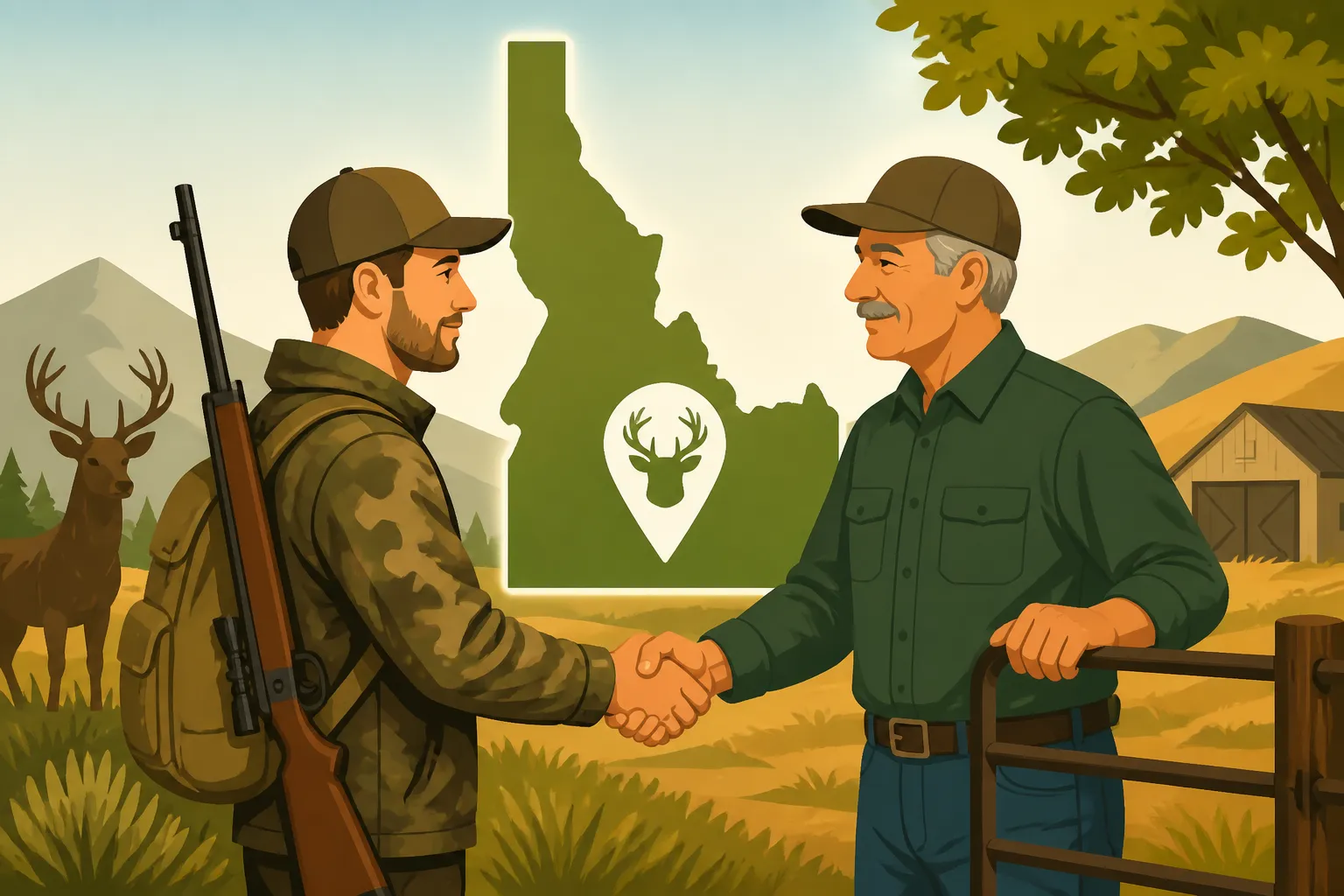
By consistently proving yourself to be a responsible, respectful, and helpful individual, you transform a simple hunting permission into a valuable, long-term relationship. This isn't just about bagging an animal; it's about building community and trust, one handshake at a time, across the incredible hunting landscape of Idaho.
| Do's When Seeking Landowner Permission | Don'ts When Seeking Landowner Permission |
|---|---|
| Do research property boundaries with tools like onX Hunt. | Don't show up unannounced or at inconvenient times. |
| Do dress respectfully and appear presentable. | Don't act entitled or make demands. |
| Do have your hunting license and ID ready. | Don't lie about your intentions or experience. |
| Do clearly state your request (species, weapon, dates). | Don't bring your hunting buddies on the first visit. |
| Do emphasize safety and respect for property. | Don't argue if the answer is "no." |
| Do offer to help with chores or property maintenance. | Don't drive off designated roads or damage property. |
| Do ask about any specific rules or conditions they have. | Don't leave trash or violate "leave no trace" ethics. |
| Do follow up with a thank-you note, even if rejected. | Don't assume permission is ongoing year-to-year. |
| Do sign a written permission slip, if offered. | Don't share access with others without explicit permission. |
Disclaimer
This article is for general informational purposes only and does not constitute professional advice. Laws, prices and regulations vary by location and change over time. Consult a qualified professional for guidance on your specific situation.