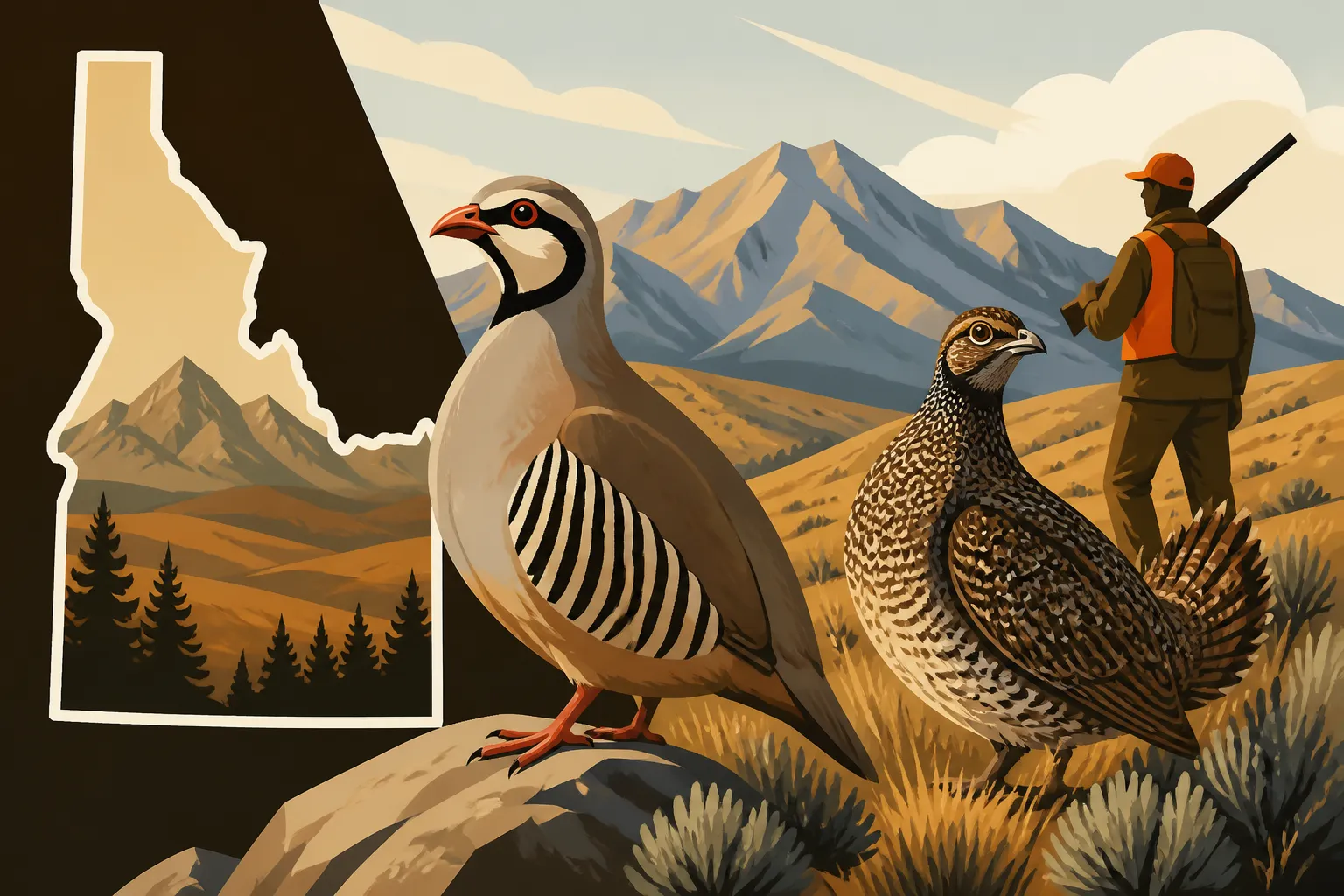
Chukar, Grouse and Idaho’s Upland Country
There's nothing quite like the crackling anticipation of a frosty morning in Idaho, the scent of sage or damp pine needles filling the air, and the promise of a sudden flush. For many hunters, the pursuit of big game dominates the conversation, but for those who truly love the chase, the often-overlooked world of upland bird hunting offers a unique blend of challenge, beauty, and tradition. This comprehensive guide is here to shed light on Idaho's diverse upland opportunities, helping you understand the birds, the gear, the tactics, and the sheer joy of working for every feather in this incredible state.
The Unique World of Idaho Upland Bird Hunting
While the roar of a bull elk or the sudden appearance of a mule deer buck certainly gets the heart pounding, there’s a distinct, almost primal satisfaction in walking miles through varied terrain, relying on your senses (and maybe a good dog!) to find and flush upland game. It’s a different pace, a different rhythm, but no less rewarding than any big game pursuit.
Beyond the Big Game: Why Upland Birds Captivate
Let's be honest, chasing elk or deer can be physically and emotionally draining. The early mornings, the long waits, the intensity of a stalk – it's all part of the allure, but it can also be a high-stakes game. Upland bird hunting, on the other hand, often feels a bit more accessible, more immediate. You're constantly moving, engaging with the landscape, and every flush is an explosion of adrenaline, a moment of pure reaction. It's less about the long-range shot and more about close-quarters action, quick thinking, and often, incredible dog work. The scenery in Idaho, from the arid chukar breaks to the high-country timber, is breathtaking, and you get to experience it up close and personal, mile after mile. It's an active, immersive form of hunting that keeps you engaged from start to finish.
This isn't to say it's easy – far from it. Upland birds are masters of their environment, and they demand respect. The physical exertion required for chukar, for instance, can rival an elk hunt. But the pressure often feels different; it’s less about a once-in-a-lifetime tag and more about the simple, repetitive joy of the hunt itself. It fosters a connection to the land and the animal in a way that’s incredibly fulfilling.
The Diversity of Idaho's Feathered Quarry
Idaho is a land of incredible biodiversity, and its upland bird populations reflect that. We're not just talking about one or two species; hunters in Idaho have the opportunity to pursue everything from the notoriously challenging chukar to several species of grouse, as well as pheasants, Hungarian partridge, and California quail. This means that no matter what kind of habitat you prefer to hunt – be it wide-open sagebrush, dense timber, or agricultural fields – Idaho likely has a feathered target for you.
The sheer variety is part of what makes upland hunting here so special. You can spend a crisp autumn morning hiking high into the mountains for dusky grouse, then transition to the river breaks in the afternoon for chukar. Each species has its own unique habitat preferences, behaviors, and challenges, keeping you on your toes and constantly learning. This diversity also extends the hunting season, as different species become available at various times throughout the fall and winter, providing ample opportunity to get out and enjoy Idaho’s wild places. Understanding these differences is the first step to becoming a successful Idaho upland hunter.
Chukar: The Legends of Idaho's Arid Breaks
If you ask any seasoned upland hunter in Idaho about chukar, you'll likely get a knowing smile, a slight wince, and then a passionate description of the most challenging bird they’ve ever pursued. These birds are legendary for a reason, inhabiting some of the most unforgiving, yet stunning, landscapes Idaho has to offer.
Unraveling the Chukar's Rugged Domain
Chukar partridge, native to Asia, have found a perfect home in the steep, rocky, arid river breaks and canyonlands of western and southern Idaho. Think deep basalt canyons, sparse sagebrush, cheatgrass, and plenty of rocks – that’s prime chukar country. These birds thrive in incredibly harsh environments, often at elevations ranging from 1,000 to 8,000 feet. They are masters of camouflage and can blend seamlessly into the rocky slopes, making them incredibly difficult to spot until they burst into flight.
Their primary food source is cheatgrass and other seeds, which are abundant in these areas, especially after a wet spring. Access to water is also critical for chukar, and you'll often find them concentrated near springs, seeps, or river edges, particularly in the mornings and evenings when they come to drink. Understanding these habitat requirements is crucial for finding birds; scouting for water sources and south-facing, rocky slopes where they can sun themselves and forage effectively is key. The Snake River Plain and its tributaries, for example, are iconic chukar hunting grounds, known for their sheer verticality and seemingly endless draws.
Essential Gear and Grit for Chukar Pursuits
Hunting chukar isn't for the faint of heart, or for the poorly equipped. The terrain is brutal, often involving steep ascents and descents over loose scree and sharp rocks. Your gear needs to be up to the task, and your physical condition even more so. First and foremost, footwear is paramount. Invest in high-quality, ankle-supporting boots with excellent traction. Think about brands like Kenetrek or Crispi, designed for mountain hunting – they're worth every penny for the miles you'll put on them. Trust me, a bad pair of boots will ruin your hunt, and possibly your ankles, within the first hour.
Beyond boots, lightweight, breathable, and durable clothing is essential, preferably in layers, as temperatures can fluctuate wildly throughout the day. A sturdy vest or small backpack is critical for carrying water, shells, snacks, and a first-aid kit. Consider carrying a GPS or a reliable mapping app like GoHunt, as it's incredibly easy to get disoriented in the maze of canyons. For shotguns, a lightweight 12 or 20 gauge is preferred, often with improved cylinder or modified chokes for quick, close-range shots. Load-wise, a 6 or 7.5 shot will typically do the trick. But above all, what you truly need is grit. Chukar hunting is a mental game as much as a physical one, demanding perseverance and an unwavering spirit to climb just one more ridge.
Strategic Approaches to Hunting the "Devil Bird"
Chukar hunting is often described as a vertical pursuit. These birds are known to run uphill when pressured, and then use their powerful wings to sail across canyons, putting distance between themselves and the hunter. A common tactic involves working from the top down, or traversing slopes horizontally, trying to get above the birds. When you encounter a covey, they'll often hold tight before exploding in multiple directions, sometimes presenting multiple shot opportunities. Remember, when they flush and sail, mark where they land – they often re-covey and can be pursued again.
A well-trained bird dog is an invaluable asset for chukar hunting. Their superior sense of smell and boundless energy allow them to cover ground efficiently and pinpoint birds that you would never see. Dogs like German Shorthaired Pointers, Brittanys, and English Pointers excel in this terrain. Even with a dog, success hinges on covering ground, paying close attention to contours, and being prepared for quick shots. Often, a "stop and go" approach works best – walk for a bit, then pause and listen. Chukar are chatty birds, and their distinctive call can give away their location. Remember to stay hydrated and take breaks, as this hunting is incredibly demanding. If you’re serious about finding these elusive birds, using a tool like the Idaho Hunt Planner Is the Tool to Start With can help you identify public lands and terrain features suitable for chukar before you even leave home.
Forest Grouse: Timber Ghosts of the Mountains
While chukar demand desert climbs, Idaho's forest grouse offer a different kind of challenge and reward, drawing hunters into the serene, often dense, timbered mountains. Here, the pursuit is more about stealth, listening, and patience, as you navigate a world of conifers, damp earth, and sudden flushes.
Ruffed Grouse: The Explosive Flush in Northern Forests
Ruffed grouse are perhaps the most iconic forest grouse, known for their distinctive "drumming" sound in the spring and their incredibly explosive flush in the fall. In Idaho, you'll primarily find ruffed grouse in the northern panhandle and central Idaho, preferring dense, regenerating timber stands, alder thickets, aspen groves, and creek bottoms. They favor areas with a mix of young and old forest, providing both cover and food sources like buds, catkins, and berries.
Hunting ruffed grouse is often a game of "still-hunting" or slow, deliberate walking through likely cover. You're not covering huge distances at breakneck speed; instead, you're moving slowly, scanning the undergrowth, and listening intently. The flush, when it comes, is often startlingly loud and fast, as the bird rockets away through the trees. Quick reflexes and a willingness to snap-shoot through a screen of branches are essential. A good pointing dog, working close, is incredibly effective, holding the bird in place until you're ready to move in for the flush. Remember that many of these areas are also home to big game, so stay aware of your surroundings.
Dusky (Blue) Grouse: High Elevation Hounds
Formerly known as blue grouse, dusky grouse are the high-country specialists of Idaho. These magnificent birds spend their summers and early fall in high-elevation conifer forests, often above 6,000 feet, where they feed primarily on conifer needles, especially Douglas fir and grand fir. As the season progresses and snow begins to fall, they’ll move to even higher, south-facing slopes, literally "treeing up" for the winter, making them very difficult to hunt later in the year.
The best time to hunt dusky grouse is early in the season, often coinciding with archery elk or deer hunts. They are typically found on steep, timbered ridges and mountain slopes. Unlike ruffed grouse, dusky grouse are often more prone to holding tight, sometimes even allowing a hunter to walk right by before flushing. This makes them a bit more approachable for hunters without dogs, though a dog can still be a huge asset in locating them. When they do flush, it’s usually straight up into a tree or further up the slope. Hunting them requires significant physical exertion, similar to chukar, as you'll be climbing steep terrain at altitude. The views, however, are almost always worth the effort.
Spruce Grouse: The "Fool Hen" of the Conifer Woods
The spruce grouse, often affectionately (or disparagingly) called the "fool hen," is another resident of Idaho's dense conifer forests, particularly in the northern and central regions where spruce and lodgepole pine dominate. These birds are known for their remarkable lack of fear, often allowing hunters to approach within feet, sometimes even picking them up. This behavior is largely due to their isolated habitat and lack of significant predation pressure from humans.
While their "foolishness" might make them seem like an easy target, finding spruce grouse can still be a challenge. They prefer extremely dense, often swampy or boggy, spruce and lodgepole pine stands – places where most hunters would rather not venture. Their diet consists almost entirely of conifer needles, buds, and shoots. Hunting them is typically a byproduct of hunting other grouse species or big game in the same habitats. If you do encounter one, they offer a unique opportunity to observe a wild bird up close. Just be mindful of local regulations, as bag limits and season lengths can vary. Respect the resource, even if the bird doesn't show much fear.
Other Upland Gems: Partridge, Pheasant, and Quail
Beyond the famous chukar and various grouse, Idaho offers a treasure trove of other upland bird opportunities, each providing a distinct experience and challenging hunters in different ways. These species often inhabit more agricultural or mixed habitats, making them accessible to a wider range of hunters.
Hungarian Partridge: Fast Flyers of the Farm Fields
Hungarian partridge, or "Huns" as they're commonly called, are small, stocky, and incredibly fast-flying birds that thrive in Idaho's agricultural landscapes, particularly in the northern and eastern parts of the state. They prefer open farmlands with a mix of grain fields, stubble fields, and grassy cover. Huns are often found in coveys, and when flushed, they explode into the air with a rapid wingbeat, flying low and fast across the open ground.
Hunting Huns often involves walking field edges, fencelines, and irrigation ditches where they seek cover and food. A good dog is incredibly helpful here, especially a pointing breed that can hold a covey for a close-range flush. Because they fly so fast and low, shooting them requires quick reflexes and a good lead. Idaho offers excellent opportunities for Hungarian partridge, particularly in areas near cereal grain production. Remember to always secure Getting Landowner Permission in Idaho if hunting on private land adjacent to public areas. These birds provide an exhilarating hunt and delicious table fare.
Ring-Necked Pheasant: A Colorful Challenge in Cover
The iconic ring-necked pheasant is a classic upland game bird, celebrated for its vibrant plumage, challenging flush, and delectable meat. While not native, pheasants have been successfully introduced and thrive in agricultural regions across Idaho, particularly in the irrigated valleys where dense cover and abundant food sources exist. You'll find them in cornfields, cattail sloughs, drainage ditches, and grassy CRP (Conservation Reserve Program) lands.
Pheasant hunting is often a social affair, enjoyed with friends and a team of dogs. Unlike chukar or grouse, pheasants are known for their tendency to run rather than fly when pressured, making them tricky to pin down. This is where flushing dogs, like Labrador Retrievers or Springer Spaniels, truly shine, pushing birds into the air. When a rooster pheasant does flush, it's a magnificent sight – a cackle, a burst of color, and a strong, straight flight. A 12-gauge shotgun with a modified or full choke and 4, 5, or 6 shot is standard. Idaho Fish and Game also operates several pheasant release sites, particularly on Wildlife Management Areas, to boost hunting opportunities. For current release information and regulations, consult the Where Idaho Releases Pheasants Each Fall section of the Idaho Fish and Game website. These birds offer a vibrant and exciting hunt.
California Quail: Desert Buzzsaws and Cohesive Coveys
California quail are spirited, highly social birds found predominantly in the arid and semi-arid regions of southern Idaho, particularly along riparian corridors, canyon bottoms, and areas with dense brushy cover. They are instantly recognizable by their distinctive "topknot" feather and their chattering calls. California quail live in tight-knit coveys, sometimes numbering dozens of birds, and when flushed, they erupt in a whirring explosion of wings, scattering in all directions like feathered projectiles.
Hunting California quail is fast-paced and exciting. Like Huns, they prefer to run and hide in dense cover, making a good dog invaluable for pointing and flushing. When a covey flushes, you often only get a fleeting chance at a single bird as they zip into the nearest thicket. Follow-up flushes are common, as birds will regroup after being scattered. Look for them in thickets of wild rose, hawthorn, and willows along stream beds, or in dense sagebrush draws. A lightweight 20 or 28-gauge shotgun with open chokes (improved cylinder or skeet) and 7.5 or 8 shot is ideal for these quick, close-range targets. Their fast, erratic flight makes them incredibly challenging and rewarding to pursue.
Equipping Your Upland Hunting Adventure in Idaho
Idaho's diverse upland terrain demands a well-thought-out gear list. Being prepared means the difference between an enjoyable, productive hunt and a miserable, potentially dangerous one. Don't skimp on the essentials, especially when it comes to personal comfort and safety.
Footwear, Clothing, and Backpack Essentials
As mentioned with chukar, your feet are your most important asset, especially when covering miles over uneven ground. High-quality, waterproof, ankle-supporting boots are non-negotiable. Look for boots designed for rugged terrain, with stiff soles and excellent traction. Brands like Schnee's, Danner, or Crispi are popular for a reason. For clothing, layers are key. Start with a moisture-wicking base layer, add insulating layers (fleece or down), and top with a durable, briar-resistant outer shell. Blaze orange is often a good idea for visibility to other hunters, though not always required for upland. A good pair of upland pants with face fabric designed to resist thorns and burrs will save you a lot of grief.
Your backpack or vest should be comfortable and sized appropriately for a day's hunt. Essentials include: plenty of water (especially in arid chukar country), high-energy snacks, a first-aid kit (including blister treatment!), a whistle, a compass or GPS, a knife, a headlamp, and game bags if you anticipate success. A satellite messenger like a Garmin inReach is also a wise investment, especially when hunting in remote areas where cell service is non-existent. Being comfortable and prepared allows you to focus on the hunt, not on discomfort or potential hazards.
Shotguns, Chokes, and Ammunition Choices
Choosing the right shotgun is a personal preference, but for upland hunting in Idaho, lighter is generally better, especially if you're covering many miles. Common choices include 12, 20, and 28 gauge, with 20 gauge offering a great balance of manageable weight and effective patterns. Over-and-under, side-by-side, and semi-automatic shotguns are all popular options. For chokes, having a selection is wise. Improved cylinder or modified are versatile choices for most upland birds, offering a good spread for close flushes but enough density for slightly longer shots. For very tight cover or specific species like pheasants that can flush further out, a full choke might be useful.
Ammunition choice depends on the bird. For smaller birds like quail and Huns, 7.5 or 8 shot is typically sufficient. For grouse and chukar, 6 or 7.5 shot works well. For pheasants, many hunters opt for 4 or 5 shot to ensure enough knockdown power for these tough birds. Always check local regulations, as some areas may have restrictions on lead shot for certain species or within specific zones, especially near waterfowl areas. Carrying a good supply of shells, but not so many that it weighs you down, is a constant balancing act.
The Unbeatable Advantage of a Well-Trained Bird Dog
While it's absolutely possible to hunt upland birds without a dog, a well-trained bird dog elevates the entire experience to another level. Whether you prefer a pointing breed (like a German Shorthaired Pointer, English Pointer, Brittany, or Setter) or a flushing dog (like a Labrador Retriever, Springer Spaniel, or Cocker Spaniel), a canine companion brings invaluable skills to the field. Dogs can cover significantly more ground than a human, use their superior sense of smell to locate birds, hold them on point, or flush them into shooting range, and most importantly, retrieve downed birds that would otherwise be lost in dense cover.
Beyond their practical hunting skills, dogs are incredible companions. They share the joy of the hunt, offer unwavering loyalty, and push you to keep going when your legs are burning. Training a bird dog is a significant commitment, but the rewards are immeasurable. They not only increase your success rate but also dramatically reduce the number of wounded birds, ensuring a more ethical hunt. Plus, watching a dog work a scent trail, lock up on point, or make a graceful retrieve is a beautiful thing in itself. If you're serious about upland hunting, consider making the investment in a good bird dog; they truly are part of the family and the ultimate hunting partner.
Navigating Idaho's Upland Regulations and Access
Understanding the rules and knowing where you can legally hunt are fundamental to a successful and ethical upland bird season in Idaho. The Idaho Fish and Game (IDFG) website is your go-to resource for the most current information.
Understanding Seasons, Bag Limits, and Licensing
Idaho's upland bird seasons vary by species and geographic zone, so it's critical to check the current regulations every year. Generally, seasons kick off in September and can extend into January, offering a long window of opportunity. Bag limits specify how many birds of each species you can harvest per day and how many you can possess (total birds in your cooler or freezer). These limits are designed to ensure sustainable populations, so respecting them is paramount.
To hunt upland birds in Idaho, you'll need a valid Idaho hunting license. For non-residents, this also involves additional fees. It's important to understand the specific license requirements and to purchase them well in advance. For the precise dates when you can start your pursuit, refer to the Idaho Upland Bird Season Opening Dates published by IDFG. Always carry your license and any necessary permits with you while hunting, as conservation officers conduct checks in the field. Ignorance of the law is never an excuse.
Public Lands and Access Yes Opportunities
Idaho boasts an incredible amount of public land managed by the US Forest Service (USFS) and the Bureau of Land Management (BLM), much of which is open to upland bird hunting. These vast tracts offer endless opportunities, especially for chukar and forest grouse, but also for Huns and quail in suitable habitats. Utilizing tools like the Idaho Hunt Planner Map Center or a mapping app such as GoHunt can help you identify public land boundaries, roads, and potential access points. Layering in satellite imagery on these apps can give you a crucial edge for E-Scouting an Idaho Unit Before the Season, allowing you to pinpoint potential bird habitat from your couch.
Beyond federal public lands, Idaho also has its "Access Yes!" program. This fantastic initiative, explained in detail in The Idaho Access Yes Program Explained, provides hunters with access to private lands that would otherwise be off-limits. Landowners receive incentives to open their properties for hunting, creating more opportunities for public use. Always respect the specific rules posted for Access Yes! properties, and remember that even on public land, certain areas might have restricted access due to seasonal closures, private inholdings, or other management considerations.
The Vital Role of Hunter Education and Ethical Conduct
For anyone new to hunting, or born after a certain date, hunter education is a mandatory step. In Idaho, Anyone Born After 1974 Needs Idaho Hunter Education. This critical training covers firearm safety, wildlife identification, hunting ethics, and conservation principles, ensuring a safe and responsible hunting community. Even if you're exempt, a refresher on safety protocols is always a good idea. For those looking to try hunting before committing to full certification, The Idaho Hunting Passport Lets You Try Before You Certify offers a fantastic mentored hunting opportunity.
Ethical conduct extends beyond just following the rules. It includes respecting landowners, leaving no trace, making clean kills, and properly handling your game. This also involves understanding and respecting motorized vehicle rules, as Idaho's Motorized Hunting Rule Runs August Into December in many areas, restricting off-road travel. Never drive off designated roads to pursue or retrieve game; always follow the rules about Which Roads Count Under the Motorized Rule. These practices ensure that hunting remains a respected and sustainable activity for future generations.
Mastering the Art of Idaho Upland Bird Scouting and Strategy
Upland bird hunting is a dynamic pursuit. While luck plays a part, consistent success comes from diligent scouting, smart strategy, and physical preparation. Don't just show up and expect birds to be waiting; put in the work, and the rewards will follow.
Harnessing Technology for Effective E-Scouting
In today's world, technology has revolutionized how we approach hunting, and upland bird hunting is no exception. Before you ever lace up your boots, you can spend hours e-scouting from your computer or phone. Start with the Idaho Fish and Game website and their The Idaho Hunt Planner Is the Tool to Start With. This tool provides detailed maps, unit boundaries, and often links to regulations. Overlay this with satellite imagery on a powerful mapping app like GoHunt. Look for key habitat features:
- Chukar: Steep, rocky south-facing slopes, proximity to water sources (springs, seeps, rivers), cheatgrass fields.
- Forest Grouse: Dense conifer stands, alder thickets along creek bottoms, aspen groves for ruffed grouse; high-elevation ridges with Douglas fir and grand fir for dusky grouse.
- Huns and Pheasants: Agricultural fields, field edges, thick fencelines, drainage ditches, cattail sloughs, grassy CRP plots.
- Quail: Brushy riparian corridors, dense thickets along canyon bottoms, sagebrush draws.
Pay attention to access points, seasonal road closures, and public land boundaries. You can use these apps to mark waypoints for potential bird locations, water sources, and even optimal glassing spots. This virtual reconnaissance saves valuable time and energy in the field.
Physical Conditioning for Idaho's Demanding Terrain
This might sound like I'm beating a dead horse, but seriously, upland hunting in Idaho is often a physically demanding endeavor. Chasing chukar in the breaks or dusky grouse in the high mountains requires excellent cardiovascular fitness and strong legs. Even walking pheasant fields can be tiring, especially if you're covering many miles. Don't underestimate the impact of elevation changes and walking on uneven ground all day.
Start your physical preparation weeks or even months before the season. Incorporate hiking with a weighted pack, stair climbing, and general cardio into your routine. Focus on strengthening your core and legs to prevent injuries. Remember, the better your physical condition, the more ground you can cover, the more birds you can pursue, and the more enjoyable your hunt will be. Plus, being physically ready means you'll be safer and less prone to fatigue-related mistakes in the field.
On-the-Ground Tactics and Reading Bird Sign
Once you're in the field, e-scouting only gets you so far; you need to be able to read the landscape and interpret bird sign. For all upland species, look for fresh tracks in dusty areas, droppings (often small and dark for grouse, larger for pheasants), and dusting bowls. Listen for calls – chukar are very vocal, Huns have a distinctive alarm call, and ruffed grouse drum.
When you do find birds, develop a strategy. For chukar, try to get above them and work downhill, or traverse slopes to intercept them. For grouse, move slowly and deliberately through cover, always ready for a sudden flush. For pheasants and Huns, work field edges and dense cover, often with a dog, to push birds into the open. Pay attention to wind direction; birds generally flush into the wind, giving them more lift. Also, always observe where birds fly after a flush. They often re-covey nearby, offering a second chance. Don't be afraid to change your tactics if what you're doing isn't working. Flexibility and adaptability are hallmarks of a successful upland hunter. Finally, after your hunt, if you want to gauge how well you did or learn more about harvest trends, consult the Reading an Idaho Harvest Statistics Report on the IDFG website. It provides valuable insights into bird populations and hunter success rates in various areas.
Beyond the Hunt: Embracing the Upland Lifestyle
The beauty of upland bird hunting in Idaho extends far beyond the moment of the flush or the shot. It's a lifestyle that encompasses conservation, community, and the simple joy of connecting with nature and sharing its bounty.
Field to Table: Celebrating Your Hard-Won Harvest
One of the most satisfying aspects of upland hunting is bringing home your hard-won birds and preparing them for the table. Upland birds are lean, flavorful, and incredibly versatile in the kitchen. From simple pan-seared breasts to more elaborate roasted whole birds or stews, there are countless ways to enjoy your harvest. Cleaning and dressing your birds promptly in the field is crucial for preserving meat quality, especially in warmer temperatures.
Sharing your wild game with family and friends is a cherished tradition. It's an opportunity to recount the day's adventure, teach others about the source of their food, and celebrate the entire experience – from the challenging climb up a chukar break to the rich flavors on your plate. It reinforces the connection between hunter and land, and the ethical responsibility we have to utilize the resource wisely.
Conservation and Community: Giving Back to the Resource
As upland hunters, we are inherently invested in conservation. Healthy bird populations and accessible habitats don't happen by accident; they are the result of dedicated effort and funding. A portion of every hunting license and tag purchase in Idaho directly supports wildlife management and habitat restoration. Additionally, organizations like Pheasants Forever, Quail Forever, and the Ruffed Grouse Society actively work on habitat enhancement, research, and public advocacy for upland species.
Getting involved in these conservation efforts, whether through volunteering your time or donating, is a vital part of the upland lifestyle. It’s about being a steward of the land and ensuring that future generations can experience the same thrills and traditions. Furthermore, connecting with the upland hunting community – online forums, local chapters, or simply sharing stories at the trailhead – enriches the experience. There’s a camaraderie among upland hunters, a shared understanding of the challenges and rewards, that fosters a strong sense of community and mutual respect.
Disclaimer
Please remember that hunting regulations, seasons, and access rules can change frequently. Always consult the most current Idaho Fish and Game regulations and official maps before planning any hunting trip. This guide is for informational purposes only and does not supersede official state regulations. It is every hunter's responsibility to know and follow all applicable laws.