Which Roads Count Under the Motorized Rule
The thrill of chasing big game across Idaho's diverse terrain is something truly special, but let's be honest, deciphering all the rules can sometimes feel like trying to track a ghost in a blizzard. One of the trickiest regulations, and a frequent source of head-scratching for hunters, revolves around motorized vehicle use. It's not always clear cut which rutted path or old logging road is fair game for your truck or ATV, and making the wrong call can have serious consequences. This comprehensive guide is here to untangle the confusion, meticulously detailing what Idaho considers an "established roadway" under its motorized hunting rules, so you can hunt with confidence and stay on the right side of the law.
Understanding Idaho's Motorized Hunting Rule
For many of us, the idea of getting off the beaten path is part of the allure of hunting in Idaho. The backcountry calls, promising untouched wilderness and wary animals. However, with that privilege comes the responsibility to protect these wild places and ensure fair chase. Idaho's motorized hunting rule is specifically designed to uphold these principles, limiting where and how vehicles can be used during certain times of the year. It's not just about preventing damage to the land, but also about maintaining the integrity of the hunt.
This rule is a crucial piece of the conservation puzzle, aiming to minimize habitat destruction, prevent the harassment of wildlife, and ensure that hunters are engaging in ethical practices. Imagine if everyone could simply drive their truck or side-by-side wherever they pleased to pursue an animal; the impact on the landscape and the animals themselves would be catastrophic. It's a balance we all strive for: enjoying access to these incredible resources while also being their best stewards.
The specifics of when and where this rule applies can vary, but generally, it's enforced during the primary big game hunting seasons. This means from late summer through late fall, when deer and elk are actively being pursued. Knowing these timelines is just as important as knowing what constitutes a legal road. For a deeper dive into these specifics, it's worth checking out when Idaho's Motorized Hunting Rule Runs August Into December.
The Spirit of the Regulation
At its heart, the motorized hunting rule is about preserving the wild experience. Idaho prides itself on offering vast, unspoiled backcountry, and vehicle restrictions help maintain that character. Without these rules, delicate ecosystems could be scarred by tire tracks, and animals could be pushed out of critical habitats. It's about respecting the land and the wildlife that call it home, ensuring that future generations can enjoy the same opportunities we do today.
While it might feel restrictive when you're staring down a long hike and wishing you could shave off a few miles, the regulation ultimately protects the very resource that draws us to Idaho. It ensures that hunting remains a challenge, a pursuit that demands skill, effort, and respect for the animal, rather than a mechanized chase. This focus on fair chase is a cornerstone of ethical hunting, and these rules reinforce that commitment.
Consider the impact on sensitive areas, particularly during the shoulder seasons or when ground conditions are wet. Off-road vehicle use can cause significant erosion, destroy vital vegetation, and disrupt wildlife patterns at critical times. The rule helps mitigate these environmental impacts, allowing the land to recover and thrive, which in turn benefits the game animals we pursue.
General Application and Timing
The motorized hunting rule isn't a year-round, blanket ban on all off-road travel. Instead, it’s strategically applied, primarily kicking in during big game hunting seasons when human-wildlife interactions are at their peak. Typically, you'll find these regulations in effect from roughly August 30th through December 31st. This period covers much of the archery, muzzleloader, and general firearm seasons for deer and elk, which is when most hunters are out in the field. Understanding When Idaho's Motorized Hunting Rule Applies is critical for planning your trips.
The rule's application also depends on the land management agency. For instance, federal lands managed by the U.S. Forest Service (USFS) and the Bureau of Land Management (BLM) have their own specific travel management plans, which often align closely with Idaho Fish and Game (IDFG) regulations. State lands and Idaho's Wildlife Management Areas (WMAs) will also have their own designated travel routes. While private landowners can, of course, allow vehicle use on their private property, if you're accessing public land through private property, or if your hunt takes you from private to public, the public land rules always apply once you cross that boundary. It's a layered system, and it demands attention to detail.
It's also worth noting that some designated wilderness areas, like the Frank Church River of No Return Wilderness, have their own, even stricter, rules regarding motorized use, essentially banning it entirely within their boundaries. While these wilderness areas are usually clearly marked, the nuance of connecting roads and trails often leads to confusion. Always refer to the most current regulations for the specific unit or zone you plan to hunt to ensure you understand all the particular restrictions that may be in place.
Defining an "Established Roadway" in Idaho
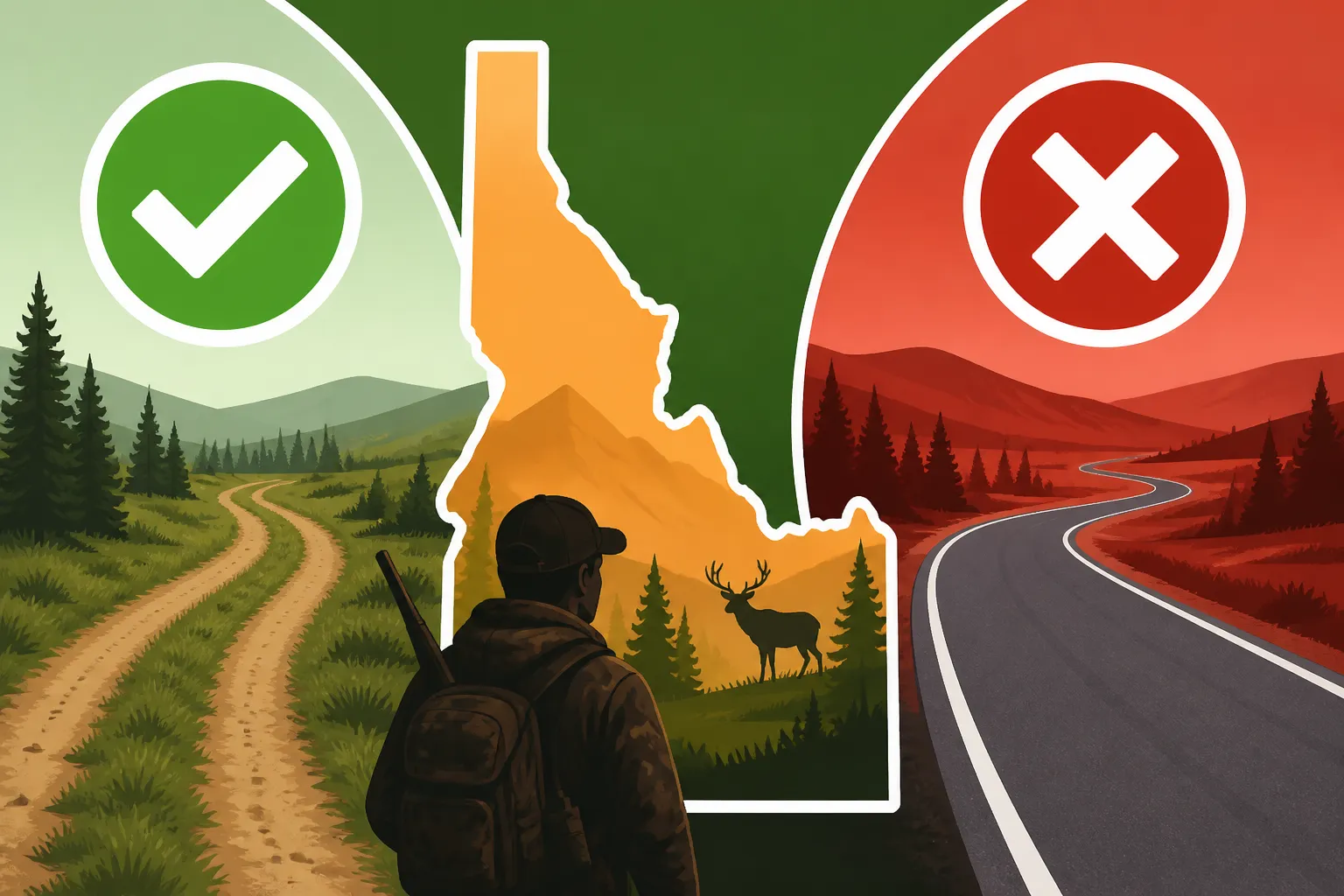
This is where the rubber meets the road, quite literally. The core of the motorized hunting rule hinges on what Idaho considers an "established roadway." Simply put, it's a path that has been constructed and maintained for vehicle travel, and crucially, one that is designated as open for public motorized use on official maps. This isn't about what looks like a road, or a path that's been worn down by years of truck tires, but what is officially recognized.
Think of it this way: highways, county-maintained gravel roads, and most main Forest Service and BLM routes generally qualify. These are paths that have seen active construction, grading, and perhaps even culvert installation to facilitate vehicle passage. They are, by their very nature, designed for the movement of cars, trucks, and other motorized vehicles. These are the arteries of the backcountry that allow us legitimate access to vast areas for hunting.
What doesn't count are those faint two-tracks that disappear into the timber, game trails, or old logging spurs that have been reclaimed by nature and are no longer actively maintained or designated for vehicle travel. These paths, while sometimes offering tempting shortcuts, are almost always off-limits. The distinction is absolutely vital, and mistaking one for the other can lead to frustrating, and costly, violations.
Official Designations and Maps
The absolute best way to determine what counts as an established roadway is to consult official maps. For lands managed by the U.S. Forest Service, your bible should be the Motor Vehicle Use Maps, or MVUMs. These maps are updated annually and explicitly show which roads and trails are open to motorized travel, which are seasonally closed, and which are entirely closed. They are the definitive guide for travel within National Forests, leaving little room for ambiguity. You can often pick up paper copies at Forest Service ranger stations, or download digital versions from their websites. These are indispensable tools for hunters, and if you haven't consulted Motor Vehicle Use Maps for Forest Ground for your hunting area, you're missing a critical step in your planning.
Similarly, the Bureau of Land Management (BLM) provides travel management maps for the lands they oversee. These maps outline designated routes and restrictions, mirroring the clarity provided by MVUMs. For areas like Wildlife Management Areas (WMAs) managed by Idaho Fish and Game, specific rules and maps are often available directly from IDFG. It's always wise to check the IDFG website for the particular Motorized Rules on Idaho Wildlife Management Areas that may apply to your chosen WMA.
Beyond paper maps, modern digital mapping apps have become game-changers. Tools like GoHunt, onX Hunt, and Gaia GPS are incredibly valuable as they often integrate these official MVUM and BLM road layers directly onto their interactive maps. This allows you to see, in real-time on your phone or tablet, whether you're on a legal road or veering into restricted territory. Before hitting the field, spend time familiarizing yourself with these digital resources and downloading offline maps, as cell service is a rare luxury in much of Idaho's hunting country. Leveraging these tools to understand Road and Trail Layers for Scouting Idaho Access can save you a lot of grief.
The "Improved for Motor Vehicle Travel" Criterion
Beyond simply being on a map, a key factor in defining an established roadway is whether it was truly improved or constructed for motor vehicle travel. This isn't just about a path that has seen a lot of traffic; it's about intentional engineering and maintenance. Think about the difference between a dirt road that has been graded, has culverts for drainage, and is regularly maintained, versus a faint track worn down by a few trucks cutting across a meadow over many years. The latter, despite appearing "established" by use, typically wouldn't meet the legal definition.
The emphasis is on infrastructure. Was there equipment brought in to cut a grade, clear stumps, or lay down gravel? Are there signs of ongoing maintenance, even if infrequent? These are the hallmarks of a legitimate, designated roadway. A game warden isn't looking for a pristine paved road in the backcountry, but they are looking for evidence that the path was intentionally created and sustained for vehicular traffic, not just incidentally formed.
This distinction is particularly important when you encounter what appears to be an old logging road. Many of these routes were indeed constructed, but after the timber harvest, many are "decommissioned" or allowed to revert to natural conditions. If a decommissioned road is no longer on an MVUM as an open route, and shows signs of reclamation (berms, planted trees, heavy overgrowth), it ceases to be an "established roadway" in the eyes of the law. You can't just assume an old, forgotten path is still legal to drive, no matter how much it looks like a road.
Common Grey Areas and Misconceptions
Despite official maps and definitions, real-world hunting scenarios often present situations that feel like grey areas, causing legitimate confusion for even seasoned hunters. It's in these moments that many well-intentioned individuals inadvertently run afoul of the regulations. Understanding these common misconceptions is almost as important as knowing the black-and-white rules.
One of the biggest culprits for confusion is the seemingly innocuous "two-track." These are often paths where vehicles have consistently driven over time, creating two distinct ruts. They can look very much like roads, especially on older maps or in areas where maintenance is minimal. However, if these two-tracks were never officially designated, constructed, or maintained as public motor vehicle routes by a land management agency, they do not qualify as "established roadways." The same goes for old logging roads that have been left to grow over or have had berms placed to block access. If it's not on your current MVUM as an open route, it's generally off-limits.
Another significant area of misunderstanding, and one that causes much frustration, revolves around retrieving downed game. Many hunters mistakenly believe that if they've successfully harvested an animal, they're automatically granted permission to drive off-road to retrieve it. This is almost universally false in Idaho. The rule states that you cannot drive off established roads to retrieve game, regardless of whether it's lying just a few yards from the road or deep in the timber. Knowing that Can You Drive Off Road to Retrieve Downed Game is a resounding no, is crucial for ethical and legal hunting.
The Illusion of the "Two-Track"
The two-track is perhaps the most common trap for hunters when it comes to the motorized rule. You're driving along a clearly marked Forest Service road, and you see a fainter path branching off into the woods – two distinct ruts, perhaps a little overgrown, but clearly once driven. It looks like a road, and your brain tells you it must be okay because vehicles have obviously been on it before. But this is where the critical distinction lies. Just because a path has been "established" by repeated vehicle use does not mean it is an "established roadway" in the legal sense.
The legal definition almost always requires an official designation, construction, and often ongoing maintenance by a governing authority. That faint two-track might be nothing more than a historical route, or perhaps even an illegal track that has developed over time. If it's not on your MVUM or BLM travel map as an open route for your specific vehicle type, you simply cannot drive on it. Game wardens are very familiar with these unofficial tracks and often patrol them specifically because they know they are points of common violation.
So, when you encounter such a path, pause and consult your maps. If there's any doubt, assume it's closed to motorized traffic. It’s a bitter pill to swallow sometimes, especially when a good hunting spot seems just a little further down that enticing track, but choosing to walk rather than drive protects you from fines and keeps the resource healthy.
Accessing Private Land and Public Corridors
Navigating land ownership adds another layer of complexity. If you have explicit permission from a private landowner, you generally have the right to drive on roads and trails across their private property. This is a common arrangement, especially when accessing hunting grounds that may be bordered by private parcels. However, this privilege stops abruptly at the public land boundary. Once you cross into Forest Service, BLM, or State land, the motorized rule immediately applies, and you are confined to designated public roadways.
It's a common scenario: a private ranch might have a well-maintained network of internal roads that leads right up to the edge of a national forest. While you might drive freely on the private land, as soon as you hit the national forest boundary, you must adhere to the MVUM for that specific area. If the private road doesn't connect to a designated public road, or if the public road is seasonally closed, your motorized access ends at that boundary. This is where tools like GoHunt, onX, and Gaia GPS, with their integrated land ownership layers, are invaluable for understanding Reading a Land Ownership Layer Correctly.
Additionally, sometimes private property owners have granted easements or rights-of-way that allow public access across their land to reach public hunting grounds. These are usually clearly marked on official maps and are recognized as legal access points. However, it's essential not to confuse these specific easements with general permission to drive anywhere on private land. Always ensure you have explicit, current permission for private land, and meticulously consult public land maps for travel restrictions once you transition from one land type to another.
Practical Strategies for Navigating the Rules
Understanding the rules is one thing; confidently applying them in the field is another. Idaho's backcountry can be vast and confusing, and relying solely on memory or guesswork is a recipe for trouble. Thankfully, with modern tools and a little preparation, you can confidently navigate the motorized hunting rules and ensure your hunting trip stays legal and enjoyable.
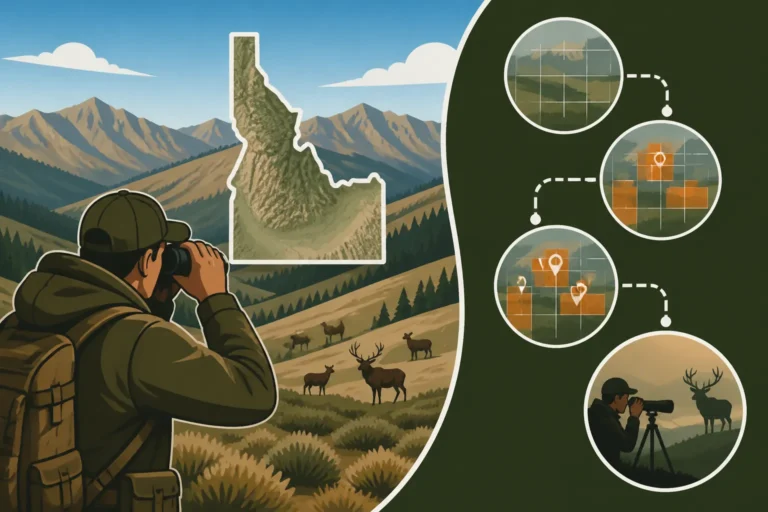
The first and arguably most important strategy is thorough pre-hunt preparation, often called e-scouting. Before you ever leave your driveway, spend serious time studying maps of your chosen unit. The Idaho Fish and Game website's Hunt Planner is an excellent resource, offering layers for unit boundaries, road networks, and even public land percentages. Pair this with dedicated mapping apps that incorporate official Forest Service MVUMs and BLM travel plans.
Once in the field, always carry reliable navigation. This means a GPS device or a smartphone with offline mapping capabilities. Cell service is unreliable in the backcountry, so don't count on streaming maps. Mark your routes, identify legal access points, and always know your position relative to designated roads. When in doubt, err on the side of caution. It's far better to walk a little further than to risk a violation and potential fines.
Leveraging Digital Mapping Tools
In today's hunting world, digital mapping tools are your best friends for navigating Idaho's complex road systems. Apps like GoHunt, onX Hunt, and Gaia GPS aren't just for marking waypoints or property lines; they are indispensable for understanding motorized travel restrictions. These platforms often incorporate the latest Forest Service Motor Vehicle Use Maps (MVUMs) and BLM travel management plans directly into their map layers. This means you can simply toggle a layer on your screen and instantly see which roads are open, which are closed, and which have seasonal restrictions.
Before your hunt, you should download these maps for offline use. This is paramount because, as any Idaho hunter knows, cell service evaporates quickly once you get beyond the main highways. With offline maps, your GPS still works, showing your exact location relative to all the marked roads, even without a signal. Spend time practicing with these apps at home, identifying the road layers and understanding how they display different types of access. This pre-hunt scouting on your device, often referred to as E-Scouting an Idaho Unit Before the Season, can save you hours of driving down dead-end roads or, worse, inadvertently violating a rule.
The Idaho Fish and Game's own Hunt Planner is another powerful digital resource. It provides comprehensive information on units, seasons, and also often overlays crucial details about road access. Spend time exploring The Idaho Hunt Planner Map Center to familiarize yourself with the area you plan to hunt. By combining these official resources with commercial apps, you gain a robust understanding of where you can and cannot drive, providing immense peace of mind.
On-the-Ground Verification and The Golden Rule
While digital maps are phenomenal, they are not always infallible. Conditions on the ground can change, gates can appear, or roads can become impassable due to weather, timber operations, or natural events. This is why on-the-ground verification is so important. As you drive, keep an eye out for physical signs: "No Motorized Travel" signs, designated road numbers, gates, berms, or even large boulders used to block old roads. These physical indicators often supersede what might be shown on an older map, or they might simply be clearer than a faint line on a digital screen.
Always be observant. If a road shown on your map looks completely overgrown, washed out, or otherwise unused, question its current status. It's entirely possible it has been effectively decommissioned even if your map isn't perfectly updated. If you encounter a road with a gate, even an unlocked one, consider if the gate indicates a restriction not noted elsewhere. Often, common sense and a cautious approach are your best guides.
The ultimate "golden rule" when it comes to motorized travel in Idaho's hunting areas is this: when in doubt, don't go. If you are uncertain whether a particular path is an established, open roadway, the safest and most responsible course of action is to park your vehicle and proceed on foot. This small inconvenience could save you from significant fines, vehicle impoundment, or even the loss of your hunting privileges. Remember, the game wardens are out there, and they are experts at identifying off-road tracks. It’s far better to be safe than sorry, ensuring you continue to be a welcome and ethical hunter on Idaho's public lands.
The Consequences of Violating the Motorized Rule
It’s easy to get caught up in the excitement of the hunt and perhaps push the boundaries, but violating Idaho’s motorized hunting rule carries serious repercussions. These aren’t just minor infractions; they are often treated with significant penalties that can impact your hunting career and your wallet. The Idaho Department of Fish and Game takes these rules very seriously because they are fundamental to preserving the state’s natural resources and upholding ethical hunting standards.
The range of penalties can vary depending on the severity of the violation, whether it's a first offense, and if other illegal activities (like harassing wildlife) were involved. However, even a seemingly minor off-road excursion can result in substantial fines. Beyond monetary penalties, you could face confiscation of your vehicle, your hunting weapons, or even any game you've harvested. Imagine losing your truck or your prized hunting rifle because of a questionable decision on a two-track.
Perhaps most impactful for a dedicated hunter is the potential loss of hunting privileges. Violations can lead to suspensions of your hunting license, meaning you could be barred from hunting in Idaho, and potentially other states through interstate compacts, for a significant period. This rule isn’t just about regulating vehicles; it’s about responsible hunting behavior, and the consequences reflect that gravity.
Penalties and Enforcement
Idaho's game wardens are highly trained and dedicated professionals who actively patrol hunting areas. They use a variety of methods, including track analysis, aerial observation, and surveillance, to enforce motorized vehicle rules. They are intimately familiar with their patrol areas, knowing which old roads are truly closed and which faint tracks are commonly abused. Their presence is a reminder that these rules are taken seriously, and they are out there to ensure compliance.
The penalties for violating the motorized rule can be quite steep. Fines can range from hundreds to thousands of dollars, depending on the specific statute violated and the damage caused. For example, damage to habitat from off-road travel can incur additional restitution fees. Moreover, your vehicle could be impounded, requiring costly fees to retrieve it, if it's not seized outright. In more egregious cases, particularly those involving the harassment of wildlife or repeated offenses, the penalties escalate, potentially leading to criminal charges. For more detailed information on potential repercussions, it's wise to review the specifics on Penalties for Breaking the Motorized Rule.
Beyond the immediate legal and financial consequences, there's also the long-term impact on your hunting record. A violation stays on your record and could affect your ability to obtain licenses in the future, both in Idaho and possibly across state lines. It’s a stark reminder that responsible hunting is not just about being successful in the field, but also about adherence to the laws designed to protect the very opportunities we cherish.
Broader Impacts on Hunting Access and Ethics
The consequences of violating motorized rules extend far beyond individual penalties. Every instance of illegal off-road travel contributes to a negative perception of hunters as a whole and can lead to stricter regulations for everyone. When land management agencies see widespread abuse of travel rules, they are more likely to implement broader closures, limiting access even for those who abide by the law. This diminishes opportunities for all of us, impacting future generations of hunters.
Consider the relationship with private landowners. If hunters are observed disrespecting designated routes on public land, or worse, illegally crossing onto private property, it erodes trust. Landowners may become less willing to grant access or participate in programs like Access Yes, which open up private land for public hunting. This loss of goodwill can severely restrict access to valuable hunting grounds, making it harder for everyone to find places to pursue game.
Ultimately, adherence to the motorized hunting rule is a matter of ethical conduct and responsible stewardship. As hunters, we have a unique and vital role in conservation. Part of that role is demonstrating respect for the land, the wildlife, and the regulations designed to protect them. By consciously choosing to stay on established, legal roadways, we not only avoid personal penalties but also contribute positively to the image of hunting and help preserve access for ourselves and those who follow in our footsteps. It's about being a part of the solution, not contributing to the problem.
Identifying Legal Roads: A Hunter's Table
To help you keep track of what counts and what doesn't, here’s a quick reference table. This is designed to give you a clear, concise overview, but always remember to consult official maps for your specific hunting unit.
| Characteristic | Established Roadway (Counts) | Not an Established Roadway (Does Not Count) | Key Action for Hunter |
|---|---|---|---|
| Origin/Purpose | Constructed/improved for vehicle travel, official designation | Formed by repeated use, game trails, decommissioned spurs | Verify with official maps (MVUM, BLM, IDFG). |
| Maintenance | Regularly maintained by public agencies (FS, BLM, County) | No official maintenance, often overgrown/deteriorated | Look for signs of grading, culverts, active use by authorities. |
| Mapping | Clearly marked on official MVUMs, BLM maps, state land maps as open | Absent from official maps, or marked as closed/trail | Use digital apps (GoHunt, onX) with MVUM layers; download offline. |
| Physical Appearance | Graded, graveled, signposted, clear, defined route | Faint two-track, overgrown, natural terrain, rock obstacles | Don't trust appearance alone; cross-reference with maps. |
| Signs/Barriers | Open gates, designated signage for vehicle access, road numbers | "No Motorized" signs, gates, berms, physical barriers | Obey all posted signs and physical closures. If unclear, walk. |
| Legal Status | Approved for public motorized access | Illegal for motorized public access | When in doubt, walk. |
Disclaimer
Please remember that hunting regulations, seasons, and access rules in Idaho can change. This guide provides general information based on current understanding, but it is not a substitute for the official regulations published by the Idaho Department of Fish and Game. Always consult the latest Idaho hunting regulations and relevant land management agency maps before heading into the field. Your responsibility is to know and adhere to all applicable laws.