Spike-Only Restrictions Across the Elk Zones
If you've ever found yourself squinting through binoculars at a distant elk, trying to discern if that young bull has a tiny third point or is truly a spike, you know the pressure of Idaho's spike-only regulations. It's a rule that can make or break a hunt, leaving many hunters scratching their heads about what counts and where it applies. This guide will walk you through everything you need to know about spike-only restrictions across Idaho's diverse elk zones, helping you confidently identify your target and understand the method behind the regulations.
Understanding Idaho's Spike-Only Elk Rules
The term "spike-only" can sometimes feel like a moving target, depending on who you talk to and which state's regulations they're accustomed to. In Idaho, however, the definition is quite clear, and understanding it precisely is absolutely critical to avoid an accidental violation and ensure an ethical harvest.
Defining a Spike Bull: What to Look For
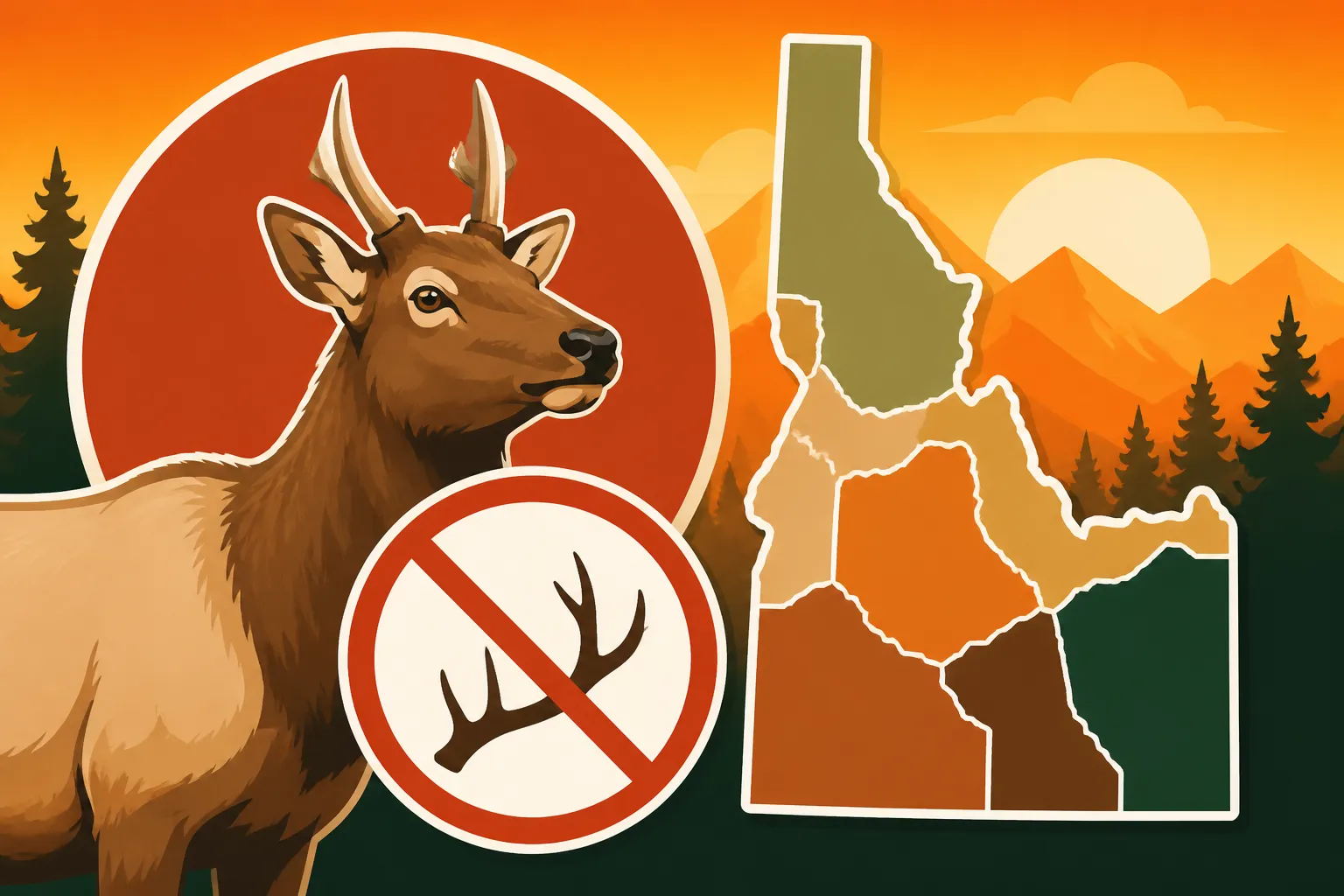
At its core, a spike bull in Idaho is an elk whose antlers consist of a single, unbranched beam on at least one side. Think of it like a simple spear or a long, pointed stick extending from the bull's head, without any other points or tines branching off it. It's not about the length of that spike, nor its thickness, but purely the lack of any additional branching. This definition is crucial because a bull with even a tiny, half-inch point stemming from its main beam on both sides would not qualify as a spike bull, even if those points are barely noticeable at a distance. The regulation hinges on the unbranched nature of at least one antler.
Sometimes hunters get caught up in the size of the elk, thinking a small-bodied, young bull must be a spike. But age and body size don't always correlate perfectly with antler development. You might encounter a small, yearling bull that already has a brow tine and a main beam with a second point, making it a "legal" branched bull even though it's still quite young. Conversely, a robust two-year-old might still only sport spikes. This is why positive antler identification is paramount, rather than making assumptions based on the animal's overall stature.
The Legal Specifics: Unbranched Antlers
Idaho's regulations typically specify an "unbranched antler on one side or a spike antler" or similar phrasing. This means if you see an elk with one antler that is a perfect spike and the other antler has even a small branch, that animal is still considered a "branched" bull and would not be legal in a spike-only season. Both antlers must be unbranched spikes, or at least one must be, with the other being a spike or perhaps even missing. The key takeaway is no branching on at least one side. It’s a very black and white rule, leaving little room for interpretation once you're clear on the definition.
This particular regulation helps focus hunter pressure on a very specific segment of the bull population – typically the youngest males in their first or second year of antler growth. By targeting these animals, the state aims to reduce pressure on the more mature, breeding-age bulls, allowing them to continue contributing to the herd's genetics and overall health. As you dive into hunting in specific regions, you'll see how Idaho Elk Zones and the A Tag or B Tag Choice can be tied into these types of specific weapon and antler restrictions.
Where Spike-Only Seasons Apply Across Idaho
Idaho's diverse landscapes and varied elk populations mean that hunting regulations, including spike-only provisions, can differ significantly from one region to another. It’s never a "one size fits all" situation, and what’s legal in one elk zone might lead to a citation in another.
General Seasons and Controlled Hunts
You'll typically find spike-only restrictions applied in a couple of ways: within general hunting seasons, often during specific archery or muzzleloader periods, or as part of a controlled hunt. General seasons are usually open to a wider pool of hunters, and the spike-only rule here often serves as a way to spread opportunity while managing harvest on younger age classes. For instance, many early archery seasons, particularly those associated with an A tag, might be spike-only for bulls. This means that hunters with A Tags Favor Archery and Muzzleloader Hunters need to be acutely aware of this restriction.
Controlled hunts, on the other hand, are limited-entry draws designed for precise management goals. While some controlled hunts might be for "any bull" or even trophy-class animals, others could specifically target spike bulls in areas where managers want to reduce the younger male population for various reasons, perhaps to address localized overpopulation or to further protect older bulls. The specifics of these controlled hunts are laid out annually in the hunting regulations, and it's your responsibility to know every detail for your chosen hunt area and weapon. Checking the official Idaho Fish and Game website or utilizing a planning resource like GoHunt can provide crucial, up-to-date details for your specific hunt unit.
Identifying Zones with Spike-Only Opportunities
Idaho is divided into many elk zones, and within those zones, numerous game management units. The application of spike-only rules varies considerably across these units. Generally, you'll find these restrictions more common in zones where elk populations are robust and the state is actively managing for trophy potential or seeking to balance age structures. Areas with historically strong Elk Herd Distribution by Zone are often subject to more nuanced regulations like spike-only limits.
To really dig into where these rules apply, you'll need to consult the current year's Idaho Big Game Hunting Seasons and Rules booklet. This document is your bible. It will clearly list each elk zone, its corresponding game management units, the weapon types allowed, and the specific antler restrictions for each season. Many hunters also use online mapping tools, sometimes enhanced by services like GoHunt, to help visualize these boundaries and restrictions. For instance, understanding Reading an Elk Zone Boundary on a Map is indispensable when planning a spike-only hunt, as crossing a unit line can instantly change the legalities of your target animal.
Here's a simplified look at how spike-only rules might be structured in some typical Idaho elk scenarios, though remember, these are generalized examples and you must check current regulations for precise details:
| Elk Zone/Unit Example | Season Type | Typical Weapon | Antler Restriction | Common Hunter Strategy |
|---|---|---|---|---|
| Panhandle (Unit 1) | General Archery | Bow | Spike Only Bull | Early season, focus on smaller, younger bulls. |
| Lolo (Unit 10) | General Archery | Bow | Spike Only Bull | Backcountry hunt for less pressured young bulls. |
| Weiser (Unit 32A) | Controlled Muzzle | Muzzleloader | Any Bull (often, but check!) | Trophy potential, less common for spike-only. |
| Pioneer (Unit 36B) | General Rifle | Rifle | Spike or Any Branched Bull | Varies year to year, could be spike or any branched. |
Remember, this table is illustrative. The most accurate information will always come directly from Idaho Fish and Game's current regulations. For more insight into these specific rules, look up topics like Spike-Only Bull Rules Inside Idaho A Tag Seasons.
Why Idaho Implements Spike-Only Regulations
It's natural to wonder why a state would impose such specific antler restrictions. It can feel like an added layer of complexity to an already challenging pursuit. However, these rules are not arbitrary; they are deeply rooted in sound wildlife management principles aimed at sustaining healthy elk populations and providing diverse hunting opportunities for years to come.
Managing for Herd Health and Quality
One of the primary drivers behind spike-only regulations is to manage the age structure and genetic health of the elk herd. By limiting the harvest to only spike bulls in certain seasons or units, wildlife managers effectively create a protected class for two-and-a-half-year-old and older bulls. These older bulls are typically the prime breeders, and by allowing more of them to survive for several seasons, they have more opportunities to breed and pass on their genetics. This can lead to a healthier, more robust herd overall.
Over-harvesting mature bulls can skew the sex ratio in a herd, leading to fewer mature bulls available for breeding. This can result in younger, less experienced bulls doing most of the breeding, which might not be ideal for herd genetics or productivity. Spike-only rules help maintain a more balanced bull-to-cow ratio, ensuring sufficient mature bulls are present to cover the cows during the rut. This strategy is also influenced by other factors impacting elk populations, such as predation. Understanding How Wolves Changed Idaho Elk Numbers can provide additional context on why careful management of bull harvest is so critical.
Balancing Hunter Opportunity with Conservation Goals
Idaho Fish and Game also uses spike-only regulations as a tool to balance hunter opportunity with long-term conservation goals. In areas with high elk numbers but a desire to foster more mature bulls, offering spike-only seasons allows a significant number of hunters to participate in the elk hunt without impacting the trophy potential of the herd. It provides an entry-level opportunity, particularly for archers, without putting excessive pressure on the older age classes.
This approach creates different "tiers" of hunting experiences. Some hunters are happy to pursue a spike bull for the meat and the experience, while others might be seeking a truly mature, branched bull. By separating these opportunities through specific seasons and antler restrictions, the state can cater to different hunter preferences while still achieving its biological objectives. It's a delicate dance between giving hunters a chance to fill their freezer and ensuring there are still impressive, mature bulls roaming the backcountry. Hunters can further understand harvest trends and management success by reviewing Reading an Idaho Harvest Statistics Report, which often breaks down harvest by antler class.
Strategies for a Successful Spike-Only Elk Hunt
Hunting elk, regardless of the antler restriction, is always a challenge. But when you're specifically targeting spike bulls, your strategies might need a slight adjustment. It's not just about finding elk; it's about finding the right elk and making a clean, ethical harvest.
Pre-Season Scouting and On-the-Ground Reconnaissance
Success on a spike-only hunt often begins long before opening day. Pre-season scouting is absolutely paramount. Spike bulls, being younger, tend to stick together in bachelor groups or can sometimes be found on the fringes of cow/calf herds. They might also be less wary than their older, more experienced counterparts, but they can still be incredibly elusive. Use tools like topographical maps, satellite imagery, and even resources like GoHunt's mapping layers to identify potential feeding areas, bedding cover, and water sources within your chosen unit. Pay close attention to areas that might hold younger bulls, perhaps slightly lower in elevation or in less dense timber than where mature bulls might prefer to hide.
Once you're on the ground, dedicate time to glassing. This is where a good pair of binoculars or a spotting scope really shines. Spend hours patiently observing large areas, especially open hillsides and clearings at dawn and dusk. You're not just looking for "elk," but specifically for bulls without branched antlers. This requires discipline and patience. You might spot a group of elk and only after careful observation, pick out the two spike bulls among them. For hunters working vast landscapes, skills developed for Glassing Idaho Breaks for Mule Deer can be easily adapted to elk, especially when trying to pick out subtle antler differences at long range. Consider also how E-Scouting an Idaho Unit Before the Season can help you narrow down your search areas, saving precious time in the field.
Positive Identification and Ethical Shot Placement
The most critical aspect of a spike-only hunt is positive identification before you even think about taking a shot. In the heat of the moment, with adrenaline pumping, it can be incredibly difficult to make a quick, accurate judgment on antler configuration. A bull that looks like a spike from a distance might reveal a small fork or brow tine as it turns its head or moves through cover.
Always err on the side of caution. Use your optics to confirm, and then confirm again. If there's any doubt whatsoever, let the animal walk. It’s far better to go home empty-handed than to mistakenly harvest a branched bull in a spike-only season and face legal repercussions, not to mention the ethical burden. Once you are 100% certain it's a legal spike, focus on making a clean, ethical shot. Just like with any elk, spikes are tough animals. Aim for the vitals and ensure you have a clear, unobstructed shot lane. Whether you're calling them in during the rut, as described in guides like Bugling Elk in Idaho's Timbered Zones, or stalking silently through timber, shot placement remains paramount for a humane harvest.
The challenges of hunting in Idaho, especially when navigating specific regulations like spike-only rules, truly test a hunter's skill and patience. But by understanding the rules, scouting diligently, and practicing ethical hunting principles, you can have a rewarding and successful experience chasing those young bulls across the Gem State.
Disclaimer
This article is for general informational purposes only and does not constitute professional advice. Laws, prices and regulations vary by location and change over time. Consult a qualified professional for guidance on your specific situation.