Where Bull Elk Winter in Steep Country
When the Idaho winter truly settles in, blanketing the high country in a thick layer of snow and dropping temperatures into the bitter cold, finding elk can feel like an impossible task. But locating those mature bull elk, the ones that often disappear when the leaves fall, requires a deep understanding of their unique winter survival strategies. This guide will walk you through the subtle nuances of their winter habitat preferences, helping you understand where these magnificent animals seek refuge in the challenging steep country of Idaho.
Understanding Idaho's Winter Elk Habitat Needs
Winter is a time of incredible hardship for elk, especially in Idaho's rugged mountains. Their primary goal shifts from breeding and growing to pure survival – conserving energy, finding what meager forage is available, and staying out of the brutal wind and snow. This isn't just about finding food; it's about finding the right kind of cover in the right kind of place to minimize caloric expenditure. They become masters of efficiency, and their winter range reflects this deep-seated need.
The Critical Role of Thermal Cover and Forage
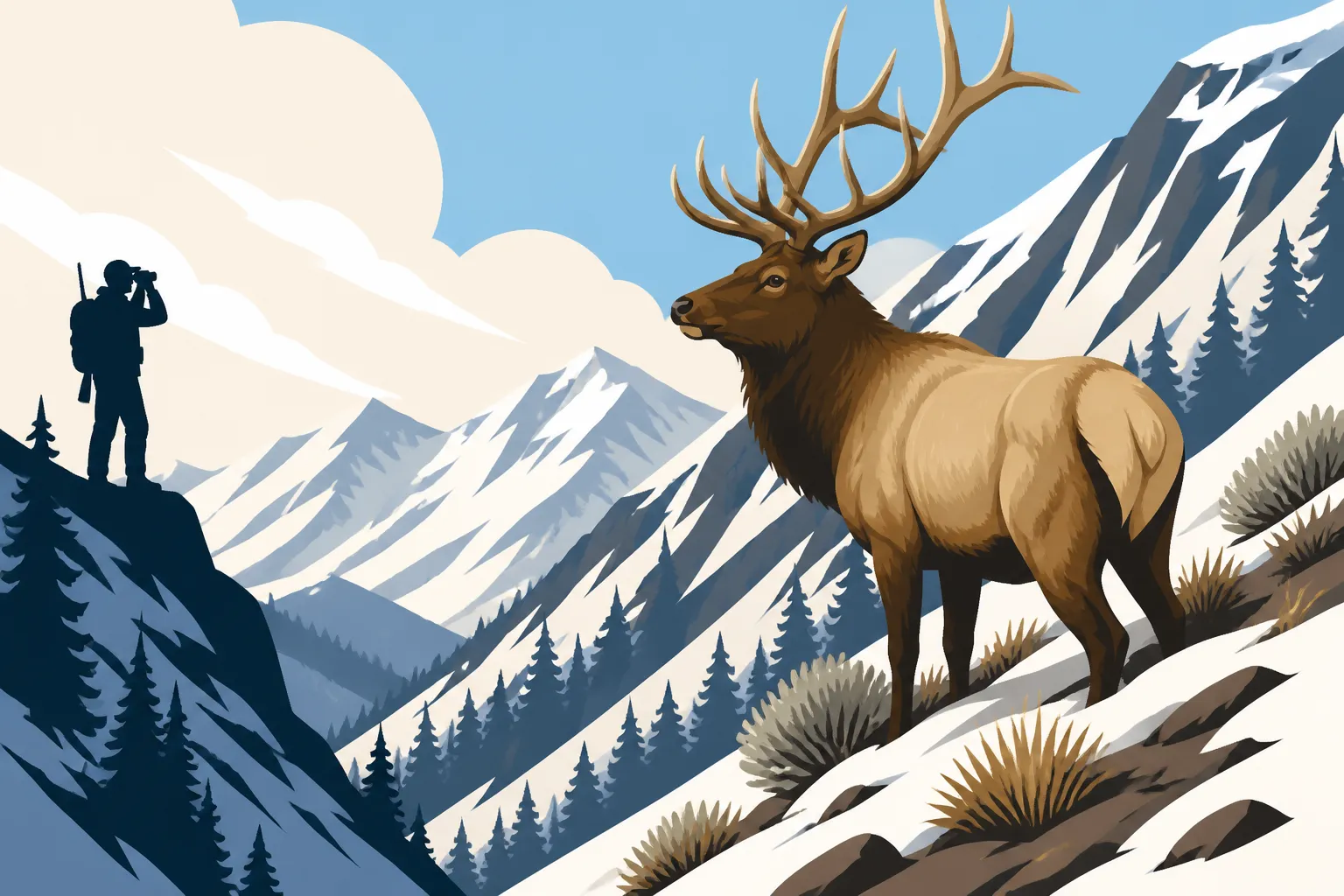
Imagine trying to stay warm and fed when the wind howls and the snow drifts. Elk face this challenge daily, which is why thermal cover is paramount. Dense stands of mature conifer trees, like Douglas fir, lodgepole pine, and subalpine fir, become literal lifesavers. These thick timber pockets act like natural blankets, trapping warmth and breaking the wind, creating microclimates that can be several degrees warmer than open areas. You’ll often find them on steep, north-facing slopes, which might seem counter-intuitive for warmth but are often where the heaviest, most protective timber grows. These areas might not see much sun, but the sheer density of the canopy sheds snow and blocks wind, allowing elk to conserve precious energy.
However, thermal cover alone isn't enough; they also need to eat. This often means a delicate balance between finding shelter and having access to forage. Elk might bed in dense timber but move to nearby south-facing slopes or brushy draws to browse on shrubs, forbs, or even exposed grasses when conditions allow. The winter diet is significantly less nutritious than summer, so they need to make every bite count, focusing on woody browse like bitterbrush, serviceberry, and aspen saplings, which can still provide some energy and nutrients.
The Impact of Snow Depth and Aspect
Snow depth is arguably the single most influential factor driving elk movements in winter. As snow accumulates, it becomes harder to travel through and covers up forage. Shallow snow, say under 18 inches, might not bother them much, especially if it’s powdery. But once it gets much deeper, it quickly depletes their energy reserves. They're built for snow, with long legs and wide hooves, but even they have limits.
This is where aspect comes into play. South-facing slopes, catching the most sun exposure, are invaluable. They shed snow faster, exposing forage earlier in the season or during mid-winter thaws. These sun-drenched benches and ridges become critical feeding grounds. But as mentioned, deep snow can accumulate even on these slopes if it’s a particularly harsh winter, forcing elk to even lower elevations or into river bottoms where snow might be less prohibitive. On the flip side, north-facing slopes, while typically holding deeper snow, often host those dense stands of thermal timber that are crucial for bedding and escaping severe weather. Mature bulls often find ways to use both, bedding on protected north-facing slopes and then moving to south-facing areas to feed during warmer parts of the day. Reading the terrain with tools like GoHunt can help you spot these crucial transitions from dense timber to sun-exposed slopes before you ever set foot in the field, helping you discern potential wintering areas.
Why Mature Bull Elk Go Their Own Way
It's a common observation among hunters that after the rut, mature bull elk seem to vanish. They don't always stick with the big cow-calf herds, and there are very good reasons for this separation, especially when winter hits. Understanding this behavior is key to finding them when conditions are at their harshest.
Segregation from Cow-Calf Herds
Once the intense physical demands of the rut are over, bull elk are often worn down, having lost a significant amount of body fat. They are in recovery mode, and their nutritional needs, while still critical, differ from those of pregnant cows and growing calves. Cows and calves typically seek out areas with more consistent, accessible forage and slightly milder conditions, often congregating in larger herds for safety in numbers. These large herds can browse an area quickly, but they also attract more attention from predators and hunters.
Mature bulls, however, have a different strategy. They tend to seek out quieter, more secluded areas where they can recover and minimize disturbance. They're less concerned with being part of a large, conspicuous group and more focused on finding the densest thermal cover and undisturbed forage to regain weight. This often means they gravitate towards the roughest, most remote parts of the winter range, places where hunting pressure is minimal and the terrain offers maximum security.
Seeking Out Seclusion and Security
For a mature bull, winter isn't just about food and warmth; it's about security. The biggest bulls didn't get that way by being careless. They learned to avoid danger, and deep winter reinforces these survival instincts. They will often choose the steepest, most broken terrain, full of hidden benches, deep canyons, and heavy timber pockets that are difficult for predators – both four-legged and two-legged – to access. Think of areas so steep and brushy that you'd rather walk around than through them; that's often exactly where a bull wants to be.
These areas provide escape routes, thermal protection, and a sense of solitude vital for recovery. They might hold small bachelor groups of bulls, or even solitary giants, simply trying to ride out the lean months. It's a strategy that prioritizes concealment over convenience, leading them into places that often demand significant physical effort to reach. If you're looking for that bull that's managed to elude hunters for years, chances are he's spending his winters in one of these "rougher is better" sanctuaries.
Pinpointing Wintering Hotspots in Idaho's Mountains
Knowing why elk winter where they do is one thing, but knowing where those spots actually are in the vastness of Idaho's landscape is another. It takes a combination of geological understanding, habitat recognition, and a bit of e-scouting detective work. Elk are creatures of habit, and their winter patterns are often predictable once you know what to look for.
High-Elevation Draws and Timbered North Slopes
When we talk about "steep country," we're often talking about rugged canyon walls and high-elevation draws. These are prime candidates for bull elk wintering habitat. Look for areas with a combination of very steep slopes, dense, old-growth conifer timber, and complex terrain with numerous benches and small, hidden pockets. While south-facing slopes get the sun, the sheer thermal cover provided by dense timber on a north-facing slope, particularly one that's sheltered from prevailing winds, can be invaluable. The timber here can act like a snow fence, too, creating shallower snow pockets directly underneath the canopy, making travel and finding browse easier than in open, wind-swept areas.
These locations often feature tight, brushy drainages that run into larger canyon systems, providing both cover and travel corridors. Bulls might bed in the absolute thickest, steepest sections of timber, often within a few hundred yards of a reliable water source, and only venture out into more open areas to feed when conditions are optimal. This is where understanding the Elk Herd Distribution by Zone and then drilling down to the micro-terrain level becomes crucial.
Southern Aspects and Sagebrush Steppe Interface
Even the most reclusive bull has to eat. So, while they might bed on those steep, timbered north slopes, they'll often venture to nearby southern aspects for feeding. These sun-drenched slopes, especially those with a mosaic of timber, rocky outcrops, and patches of sagebrush or bitterbrush, can be critical. The sun helps melt snow, exposing vital forage that might be completely buried elsewhere. Look for the interface where these steep timbered areas transition into more open, sagebrush-steppe country. These transition zones often hold a mixture of browse and grass, crucial for supplementing their diet.
Using satellite imagery on platforms like GoHunt or other mapping software is indispensable for identifying these features. You can visually pick out the dark timber stands, the lighter-colored south-facing slopes, and the subtle benches where elk might pause to feed. Pay attention to how these features connect, forming a network of cover, forage, and travel routes that bull elk are likely to exploit. It's also worth investigating Mule Deer Winter Range Across the High Desert for similar insights, as both species often utilize these interface zones, albeit with different preferences.
Historical Winter Ranges and Migration Corridors
Elk are creatures of habit. They often follow ancestral migration corridors and return to the same winter ranges year after year, sometimes for generations. This means that historical data, if you can find it (often through local Idaho Fish and Game offices or experienced local hunters), is gold. A severe winter might push them lower than usual, but their core wintering areas tend to remain consistent unless there’s a major habitat disturbance.
Migration corridors, which funnel elk from summer to winter range, are often bottleneck areas. Identifying these can give you a clue as to where elk will eventually end up. However, once on winter range, these corridors transform into smaller, localized travel routes between bedding and feeding areas. If you're doing your E-Scouting an Idaho Unit Before the Season, look for these natural funnels and adjacent steep, timbered areas on maps. Keep in mind that areas like Why Elk Numbers Dropped in the Nineties might indicate shifts in historical ranges due to habitat changes or other factors, so always verify older information with current observations or maps.
Scouting and Hunting Strategy for Winter Bulls
Finding bull elk in winter, especially in the steep country, isn't just about luck; it's about smart scouting and a calculated approach. You're trying to outwit an animal that has spent its entire life adapting to the harshest conditions, and a mature bull has likely evaded many hunters before you.
Leveraging Topographic Maps and Satellite Imagery
Before you even tie your boots, your most powerful tools are topographic maps and satellite imagery. Dive deep into the details. Look for:
- Dark timber patches: Identify dense, north-facing timber stands. These are your primary suspects for thermal cover.
- Steepness: Use contour lines to identify extremely steep, broken country. Bulls love terrain that's challenging for humans.
- Aspect: Pinpoint south-facing slopes adjacent to that dark timber. These are where they'll seek forage.
- Elevation: Note elevation bands. How does the snow depth likely vary with elevation in your unit?
- Water sources: Even in winter, elk need water. Frozen streams might mean they're eating snow, but open water is still a draw.
Platforms like GoHunt, combined with state Fish and Game resources, can provide layers for public land ownership, old road systems, and even some historical harvest data, helping you hone in on promising areas. Think about the Reading an Elk Zone Boundary on a Map and how it relates to specific terrain features. Imagine yourself as a bull elk: where would you go to feel safe, stay warm, and find just enough to eat without expending too much energy? This kind of armchair scouting is critical. Consider also using techniques from The Grid Glassing Method, Step by Step but applied to your digital map, breaking down large basins or canyon complexes into smaller, manageable search areas.
Reading Sign in Snow and Terrain
Once you're on the ground, especially after a fresh snowfall, your ability to read sign becomes paramount. Fresh tracks in the snow are the obvious tell, but don't just follow them blindly. Understand what the sign is telling you:
- Tracks: Are they fresh or old? Are they walking, trotting, or running? A bull's track will be larger and often more solitary than a cow or calf.
- Beds: Look for depressions in the snow, often under a tree or against a rock, where an elk has rested. Are they still warm? Is there melt around the edges?
- Browse lines: Notice where elk have been feeding on brush. Are the ends of branches nipped off? Is it recent? This helps confirm active feeding areas.
- Rubbed trees: While less common in deep winter, bulls might still rub smaller trees, especially earlier in the winter or during thaws.
- Droppings: Fresh droppings indicate recent presence.
Focus your ground scouting efforts on those areas you identified during your e-scouting – the fringes of the dense timber, the edges of south-facing slopes, and areas sheltered from the wind. Remember, access can be a huge challenge. Many roads might be closed due to snow, so be aware of Seasonal Road Closures Across Idaho Forests and plan your approach accordingly. As you're moving through the terrain, remember the principles of Reading Fresh Elk Sign in Dark Timber and adapt them for winter conditions. Sometimes, it’s not about covering miles, but about meticulously picking apart a small, promising pocket of steep, timbered country where a wintering bull might be holed up. Patience and persistence are your greatest allies when chasing winter bulls in Idaho.
| Feature | Cow-Calf Herds (General) | Mature Bull Herds (Winter) |
|---|---|---|
| Primary Goal | Survival, calf protection, easy forage access | Energy conservation, security, seclusion |
| Terrain | Gentler slopes, accessible benches | Steep, rugged, broken country, hidden draws |
| Aspect Preference | South-facing for warmth and forage | Mix of south-facing for quick forage and dense north-facing for thermal cover/windbreak |
| Vegetation | Open meadows near cover, shrubby slopes | Dense conifers, thick brush, rocky outcroppings |
| Snow Depth | Avoid deep snow, prefer shallower areas | Tolerate deeper snow if thermal cover is excellent |
| Herd Size | Larger groups, family units | Smaller groups or solitary |
| Security | Group safety in numbers | Individual concealment and remote locations |
Disclaimer
This article is for general informational purposes only and does not constitute professional advice. Laws, prices and regulations vary by location and change over time. Consult a qualified professional for guidance on your specific situation.