Cow Moose Tags and Where They Go
For many hunters, the dream of drawing an Idaho moose tag feels like hitting the lottery, and when it comes to cow moose tags, that feeling is magnified by their extreme rarity and specific purpose. It can be incredibly frustrating to apply year after year, seeing those slim odds, but understanding why these tags exist and how to navigate the process is key. This guide will help you understand the specifics of cow moose tags in Idaho, where they fit into conservation, and what steps you can take if you're lucky enough to draw one.
The Elusive Nature of Idaho Cow Moose Tags
Let's be real, drawing any moose tag in Idaho is a monumental achievement, a true testament to patience and a touch of luck. Cow moose tags, while perhaps not the "trophy" many envision, are arguably even more specialized and elusive, playing a critical role in the state's intricate wildlife management plans.
Why Moose Tags are So Hard to Come By
The simple truth is that moose, particularly the Shiras moose found in Idaho, are not as numerous as deer or elk. They have lower reproductive rates, mature slower, and generally inhabit more specialized habitats. This means that Idaho Fish and Game manages their populations with extreme conservatism. The limited number of tags issued each year reflects a careful balancing act to ensure healthy, sustainable moose populations for generations to come. It’s tough to constantly see those 0.5% or 1% draw odds, and it certainly can feel disheartening. Many hunters spend decades putting in for these tags, and that long wait is a common part of the Idaho hunting journey. The state takes its responsibility to these magnificent animals very seriously, which is why the opportunity to hunt them is so tightly controlled. For more context on the wait, you might find insight in articles like How Many Years It Takes to Draw Idaho Moose.
Understanding the "Once-in-a-Lifetime" Rule
Idaho has a unique rule for its most prized big game species: moose, mountain goat, and bighorn sheep. If you are fortunate enough to draw and harvest any tag for one of these species in Idaho, you are generally not eligible to draw another tag for that same species again in your lifetime. This "once-in-a-lifetime" rule adds a profound layer of significance to every application. When you put in for a moose tag, whether it’s a bull or a cow, you're not just hoping for a hunt this year; you're making a choice that will impact all future moose hunting opportunities in Idaho for you. This often leads to internal debates for hunters: do you hold out for a bull, or do you take any moose tag you can get? For many, the chance to hunt any moose, cow or bull, is the ultimate goal, and they'll apply for whatever offers even a sliver of hope.
The Role and Purpose of Cow Moose Hunts in Idaho
Cow moose tags aren't merely a consolation prize for not drawing a bull tag. In fact, they are a highly specific and valuable tool used by Idaho Fish and Game for targeted population management. Understanding this helps frame their purpose and distribution.
Managing the Moose Population Through Cow Harvest
Idaho Fish and Game doesn't just issue tags arbitrarily. Cow moose tags are a deliberate strategy implemented in very specific game management units (GMUs) where localized populations might need adjustments. This could be due to several factors: perhaps there's a need to reduce overall moose numbers in an area to mitigate habitat impacts, address potential conflicts with human development, or balance the sex ratio within a herd to promote healthier demographics. Unlike a general bull hunt that might be aimed at recreational opportunity and trophy potential, a cow hunt is primarily a surgical management tool. It allows biologists to fine-tune herd dynamics in a way that simply harvesting bulls wouldn't achieve, ensuring the long-term health and sustainability of the entire moose population. This precise approach is a cornerstone of how Idaho manages all its big game.
Distinctions Between Bull and Cow Moose Opportunities
While both bull and cow moose tags are incredibly difficult to draw, there are subtle differences in their allocation and the hunting experience they offer. Bull tags often generate more interest due to the trophy potential, and thus, the draw odds can be even more abysmal. Cow tags, on the other hand, might occasionally present slightly less astronomical odds in certain units. These specific cow hunts are typically found in areas where population reduction is a priority, or in units that historically have stable, if not slightly over-populated, cow segments. It's crucial to understand that a cow moose hunt isn't about the rack; it's about the unique challenge of hunting one of North America's largest game animals and the immense amount of high-quality meat it provides. The hunt itself, the pursuit of this massive animal in its often dense, swampy habitat, is an experience unparalleled, regardless of the antlers.
Navigating the Idaho Controlled Hunt Application Process
Alright, you've decided to throw your hat in the ring for a cow moose tag. This is where diligent research and careful adherence to deadlines become absolutely critical. The Idaho controlled hunt system, while straightforward, demands attention to detail.
Key Dates and Application Windows
The application period for Idaho's coveted trophy species, including moose, typically opens in April and closes in early May. This is a non-negotiable window, and if you miss it, you're out of luck for the year. Before you can even apply for a controlled hunt, you must purchase a valid Idaho hunting license. This isn't just a technicality; it's a prerequisite. Once your license is squared away, you'll submit your application directly through the Idaho Fish and Game's online licensing system, GoOutdoorsIdaho. Be prepared to pay a non-refundable application fee for each species you apply for. My advice? Mark these dates on every calendar you own, set phone reminders, and maybe even get a friend to send a nudge. Nothing stings more than realizing you missed the deadline after dreaming about a hunt all year. For a full breakdown of the season, check out The Idaho Controlled Hunt Calendar, April Through August.
Strategies for "Increasing" Your Moose Drawing Odds
Let's be honest: "increasing" your odds for an Idaho moose tag, especially a cow tag, is a bit of a misnomer because Idaho doesn't use a preference point system like some other western states. This means that every applicant, whether it's their first year applying or their thirtieth, theoretically has the same chance in the primary draw. This can be frustrating if you've been loyal to the system for years, but it also means a first-time applicant can get lucky! However, there are still strategies to consider. One common approach is to meticulously research past draw odds for specific units. Tools like GoHunt's INSIDER platform can be incredibly useful for analyzing historical data and identifying units that might have marginally better odds for cow tags, or simply have fewer applicants. While this is rarely a silver bullet, it allows you to make an informed decision rather than a blind one. Some hunters also consider applying for hunts that are less popular due to their remote nature, difficult access, or specific weapon restrictions. Keep in mind that party applications are an option, but this generally means if one person draws, everyone in the party draws the same tag, it doesn't inherently boost your individual chances. Understanding Idaho Has No Preference Points, and What That Changes can help you manage expectations.
Finding Opportunity: Where Idaho's Cow Moose Tags Go
So, you're committed to the dream. Now, where do you even start looking for these elusive cow moose tags? It comes down to understanding moose habitat and rigorously dissecting the Idaho Fish and Game data.
Identifying Moose Habitat and Distribution
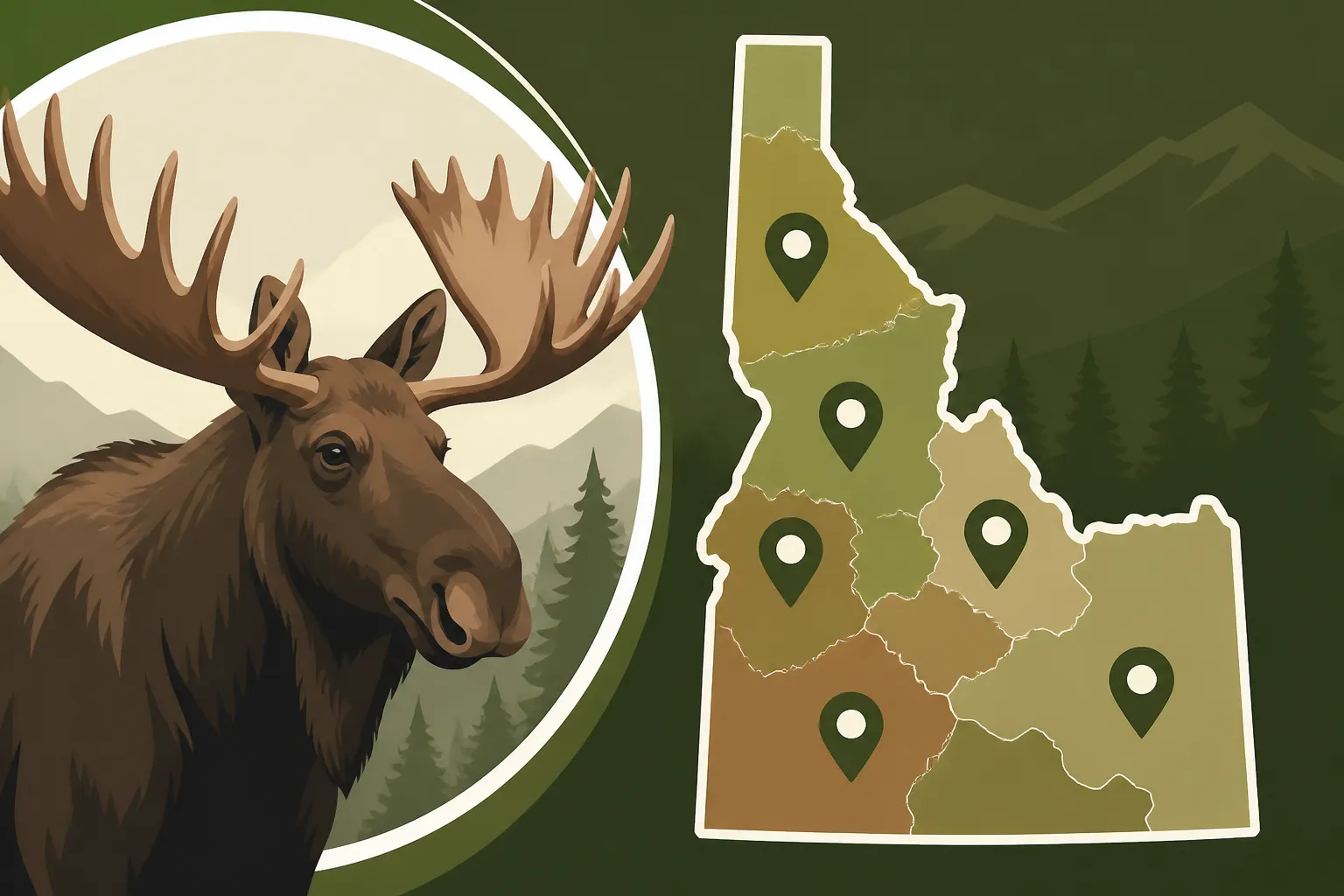
Idaho's Shiras moose are creatures of specific environments. They thrive in areas rich with willows, aspen, and other deciduous browse, typically found along riparian corridors, near marshy wetlands, and in high-elevation timber. They often favor dense cover for bedding and protection, especially in areas with deep snow in winter. Geographically, you'll find significant moose populations scattered throughout Idaho's northern, central, and eastern regions. Think of the Panhandle National Forests, the vast Salmon-Challis National Forest, and parts of the Caribou-Targhee National Forest bordering Wyoming. These areas offer the diverse blend of water, forage, and cover that moose need to survive and reproduce. Understanding these general habitat preferences is your first step in narrowing down potential hunting units. Articles like Shiras Moose Across Idaho can offer a broader view of their distribution.
Analyzing Hunt Planner Data for Cow Moose Hunts
This is where your inner detective comes out. The Idaho Fish and Game Hunt Planner is an indispensable tool for any serious applicant. You'll need to pore over the regulations and the hunt planner unit by unit, looking for specific "Moose" or "Cow Moose" controlled hunt opportunities. These tags are highly localized and tied directly to IDFG's management objectives for that particular GMU. Don't expect to see "Cow Moose, statewide" options. Instead, you'll find unit-specific hunts, sometimes with very limited tag numbers (e.g., 1-5 tags). This is another area where a robust data platform like GoHunt can really shine, as it often aggregates this information and presents historical draw odds in an easier-to-digest format. You’ll be looking for any opportunities for "Any Moose" or explicitly "Cow Moose" tags in units that align with known moose habitat. Remember, these tags and their associated units can change from year to year based on population surveys and management adjustments, so always consult the most current regulations. This is the only way to accurately determine Idaho Moose Controlled Hunt Draw Odds for the current year.
Here's a simplified comparison of what you might generally find when looking at moose tags in Idaho:
| Feature | Bull Moose Tags | Cow Moose Tags |
|---|---|---|
| Primary Objective | Regulated harvest, trophy opportunity | Population control, habitat management, harvest |
| Typical Season Dates | Early-Mid Fall (often September-October) | Often later in fall (October-November) |
| Draw Odds | Extremely low (often <1% in popular units) | Very low, potentially slightly "better" in specific management units |
| Unit Allocation | Broader range of units, though still limited | Highly specific units, fewer overall options |
| "Once-in-a-Lifetime" | Yes, drawing a bull tag means no future moose tags | Yes, drawing a cow tag means no future moose tags |
| Meat Yield (approx.) | 400-600 lbs boned | 300-500 lbs boned |
Preparing for Your Idaho Moose Hunt
Congratulations! You’ve defied the odds and drawn an Idaho cow moose tag. Now the real work begins. A moose hunt, especially in Idaho's rugged terrain, demands significant preparation, both physically and logistically.
Scouting and Pre-Season Preparation
Even if you’re familiar with Idaho's general landscapes, a moose hunt calls for hyper-focused scouting. Start with extensive e-scouting using satellite imagery tools like Google Earth or onX Hunt. Identify potential bedding areas, feeding grounds, and water sources – moose are often found near wetlands or riparian zones. Look for areas with dense willow and aspen stands. Map out potential access points and, crucially, egress routes for meat retrieval. Moose don’t always fall conveniently near a road. Consider any Idaho Moose Season Dates by Weapon as you scout. Beyond the maps, physical conditioning is paramount. Moose habitat often means slogging through thick timber, climbing steep slopes, or navigating boggy, uneven ground. You'll be packing out hundreds of pounds of meat, often over difficult terrain. Start a rigorous exercise regimen months in advance, focusing on strength, endurance, and pack training. You'll likely be hunting in Hunting Idaho's National Forests and BLM Ground, so understanding public land access is also key.
Essential Gear and Logistics for a Moose Hunt
Hunting an animal the size of a moose requires specialized gear and a well-thought-out logistical plan. Your standard deer hunting setup might not cut it. You’ll need:
- Heavy-duty packing frame and game bags: A moose is a massive animal, yielding hundreds of pounds of meat. You'll likely need to quarter it in the field, and a sturdy packing frame is essential for multiple trips. Investing in good quality, breathable game bags will protect your meat.
- Saws and sharp knives: A compact bone saw or even a specialized reciprocating saw can be a lifesaver for breaking down a moose carcass. Bring multiple sharp knives and a sharpener.
- Navigation tools: GPS, a reliable satellite messenger (like a Garmin InReach), and physical maps are non-negotiable for safety in remote moose country.
- Appropriate clothing and shelter: Idaho weather in the fall can be unpredictable. Be prepared for rain, snow, and freezing temperatures with layered clothing, waterproof outer shells, and a robust camping setup if you're planning a multi-day backcountry hunt. Consider Camping on Idaho Forest Ground While Hunting rules if you plan an extended stay.
- Meat retrieval plan: This is huge. Do you have horses? ATVs (where legal on designated trails)? Strong hunting partners? If you drop a moose miles from the nearest road, you need a realistic, executable plan for getting that meat out quickly to prevent spoilage. This is where Field Dressing and Carcass Transport Rules Explained becomes absolutely critical, especially with the sheer volume of meat.
Beyond the Harvest: Respect and Responsibility
Drawing and successfully harvesting a cow moose in Idaho is a profound experience, but the journey doesn't end when the animal is down. It extends to the ethical considerations and your role in ongoing conservation.
The Immense Value of an Idaho Moose Tag
For many, an Idaho moose tag represents the pinnacle of their hunting career, a culmination of years of applying and dreaming. Successfully harvesting a cow moose provides an incredible amount of lean, delicious meat that will fill your freezer for a long time. Beyond the sustenance, it's the experience itself: the solitude of the moose's domain, the immense challenge of the hunt, and the deep satisfaction of an ethical harvest. This isn't just another tag; it's a connection to Idaho's wild heritage and a profound respect for one of North America's most iconic animals. Treat the opportunity with the gravity and respect it deserves. Use resources like The Idaho Hunt Planner Is the Tool to Start With to maximize your experience.
Contributing to Conservation Efforts
Every hunter who purchases a license and applies for a controlled hunt plays a direct role in funding Idaho's wildlife management and conservation efforts. Those application fees, license sales, and tag purchases directly support Idaho Fish and Game's work, from habitat restoration to population surveys, law enforcement, and research. After a successful hunt, your responsibility continues. Idaho has mandatory harvest reporting requirements for big game. This isn't just bureaucracy; it's vital data that helps biologists track population trends, harvest rates, and the overall health of moose herds. By diligently reporting your harvest, you're providing critical information that will inform future management decisions, ensuring that moose populations remain healthy and that these incredible hunting opportunities continue for future generations. Make sure you understand Mandatory Reporting After an Idaho Harvest and submit your information promptly. Even if you apply for years and never draw a tag, your consistent application helps fund the system that manages these animals.
Disclaimer
Always consult the most current Idaho Fish and Game regulations for precise and up-to-date hunting laws, dates, and requirements before planning any hunting activity. This guide provides general information and recommendations.