Rocky Mountain Bighorns in Idaho
Hunting Rocky Mountain bighorn sheep in Idaho is a dream for so many, but it often feels like an impossible one. The sheer difficulty of drawing a tag, coupled with the brutal terrain these magnificent animals call home, can leave even the most seasoned hunters feeling overwhelmed and disheartened. This guide is here to shed some light on the reality of pursuing Rocky Mountain bighorns in Idaho, breaking down the application process, exploring their unique habitat, and offering practical advice to help you prepare for what would undoubtedly be a hunt of a lifetime.
Understanding Idaho's Bighorn Management and Populations
The story of Rocky Mountain bighorn sheep in Idaho is one of resilience and dedicated conservation. These incredible animals thrive in some of the most unforgiving landscapes, making their pursuit a truly unique challenge. But before you even think about lacing up your boots, it's vital to grasp how Idaho manages these herds and what that means for hunters.
The Elusive Nature of Rocky Mountain Bighorns in Idaho
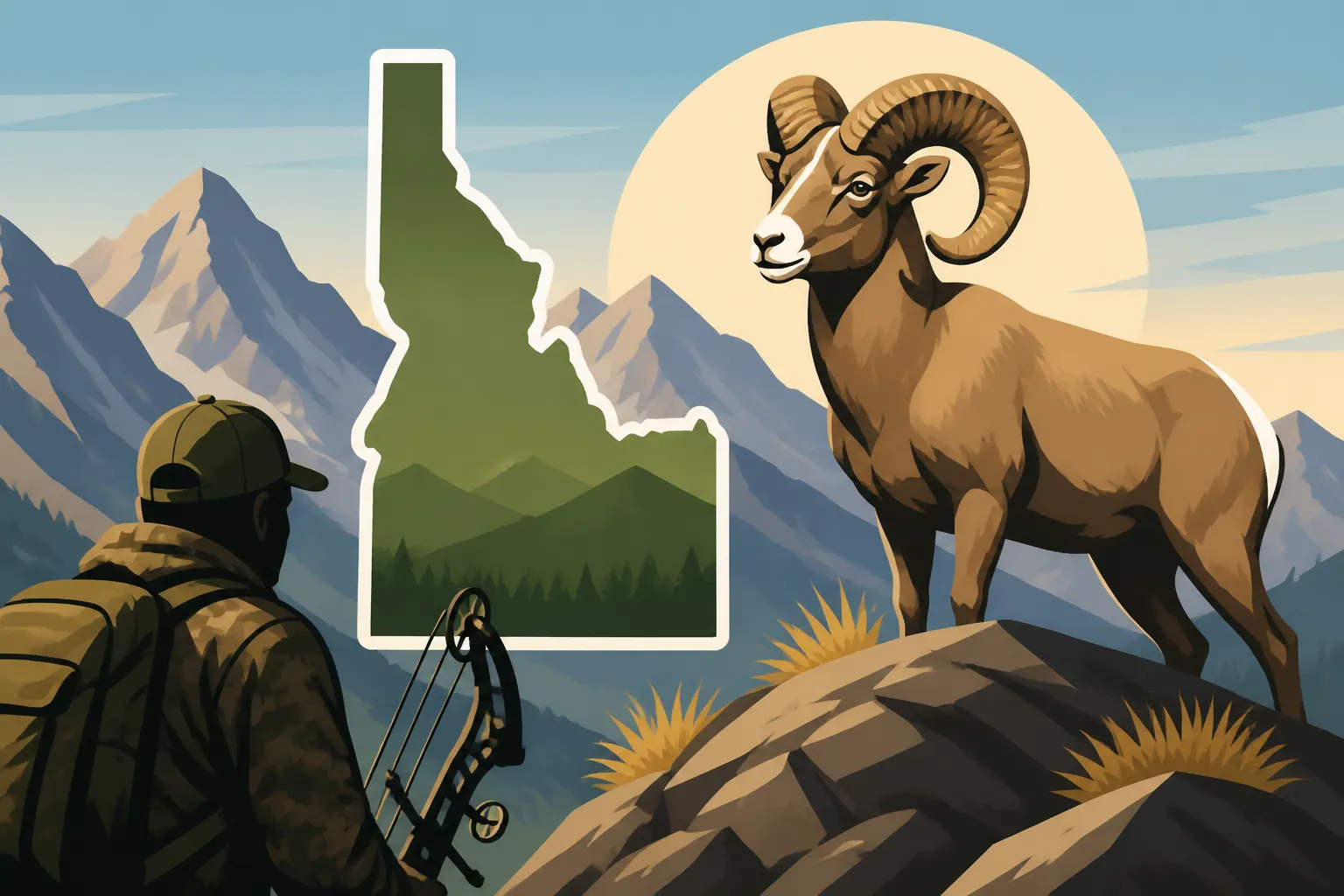
Rocky Mountain bighorn sheep are iconic symbols of the rugged West, perfectly adapted to their steep, rocky domain. In Idaho, you'll find these animals primarily in the central and northern parts of the state, often along major river canyons like the Salmon and Snake Rivers, and throughout the jagged peaks of the Frank Church River of No Return Wilderness. Their populations, while carefully managed, are never robust. They face natural predators, disease, and the constant encroachment of human activity, making sustained growth a delicate balance.
Idaho Fish and Game works tirelessly to monitor these herds, implementing management strategies aimed at maintaining healthy numbers and genetic diversity. This often involves transplanting sheep to re-establish populations in historical ranges or bolster struggling herds. These efforts are crucial, but they also mean that hunting opportunities remain extremely limited. The health of these fragile populations directly dictates the number of tags available, which, as you can imagine, is never very high. We're talking about an animal that truly earns its "trophy" status, not just for its horns, but for the sheer effort and luck involved in hunting one.
Drawing the Golden Ticket: Explaining Idaho's Bighorn Lottery
For most hunters, the biggest hurdle to hunting a Rocky Mountain bighorn in Idaho isn't the steep mountainside or the keen eyesight of a ram—it's drawing the tag in the first place. Idaho's bighorn sheep tags are allocated through a controlled hunt draw system, and the odds are notoriously long. This isn't a game of preference points, as Idaho has no preference points, and what that changes for applicants. Instead, every applicant essentially starts with equal odds each year, which can be both a blessing and a curse.
The "once-in-a-lifetime" rule for bighorn sheep hunting in Idaho is a critical factor here. If you are fortunate enough to draw and harvest a Rocky Mountain bighorn ram, you cannot apply for another Rocky Mountain bighorn ram tag in Idaho ever again. This rule is in place to spread out the limited opportunities, allowing more hunters a chance at this incredibly rare experience. It’s important to note, however, that Idaho's once-in-a-lifetime rule is per subspecies. So, if you were to harvest a Rocky Mountain bighorn, you could technically apply for a California bighorn tag in Idaho if you meet all other requirements, though those opportunities are even more scarce. This distinction matters for those dedicated few who dream of a full Idaho sheep slam.
Key Herd Units and Their Characteristics
Idaho's bighorn sheep herds are distributed across various units, each with its own unique characteristics, terrain, and challenges. Some of the most well-known areas include the vast and rugged Hells Canyon region along the Snake River, the impressive Salmon River Breaks, and certain units within the central Idaho wilderness areas. These areas are defined by extreme topography, with steep canyon walls, rocky bluffs, and sparse vegetation dominating the landscape.
For example, units in Hells Canyon are often characterized by deep, unforgiving gorges and dense brush on the lower slopes, transitioning to more open, rocky benches higher up. The Salmon River Breaks, conversely, can offer more expansive glassing opportunities from high vantage points, but the sheer size and broken nature of the country make finding and approaching sheep incredibly difficult. When you're researching potential units, resources like the Idaho Hunt Planner are your best friend. This tool allows you to dive deep into unit-specific harvest statistics, terrain features, and public land percentages, giving you a crucial advantage in understanding what you're up against. Each unit presents a distinct challenge, and understanding these nuances is essential for anyone hoping to draw a tag and then succeed in the field.
The Unique Habitat of Idaho's Rocky Mountain Bighorns
Hunting bighorn sheep isn't just about bagging an animal; it's about immersing yourself in some of the most wild and spectacular landscapes Idaho has to offer. Their habitat is as breathtaking as it is brutal, demanding peak physical and mental fortitude from any hunter who ventures into their domain.
Navigating the Rugged Mountainous Terrain
Rocky Mountain bighorns live up to their name. Their preferred habitat is characterized by extremely steep, rocky, and often high-elevation terrain. Think sheer cliffs, scree slopes, and canyons so deep they feel like they swallow the sun. These aren't just pretty backdrops; they are integral to the sheep's survival strategy. The broken country provides excellent escape cover from predators and thermal advantages in harsh weather. For a hunter, this means every step is a deliberate effort, often involving arduous climbs, careful footing across loose rock, and navigating areas with no discernible trails.
It's a world away from hunting in the timber or on rolling hills. You'll find yourself constantly looking for handholds and footholds, often side-hilling across precarious slopes. The mental game is as challenging as the physical one, as the constant exposure and difficulty of movement can be genuinely draining. Packing an elk out of steep country alone is tough, but a bighorn can be just as demanding, given the types of terrain they inhabit. You simply cannot overstate the physical demands; preparation is key, both for safety and success.
Seasonal Movements and Adaptations
Bighorn sheep are masters of their environment, and their movements are largely dictated by the seasons and the availability of food and water. During the spring and summer, rams will often range higher, seeking out nutrient-rich forage in alpine meadows and on exposed ridges. As fall approaches and the rut kicks in, they'll often move to lower, more accessible (though still rugged) areas where ewe groups congregate. Winter, of course, drives them to south-facing slopes and lower elevations where snow accumulation is less severe, and they can still find browse.
Understanding these seasonal patterns is crucial for a successful hunt. A September hunt might find rams high on a mountain, requiring a strenuous ascent. A later season hunt, however, might have them concentrated in specific canyon systems. These movements aren't just about food; they're also about survival. Bighorns adapt their entire lives to these shifts, growing thick coats for winter insulation and developing incredible lung capacity for high-altitude living. Hunters need to be just as adaptable, ready to adjust their strategies based on the time of year and prevailing conditions.
Water Sources and Escape Cover
In the arid and rugged landscapes where bighorn sheep thrive, water is often the limiting factor. Identifying reliable water sources is a critical part of scouting and hunting these animals. In some areas, this might mean natural springs high on a mountain face, while in others, it could be seeps and pockets of snowmelt. During the hotter months, sheep will often bed closer to these water sources, making them natural focal points for glassing efforts.
Beyond water, escape cover is paramount. Bighorns rarely hide in dense timber like deer or elk. Instead, their escape cover is the sheer verticality of their world. They will retreat to impossible-to-reach cliffs, using their incredible agility and gripping hooves to navigate terrain that would be impassable for most predators, and certainly for most hunters. When scouting or hunting, always consider the sheep's escape routes. If you push them, where will they go? Often, it's straight up a cliff face, making further pursuit impossible. This means a hunter's approach needs to be meticulously planned, accounting for wind, thermals, and topography, to minimize the chance of spooking them into an impenetrable fortress.
Applying for an Idaho Rocky Mountain Bighorn Tag
The dream of holding an Idaho bighorn tag in your hand starts long before the season opener—it begins with understanding the complex, yet exhilarating, controlled hunt application process. This isn't just about filling out a form; it's a strategic game of patience, research, and a little bit of luck.
The Application Timeline and Requirements
Idaho's controlled hunt calendar, April through August, dictates the rhythm of every big game hunter's year, and it's especially critical for species like bighorn sheep. The application period for trophy species like moose, sheep, and goat typically opens in April, with a strict deadline that usually falls around the end of April. You absolutely cannot miss this window. To apply, you'll first need to purchase an Idaho hunting license. For non-residents, this can be a significant upfront cost, and it's important to remember that the Idaho hunting license price is generally non-refundable, even if you don't draw your desired tag.
Beyond the general license, there's a specific application fee for each species you apply for. When you submit your application, you’ll also authorize a charge for the tag itself, but this will only be processed if you are successfully drawn. It’s a nerve-wracking waiting game, knowing that the cost is there, but the outcome is uncertain. Many hunters find using tools like GoHunt invaluable during this stage. Their platform often aggregates critical information, streamlines research, and helps you keep track of crucial deadlines, ensuring you don't miss that narrow application window for such a coveted tag.
Understanding Draw Odds and Application Strategy
Given Idaho has no preference points, and what that changes in the draw, every applicant has the same chance each year, regardless of how many times they've applied unsuccessfully. This "flat odds" system means that while the overall odds might be very low (often less than 1% for resident tags, and even lower for non-residents), a first-time applicant theoretically has the same chance as someone who's applied for 20 years. This can be both frustrating and incredibly exciting.
When formulating your application strategy, researching past Idaho bighorn sheep draw odds explained by Idaho Fish and Game is crucial. This data, often found on the Idaho Hunt Planner or through third-party services like GoHunt, will show you how many tags were offered in each unit, how many applicants there were, and the resulting draw odds. Some units might offer slightly better odds due to less desirability or more tags, but generally, all bighorn tags are incredibly difficult to draw. Some hunters apply for the same unit year after year, hoping for consistency. Others might try to pinpoint units with minor fluctuations in applicant numbers. Ultimately, the strategy often boils down to choosing the unit you'd most like to hunt and applying consistently, hoping luck is on your side.
The Importance of the Once-in-a-Lifetime Rule
We briefly touched on this, but it bears repeating: Idaho's "once-in-a-lifetime" rule for bighorn sheep tags is a significant aspect of applying. If you draw a Rocky Mountain bighorn tag and successfully harvest a ram, you are no longer eligible to apply for another Rocky Mountain bighorn ram tag in Idaho. This rule is designed to ensure that more individual hunters get the chance to experience this unique opportunity.
However, as mentioned, the rule is subspecies-specific. This means if Idaho offers tags for both Rocky Mountain Bighorns and California Bighorns (which they do, though California bighorn opportunities are even more limited and found in specific areas like the Owyhee region), you could potentially draw and harvest one of each in your lifetime. This detail is important for the most dedicated sheep hunters with extremely long-term goals. For most, drawing just one bighorn tag of any subspecies is a monumental achievement, making the decision of which unit to apply for even more weighty. You’re not just applying for a hunt; you’re applying for a legacy.
Gear and Tactics for Idaho Bighorn Hunts
Once that golden ticket—the bighorn tag—is in your hand, the real work begins. Hunting bighorns is a demanding endeavor that pushes the limits of your physical endurance, mental toughness, and equipment. Having the right gear and a solid tactical approach is non-negotiable.
Essential Optics for Mountain Hunting
In bighorn country, your eyes are your most important hunting tool, and high-quality optics are their extension. You simply cannot effectively hunt sheep without top-tier binoculars, a powerful spotting scope, and a sturdy tripod. Bighorns are often spotted from miles away across vast, broken landscapes. You'll spend hours, if not days, meticulously glassing every rock band, every patch of broken timber, and every high ridge line. Binocular size that survives an all-day session typically means 10x or 12x power for general scanning, mounted on a tripod to reduce fatigue and stabilize the image.
When you spot something promising, you'll immediately transition to your spotting scope, usually in the 20-60x or 27-60x range. This is where the real work happens: identifying if it's a ram, judging its age and legality (specifically the ram curl requirements Idaho enforces), and determining a potential stalk route. Optics power for Idaho's long canyon sightlines needs to be robust, allowing you to discern subtle details at extreme distances. Brands like Zeiss, Swarovski, and Kowa are popular choices for their clarity and durability in rugged conditions. Don't skimp here; your optics are your primary means of finding the animal and making a responsible decision before committing to a grueling stalk.
Physical Conditioning and Preparation
Let's be blunt: if you're not in prime physical condition, an Idaho bighorn hunt will break you. This isn't just about being "in shape"; it's about being mountain-strong. You'll be climbing thousands of vertical feet, often with a heavy pack, at high altitudes where the air is thin. You'll traverse steep scree fields, navigate dense brush, and endure long days in the sun or cold. This is why physical conditioning for Idaho backcountry is paramount.
Your training regimen should focus on endurance, strength, and balance. Incorporate exercises like rucking with a heavy pack, hiking steep trails, stair climbing, and exercises that strengthen your core and legs. Don't forget about your mental fortitude; the ability to push through discomfort and fatigue is just as important as physical strength. Start your training months, if not a year, in advance. Simulating hunt conditions by hiking with your loaded pack and boots you'll wear on the hunt is essential. The better prepared you are physically, the safer and more enjoyable your hunt will be, and the higher your chances of success.
Stalking and Shot Placement in Steep Country
Once you've located a legal ram and formulated a plan, the stalk begins. This is where the terrain becomes your biggest ally and your biggest enemy. You'll need to use every contour, every rock, and every patch of vegetation for cover. Playing wind direction on a timbered stalk is critical, but in wide-open, rocky bighorn country, you also have to contend with unpredictable thermals in canyons and the ever-present threat of rolling rocks. Every step must be silent and deliberate, as their senses are incredibly sharp.
Closing the distance in steep country is agonizingly slow. You might get within range only to have the ram move, forcing you to adjust or start over. When the moment of truth arrives, shot placement in steep country presents its own challenges. Uphill or downhill shots dramatically change your point of impact due to gravity and arrow/bullet trajectory. Practice shooting from awkward positions—kneeling, sitting, even prone on an incline. Knowing your rifle's zero distance for canyon country shooting and practicing holds for various angles is crucial. Ethical shot placement is always the goal, and the steep, unforgiving landscape demands even greater precision and patience.
Navigating Regulations and Post-Harvest Requirements
The hunt doesn't end when you pull the trigger. Idaho has specific regulations that govern what happens after a successful bighorn harvest, from field dressing to reporting. Understanding and adhering to these rules is crucial for remaining legal and contributing to conservation efforts.
Ram Curl Requirements and Field Judging
One of the most critical aspects of bighorn sheep hunting in Idaho is correctly identifying a legal ram based on its curl requirements. Generally, a legal ram must be at least a 3/4 curl. This means the horn, when viewed from the side, must extend in an arc that passes the centerline of the eye. Sometimes, rams will "broom" their horns by rubbing or breaking off the tips, which can make field judging tricky. An experienced hunter will look for indications of age, body size, and horn mass in addition to the curl.
It’s not uncommon for hunters to spend hours or even days field judging a ram from a distance with their spotting scope before committing to a stalk. Misjudging a ram can lead to a citation and the forfeiture of your valuable tag. If you are unsure, it is always better to pass than to risk harvesting an illegal animal. Idaho Fish and Game often provides educational materials and diagrams to help hunters understand these specific requirements. Taking the time to study these resources thoroughly before your hunt is an absolute must.
Mandatory Reporting and Sample Submission
A successful bighorn sheep hunt in Idaho comes with mandatory post-harvest reporting requirements. After you've tagged your animal and are off the mountain, you are legally required to report your harvest within a specific timeframe. This typically involves contacting Idaho Fish and Game directly, either online or by phone. Additionally, hunters are usually required to submit specific biological samples from the harvested ram.
These samples, often including the skull and horns, are vital for Idaho Fish and Game's ongoing research and management of bighorn sheep populations. They analyze horn growth, age the animal by counting annual growth rings, and check for signs of disease. For instance, the agency has increased its efforts in chronic wasting disease testing in Idaho, though CWD is not currently widespread in bighorn populations. Complying with these requirements isn't just a legal obligation; it's a direct contribution to the health and future of Idaho's bighorn sheep herds. Make sure you understand the specific carcass transport rules after a CWD detection or any mandatory sample submission requirements before you head into the field.
Permitted Weapons and Restrictions
For Rocky Mountain bighorn sheep in Idaho, hunters are generally allowed to use centerfire rifles, muzzleloaders, or archery equipment during designated seasons. Each weapon type comes with its own set of challenges and considerations. For rifle hunters, choosing a rifle for Idaho's timber and breaks means selecting a caliber capable of ethical kills at varying distances, often in windy conditions across canyons. Popular calibers might include .270, .30-06, 7mm Rem Mag, or .300 Win Mag.
Archery hunting for bighorns is an even greater challenge, requiring extreme stealth and precision. Whether fixed blade against mechanical broadheads on elk, the principle of a razor-sharp, well-placed broadhead is the same for sheep. Muzzleloader hunters must also adhere to specific rules regarding scopes and inline ignition. Regardless of your chosen weapon, familiarize yourself with Idaho's specific regulations regarding minimum projectile energy, bullet construction, and archery equipment specifications. Ensuring your equipment meets all legal requirements and that you are proficient with it under real-world hunting conditions is paramount for a responsible and successful hunt.
| Aspect | Rocky Mountain Bighorn Sheep Hunt Overview |
|---|---|
| Primary Habitat | Steep, rocky terrain; major river canyons (Salmon, Snake), wilderness peaks. |
| Hunting Season | Fall, specific dates vary by unit and year. |
| Tag Allocation | Controlled hunt drawing; no preference points. |
| Draw Odds | Extremely low (often <1% for residents, lower for non-residents). |
| "Once-in-a-Lifetime" | Yes, for each subspecies (e.g., Rocky Mountain Bighorn). |
| Legal Ram | Typically 3/4 curl or larger (verify current regulations). |
| Essential Gear | High-quality binoculars (10-12x), spotting scope (20-60x), sturdy tripod. |
| Physical Demands | Extreme; requires excellent cardiovascular and muscular endurance. |
| Post-Harvest Rules | Mandatory reporting and submission of biological samples (skull/horns). |
| Weapon Types | Centerfire rifle, muzzleloader, archery (check specific unit/season rules). |
Disclaimer
Please remember that hunting regulations, seasons, and tag allocations can change. Always consult the most current Idaho Fish and Game regulations brochure and their official website before planning any hunt. This guide is for informational purposes only and should not be considered a substitute for official state publications.