Why Bear Escapes Idaho’s Wilderness Guide Rule
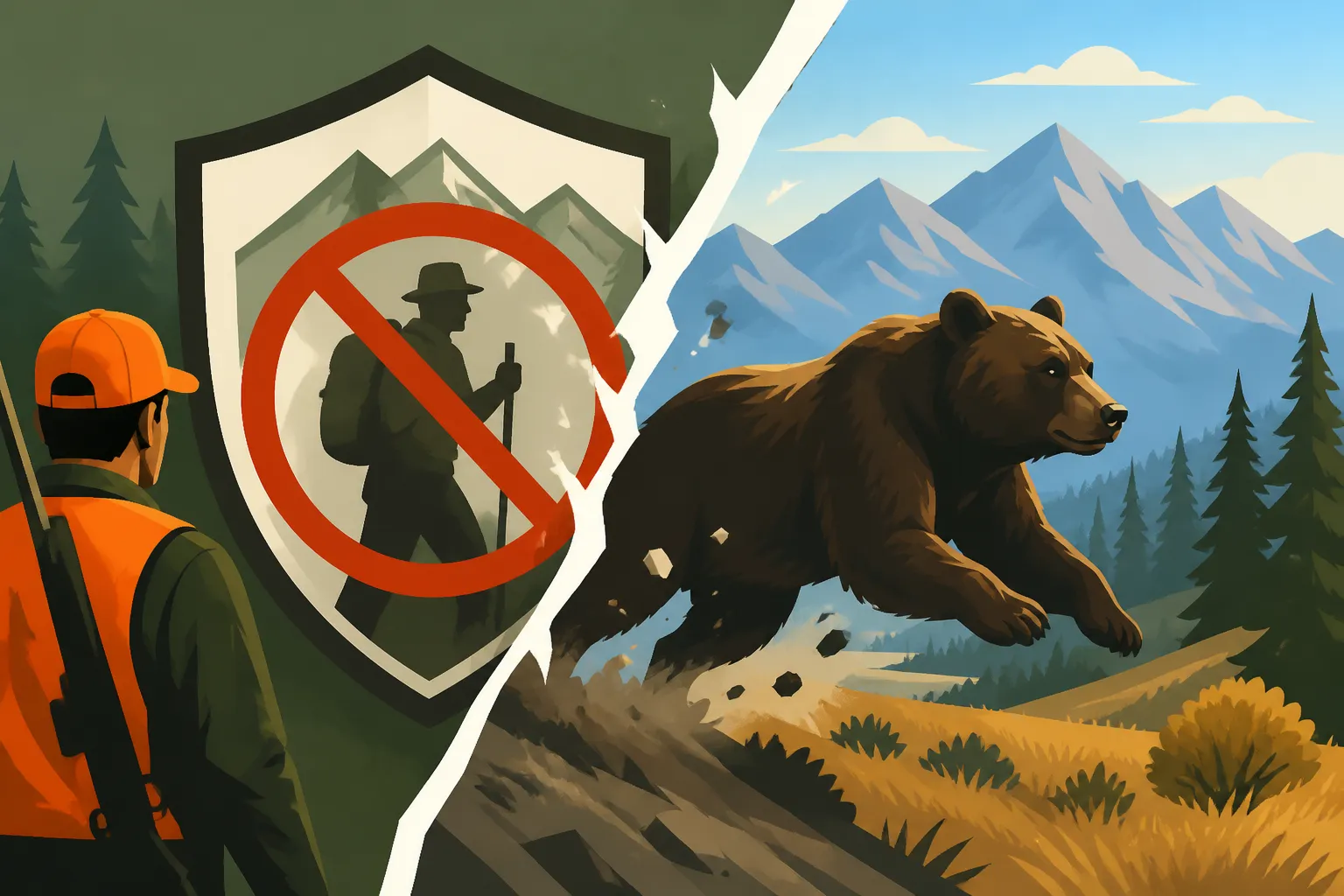
Navigating the specific requirements for hunting big game in Idaho's vast wilderness areas can feel like deciphering a complex legal document, especially for nonresidents. It's a common point of frustration for many who dream of a DIY adventure, only to discover that for certain species, a licensed outfitter is a mandatory companion. However, for those looking to pursue black bear, there's often a pleasant surprise: the guide rule that applies to elk, moose, sheep, and goat doesn't always extend to bears. This guide will clarify why bear hunting often escapes Idaho's wilderness guide rule, helping you understand the regulations and plan your hunt accordingly.
Understanding Idaho's Wilderness Guide Rule for Nonresidents
Idaho's wilderness guide rule is a specific regulation designed to manage nonresident hunting in designated wilderness areas, aiming to protect resources and ensure fair chase. It's a critical piece of information for any nonresident planning a hunt in the state's most remote and pristine landscapes.
The General Rule: When a Guide is Mandatory
For many nonresidents, the dream of a self-guided hunt into Idaho's wilderness areas, like the Frank Church-River of No Return or the Selway-Bitterroot, often bumps up against a very specific regulation. Idaho law, in an effort to manage pressure and ensure responsible hunting practices in these sensitive, remote ecosystems, mandates that nonresidents pursuing certain big game species within designated wilderness areas must be accompanied by a licensed Idaho outfitter or guide. This isn't just a suggestion; it's a legal requirement that carries significant weight. Imagine spending months planning your dream elk hunt, poring over maps, training hard, and then realizing your entire plan is moot because you didn't factor in the mandatory guide. It’s a bitter pill to swallow for many. This rule primarily applies to trophy species and those highly sought after, like elk, moose, bighorn sheep, and mountain goat. The idea is to ensure that hunters, especially those less familiar with the rugged Idaho backcountry, have experienced professionals assisting them, which can help with everything from minimizing impact to increasing ethical harvest rates. If you’re a nonresident dreaming of bugling in a bull deep in the Frank Church, you'll need to remember that Idaho Forces Nonresidents to Hire a Guide for Wilderness Elk.
Why Bear is Different: Species-Specific Regulations
Here's where it gets interesting and offers a glimmer of hope for the DIY enthusiast. While the guide rule stands firm for elk and other high-demand species, black bear often escapes this specific mandate. The reason isn't arbitrary; it's rooted in the Idaho Fish and Game's (IDFG) management strategies and the unique characteristics of black bear populations and hunting methods. Unlike species with often limited tag allocations or specific conservation concerns tied to high hunting pressure in remote areas, black bear populations in Idaho are robust and widely distributed. Their management often focuses on maintaining healthy populations while providing ample hunting opportunity, sometimes even to help manage timber depredation or nuisance animal issues in certain areas. This difference in management objectives allows for more flexibility in how and where bears can be hunted by nonresidents. It means that while you might need to hire an outfitter for a bighorn sheep hunt in the same wilderness area, you could potentially pursue a black bear on your own. It's crucial, however, to always verify the most current regulations for your specific unit and the season you intend to hunt, as rules can, and sometimes do, change.
Where the Rule Applies: Designated Wilderness Areas
It's important to understand that the "wilderness guide rule" isn't a blanket rule for all public lands. It specifically applies to "designated wilderness areas." Idaho is home to several iconic wilderness areas, each offering incredible hunting opportunities but also carrying strict regulations regarding access and activities. The most well-known of these include the Frank Church-River of No Return Wilderness, the Selway-Bitterroot Wilderness, the Gospel-Hump Wilderness, and parts of the Hells Canyon Wilderness. These areas are managed under federal Wilderness Act guidelines, emphasizing preservation of their pristine, untrammeled character. This means no motorized vehicles, no mechanized equipment, and a focus on self-sufficiency. For nonresidents, it's these specific boundaries that trigger the guide requirement for certain species. Hunting just outside a wilderness boundary, even by a few feet, can often exempt you from the guide rule, though it doesn't always mean easier hunting. You can learn more about specific areas by understanding Which Wilderness Areas the Idaho Rule Applies To. Always consult detailed maps and official IDFG resources, such as the Idaho Hunt Planner, to pinpoint these boundaries accurately. Don't rely on general knowledge; those lines on the map are legal boundaries, and crossing them improperly can lead to serious consequences.
Factors Influencing Bear Hunting Guide Requirements
The distinction between bear and other big game species regarding nonresident guide requirements isn't arbitrary. It's a reflection of Idaho's wildlife management philosophy, population dynamics, and common hunting practices for each species.
Population Management and Harvest Goals for Bear
Idaho's black bear populations are generally thriving across the state, particularly in the vast timbered regions of the north and central mountains. Unlike species like bighorn sheep or mountain goat, which have very limited tags and are managed for extremely low harvest numbers due to their sensitive populations, black bear management often aims for a more substantial annual harvest. This is done to maintain healthy ecosystems, prevent overpopulation in certain areas, and mitigate conflicts with human activity, such as livestock depredation or encounters in populated zones. The IDFG has specific population objectives for black bears, and these often include providing robust hunting opportunities across various seasons, including both spring and fall. Because black bears are not typically considered a "trophy" species in the same vein as a giant bull elk or a record bighorn, the state has more flexibility in how it allows them to be hunted. The management approach tends to be broader, allowing more hunters to participate without the same level of concern for localized population impacts that might warrant a mandatory guide for nonresidents in wilderness settings. This means that hunters looking for bear often have more units, more season dates, and fewer restrictions to contend with compared to the highly regulated hunts for other big game.
Different Hunting Methods: Baiting and Spot-and-Stalk
The typical methods used for hunting black bear also play a significant role in why the guide rule differs. Bear hunting in Idaho often involves two primary techniques: spot-and-stalk or baiting (where legal).
- Spot-and-Stalk: This method involves covering ground, glassing clearcuts, avalanche chutes, or open hillsides, and then making a stalk on a bear that has been spotted. This is a highly independent form of hunting, requiring stealth, keen eyesight, and often good physical conditioning. It's very similar in execution to how many deer hunters operate, and it doesn't inherently require the specialized tracking or recovery expertise that might be assumed necessary for larger, more difficult-to-locate animals in dense wilderness, like a wounded elk that has traveled a great distance into thick timber.
- Baiting: In many parts of Idaho, baiting for black bear is a legal and effective method. This involves establishing a bait site and waiting for bears to visit. While some outfitters do offer baited bear hunts, the act of baiting itself can often be managed by an individual hunter (following strict regulations, of course, including registering the bait site). A hunter can set up a bait site, monitor it, and then hunt over it from a stand or blind. This method doesn't necessarily demand the same deep wilderness navigation or extensive tracking skills once a bear is hit, as the encounter is often at close range near a known location.
These methods, while challenging in their own right, are generally seen as less impactful on the wilderness experience or less prone to creating lost game scenarios that the mandatory guide rule aims to prevent for other species. This contrasts sharply with, say, a nonresident chasing a wounded elk through vast, roadless timbered canyons, where the consequences of a lost animal are much greater and the terrain far more unforgiving.
Resident vs. Nonresident Opportunities
It’s crucial to remember that the wilderness guide rule is specifically a nonresident regulation. Idaho residents are always free to hunt in designated wilderness areas without a guide for any species, as long as they possess the correct tags and licenses. This distinction highlights the state’s interest in ensuring residents have unimpeded access to their public lands while managing nonresident impact and economic contribution through the outfitter industry for certain high-demand species. For a resident, a backcountry elk hunt in the Frank Church is a completely different logistical challenge than it is for someone traveling from out of state. This understanding reinforces that the guide rule for specific species is less about the inherent difficulty of the hunt and more about policy regarding nonresident participation in sensitive areas. For nonresidents, understanding that Can an Idaho Resident Hunt Wilderness Unguided? applies across the board, helps underscore the specific nature of the nonresident rule for certain species.
Planning Your Unguided Bear Hunt in Idaho Wilderness
So, if you're a nonresident planning to hunt black bear in Idaho's wilderness without a guide, it's absolutely doable, but it requires meticulous planning, a deep understanding of the regulations, and a commitment to self-reliance. This isn't a casual endeavor; it's a serious backcountry hunt that demands respect and preparation.
Essential Gear and Preparation for a Backcountry Bear Hunt
Hunting black bears in Idaho's wilderness means being self-sufficient in some of the most rugged and remote terrain in the Lower 48. Your gear list won't just be about hunting; it'll be about survival and comfort far from any road or trailhead. Start with your physical conditioning. Bear hunting, whether spot-and-stalk or tending a bait site, often involves significant hiking over steep, uneven ground. You'll be climbing in and out of drainages, navigating dense timber, and potentially packing out hundreds of pounds of meat over miles. Make sure your body is ready. Physical Conditioning for Idaho Backcountry isn't just a suggestion; it's a necessity.
Beyond your hunting weapon, optics are paramount. Quality binoculars and a spotting scope are indispensable for glassing distant hillsides for bears. A reliable GPS device or a smartphone with robust mapping applications like GoHunt's mapping features, pre-downloaded offline maps, and a satellite communication device (like a Garmin inReach or Zoleo) are not optional; they are critical safety tools. Navigation errors in the wilderness can quickly become life-threatening. You'll also need a well-stocked first-aid kit, water filtration, sufficient food for your trip, and dependable shelter. Bear safety is also a huge concern. While black bears are generally less aggressive than grizzlies, encounters can happen, especially if cubs are present or food sources are defended. Carrying bear spray and knowing how to use it is a smart precaution. Bear Safety Practices in an Outfitter Camp details crucial information you should know, even if you are not with an outfitter. Proper food storage in bear country (bear canisters, hanging food, or electric fences) is vital to prevent habituating bears to human food and minimize dangerous encounters.
Navigating Regulations and Unit-Specific Rules
Just because bears generally escape the nonresident guide rule doesn't mean you can just show up and hunt. Idaho's hunting regulations are highly specific, changing by unit, season, and even specific weapon types. Your first stop should always be the official Idaho Fish and Game regulations brochure for the current year. This document is your bible. Pay close attention to the specific unit you plan to hunt, as season dates, bag limits, and even legal hunting methods can vary dramatically from one Game Management Unit (GMU) to another. The Idaho Hunt Planner Is the Tool to Start With is an invaluable online resource for this. It allows you to explore units, check drawing odds (if applicable for your tag), and view historical harvest statistics.
Wilderness boundaries themselves also require careful attention. These are not always marked with signage deep in the backcountry, so relying on your GPS and detailed maps (like those available through GoHunt's subscription) to understand Reading an Idaho Controlled Hunt Area Boundary is non-negotiable. Furthermore, be acutely aware of Idaho's motorized hunting rule. While you're in a wilderness area, motorized vehicles are prohibited by definition. However, getting to the wilderness often involves forest roads, and many of these have seasonal closures or restrictions on when and where you can drive. Understand Motorized Vehicles Inside Wilderness Boundaries and the rules for accessing trailheads. Penalties for violating these rules can be severe, ranging from hefty fines to license revocation.
Scouting and Accessing Remote Wilderness Areas
Scouting is paramount for a successful unguided wilderness bear hunt. Since you can't drive into these areas, your scouting often starts from home with e-scouting tools like satellite imagery, topographical maps, and public land ownership layers. Identify potential bear habitat – areas with good feed (berry patches, clearcuts, south-facing slopes in spring), water sources, and bedding areas. Look for natural travel corridors, benches, and saddles that bears might use. Reading Terrain Before You Pick a Camp is an essential skill to develop for these types of hunts.
Accessing these remote wilderness areas often means long hikes from distant trailheads. Consider how you will get your gear and, hopefully, your bear out. A reliable pack frame is essential. Some areas might allow pack stock (horses or mules) for access, but you'll need to confirm these regulations and have the necessary experience or assistance. If flying into a backcountry airstrip is an option, remember that these flights are often costly and need to be booked well in advance. Consider all logistical challenges and have a solid "Plan B" for unexpected events like weather changes or injuries.
Alternatives and Hybrid Approaches
While an unguided wilderness bear hunt is a true testament to self-reliance, it's not the only way to experience Idaho's backcountry bear hunting. Many hunters find a middle ground by leveraging certain outfitter services or adjusting their hunting locations to enjoy the remote experience without a mandatory guide.
Drop Camps and Semi-Guided Options
Even if you don't need or want a fully guided hunt, outfitters can still be an invaluable resource, especially for accessing deep wilderness areas. This is where options like drop camps or semi-guided hunts come into play. A "drop camp" service means an outfitter, often utilizing pack horses or mules, will pack you and your gear into a pre-established camp location deep in the wilderness, then leave you to hunt on your own. They'll return at a pre-arranged date to pack you and your harvest back out. This drastically reduces the physical burden of hauling heavy gear for miles and opens up access to areas that would be incredibly difficult to reach otherwise. It allows you to focus on the hunting without the logistical nightmare of setting up a remote camp from scratch. What an Idaho Drop Camp Actually Includes typically covers tent setup, some cooking gear, and basic supplies, but you'll still bring your personal hunting gear, food, and sleeping arrangements.
Semi-guided hunts are another hybrid option, where an outfitter provides some level of assistance, like helping you scout an area, setting up a camp, or providing transportation to remote trailheads, but they don't actively guide you during the hunt itself. This can be a great compromise for nonresidents who want the wilderness experience but appreciate some professional support with logistics or local knowledge. While the mandatory guide rule doesn't apply to bear in wilderness, choosing one of these options can enhance your safety, comfort, and success, especially if you're unfamiliar with the specific area. Websites like BookYourHunt can be a useful resource for finding Idaho outfitters who offer these types of services, even for bear.
Hunting Near Wilderness Boundaries
Another strategic approach to avoid the nonresident guide rule, while still experiencing remote hunting, is to focus your efforts just outside the designated wilderness boundaries. While the terrain and habitat might still be incredibly rugged and wild, these areas do not fall under the strict guide mandate. This allows you to hunt freely without the added cost or commitment of an outfitter. Many of Idaho's national forests and BLM lands border wilderness areas and offer similar habitat for black bears.
The key here is meticulous map reading and understanding land ownership. Utilizing tools like GoHunt's public and private land mapping features is crucial. You'll need to know exactly where the wilderness boundary lies and ensure you are hunting legally on adjacent public land. Be aware that areas immediately outside wilderness can still see significant hunting pressure, especially on opening weekends. However, if you're willing to hike a few extra miles away from roads and popular trailheads, you can often find unpressured areas with excellent bear potential. This approach allows you to essentially "hunt the wilderness edge" without technically being inside the designated wilderness where the guide rule would apply to other species. Hunting Just Outside a Wilderness Boundary offers a deeper dive into this strategy. Always double-check current regulations, as boundary designations or specific unit rules can occasionally change.
Idaho Wilderness Guide Requirements at a Glance
For nonresidents, the rules surrounding guided hunts in Idaho's wilderness areas can be confusing, varying significantly by species. Here’s a quick overview to help clarify which animals generally trigger the mandatory guide rule and which, like the black bear, often do not.
| Species | Nonresident Wilderness Guide Required? | Primary Reason for Requirement (if any) | Common Hunting Methods |
|---|---|---|---|
| Black Bear | No (Generally) | Healthy populations, less impact on sensitive habitats, varied methods. | Spot-and-stalk, baiting (where legal). |
| Elk | Yes | Population management, resource protection, high trophy value. | Spot-and-stalk, calling, still hunting. |
| Moose | Yes | Extremely limited tags, conservation of sensitive populations. | Spot-and-stalk. |
| Bighorn Sheep | Yes | Extremely limited tags, conservation, high trophy value, rugged terrain. | Spot-and-stalk. |
| Mountain Goat | Yes | Extremely limited tags, conservation, fragile alpine habitat. | Spot-and-stalk. |
| Mule Deer | No | Generally robust populations, less impact on sensitive habitats. | Spot-and-stalk, still hunting, glassing. |
| Whitetail Deer | No | Generally robust populations, less impact on sensitive habitats. | Still hunting, stand hunting, spot-and-stalk. |
| Mountain Lion | No (Generally) | Primarily hunted with hounds, which can operate independently. | Hound hunting, calling, incidental harvest. |
Note: While the general rule for bear and deer is no guide required, always verify current regulations for your specific hunt unit and season. Rules can be dynamic and exceptions may exist.
Disclaimer
This article is for general informational purposes only and does not constitute professional advice. Laws, prices and regulations vary by location and change over time. Consult a qualified professional for guidance on your specific situation.