Hunting Just Outside a Wilderness Boundary
For many of us, the allure of Idaho's vast, untamed wilderness is a powerful draw, whispering promises of untouched landscapes and elusive big game. Yet, the reality of hunting deep within designated wilderness areas often comes with significant logistical hurdles, not to mention the strict rules about nonresidents needing a guide for certain species like elk. This guide is all about embracing a smart, strategic approach: hunting just outside a wilderness boundary, offering a fantastic opportunity to tap into prime hunting grounds without all the deep backcountry commitments.
Understanding Idaho's Wilderness Boundaries
Idaho is home to some incredible designated wilderness areas, places like the Frank Church-River of No Return, the Selway-Bitterroot, and the Gospel-Hump. These aren't just big tracts of trees and mountains; they're federally protected landscapes where human impact is minimized. That means no motorized vehicles, no mechanized transport (think bicycles or ATVs), and often, even specific rules about group size and camp locations. For a nonresident hunter, these areas can pose unique challenges, particularly when it comes to the legal requirement to hire an outfitter for certain big game species.
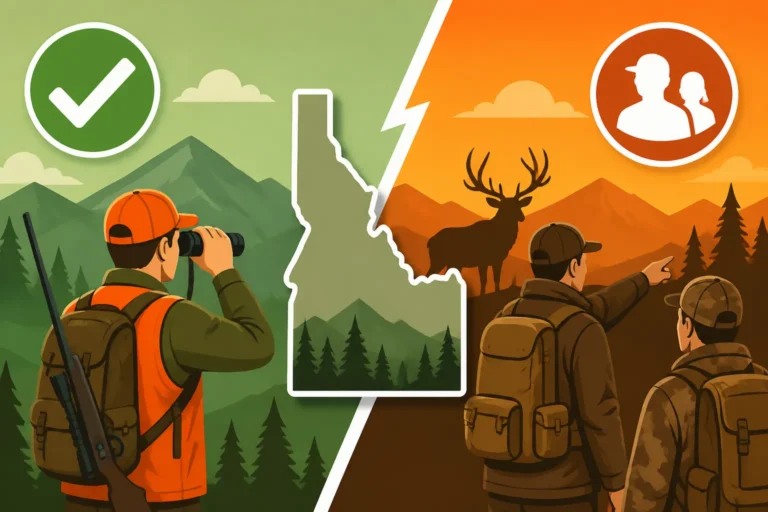
The boundary itself isn't just a line on a map; it's a hard-and-fast demarcation that dictates what you can and cannot do. Step one foot inside, and you're under wilderness rules. Step one foot outside, and you're typically on national forest or BLM land that often has more relaxed access regulations. This distinction is absolutely crucial for your hunt planning. Understanding these lines isn't just about avoiding trouble; it's about unlocking opportunities. Animals don't carry maps, and they frequently move in and out of these areas, especially when pressured.
Strategic Advantages of Hunting Near a Wilderness Boundary
Hunting just outside a wilderness boundary isn't a shortcut; it's a deliberate and often highly effective strategy. Think of these boundaries as natural funnels and sanctuaries that funnel game to specific areas. The animals learn quickly where human pressure drops off, and they use the safety of the wilderness as a refuge.
Accessing Less Pressured Game
One of the biggest draws to wilderness-adjacent hunting is the potential for encountering less pressured animals. Many hunters stick to easily accessible areas, driving roads and hitting popular trailheads. While there's certainly game in those spots, animals that reside deeper in or routinely use wilderness areas are often more mature and less wary. When the general season opens, or when hunting pressure builds in easily accessible zones, game naturally gets pushed towards these quieter, protected spaces. A smart hunter positions themselves along the fringes, intercepting animals as they move out to feed, water, or escape pressure. This often translates to larger, older animals that have had more time to grow.
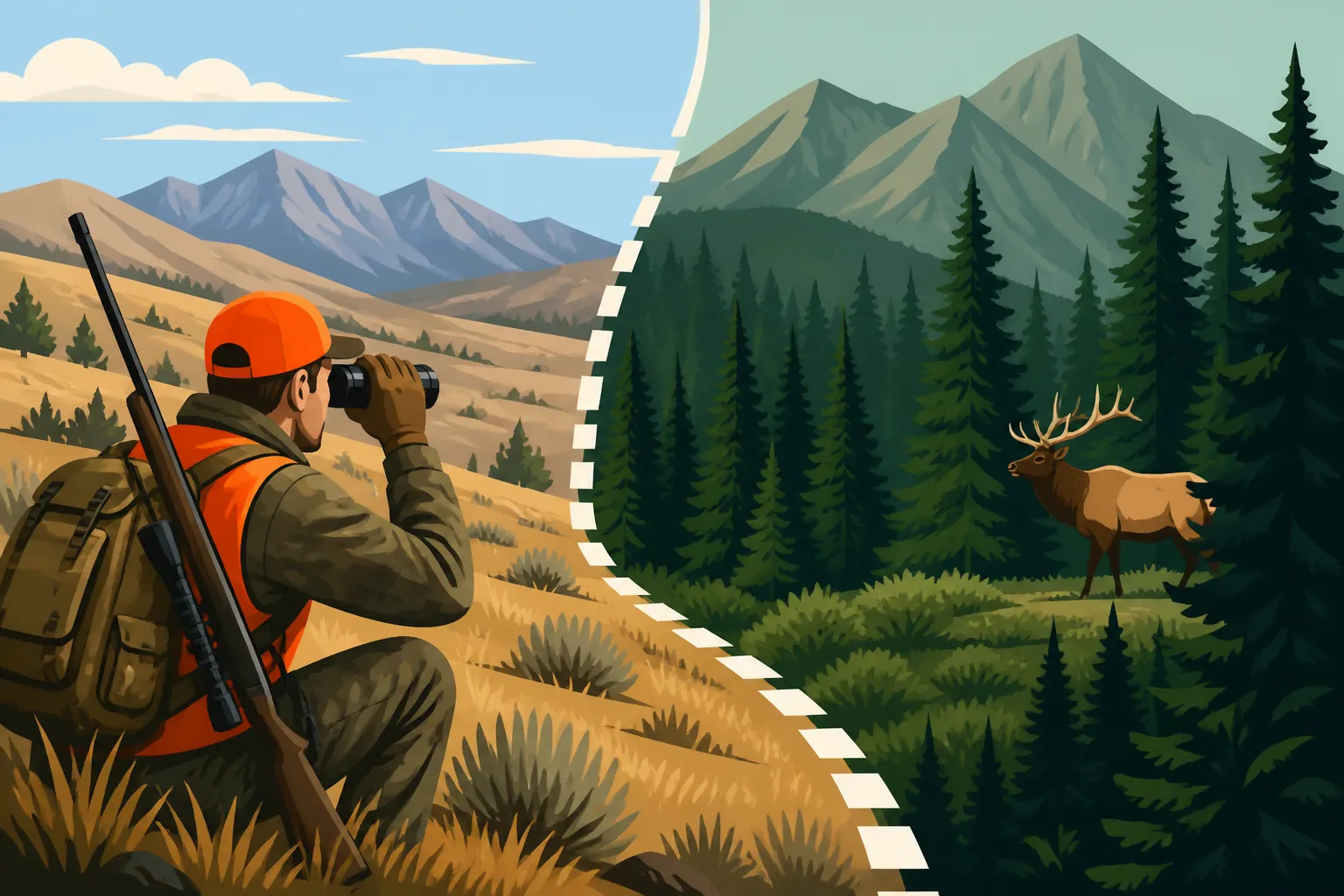
Consider an elk herd that spends its days bedded deep inside a wilderness area. As evening approaches, they might filter out into adjacent national forest land to hit a favorite feeding ground. By setting up just outside that boundary, a hunter can capitalize on their natural movements. You're essentially letting the wilderness do the work of holding game for you, then catching them as they transition. This strategy can be particularly effective during the rut, when bulls are less cautious and more willing to move across boundaries in search of cows.
Avoiding Nonresident Guide Requirements
For nonresidents looking to hunt specific species like elk, bighorn sheep, or mountain goat in Idaho's designated wilderness areas, there's a mandatory requirement to hire a licensed outfitter. This rule, designed to regulate commercial activity and ensure proper wilderness use, can add a significant cost and planning layer to a hunt. By intentionally hunting just outside these wilderness boundaries, nonresidents can circumvent this specific regulation entirely. Why Elk Requires an Idaho Outfitter in Wilderness explains this in more detail.
This isn't about sidestepping ethical hunting; it's about navigating the legal framework to make a DIY hunt feasible for those who prefer to go unguided. You still get to hunt in incredibly wild and challenging country, often seeing the same animals that utilize the wilderness proper, but without the financial commitment of a guided trip inside the boundary. This opens up a world of opportunity for adventurous nonresident hunters who are prepared to put in the effort themselves.
Leveraging Strategic Access Points
While you can't drive into a wilderness area, the surrounding public lands often provide much better access than the deep interior. This might mean established forest service roads that get you within a mile or two of the boundary, or even designated ATV trails that allow for mechanical assistance to cover ground quickly. Idaho's Motorized Hunting Rule Keeps You on the Road is a critical read for understanding what's allowed.
Imagine packing in several miles to a remote spike camp just outside the wilderness line. You might use a mountain bike to get your gear in efficiently on an approved trail, then switch to foot hunting once you're on the boundary. This hybrid approach lets you save your energy for the actual hunting and packing out game. These access roads and trails also become critical for game retrieval. While you can't drive off-road to pick up a downed animal, getting a mule deer or elk to a nearby road is far easier than dragging it many miles out of a true wilderness interior. Can You Drive Off Road to Retrieve Game? delves into the specifics of this rule.
Practical Considerations for Boundary Hunting
Successfully hunting near a wilderness boundary requires meticulous planning and a keen understanding of the terrain. It’s not just about showing up; it’s about preparing for a demanding hunt.
Master Your Maps and E-Scouting Tools
Before you even think about setting foot on the ground, you need to become an absolute wizard with maps. Digital mapping applications like onX Hunt or Gaia GPS are invaluable. Start by clearly identifying the exact wilderness boundaries for your chosen unit. These apps will overlay federal land designations, allowing you to see precisely where the wilderness begins and ends. Using onX Layers for Idaho Public Land can show you how powerful these tools are.
Look for areas where the boundary creates natural pinch points, saddles, or drainages that funnel game. Pay close attention to changes in topography, vegetation transitions, and water sources both inside and just outside the wilderness. Often, animals will move from thick timber inside the wilderness to more open feeding areas on the adjacent public lands. Tools like GoHunt's insider platform can provide detailed unit information, harvest statistics, and public land percentages, which are all crucial for identifying promising boundary areas. E-Scouting an Idaho Unit Before the Season is a great resource to get started.
The Realities of Terrain and Physical Demands
Don't let the idea of "just outside" fool you into thinking it's easy hunting. Wilderness boundaries are often drawn along formidable terrain features – steep canyons, rugged ridgelines, and dense timber. These areas are wild for a reason. While you might be able to drive closer than if you were going deep into the wilderness, you'll still be facing demanding physical challenges. Physical Conditioning for Idaho Backcountry is non-negotiable reading.
You'll likely be hiking through steep country, crossing drainages, and navigating dense brush. The physical exertion required to effectively scout, hunt, and especially retrieve an animal from these areas can be immense. Factor in elevation changes, potential weather shifts, and the need to carry all your gear. Be honest with yourself about your physical capabilities and train accordingly. A hunter in good shape can cover more ground, make better decisions, and ultimately have a safer, more successful hunt.
Logistics of Game Retrieval
This is where hunting close to a boundary can pay dividends, but it still demands careful planning. Dropping an elk or a big mule deer in steep, rugged country even 500 yards from a road is still a monumental task. While you might have better access than if you were 10 miles deep, you still need a solid plan for getting that meat out.
Consider carrying a quality game bag system, a sharp knife, and potentially a pack frame designed for heavy loads. If you're hunting with a partner, practice field dressing and quartering quickly. Have an escape route in mind—a path of least resistance to the nearest legal motorized access point. Remember, Can You Drive Off Road to Retrieve Game? clearly states that driving off established roads is prohibited, so even if you're close, you'll still be doing some dragging or packing. Some hunters even consider utilizing pack services from outfitters who operate on the outside of wilderness areas, specifically for game retrieval.
Legality and Ethics of Hunting Just Outside the Line
Hunting the fringes of a wilderness area presents both legal precision and ethical considerations that every hunter should deeply consider. It's a fantastic opportunity, but it demands respect for the land, the rules, and the game.
Pinpointing the Boundary: Know Your Lines
It cannot be stressed enough: you must know exactly where the wilderness boundary is at all times. This is not a suggestion; it's a legal imperative. A modern GPS unit with accurate land ownership and boundary overlays is essential. Before you leave cell service, download all relevant maps for offline use. Double-check your location frequently throughout the day. It’s too easy to inadvertently cross a line when you’re focused on tracking an animal or navigating tough terrain.
Ignorance of the boundary is not a defense if you find yourself violating wilderness regulations. If you're a nonresident hunting elk, for example, and you stray inside the wilderness boundary without a guide, you could face significant fines and penalties. Take the time to study your unit maps, perhaps even marking potential boundary crossings on physical maps as a backup. Reading an Idaho Controlled Hunt Area Boundary provides guidance on interpreting these critical lines.
Navigating Game Retrieval Across the Line
What happens if you make a legal shot on an animal just outside the wilderness boundary, but the animal runs and expires inside? This is a common and legitimate concern for boundary hunters. Generally, Idaho law allows for the retrieval of legally harvested game from a wilderness area. However, there are strict conditions.
- No Motorized or Mechanized Transport: You cannot use ATVs, e-bikes, or any other motorized or mechanized device to retrieve game from within the wilderness. Retrieval must be done on foot or with pack stock if you have appropriate permits.
- Weapon Considerations: You typically cannot bring a loaded weapon into the wilderness for retrieval purposes if you are not actively hunting within the wilderness (which would then fall under the guide rule for nonresidents on certain species). It’s usually best practice to secure your weapon outside the boundary before entering for retrieval.
- Minimal Impact: Retrieval must be done in a manner that adheres to wilderness principles – leaving no trace, causing minimal disturbance.
It's always wise to check the most current Idaho Fish and Game regulations for specifics on game retrieval from wilderness, as these rules can be nuanced. If there's any doubt, contact the local Idaho Fish and Game office or the managing Forest Service/BLM office before you head out.
Ethical Hunting and Respecting the Spirit of the Law
While hunting just outside a wilderness boundary is perfectly legal (provided you adhere to all regulations), it's important to approach it with a strong ethical compass. This means:
- Fair Chase: Always uphold the principles of fair chase. Don't exploit boundary proximity in ways that are unsportsmanlike or that make a mockery of the wilderness designation.
- Respect for Wilderness Values: Even though you're outside, the animals you're hunting are often part of the wilderness ecosystem. Respecting that ecosystem means packing out all trash, minimizing your impact, and leaving the area cleaner than you found it.
- Positive Representation: Hunters are often scrutinized. By conducting ourselves ethically and responsibly near these cherished wild places, we contribute positively to the perception of hunting and conservation.
Hunting the edges of Idaho's wilderness can be an incredibly rewarding experience, offering challenging hunts and a chance to connect with wild country. By understanding the rules, diligently preparing, and always hunting ethically, you can make the most of these unique opportunities. If you're looking for a challenging but unguided adventure, these fringe areas might be exactly what you've been searching for. Remember to utilize resources like The Idaho Hunt Planner Is the Tool to Start With to aid in your planning and research.
Comparative Overview: Inside vs. Outside Wilderness Boundary
To help visualize the distinctions and considerations, here's a quick comparison:
| Aspect | Hunting Inside Wilderness Boundary | Hunting Just Outside Wilderness Boundary |
|---|---|---|
| Nonresident Guide Rule | Required for species like elk, sheep, goat (Idaho-specific) | Not required for any species (for nonresidents) |
| Motorized Access | Strictly prohibited for any purpose (foot/horse only) | Often allowed up to the boundary on established roads/trails |
| Mechanized Transport | Prohibited (e.g., bicycles, ATVs) | Often allowed on designated trails/roads (check local rules) |
| Hunting Pressure | Very low due to difficulty of access and restrictions | Lower than general public land, higher than deep wilderness interior |
| Logistics | Extreme: multi-day pack trips, remote camps, self-sufficiency essential | Challenging: day hunts or spike camps near boundary, easier access |
| Game Retrieval | Extremely difficult, often requiring pack stock or multiple foot trips | Difficult, but closer to motorized access, potentially easier |
| Cost (Nonresident Elk) | Significantly higher due to mandatory outfitter fees | Lower (DIY costs only), as outfitter is not required |
| Experience | Pure, deep wilderness challenge; ultimate solitude | Wild, rugged experience with slightly more logistical flexibility |
Disclaimer
This article is for general informational purposes only and does not constitute professional advice. Laws, prices and regulations vary by location and change over time. Consult a qualified professional for guidance on your specific situation.