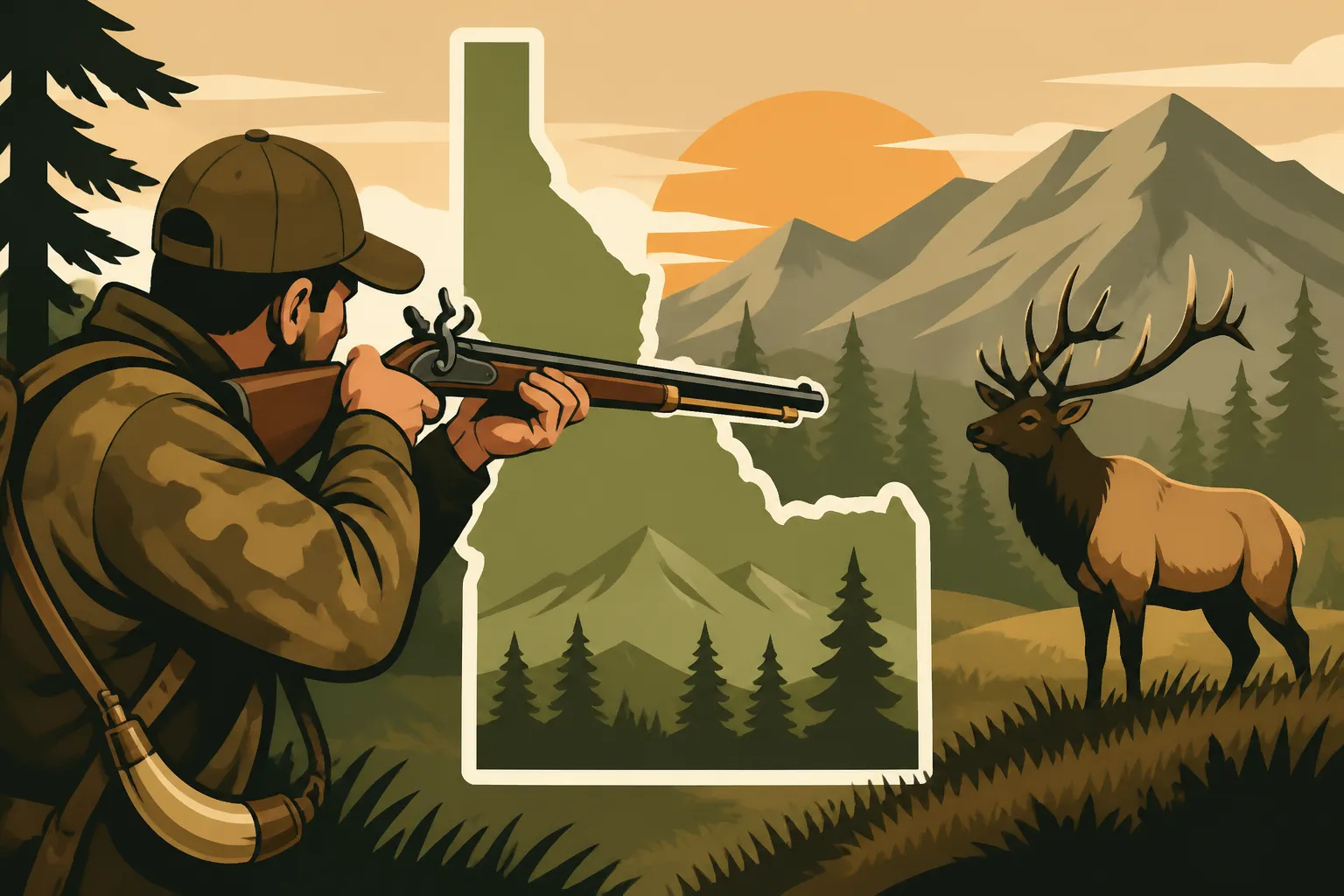
Using a Muzzleloader in Any-Weapon Season
It's a common dilemma for hunters: you've invested in a fantastic muzzleloader, you love the challenge and tradition, but you also want to maximize your time in the field. So, when an "any-weapon" season rolls around in Idaho, the question inevitably pops up: can I use my trusty smokepole then, or is it strictly for those dedicated muzzleloader-only hunts? This comprehensive guide will clear up that confusion, diving deep into Idaho's regulations so you can confidently carry your muzzleloader in any-weapon seasons, understanding both the freedoms and the few remaining constraints.
Understanding Idaho's Any-Weapon Season Framework
Idaho’s hunting regulations can feel like a labyrinth, especially when you start parsing out weapon restrictions. The term "any-weapon season" is one of the most straightforward, yet it still sparks questions about specific gear like muzzleloaders. Let's break down what this designation truly means for you in the field.
What "Any-Weapon" Truly Means for Hunters
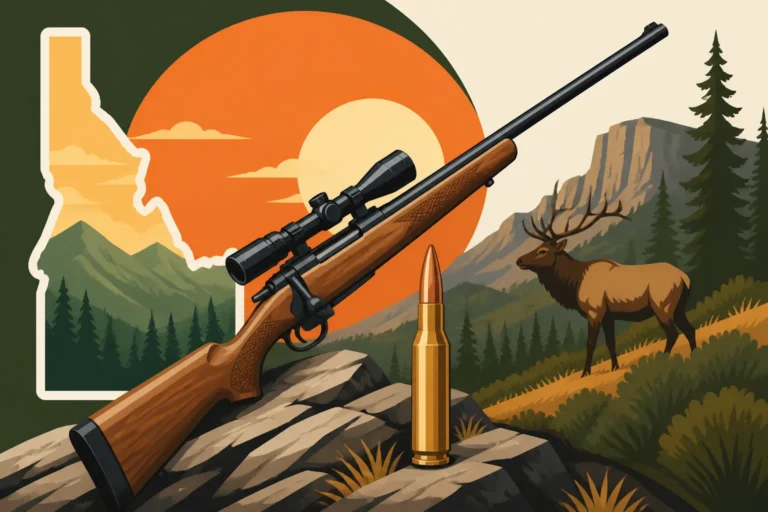
When Idaho Fish and Game designates a season as "any-weapon," they're essentially opening the door to the full legal arsenal permitted for that species. This means that if you're hunting deer or elk in an any-weapon unit during an any-weapon season, you have the flexibility to use a rifle, a shotgun (with slugs or buckshot, depending on species and regulations), archery equipment, a crossbow, or yes, your muzzleloader. The key distinction here is that your muzzleloader isn't being used under the restrictive rules of a muzzleloader-only season; it's simply one of many legal tools you can choose from.
Think of it as the ultimate freedom of choice, within reason. It contrasts sharply with weapon-specific seasons like archery-only, which, as the name implies, restricts you to bows and arrows, or the even more specific muzzleloader-only seasons. In an any-weapon season, your muzzleloader doesn't have a special status; it's just another firearm option in the hunter's toolkit. This broad definition means you're not constrained by the traditional limitations often associated with muzzleloader hunting, which we'll explore further. It's about empowering you to pick the best tool for the specific conditions, whether that's dense timber where a quick follow-up shot from a rifle might be preferred, or wide-open plains where the increased range of a scoped muzzleloader can be advantageous.
The Regulatory Advantage of Muzzleloaders in Any-Weapon Hunts
This is where the real beauty of using a muzzleloader in an any-weapon season shines. The most significant advantage is that the strict regulations imposed during muzzleloader-only seasons often don't apply. For instance, in a dedicated muzzleloader hunt, hunters are typically restricted from using scopes and must rely on open or peep sights. Furthermore, Idaho often mandates specific ignition types, like exposed percussion caps, meaning modern inline muzzleloaders are usually off-limits. You can dive deeper into these specific restrictions by reading about Are Scopes Allowed on Muzzleloader-Only Hunts? and Why Inline Ignition Fails Muzzleloader-Only Rules.
However, when you're hunting during an any-weapon season, these particular constraints are lifted for your muzzleloader. This means you can mount a modern rifle scope, dramatically improving your accuracy at longer distances and in low-light conditions. You can also use an inline muzzleloader with a sealed primer system, which offers greater reliability in adverse weather and generally burns powder more efficiently for increased velocity and flatter trajectories. This transformation effectively turns your "primitive weapon" into a high-performance, single-shot rifle, capable of ethical shots out to 200 yards or even more with practice and the right setup. This flexibility allows you to leverage the advancements in muzzleloader technology without being penalized by the traditionalist rules of specialized seasons. It opens up opportunities to hunt areas or conditions where a traditional muzzleloader setup might be at a disadvantage, giving you a competitive edge.
Muzzleloader-Specific Rules Still Apply
While the "any-weapon" designation frees you from many of the constraints of muzzleloader-only seasons, it's crucial to remember that some fundamental muzzleloader-specific rules for big game in Idaho remain in effect. These are largely related to ethical harvest and apply to any season where a muzzleloader is used for big game, regardless of whether it's the only weapon allowed or just one of many.
Caliber Minimums Remain Consistent Across Seasons
One rule that absolutely does not change, whether you're in an archery-only season (with a crossbow for instance), a rifle season, or an any-weapon season with your muzzleloader, is the minimum caliber requirement for big game. Idaho Fish and Game sets these minimums to ensure a humane and ethical harvest. For deer, a muzzleloader must be at least .45 caliber. If you're chasing elk, moose, or bighorn sheep, your muzzleloader needs to be at least .50 caliber. This consistency is critical for responsible hunting, ensuring that the projectile has enough energy and mass to penetrate vital organs and bring down the animal quickly and cleanly. You can learn more about these specific requirements, including the reasoning behind them, by checking out Minimum Muzzleloader Caliber for Idaho Deer and Minimum Muzzleloader Caliber for Idaho Elk. The state's regulations are designed to minimize suffering, and these caliber floors reflect that commitment, making sure that regardless of your weapon choice in an any-weapon season, you're using appropriate firepower. Understanding Why Idaho Splits Muzzleloader Caliber by Species can also provide valuable context here, as it's rooted in the size and resilience of different game animals.
Powder and Projectile Considerations
Beyond caliber, Idaho also has specific requirements for the types of powder and projectiles you can use in your muzzleloader, even in an any-weapon season. When it comes to propellants, only black powder or approved black powder substitutes are legal. This includes popular options like Pyrodex, Triple Seven, and Blackhorn 209. A crucial point often overlooked is that these substitutes must be measured by volume, not by weight, even if the packaging lists weight equivalents. This is because the density of substitutes differs from true black powder. Ensuring correct measurement is vital for safety and performance, so make sure you're familiar with Measuring Blackpowder Substitutes by Volume, Not Weight.
For projectiles, legal options typically include conical bullets and saboted bullets. Idaho's regulations are generally accommodating here, allowing hunters to choose from a wide array of modern muzzleloader projectiles that offer excellent accuracy and terminal performance. However, you'll want to ensure that any sabots or projectiles you use are designed for muzzleloaders and meet any other specific material requirements (e.g., lead-free requirements in certain areas, though less common in Idaho). It's also critical to note that pre-loaded powder charges or cartridges are not allowed; each shot must be loaded from the muzzle, one component at a time, to qualify as a legal muzzleloader. Always double-check the current year's regulations on the Idaho Fish and Game website or through resources like GoHunt to stay up-to-date on any changes to projectile or powder rules.
Strategic Advantages and Considerations for Using a Muzzleloader
Opting for a muzzleloader in an any-weapon season isn't just about regulatory compliance; it's a strategic choice that can offer distinct advantages, especially when equipped to maximize its potential. However, it also comes with practical considerations that require thorough preparation.
Maximizing Your Muzzleloader's Potential
In an any-weapon season, your muzzleloader can truly shine, escaping the historical limitations that often make it a niche weapon. Modern muzzleloaders from brands like CVA, Traditions, Thompson/Center, or Savage, when paired with a good quality scope and premium saboted bullets, can deliver accuracy comparable to many centerfire rifles out to considerable distances. The ability to use a scope, rather than being limited to the open or peep sights mandated in muzzleloader-only hunts, is a game-changer. This dramatically improves target acquisition, especially in challenging light conditions or when trying to discern antler points at a distance. If you're interested in the differences, consider reading Open Against Peep Sights on a Muzzleloader.
This setup allows you to leverage the inherent precision of modern muzzleloaders, extending your ethical shooting range significantly. While a traditional muzzleloader might be comfortable out to 75-100 yards, a scoped, modern inline can push that confidently to 150-200 yards, or even further with extensive practice and specific loads. This expanded range opens up different hunting scenarios, allowing you to take shots across clearings or canyons that would be impossible with traditional iron sights. When planning your hunt, researching units with GoHunt can help you identify areas where longer shots might be more common, making a scoped muzzleloader a powerful asset. Just remember, regardless of your equipment, practice is paramount. Knowing your rifle's capabilities and your personal limits is far more important than the theoretical maximum range. The effective range of a muzzleloader on elk, for instance, comes down to many factors, including the hunter's skill.
Packing the Right Gear and Being Prepared
Choosing to hunt with a muzzleloader, even in an any-weapon season, means committing to a specific set of gear and a rigorous preparation routine. Unlike a bolt-action rifle where a quick magazine swap reloads you, a muzzleloader demands a more deliberate, multi-step process for each shot. Therefore, your pack needs to be meticulously organized. You'll need:
- Pre-measured Powder Charges: Carry these in waterproof containers or speed loaders. Never load powder without a bullet on top, and never carry loose powder exposed to the elements.
- Primers/Percussion Caps: Keep these in a waterproof dispenser, easily accessible.
- Bullets/Sabots: Ensure you have plenty, and they are protected from moisture and crushing.
- Ramrod Extensions: Many factory ramrods are too short for comfortable reloading in the field, especially on a standing animal.
- Breech Plug Wrench & Spare Breech Plug: Fouling can seize a plug, and a spare can save your hunt.
- Cleaning Supplies: A small bottle of solvent, patches, and a bore brush for field cleaning to maintain accuracy, especially if you anticipate multiple shots over a few days.
- Nipple Pick/Vent Pick: Crucial for clearing fouled flash holes.
Beyond the physical gear, preparation involves extensive practice. Reloading quickly and quietly under pressure, with cold fingers, in the dark timber, or on a steep mountainside, is a skill that only comes from repetition. Practice your loading sequence until it's second nature. Understand how your muzzleloader performs in different temperatures and humidity levels. A table outlining the critical differences in rules might help visualize what's allowed:
| Feature / Rule | Muzzleloader-Only Season (Example) | Any-Weapon Season (Using a Muzzleloader) | Key Benefit in Any-Weapon |
|---|---|---|---|
| Scopes | Generally prohibited; open/peep sights only | Allowed | Enhanced accuracy, low-light performance |
| Ignition Type | Exposed percussion cap/primer only; no inline | Any legal ignition system (including modern inline) | Improved reliability, consistency |
| Projectile Type | Legal sabots & conicals allowed (per caliber) | Legal sabots & conicals allowed (per caliber) | Flexibility in projectile choice |
| Powder Type | Black powder/approved substitutes (volume measured) | Black powder/approved substitutes (volume measured) | Standardized safe practice |
| Minimum Caliber | .45 for deer, .50 for elk (consistent) | .45 for deer, .50 for elk (consistent) | Ethical harvest standard |
| Muzzleloader Validation | Required (often specified on tag) | Not required (covered by general tag) | Simpler licensing |
| Hunter Orange | May not be required (check specific regs) | Often required (check regs for rifle seasons) | Safety compliance |
This table clearly illustrates the expanded capabilities you gain by bringing your muzzleloader into an any-weapon hunt.
When a Muzzleloader Validation Might Still Be Relevant
The concept of a "muzzleloader validation" is a common source of confusion for hunters in Idaho. While you can use your muzzleloader during an any-weapon season without specific validation, it's vital to understand when this extra step is actually necessary.
Understanding Muzzleloader Validation
A muzzleloader validation in Idaho is essentially an endorsement on your hunting license that grants you permission to hunt during a designated muzzleloader-only season. It's a specific legal requirement for those unique, traditional-style hunts where only muzzleloaders are permitted. The important takeaway here is that if you are hunting any-weapon season with your muzzleloader, you absolutely do not need this validation. Your general big game tag (deer, elk, etc.) covers your use of the muzzleloader, just as it would cover a rifle or a shotgun. The validation exists solely to enforce the rules of specific primitive weapons seasons, ensuring that only those who explicitly choose to hunt under those conditions are participating.
The logic is simple: in an any-weapon season, your muzzleloader is simply considered a firearm, no different from a modern rifle in the eyes of the regulations regarding its basic legality. The validation only comes into play when the season itself is defined by the weapon type. For instance, if you drew a tag for an "early muzzleloader-only elk hunt" in a specific unit, then yes, you would need that validation. But for general season, over-the-counter tags, or controlled hunts designated as "any-weapon," you're good to go with just your standard big game tag. This eliminates an extra step for many hunters and simplifies the process of bringing your muzzleloader to the field during the more popular hunting windows. You can read more about When You Need a Muzzleloader Validation in Idaho to further clarify these distinctions.
Overlapping Season Opportunities
Idaho's hunting calendar can be complex, with various seasons — archery-only, short-range weapon, muzzleloader-only, and any-weapon — sometimes running concurrently in different units, or even within the same zone for different tag types. This overlap creates strategic opportunities but also necessitates careful planning. For example, a particular unit might have an early archery-only season, followed by an any-weapon season, and then a late muzzleloader-only season. Or, a general any-weapon elk season might run alongside a short-range weapon deer season in a different part of the state.
This is where meticulous research becomes your best friend. Always, and I mean always, consult the current year's Idaho Big Game Hunting Seasons and Rules booklet. Pay close attention to the specific unit boundaries, the dates for each season, and the weapon restrictions tied to your specific tag. Tools like the Idaho Fish and Game website's hunt planner are invaluable, as are third-party resources like GoHunt, which can help you filter seasons by weapon type, species, and unit. Using The Idaho Hunt Planner Is the Tool to Start With or conducting A Walkthrough of the Idaho Hunt Planner can make navigating these complexities much easier. By carefully studying these resources, you can strategically plan your hunt, potentially using your versatile muzzleloader in multiple any-weapon scenarios, or choosing to participate in a dedicated muzzleloader-only hunt if you acquire the appropriate validation and tag. Just be sure that when you're in an any-weapon season, you're observing any general rifle season requirements, such as blaze orange, which might not be mandatory in a muzzleloader-only hunt.
Disclaimer
Always consult the most current Idaho Fish and Game regulations directly on their official website or by obtaining a physical copy of the hunting regulations booklet. Hunting laws and seasons can change, and it is the hunter's responsibility to be aware of and comply with all applicable rules and regulations.