Minimum Muzzleloader Caliber for Idaho Elk
Few things are more frustrating than preparing for a big game hunt, meticulously scouting and practicing, only to realize you might be running afoul of regulations on something as fundamental as your equipment. For those of us dreaming of an Idaho elk hunt with a muzzleloader, understanding the precise caliber requirements is absolutely critical. This guide is here to cut through the confusion and ensure you're fully prepared and legal for your pursuit of wapiti in the Gem State.
Understanding Idaho's Muzzleloader Caliber Requirements for Elk
Navigating hunting regulations can feel like deciphering ancient texts, especially when it comes to specific weapon types like muzzleloaders. You've got the rifle, you've got the powder, but is your bore big enough to legally and ethically pursue one of Idaho's magnificent elk? It’s a question that needs a crystal-clear answer, not just for legality, but for responsible hunting.
The Specific .50 Caliber Mandate for Elk
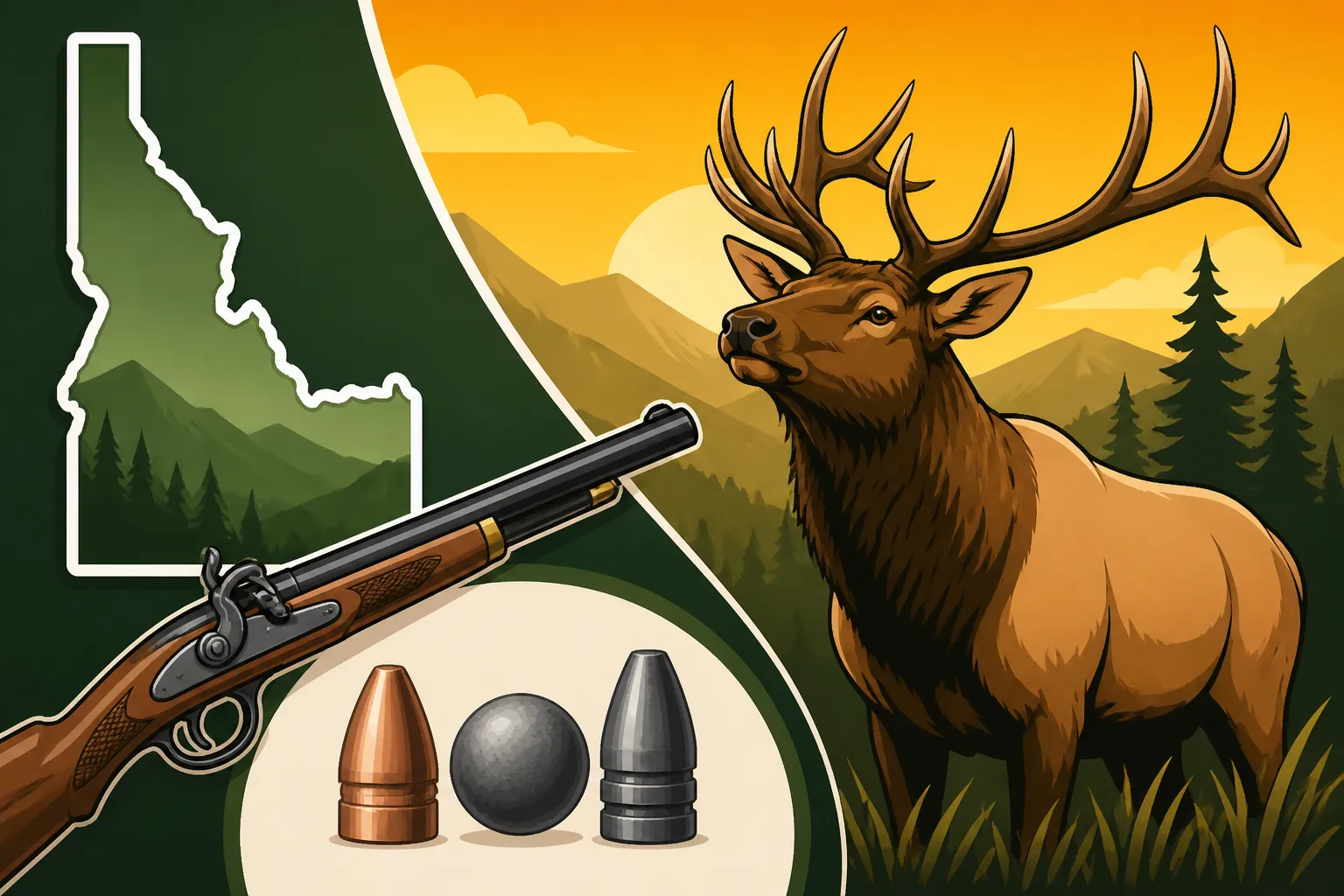
Let's get straight to it: when hunting elk in Idaho with a muzzleloader, the law is very specific. You must use a muzzleloader that is at least .50 caliber in size. This isn't a suggestion; it's a hard-and-fast rule designed to ensure that hunters use equipment capable of ethically harvesting an animal as large and robust as an elk. The Idaho Fish and Game Department sets these minimums to promote humane kills and reduce the likelihood of wounded game.
This .50 caliber requirement for elk isn't arbitrary. It's based on decades of experience and data regarding the terminal ballistics necessary to effectively put down a large cervid like an elk. The larger bore allows for heavier projectiles that carry more kinetic energy and create a more significant wound channel, increasing the chances of a quick, clean kill. This contrasts with the requirements for smaller game; for instance, if you're targeting deer, the minimum muzzleloader caliber is generally .45. You can read more about those specific requirements in our guide on Minimum Muzzleloader Caliber for Idaho Deer.
Why Caliber Matters Beyond "Minimum"
While .50 caliber is the legal minimum, savvy hunters know that "minimum" doesn't always equate to "optimal." For elk, a powerful animal with dense muscle and bone, the caliber choice is directly linked to the projectile's ability to penetrate deeply and deliver a debilitating blow. A .50 caliber muzzleloader firing a heavy, well-constructed bullet can achieve this, but it takes the right combination.
Consider the immense strength and vitality of an elk. They can absorb a significant amount of impact and still travel a considerable distance, making tracking difficult, especially in rugged Idaho terrain. The kinetic energy transferred by a sufficiently large and heavy projectile is crucial for disrupting vital organs and anchoring the animal quickly. This isn't just about the hole the bullet makes; it's about the shockwave and tissue damage caused by that energy. Proper shot placement is always paramount, of course, but even the best shot can be hampered by an underpowered setup, leading to unnecessary suffering and lost animals. We're talking about humane harvest here, and that means respecting the animal by using the right tools for the job.
Compliance and Ethical Hunting Practices
Adhering to Idaho's muzzleloader caliber regulations is more than just avoiding a citation; it's about upholding the integrity of hunting. Using an undersized caliber, even inadvertently, could result in a wounded animal that suffers needlessly or is never recovered. This is an ethical breach that no responsible hunter wants to commit. The Idaho Department of Fish and Game (IDFG) takes these regulations seriously, and ignorance is rarely an acceptable excuse.
The consequences of non-compliance can range from significant fines to the forfeiture of your game and hunting privileges. But beyond the legal repercussions, there's the personal weight of an unethical hunt. As outdoorspeople, we have a responsibility to our quarry and to the public perception of hunting. By meticulously checking regulations—perhaps using resources like the GoHunt platform or the official IDFG website to stay informed—and ensuring your equipment is up to snuff, you contribute positively to the conservation efforts and the ethical pursuit of game. It’s part of being a good steward of the land and its wildlife.
Navigating Muzzleloader Choices for Idaho Elk Hunts
Once you understand the .50 caliber minimum, the next step is selecting the right muzzleloader and projectile to give you the best chance of success in Idaho's diverse hunting landscapes. The world of muzzleloaders has evolved, offering hunters more choices than ever before.
Traditional vs. Modern Muzzleloaders for .50 Caliber
The term "muzzleloader" covers a surprisingly broad range of firearms, each with its own quirks and advantages. For a .50 caliber elk hunt, you'll generally be looking at a few main types:
- Traditional Caplock (Percussion) Rifles: These are often what people picture when they think "muzzleloader." They use percussion caps to ignite loose black powder, loaded down the barrel, followed by a patched round ball or a conical bullet. Many purists prefer these for their historical feel and challenge. They are certainly capable of taking elk, but require diligent cleaning and protection from the elements.
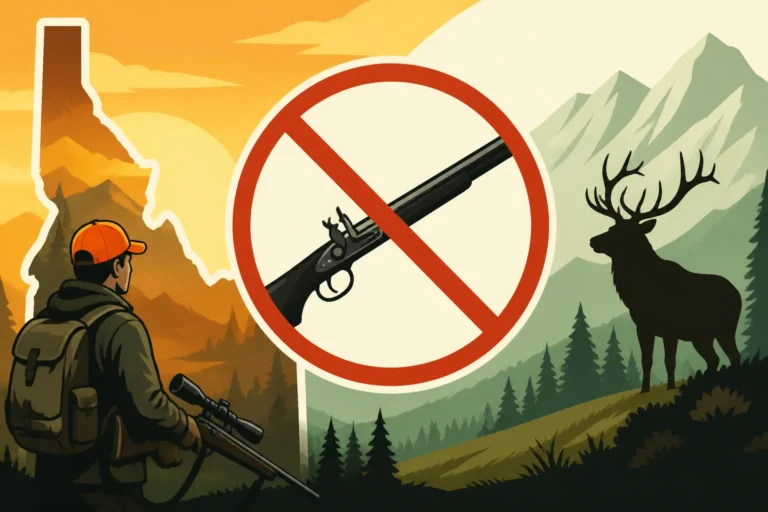
- Inline Muzzleloaders: These are the more "modern" take, designed for increased reliability, accuracy, and ease of use. They use 209 shotshell primers, which offer hotter, more consistent ignition, especially in adverse weather. The primer is "inline" with the powder charge, hence the name. Inline rifles often feature modern rifle-style stocks, optics mounting options, and sometimes even fluted barrels. While popular, remember that Idaho's muzzleloader-only seasons have specific restrictions. For instance, Why Idaho Muzzleloader-Only Hunts Ban Scopes and Inline Ignition delves into how these modern features are often prohibited during dedicated muzzleloader hunts. This distinction is crucial for planning your hunt.
- Flintlock Rifles: While beautiful and historically significant, flintlocks are less common for elk hunting due to their more complex ignition system, which can be less reliable in wet or cold conditions. They certainly demand a higher level of skill and dedication.
When choosing, consider the specific season you're hunting. If it's a general season, an inline might offer advantages in terms of optics and reliability. If it's a special muzzleloader-only season, you'll be limited to open and peep sights, and often percussion caps, making a traditional caplock more suitable. For a deeper dive into these restrictions, our article on Open and Peep Sights Only in Muzzleloader-Only Hunts can be very helpful.
Choosing the Right Projectile for Your .50 Caliber Muzzleloader
Once you have your .50 caliber muzzleloader, the projectile choice becomes incredibly important. You need a bullet that will hold together, penetrate deep, and expand reliably on a large animal like an elk.
- Saboted Projectiles: These consist of a smaller diameter bullet (like a .45 or .40 caliber) encased in a plastic sabot that allows it to be fired from a .50 caliber barrel. They often offer excellent accuracy and velocity. Many modern centerfire bullet designs are available in sabot form, providing great terminal performance.
- Conical Bullets: These are full-bore diameter projectiles, typically made of lead or a lead alloy, that engage the rifling directly. They are often heavier than saboted bullets and are known for deep penetration. Popular options include Hornady's FPB (Flex Tip Projectile for Muzzleloader) or various soft-lead conical designs. These are particularly favored in "traditional" muzzleloader seasons where sabots might be restricted in some states (though generally legal in Idaho for general seasons).
- Round Balls: While effective on deer at close range with lighter loads, round balls are generally not recommended for elk. They lack the mass and ballistic coefficient to deliver sufficient energy and penetration for a clean elk kill, especially at anything beyond very close distances.
When selecting, prioritize bullet weight and construction designed for large game. Look for bullets that are designed to expand but also retain a high percentage of their weight to ensure deep penetration through hide, muscle, and bone. For example, some hunters debate the merits of fixed blade against mechanical broadheads on elk, and a similar debate can exist for muzzleloader projectiles—you want something robust that won't fragment prematurely. GoHunt and other reputable outdoor resources often feature reviews and ballistic tests of various muzzleloader projectiles, which can be invaluable in making an informed decision.
Powder and Priming Considerations for Optimal Performance
The powder charge and primer are the heart of your muzzleloader's performance. Getting this right is crucial for consistency, accuracy, and power.
- Black Powder vs. Substitutes: Traditional black powder works well, but it's corrosive and can be messy. Modern black powder substitutes like Pyrodex, Triple Seven, and Hodgdon BH209 offer cleaner burning, less fouling, and easier cleanup, along with comparable performance. When using substitutes, remember the golden rule: they are typically measured by volume, not by weight, to achieve the equivalent of black powder loads. Our guide on Measuring Blackpowder Substitutes by Volume, Not Weight provides a detailed explanation of this often-overlooked but critical detail.
- Primer Types:
- 209 Shotshell Primers: These are standard for inline muzzleloaders. They offer powerful, consistent ignition, even in cold or damp conditions. Ensure you have a good seal around the primer pocket to keep moisture out.
- Percussion Caps (No. 10 or No. 11): Used for caplock rifles, these are smaller and less powerful than 209s. They require careful handling and protection from moisture. In muzzleloader-only seasons, Idaho often enforces an The Exposed-Cap Ignition Rule Idaho Enforces, meaning the cap must be visible and not enclosed, which dictates the type of rifle and ignition system you can use. This is another reason why knowing your season-specific regulations is paramount.
Experimentation at the range is the only way to find the optimal powder charge and projectile combination for your specific muzzleloader. Always start with manufacturer recommendations and work up or down carefully, paying close attention to accuracy and recoil. Consistency in powder measurement and loading procedure will translate directly to accuracy in the field.
Practical Tips for a Successful .50 Caliber Elk Hunt
Having the right muzzleloader and load is only half the battle. Success in the field, especially with a single-shot muzzleloader, demands discipline, practice, and a thorough understanding of the conditions you'll face.
Mastering Your Muzzleloader Before the Hunt
You wouldn't expect to run a marathon without training, and you shouldn't expect to consistently hit an elk's vitals under pressure without mastering your muzzleloader. This means more than just a quick zero check at the bench.
- Extensive Range Practice: Shoot your muzzleloader, a lot. Get comfortable with the loading procedure, the recoil, and the unique report. Practice quickly reloading under simulated hunting conditions. Muzzleloaders are not typically long-range instruments, so understanding The Effective Range of a Muzzleloader on Elk is vital. Many successful muzzleloader elk hunters limit their shots to within 100-150 yards, sometimes even closer depending on terrain and conditions.
- Practice from Hunting Positions: How often do you get a perfect bench rest shot in the field? Rarely. Practice shooting from kneeling, sitting, and off shooting sticks or a bipod. Mimic real-world scenarios – shooting uphill, downhill, or bracing against a tree. This kind of practice builds muscle memory and confidence. Compare this to the dedication required for Realistic Archery Practice Distance for Big Game; the principle of practical field-condition training is the same.
- Understand Your Ballistics: Know your rifle's trajectory with your chosen load. Drop charts are your friend. A simple scope (if allowed in your season) or even open sights will only be truly effective if you know where your bullet will land at various distances. Many hunters use an app or data card to keep this information handy.
Field Considerations for Muzzleloader Hunters
Hunting with a muzzleloader adds a layer of challenge and excitement, but also a layer of critical preparation for the field.
- Weatherproofing Your Setup: Idaho weather can change on a dime, especially in the mountains. Moisture is the enemy of black powder and percussion caps. Carry your powder charges in waterproof containers and keep your caps/primers in a sealed pouch. Many hunters use electrical tape over the muzzle or a rubber cap to prevent moisture from entering the bore. Some even put a small piece of tape over their percussion cap or primer.
- Carrying Multiple Charges: Unlike a modern rifle, you don't have a magazine full of rounds. Carry several pre-measured powder charges and bullets ready to load. Speed is of the essence if a follow-up shot is needed.
- Patience and Stalking: With a single-shot weapon and a limited effective range, your hunting strategy shifts towards closer encounters. This means more emphasis on stalking and calling. Learn to read the wind, move quietly, and use the terrain to your advantage. Whether you're still-hunting timber for bedded animals or carefully working into range on a feeding elk, patience is paramount. The skills involved are similar to those required for a bowhunter who understands How Close a Bowhunter Needs to Get on Elk. Every step counts, and every rustle could be the difference between a shot opportunity and a vanished animal. Our article on Stalking a Bedded Mule Deer offers principles that apply to elk as well, especially when you need to close the distance.
Understanding Idaho's Muzzleloader-Specific Seasons
Idaho offers several opportunities for muzzleloader hunters, but the rules can vary significantly between general seasons and dedicated muzzleloader-only hunts.
- General Seasons: During "any weapon" general hunting seasons, a .50 caliber muzzleloader is perfectly legal, and you can often use modern optics and inline ignition. You typically don't need a special When No Muzzleloader Validation Is Needed in these seasons.
- Muzzleloader-Only Seasons: These are where the traditional rules come into play. These seasons are specifically designed to offer a more primitive hunting experience, and thus, often restrict modern conveniences. You'll typically be limited to open or peep sights, often exposed percussion caps, and certain projectile types. As mentioned, inline ignition systems are often banned to preserve the traditional nature of the hunt. This is a key part of the hunting experience for many.
Always, always consult the current Idaho Fish and Game hunting regulations booklet for the specific year and unit you plan to hunt. Regulations can change, and what was legal last year might not be this year. Resources like the official IDFG website or platforms like GoHunt provide up-to-date regulation summaries and drawing odds which are invaluable for proper planning.
Table: Common .50 Caliber Muzzleloader Projectiles for Elk
To help clarify your projectile choices for a .50 caliber muzzleloader, here's a brief comparison of common types suitable for elk in Idaho:
| Projectile Type | Description | Key Advantages | Considerations | Recommended for Elk? |
|---|---|---|---|---|
| Full-Bore Conical | Heavy, solid lead or alloy bullet, loads directly into rifling. | Deep penetration, excellent weight retention, good energy transfer. | Can be less aerodynamic than sabots, may drop more at longer ranges. | Yes |
| Saboted Projectile | Smaller diameter bullet (e.g., .45 cal) encased in a plastic sabot. | Often excellent accuracy, high velocity, uses modern bullet designs. | Plastic sabot can foul barrel, may be restricted in some traditional seasons (not Idaho). | Yes |
| Patched Round Ball | Spherical lead ball, loaded with a lubricated patch. | Simple to load, historical authenticity, light recoil. | Poor ballistics, very limited range, insufficient energy for reliable elk kill. | No |
| PowerBelt Bullet | Specialized conical bullet with a plastic gas seal, full bore diameter. | Easy to load, good accuracy, designed for expansion and weight retention. | Some designs may have less consistent expansion than premium saboted bullets. | Yes |
Disclaimer
Please note that hunting regulations, seasons, and requirements can change. This article provides general information and guidance based on typical Idaho Fish and Game regulations. It is the individual hunter's responsibility to review and understand the most current Idaho hunting regulations and proclamations before engaging in any hunting activity. Always confirm details with the official Idaho Fish and Game Department resources or website for the specific year and unit you plan to hunt.