Are Scopes Allowed on Muzzleloader-Only Hunts?
It's incredibly frustrating when you're trying to do everything right for an Idaho hunt, but the rules around muzzleloaders feel like a maze, especially when it comes to something as fundamental as whether you can even use a scope. Many hunters spend hours pouring over regulations, only to find conflicting interpretations or vague language that leaves them scratching their heads. This guide is here to cut through that confusion, giving you a crystal-clear understanding of Idaho's regulations on scopes for muzzleloader-only hunts, so you can hunt with confidence and stay on the right side of the law.
Understanding Idaho's Muzzleloader Regulations
Idaho Fish and Game (IDFG) has a very specific philosophy when it comes to what they designate as "muzzleloader-only" seasons. These aren't just any old hunts where you happen to use a muzzleloader; they're set aside with the explicit intention of preserving a more traditional, challenging hunting experience. Think back to the days when hunters relied on simpler equipment, requiring a different set of skills and a much closer approach to game. That's the essence of these specific seasons.
This distinction is absolutely crucial because it dictates what kind of equipment you can bring into the field. If you're heading out for an "any-weapon" season, where a muzzleloader is simply one of the many legal choices, the rules are far more relaxed. But for those precious "muzzleloader-only" opportunities, the Idaho Department of Fish and Game wants to ensure that the spirit of traditional hunting is maintained. This commitment to tradition is why you'll find strict limitations on modern conveniences, like scopes and inline ignition, which might otherwise provide a technological edge. It's about leveling the playing field and emphasizing the hunter's skill rather than their gear. For a deeper dive into these specific restrictions, you might find our article on Idaho Muzzleloader-Only Hunts Ban Scopes and Inline Ignition particularly useful.
The "Muzzleloader-Only" Hunt Definition
So, what exactly marks a hunt as "muzzleloader-only" in Idaho? It boils down to how the Idaho Fish and Game sets up specific hunting seasons and units. When you look through the big game regulations, you'll see certain units and timeframes explicitly listed with the "muzzleloader-only" designation. This isn't a suggestion; it's a hard rule for that specific period and area. The whole idea is to create a more challenging, primitive-style hunt. Hunters are expected to get closer to their quarry and rely on traditional skills, much like those who pursue game with archery equipment. It's an opportunity for a different kind of challenge, moving away from the longer-range capabilities of modern firearms.
For example, imagine scouting a specific unit in the summer, finding a promising drainage holding elk, and then realizing the tag you drew for that area is for a muzzleloader-only season. That "only" is the key. It immediately signals that you'll need to leave your modern optics at home and prepare for a hunting experience where your iron sights, tracking skills, and patience will be put to the ultimate test. It’s a purposeful design to limit technological advantages and promote a more immersive, traditional experience for those who choose these tags.
General Weapon Rule Exemptions in Muzzleloader Seasons
One common misconception is that if a season allows muzzleloaders, it automatically allows any muzzleloader setup. Unfortunately, that's not how "muzzleloader-only" seasons work in Idaho. These designated seasons are a world apart from "any-weapon" seasons where you can technically use a muzzleloader if you wish. In a muzzleloader-only hunt, you're looking at a very narrow set of allowed weaponry, generally restricted to traditional muzzleloaders. This means no crossbows, no modern centerfire rifles, and importantly, no optical, electrical, or electronic devices attached to your firearm.
Let’s say you’ve purchased a tag for an A-tag elk hunt that falls within a muzzleloader-only season. Even if you're a skilled archer, you can't simply bring your compound bow unless the regulations explicitly state archery is also allowed within that specific muzzleloader season framework, which is usually not the case. The focus remains squarely on that traditional black powder firearm. This strict adherence to traditional methods is also why you'll find that Why Inline Ignition Fails Muzzleloader-Only Rules, as these modern ignition systems are also excluded from these specific hunts, further emphasizing the traditional approach Idaho aims to preserve.
The Specifics of Scope Restrictions for Muzzleloader-Only Hunts
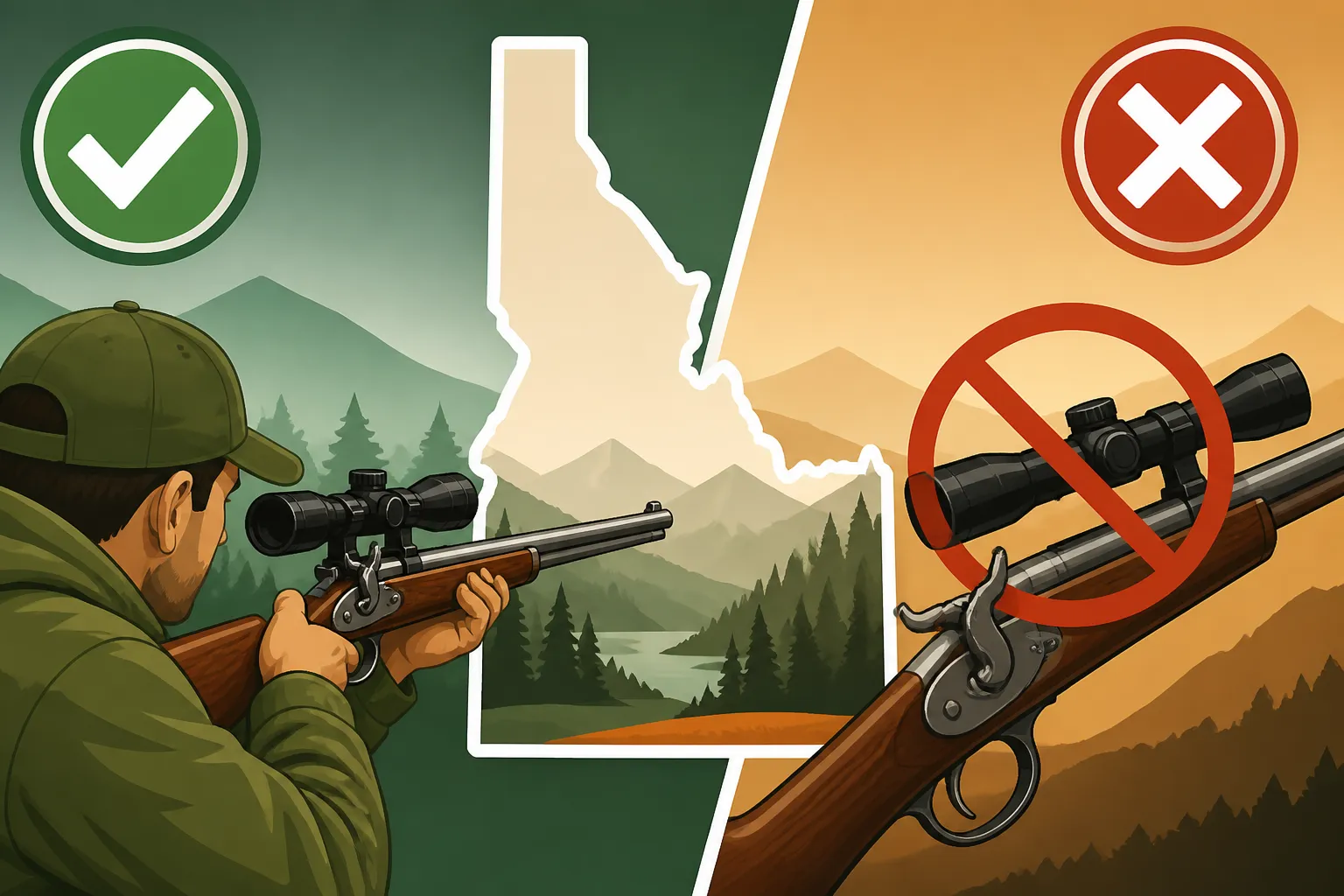
Let's get straight to the point: during muzzleloader-only hunts in Idaho, scopes are absolutely not allowed. When Idaho Fish and Game says "muzzleloader-only," they are not only referring to the type of firearm but also to the sighting system you can use. This means any magnified optical device, electronic aiming system, or even something as seemingly innocuous as a red dot sight that relies on electronics, is off-limits. The intent is to keep these hunts as traditional as possible, pushing hunters to rely on older, simpler sighting methods that require a different level of proficiency and often a closer shot.
This rule is a deal-breaker for many modern muzzleloader enthusiasts who are used to the precision and ease of a scope. If you've been practicing all year with a 3-9×40 scope on your muzzleloader, preparing for that long-range shot across an Idaho canyon, you'll need to adjust your strategy significantly for a muzzleloader-only hunt. Instead, you'll be honing your skills with iron sights or peep sights, which bring their own unique challenges and rewards. For a detailed look at the allowed sighting systems, our guide on Open and Peep Sights Only in Muzzleloader-Only Hunts offers excellent insights.
Defining "Magnified Optics" in Idaho Regulations
When Idaho Fish and Game talks about restrictions on sighting devices for muzzleloader-only hunts, they're pretty clear. The regulations specifically prohibit the use of "any optical, electrical, or electronic device attached to the muzzleloader." This broad definition covers a lot more than just traditional magnifying scopes. It means your standard telescopic rifle scope is out, but so are many other modern aiming aids.
For instance, those popular red dot sights that project a holographic reticle? Also not allowed, because they are electronic devices, even if they don't magnify the target. Range-finding scopes that integrate a laser rangefinder? Definitely out, as they are both optical and electronic. Even low-power variable optics (LPVOs) that can go down to 1x magnification would fall under the "optical" device category. Essentially, if it uses lenses, batteries, or projects a dot or reticle, it's a no-go for these specific seasons. The rule forces a return to purely mechanical, non-electronic, and non-magnifying aiming systems, emphasizing the traditional aspect of the hunt.
The Role of Open and Peep Sights
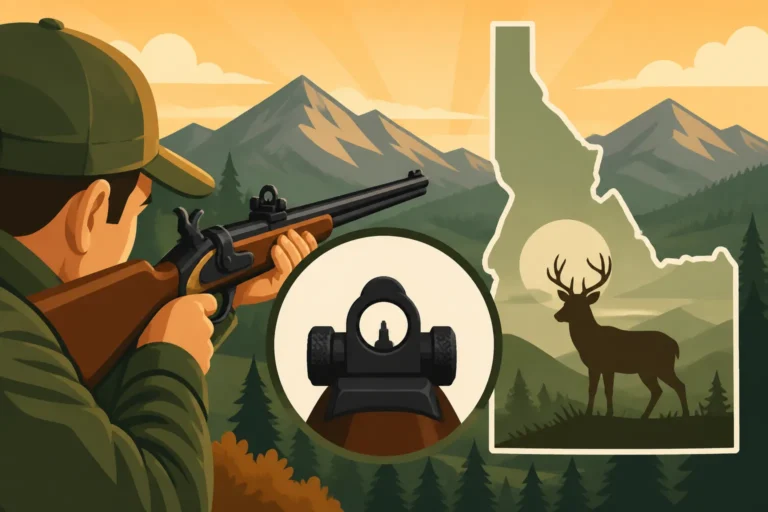
Since modern optics are out, what are you left with for a muzzleloader-only hunt in Idaho? You're relying on traditional open sights or peep sights. These are the workhorses of traditional shooting, and mastering them is a skill in itself.
Open sights, often called "iron sights," typically consist of a rear sight (like a notch or buckhorn shape) and a front sight (a blade or bead). You align the front sight within the rear sight, placing it on your target. They are robust, simple, and don't rely on batteries or delicate lenses. However, they can be challenging in low light or against dark backgrounds, and precise aiming at longer distances takes a lot of practice. Many hunters find their effective range with open sights to be significantly shorter than with a scope, generally limiting ethical shots to within 50-75 yards for big game.
Peep sights, on the other hand, offer a slight advantage in terms of precision, especially for older eyes or those accustomed to a clearer sight picture. A peep sight uses a small aperture (a "peep hole") closer to your eye as the rear sight, and you focus on the front sight and the target. Your eye naturally centers the front sight in the peep hole, which can simplify alignment and improve accuracy. They also tend to work better in lower light conditions than open sights because your eye gathers more light through the aperture. Many traditional muzzleloaders come equipped with, or can be easily fitted with, these types of sights. Choosing between open and peep sights often comes down to personal preference and what you've practiced with, but both offer a genuine, traditional aiming experience that aligns perfectly with Idaho's muzzleloader-only rules.
Navigating Different Muzzleloader Seasons and Gear Choices
The world of muzzleloader hunting in Idaho isn't monolithic; it's split into distinct categories, and your gear choices absolutely hinge on which one you're participating in. Understanding the difference between a dedicated "muzzleloader-only" hunt and an "any-weapon" season where a muzzleloader is simply an option is paramount. This isn't just about what's legal; it's about optimizing your hunting strategy and ensuring you're prepared for the conditions and the expected range of shots.
Let's face it, hunting success often comes down to preparation, and that includes matching your equipment to the specific rules of your tag. A modern inline muzzleloader with a powerful scope is a completely different beast than a traditional sidelock with open sights. Each has its place, but only one is welcome in a true muzzleloader-only season. This means that a hunter might need two distinct muzzleloader setups if they plan to hunt both types of seasons, or they might choose to focus on one specific type of hunt to simplify their gear. Resources like GoHunt can be incredibly helpful here, as they often compile and simplify complex regulations, allowing you to easily identify the weapon restrictions for various units and seasons.
Muzzleloaders in "Any-Weapon" Seasons
Here's where things get a bit more lenient for muzzleloader enthusiasts. If you've drawn a general season tag or a controlled hunt that is designated as an "any-weapon" season, your modern muzzleloader with a scope is perfectly legal to use. In these scenarios, Idaho Fish and Game allows the full spectrum of legal hunting firearms, and that includes contemporary muzzleloaders with all their modern accoutrements. This means you can mount your favorite variable power scope, utilize an advanced inline ignition system, and push the effective range of your black powder rifle much further.
Many hunters choose to use a modern muzzleloader in an any-weapon season precisely because it offers a significant advantage in terms of accuracy and extended range compared to traditional iron sights. It allows them to participate in the general rifle seasons with a unique challenge, without being handicapped by primitive sighting systems. For those seeking maximum effectiveness with a muzzleloader, or who simply prefer the single-shot challenge within a broader season, these "any-weapon" opportunities are ideal. Our article on Using a Muzzleloader in Any-Weapon Season provides additional details on this flexibility. You can research which units and seasons offer these opportunities using resources like the Idaho Fish and Game website or detailed mapping services.
Matching Your Gear to the Hunt Type
Choosing the right gear isn't just a preference; it's a regulatory requirement in Idaho. It's not enough to simply have a muzzleloader; you need the right kind of muzzleloader setup for the hunt you're on. This means if you're planning a muzzleloader-only hunt, your modern inline muzzleloader with a high-power scope needs to stay in the gun safe. Instead, you'll be reaching for that traditional percussion or flintlock rifle, equipped with trusty open sights or a peep sight.
The table below breaks down the fundamental differences in gear and intent between these two distinct types of muzzleloader opportunities in Idaho. When you're trying to figure out if your prized scoped muzzleloader is legal for a specific hunt, tools like GoHunt can help filter through the regulations quickly, showing you exactly what's allowed. Always double-check your specific tag's regulations, as zone and unit variations are common. Don't forget to consider important factors like Minimum Muzzleloader Caliber for Idaho Deer or Minimum Muzzleloader Caliber for Idaho Elk, as these will also impact your equipment choices regardless of the season type. Understanding The Effective Range of a Muzzleloader on Elk is crucial for ethical hunting, particularly when limited to traditional sights.
| Season Type | Scopes Allowed? | Ignition Type | Sights Allowed | Typical Intent/Challenge |
|---|---|---|---|---|
| Muzzleloader-Only Hunt | No | Exposed cap, flintlock | Open, Peep | Traditional fair chase, increased challenge, shorter range |
| Any-Weapon Season | Yes | Inline, exposed cap, etc. | Any (optical, open) | Maximum effectiveness, longer range potential |
Consequences of Non-Compliance and Best Practices
Nobody wants their dream Idaho hunt to turn into a nightmare, but unfortunately, ignorance of the law isn't a valid defense. Idaho Fish and Game takes its regulations seriously, especially when it comes to fair chase and weapon restrictions. Getting caught with a scope on your muzzleloader during a muzzleloader-only hunt can lead to severe penalties that will not only ruin your trip but could also impact your future hunting privileges across multiple states. It's a risk simply not worth taking, especially when the solution is as simple as thoroughly checking the rules and equipping yourself appropriately.
The key to avoiding these headaches lies in diligent pre-hunt research and verification. Don't rely on assumptions or word-of-mouth. The official regulations are readily available, and there are excellent tools out there to help you navigate them. Think of it as part of your hunting prep, just like sighting in your rifle or scouting your unit. Taking the time upfront can save you a world of trouble and ensure your focus remains where it should be: on the hunt itself. For general research, checking out A Walkthrough of the Idaho Hunt Planner can be a huge benefit for planning any type of hunt.
Penalties for Violations
The consequences of hunting with an illegal weapon during a muzzleloader-only season in Idaho can be quite severe. First and foremost, you could face significant fines, often ranging from hundreds to well over a thousand dollars, depending on the severity of the violation and whether game was taken. Beyond the financial hit, a violation can also result in the forfeiture of your harvested animal, and the seizure of your firearm. Imagine the heartbreak of finally taking that bull elk after a tough hunt, only to have it confiscated because you had a scope you weren't supposed to.
Even more impactful is the potential for hunting license suspension. This isn't just an Idaho-specific problem either; most states participate in the Interstate Wildlife Violator Compact, meaning a suspension in Idaho could lead to your hunting privileges being revoked in dozens of other states as well. This could effectively put you out of hunting for several years. Law enforcement officers from the Idaho Fish and Game are out in the field to ensure compliance, and they do not make exceptions for hunters who claim they "didn't know." Always remember, it is the hunter's responsibility to understand and abide by all current regulations.
Essential Pre-Hunt Research and Verification
To avoid any issues, thorough pre-hunt research is non-negotiable. Start by obtaining the most current Idaho Fish and Game Big Game Regulations pamphlet. You can usually find this at license vendors, IDFG offices, or readily available for download on their official website. Always check the regulations specifically for the unit and season code you have drawn or plan to hunt. The regulations are incredibly detailed, and a small change year to year could impact what gear is permissible. Our guide on Where the Current Idaho Regulations Are Posted is an excellent resource for finding the official rules.
Beyond the official pamphlet, online resources are invaluable. The IDFG website provides a wealth of information. Additionally, dedicated hunting platforms like GoHunt offer detailed unit profiles and regulation summaries that can help you quickly ascertain weapon restrictions. A hunter might use a platform like GoHunt to pore over the regulations, often with helpful overlays and filters, making the complex rules much easier to digest. GoHunt's unit profiles often include summaries of weapon restrictions, drawing odds, and harvest statistics, which can be cross-referenced with the official rules. If, after all your research, you're still unsure about a specific piece of equipment, the absolute best course of action is to contact Idaho Fish and Game directly. A quick phone call to a regional office can clarify any lingering doubts and save you from a potential violation. Using resources like the Idaho Fish and Game website in conjunction with detailed mapping services like GoHunt can prevent a lot of headaches and ensure you're fully compliant and ready for your hunt. Don't forget to also look at Reading an Idaho Harvest Statistics Report to help inform your hunt planning.
Disclaimer
Please be aware that hunting regulations, including those pertaining to weapon restrictions, can change. Always consult the most current Idaho Fish and Game regulations for the exact season and unit you plan to hunt before heading into the field. This article provides general information and should not be considered a substitute for the official, annually updated regulations.