Spike-Only Bull Rules Under an Idaho A Tag
Navigating Idaho's elk regulations can feel like trying to decipher an ancient map, especially when you're faced with specific antler point rules. Many hunters, even seasoned ones, find themselves scratching their heads over the nuances of "spike-only" bull regulations, particularly when they're holding an Idaho "A Tag." It's not enough to simply draw a tag; understanding the exact kind of bull your tag allows you to pursue in certain seasons is absolutely critical. This guide is here to untangle the complexities of spike-only bull rules for Idaho A Tags, helping you avoid any costly mistakes and empowering you to hunt with confidence and clarity.
Understanding Idaho's Elk Tags: A Tag Versus B Tag
Before we dive deep into the world of spike-only bulls, it's essential to grasp the fundamental distinction between Idaho's A Tags and B Tags. This distinction isn't just an arbitrary classification; it dictates which seasons you can hunt and often, which weapons you can use, directly impacting your opportunities, especially for different types of bulls.
The Core Differences in Idaho's Elk Tags
Idaho Fish and Game designed the A and B tag system to help manage hunter numbers and spread pressure across different seasons and weapon types. Think of A Tags as generally favoring those who prefer archery and muzzleloader seasons, often aligning with earlier hunts in the fall. These seasons typically provide a more primitive hunting experience, and sometimes, a more challenging one due to the nature of the weapons. On the flip side, B Tags are usually geared towards general rifle seasons, which tend to occur later in the fall when elk might be more concentrated or vulnerable as they move towards winter range.
It's crucial to remember that this isn't a hard and fast rule across every single unit or zone in Idaho. Some units might offer A Tags that cover rifle seasons, or B Tags that allow for archery. The key is that each tag type grants access to a specific set of seasons and weapon choices outlined in the Idaho Big Game Regulations. For example, if you're looking at an A tag, you'll often find yourself in the woods during prime bugle periods with a bow in hand. For a more detailed breakdown, check out our guide on How to Pick Between an Idaho A Tag and a B Tag. This distinction is critical because the spike-only rules are almost exclusively tied to particular A Tag seasons, reflecting a management strategy to protect mature bulls during certain hunting periods.
Why A Tags Often Have Specific Bull Restrictions
The reason A Tags frequently come with more specific bull restrictions, like spike-only rules, ties directly back to herd management. Early archery and muzzleloader seasons often coincide with the elk rut. During this time, mature bulls are highly active, vocal, and sometimes less cautious, making them more susceptible to harvest. By designating some of these early A Tag seasons as spike-only, Idaho Fish and Game aims to protect the breeding-age bulls, allowing them to continue contributing to the herd's genetics and population growth.
This strategy ensures that a healthy number of mature bulls survive the early hunts, improving the overall age structure and quality of the herd. For hunters, this means that while an A Tag might offer the thrill of hunting during the rut, it often comes with the added challenge of distinguishing a legal spike bull from a branch-antlered bull. Understanding these management goals helps put the seemingly complex rules into perspective. In essence, A Tags Favor Archery and Muzzleloader Hunters but sometimes with specific limitations designed to benefit the elk population in the long run.
The Nitty-Gritty of Spike-Only Bull Regulations
Now, let's get into the heart of the matter: what exactly constitutes a "spike-only" bull in Idaho, and why is this definition so important for hunters with an A Tag? This isn't just about common sense; it's about precise legal definitions that can make or break your hunt.
Defining a Legal Spike Bull in Idaho
Idaho's definition of a legal spike bull is quite specific, and it's essential to commit it to memory before you head into the field. According to Idaho Fish and Game regulations, a spike bull is an elk with at least one antler that has no branching above the ear, or a single antler point that is at least five inches long.
Let's break that down:
- "No branching above the ear": This means the antler shaft goes up without any tines or points splitting off from the main beam above where the ear typically sits. It's just a single, unbranched point.
- "Single antler point that is at least five inches long": If an antler does have branching, but only one of those points extends at least five inches from the main beam, and there are no other points or branching above the ear, it can still qualify as a spike. This part is where hunters sometimes get confused.
The critical takeaway here is that only one antler needs to meet this criterion. If a bull has one antler that is a spike (as defined above) and the other antler is a branch antler (e.g., a 6×6), that bull is not a legal spike bull. The rule applies to the bull's overall antler configuration, meaning it must be a "spike-only" bull, not just a bull with a spike. The spirit of the rule is to protect bulls that have already started developing complex antlers. For more detailed insights, you can review the official regulations, which clarify Spike-Only Bull Rules Inside Idaho A Tag Seasons.
Why Spike-Only Rules Exist and What They Mean for Your Hunt
The implementation of spike-only bull rules, particularly in certain A Tag seasons, is a calculated move by Idaho Fish and Game aimed at promoting herd health and quality. As mentioned earlier, it’s primarily a management tool to ensure more mature, branch-antlered bulls survive the hunting season. By restricting harvest to spike bulls, the department protects the younger, genetically developing bulls for future breeding seasons. This strategy helps foster a more balanced age structure within the elk population, which can lead to larger, healthier animals in the long run.
For you, the hunter, this means a few things for your A Tag hunt:
- Increased Identification Challenge: You'll need to be extra vigilant in the field to correctly identify a legal spike. This requires patience, good optics, and a clear understanding of the definition. Mistakes can lead to citations and loss of your animal, which nobody wants.
- Shift in Tactics: Your hunting strategy might need to adapt. Instead of targeting the biggest, most vocal bulls (which are almost certainly branch-antlered), you'll focus on identifying smaller, younger animals. These spikes often travel with cow groups or in bachelor groups and might not be as responsive to aggressive calling.
- Specific Zone Awareness: Not all A Tag units or seasons are spike-only. It is imperative to consult the current year's regulations for your specific unit and season. The Idaho Hunt Planner Is the Tool to Start With for this kind of detailed information. Missing this critical step could lead to hunting in the wrong place or pursuing the wrong animal. This rule reflects a commitment to sustainable hunting, ensuring future generations of hunters have quality opportunities.
Regional Variations and Exceptions to the Rule
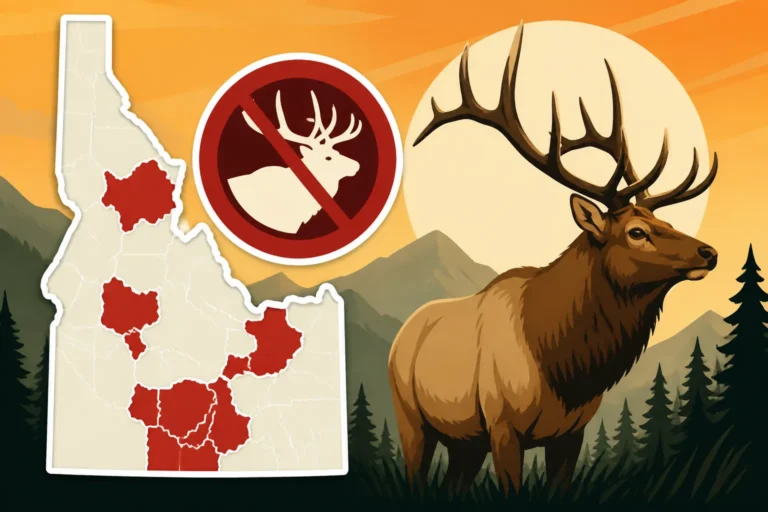
It's important to remember that Idaho is a vast state with diverse elk populations and management objectives. Consequently, spike-only rules are not uniformly applied across every single elk zone or unit. While many A Tag seasons might feature these restrictions, others, particularly in zones where herd numbers need reduction or where general season opportunities are broader, might allow for "any bull" harvest, even during archery or muzzleloader seasons.
For instance, certain Idaho Elk Zones and the A Tag or B Tag Choice might have different regulations. The Panhandle Zone, known for its dense timber and whitetail populations, might have different elk management strategies compared to the vast, open country of the Salmon River Breaks or the Caribou-Targhee region. Some areas might have "two-point or better" rules, or even "any legal weapon, any bull" seasons, regardless of tag type. This is why consulting the official Idaho Fish and Game regulations for your specific unit and season is not just recommended, but absolutely mandatory. Relying on general knowledge or past experiences from other states can lead to serious errors. Always double-check your draw information and the corresponding regulations to ensure you're hunting within the legal framework.
Navigating Spike-Only Seasons with Your A Tag
Hunting during a spike-only A Tag season requires a bit more intentionality and preparation. It's not just about finding elk; it's about finding the right elk and confidently identifying them as legal.
Pre-Season Scouting and Intelligence Gathering
The best way to succeed in a spike-only season is through thorough pre-season scouting. This means more than just looking for elk sign; it means actively trying to locate and observe bachelor groups of bulls or cow/calf groups that might have spikes tagging along. Use trail cameras in areas known for elk activity to try and get photos of younger bulls. This can help you understand the age class distribution in your chosen unit.
Tools like GoHunt's platform can be invaluable here. They often provide detailed unit information, including harvest statistics and public land percentages, which can help you narrow down areas where younger bulls might be more prevalent or where hunting pressure pushes them. Look for areas with good forage and cover that might attract younger, less dominant bulls. If you can identify specific bedding or feeding areas that spikes frequent before the season even opens, you'll be ahead of the game. Pay attention to water sources in dry sage country, as these can be magnets for elk of all ages.
Adapting Your Hunting Tactics for Spikes
Your traditional elk hunting tactics might need a slight adjustment when targeting spike bulls. While bugling aggressively might draw in a big herd bull, it's less likely to bring in a cautious spike.
Here are a few tactical considerations:
- Focus on Cow Groups: Spikes often hang with cow and calf groups, especially outside the peak rut. Focusing your efforts on locating and still-hunting these groups, or using soft cow calls, can be more productive.
- Less Aggressive Calling: Instead of challenging bugles, consider using soft cow calls, mews, and satellite bull sounds. These can pique the curiosity of younger bulls without intimidating them. Our article on Bugle and Cow Call Timing Through September offers excellent advice on this.
- Cover and Terrain: Spikes, being younger and less experienced, might not be as savvy at avoiding hunters as older bulls. They might be found in thicker timber or slightly less accessible areas where they feel safer from both predators and hunters. Learning to Read Fresh Elk Sign in Dark Timber becomes paramount.
- Patience and Observation: When you locate elk, spend time observing them. Don't rush in. Use your binoculars and spotting scope to carefully assess each bull for legal spike characteristics before making a move. This is where patience truly pays off.
Field Judging for Spikes: Tips and Tricks
Field judging is arguably the most critical skill for a spike-only hunt. The fleeting glance of an antler through timber can be deceiving, and misidentification can lead to serious consequences.
Here are some tips to help you accurately identify a legal spike:
- Use Quality Optics: This cannot be stressed enough. A good pair of 10×42 or 12×50 binoculars, or even a spotting scope, is essential. Take your time to clearly see the antler. GoHunt often features gear reviews for optics, helping you choose the best tools for the job. Our guide on Optics Power for Idaho's Long Canyon Sightlines can also give you insights into optimal glassing equipment.
- Look for the "Y": If you see any distinct "Y" shape or branching above the ear on either antler, it's not a spike. The main beam should be smooth and unbranched.
- Identify the Ear Line: Use the bull's ear as a reference point. If there are any points or branching clearly above the top of the ear, it's not a spike.
- Confirm Both Sides (for peace of mind): While only one antler needs to be a spike for the animal not to be a legal spike bull, you're looking for a bull where both antlers are spikes. If one is clearly branched, it's not a legal spike bull. The wording is "spike-only bull," meaning the bull must only have spike antlers.
- Wait for Clear Visibility: Never take a shot if you're unsure. Wait for the bull to move into an open area or present a clearer view. It's far better to let an animal walk than to make an illegal harvest.
- Practice: Spend time at home reviewing images and videos of spike bulls versus small branch-antlered bulls to train your eye.
Here's a quick comparison table to help differentiate:
| Characteristic | Legal Spike-Only Bull | Illegal (Branch-Antlered) Bull |
|---|---|---|
| Antler Branching | At least one antler has NO branching above the ear. | At least one antler has branching ABOVE the ear. |
| Antler Points | May have a single point > 5 inches long, but no others above ear. | Multiple points, or one point clearly above ear. |
| Overall Look | Typically straighter, simpler antlers. | More complex antler structure, distinct tines. |
| Age | Generally younger bulls (yearlings or 2-year-olds). | Older, more mature bulls. |
Maximizing Your Opportunity in Spike-Only Zones
A spike-only A Tag hunt is a fantastic opportunity to get into the elk woods during exciting times of the year. With the right mindset and strategies, you can have a very successful and rewarding experience.
Focus on Pressure-Reduced Areas
Younger spike bulls, while not as dominant as mature herd bulls, are still highly susceptible to hunting pressure. They will often seek refuge in areas with less human activity. This means looking beyond the easily accessible roads and popular trailheads. Utilize your maps and GPS (even better if you have apps like GoHunt with public land and roads layers) to identify drainages, ridges, or patches of timber that are a little further off the beaten path. These might require a longer walk or a steeper climb, but they often hold elk that haven't been as disturbed.
Even if a unit is heavily hunted, there are almost always pockets of overlooked terrain. Think about thickets on north-facing slopes, saddles between drainages, or benches high up in the mountains that don't see as much foot traffic. Spikes will often use these less-pressured areas to feed and bed, especially during the middle of the day.
Calling Strategies Tailored for Younger Bulls
While a screaming bugle might grab the attention of a big bull looking for a fight, it could easily spook a younger spike. For spike-only seasons, a more subtle and nuanced calling approach is often more effective.
- Soft Cow and Calf Mews: These calls mimic the general chatter of a cow herd and can make a spike feel comfortable approaching, thinking it's just another part of the group. Start soft and keep it natural.
- Lost Calf Cries: A distressed calf call can sometimes draw in a protective cow, and often, spikes will be nearby.
- Raking and Rubbing: Mimicking the sound of antlers rubbing against a tree can attract curious younger bulls. This isn't an aggressive challenge but rather a sound that suggests other elk are in the area.
- Patience After Calling: Don't call continuously. Call, then listen intently for responses or movement. Spikes might be hesitant and take their time to approach, often circling downwind. Set up in a spot that offers good visibility and cover, allowing you to observe their approach.
Hunting in Conjunction with the Rut
Many A Tag seasons coincide with at least part of the elk rut. Even though you're looking for spikes, you can still leverage rutting behavior. While you won't be calling in a dominant bull, spikes are often found on the fringes of a herd, trying to sneak in and breed cows when the herd bull is preoccupied or exhausted. Listen for the distant bugles of herd bulls and try to move quietly into those areas, watching for spikes that might be trying to skirt the action.
Sometimes, a satellite spike will even respond to a cow call, hoping to pull a cow away from the main herd. Paying attention to When the Elk Rut Actually Peaks Out West can give you an edge in understanding these dynamics. Utilizing wind direction is also paramount; always try to keep the wind in your favor, especially when stalking or calling, to prevent elk from scenting you.
Leveraging Idaho's Public Lands
Idaho boasts an incredible amount of public land, from vast tracts of Bureau of Land Management (BLM) ground in the south to extensive National Forests in the central and northern parts of the state. This public access is a huge advantage for hunters, especially for those pursuing spikes. GoHunt and other mapping tools can show you public/private land boundaries, helping you identify prime hunting areas.
Focus on units with high public land percentages, as these often offer more expansive areas where elk can roam freely and where hunting pressure can be more dispersed. Don't shy away from areas that look rugged or difficult to access; these are often the places where spikes will find refuge. Our guide on Hunting Idaho's National Forests and BLM Ground provides more context on where to find these opportunities. Remember to always respect private land boundaries and consult current Motor Vehicle Use Maps (MVUMs) for National Forests to understand road access and restrictions. This comprehensive planning, combined with a deep understanding of spike-only rules, will set you up for success in Idaho's exciting elk country.
Disclaimer
Please be aware that hunting regulations, seasons, and tag allocations can change annually. The information provided in this guide is intended for general informational purposes only and should not be considered legal advice. Always consult the most current Idaho Fish and Game Big Game Regulations and official publications for the specific year you plan to hunt before making any plans or heading into the field. It is your responsibility as a hunter to know and abide by all applicable laws and regulations.