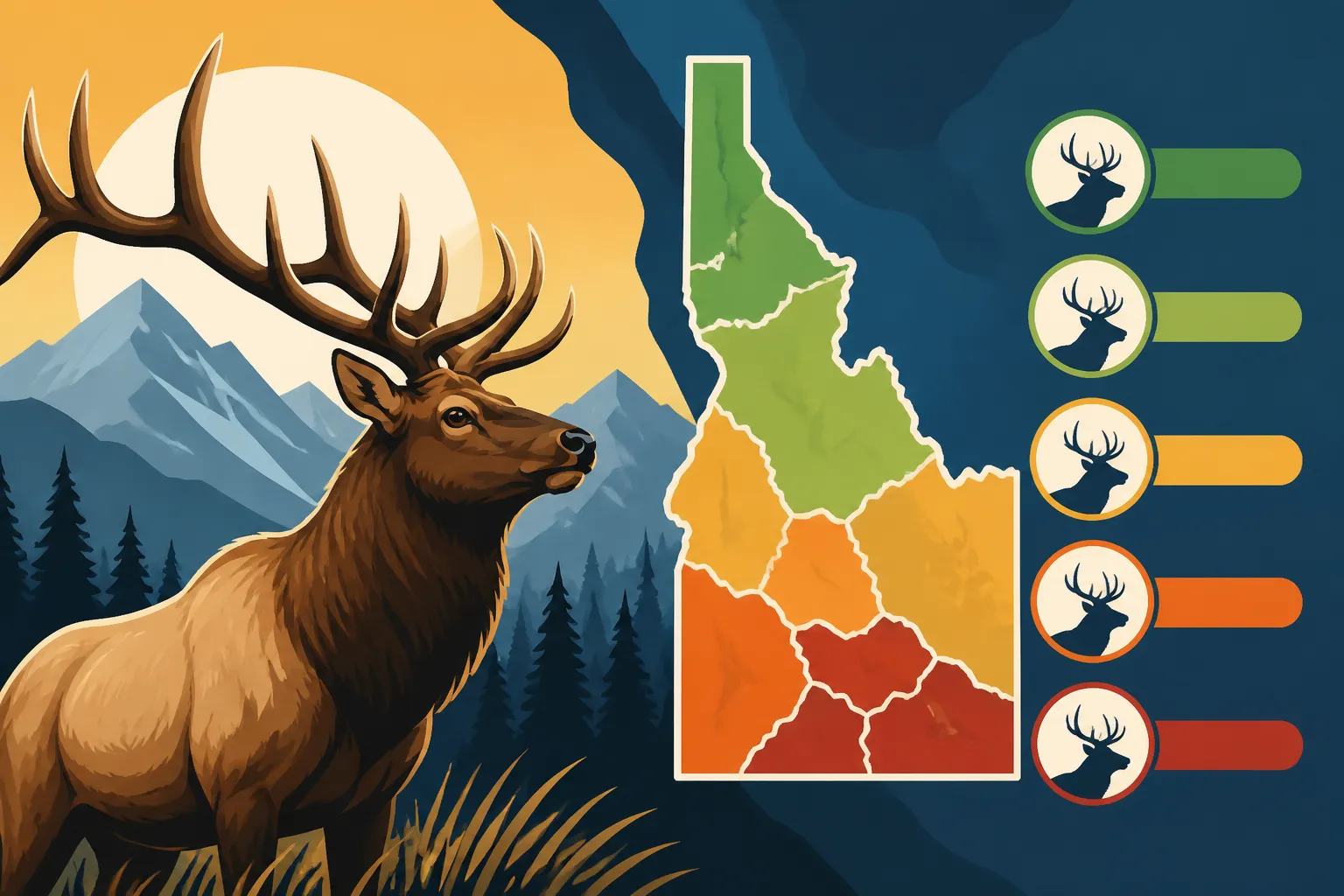
Elk Harvest Success Rates by Zone
Deciding where to invest your precious time and money for an Idaho elk hunt can feel like a game of chance. You pore over maps, read forum posts, and dream of that perfect bull, but the sheer volume of information can be overwhelming, leaving you wondering which areas truly offer the best odds. This guide will help you understand Idaho's elk harvest success rates by zone, what those numbers actually mean, and how to use them effectively to plan a hunt that aligns with your expectations, moving beyond just raw statistics to the heart of what makes a successful outing.
Understanding Idaho's Elk Success Rates
When you start digging into Idaho's elk hunting regulations and reports, you'll inevitably come across references to "harvest success rates." It’s natural to gravitate toward these numbers, hoping they'll reveal a secret shortcut to a filled tag. But just seeing a percentage isn't enough; you need to understand what factors feed into those figures and how they're collected to truly make sense of them for your personal hunt planning.
What Harvest Success Rates Actually Represent
At its core, an elk harvest success rate is the percentage of hunters who reported harvesting an elk within a given area or during a specific season. This seems straightforward, right? However, these numbers are typically based on hunter reporting, and while Idaho Fish and Game does a fantastic job of collecting this data, it's often a broad stroke. A zone might have a 15% success rate for general elk, but that doesn't differentiate between archery hunters, muzzleloader hunters, or modern firearm hunters, nor does it factor in the type of terrain or the hunter's experience level. It's an aggregate, a snapshot of what happened across a large and often diverse landscape.
Think of it this way: if 100 hunters enter a zone and 15 of them tag an elk, that's a 15% success rate. But were those 15 successful hunters seasoned backcountry experts, or was it a mix of skill levels? Were they hunting bulls, or did a significant portion fill cow tags? These nuances are often lost in the simple percentage. It's a starting point, a clue, but never the whole story. The data might tell you something about the overall health of the elk herd and the general pressure in an area, but it won't tell you if you will be successful.
Where to Find and Interpret the Data
Idaho Fish and Game provides a wealth of data, often broken down by unit and season, allowing you to dive much deeper than just zone averages. The official website is usually the first stop for anyone looking to understand Reading an Idaho Harvest Statistics Report. You'll find reports that break down hunter numbers, harvest totals, and success percentages, often going back several years. This historical data is crucial because elk populations and hunting conditions can fluctuate year to year. A single exceptional year might skew a zone's average if you only look at the most recent report.
Beyond the official state data, dedicated hunting platforms and community tools can help streamline your research. Resources like GoHunt, for instance, often compile and visualize this state-provided data in user-friendly formats, allowing you to quickly compare different zones, units, and even specific hunt types. These tools can save you countless hours of digging through PDFs, presenting the information in a way that helps you analyze trends more efficiently. Remember, while a zone might look good on paper, always cross-reference with maps to understand the terrain, access points, and public land available before committing your resources.
Factors Influencing Your Personal Success
Harvest success rates are statistical averages, but your actual success on an Idaho elk hunt is a deeply personal endeavor, influenced by far more than just a number on a page. Many experienced hunters will tell you that the numbers are just one piece of a much larger puzzle, and often, the most significant variables are within your control.
Hunter Skill, Physical Conditioning, and Experience
Let's be honest: not all hunters are created equal, and that's okay! A hunter who spends months training, scouting, and practicing their shooting skills will likely have a higher probability of success than someone who shows up cold. This isn't about shaming anyone, but about recognizing the reality of backcountry elk hunting. Are you prepared to hike steep miles, handle varying weather conditions, and spend hours glassing? Your physical and mental conditioning plays an enormous role in your ability to access elk, withstand the elements, and perform when the moment of truth arrives.
Furthermore, experience in reading sign, understanding elk behavior, and navigating challenging terrain are invaluable. A seasoned hunter might consistently fill tags in a zone with a "low" success rate because they know how to adapt to pressure, find overlooked pockets of elk, and stay persistent. Conversely, a novice hunter might struggle in a zone with a "high" success rate if they lack the foundational skills or the grit to push through tough days. Be realistic about your own capabilities and continually strive to improve them; that's where true, repeatable success lies, far beyond what any statistical report can promise.
Weapon Choice, Season Timing, and Hunt Pressure
The type of weapon you choose and the season you hunt are massive determinants of your individual success, even within the same elk zone. Archery seasons, for example, typically occur earlier in the fall, often during the elk rut, which can present incredible calling opportunities. However, they also demand getting incredibly close to the animal, requiring exceptional stalking skills and precision shooting. Compare this to a modern firearm season, which generally offers longer effective ranges and less need for an intimate close-quarters encounter. While a rifle hunter might have a higher chance to connect with an elk from further away, the sheer increase in hunter numbers during rifle seasons often means more pressured animals.
This leads us to hunter pressure. Some zones are simply more popular, meaning more boots on the ground, more ATVs on roads, and more disturbances in general. Elk are smart; they learn quickly to avoid areas with heavy human activity, often retreating to dense timber or steep, inaccessible terrain. Even if a zone has a good overall success rate, if you're hunting during a high-pressure week, your personal odds might dip significantly. That's why considering A Tags Favor Archery and Muzzleloader Hunters and B Tags Favor the Centerfire Rifle Crowd is crucial, as they often dictate different season dates and associated hunter density. Looking at the data for specific weapon types and understanding general trends in hunter numbers for various seasons is a key part of personalizing those broad success rate statistics.
Breaking Down Success by Idaho Elk Zones
Idaho's elk hunting landscape is incredibly diverse, from the dense timber of the Panhandle to the sprawling sagebrush of the high desert and the rugged mountains of the central wilderness areas. It stands to reason that elk harvest success rates will vary significantly across these regions, largely due to habitat, herd dynamics, and hunter access.
General Trends Across Idaho's Diverse Terrain
Broadly speaking, you'll often see different success rate patterns emerge depending on the type of terrain and the overall management objectives for a particular zone. Zones dominated by vast wilderness areas, like the Frank Church River of No Return or the Selway-Bitterroot, might have lower overall success rates due to extreme difficulty of access, the sheer size of the country, and the necessity for deep backcountry skills. However, these zones might also produce some of the largest bulls for those willing and able to tackle them. The success here often means a hard-earned opportunity, not necessarily an easy one.
Conversely, some general season zones with more accessible timbered country or mixed private/public lands might show slightly higher success rates, particularly for cow elk or spike bulls. These areas can sometimes offer more "road hunting" opportunities or hunts that don't demand multi-day pack trips. However, with easier access often comes higher hunter density and more pressured animals. Elk Herd Distribution by Zone can give you a better idea of where elk are generally found, which can then be cross-referenced with success rate data to understand which zones are productive, and which might be tougher nuts to crack.
Zones with Higher Success Potential
While I cannot provide specific, current numbers or guarantee any particular outcome, certain characteristics generally lead to higher success potential in an Idaho elk zone:
- Managed Units/Controlled Hunts: Often, zones with higher success rates are those managed through controlled hunts, where tag numbers are limited. This directly reduces hunter pressure and can improve the quality of animals and the individual hunter's odds. However, drawing a tag in these units can be incredibly difficult, often taking many years of applications.
- Good Habitat & Low Pressure: Areas that consistently hold strong elk populations due to excellent forage and cover, combined with relatively lower hunter pressure (perhaps due to difficult access or less notoriety), tend to yield better results. This isn't always about wilderness; sometimes it's simply a large block of public land that's harder to get into than others.
- Cow-Only or Spike-Only Opportunities: When a zone offers specific seasons for Cow Elk Controlled Hunt Opportunity Explained or spike bulls, the success rates for those specific hunts can be significantly higher than for general bull tags. These hunts are often management tools to reduce herd numbers or manage bull-to-cow ratios, making them more accessible and offering a greater chance of filling the freezer.
It's important to remember that a "high success rate" is relative. A 20% success rate for a general public land bull hunt can be considered excellent in many Western states, while a 50% rate for a private land cow hunt might be par for the course. Always compare apples to apples when interpreting these statistics.
Zones That Present Greater Challenges
On the flip side, some Idaho elk zones, while offering incredible experiences and potentially trophy animals, consistently present greater challenges and thus often have lower average success rates.
- Deep Wilderness Areas: As mentioned, regions like the Frank Church Wilderness, while spectacular, demand extreme physical fitness, advanced navigation skills, and the ability to pack out an animal in grueling conditions. The sheer vastness of the terrain makes finding elk a daunting task, and packing them out is often a multi-day ordeal. The Idaho Hunt Planner Is the Tool to Start With can show you the vastness of these areas, hinting at the effort required.
- Heavily Pressured General Zones: Some easily accessible general zones, particularly those closer to population centers, can experience intense hunting pressure, especially on opening weekend. While they might still have elk, these animals quickly become nocturnal and retreat to the thickest cover, making them extremely difficult to locate and stalk. Success in these areas often comes down to perseverance, hunting midweek, and being willing to go where others won't.
- Units with Predation Issues: In certain areas, wolf or bear predation can impact elk calf survival and overall herd numbers, leading to fewer elk and tougher hunting. While wildlife managers strive to balance these factors, some units may reflect lower harvest numbers due to these ecological pressures.
The "challenge" zones aren't necessarily bad; they simply require a different mindset and skillset. For many, the reward of harvesting an animal in such a demanding environment is far greater than an "easier" hunt. The challenge itself is often part of the draw.
Using Success Rates to Plan Your Hunt
Now that we've dug into what elk harvest success rates mean and the factors that influence them, let's talk about how to actually put this information to work when planning your next Idaho adventure. It's about blending the data with your personal aspirations and capabilities.
Matching Success Rates to Your Goals and Abilities
The first step in using success rates effectively is to honestly assess your own hunting goals and abilities. Are you looking for a guaranteed meat hunt, or are you chasing a trophy bull with an understanding that success might be years in the making? Do you have the physical stamina for a multi-day backpack hunt in steep country, or would a more accessible hunt with day trips be a better fit? If you’re just starting out, a zone with a modest but consistent success rate that offers easier access might be a much more satisfying experience than throwing yourself into a low-percentage wilderness hunt that ends in frustration.
Consider the time you have available. A hunter with a full two weeks might be able to tackle a more challenging, lower-success-rate zone, knowing they have time to scout, adapt, and wait out the elk. Someone with only a long weekend might be better served by focusing on areas with historically higher, more consistent harvest numbers, even if it means more competition. This self-assessment is critical; don't let the allure of high harvest rates blind you to the realities of what you're truly prepared for.
Combining Data with Other Research Tools
Harvest success rates are a powerful piece of the puzzle, but they are never the only piece. To truly make an informed decision, you need to combine this statistical data with a range of other research tools.
- Maps and Satellite Imagery: Once you've identified a few zones or units with promising success rates, dive into detailed maps and satellite imagery. Look for public land access, road systems (and how they might be impacted by Idaho's Motorized Hunting Rule Keeps You on the Road), water sources, bedding areas, and potential escape routes for elk. Tools like GoHunt often integrate detailed mapping layers, allowing you to quickly visualize terrain and identify potential hunting spots.
- Harvest Reports and Herd Management Plans: Beyond just the success rate percentage, dig into the actual harvest reports. Do they show a healthy age structure in the bulls harvested? Are there many cows being taken, indicating a robust herd? Understanding how many elk the state actually holds within How Many Elk the State Actually Holds and how the herd is managed in a particular zone can give you a better picture of future potential.
- Forums and Local Knowledge: While always taking forum advice with a grain of salt, these platforms can sometimes offer insights into hunter pressure, specific access challenges, or recent changes in elk behavior within a zone. Combining anecdotal evidence with hard data can help round out your understanding.
- E-Scouting and Physical Scouting: Nothing beats putting in the boots-on-the-ground effort, but E-Scouting an Idaho Unit Before the Season can give you a massive head start. Use mapping tools to identify potential glassing knobs, water sources, and bedding areas. If possible, a pre-season scouting trip to promising areas, even just for a weekend, can reveal invaluable information that no success rate report can provide.
Ultimately, elk harvest success rates in Idaho are a valuable guidepost, not a guarantee. They help you understand historical trends and identify zones that tend to be more or less productive. But your success will always come down to your preparation, your persistence, and your ability to adapt to the wild and beautiful challenges that Idaho's elk country throws your way.
Disclaimer
This article is for general informational purposes only and does not constitute professional advice. Laws, prices and regulations vary by location and change over time. Consult a qualified professional for guidance on your specific situation.