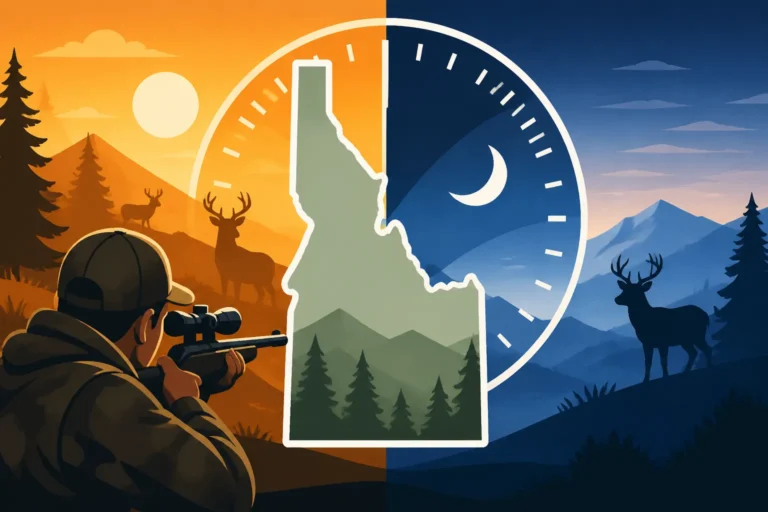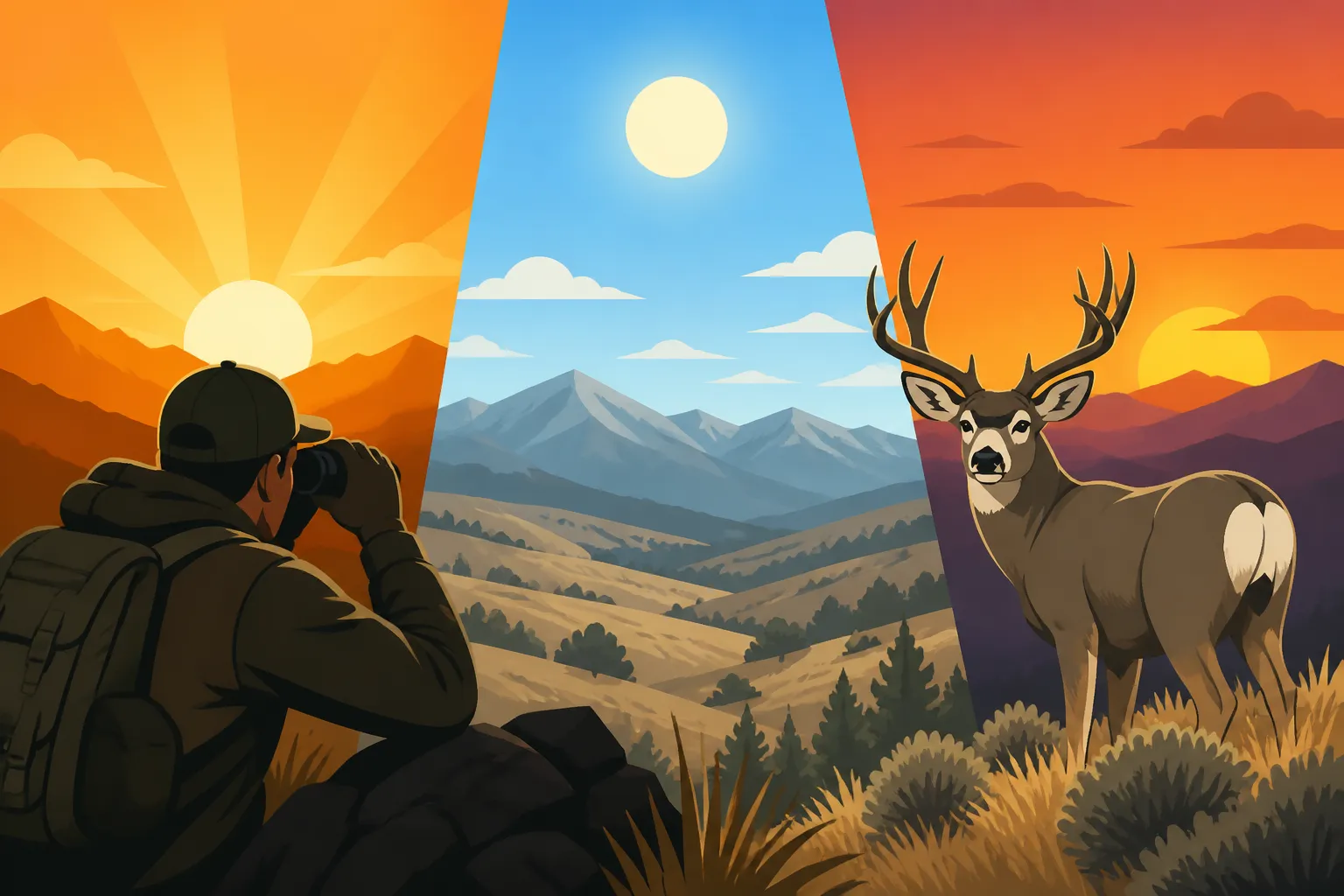
Best Time of Day to Glass Mule Deer
Hunting elusive Idaho mule deer can feel like trying to find a needle in a haystack, especially when they blend so perfectly with the rugged terrain. You've spent hours hiking, positioned yourself on a good vantage point, and now you're wondering if you're even looking at the right time. It’s a common frustration, and honestly, it’s one of the biggest challenges in western hunting. This guide is all about helping you cut through that uncertainty by revealing the best times of day to glass for mule deer in Idaho, helping you maximize your efforts and spot those hidden bucks.
The Golden Hours: Why Early Morning and Late Evening Reign Supreme
Let’s be real, if you’re heading out to glass for mule deer, the general wisdom points to the bookends of the day: early morning and late evening. And for good reason! This isn't just old-timer talk; it's rooted in deer behavior and environmental conditions that make these periods incredibly productive for spotting game. These are the times when deer are most likely to be on their feet, actively feeding, and less likely to be hunkered down, completely hidden.
The Magic of First Light: Feeding Frenzy and Cooling Temps
There’s nothing quite like the crisp air and the first blush of dawn hitting the Idaho mountains. This isn't just a beautiful sight; it's prime mule deer time. As the sun barely peeks over the horizon, mule deer are often wrapping up their main overnight feeding period or just starting a final push before bedding down for the day. They're typically out in the open, or at least on the edges of cover, grabbing those last bites of forage. This is your absolute best bet for catching them moving and vulnerable.
Think about it: the temperatures are at their coolest, making physical activity more comfortable for these animals. You’ll often see them grazing on open hillsides, in sagebrush flats, or along the edges of timber. The shadows are long and dramatic at this hour, which can be a double-edged sword. While shadows can hide deer, they also create stark contrasts that can help you pick out a deer’s silhouette or the glint of an antler against a shaded backdrop. As the sun climbs higher, the thermals—the air currents that rise as the ground warms—are typically dropping or settling. This means your scent is less likely to be carried up to animals higher on the ridge, and it also means deer might be moving to lower, cooler elevations where dropping thermals won't betray them to predators below. This is a fantastic time to put your optics to work and cover wide expanses, glassing thoroughly for those telltale shapes.
Dusk's Embrace: Before Bedding Down
Just as the morning offers a feeding opportunity, the late evening, as the sun dips towards the western horizon, provides the second major window of opportunity for glassing. Mule deer, after spending the bulk of the day bedded down in thick cover or shaded areas, will begin to stir. They'll stretch, maybe take a quick drink, and then head out for their evening feeding. This is often a slower, more deliberate movement than the morning rush, but it’s equally productive.
The light quality changes dramatically in the evening, softening and taking on warmer hues. This can make spotting deer a little easier as the harsh midday glare fades. Deer will emerge from their bedding areas, often high on benches or within timber, and work their way down to more open feeding grounds. As with the morning, the cooling temperatures make movement more comfortable. The thermals are typically reversing direction in the evening, beginning to fall as the air cools. This means your scent will be carried downwards, making it wise to glass from a higher position if possible, allowing your scent to drop below any deer you might be watching. Many hunters swear by those last 30-60 minutes before legal shooting light ends, as deer feel a sense of security returning to their feeding patterns before the deep darkness of night. It’s also during these times that you'll be focusing your efforts on Glassing Breaks and Benches for Mule Deer, knowing they'll be moving out of their hiding spots.
Midday Maneuvers: Don't Dismiss the "Dead" Hours
Now, I know what you're thinking. "Midday? That's when I take a nap!" And yes, many hunters do. But dismissing the midday entirely is a huge mistake, especially when you're targeting big, old mule deer bucks in Idaho. While deer activity certainly slows down, they don't simply vanish. They're just harder to spot, requiring a different approach and a lot more patience. This is where many hunters give up, creating an opportunity for those willing to put in the focused effort.
Pinpointing Bedded Bucks: The Art of Slow Glassing
During the middle of the day, from roughly 10 AM to 4 PM, mule deer are almost exclusively bedded down. They'll seek out thick cover, shady spots, or depressions that offer concealment and a comfortable resting place. This means you’re not looking for moving deer; you’re looking for parts of deer. A flick of an ear, the outline of a rump against a rock, a patch of hide that looks "off" in the shadows, or the tines of an antler sticking up above a bush. This requires a much slower, more methodical approach to glassing.
Instead of scanning wide areas quickly, you'll want to break down the terrain into smaller, manageable sections. Systematically grid search each section, moving your optics incredibly slowly, almost pixel by pixel. Think about using the Grid Glassing a Basin Without Missing Bucks method. Spend several minutes, even up to 15-20 minutes, scrutinizing a single hillside, a patch of timber, or a section of rocks. It's tedious, I won't lie, but it's incredibly effective for finding those bedded animals that an active scanner would completely miss. Often, all you'll see is a tiny, almost imperceptible movement, or a flash of color that doesn't belong. This is also where high-quality optics truly shine. A good spotting scope on a sturdy tripod, like those offered by Vanguard or Vortex, becomes your best friend, allowing you to resolve fine details at extreme distances. Remember, even a bedded deer might make a slight adjustment, twitch an ear, or lift its head, and that's your cue.
Leveraging Thermals and Shade: Midday Movement Triggers
While general activity is low, deer aren't completely inanimate. They might shift their beds to stay in the shade as the sun moves, or they might get up for a quick stretch and relocate a few yards to a better vantage point or cooler air. These small movements, even for just a few seconds, are your chance. The midday sun creates strong rising thermals, carrying your scent upwards, so positioning yourself downwind and below potential bedding areas is crucial.
Also, consider water sources. Even if deer aren't actively feeding, they might get up to take a drink, especially on hot days. Focus your midday glassing efforts on north-facing slopes, dense timber pockets, and areas with available shade close to natural travel corridors or water. Deer will often try to stay out of direct sunlight to conserve energy and avoid overheating. Keep an eye on the edges of these shady spots; deer may position themselves right on the line, blending in with the transition from light to shadow. A quick check of your onX Hunt or GoHunt app can help you identify these features remotely before you even step foot in the unit, aiding in E-Scouting an Idaho Unit Before the Season. Don't underestimate the power of these subtle midday shifts to reveal a hidden buck.
Reading the Landscape: How Terrain and Weather Influence Activity
Understanding when to glass is only half the battle; knowing where to glass is the other. Idaho's diverse landscape, from the high desert sagebrush to dense timber, coupled with its ever-changing weather patterns, heavily influences where and when mule deer will be active and visible. It's about adapting your strategy to the specific conditions you're facing on any given day.
The Impact of Aspect and Elevation: Sun and Shadows
The direction a slope faces, known as its aspect, and its elevation play a massive role in mule deer behavior. Think about the sun's path throughout the day. In the early morning, east-facing slopes catch the first rays of sun, warming up quickly. Deer might linger on these slopes to soak up some warmth after a cold night. As the sun climbs, north-facing slopes and the bottoms of deep canyons remain in shadow longer, providing cooler, more comfortable bedding areas during the heat of the day. South-facing slopes, on the other hand, get direct sunlight for most of the day, making them warmer and often drier. While deer might feed on south-facing slopes in cooler temperatures, they'll usually avoid bedding there during warm spells.
In the high desert areas of southern Idaho, where temperatures can soar, deer will gravitate heavily towards any available shade—a solitary juniper, a deep ravine, or a north-facing canyon wall. Up in the timbered zones of the central and northern parts of the state, deer will often seek out the darkest, thickest timber to bed down. Understanding these micro-climates and how the sun and shadows interact with the terrain is crucial for pinpointing where deer are likely to be at different times of the day. When you're glassing from afar, observing these patterns can guide your focus, letting you know to search the sun-drenched areas at dawn and dusk, but to meticulously comb the shaded pockets during the midday lull. This knowledge is key to effective Glassing Breaks and Benches for Mule Deer.
Weather's Role: Overcast Days and Storm Fronts
Weather isn't just a nuisance; it's a major influencer of deer activity. A crisp, clear, sunny morning might bring deer out early, but it also drives them into thick cover quickly once the sun gets high. Overcast days, however, can extend those prime feeding periods. Without direct, harsh sunlight, deer often feel more comfortable moving around for longer stretches, even into what would typically be considered midday. These gray, cooler days are fantastic for all-day glassing efforts, as deer might be less inclined to bed down so tightly.
Impending storm fronts often trigger increased activity. Animals seem to sense a change coming and will often feed heavily before a major weather event moves in. This can lead to fantastic glassing opportunities as deer stock up on calories. Conversely, during a heavy downpour or a major snowstorm, deer will typically hunker down in dense cover, prioritizing shelter over feeding. After a storm passes, especially if temperatures drop, they'll often emerge again to feed, making the period immediately following a weather system another golden opportunity. Always check the forecast and adjust your glassing times accordingly. A little rain or snow can actually simplify your hunt, as deer movement becomes more predictable. Understanding Mule Deer Winter Range Across the High Desert can also help predict where deer might be concentrated during specific weather patterns.
Gear and Technique: Optimizing Your Glassing Strategy
Even with the perfect timing, your glassing efforts will fall flat without the right tools and a systematic approach. Good optics and a refined technique are paramount to success when hunting Idaho mule deer, especially when trying to spot them at distance across vast, open country or in dense timber.
Essential Optics for Idaho Mule Deer
Let's talk gear. You simply cannot effectively glass for mule deer without quality optics. This isn't an area to skimp on.
- Binoculars: Your primary tool. Most hunters opt for 10×42 or 12×50 binoculars. The 10x models offer a wider field of view and are easier to hold steady, while the 12x models provide a bit more magnification for picking out detail at longer ranges. Brands like Vortex, Swarovski, and Leica are top-tier, but even mid-range options from Maven, Athlon, or Bushnell can get the job done. A good pair of binos allows you to quickly scan large areas and identify potential animal shapes. Ensure your Binocular Size That Survives an All-Day Session is comfortable to carry and use.
- Spotting Scope: For serious mule deer hunting, a spotting scope is indispensable. Ranging from 15-45x magnification up to 27-60x or even higher, a spotter lets you scrutinize distant hillsides and confirm if that "rock" is actually a bedded buck. This is where you identify antler size, legality, and plan your stalk. You'll want significant Optics Power for Idaho's Long Canyon Sightlines. Combine it with a solid tripod.
- Tripod: Crucial for both binoculars (especially 12x and higher) and spotting scopes. Hand-holding optics for extended periods leads to fatigue, shaky images, and missed details. A sturdy tripod provides a stable platform, allowing you to settle in and thoroughly pick apart the landscape without strain. Consider a lightweight carbon fiber option for backcountry hunts. Don't forget a good Tripod Setup for Glassing From a Vehicle, as this can extend your range considerably.
- Phone Adapter: Many hunters attach their smartphones to their spotting scopes to capture photos or videos, and more importantly, to show hunting partners exactly what they're seeing. This can be a game-changer for confirming details without constantly swapping places at the eyepiece.
Remember, clear glass with good light transmission and edge-to-edge clarity makes all the difference, particularly in those low-light "golden hours."
The Grid Glassing Method in Practice
Having the best optics won't help if you're just randomly scanning. A systematic approach is key, and the grid glassing method is a tried-and-true technique for covering terrain thoroughly and efficiently.
Here's how it generally works:
- Pick a Section: From your vantage point, select a manageable section of terrain—a hillside, a basin, a ridge. Don't try to bite off too much at once.
- Establish a Starting Point: Begin at a fixed point, typically the top left corner of your chosen section.
- Slow, Deliberate Horizontal Sweep: With your binoculars or spotting scope on a tripod, slowly traverse horizontally, focusing on every detail. Move in small, overlapping increments. Don't rush! Imagine you're reading a book, line by line.
- Drop Down and Repeat: Once you reach the end of your horizontal line, drop your optics down slightly (just enough to create overlap with your previous line) and make another slow horizontal sweep in the opposite direction.
- Continue Until Complete: Repeat this process, working your way down the entire section until you've covered every inch of it.
This methodical approach prevents you from missing parts of the terrain and helps your brain register shapes and forms that might otherwise blend in. It's often during the fifth or sixth pass over an area that a bedded deer's ear flick or the tines of an antler finally catch your eye. This level of focus is what leads to spotting those truly elusive bucks. You'll also want to consider Reading Wind in Steep Timbered Country to position yourself correctly before settling in for a long glassing session. If you do spot a buck, remember that the goal is often to figure out How Far to Stalk a Bedded Mule Deer before making your move.
Disclaimer
Please remember that hunting regulations, seasons, and access rules in Idaho can change. Always consult the most current Idaho Fish and Game regulations and land management agency rules before planning any hunt. This information is intended for general guidance and educational purposes only.