Why Moose and Sheep Need a Larger Bore
It’s a common moment for any hunter new to Idaho or looking to expand their horizons beyond deer and elk: you’re poring over the regulations, dreaming of a majestic Shiras moose or a challenging bighorn sheep hunt, and then you hit the caliber requirements. Suddenly, you see numbers that are quite a bit larger than what you might be used to for other big game. This can be frustrating, especially if your trusty deer rifle has always done the job elsewhere. This guide is here to walk you through the very real and practical reasons why Idaho Fish and Game sets a larger bore minimum for moose and sheep, helping you understand the biological realities and ethical considerations behind these important rules.
Understanding Idaho's Caliber Requirements for Big Game
When you dive into the Idaho hunting regulations, you'll quickly notice that not all big game animals are treated equally when it comes to minimum caliber requirements. This isn't just arbitrary rule-making; it's a carefully considered approach to ensure humane and effective harvests, recognizing the distinct physical attributes of each species. The goal is always to maximize the chances of a clean kill and minimize suffering, which is a responsibility every ethical hunter takes seriously.
Breaking Down Idaho's Minimum Bore Sizes
Idaho Fish and Game outlines specific minimum calibers to ensure that hunters use adequate firepower for the intended game. For common species like deer, the minimum centerfire rifle caliber is often set at .22 centerfire, although many experienced hunters would argue for something larger to be truly effective. When it comes to elk, the regulations typically stipulate a minimum of .243 (6mm), though again, most would suggest going up to a .270 or .30-caliber for consistent results on these tough animals. For those delving into muzzleloader seasons, the state has clear guidelines, requiring a minimum muzzleloader caliber for Idaho deer of .45 and a minimum muzzleloader caliber for Idaho elk of .50. These are important distinctions that reflect the increasing size and resilience of the animals.
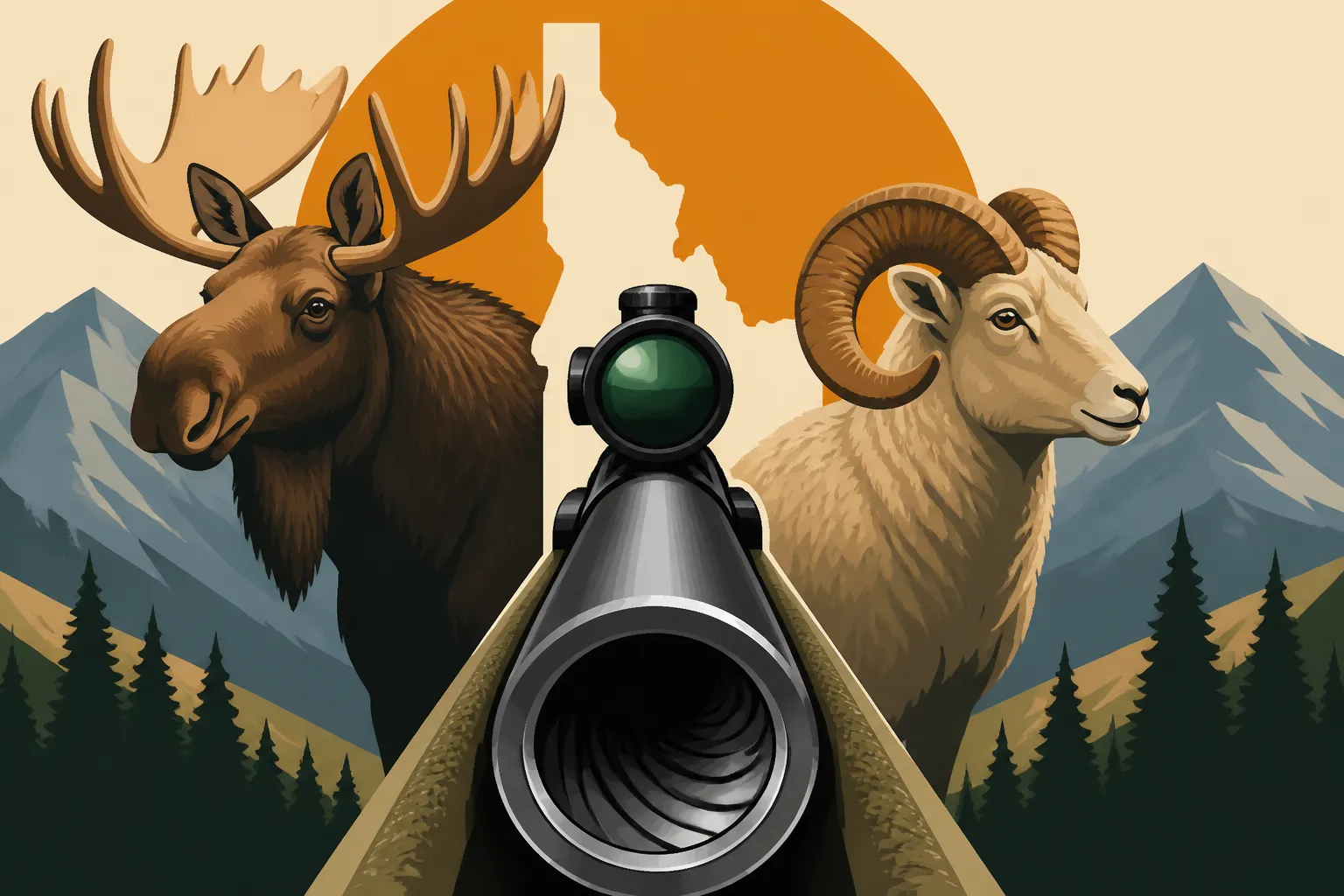
However, when you start looking at species like moose and bighorn sheep, the bar is raised even higher. Idaho's regulations typically specify a minimum of a .270 caliber for both moose and bighorn sheep. This immediately rules out many popular deer cartridges and even some lighter elk calibers, prompting hunters to consider heavier hitting options. The reason for this jump isn't just about size; it's about the unique combination of bone structure, muscle density, and tenacity that these magnificent animals possess. Understanding Why Idaho Splits Muzzleloader Caliber by Species helps illustrate the state's careful approach to matching weapon to quarry.
The Intent Behind the Regulations
At its core, the intent behind these regulations is to promote ethical hunting and reduce the likelihood of wounding an animal without recovering it. There’s nothing more gut-wrenching than a long, difficult track that ends in failure, leaving an animal to suffer. By requiring a larger bore, Idaho aims to ensure that bullets carry sufficient kinetic energy and have the necessary mass and construction to penetrate deeply, expand reliably, and damage vital organs effectively.
This becomes especially critical when considering animals like moose and sheep. A moose, for example, is a massive animal, often weighing well over a thousand pounds. Its dense muscle and heavy bone structure require a bullet that can punch through substantial tissue to reach the heart and lungs. Similarly, bighorn sheep, while not as heavy as moose, are incredibly tough, agile animals with a surprisingly dense skeletal structure, particularly around the shoulder and rib cage. A shot that might be quickly fatal to a whitetail deer might simply injure or merely slow down a bighorn ram, leading to a prolonged chase or an unrecovered animal. The regulations are a proactive measure, setting a baseline to ensure hunters are equipped to handle the unique challenges these species present.
The Biological Realities of Moose and Bighorn Sheep
Hunting these specific animals isn't just about finding them; it's about understanding their incredible resilience and physical makeup. Both moose and bighorn sheep have evolved to survive in some of Idaho's most demanding environments, and their biology reflects that toughness. This is why a larger bore is not just a suggestion but a requirement.
Dense Bone and Muscle Structure
Imagine the sheer scale of a bull moose compared to an average mule deer. A mature bull moose can stand over six feet at the shoulder and weigh upwards of 1,200 pounds, sometimes even more. Their bodies are packed with incredibly dense muscle, particularly in the shoulders and chest, which act like a protective shield. Beneath that muscle, their bones are robust and thick, built to withstand incredible forces in their natural habitat. A bullet from a smaller caliber might simply shed too much energy trying to punch through this outer armor before it even reaches the vital organs. It's not just the amount of tissue, but the density and toughness of it that demands more.
Bighorn sheep, while much smaller, possess a similar, surprising density. Their skulls are legendary for their thickness and resilience, but their entire skeletal structure is compact and robust, designed for navigating steep, rocky terrain. Their muscle tissue is incredibly lean and sinewy. When a bullet hits the shoulder of a bighorn, it's not encountering soft tissue. It's often hitting dense bone and muscle that can deform or deflect lighter, faster bullets that lack the mass and construction for deep penetration. Many hunters familiar with these animals will confirm that they are disproportionately tough for their size, capable of soaking up significant impact and still covering ground. The ability to pack an elk out of steep country alone gives you an appreciation for the challenges of retrieval, and a wounded bighorn in similar terrain is an even more daunting prospect.
Critical Organ Protection
Another crucial aspect is how well-protected their vital organs are. In both moose and bighorn sheep, the heart and lungs are situated deep within the chest cavity, often shielded by heavy bone (ribs, shoulder blades) and thick muscle. For a bullet to effectively reach these life-sustaining organs and cause rapid, irreversible damage, it needs to maintain its integrity, penetrate deeply, and expand sufficiently once it's inside the animal.
A bullet from an undersized caliber, even if perfectly placed, might lack the necessary momentum and construction to achieve adequate penetration. It could fragment prematurely on the shoulder blade, deflect off a rib, or simply run out of steam before reaching the far lung or heart. This leads to superficial wounds, prolonged suffering, and the high probability of losing the animal. Larger, heavier bullets, often associated with larger bores, are designed to retain more energy and penetrate deeper, increasing the odds of reaching and destroying the vitals, leading to a quicker, more humane dispatch. This consideration is particularly important for species like moose, which can travel incredible distances even with a mortal wound if the initial impact isn't devastating enough.
Ethical Hunting and Bullet Performance
The regulations aren't just about raw power; they're deeply rooted in the principles of ethical hunting, which prioritize a quick, clean kill above all else. This requires understanding how a bullet performs upon impact and what it takes to effectively bring down a large, resilient animal.
Maximizing Energy Transfer and Penetration
A larger bore typically allows for the use of heavier, larger diameter bullets. These bullets, when driven at appropriate velocities, carry significantly more kinetic energy and have a higher sectional density, which aids in penetration. When a bullet strikes an animal, it transfers energy, creates a wound channel, and, ideally, causes a hydrostatic shock that incapacitates the animal quickly. With larger game like moose and bighorn sheep, you need a substantial amount of both energy transfer and penetration to achieve this.
Consider a premium, heavy-for-caliber bullet from a .30-06 Springfield or a .300 Winchester Magnum – common calibers that meet the .270 minimum and are often recommended for moose and sheep. Such a bullet is designed to hold together, punch through dense muscle and bone, and then expand to create a larger wound channel once it's in the vitals. This expansion is critical for destroying tissue and causing massive hemorrhaging. A smaller, lighter bullet might simply blow up on impact with heavy bone, fragmenting superficially and failing to deliver its energy where it truly counts. This is why bullet construction is just as important as caliber, and why cartridges capable of handling robust bullets are preferred. For instance, comparing a Recurve Poundage That Will Kill an Elk to a rifle's kinetic energy really puts the difference into perspective. Resources like GoHunt can be invaluable for researching cartridge and bullet performance for specific species.
Minimizing Wounded Animals and Trailing Challenges
The reality of hunting is that perfect shots don't always happen. Animals move, branches deflect, and human error can occur. When you're hunting tough animals in challenging terrain, the margin for error is significantly reduced. A marginal hit with an undersized caliber dramatically increases the chance of wounding an animal that then disappears into the brush or over a ridgeline, never to be recovered. This is a scenario every hunter dreads.
For instance, hunting a bighorn sheep often means operating in incredibly steep, remote, and unforgiving mountains. A wounded sheep can travel at remarkable speed over impossible terrain, making recovery nearly impossible. Similarly, a wounded moose can vanish into dense timber or deep swamps, creating an arduous and often fruitless tracking job. The larger bore requirement serves as a safety net, increasing the probability that even a slightly less-than-perfect shot might still be fatal or at least sufficiently incapacitating to allow for recovery. It's about maximizing the hunter's ethical responsibility to ensure a clean harvest and minimize the suffering of the animal. This is particularly relevant when you look at Idaho Bighorn Sheep Draw Odds Explained; given the effort and rarity of these tags, ensuring a clean kill is paramount.
Practical Considerations for Shot Placement and Gear
Even with the right caliber, hunting moose and sheep requires diligence in shot placement and careful gear selection. The larger bore is a tool, but it's the hunter's skill and preparation that ultimately make the difference.
Shot Placement for Larger Animals
No matter the caliber, precise shot placement remains the absolute paramount factor in ethical hunting. A .300 Win Mag bullet placed poorly will still wound an animal, albeit with more devastating effect than a smaller caliber. For moose and bighorn sheep, hunters should always aim for the vital areas: the heart-lung zone. This typically means aiming just behind the shoulder, slightly low on the body to penetrate the lungs and potentially the heart.
With moose, their sheer size can sometimes make judging exact vital placement tricky. Their deep bodies mean the vitals are further back and lower than one might intuitively guess. For bighorn sheep, their dense musculature and thick bone structure demand that you hit the exact vitals to ensure a quick kill. A larger bullet offers a slightly more forgiving margin for error in terms of energy transfer and wound channel size, but it is never a substitute for meticulous shot placement. Hunters often spend hours practicing their shots to prepare for these high-stakes opportunities. It's a key part of responsible hunting, and even when considering the Effective Range of a Muzzleloader on Elk, accuracy is always king.
Selecting the Right Ammunition and Rifle
Given Idaho's requirements and the biological realities, choosing the right rifle and ammunition is crucial. For moose and sheep, look for rifles chambered in cartridges that meet or exceed the .270 minimum, but preferably offer more bullet mass and energy. Popular choices often include:
| Species Minimum Caliber | Recommended Calibers | Bullet Type Considerations |
|---|---|---|
| Deer: .22 centerfire | .243, .270, .30-06 | Expanding soft point, polymer tip |
| Elk: .243 (.270 and up preferred) | .270, .30-06, .300 Win Mag | Heavy-for-caliber, bonded, partition |
| Moose: .270 (and up) | .30-06, .300 Win Mag, .338 Win Mag | Premium heavy, controlled expansion |
| Sheep: .270 (and up) | .270, 7mm Rem Mag, .30-06 | Premium controlled expansion |
For moose, cartridges like the .30-06 Springfield with heavy, well-constructed bullets, the .300 Winchester Magnum, or even the .338 Winchester Magnum are highly regarded for their ability to deliver devastating energy and deep penetration. For bighorn sheep, while a .270 Winchester with premium bullets is often considered adequate, many hunters prefer something like a 7mm Remington Magnum or a .30-06 for their added power and flatter trajectory in mountainous terrain. When applying for controlled hunts, like the challenging Idaho Moose Is a Controlled Hunt You Wait Years For or any bighorn sheep tags, you want every advantage.
The key is selecting premium bullet types designed for controlled expansion and deep penetration. Avoid varmint or thin-jacketed bullets. Look for bullets with bonded cores, partitioned designs, or monometal construction, as these are engineered to hold together and perform reliably on heavy game. Brands like Federal Premium Trophy Bonded Tip, Nosler AccuBond or Partition, Barnes TSX/TTSX, or Hornady ELD-X are excellent choices that provide the necessary performance. Before heading out, make sure you know your rifle and ammunition intimately, understanding its capabilities and limitations. Resources like GoHunt can provide detailed ballistics data and member-submitted field reports to help you make informed decisions about your setup.
Ultimately, Idaho's larger bore requirements for moose and bighorn sheep aren't about making hunting harder; they're about upholding the highest standards of ethical hunting. They acknowledge the incredible resilience of these animals and ensure that hunters are equipped with the tools necessary to achieve a quick, humane, and successful harvest. Planning a hunt for these magnificent creatures means not only understanding the regulations but also respecting the animals enough to prepare with the most appropriate gear.
Disclaimer
Please remember that hunting regulations, including caliber requirements, can change. Always consult the most current Idaho Fish and Game regulations or visit their official website before planning any hunt. This article is intended for informational purposes only and should not be considered legal advice.