Mule Deer Across Idaho’s High Desert and Breaks
Hunting mule deer in Idaho is a dream for so many, but the reality of glassing vast, intimidating landscapes—from the seemingly endless high desert sagebrush to the sheer, timbered breaks of deep canyons—can feel utterly overwhelming. You scout for hours, your eyes ache, and sometimes it feels like you're searching for a needle in a haystack. This comprehensive guide is here to break down the complexities of finding and pursuing mule deer in Idaho's diverse and often challenging high desert and canyon country, giving you the practical strategies you need to fill your tag.
Understanding Idaho's Mule Deer Habitat
Idaho's mule deer are creatures of incredible adaptability, thriving in a range of environments from arid sagebrush flats to high-elevation mountain slopes. When we talk about the "high desert and breaks," we're really encompassing a huge variety of terrain where these magnificent animals call home. It’s critical to understand these specific habitats because a buck's behavior, movement, and even diet are heavily influenced by the ground he walks on. Knowing where to look isn't just about reading a map; it's about understanding the land from a mule deer's perspective.
High Desert Basins and Sagebrush Steppe
Imagine miles upon miles of undulating sagebrush, punctuated by basalt outcroppings, dry washes, and the occasional juniper tree. This is the classic Idaho high desert. For mule deer, these expansive basins aren't just empty spaces; they are prime foraging grounds, especially during certain times of the year. The sagebrush itself, along with bitterbrush, rabbitbrush, and various forbs, provides critical browse that sustains deer through much of the year, particularly in winter when other forage is buried under snow.
Water sources, often scarce and seasonal in the high desert, become absolute magnets for deer. Identifying these limited water points—be it a spring, a guzzler, or a stock tank—can narrow down your search immensely. Deer will often bed in the taller, denser sage, using its scent and visual obstruction for cover. They might also gravitate towards the shade and security offered by rock formations or the sporadic timber patches found along drainages. Understanding the historical ranges and how modern agriculture has pushed deer into certain areas can also be a game-changer. Sometimes, the edge where agricultural fields meet the wild sage can be incredibly productive, offering both food and cover.
Rugged Breaks and Canyon Country
Beyond the rolling sage, the landscape can suddenly plummet into dramatic canyons, revealing what hunters often refer to as "the breaks." These are the steep, often timbered, or rocky slopes that transition from the flatlands into river or creek bottoms. For mule deer, these breaks offer an entirely different set of advantages. The steepness provides incredible escape cover, making it difficult for predators (and hunters!) to approach unseen. A buck can simply melt over a ridge or into a deep draw, vanishing in seconds.
The varied topography of breaks also creates diverse microclimates. North-facing slopes often retain more moisture, leading to lusher vegetation and denser pockets of timber, which offer both thermal cover in extreme temperatures and security cover from prying eyes. South-facing slopes, conversely, warm up faster in the morning, making them attractive bedding sites for deer seeking to soak up the sun. During harsh winters, these lower, south-facing slopes can also be crucial winter range, providing access to forage when higher elevations are inaccessible. The broken terrain is naturally conducive to holding deer, as it offers endless nooks and crannies for bedding, feeding, and escaping.
The Role of Migration Corridors
Mule deer are highly migratory in many parts of Idaho, particularly those that summer at higher elevations and move to lower winter ranges. These seasonal movements are not random; deer utilize established migration corridors—pathways passed down through generations—that connect summer and winter habitats. Understanding these routes is paramount for intercepting deer during the shoulder seasons. These corridors often follow river drainages, mountain passes, or specific topographical features that provide the easiest travel or necessary forage along the way.
Pinch points within these corridors, such as narrow valleys, saddles, or areas where natural barriers funnel deer into a predictable path, can be incredibly productive hunting spots. However, human development, fencing, and even habitat changes can impact these ancient paths. Utilizing modern mapping tools, like those found on GoHunt, allows you to visualize and analyze these critical corridors, helping you understand where deer might be moving and why. Protecting these corridors is also vital for the long-term health of Idaho's mule deer populations, ensuring they can access the seasonal resources they need to thrive. If you're looking to delve deeper into these crucial pathways, you'll find a wealth of information in our guide on Mule Deer Migration Corridors Worth Knowing.
Mule Deer Behavior and Biology Specific to Idaho
To consistently find mule deer in Idaho's vast and varied landscapes, it's not enough to just know where they might be; you need to understand why they are there and what they are doing. Their behavior is largely dictated by the annual cycle of seasons, their biological imperatives like breeding, and their inherent social structures. Ignoring these foundational elements is like trying to solve a puzzle with half the pieces missing.
The Annual Cycle and Seasonal Patterns
Mule deer in Idaho go through a distinct annual cycle, each phase presenting unique challenges and opportunities for hunters. In spring, as the snow melts and new growth emerges, deer move from their often crowded winter ranges to higher, more dispersed summer grounds. This "green-up" period is when bucks begin to rebuild their bodies after the lean winter, and does focus on birthing and raising fawns. During the summer, bucks will often seek high-elevation alpine basins or dense timber pockets, growing their antlers and putting on fat. They are typically found in bachelor groups, focused on feeding and staying hidden.
As fall approaches and temperatures drop, deer begin their gradual migration back towards winter ranges. This is often when hunting seasons open, and deer are transitioning from their summer haunts. The shift in seasons triggers changes in their feeding patterns and movements. The crucial period for hunters typically aligns with the rut, but understanding the pre-rut build-up and post-rut recovery is just as important. In winter, deer concentrate on lower, more protected slopes, conserving energy and trying to survive until spring. Knowing these patterns helps you predict where deer will be, not just on a given day, but across the entire hunting season.
Rut Timing and Breeding Behavior
The mule deer rut is, for many, the pinnacle of deer hunting. It's when mature bucks, normally reclusive, become far more visible and vulnerable as they throw caution to the wind in pursuit of does. In Idaho, the timing of the rut can vary slightly depending on elevation, latitude, and local weather patterns, but generally, it kicks off in late October, peaks through much of November, and can extend into early December. The pre-rut phase, where bucks are actively scraping and sparring, is a build-up to the main event, often seeing increased buck activity as they establish dominance hierarchies.
During the peak rut, bucks will relentlessly chase does, often oblivious to their surroundings. This is a period of high energy expenditure for bucks, making them susceptible to exhaustion and hunger. They'll follow estrous does for days, pushing them, grunting, and fighting off rivals. Understanding When the Mule Deer Rut Actually Starts in your specific hunting unit can give you a significant edge, allowing you to time your hunt for maximum opportunity. Post-rut, bucks are often exhausted and depleted, seeking heavy cover to recover. Knowing these nuances can help you capitalize on prime activity or adjust your tactics when the primary chase is over.
Social Structures and Bachelor Groups
Mule deer aren't solitary animals all year round, but their social dynamics shift dramatically with the seasons. During spring and summer, especially in the high country, mature bucks typically form "bachelor groups." These groups can range from two or three bucks to a dozen or more, often consisting of similarly-aged animals. They feed, bed, and travel together, forming a sense of collective security. Finding one buck in a bachelor group often means there are other bucks nearby, sometimes a real monster hiding among them.
Doe groups, on the other hand, are typically family units, consisting of a mature doe, her fawns from the current year, and sometimes yearlings from previous seasons. These groups are often larger and more widespread. As the rut approaches, these social structures begin to break down. Bachelor groups dissolve, and bucks become more solitary, either aggressively seeking out does or holding tight to a small territory. Older, more experienced bucks may be the first to break from bachelor groups, establishing their dominance. Understanding these changing social patterns is crucial for targeting mature bucks, as their habits shift from communal feeding to solitary, rut-driven pursuits.
Scouting Strategies for Idaho Mule Deer
The vastness of Idaho can be daunting, and simply showing up on opening morning without a plan is a recipe for frustration. Successful mule deer hunting, especially in the high desert and breaks, starts long before you ever set foot in the field. Effective scouting, blending modern technology with traditional boots-on-the-ground recon, is the bedrock of consistent success. It’s about more than just finding a deer; it’s about understanding the land and anticipating deer movement.
E-Scouting Before You Go
In this modern age, technology has revolutionized the way we prepare for a hunt. E-scouting, or electronic scouting, allows you to "walk" the terrain from your living room, saving valuable time and effort. Tools like GoHunt provide invaluable layers, including public/private land boundaries, topographical maps, satellite imagery, and even historical burn data or recent timber cuts. These features can help you identify potential bedding areas, water sources, natural funnels, and escape routes without burning gas or boot leather.
Start by identifying areas with a high percentage of public land and then zoom in on features that would attract deer: north-facing slopes with dark timber for bedding, south-facing slopes for morning sun, saddles between drainages, and isolated water sources. Look for transition zones where different habitat types meet, as these are often highly productive. You can mark waypoints for potential glassing knobs, access points, and areas of interest. This initial phase of e-scouting is crucial for narrowing down vast units into manageable sections and for creating a preliminary plan of attack. For a deeper dive, check out our guide on E-Scouting an Idaho Unit Before the Season.
Boots-on-the-Ground Reconnaissance
While e-scouting is a powerful starting point, nothing replaces the intimate knowledge gained from actual boots-on-the-ground reconnaissance. This is where you validate your e-scouting theories and discover the subtle nuances that satellite imagery can't show. Walk potential access routes, noting any unexpected fences, dense brush, or difficult terrain. Look for fresh sign: tracks, droppings, rubs on sagebrush or small trees, and active deer trails. The freshness of the sign tells you how recently deer have been in the area.
Pay close attention to water sources. Are they perennial or seasonal? Is there fresh mud around them, indicating recent use? Assess bedding areas—are there depressions in the dirt, or matted-down vegetation? How does the wind typically blow through these spots? Understanding historical pressure in an area is also vital. Areas with easy access tend to get hammered, so look for those hidden pockets that require a bit more effort to reach. Finding these out-of-the-way places usually requires physically being there, smelling the sage, feeling the wind, and seeing the terrain in person.
Best Time of Day to Glass for Bucks
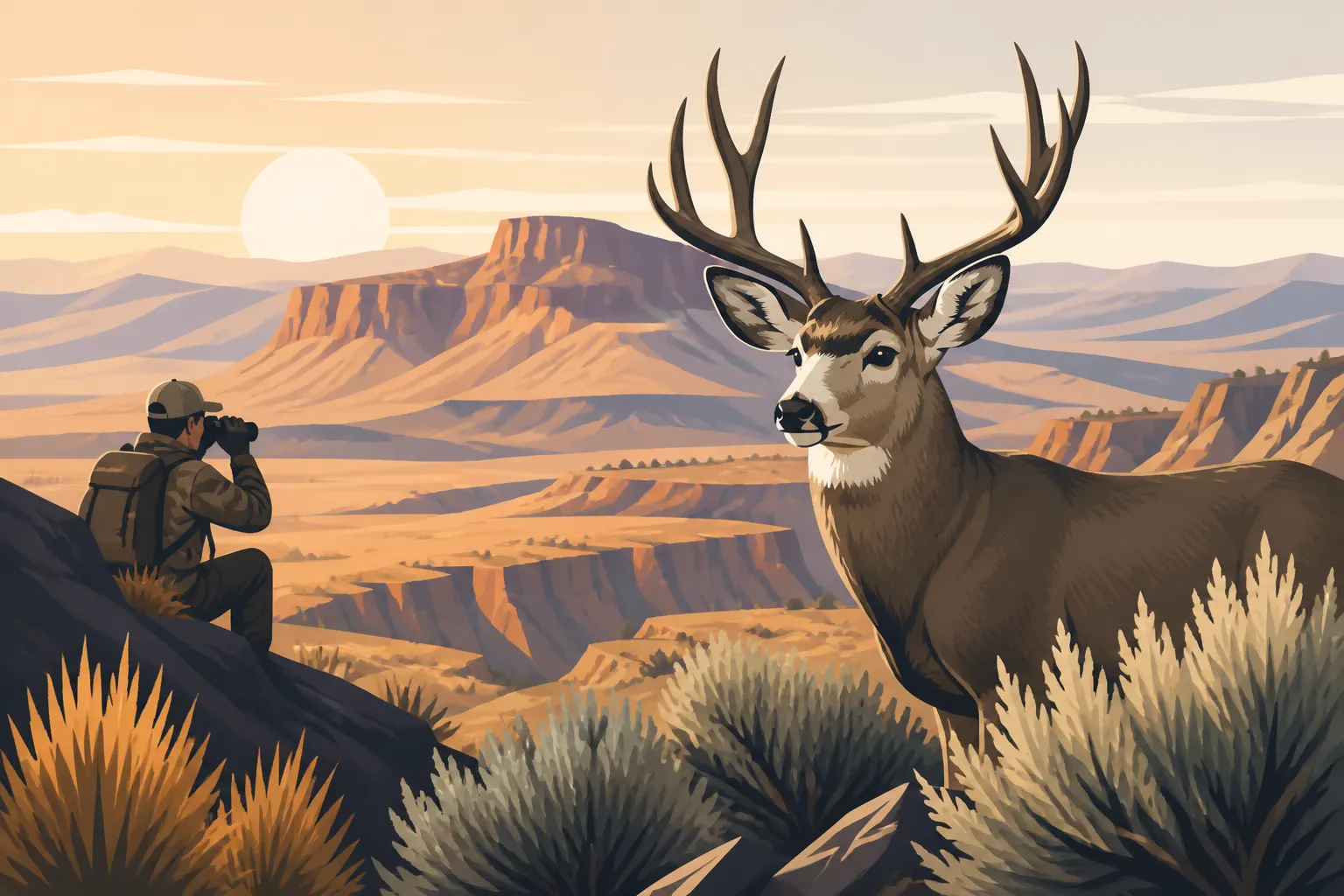
For many mule deer hunters in the breaks and high desert, glassing is the primary method of locating animals. Knowing when to glass is almost as important as where. Mule deer, especially mature bucks, are most active during the low-light hours of dawn and dusk. This is when they move from their bedding areas to feed and water, making them more visible. As the sun rises higher, they typically move to bed down in shady, secure locations, often high on a ridge or tucked into a deep canyon.
Therefore, the best times to glass are the first few hours after sunrise and the last few hours before sunset. Set up on a vantage point before first light, allowing your eyes to adjust, and systematically pick apart the landscape as the sun begins to illuminate the terrain. In the evening, reverse the process, focusing on feeding areas and routes to water. During the middle of the day, shift your focus to potential bedding areas—thick timber, north-facing slopes, or shadowed rock formations. Understanding the thermals, or localized wind currents, also plays a huge role. Mornings typically see thermals rising, while evenings see them falling. This affects how deer move and where they bed to take advantage of the wind for scenting danger. Our guide on Best Time of Day to Glass Mule Deer offers more detailed insights into optimizing your glassing sessions.
Effective Hunting Tactics for Idaho's Diverse Terrain
Once you’ve put in the legwork with scouting and have a solid understanding of mule deer behavior, the next step is applying effective hunting tactics tailored to Idaho's varied high desert and canyon country. This isn't a one-size-fits-all approach; different terrains demand different strategies. Whether you're peering through a spotting scope across a vast basin or quietly slipping through a timbered draw, adapting your method is key to success.
Glassing Vast Landscapes
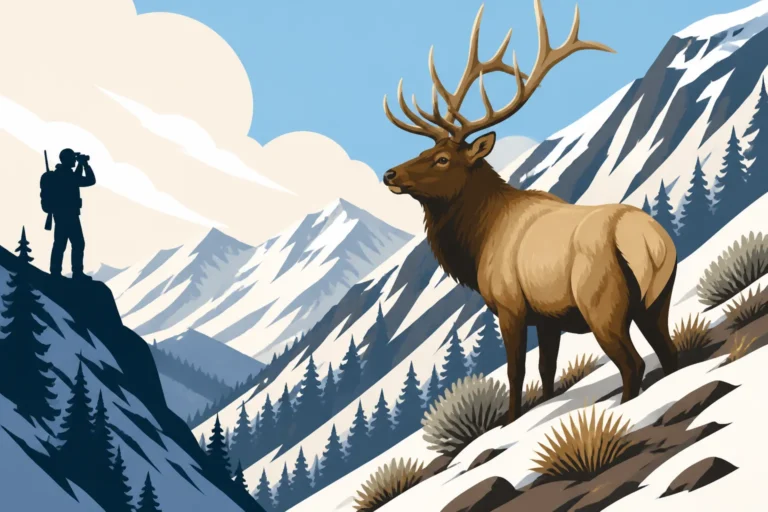
Glassing is arguably the most crucial skill for hunting mule deer in Idaho's open country. It’s not just looking; it’s methodical searching. To start, find a high vantage point that offers expansive views of potential deer habitat. This might be a prominent ridge, a knob, or even a steep sidehill bench. Set up your spotting scope and binoculars on a sturdy tripod—this is non-negotiable for minimizing fatigue and maximizing stability.
The "grid glassing method" is incredibly effective. Divide the landscape in front of you into imaginary squares, then systematically scan each square, working from near to far, side to side, or top to bottom. Don't just look for an entire deer; look for pieces: an antler tip, the horizontal line of a deer's back against vertical sage, a patch of hide, or even a subtle flick of an ear. Take your time. Spend at least 15-20 minutes on each "grid" before moving on. What looks like a rock at first glance might reveal itself to be a bedded buck after prolonged observation. Patience is paramount here, as deer often blend seamlessly into their surroundings. For more on this, check out our detailed guide on Grid Glassing a Basin Without Missing Bucks. When selecting your optics, consider the vastness of Idaho. Our piece on Optics Power for Idaho's Long Canyon Sightlines provides excellent guidance on choosing the right gear for these expansive views.
Spot and Stalk in Open Country
Once you've located a buck through your glass, the real work begins: the spot and stalk. This tactic requires careful planning, stealth, and a keen understanding of wind, terrain, and deer behavior. The goal is to close the distance to within shooting range without being detected. First, thoroughly evaluate the situation: where is the buck bedded? What is the wind doing, and what is its predicted direction? Are there any natural features—ridges, draws, rock formations, or dense sage—that can provide cover for your approach?
The wind is your absolute top priority. Always keep it in your face or quartering. A mule deer's nose is their primary defense, and if they smell you, the game is over. Plan your route to utilize every piece of cover, moving slowly and deliberately. Avoid skylining yourself on ridges. If the buck is bedded, pay close attention to his posture and any movements. He might stand up, feed a bit, and re-bed. Use these moments of distraction to advance. If the buck is feeding, you might have more leeway, but be prepared for him to lift his head and scan. Sometimes, patience means waiting hours for the deer to move into a more favorable position for a stalk. For practical advice on closing the distance, our guide on How Far to Stalk a Bedded Mule Deer is a must-read.
Still Hunting Breaks and Timber Edges
While glassing and stalking dominate open country, the timbered breaks and patchy cover demand a different, more deliberate approach: still hunting. This tactic involves moving incredibly slowly and deliberately through cover, pausing frequently to observe, listen, and scan for deer that might be bedded or slowly moving through the shadows. The key here is not to spook deer, but to spot them before they spot you.
Focus on terrain features like finger ridges, benches, and the edges where timber meets open sage. These are natural travel corridors and bedding areas. Take two or three slow steps, then pause for several minutes, scanning every shadow, every cluster of trees, and every patch of brush. Use your binoculars constantly, even in dense cover, to pick apart the details. Look for horizontal lines, contrasting colors, or the tell-tale shape of an antler. Pay close attention to the wind, using it to your advantage, just as you would in a spot and stalk. Reading sign on the move—fresh tracks, droppings, or disturbed vegetation—can tell you if deer are in the immediate vicinity. Still hunting requires immense patience and discipline, but it can be incredibly effective for surprising a bedded buck in the tight confines of Idaho's timbered breaks. Our article on Still Hunting Timber for Bedded Mule Deer offers more specific techniques for this challenging environment.
Gear Considerations for Idaho Mule Deer Hunting
Idaho’s high desert and breaks present a demanding environment, and your gear needs to be up to the task. The right equipment can make the difference between a successful, comfortable hunt and a miserable, unproductive one. From your optics that let you scan miles of country to the rifle that makes the shot, every piece plays a vital role. Don's skimp on quality; invest in gear that will perform when it truly matters.
Optics: Binoculars, Spotting Scopes, and Tripods
When hunting mule deer in vast, open landscapes, your optics are your most important tools, second only to your rifle. High-quality binoculars (10×42 or 12×50 are popular choices) are essential for general glassing and finding deer. They offer a wide field of view and are quick to deploy. A good spotting scope (20-60x or 20-70x) is critical for evaluating bucks at extreme distances, determining if they're a shooter, and aiding in the planning of your stalk. You can't put a stalk on a buck if you're not sure he's the one you want to pursue.
Both your binoculars and spotting scope should be mounted on a sturdy tripod. Hand-holding optics for hours will lead to fatigue and an unstable image, causing you to miss subtle details. A carbon fiber tripod is a great investment for its light weight and rigidity. Consider a fluid head for smooth panning across vast landscapes. The ability to lock down your optics and systematically scan without wobble is crucial. Think of your optics system as an extension of your eyes; investing in the best you can afford will significantly increase your odds of locating deer. For insights into selecting the right glass for those long days, refer to Binocular Size That Survives an All-Day Session.
Footwear and Clothing for Variable Weather
Idaho weather, particularly in the high desert and mountains, can be notoriously unpredictable, swinging from warm sunshine to freezing winds and even snow in a single day. Your clothing system needs to be versatile, allowing you to adapt quickly. A layering system is non-negotiable. Start with a moisture-wicking base layer, add insulating mid-layers (fleece or puffy jackets), and top it off with a waterproof and windproof outer shell. This allows you to add or shed layers as conditions change, regulating your body temperature and preventing dangerous swings between sweating and chilling.
Footwear is equally critical. You'll be covering miles over uneven, often steep, and rocky terrain. Sturdy, well-broken-in boots with excellent ankle support and aggressive traction are paramount. Waterproof boots are a must, as you might encounter wet grass, stream crossings, or unexpected snow. Some hunters prefer stiffer mountain boots for aggressive side-hilling and carrying heavy loads, while others opt for slightly lighter, more flexible hiking boots. The most important thing is that they fit well and are comfortable for extended periods of walking over rugged ground.
Rifles and Ammunition for Long-Range Shots
Mule deer hunting in Idaho’s high desert and breaks often presents opportunities for longer shots. While ethical hunters always strive for the closest, most ideal shot, the open nature of the country means you need a rifle and ammunition combination capable of accuracy at extended ranges. Popular calibers range from .270 Win, 6.5 Creedmoor, and .308 Win, up to .300 Win Mag and 7mm Rem Mag. The key is knowing your rifle’s capabilities and your own limitations.
Accuracy is king, so a rifle that consistently shoots sub-MOA groups with your chosen hunting ammunition is ideal. Pair this with quality, high-BC (ballistic coefficient) bullets designed for controlled expansion and deep penetration, such as those from Federal Premium or Hornady. Practicing shooting from various field positions—prone, kneeling, using a bipod or shooting sticks—is crucial. Understanding your rifle's ballistic performance at different ranges and under varying wind conditions is paramount. You need to know your exact holdovers or dial settings. Our article on Rifle Zero Distance for Canyon Country Shooting offers vital information on preparing your firearm for these challenging environments.
| Gear Category | Essential Items | Key Considerations |
|---|---|---|
| Optics | Binoculars (10x-12x), Spotting Scope (20-70x), Tripod, Bino Harness | High-quality glass for clarity, durability, and low-light performance. Tripod is non-negotiable for stability. Bino harness keeps optics accessible and protected. |
| Footwear | Sturdy, Waterproof Hunting Boots | Excellent ankle support, aggressive traction, comfortable for long miles over rugged terrain. Well-broken-in before the hunt. |
| Clothing | Layering System (Base, Mid, Outer layers), Rain Gear | Versatile system for varying weather: moisture-wicking base, insulating mid-layers, waterproof/windproof outer shell. Avoid cotton. |
| Navigation | GPS Device or Phone App (e.g., GoHunt), Paper Map, Compass | Reliable GPS with public/private land layers. Always carry a physical map and compass as a backup, and know how to use them. |
| Rifle & Ammo | Accurate Hunting Rifle, Quality Ammunition | Caliber appropriate for mule deer, proven accuracy with chosen hunting bullet. Practice shooting from field positions at various distances. Know your ballistics. |
| Backpack | Daypack or Multi-Day Pack | Sufficient capacity for water, food, extra layers, first-aid, game bags, and a spotting scope. Comfortable and capable of carrying weight. |
| Essentials | Water/Filter, First-Aid Kit, Knife, Headlamp, Fire Starter, Game Bags | Always carry enough water or a way to filter it. Be prepared for emergencies. Game bags are crucial for meat care. |
Navigating Idaho's Regulations and Public Access
Hunting Idaho's mule deer involves more than just finding the animals; it requires a thorough understanding of the state's hunting regulations and how to navigate its complex landscape of public and private land. Ignoring these details can lead to fines, lost tags, or worse. Being a responsible and informed hunter is paramount to ensuring a smooth and successful experience.
Understanding Game Management Units and Tags
Idaho is divided into numerous Game Management Units (GMUs), each with its own specific regulations, season dates, and tag allocations. For mule deer, Idaho utilizes both general season tags and controlled hunt tags. General season tags are typically purchased over the counter and allow hunting in specific, usually broad, areas during set dates. Controlled hunts, on the other hand, are limited entry and require an application process, often with significantly better success odds due to lower hunter numbers and specific unit allocations.
Applying for controlled hunts means you're entering a draw, and Idaho operates without a preference point system, meaning every applicant, regardless of past success, theoretically has equal odds each year. This makes Idaho appealing to first-time applicants but also means drawing a coveted tag can take several years of trying. It's crucial to consult the annual Idaho Fish and Game hunting regulations booklet to understand the specific rules for your chosen GMU, including legal shooting hours, antler point restrictions, and weapon types allowed. Studying past harvest statistics reports for various units, available through the Idaho Fish and Game website, can also provide insight into buck quality and hunter success rates in different areas, helping you make informed decisions about where to apply or hunt. Learning how to effectively interpret these can be found in our detailed guide on Reading an Idaho Harvest Statistics Report.
Public Land Access and Motorized Rules
A significant portion of Idaho is public land, managed by agencies like the Bureau of Land Management (BLM) and the U.S. Forest Service (USFS), offering vast opportunities for mule deer hunting. However, understanding access rules is critical. BLM and National Forest lands are generally open to hunting, but specific travel management plans dictate where motorized vehicles are permitted. Most national forests and BLM areas enforce "Motorized Hunting Rules" that restrict driving to established roads and trails, especially during big game seasons.
This means you cannot drive off-road to retrieve game, and you need to be acutely aware of designated motorized routes versus areas closed to vehicles. Maps specifically detailing these motorized restrictions are usually available from the managing agencies or on digital mapping platforms like GoHunt. Respecting these rules is not only about legality but also about maintaining the integrity of the land and ensuring quality hunting experiences for everyone. The Idaho Fish and Game's Motorized Hunting Rule typically runs from August into December, covering the primary big game seasons, and it's something every hunter needs to be familiar with. You can find more comprehensive details on this rule in our guide on Idaho's Motorized Hunting Rule Keeps You on the Road. Additionally, programs like "Access Yes!" open up private lands to public hunting through agreements with landowners, providing even more opportunities, but always verify the rules specific to each parcel.
Field Care and Trophy Requirements
After successfully harvesting a mule deer, proper field care is essential to ensure the meat is handled ethically and legally. The first step is to immediately tag your animal with your valid tag, ensuring it's attached to the carcass as specified by Idaho Fish and Game regulations. Beyond that, prompt field dressing is crucial to cool the carcass down, especially in warmer conditions, to prevent spoilage. This means removing the entrails as quickly and cleanly as possible.
Idaho regulations often require "evidence of sex" to remain naturally attached to the carcass until it reaches its final place of storage or processing. For bucks, this typically means keeping the head or antlers attached, or a specific portion of the hide with genitalia if the head is removed. Transporting the carcass legally also involves specific rules. Often, meat must be transported in a way that prevents spoilage, typically in game bags, and evidence of sex or species identification must be retained. Knowing how to quickly and accurately field judge a mule deer buck for age and antler size can also be beneficial, especially if hunting in areas with specific antler point restrictions. For practical tips on this, refer to Field Judging a Mule Deer Buck Quickly. Always double-check the current year's regulations for any updates on tagging, evidence of sex, and transport requirements.
Disclaimer
Please remember that hunting regulations, season dates, and access rules can change frequently. While I strive to provide accurate and up-to-date information, it is the individual hunter's responsibility to consult the current Idaho Fish and Game regulations, secure all necessary licenses and tags, and understand local land access rules before heading into the field. This guide is for informational purposes only and should not be considered a substitute for official state publications.