Idaho Wolf Season Dates by Unit
Trying to nail down the exact wolf season dates for your upcoming Idaho hunt can feel like an exercise in frustration. It's not as simple as a statewide opener and closer; instead, you're faced with a patchwork of regulations that change not just by species, but by specific Game Management Unit (GMU) and even land ownership. This guide is here to untangle that complexity, helping you understand how Idaho Fish and Game structures these seasons, where to find the most accurate information, and what to consider when planning your wolf hunt.
Understanding Idaho's Wolf Management Strategy
Idaho's approach to wolf management is nuanced, balancing predator populations with big game herds, livestock interests, and hunter opportunity. It's a dynamic system, meaning what's true this year might shift next year based on biological data, public input, and management goals. The complexities reflect the diverse landscapes and competing values across the state.
The Unit-Specific Approach to Wolf Seasons
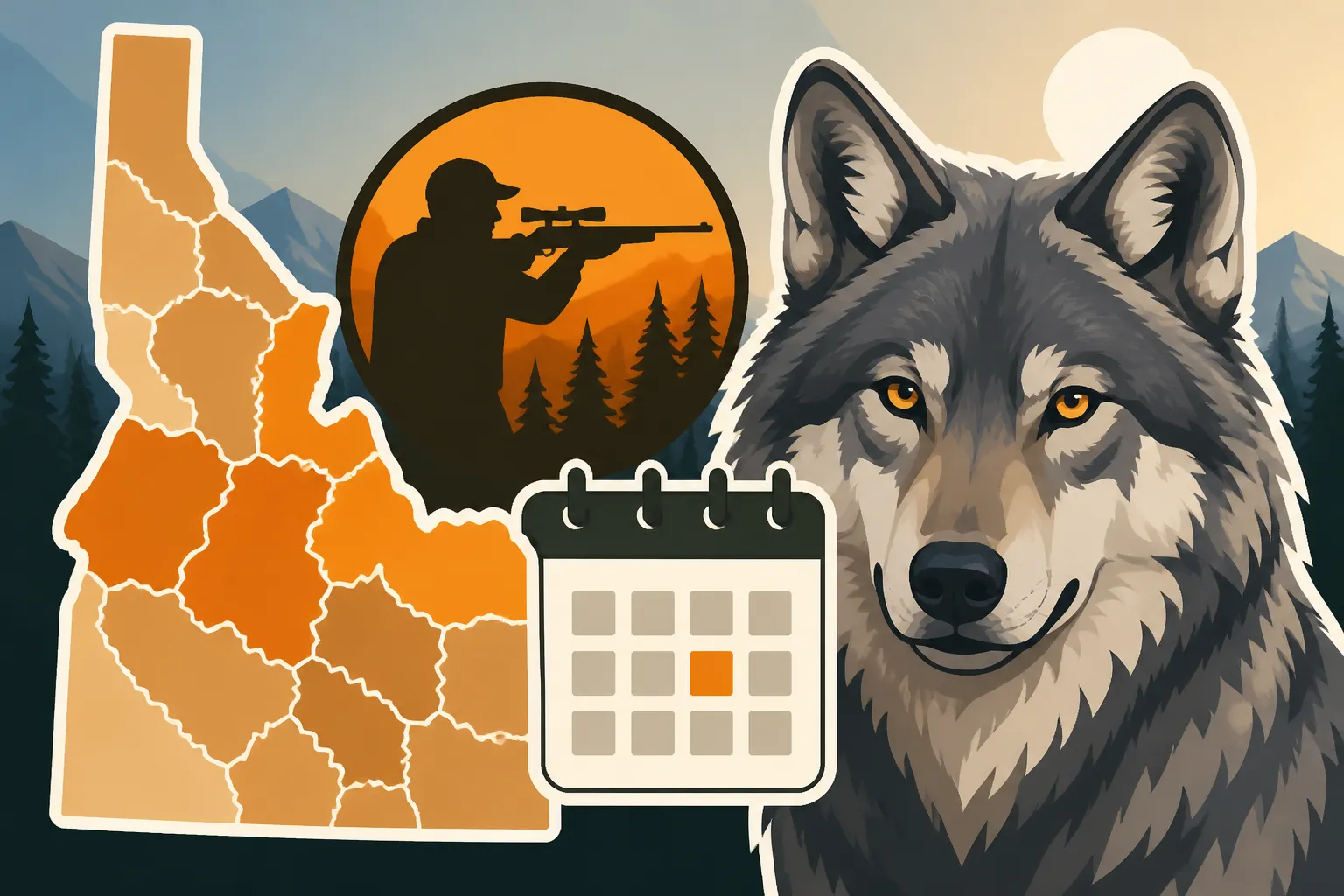
Unlike some other species with broader regional seasons, wolf hunting and trapping seasons in Idaho are meticulously tailored to individual Game Management Units (GMUs). Imagine trying to track the weather across a mountain range; one valley might be clear while the next is blanketed in snow. That's a bit like Idaho's wolf units. Each of Idaho's 99 Game Management Units has its own specific set of rules. This unit-by-unit management allows Idaho Fish and Game to respond directly to local conditions, such as:
- Elk and Deer Population Health: If a particular GMU has declining elk or mule deer populations, wolf seasons might be extended or harvest limits adjusted to reduce predator pressure. Conversely, if prey numbers are robust, seasons might be more conservative. You can really see the focus on managing prey species when you consider aspects like Idaho Wolf Management and Harvest Limits, which directly impacts how many wolves can be taken in a given area.
- Wolf Population Density: Units with higher wolf densities generally have longer and more liberal seasons to help manage their numbers effectively.
- Proximity to Livestock: Units with a significant ranching presence often have extended seasons to provide landowners and hunters more tools to mitigate depredation.
This means you absolutely cannot assume that the season dates for Unit 10 will be the same as Unit 39, or even Unit 10A just next door. It requires diligent research for your specific hunting area.
Why Seasons Vary Between Public and Private Land
One of the most significant distinctions you'll encounter when researching Idaho wolf seasons is the difference in regulations between public and private land. This isn't just a minor detail; it can dramatically impact your hunting strategy and opportunities. In many GMUs, Idaho Fish and Game offers extended or even year-round wolf seasons on private land, while public land seasons are more restrictive. This makes a lot of sense when you consider the challenges faced by landowners.
The primary reason for this differentiation boils down to livestock depredation and property rights. Ranchers and private landowners bear the brunt of wolf impacts on their herds, and Idaho's regulations aim to provide them with more flexibility to protect their livestock. This often means that if you have access to private ground, your wolf hunting opportunities could be considerably longer. It's not uncommon to see provisions where Idaho Wolf Seasons Differ on Private Land, allowing for additional harvest opportunities outside the general public land season framework. It's a critical point to remember, because securing private land access, even for wolves, can open up a whole new set of possibilities.
Navigating the Idaho Fish and Game Regulations for Wolf Seasons
Finding the most up-to-date and accurate wolf season dates means going directly to the source: the official Idaho Fish and Game regulations. While other resources can be helpful, the printed or online regulations are the legal authority. Sometimes, wading through these documents can feel like a chore, but it's absolutely essential to avoid misunderstandings that could lead to a citation or, worse, an unethical harvest.
Decoding the Wolf Season Table in the Regulations
When you crack open the Idaho hunting regulations, specifically the sections related to furbearers or predators (wolves are often listed under their own dedicated section now, given their unique management), you'll find a table that outlines the season dates by GMU. This table is your roadmap, but it requires careful reading. Here's what you'll typically encounter:
- Game Management Unit (GMU) Number: This is the first column, listing the numerical identifier for each hunting unit. You need to know which unit you plan to hunt in.
- Open Season Dates: This will show the start and end dates for hunting wolves in that specific unit. Pay close attention, as some units might have different dates for archery-only periods, or specific early/late seasons. You might see "Any Weapon," but for wolves, it's generally open to standard hunting methods, not usually restricted like big game archery or muzzleloader seasons.
- Trapping Season Dates: Many units will also have separate trapping seasons for wolves. These are usually later in the year, often starting in the fall and extending through winter.
- Special Provisions/Notes: Always look for small print or footnotes. These can include:
- Private Land Only: Denotes seasons exclusively for private property.
- Quota Closures: Though less common for general wolf seasons these days, it's always good to be aware that some species or specific areas might close if a certain harvest number is reached. This is similar to how Idaho Mountain Lion Season and Quota Closures work, where monitoring ensures sustainability.
- Specific Restrictions: Any unusual conditions or requirements unique to that unit.
Always, always double-check the current year's regulations. Seasons can and do change year-to-year. What was open last fall might be different this season.
Utilizing Online Tools to Pinpoint Your Unit's Dates
Beyond the physical or PDF regulation book, Idaho Fish and Game offers excellent online resources, and third-party platforms have also become incredibly useful for hunters. These tools can make the process of locating your unit's specific dates much more intuitive.
The Idaho Hunt Planner is your official online portal to this information. You can select your desired species (wolf) and then zoom into specific units on an interactive map. Clicking on a unit will often pull up a summary of general season dates, special regulations, and even harvest statistics for that area. It’s a fantastic resource, and really, A Walkthrough of the Idaho Hunt Planner can show you just how much information is packed in there.
Additionally, online platforms like GoHunt provide exceptional mapping tools and integrated regulations. You can overlay GMU boundaries with public and private land layers, and then, with a simple tap or click, often access the specific wolf season dates for that exact parcel of land you're scouting. GoHunt’s detailed maps allow you to visualize the terrain, access points, and season boundaries simultaneously, making e-scouting an incredibly efficient process. They often update their information rapidly, which can be a huge time-saver. Other apps like onX Hunt offer similar functionality. These resources often consolidate the information from the official regulations into a more user-friendly, interactive format, but it's crucial to remember they are supplemental, not replacements for the official Idaho Fish and Game rules.
Key Factors Influencing Idaho's Wolf Season Dates and Methods
The specific dates you see in the regulations aren't arbitrary. They are the result of careful analysis and a comprehensive management philosophy designed to maintain healthy ecosystems. Understanding these underlying factors can give you a better grasp of why the seasons are structured the way they are.
Population Management and Elk Herd Health
One of the primary drivers behind Idaho's wolf season dates and liberal harvest opportunities is the state's commitment to managing its ungulate populations, particularly elk. Over the past few decades, the relationship between wolves and elk has been a topic of intense study and management effort. High wolf densities in certain areas can lead to increased predation pressure on elk, especially calves, which can impact herd recruitment and overall population numbers.
Idaho Fish and Game continually monitors elk herd health, calf-to-cow ratios, and population trends in each GMU. Where elk numbers are below objective or declining, management actions often include longer wolf hunting and trapping seasons to help alleviate predator impacts. It's a direct effort to ensure that healthy elk populations thrive, providing robust hunting opportunities for sportsmen. Research into How Wolf Predation Affects Elk Calf Survival directly informs these management decisions, highlighting the delicate balance required.
Livestock Depredation and Private Land Concerns
The presence of wolves in Idaho also presents significant challenges for the state's agricultural industry, particularly livestock producers. When wolves prey on cattle, sheep, or other domestic animals, it creates substantial economic losses and emotional distress for ranchers. Idaho Fish and Game, alongside other agencies, works to mitigate these conflicts.
The varied and often extended wolf seasons on private land are a direct response to these concerns. By allowing for more consistent harvest pressure on private property, the state provides landowners with tools to reduce wolf activity near their operations. This is where methods like trapping become particularly relevant, often having specific seasons that coincide with periods of increased depredation risk. Electronic calls, while not always legal for big game, are often permissible for predators like wolves, coyotes, and varmints, providing another tool in the hunter's arsenal, as explored in articles like Electronic Calls for Predators and Varmint Hunting. Additionally, understanding Where Wolf Trapping Is Allowed in Idaho and its specific regulations is crucial for those looking to participate in this form of management. These measures collectively aim to protect livestock while still managing the wolf population sustainably.
Practical Advice for Hunting Idaho Wolves
Once you've deciphered the season dates for your chosen unit, the real work of planning your wolf hunt begins. Success often hinges on thorough preparation, understanding the landscape, and staying adaptive.
The Importance of E-Scouting Your Chosen Unit
Before you even think about lacing up your boots, dedicate significant time to e-scouting your unit. This involves using online mapping tools, satellite imagery, and topographical maps to virtually explore your hunting area. For wolves, you're often looking for areas that combine dense cover with proximity to their primary prey species, like elk or deer, and travel corridors.
Here’s what to focus on during your e-scouting:
- Terrain Analysis: Look for steep, broken country, dense timber, and drainages that offer wolves cover and travel routes. Wolves are masters of using topography to their advantage, so understanding the contours of the land is key.
- Water Sources: Identify perennial water sources. While not as critical for wolves as for big game, they still need water and often travel along drainages.
- Prey Concentration Areas: Overlay your wolf hunting unit with information on local elk and deer wintering grounds, migration routes, and summer range. This is where wolves will be. Tools like GoHunt's layers, or the Idaho Hunt Planner, are indispensable for this. They allow you to switch between public/private land, GMU boundaries, and topographic features with ease. E-Scouting an Idaho Unit Before the Season provides an excellent deep dive into these techniques, showing you how to really leverage technology.
- Access Points and Roads: Determine how you'll get into the unit and where you can legally park. Identify potential glassing points that offer expansive views of likely wolf habitat.
Staying Current with Emergency Closures and Quotas
Idaho's wolf seasons, particularly for trapping, can occasionally be subject to emergency closures or adjustments if harvest quotas are met in specific areas. While hunting seasons tend to be more fixed, it is always wise to remain vigilant. Imagine arriving for a hunt only to discover your unit has closed prematurely—a truly deflating experience!
Therefore, it's critical to regularly check the Idaho Fish and Game website for news releases and emergency orders leading up to and during your hunt. Many units now have specific reporting requirements for harvested wolves (more on that below), and this data helps IDFG track harvest progress in real-time. Platforms like GoHunt often have alerts and updated information, but the official IDFG site remains the ultimate source. Don't rely solely on what you read months in advance; always verify closer to your hunt date.
Reporting Your Harvest and Regulatory Compliance
Successfully harvesting a wolf in Idaho comes with immediate and strict reporting requirements. This isn't just a suggestion; it's mandatory and critical for effective wolf management. Neglecting to report your harvest can result in penalties, so make sure you understand the rules before you head into the field.
Typically, you'll need to:
- Validate Your Tag: Immediately after harvesting a wolf, validate your tag by notching or otherwise marking it as required by law.
- Report the Harvest: Within a specified timeframe (often 24-72 hours, but always check the current regulations), you must report your harvest to Idaho Fish and Game. This can often be done online through their licensing system or by phone. This is precisely what's outlined in detail when discussing Reporting a Harvested Wolf in Idaho.
- Present for Tagging/Inspection: In some cases, or for certain units, you may be required to present the skull and hide to an Idaho Fish and Game regional office or designated personnel for mandatory tagging. This is similar to the requirements for mountain lions, where Idaho Mountain Lion Pelt Tagging Rules ensure proper management and data collection.
These steps are crucial for IDFG to gather essential biological data on wolf populations, monitor harvest levels, and inform future management decisions. Compliance is not only a legal obligation but also a critical part of being a responsible and ethical hunter.
Here’s an example of how wolf hunting seasons might look for a few different, fictionalized Idaho GMUs. Always refer to the current year's official Idaho Fish and Game regulations for precise dates, as these are illustrative and subject to change.
| Game Management Unit (GMU) | General Hunting Season (Public Land) | Private Land Hunting Season | Trapping Season (Public & Private) | Special Notes/Restrictions |
|---|---|---|---|---|
| Unit 1 (Panhandle) | Aug 1 – Mar 31 | Year-round | Nov 15 – Mar 31 | Open to any legal weapon. High wolf density. |
| Unit 12 (Clearwater) | Aug 1 – Mar 31 | Year-round | Nov 15 – Mar 15 | Designated a "Wolf Management Unit." Focus on elk calf recruitment. |
| Unit 39 (Boise River) | Aug 1 – Mar 31 | Year-round | Nov 15 – Feb 28 | Moderate wolf density. Check for specific depredation areas. |
| Unit 43 (Pioneer) | Aug 1 – Mar 31 | Year-round | Dec 1 – Mar 15 | Lower wolf density, highly dispersed. |
| Unit 50 (Lemhi) | Aug 1 – Mar 31 | Year-round | Nov 1 – Mar 31 | Focus on mitigating livestock depredation concerns. |
Disclaimer: Hunting regulations in Idaho are subject to change annually and can sometimes be updated even mid-season. The information provided in this guide is for general informational purposes only and is not a substitute for the official Idaho Fish and Game hunting regulations. Always consult the most current Idaho hunting regulation brochures and the Idaho Fish and Game website before planning or engaging in any hunting activity. It is the hunter's responsibility to know and follow all applicable laws and regulations.