Whether Lighted Nocks Are Legal for Bowhunters
Figuring out the ever-changing rules and regulations for hunting can feel like trying to hit a moving target sometimes, can't it? Especially when it comes to new technologies that aim to make our lives easier, like lighted nocks for bowhunting. It’s easy to get confused about what's legal and what might land you in hot water. This guide is here to cut through the noise, clarify Idaho’s specific stance on lighted nocks for bowhunters, and help you understand how to use them responsibly.
Understanding Idaho's Regulations on Archery Equipment
Navigating the dense thicket of hunting regulations can be a real headache, especially for bowhunters who often face stricter rules when it comes to technology. Many states have different interpretations of what constitutes "fair chase" when electronics are involved, and Idaho is no exception. It’s crucial to understand the foundational principles behind these rules before you even consider adding new gear to your setup.
The Idaho Fish and Game Archery Rulebook
Let's be honest, those regulation booklets, whether physical or digital, can be a bit intimidating. They’re packed with legalese and often don't explicitly mention every single piece of gear available on the market. The Idaho Fish and Game (IDFG) website is always your go-to source for the most current rules, and it’s smart practice to check it annually because things do change. What was perfectly fine last year might have a new caveat this season. These rules are designed not just for safety, but to maintain the integrity of the sport, ensuring that the animal still has a fair chance and that human skill remains paramount. Many experienced hunters, myself included, spend time on resources like the Idaho Hunt Planner Is the Tool to Start With to stay current, which aggregates information and helps make sense of the regulations. It's a fantastic tool that can save you a lot of grief and ensure you're compliant before you ever step foot in the woods.
General Principles of Ethical Archery Hunting
At the heart of all hunting regulations, especially for archery, is the concept of fair chase. This isn't just a dusty old tradition; it’s a commitment to respecting the animal and the challenge of the hunt. Modern technology offers some incredible advantages, but regulations often draw a line where those advantages start to diminish the animal's chance or reduce the skill required of the hunter. For example, you’ll find discussions about mechanical broadheads versus fixed-blade broadheads, and while both are legal, the nuances often lead to spirited debates among archers. If you're curious about other archery tackle, a good read is Fixed Blade Against Mechanical Broadheads on Elk which dives into the performance aspects. The intent behind many regulations is to prevent any device that artificially aids in targeting the animal, making a shot easier than what traditional archery skill would allow. This often means restrictions on certain electronic devices, light projection onto targets, or even specific arrow components that some states deem to give an unfair advantage. It's about preserving the essence of the hunt.
Are Lighted Nocks Legal in Idaho for Bowhunting?
This is the big question many bowhunters ponder, especially as they look for ways to improve recovery rates and learn more from their shots. The answer, thankfully for most, is a resounding yes in Idaho, but understanding why they are legal helps you navigate other equipment choices.
The Definitive Answer: Yes, But With Nuances
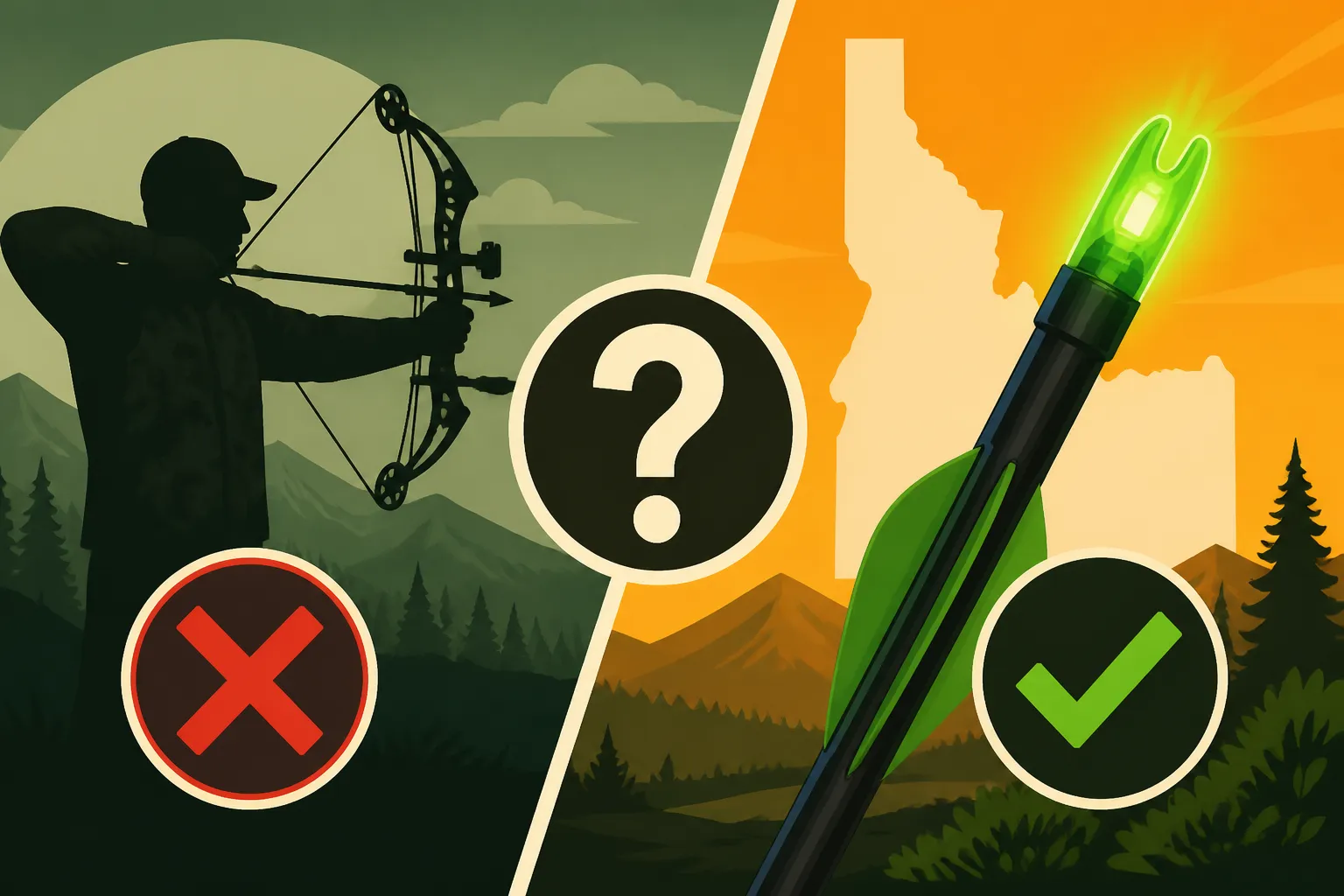
Alright, let's get straight to it: yes, lighted nocks are legal for bowhunting in Idaho. This is a huge relief for many archers who want the benefits these small, illuminated devices offer without breaking any rules. The reason they're allowed comes down to their primary function: they don't aid in the targeting or taking of the animal itself. Instead, they kick on after the shot, making the arrow much easier to track in flight and, critically, locate after it hits the ground or the animal.
Think about it this way: when you release an arrow, your focus is on the target. The lighted nock activates after it leaves the bowstring, becoming a beacon. This makes it incredibly helpful for determining shot placement, especially in low light conditions, and significantly increases your chances of finding a downed animal or recovering a missed arrow. This contrasts with other states that might view any electronic component as an unfair advantage. Idaho's interpretation, however, distinguishes between devices that assist pre-shot accuracy and those that assist post-shot recovery. Similarly, for those curious about other archery enhancements, you might wonder Are Release Aids Allowed for Archery Hunting?, which are also generally legal and widely used to improve consistency and accuracy.
The "Electronic Device" Exception and Why Nocks Differ
Idaho regulations, like many others, generally prohibit electronic devices that project a beam of light onto the target or aid in target acquisition. This is where the distinction for lighted nocks becomes crucial. A laser sight, for instance, would project a dot onto the animal, helping you aim – that's a clear no-go. Similarly, any electronic scope that actively illuminates a reticle or provides a digital aiming point (beyond a simple fiber optic pin or dot) on a bow would likely fall into the prohibited category.
Lighted nocks, however, don’t do any of that. They simply glow or flash away from the animal, at the rear of the arrow. They act as a tracer round, if you will, but one that only becomes active upon release and doesn't provide any aiming assistance. They don't project light onto the animal or its surroundings to illuminate it for a shot. They are a post-shot recovery and tracking aid, pure and simple. This is a vital difference and why they receive a green light from IDFG. If you look at the rules for other weapon types, like muzzleloaders, you'll see how strict the state can be regarding electronics. For example, Why Inline Ignition Fails Muzzleloader-Only Rules highlights the state's intent to keep certain hunts traditional and free from modern electronic advantages. The spirit of these rules is about preventing a technological shortcut to the shot itself.
Practical Benefits of Lighted Nocks in the Field
The advantages of using lighted nocks are hard to overstate, especially for bowhunters. I've heard countless stories, and experienced a few myself, where a lighted nock made all the difference between a quick recovery and a lost arrow, or worse, a lost animal.
Imagine this: you're on an elk hunt, the light is fading fast, and you finally get a shot opportunity at a bull at last light. You release, the arrow flies, and in the dim twilight, you might struggle to see exactly where it hit, or even if it hit at all. With a lighted nock, that small beacon helps you instantly confirm the shot path, where the arrow struck, and its initial trajectory after impact. This information is absolutely priceless for making crucial decisions about tracking. If you see the arrow bury deep and fly true, you know you likely have a quick recovery. If it deflects, or you see it bounce off, it gives you critical data for a more cautious tracking job.
Beyond shot placement, simply finding a missed arrow in tall grass, heavy brush, or dark timber is significantly easier. Without a lighted nock, a carbon arrow can vanish into the foliage, representing a significant financial loss and a potential environmental hazard. With one, you often just follow the glow. It helps reduce property loss and ensures you're not leaving equipment behind in the wilderness. It's a tool that genuinely enhances the ethical hunter's ability to ensure a clean harvest and efficient recovery.
Selecting and Using Lighted Nocks Responsibly
Now that we know lighted nocks are legal and beneficial, let's talk about how to choose the right ones and use them in a way that respects the hunt and the environment. Not all lighted nocks are created equal, and proper selection and maintenance are key.
Choosing the Right Lighted Nock for Your Arrows
The market for lighted nocks has exploded, offering various styles and brands. The main players you'll hear about are brands like Nockturnal, Lumenok, and Clean-Shot Nock Out. Each has its own method of activation and design philosophy.
- String-activated nocks: These are the most common. A small pin or lever is depressed by the bowstring upon release, completing a circuit and turning on the light. They are generally reliable and activate consistently.
- Push-button activated nocks: Some nocks require a small button to be pressed to turn them on. While less common for hunting, they offer control over when the light is active.
- Impact-activated nocks: A few designs use the shock of impact to turn on, which might be useful for target practice but less ideal for immediate shot assessment in hunting.
When choosing, make sure the nock is compatible with your arrow shaft diameter. Most brands offer different sizes to fit common arrow models. I can’t stress enough the importance of testing your chosen nocks before you head into the field. You need to ensure they activate reliably, stay lit for a sufficient amount of time, and, crucially, that they don't change your arrow's flight characteristics. Even a slight weight difference at the back of the arrow can affect your shot, especially at longer distances.
Here's a quick look at common activation types:
| Activation Type | Pros | Cons | Best Use Case |
|---|---|---|---|
| String-Activated | Reliable, automatic activation | Can be accidentally activated if bumped | Most popular for hunting, consistent performance |
| Push-Button | Full control over activation | Requires manual activation, can be fiddly | Target practice, specific low-light scenarios |
| Impact-Activated | No accidental activation before shot | Light activates after impact, not in flight | Less ideal for immediate flight tracking, mostly for target |
Best Practices for Archery Equipment Maintenance
While we're talking about nocks, let's zoom out a bit. Your lighted nocks are only one small part of your overall archery setup, and the performance of your entire system matters for a clean, ethical kill. Regular maintenance of your bow, arrows, and broadheads is non-negotiable.
Always inspect your arrow shafts for cracks, especially after a shot or a missed target. Check your fletching for damage or lifting, as even a small imperfection can cause erratic flight. Broadheads, whether fixed-blade or mechanical, must be razor-sharp. A dull broadhead will lead to poor penetration and potentially a wounded animal. Taking the time to properly tune your bow is also critical to ensure all your components work together harmoniously. If your bow isn't tuned, your arrow flight can be inconsistent, regardless of how good your nocks are. You can find some great information on this by looking up resources like Bow Tuning Worth Doing Before a Mountain Hunt. And don't forget the importance of your arrow's overall weight and kinetic energy, especially for larger game like elk. Getting Arrow Weight That Gets Through an Elk right is paramount for ethical penetration.
Ethical Considerations and Sportsmanship with Technology
The introduction of any new technology into hunting brings with it a responsibility to use it ethically and in the spirit of sportsmanship. Lighted nocks are a great tool for recovery, but they don't excuse a hunter from making a poor shot or attempting a shot beyond their effective range.
Your skill as an archer, developed through consistent practice and a deep understanding of animal anatomy, remains the most important factor. Never rely on a lighted nock to compensate for a lack of practice or a failure to know your true limitations. Idaho's wilderness demands respect, and that respect extends to the animals you pursue. Use the lighted nock to confirm your shot and aid in recovery, not to justify an otherwise risky or unethical shot. Always prioritize a clean kill and efficient recovery above all else. Remember, Realistic Archery Practice Distance for Big Game is often closer than many realize, and knowing How Close a Bowhunter Needs to Get on Elk is key to success.
Common Misconceptions and Clarifications for Idaho Bowhunters
Idaho's regulations can be a bit of a labyrinth sometimes, and common misunderstandings about certain equipment pop up frequently. It's easy to confuse rules across different weapon types or even different states. Let's clear up some of those persistent myths.
Dispelling Myths About Electronic Archery Accessories
One of the biggest areas of confusion revolves around what "electronic" means in the context of archery equipment. Because Idaho permits lighted nocks, some hunters assume all electronic devices are fair game. That's a dangerous assumption.
- Rangefinders: Handheld rangefinders are perfectly legal and widely used by bowhunters to accurately gauge distance before the shot. They don't project light onto the target and only provide information.
- Action Cameras: Mounting a small action camera (like a GoPro) on your bow to film your hunt is generally legal. These devices record, but they don't aid in the actual aiming or taking of game.
- Illuminated Reticles: While many rifle scopes feature illuminated reticles for low-light conditions, these are not permitted on bows if they cast a light onto the target or in any way illuminate the sight picture beyond the reticle itself. The rules for bows are often stricter than for firearms. This is a common point of confusion, especially for hunters who participate in both rifle and archery seasons. For example, Are Scopes Allowed on Muzzleloader-Only Hunts? is a different discussion entirely, highlighting how specific weapon categories have their own distinct rules regarding optics. Always check the archery-specific regulations.
The key takeaway is this: if it projects light outward to the target, or electronically enhances your ability to aim the weapon at the animal, it's probably illegal for archery in Idaho. If it simply aids in tracking, recovery, or recording, it's likely fine.
Staying Up-to-Date on Idaho's Ever-Evolving Regulations
Hunting regulations are not static; they are dynamic documents that can change from year to year based on wildlife management goals, public input, and sometimes, new technologies. What's legal today might have a new restriction next season. It's not enough to just know the rules when you buy your license; you need to stay informed throughout the year.
My best advice here is to make checking the official Idaho Fish and Game website and downloading the current year's regulations a yearly ritual. Sign up for IDFG email newsletters or follow their social media channels for updates. Groups like GoHunt also do an excellent job of distilling complex regulations into understandable summaries and highlighting changes, which can be a real time-saver. Consider their platform as a valuable resource for cross-referencing information and getting insights into specific units and species. It's a proactive approach that ensures you're always hunting legally and ethically. Remember, ignorance of the law is no excuse, especially when you're carrying a weapon in the field. Having a copy of Where the Current Idaho Regulations Are Posted is essential for every hunter.
When in Doubt, Call Idaho Fish and Game
Look, nobody expects you to be a walking legal library of Idaho's hunting laws. If you've read the regulations, searched online, and still have a lingering question about a specific piece of equipment or a particular scenario, there's one definitive source: the Idaho Department of Fish and Game.
Don't hesitate to call your local IDFG office or the regional office covering the area you plan to hunt. Be prepared with specific questions. For example, instead of asking "Are electronics legal for bows?", ask "Are lighted nocks legal for archery deer season in Unit X?" or "Does my illuminated rangefinding sight on my bow fall under the prohibited electronic device rule for archery?" The more specific you are, the clearer the answer you'll receive. They are there to help hunters understand and comply with the rules, ensuring a safe and fair hunting environment for everyone. Getting a direct answer from the source can provide invaluable peace of mind before you head afield.
Disclaimer
Please remember that hunting regulations can change, and interpretations may vary. This guide is intended for informational purposes only and should not be considered legal advice. Always consult the official Idaho Fish and Game regulations and, if necessary, contact the Idaho Department of Fish and Game directly for the most current and authoritative information before engaging in any hunting activities.