Retrieving Game From Private Land in Idaho
There's almost nothing worse than making a good shot on an animal, watching it run, and then realizing it's crossed onto private property where you don't have permission to be. That pit-in-your-stomach feeling, the frantic rush to figure out what to do next – it's a gut-wrenching experience every hunter dreads. This guide will walk you through the proper, legal, and ethical steps for retrieving game from private land in Idaho, helping you navigate this tricky situation with respect and responsibility.
The Unspoken Stress of a Cross-Property Recovery
We've all been there, or at least we've played out the scenario in our heads a thousand times. You spend countless hours scouting, practicing, and finally, everything comes together. You make the shot, but the animal doesn't drop in its tracks. Instead, it takes off, vanishing over a fence line or into a patch of timber that you know, deep down, isn't public ground. The immediate relief of a successful hit is quickly replaced by an icy dread: "What now?"
When the Shot Breaks the Boundary Line
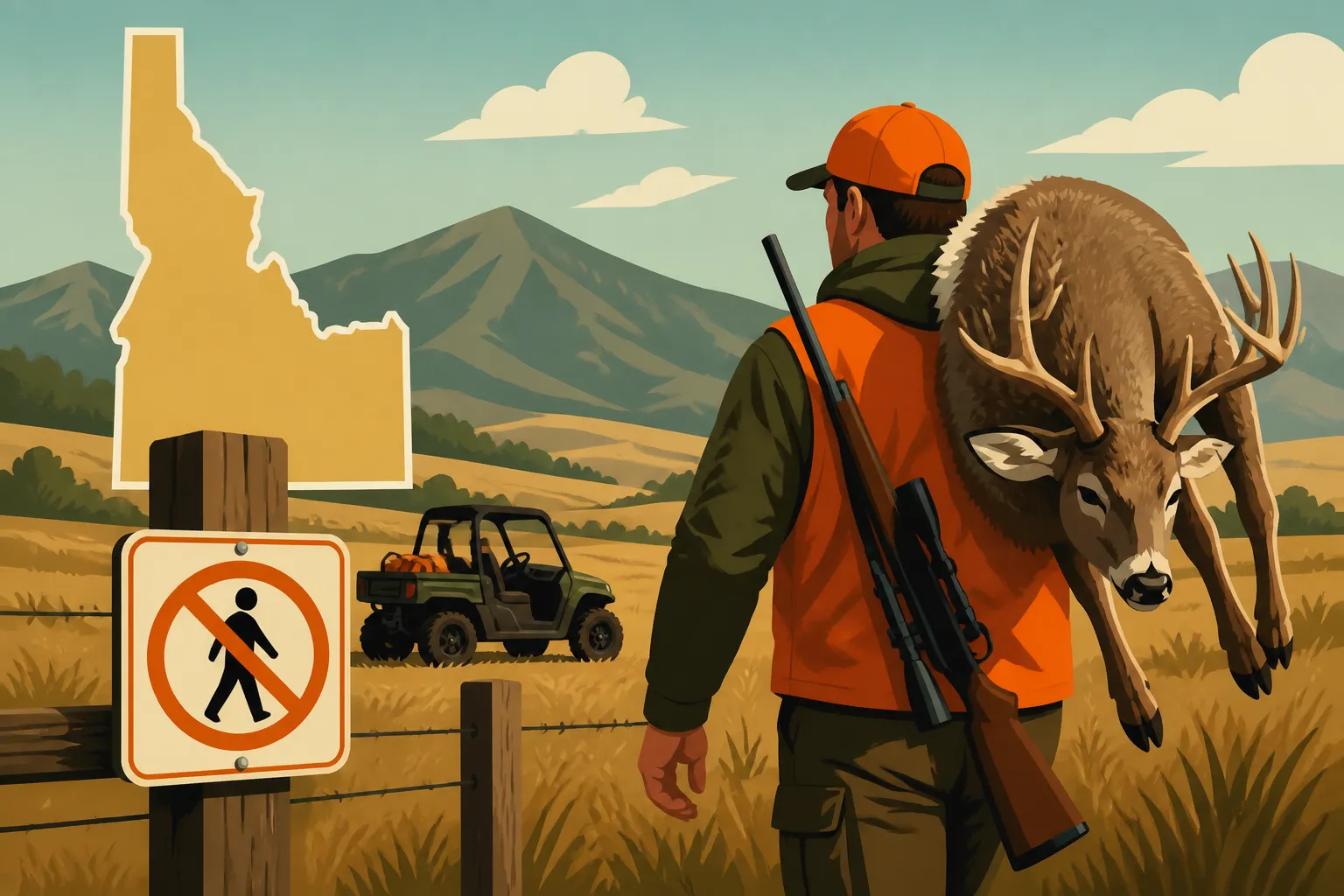
The moment your animal crosses that invisible, or sometimes very visible, boundary onto private land, the rules change drastically. It doesn't matter if it's a small parcel bordering a national forest or a sprawling ranch in the valley; private land is private land. Your immediate instinct might be to follow, to keep eyes on your game, but Idaho law is very clear on this. Without permission, you are trespassing, pure and simple. This isn't just a polite suggestion; it's a legal line you absolutely cannot cross, no matter how strong your desire to recover your animal.
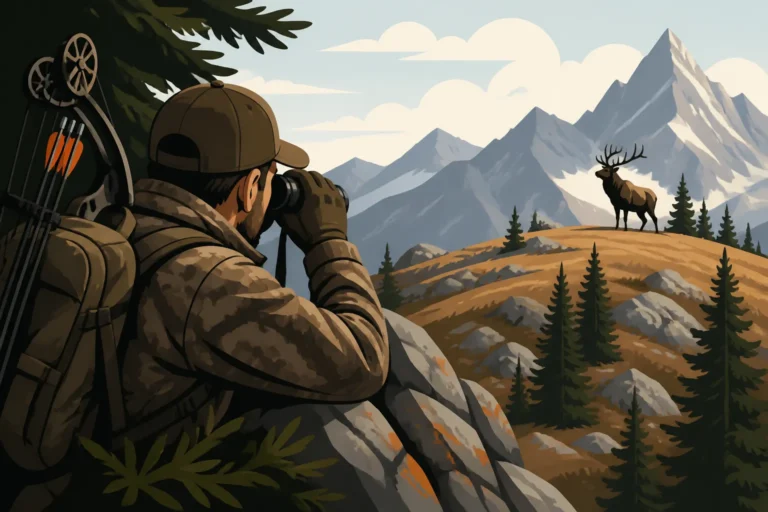
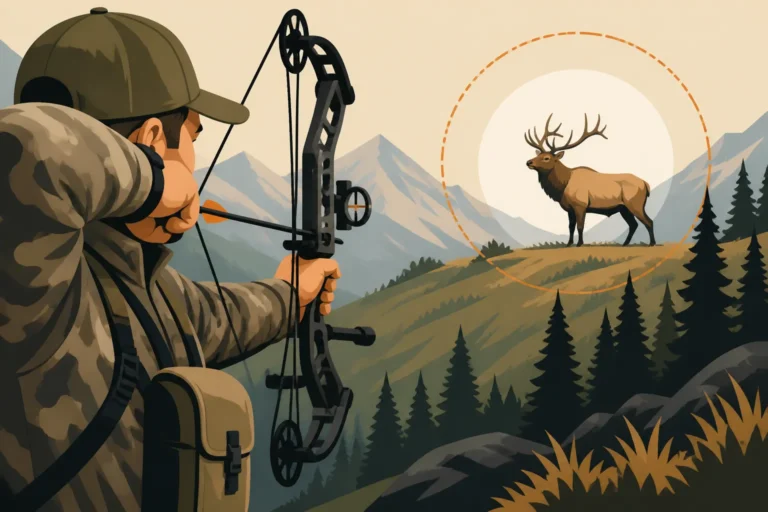
Imagine you're hunting an elk in the Clearwater Country, on a perfect public land bench. You've made a great shot, and the bull, though hit, decides to make one last dash, disappearing over the hill and into a valley below. You crest the ridge, pull out your binoculars, and see a "No Trespassing" sign nailed to a tree just a hundred yards beyond where you last saw it. The frustration is immense, but rushing in will only complicate things further and could land you in serious legal trouble.
The Ethical Imperative to Recover Game
Beyond the legalities, there's a profound ethical obligation that every hunter feels: the duty to recover wounded game. We owe it to the animal, to ourselves, and to the conservation principles we uphold. Leaving an animal to suffer or to simply rot unrecovered goes against everything responsible hunting stands for. This ethical drive is precisely why the situation of an animal crossing onto private land is so distressing. You want to fulfill your duty, but you're legally constrained. This tension is what makes navigating private land retrieval so critical, and why understanding the proper protocol is non-negotiable. It's a test of patience and adherence to the rules, even when your heart is telling you to just go get your animal.
Idaho's Rules for Private Land Game Retrieval
Idaho's regulations are pretty straightforward when it comes to private land. They're designed to protect landowner rights while also providing a framework for responsible game recovery. Ignorance of these rules is not an excuse, and violating them can have significant consequences, not just for your hunt but for your legal standing as well.
Obtaining Permission Before Stepping Foot
This is the golden rule, the absolute, unshakeable foundation of private land retrieval: you must obtain express permission from the landowner before entering private property, for any reason, including game retrieval. There are no implied rights, no "good Samaritan" clauses that let you step onto someone's property just because your game ran there. This permission needs to be clear, direct, and ideally, documented.
Think about it from the landowner's perspective. They might have livestock, ongoing operations, or simply value their privacy. An unknown person with a firearm walking around their property is a legitimate concern. Therefore, respect for their property and a clear request for permission are paramount. This isn't just for retrieval; it applies to any instance of hunting on or even accessing private land. For a deeper dive into this, check out our guide on Getting Landowner Permission in Idaho.
What Happens Without Express Permission
Entering private land without explicit permission is considered trespassing in Idaho. This isn't a minor infraction; it can lead to fines, loss of hunting privileges, and even criminal charges, depending on the circumstances. If the property is posted with "No Trespassing" signs, or if the landowner has previously communicated that hunting or entry is prohibited, the penalties can be more severe. Our article on Trespass Law on Posted Idaho Property elaborates on the specifics here.
The consequences extend beyond just legal repercussions. It damages the relationship between hunters and landowners, potentially leading to more restrictive access for everyone in the future. One hunter's careless action can ruin opportunities for many others. Imagine if you've been working with a landowner for years, building trust, and then another hunter from out of state just barrels onto their property. That trust is immediately eroded, making it harder for everyone.
The Role of Law Enforcement
When an animal crosses onto private land, and you need to seek permission, you might wonder if law enforcement or Idaho Fish and Game (IDFG) wardens can help. In some situations, they can act as intermediaries, but their primary role is to enforce the law, not to grant access.
If you contact IDFG, they can often help you identify the landowner, or in some cases, they might attempt to contact the landowner on your behalf. However, they cannot compel a landowner to grant you access. If a landowner refuses permission, an IDFG officer cannot overrule that decision. Their involvement is usually to ensure that hunters are following the law and that landowners' rights are respected. If a landowner reports someone trespassing, IDFG or local sheriffs will investigate and take appropriate action. Therefore, it's always best to try and work directly with the landowner first, showing respect and good faith.
Best Practices for Securing Retrieval Permission
The best offense is a good defense, right? While you can't predict every shot, you can prepare for the possibility of a cross-property recovery. Being proactive and having a respectful approach significantly increases your chances of gaining access.
Proactive Planning: Knowing the Landowners Ahead of Time
The absolute best way to handle this situation is to prevent it from becoming a crisis in the first place. If you're hunting near private land boundaries, it's incredibly smart to identify and contact those landowners before you ever head into the field. This might seem like extra work, but it pays dividends in peace of mind.
- Mapping Tools: Utilize digital mapping applications like GoHunt or onX Hunt. These tools allow you to see property lines, landowner names, and often contact information. Our guide on Using onX Layers for Idaho Public Land provides excellent tips for leveraging these resources. Identifying the owner of the quarter section adjacent to your public land hunting spot can save you a world of trouble.
- County Records: If mapping apps don't yield contact info, county assessor's offices or plat books can often provide landowner names and addresses.
- In-Person Visits: A polite, in-person visit well before hunting season can be highly effective. Introduce yourself, explain you'll be hunting nearby public land, and politely ask if, in the unfortunate event an animal were to cross onto their property, you could have permission to retrieve it. Bring a map, point out where you'll be hunting, and offer your phone number. This kind of courtesy builds goodwill. Many landowners appreciate the heads-up and are more likely to grant permission to someone who has shown respect upfront.
The On-the-Spot Approach: Respect and Communication
Okay, so you didn't get proactive permission, and now your animal is on private ground. What's your immediate next step?
- Do NOT Cross the Line: Stay on public land, mark the location of the animal (if visible), and back out. Do not track the animal onto private property without permission. This is crucial.
- Locate the Landowner: Use your mapping apps to find the landowner's name and contact information. If there's a visible residence, approach it respectfully.
- Initiate Contact: When you speak to the landowner (either in person or by phone), be polite, calm, and direct.
- Introduce yourself and explain the situation clearly. "Hello, my name is [Your Name], and I was hunting on the public land just north of your property. I shot a [species] and it appears to have run onto your land. I would be very grateful if you would allow me to retrieve it."
- Offer specifics: "I last saw it near [landmark] on your property. I'm happy to show you on a map."
- Emphasize your ethical responsibility: "As a responsible hunter, I feel a strong obligation to recover this animal and not let it go to waste."
- Assure them you will be respectful of their property and their time. Offer to go with them if they prefer, or to leave your weapon behind.
Offering Assistance and Building Goodwill
Sometimes, gaining permission is about more than just a polite request; it's about building a positive relationship. Landowners are often busy, and they might have concerns about strangers on their land.
- Offer to Help: "Is there anything I can do to help you while I'm on your property? I'm happy to close gates, check fences, or lend a hand with anything you might need." This small gesture can go a long way.
- Leave No Trace: Assure them you will leave absolutely no trash, disturb nothing, and exit immediately after recovery.
- Show Appreciation: If permission is granted, thank them profusely. A follow-up thank-you note or a small token of appreciation (like some processed game meat if successful, or a gift card for a local business) can solidify that positive relationship for future interactions, not just for you but for other hunters as well.
Navigating Difficult Situations and Denied Access
Despite your best efforts and politeness, there will be times when a landowner simply says "no." This is a tough pill to swallow, especially with an animal potentially within sight, but it's a reality you must be prepared for.
When Permission is Denied: Your Options (or Lack Thereof)
If a landowner denies you permission to retrieve your animal, you have very few options. Legally, you cannot enter their property. Period. This can feel incredibly frustrating and even unethical, given your responsibility to recover game, but the landowner's property rights take precedence.
Idaho law does not provide a mechanism to force a landowner to grant access for game retrieval. There's no "right to retrieve" clause that overrides private property rights. This means if you are denied, you are essentially out of luck regarding that particular animal. It's a harsh reality that underscores the importance of scouting land boundaries thoroughly and being proactive with permission requests. The best course of action is to accept their decision, thank them for their time, and leave peacefully.
Documenting Your Efforts and Contacting IDFG
Even if permission is denied, it's wise to document your efforts. This protects you in case of any future questions about the incident.
- Record Details: Note the date, time, landowner's name, and the nature of your conversation.
- Contact IDFG (Discretionary): If you are denied access, you may choose to contact Idaho Fish and Game. Explain the situation: you shot an animal, it crossed onto specific private property, and the landowner denied retrieval access. While IDFG cannot grant you access, reporting the incident demonstrates your commitment to ethical hunting and ensures that if the animal is later found, there's a record of your attempt to recover it. They may also be able to advise you on Idaho's carcass transport rules or the process for a Mandatory Reporting After an Idaho Harvest if you're eventually successful in retrieving the game. You can find their contact information through the official GoOutdoorsIdaho website.
The Unfortunate Reality of Unrecovered Game
The truth is, sometimes, despite your best efforts, you might not be able to recover an animal that has run onto private land. This is the absolute worst-case scenario for a responsible hunter. It's heartbreaking, frustrating, and can lead to feelings of guilt.
However, remember that you did everything within your legal and ethical power. You sought permission, you respected property rights, and you followed the law. While the animal is lost, your integrity as a hunter is maintained. This situation highlights why understanding land ownership layers, which you can easily view on tools like GoHunt, is so critical before you even pull the trigger. Knowing how to read a controlled hunt area boundary and the public land percentage by Idaho unit can help mitigate these risks.
Tools and Resources for Landowner Identification
In today's digital age, hunters have incredible tools at their fingertips to help navigate complex land ownership. Gone are the days of only relying on physical plat maps.
Digital Mapping and Plat Books
The most effective modern tools for identifying landowners are digital mapping applications.
- onX Hunt / GoHunt: These apps are invaluable for showing detailed property boundaries, public vs. private land distinctions, and often include landowner names and contact information. You can overlay different layers, like roads and trails, to get a comprehensive view of your hunting area. When considering hunting areas, especially near transition zones, pull up your GoHunt app and zoom in. Knowing the owner of that quarter section bordering the timber where you expect deer to bed can be a game changer. The ability to instantly see who owns the land adjacent to your chosen spot is an incredible advantage for proactive planning.
- County Websites: Many Idaho counties provide online GIS (Geographic Information System) portals where you can view property ownership maps and assessor records. These are often free and offer detailed information, though sometimes less user-friendly than commercial apps.
- Plat Books: While digital is king, physical plat books are still available for purchase, typically by county, and offer detailed landowner information in printed format. These are particularly useful if you prefer to scout areas without relying on cell service. For understanding your hunting unit, the Idaho Hunt Planner Map Center offers great resources, but for specific private land parcels, dedicated mapping tools are superior.
Local Knowledge and Community Connections
While technology is powerful, never underestimate the value of old-fashioned local knowledge and community connections.
- Ask Around: If you're a regular in a certain area, talk to locals. The folks at the diner, the gas station, or the local hardware store often know who owns what land and how best to contact them. They might even know a landowner personally and offer to make an introduction.
- Hunting Forums and Groups: Online hunting forums or local hunting groups can sometimes provide insights into landowner contact, but always verify information independently.
- Idaho Fish and Game: As mentioned, IDFG personnel may not give out private contact information but can sometimes act as an intermediary or confirm ownership details, especially if a law enforcement issue is pending. You can also find valuable resources on Idaho Fish and Game Licensing Phone Line.
By combining digital resources with community outreach, you'll be well-prepared to navigate private land boundaries and ensure you uphold your ethical and legal responsibilities as an Idaho hunter.
Here's a quick reference table to keep in mind:
| Action | Do | Don't |
|---|---|---|
| Before the hunt | Identify landowners near public land boundaries. | Assume all adjacent land is public. |
| Proactively seek permission for potential retrieval. | Wait until an animal is on private land to think about permission. | |
| After the shot | Stay on public land; mark the animal's last known location. | Cross the property line without explicit permission. |
| Contact the landowner politely and clearly explain the situation. | Demand access or act entitled. | |
| Be respectful, offer assistance, and show appreciation. | Be aggressive, rude, or trespass if denied. | |
| If denied permission | Accept the landowner's decision gracefully. | Argue, harass, or attempt to sneak onto the property later. |
| Document your efforts to contact the landowner and their refusal. | Leave the situation unreported if you feel it warrants IDFG knowledge. | |
| Tools | Use mapping apps (GoHunt, onX) and county records. | Rely solely on outdated maps or hearsay. |
Disclaimer
Always consult the most current Idaho Fish and Game regulations and local laws before planning any hunting activity. Regulations can change, and this guide is intended for informational purposes only and not as legal advice.