How Close a Bowhunter Needs to Get on Elk
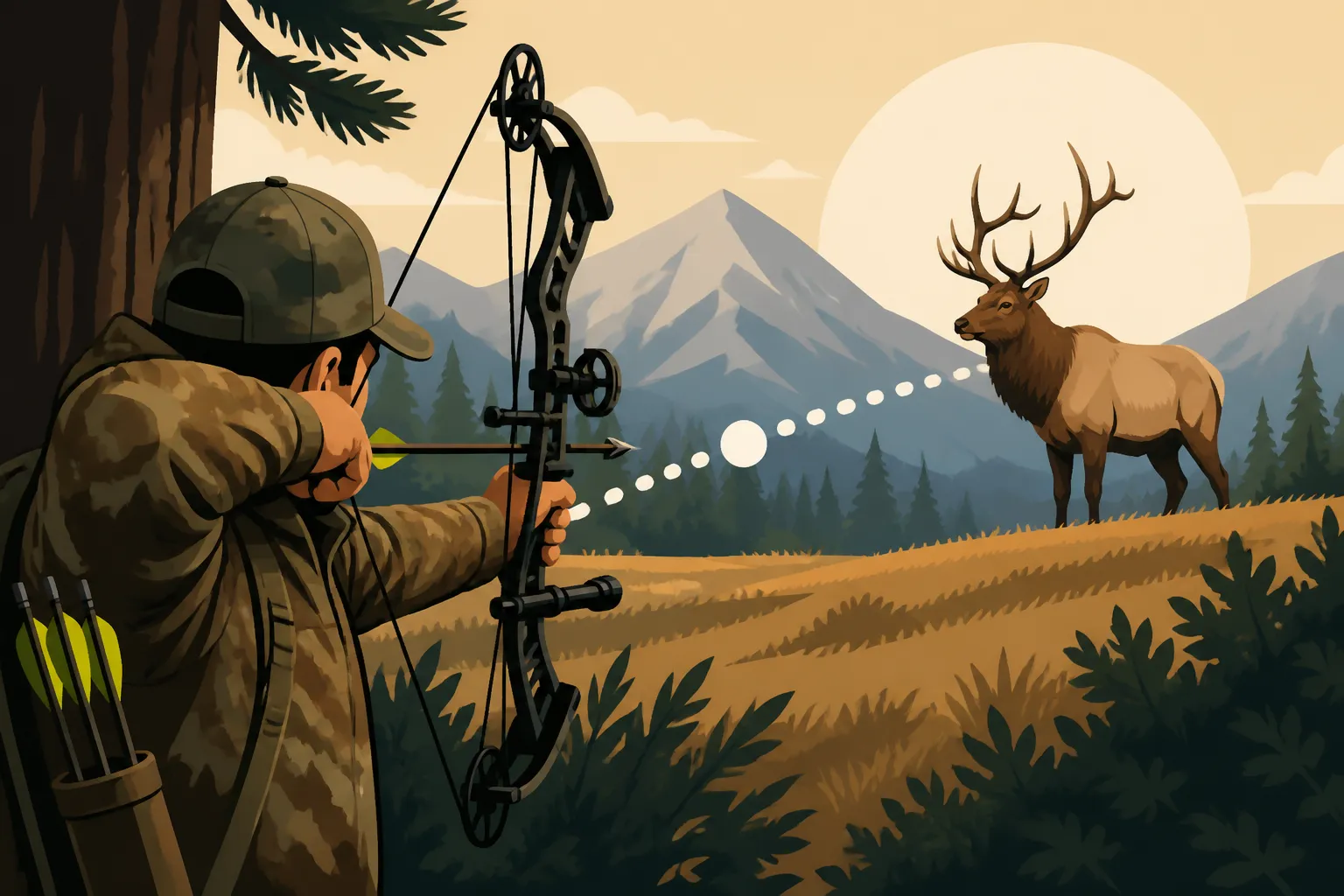
The thrill of chasing elk with a bow in Idaho is something truly special, but let's be honest, it's also incredibly challenging. Getting close enough for an ethical shot often feels like trying to sneak past a ninja with supersonic hearing. This guide is all about demystifying that crucial distance, helping you understand the many factors that dictate how close you really need to be to ensure a clean, responsible harvest, and giving you the tools to get there.
Understanding the "Ethical Shot" Principle for Elk
When we talk about bowhunting, the term "ethical shot" isn't just a buzzword; it's the very foundation of our sport. It boils down to making a clean, lethal hit that ensures a quick and humane dispatch of the animal. For elk, with their impressive size and resilience, this becomes even more critical.
Defining Your Personal Maximum Effective Range
Every bowhunter has a maximum effective range, and it’s a highly individual number. It's not what you can hit on a perfectly calm day at the local archery range with all the time in the world. It’s the distance at which you can consistently place an arrow into a ~6-inch vital zone on an animal, under field conditions. Think about it: wind, adrenaline, uneven ground, a potentially moving animal, and the sheer pressure of the moment all conspire to shrink your comfortable shooting distance.
To truly know your maximum effective range, you need to practice. A lot. Practice from kneeling, standing, sitting, uphill, downhill. Practice when you're tired, when your heart rate is elevated. If you can reliably hit a dinner plate-sized target at 50 yards on the range, your effective hunting range might be closer to 30 or 40 yards. Be brutally honest with yourself; the animal deserves nothing less.
This self-assessment is key. Pushing your limits in a target-rich environment is one thing, but pushing them on a living creature is entirely different. Don’t let ego dictate your shot selection.
The Importance of Shot Placement for Elk
Elk are big, tough animals. Their vital organs (heart and lungs) are protected by a stout rib cage and massive shoulder bones. A perfectly placed arrow through both lungs is devastating and typically leads to a rapid, ethical harvest. However, a shot that drifts too far forward into the shoulder, or too far back into the paunch, often results in a wounded animal that can travel for miles, leading to a long, frustrating, and often unsuccessful recovery.
Understanding the anatomy of an elk is paramount. Study diagrams, visualize the organs, and know exactly where you need to aim for a double-lung shot, or a heart shot if the opportunity presents itself. The broadside shot is almost always preferred, presenting the largest and most forgiving target. Quartering-away can be lethal if the angle is right, allowing the arrow to enter behind the ribs and angle forward into the vitals, but it carries more risk. Quartering-to shots should generally be avoided with a bow due to the heavy bone structure of the shoulder.
Remember, a marginal hit at 20 yards is far worse than no shot at all. Patience and discipline are your best friends in the elk woods.
Factors Influencing Ethical Distance: Elk Behavior
Elk are incredibly perceptive animals, a fact that significantly impacts how close you can realistically get. Their senses are finely tuned to detect danger. Their hearing is acute, capable of picking up the slightest rustle of leaves or click of a boot. Their sense of smell is legendary; a whiff of human scent can send a herd scattering before you even know they're there. And while their eyesight isn't as sharp as a whitetail's, they are excellent at detecting movement, especially in open country.
This keen awareness means that closing the distance requires not only stealth but also a deep understanding of their behavior. Are they feeding calmly, or are they nervous and jumpy? Is there a strong wind to carry your scent away, or is it swirling unpredictably? A bull preoccupied with bugling during the rut might be more forgiving than a wary cow leading her calves through the timber. Understanding these nuances will help you decide if an approach is even feasible, or if you need to hold off and wait for a better opportunity.
The Impact of Terrain and Cover on Shot Opportunity
Idaho's diverse landscapes offer both challenges and incredible opportunities for bowhunters trying to get within spitting distance of an elk. From dense timber to wide-open sagebrush flats and steep, broken country, each environment dictates a different approach to closing the distance.
Using Idaho's Diverse Landscapes to Your Advantage
Idaho's terrain is a bowhunter's best friend and worst enemy, sometimes within the same square mile. Thick stands of lodgepole pine, dense pockets of dark timber, and brushy draws provide excellent cover for an approach, masking your movement and scent. These areas allow you to get much tighter to elk without being detected, often resulting in 20-30 yard shots. Conversely, wide-open mountain meadows, clear-cuts, and high-desert sage flats leave you exposed, making a direct approach nearly impossible.
When scouting an area, pay close attention to contour lines, drainages, and vegetation changes. These natural features act as highways and hiding spots for elk, but also as avenues for you to move undetected. A deep gully or a thick stringer of timber running up a hillside can be a golden ticket for a silent stalk. Learning to use the undulations of the land and available vegetation to break up your silhouette and mask your movement is a crucial skill. On a map, use tools like those available through GoHunt to identify these features long before you ever set foot on the ground.
Navigating Timber, Breaks, and Open Country
Each type of terrain demands specific tactics. In thick timber, you can often get away with more movement, but noise becomes a bigger issue. Slow, deliberate steps, picking up your feet, and placing them softly are essential. You might only see an elk for a fleeting moment through the trees, so be ready to shoot quickly. In this environment, your effective range is naturally compressed, and 20-30 yards is a common shot distance. This is also where understanding Using Benches and Draws to Close Distance can make all the difference.
The steep, broken country of Idaho's "breaks" offers mixed cover. You might have dense brush in the draws and on north-facing slopes, but open, rocky faces elsewhere. This terrain often allows for longer-range glassing (which is often done for mule deer, but equally useful for elk), followed by a strategic stalk using terrain features to stay out of sight. The shot opportunities here can vary wildly, from 20 yards in a hidden pocket to perhaps 50 yards across a small canyon if the conditions are perfect and you've practiced extensively for such a shot.
In truly open country, your best bet is often to move under the cover of darkness or fog, or to set up on a travel corridor between feeding and bedding areas. Stalking across open ground is nearly impossible on alert elk. In these scenarios, the distance will often be determined by where you can intercept them along a natural funnel or choke point.
The Role of Wind and Thermals in Closing the Distance
Perhaps the single most critical factor in bowhunting elk, especially in Idaho's mountainous terrain, is understanding and playing the wind and thermals. Elk rely heavily on their sense of smell, and if your scent drifts their way, the game is over. Period. This is why Playing Wind Direction on a Timbered Stalk is a skill every hunter must master.
Wind is simply air moving horizontally, and its direction is relatively predictable by a weather app or a simple wind checker. Thermals, however, are vertical air currents caused by temperature changes throughout the day. In the morning, as the sun warms the earth, thermals rise, carrying scent uphill. In the evening, as the air cools, thermals drop, carrying scent downhill.
Successful bowhunting often means planning your approach based on these air currents. You want the wind and thermals to be blowing from the elk to you, or at least perpendicular to your approach, carrying your scent away from them. This often means waiting for the right time of day or taking a circuitous route to get into a favorable position. Ignoring the wind or thermals is a recipe for busted stalks and empty hands.
Gear Considerations for Maximizing Your Ethical Range
While no amount of gear can replace skill and practice, having a well-tuned and appropriate setup can certainly extend your personal ethical range and increase your confidence when an opportunity arises. The right tools ensure that when you execute your shot, your arrow performs as intended.
Bow Setup and Tuning for Elk Hunting
Your bow is the heart of your archery system, and it needs to be perfectly tuned for elk hunting. This means making sure your arrows are flying perfectly straight, without any "porpoising" (up and down) or "fishtailing" (side to side). A perfectly tuned bow maximizes accuracy and penetration, giving you the best chance for a lethal hit. Factors like cam timing, limb deflection, and arrow rest alignment all play a role. Don't underestimate the importance of Bow Tuning Worth Doing Before a Mountain Hunt – it can mean the difference between a clean pass-through and a glancing blow.
Draw weight is another critical component. While Idaho requires a minimum peak draw weight, you need to shoot a bow you can comfortably draw and hold in various positions for an extended period. Don't overbow yourself; a lighter draw weight that you can consistently control is far more effective than a heavy one you struggle with. Ensure your bow meets minimum legal requirements, such as those discussed in How Idaho Measures Draw Weight at 28 Inches for any bow, not just compounds.
Arrow and Broadhead Performance for Optimal Penetration
For elk, you need an arrow and broadhead combination that delivers deep penetration and creates a massive wound channel. Heavy arrows typically carry more kinetic energy and momentum, which helps them punch through tough hide, muscle, and bone. Aim for an overall arrow weight that provides a good balance of speed and momentum for your bow. More insight on this can be found in Arrow Weight That Gets Through an Elk.
When it comes to broadheads, the debate between fixed-blade and mechanical broadheads is ongoing. Fixed-blade broadheads are known for their reliability and robust construction, often performing well even after hitting bone. Mechanical broadheads, with their expandable blades, typically offer a wider cutting diameter and field-point-like flight characteristics. However, they can be more susceptible to failure on bone impacts or in extremely heavy hide. Both can be effective, but understanding their characteristics is crucial. You can delve deeper into this topic by exploring Fixed Blade Against Mechanical Broadheads on Elk.
Regardless of your choice, ensure your broadheads are razor-sharp. A dull broadhead will push tissue instead of cutting it, reducing penetration and the effectiveness of your shot.
Rangefinders and Sighting Systems for Precision
A reliable rangefinder is an indispensable tool for bowhunting elk. It removes the guesswork from judging distances, which is incredibly difficult in mountainous terrain where inclines and declines can play tricks on your eyes. Practice using your rangefinder quickly and quietly, as opportunities can be fleeting. Knowing the exact yardage to your target, and to various landmarks around it, allows you to confidently place your pin on the vitals.
Your sighting system should be robust and easy to use under various lighting conditions. Single-pin, multi-pin, and dial-to-distance sights all have their adherents. Choose one that you are most comfortable with and that fits your hunting style. For hunting in varied terrain, a sight that compensates for angle (true horizontal distance) can be a significant advantage, particularly on steep uphill or downhill shots. The clarity of your pins and the brightness settings can be critical in low-light situations, especially at dawn and dusk when elk are most active.
Strategies for Closing the Distance on Elk
Getting within bow range of an elk is rarely a stroke of luck; it's usually the culmination of careful planning, strategic movement, and a deep understanding of elk behavior. It's about turning a distant observation into a close-range encounter.
Effective Calling Tactics to Bring Elk Closer
Calling is arguably the most exciting and dynamic way to close the distance on elk, especially during the rut. A well-executed series of bugles or cow calls can either bring a bull charging in or keep a herd from spooking as you sneak closer. Understanding Bugling Elk in Idaho's Timbered Zones can be particularly effective.
Locator bugles are great for finding elk, but once you've located them, your calling strategy needs to adapt. During the early rut, soft cow calls can pique a bull's curiosity without making him feel challenged. As the rut intensifies, aggressive bugles, rakes, and chuckles can challenge a dominant bull into investigating or even charging your position. Be prepared to shoot immediately when calling, as elk often appear silently and quickly.
For close-range encounters, subtle cow and calf calls are often more effective, mimicking the sounds of a contented herd. Remember, less is often more with calling; don't overdo it. And crucially, understand when Bugling Against Cow Calling Through September is most effective, as the rut progresses and elk behavior shifts. Set up so that the elk comes to you, ideally presenting a broadside shot as it scans for the source of the sound, and ensure you have clear shooting lanes.
Mastering the Stalk in Challenging Conditions
When calling isn't working, or you're after non-bugling elk, stalking is your primary method of getting close. This is where patience, stealth, and acute situational awareness are paramount. A successful stalk begins long before you even move; it starts with identifying a specific animal or a small group, assessing the wind, identifying cover, and mapping out a route.
Movement must be excruciatingly slow and deliberate. Take one or two steps, then pause, scan, and listen. Look for elk eyes, ears, and subtle movements. Move when the elk's head is down feeding, behind a tree, or when the wind is rustling the leaves. Utilize every bit of available cover—trees, bushes, rocks, and terrain features. This is where Using Benches and Draws to Close Distance becomes a practical, on-the-ground skill. Avoid breaking twigs underfoot, and be mindful of any metallic noises from your gear. Even the crunch of dry grass can give you away on a quiet day.
Always be ready to draw your bow, as an elk can materialize from behind cover at any moment. Your personal maximum effective range will be tested in these high-pressure, close-quarter situations.
Situational Awareness and Patience in the Moment
Getting close enough for a bow shot on an elk requires an exceptional level of situational awareness. This means not just watching the target animal, but also scanning for other elk that might spot you, paying attention to wind shifts, identifying potential shooting lanes, and constantly assessing the risk versus reward of your next move. Are you about to step on a patch of crunchy leaves? Is that branch going to smack your bow? Is there a subtle thermal shift that could carry your scent?
Patience is a virtue in elk hunting, perhaps more so for bowhunters than rifle hunters. You might spend hours stalking an animal, only for the wind to shift, forcing you to abandon your approach. Or an elk might step behind a tree just as you're about to draw. Resist the urge to rush. Waiting for the absolute perfect shot, even if it means letting an opportunity pass, is the mark of a truly ethical hunter. Sometimes, the best shot is no shot at all. Remain calm, breathe deeply, and trust your judgment. The right opportunity will present itself if you stay patient and prepared.
Practice and Preparation for Idaho Elk Archery
The physical and mental demands of bowhunting elk in Idaho are no joke. The mountains are steep, the air is thin, and the stakes are high. Preparation off the mountain is just as important as your actions on it.
Realistic Practice Scenarios and Distances
Your practice sessions should mimic hunting conditions as closely as possible. Forget shooting perfectly flat, brightly lit targets at known distances. Instead, practice shooting uphill, downhill, from kneeling positions, and from behind natural obstacles. Put on your hunting clothes, carry your pack, and practice drawing your bow quietly. Elevated heart rate shooting is also a valuable training method; do some jumping jacks or run a short sprint, then immediately grab your bow and shoot. This simulates the adrenaline of a hunting situation.
Vary your distances, focusing heavily on the ranges you expect to encounter most often—typically 20-50 yards. While you might be able to hit a target at 70 yards, Realistic Archery Practice Distance for Big Game suggests that your ethical range in the field will likely be much shorter. Practice judging distance without a rangefinder too, as sometimes you won't have time to pull it out. A great drill is to guess the distance, then range it, and then shoot. Over time, your eye will become more accurate.
Mental Toughness and Shot Execution Under Pressure
Elk hunting isn't just a physical game; it's a mental one. The pressure of a bull elk standing broadside at 30 yards can turn even the most seasoned archer into a bundle of nerves. Develop a pre-shot routine that you can execute consistently, regardless of the situation. This might involve a specific breathing technique, a mental checklist for form, or a visual cue.
Visualization can also be a powerful tool. Before your hunt, close your eyes and imagine various scenarios: an elk appearing silently, a bull responding to a call, a long stalk ending in a shot opportunity. Mentally walk through your shot process, from drawing your bow to following through. The more you mentally prepare, the less surprised and overwhelmed you'll be when the real moment arrives. Trust your thousands of practice shots, focus on a spot, and let the arrow fly.
Physical Conditioning for Steep Country
Idaho's elk country is rugged, often characterized by steep climbs, deep drainages, and high elevations. Being in peak physical condition is not just about comfort; it's about safety, endurance, and ultimately, success. You need to be able to hike for miles with a heavy pack, ascend steep grades without becoming winded, and still have the energy and steady hands required to make an ethical shot when an opportunity presents itself.
Focus on cardiovascular fitness, strength training, and endurance. Incorporate exercises that mimic hunting movements: hiking with weight, lunges, squats, and core strengthening. If possible, train in similar terrain to what you'll be hunting. For more in-depth advice on this, check out Physical Conditioning for Idaho Backcountry. Being physically prepared also helps with the mental game; when your body isn't struggling, your mind can focus more clearly on the hunt. The ability to climb quietly and steadily can be the difference between getting into position and blowing out a herd.
Understanding Average Shot Distances
It's common for bowhunters to fantasize about those chip-shot, 20-yard opportunities, and while they do happen, they're not the average. The reality for most Idaho elk bowhunters is a shot distance that often falls within the 30-50 yard range. This isn't to say longer shots don't happen, or that closer shots are impossible, but rather to set realistic expectations and guide your practice.
| Shot Distance Category | Typical Conditions | Required Skill Level | Success Rate Implications |
|---|---|---|---|
| 0-20 Yards | Dense timber, effective calling, ambushes, perfectly executed stalks, unaware animals. | High stealth, quick draw, impeccable form under pressure. | Highest success, maximum penetration, most forgiving of minor errors. |
| 21-40 Yards | Broken timber, brushy draws, responding to calls, slight exposure. | Solid form, excellent distance judgment, wind awareness. | Very good success, good penetration, minor errors still recoverable. |
| 41-60 Yards | Open parks, long draws, wary animals, limited cover. | Expert form, precise distance judgment, full wind compensation, deep understanding of arrow ballistics. | Moderate success, penetration can be reduced by errors, small errors lead to misses or poor hits. |
| 60+ Yards | Very open country, last-ditch efforts. Generally discouraged for ethical bowhunting. | Elite level of skill and practice. | Very low success rate for most hunters. High risk of wounding. |
This table clearly illustrates why closer is always better for bowhunting elk. The further out you shoot, the more variables come into play—wind drift, arrow drop, and the elk's potential to "jump the string" (react to the sound of the bow). These variables amplify the chances of a non-lethal hit. Focus your efforts on getting as close as possible, practicing extensively at your maximum comfortable range, and waiting for the right opportunity.
Disclaimer
Always consult the most current Idaho Fish and Game regulations for specific legal requirements and seasons before planning any hunting trip. Regulations can change, and it is the hunter's responsibility to be fully informed and compliant.