Terrain That Hides a Stalk Above Timberline
It's incredibly frustrating when you finally spot that trophy animal above timberline, only to realize the open, unforgiving landscape offers seemingly nowhere to hide. The high country can feel like a vast, exposed amphitheater where every movement is magnified, leaving many hunters wondering how on earth anyone manages to close the distance. This guide is all about equipping you with the knowledge and tactics to use the subtle, and not-so-subtle, features of high-alpine terrain to your advantage, turning seemingly barren slopes into your personal stalking playground for big game in Idaho.
The Unique Challenges of High-Altitude Stalking
Hunting above the timberline in Idaho presents a completely different set of problems than still-hunting thick timber or calling elk in dark canyons. The air is thinner, the weather can turn on a dime, and the cover you're used to relying on often vanishes. It's an environment that demands careful observation and a deep understanding of how animals interact with the landscape.
Scarcity of Traditional Cover
When you're up high, those dense stands of lodgepole pine or aspens that offer easy concealment below are long gone. Instead, you're faced with vast expanses of rock, scree, alpine meadows, and sparse subalpine fir or whitebark pine, often stunted and scattered. This lack of traditional cover means you can't just weave through trees to approach an animal. You have to be far more creative and disciplined in your movements. The mental game here is huge; it's easy to feel defeated by the open landscape, but with the right mindset, you'll start seeing opportunities you once overlooked. It's about shifting your perspective from "where can I hide?" to "what can break up my outline or shield my approach?"
Unpredictable Weather Patterns
Above timberline, the weather isn't just a factor; it's a character in the hunt. Clear, sunny mornings can quickly give way to violent thunderstorms, hail, or even snow, even in the middle of archery season. Wind is a constant companion, often swirling unpredictably as it wraps around peaks and funnels through saddles. This makes reading the wind in steep timbered country even more critical. A shift in wind direction can blow your carefully planned stalk in an instant, forcing you to recalculate or abandon your approach entirely. You're not just fighting the animal's senses; you're often battling Mother Nature herself. Keeping a close eye on forecasts and understanding how weather impacts animal behavior at elevation is paramount.
Extended Visibility and Detection Ranges
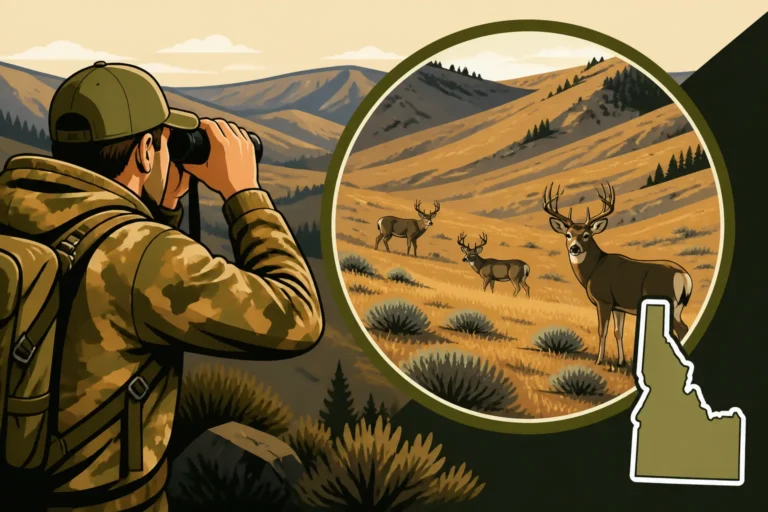
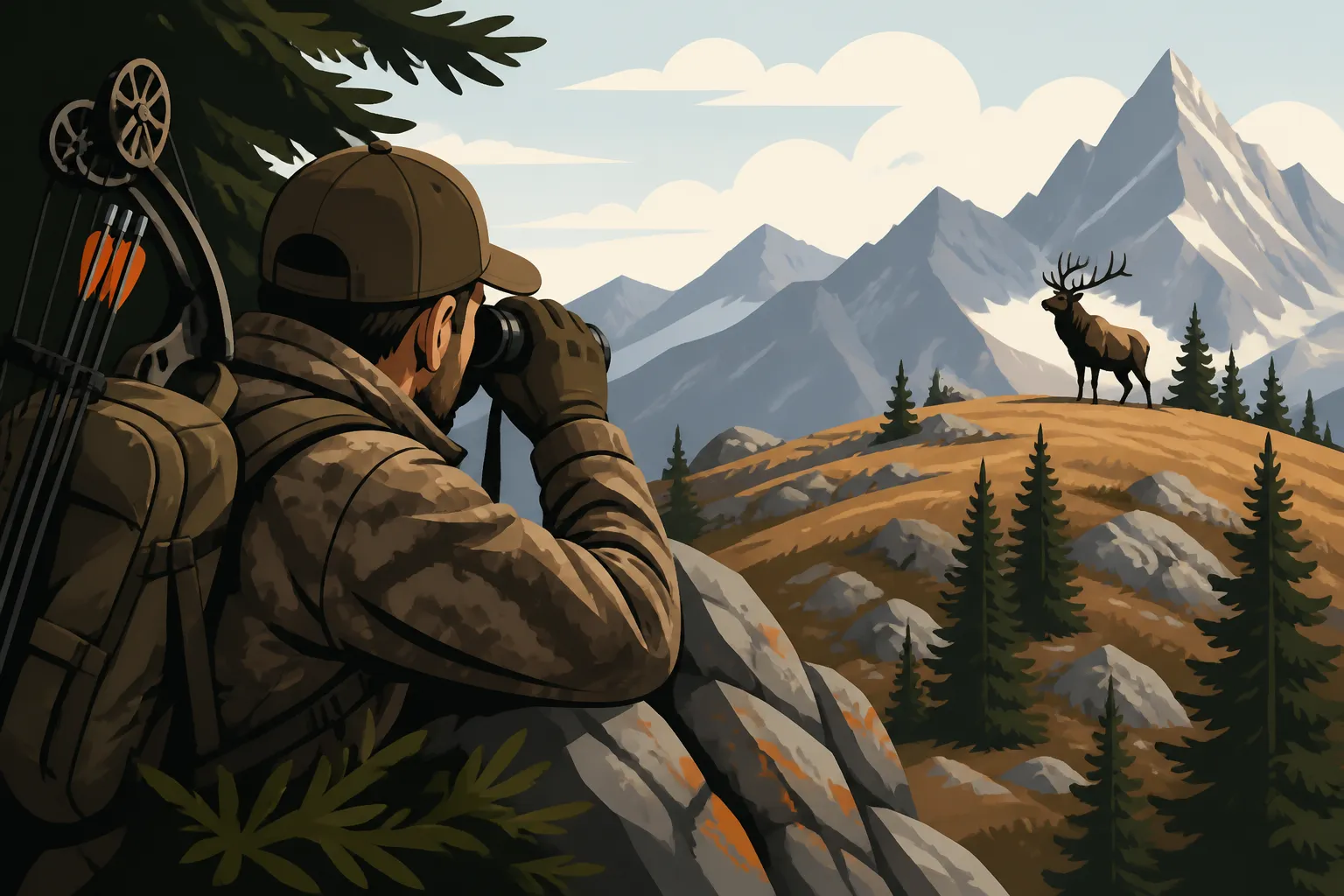
The upside of hunting high country is the incredible visibility it affords you for glassing. You can literally see for miles, spotting animals that would be completely hidden in lower elevations. This is fantastic for locating game, but it’s a double-edged sword. That animal can see you just as easily. Your movement, your silhouette against the skyline, and even the glint of your optics can give you away from incredible distances. This means your approach has to be deliberate, slow, and exploit every tiny fold in the terrain. The game of cat and mouse is played out on a much larger, more exposed stage, demanding patience and precision. You might even find yourself looking up your specific unit in the Idaho Hunt Planner Is the Tool to Start With to understand terrain features before you even hit the field.
Mastering Natural Terrain Features for Concealment
When trees and dense brush are scarce, the very ground beneath your feet becomes your ally. Learning to read and exploit every natural depression, ridge, and rock formation is the key to successful high-country stalking. It’s about becoming part of the landscape, not just moving through it.
Utilizing Ridges, Benches, and Draws
These are your bread and butter in the high country. Ridges offer linear cover, allowing you to stay below the skyline and out of sight as you move parallel to an animal. Benches, those relatively flat stretches on a mountainside, are often animal highways and can provide excellent routes for approach, especially if they have some broken terrain or stunted vegetation. Draws and coulees are natural funnels and fantastic for sneaking in, offering deep cuts in the earth that can completely hide your movement, even when animals are relatively close. When planning your route, think about how these features create natural blind spots from the animal's perspective. Can you use a series of small draws to work your way up a slope? Can you get to the backside of a ridge and then pop over for a shot? Using benches and draws to close distance is an art form.
Exploiting Rock Formations and Boulders
Large rock outcroppings and individual boulders, even seemingly small ones, become critical pieces of cover above timberline. They break up your silhouette, offer a momentary shield for movement, or even provide a stable shooting rest. When you're making your final approach, a single boulder can be the difference between getting busted and getting a shot. Pay attention to how the sun casts shadows around these rocks; sometimes the shadow itself provides enough cover to move a few critical yards. Think about crawling behind a series of boulders, using each one as a stepping stone to the next bit of cover. Even small rock fields or scree slopes can be used to your advantage, not just as obstacles.
Depressions, Swales, and Sparse Vegetation
Don't underestimate the power of subtle ground features. A small depression in an alpine meadow, a gentle swale, or even a patch of tough, low-growing vegetation might not seem like much, but they can offer just enough concealment for a low crawl or a slow, deliberate advance. These are the places where animals often bed, seeking refuge from wind or sun, which means they're also excellent places for you to mimic their behavior. Sometimes, a field of dwarf willows or even just taller grass can provide the necessary visual break-up, especially if you're wearing good camouflage that helps you blend into the muted colors of the high country. Every ripple and bump in the terrain becomes a potential hide.
Reading Animal Behavior and Movement Patterns
Animals above timberline behave differently than those in dense forest. They rely heavily on their eyesight and the wide-open spaces, often bedding in locations that give them commanding views. Understanding these tendencies is crucial for planning a successful stalk.
Preferred Bedding and Feeding Areas
High-country animals, especially elk and mule deer, often bed in spots that offer maximum visibility and security. This typically means a bench or saddle with a good vantage point, allowing them to see danger approaching from multiple directions. They'll also seek out areas with thermals that carry their scent uphill in the morning and downhill in the evening, providing an extra layer of defense. Knowing these tendencies helps you predict where they might be. During the heat of the day, they might seek the shade of a small cluster of stunted trees or the lee side of a ridge. Early mornings and late evenings often find them feeding in alpine meadows or on north-facing slopes, before retreating to higher, more secure bedding sites. Using tools like GoHunt can help you e-scout these types of features from home, identifying potential bedding and feeding areas before you even pack your boots.
Understanding Thermal and Wind Dynamics
This is perhaps the most critical component of a high-country stalk. Thermals are predictable air currents: in the morning, cold air sinks, pulling your scent downhill; in the afternoon, warm air rises, carrying your scent uphill. But above timberline, these primary thermals can be heavily influenced by topographical features, creating swirling winds. You might have a thermal drawing your scent uphill in one draw, while a crosswind wraps around a peak just a few hundred yards away, pushing your scent in a different direction. It's a complex puzzle, and you need to be constantly checking and re-checking the wind. A good wind checker is indispensable. Always remember, if you have any doubt about the wind, err on the side of caution and back off to reassess. It's better to reset than to blow a stalk.
Predicting Escape Routes and Alert Behavior
When an animal gets spooked in the open country, they rarely just run blindly. They'll often have a pre-planned escape route in mind, usually leading them over a ridge, into a deep draw, or toward a rocky, inaccessible area. Observing their typical escape patterns from a distance, if possible, can give you an edge. Watch how they react to distant sounds or movements. Do they freeze and scan? Do they quickly move to a more secure position? Understanding their alert behavior allows you to anticipate their next move and potentially cut them off or change your approach. A great way to learn this is to just spend time glassing animals without a weapon in hand, simply observing and learning their habits.
Crafting Your Stalk: Strategy and Execution
Now that you've located your animal and understood the terrain, it's time to put your plan into action. This is where patience, discipline, and meticulous execution come into play. A bad stalk can ruin an otherwise perfect setup.
The Art of Observation and Planning Your Route
Before you take a single step, spend ample time glassing the animal and the surrounding terrain. Use your binoculars or spotting scope to pick apart every detail. Where are the patches of cover? How deep are the draws? Where are the possible escape routes? Can you identify a landmark that will guide your path? Consider all possible approaches: which one offers the best wind, the most cover, and the easiest recovery? Often, the longest route is the safest route. Don't rush this phase. Many successful stalks are won or lost in the initial planning. Sometimes, it means hiking all the way around a mountain to get the perfect wind and approach.
| Cover Type | How to Use for Stalking | Best Use Case | Considerations |
|---|---|---|---|
| Ridges/Saddles | Stay below the skyline, use as linear shields. Crawl over crests carefully. | Long-distance approach, changing basins. | Wind can swirl over crests; avoid silhouetting yourself. |
| Draws/Coulees | Deep cuts provide full concealment, natural funnels. | Close-range approach, ascending/descending slopes. | Can be noisy (loose rock); wind can change inside draws. |
| Benches | Follow natural contours for horizontal movement. | Crossing open slopes, natural animal travel routes. | May have sparse cover; be mindful of visibility from above/below. |
| Rock Outcroppings | Use as solid shields to break outline, stable shooting rests. | Short-range movement, final approach to shooting position. | Shadows can move; ensure stable footing. |
| Boulders | Individual rocks for momentary concealment or low crawl. | Last 50-100 yards, moving between larger features. | Requires low profile; limited duration of concealment. |
| Sparse Vegetation | Crawl low, use texture to break up outline. | Open meadows, gentle slopes, final low approach. | Offers visual break-up, not physical concealment; requires excellent camo. |
| Shadows | Move within shadow lines to obscure movement, especially in bright sun. | Open, exposed areas, mid-day approaches. | Shadows shift quickly; ensure consistent coverage. |
Slow and Deliberate Movement
This isn't a race. Every step must be measured. Think of it as a chess game, where each move is carefully considered. When you have cover, move slowly and deliberately. When you're exposed, move even slower, taking advantage of any visual distraction (like a cloud passing overhead) or a moment when the animal's head is down feeding. Your eyes should be glued to the animal, watching for any sign of alarm. If they look up, freeze. Become a rock. Don't move until they settle back down and appear comfortable again. This level of patience is often what separates a successful stalk from a blown opportunity. It's a demanding mental and physical exercise, requiring a lot of physical conditioning for Idaho backcountry hunting.
Managing Wind and Thermals During the Approach
As you move, continually check the wind. A small puff of milkweed, a tiny piece of dental floss on your bow string, or a dedicated wind checker bottle are your best friends. Don't rely on a single check at the beginning of the stalk. The wind can shift unexpectedly, especially as you move into different micro-terrains or as the day progresses and thermals reverse. If the wind becomes iffy, stop. Wait it out if you can, or be prepared to pull back and try a different approach. Blowing the wind is the quickest way to end your hunt above timberline. Remember, a good nose will usually bust you before a keen eye will in this country.
The Final Approach and Shot Opportunity
This is the moment of truth. As you get within shooting range, everything speeds up, but you need to slow down. Be absolutely certain of your shot opportunity before exposing yourself. Look for a stable shooting rest, whether it's a large rock, a bipod, or shooting sticks. Make sure you have a clear lane to the animal, free of obstructions. Take a moment to control your breathing and calm your nerves. If you're a bowhunter, focus on getting as close as possible, sometimes even just a few extra yards can make all the difference, but respect the animal's space and your effective range. Then, execute the shot with confidence. If you're bowhunting, understanding Realistic Archery Practice Distance for Big Game is critical.
Beyond the Stalk: Recovery and Learning
A successful stalk doesn't end with the shot. The high country environment continues to present unique challenges, and learning from every experience, good or bad, is vital for future success.
Game Recovery in Rugged Terrain
Once the shot is taken, the challenges aren't over. Recovering game above timberline can be incredibly demanding. The terrain is often steep, rocky, and unforgiving, making packing an elk out of steep country alone a monumental task. Mark your spot meticulously, noting landmarks and using GPS waypoints. Don't rush into a recovery; give the animal time if necessary, but don't lose track of it in the vast landscape. Bring sufficient gear for field dressing and packing, and be prepared for changing weather conditions. If you're hunting with a partner, communicate your plan clearly. This is where fitness and preparedness truly pay off.
Learning from Each Experience
Every stalk, successful or not, offers valuable lessons. Take the time to analyze what worked well and what didn't. Did you misread the wind? Did you move too quickly? Was your camouflage effective against the backdrop? Did you choose the best route? Even if you didn't get a shot, reviewing the approach and identifying where you might have been detected can provide invaluable insights for your next hunt. Use apps like GoHunt to revisit your path on the map, analyzing elevation changes and potential cover you used or missed. This continuous learning cycle is what builds true expertise in high-country hunting. Don't be afraid to try new tactics or adapt your approach based on what you observe.
Gear Considerations for High-Country Stalks
Your gear plays a significant role in your ability to stalk successfully above timberline. Lightweight, durable clothing that allows for quiet movement is essential. A good pair of binoculars or a spotting scope with optics power for Idaho's long canyon sightlines is non-negotiable for spotting animals and planning routes. Consider shooting sticks or a bipod for a stable rest in exposed situations. A reliable GPS device or a smartphone with detailed mapping (like GoHunt's mobile app) is crucial for navigation and marking waypoints. Don't forget layers for unpredictable weather, a quality backpack, and plenty of water and high-energy snacks. Every item you carry should serve a purpose and be able to withstand the rigors of the alpine environment.
Disclaimer: Hunting regulations, seasons, and access can change. Always consult the most current Idaho Fish and Game regulations before planning any hunt. This guide is for informational purposes only and does not substitute for official information or professional guiding services.