Idaho’s Minimum Peak Draw Weight for Any Bow
One of the most common headaches for new and even seasoned archers heading into the Idaho wilderness is navigating the labyrinth of regulations, especially when it comes to equipment specifics. It can feel like you need a law degree just to understand if your bow is even legal to hunt with. This guide is here to untangle the complexities of Idaho's minimum peak draw weight requirements for any bow, ensuring you're compliant and ready for an ethical, successful hunt.
Understanding Idaho's Draw Weight Regulations
When you're out in the field, whether chasing a wary mule deer or calling in a bull elk, the last thing you want to worry about is whether your equipment meets the legal standard. Idaho's Fish and Game regulations are designed not just for fair chase, but also to ensure the ethical taking of game. This all starts with understanding the power behind your shot.
Why Draw Weight Matters for Ethical Hunting
The draw weight of your bow is a critical factor in delivering an arrow with enough kinetic energy and momentum to achieve a swift, humane kill. Imagine putting in all that time scouting, practicing, and finally getting an opportunity on a magnificent animal, only for your equipment to fall short. It's a gut-wrenching thought, and frankly, it's irresponsible. A bow that's too light simply won't drive a broadhead deep enough to reach vital organs consistently, leading to wounded animals that suffer and are often unrecovered.
We're all striving for that clean, ethical harvest, and that means choosing a bow that can effectively do its job. The regulations aren't arbitrary; they're based on years of experience and research into what it takes to ethically harvest big game. It's about respecting the animal and upholding the traditions of responsible hunting. You want that arrow to pass through, creating a clear wound channel that causes rapid blood loss and incapacitation. Without sufficient draw weight, you’re essentially handicapping your arrow's ability to penetrate, regardless of how sharp your broadhead is or how accurate your shot placement might be.
The Specific Idaho Requirement for All Bows
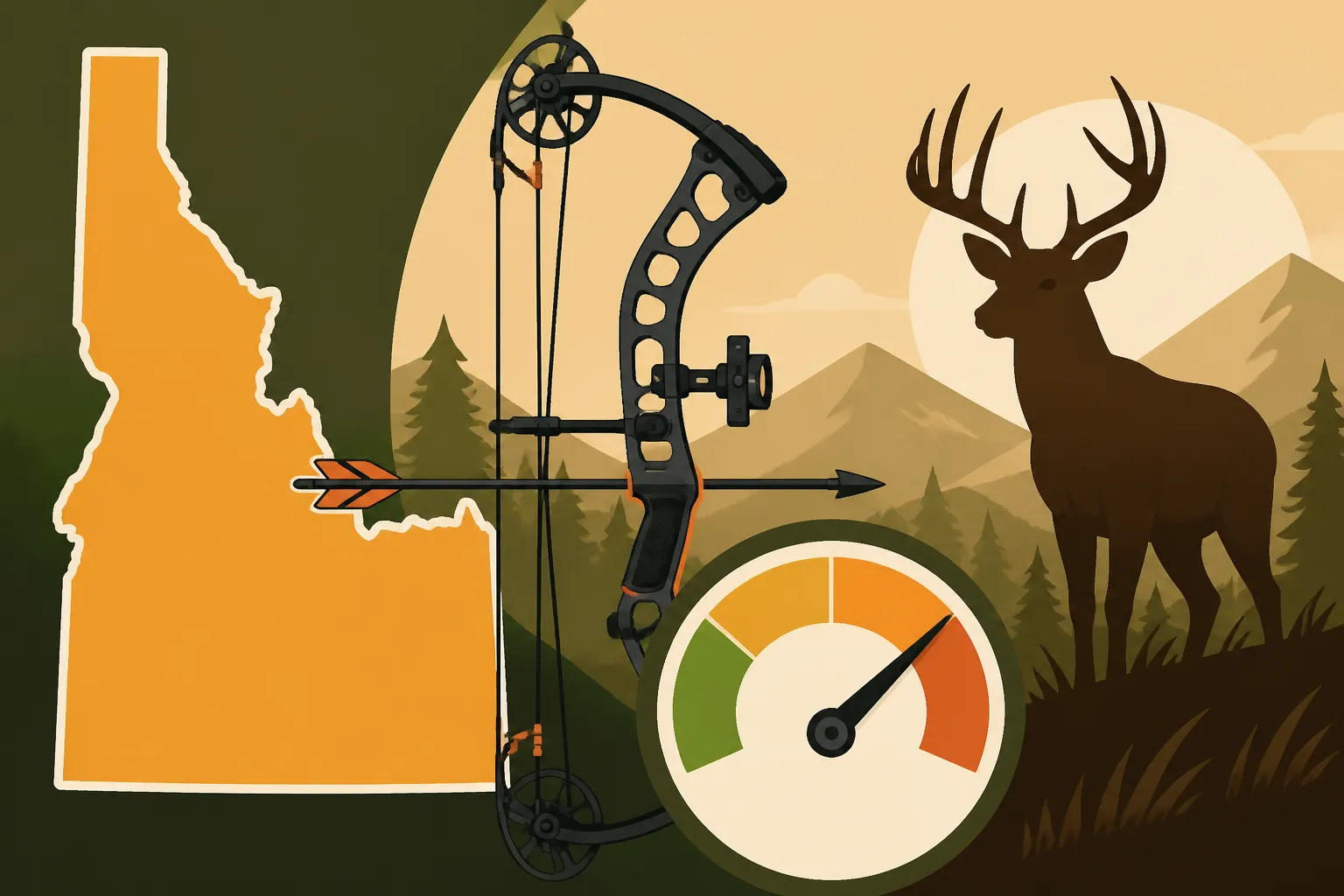
Idaho Fish and Game sets a clear minimum: any bow used for hunting big game must have a peak draw weight of at least 40 pounds. This isn't a suggestion; it's a hard and fast rule. This requirement applies uniformly across all species classified as "big game" in Idaho, which includes everything from deer and elk to bear and mountain lion. There’s no sliding scale for different animals; if it’s big game, your bow needs to hit that 40-pound mark.
It’s crucial to understand what "peak draw weight" means. For most modern compound bows, this refers to the maximum weight achieved during the draw cycle, before the let-off kicks in. For traditional bows like recurves and longbows, it's the weight measured at a specific draw length (which we’ll get into next). The intent is to ensure that the bow, at its full power, can generate the necessary force for ethical hunting. For a deeper dive, our guide on Idaho Requires a 40-Pound Bow at a 28-Inch Draw outlines this foundational rule in detail. This ensures that every archer is starting with a minimum power level to ensure a humane harvest.
How Draw Weight is Measured in Idaho
The specific method for measuring draw weight is just as important as the weight itself. Without a standardized approach, there would be endless confusion and inconsistency, making regulation enforcement nearly impossible. Idaho, like many other states, adopts an industry-standard method to keep things clear and fair for everyone.
The Standard 28-Inch Draw Length Measurement
The 28-inch draw length isn't just a random number; it's an industry-wide standard for measuring the static draw weight of a bow, particularly traditional bows. When you see a recurve or longbow advertised as, say, "50 lbs @ 28 inches," that means if you draw that bow back to exactly 28 inches, it will register 50 pounds on a scale. This is how Idaho Fish and Game expects the minimum 40-pound threshold to be met for all bows, regardless of your personal draw length. For a full explanation of this measurement, check out our piece on How Idaho Measures Draw Weight at 28 Inches.
This can be a significant point of confusion, especially for archers with a personal draw length shorter or longer than 28 inches. If your personal draw length is, for instance, 26 inches, a recurve rated at 40 lbs @ 28 inches might only pull around 36-38 pounds at your actual draw. Conversely, if your draw length is 30 inches, that same bow would pull more than 40 pounds. The key takeaway is that the bow itself must be capable of achieving 40 pounds at the 28-inch mark. For compound bows, which are adjustable and designed for a specific draw length, you'll need to ensure that when set to your draw length, its peak weight during the draw cycle reaches at least 40 pounds. It's not about what you pull, but what the bow is rated to pull at that standardized point.
Equipment for Verifying Draw Weight
To ensure your bow meets the 40-pound minimum, especially if you're using an older bow or have recently adjusted a compound, you'll need a reliable way to measure its draw weight. Bow scales are the essential tool for this, and they come in two main types: digital and analog. Digital scales offer precise readings, often to the tenth of a pound, while analog scales provide a physical needle reading. Both are acceptable as long as they are accurate.
Using a bow scale properly is straightforward but requires a little attention to detail. For traditional bows, you'll attach the scale to the bowstring, then slowly draw the bow back to exactly 28 inches, noting the highest reading. For compound bows, you'll pull the bow to its full draw, letting the string come all the way back into the valley (where the let-off engages), and record the peak weight achieved before the let-off. Some scales have a "peak weight hold" feature that simplifies this. It's a good practice to check your bow's draw weight regularly, especially if you're traveling, storing it in extreme temperatures, or just haven't shot it in a while, as materials can sometimes settle or components might shift slightly. This proactive check ensures you're always within legal limits and performing optimally.
Different Bow Types and Draw Weight Considerations
Each type of bow brings its own unique characteristics to the field, and understanding how the 40-pound draw weight minimum applies to each is crucial. It’s not a one-size-fits-all discussion, especially when you factor in modern innovations like let-off or the timeless simplicity of traditional archery gear.
Compound Bows and Let-Off
Compound bows are incredibly popular for good reason: they offer impressive speed, accuracy, and often, a comfortable shooting experience thanks to their cam system and let-off. Let-off is a feature where, once you've drawn the bow to its full extent, the weight you're actually holding significantly drops, sometimes by as much as 80-90% of the peak draw weight. This allows you to hold at full draw for longer, giving you more time to aim steadily.
However, the Idaho regulation specifies peak draw weight, not holding weight. So, if your compound bow is set to a peak draw weight of 55 pounds, but only holds 10 pounds at full draw (an 82% let-off), it still easily meets the 40-pound minimum. The key is that the bow must reach at least 40 pounds at some point during the draw cycle. Many modern compound bows are highly adjustable, allowing you to increase or decrease the draw weight within a certain range by adjusting limb bolts or cam settings. Always ensure that these adjustments keep your bow above the 40-pound peak minimum. If you're curious about the mechanics, our article on Compound Bow Let-Off and Measured Draw Weight delves deeper into how this works and its implications for hunters. It's a fantastic advantage for steady aiming, but don't confuse it with the peak measurement for legal compliance.
Recurve and Longbow Specifics
Traditional bows, like recurves and longbows, offer a different kind of challenge and reward. They lack the let-off system of compounds, meaning you hold the full draw weight throughout your aim. This demands more physical strength and disciplined form. Manufacturers typically mark the draw weight of traditional bows directly on the limb, often stating something like "45# @ 28"" (45 pounds at a 28-inch draw). This rating is exactly what Idaho's regulation is looking for.
If you're hunting with a traditional bow, you need to be absolutely sure that its stated draw weight, measured at 28 inches, is at least 40 pounds. If your personal draw length is shorter than 28 inches, the actual weight you're pulling will be less than the advertised weight, but the bow's inherent rating must still be 40 lbs @ 28 inches or more. For hunters considering traditional bows, it's vital to build up the necessary strength and refine your form to comfortably and accurately shoot a bow that meets or exceeds this minimum. You don't just want to pull it; you want to shoot it well and consistently. For those wondering about the power needed for larger game, our guide on Recurve Poundage That Will Kill an Elk offers valuable insights into bow performance for elk.
Crossbows and the Idaho Draw Weight Rule
Crossbows are a somewhat different animal when it comes to Idaho's draw weight regulations, and it's important not to conflate them with vertical bows. Generally speaking, crossbows are not subject to the same "peak draw weight at 28 inches" rule in the same way compound, recurve, and longbows are. Crossbows have their own specific set of regulations regarding minimum draw weight and bolt length, but these are distinct from the vertical bow requirements.
In Idaho, crossbows typically fall under "short-range weapon" seasons or specific controlled hunts, not necessarily general archery seasons where the 40-pound vertical bow rule applies. When using a crossbow, you'll need to consult the Idaho Fish and Game regulations for crossbow-specific requirements, such as minimum draw weight (often higher than 40 pounds, but measured differently, typically by the manufacturer's rating) and minimum bolt length. It's a common misconception that all bows fall under the same category, but the rules are quite different. If you're planning on using a crossbow, definitely refer to our article: Does a Crossbow Count as a Short-Range Weapon? for clarity on their specific legal standing and use in Idaho hunts.
| Bow Type | Idaho Minimum Draw Weight Rule | Measurement Standard | Let-Off Feature | Common Applications |
|---|---|---|---|---|
| Compound | 40 lbs Peak Draw Weight | Peak weight during draw cycle | Yes (significant) | Big Game, Target Archery |
| Recurve | 40 lbs @ 28 inches | Measured at 28" draw length | No | Big Game, Traditional Archery, Bowfishing |
| Longbow | 40 lbs @ 28 inches | Measured at 28" draw length | No | Big Game, Traditional Archery |
| Crossbow | Separate Regulations (often higher) | Manufacturer's rating | N/A (cocking device) | Short-Range Weapon, Disabled Hunter Permits |
Ensuring You Meet the 40-Pound Minimum
Knowing the rule is one thing; consistently meeting it and performing effectively with your bow is another. It's not just about legal compliance; it's about being a responsible, capable hunter in the field. This often involves a combination of personal preparation and equipment optimization.
Building Strength and Proper Form
If you're struggling to comfortably draw a 40-pound bow, or if you find yourself shaky at full draw, it's time to invest in your physical conditioning and shooting technique. Drawing a bow, especially repeatedly during practice or under the adrenaline of a hunt, requires specific muscle groups in your back, shoulders, and core. Incorporating exercises like resistance band pulls, rows, and shoulder presses can significantly improve your ability to handle heavier draw weights.
Beyond sheer strength, proper shooting form is paramount. A strong, consistent form allows you to efficiently transfer power from your body to the bow, making even a heavier draw feel smoother. Focus on engaging your back muscles to draw the bow, maintaining a solid anchor point, and following through with each shot. Consistent practice, even with a lighter practice bow or a resistance band, will build the muscle memory and stamina needed. Remember, you don't just need to pull 40 pounds; you need to be able to control 40 pounds for an accurate and ethical shot. Investing time in your physical readiness means you'll be more confident and effective when it counts.
Bow Tuning and Arrow Selection
Meeting the draw weight minimum is just the starting line. To truly ensure ethical harvesting, your bow setup needs to be finely tuned, and your arrow selection needs to be spot-on. A well-tuned bow is one where the arrow flies straight and true, without porpoising or fishtailing, maximizing the energy it carries. This involves checking things like cam timing, arrow rest alignment, and nock point. Even a few pounds of draw weight can feel very different if your bow isn't tuned correctly. Our article on Bow Tuning Worth Doing Before a Mountain Hunt offers an excellent step-by-step guide to dialing in your setup for optimal performance in rugged terrain.
Equally important is selecting the right arrow. A heavy, well-constructed arrow, paired with a sharp, cut-on-contact or solidly built mechanical broadhead, will penetrate much better than a light arrow, even at the same draw weight. The goal is momentum and FOC (front of center) balance to drive through hide, muscle, and bone. You've got to make sure your broadhead is legal too; check out Fixed Blade Against Mechanical Broadheads on Elk for the Idaho specifics. Remember, the combination of draw weight, arrow weight, and broadhead design is what ultimately determines terminal performance. Don't skimp on any of these elements. If you're looking for more details on arrow dynamics, our post on Arrow Weight That Gets Through an Elk provides a comprehensive overview.
What to Do If Your Bow Doesn't Measure Up
Discovering that your bow doesn't meet the 40-pound minimum can be a deflating moment, but it's a problem with clear solutions. The most straightforward path for compound bow users is to adjust the draw weight. Most compound bows have limb bolts that allow for a significant range of adjustment. Turn them clockwise to increase draw weight, counter-clockwise to decrease. Always make equal adjustments to both limbs and never exceed the manufacturer's recommended maximum turns. If you're unsure, take it to a reputable pro shop like one found in Boise or Idaho Falls, where they can make the adjustments and verify the weight on a calibrated scale.
For traditional archers, adjusting draw weight isn't usually an option; their bows are typically built to a specific weight. If your recurve or longbow is under 40 pounds at 28 inches, your main options are to acquire a new, heavier-poundage bow or to improve your form and strength to such an extent that you can handle a higher-rated traditional bow. The consequences of heading afield with an illegal bow are severe, including fines, confiscation of equipment, and loss of hunting privileges. It's simply not worth the risk. Make sure you're compliant before you ever step into the field.
The Broader Context of Archery Regulations in Idaho
While draw weight is a fundamental aspect of Idaho's archery regulations, it's just one piece of a larger puzzle. A responsible archer understands the full scope of rules that govern their equipment and conduct in the field.
Beyond Draw Weight: Other Archery Restrictions
Idaho Fish and Game has a comprehensive set of rules for archery equipment that extends far beyond just draw weight. For instance, broadhead regulations are critical. You're typically required to use broadheads with at least two cutting edges and a minimum cutting width. This generally means no bludgeon-type points for big game. Mechanical broadheads are often legal, but they must meet specific deployed diameter requirements. This is where our article on Fixed Blade Against Mechanical Broadheads on Elk can be a lifesaver, breaking down what's allowed and what's not.
Then there are accessories. Lighted nocks, which help track your arrow's flight and locate it after a shot, are legal in Idaho. We discuss this in more detail in Whether Lighted Nocks Are Legal for Bowhunters. Release aids, which mechanically assist in releasing the string, are also permitted. For a full rundown on these devices, our piece on Are Release Aids Allowed for Archery Hunting? is a great resource. Understanding all these nuances ensures you're not just legally compliant, but also employing the most effective and ethical tools for your hunt. Don't let a small oversight ruin an otherwise perfect hunt.
Utilizing Resources Like GoHunt for Regulations
Staying on top of hunting regulations can feel like a full-time job. The Idaho Fish and Game website is the ultimate authority, and you should always consult their current rule book. However, navigating dense legal language isn't always easy. This is where modern hunting resources and tools come into play. Platforms like GoHunt provide an invaluable service by aggregating and simplifying this information, making it more accessible and easier to understand.
GoHunt is a fantastic resource for checking current regulations, finding draw odds, and e-scouting specific units. They often break down complex rules into digestible formats and keep their information up-to-date with the latest changes from Fish and Game. Their mapping tools, in particular, can help you visualize unit boundaries and understand how different regulations apply to specific areas. Using a service like GoHunt can significantly streamline your pre-hunt planning, allowing you to focus more on preparation and less on legal deciphering. Always cross-reference with the official Idaho Fish and Game regulations, but a good supplementary tool like GoHunt can save you a lot of time and potential headaches. For general trip planning and understanding the digital tools available, our comprehensive guide, A Walkthrough of the Idaho Hunt Planner, is also an excellent starting point.
Disclaimer
Please remember that hunting regulations can change frequently. While this guide aims to provide accurate and up-to-date information, it is your sole responsibility to consult the most current Idaho Fish and Game regulations prior to any hunting activity. This content is for informational purposes only and does not constitute legal advice.