Two-Way Radio Use Between Hunting Partners
There’s nothing quite like the immense landscapes of Idaho, with its vast timber, deep canyons, and expansive sagebrush country. But while the scenery is breathtaking, it also means that getting separated from your hunting partner can happen in the blink of an eye, turning a great day into a serious safety concern or a missed opportunity. This guide is all about how two-way radios can be your best friend in the Idaho backcountry, offering crucial communication that keeps you safe, coordinated, and successful.
Why Radios Are a Game Changer for Idaho Hunters
Hunting in Idaho often means covering significant ground, whether you're still-hunting through dense timber, navigating a steep canyon, or glassing across open breaks. In such dynamic environments, relying solely on hand signals or shouting is simply impractical and often ineffective. Two-way radios bridge this communication gap, making them an indispensable tool for any hunting party, whether you're after mule deer in the high desert or bugling elk in Idaho's timbered zones.
Enhancing Safety and Peace of Mind
The primary benefit of carrying two-way radios is the undeniable boost in safety and the peace of mind it brings. Imagine this scenario: you've split up with your partner to cover more ground in a thick patch of national forest. Suddenly, one of you takes a fall on slippery ground or gets turned around by an unexpected drainage. Without a radio, reaching out for help or even just letting your partner know your status can be incredibly difficult, if not impossible, especially if cell service is non-existent, which it often is in Idaho's remote areas.
With radios, a simple call can instantly connect you. You can quickly relay your location, report an injury, or simply confirm that you're safe and on track. This capability is critical when hunting dangerous game like black bears, where knowing your partner's exact position can prevent accidental encounters or provide immediate backup if an animal is wounded. The ability to communicate freely means you can focus more on the hunt and less on worrying about your partner’s well-being, knowing a quick check-in is always possible.
Moreover, radios allow you to stay updated on environmental changes. A sudden shift in wind direction, a fast-moving storm rolling in, or even spotting another hunting party nearby can all be communicated instantly. This kind of real-time information is invaluable for making safe, timely decisions that affect your entire hunt. Staying connected just makes the entire experience safer and more enjoyable, especially when you're miles from the nearest road and deep in the wilderness.
Seamless Coordination in the Field
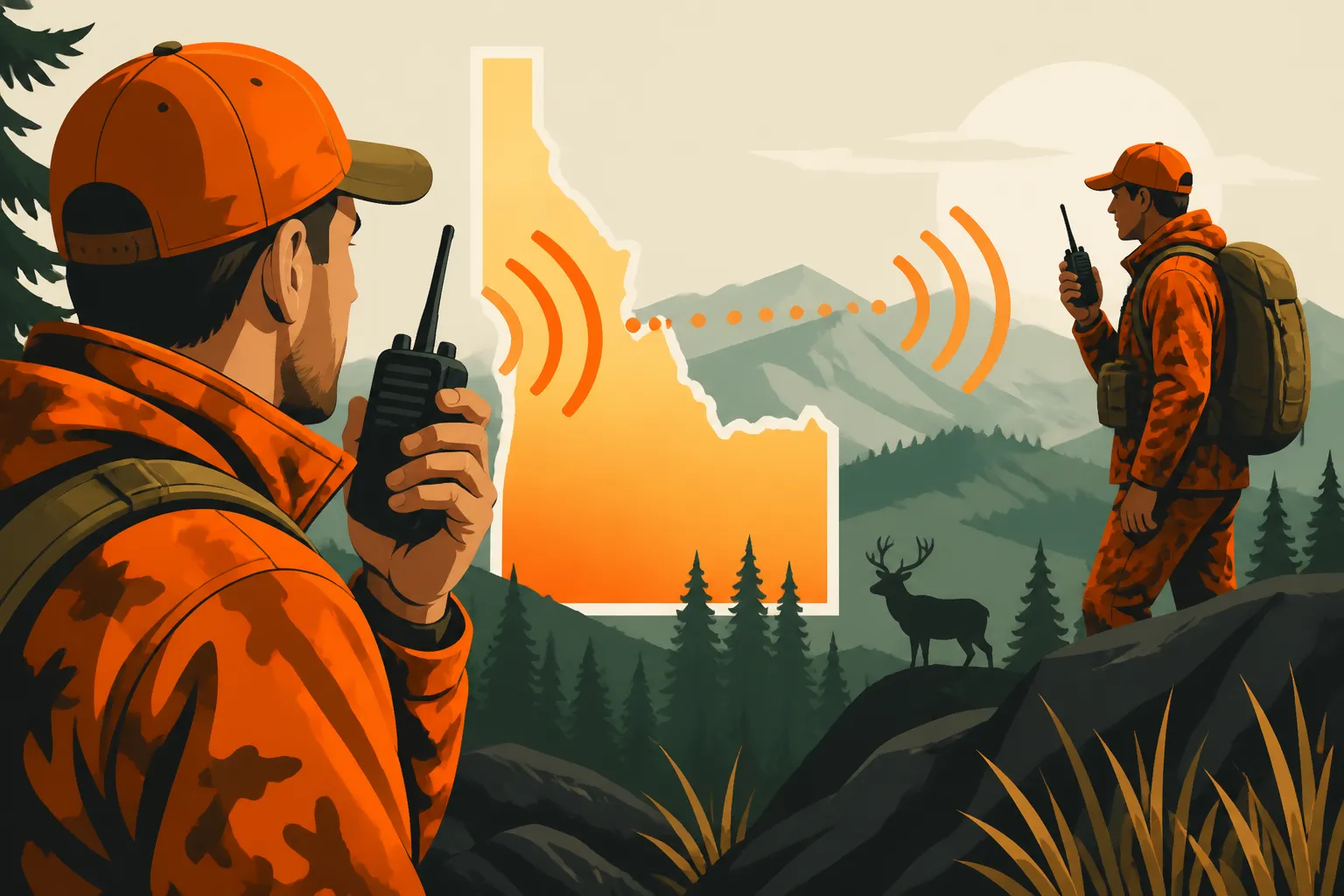
Beyond safety, two-way radios excel at facilitating real-time tactical coordination that can directly impact your success. Picture a situation where you're glassing a distant ridge, and your partner is stalking through a timbered draw below. If you spot a group of elk moving towards your partner, you can immediately radio instructions, guiding them into a better position or alerting them to adjust their approach. This kind of precise, simultaneous action is nearly impossible without reliable communication.
For instance, when calling elk, one hunter might be bugling from a distance while another moves in closer, anticipating the bull's response. A radio allows the caller to describe the bull's reaction, how it's moving, and exactly when to be ready for a shot. This intricate dance would fall apart without instant feedback between partners. Similarly, when trying to push a patch of cover for mule deer, radios enable hunters to coordinate their movements, ensuring proper spacing and coverage without leaving gaps or spooking animals unnecessarily.
This coordination extends to basic logistical movements as well. If one hunter needs to circle back to the truck for forgotten gear or to reposition for a different angle, they can communicate their intentions and estimated return time, keeping everyone on the same page. This prevents wasted time and confusion, ensuring the entire hunting effort remains efficient and productive. Ultimately, radios transform individual hunters into a cohesive, highly effective team.
Minimizing Disturbance and Maximizing Stealth
One of the often-overlooked advantages of using radios is their role in maintaining stealth and minimizing disturbance to game animals. Imagine needing to communicate with your partner who is 400 yards away in a dense thicket. Without a radio, your options are limited to yelling, whistling, or walking over to them—all of which are loud, conspicuous, and highly likely to spook any game within earshot. This is particularly true in areas where animals are accustomed to human pressure, such as many of Idaho's national forest grounds.
With a radio, you can use a quiet, hushed voice, or even a silent vibrate alert on some models, to get your partner's attention. This allows you to discuss strategy, relay animal sightings, or coordinate movements without breaking the silence of the woods. You can spread out, cover more ground, and effectively communicate across distances that would otherwise be impossible to bridge quietly. This significantly reduces your acoustic footprint, keeping you a stealthier presence in the field.
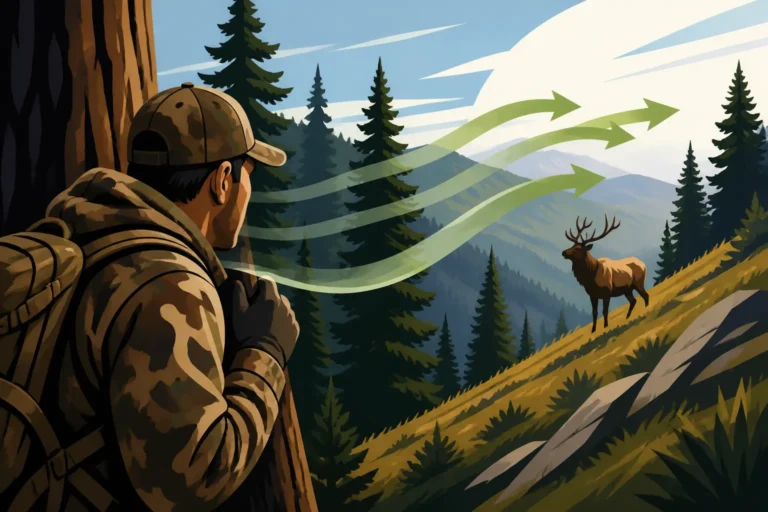
Furthermore, radios help reduce the amount of human scent you're spreading. Instead of having to physically move to your partner to convey information, you can stay put, allowing your scent cone to remain localized. This is a huge advantage when you're trying to play wind direction on a timbered stalk or are set up downwind from a potential game trail. Every small detail counts when you're trying to get within range of a wary Idaho big game animal, and silent communication via radio is a powerful tool in your arsenal.
Understanding the Rules and Realities of Radio Use in Idaho
While two-way radios offer incredible benefits, it's crucial to understand the regulatory landscape and the practical limitations they possess, especially when hunting in Idaho's diverse terrain. The technology isn't "set it and forget it," and knowing the legalities and how different conditions affect performance is key to effective use.
FRS vs. GMRS: What You Need to Know for Hunting
When you're looking at two-way radios for hunting, you'll primarily encounter two main types: FRS (Family Radio Service) and GMRS (General Mobile Radio Service). The key difference boils down to power output and licensing requirements. FRS radios are low-power devices (typically 0.5 to 2 watts) that operate on 22 shared channels. They are license-free, readily available, and generally sufficient for short-range communication, perhaps within a couple of hundred yards in open terrain or around camp. However, in thick timber or rugged Idaho canyons, their range can diminish rapidly.
GMRS radios, on the other hand, offer significantly higher power output, sometimes up to 5 watts for handheld units, and can even reach 50 watts for mobile units. They use the same 22 channels as FRS but also have 8 additional dedicated GMRS channels and GMRS repeater capability for extended range. The increased power means better penetration through obstacles and a more reliable signal over longer distances, which is often essential for the vastness of an Idaho elk hunt. However, operating a GMRS radio requires a license from the Federal Communications Commission (FCC).
For serious hunting in Idaho's backcountry, GMRS is almost always the superior choice due to its increased range and reliability. While FRS might be fine for a short walk around camp, trying to coordinate a complicated stalk or ensure safety over a mile or more of broken country often demands the extra power and clarity that GMRS provides. Thinking about your hunt through the Idaho Hunt Planner can help you visualize the distances and terrain you'll be covering, solidifying the need for reliable communication.
Licensing and Responsible Channel Use
The FCC license for GMRS radios is not per radio, but per family (or individual, if you're not part of a family unit). Once obtained, everyone in your immediate family can use your licensed GMRS radios. The application process is relatively straightforward and can be completed online through the FCC's Universal Licensing System (ULS). The license is valid for ten years and usually costs around $35. It's a small investment for the enhanced safety and communication capabilities it unlocks for your hunting party.
Responsible channel use is also paramount. While FRS and GMRS channels are shared, the use of "privacy codes" (also called sub-channels or CTCSS/DCS tones) helps filter out unwanted conversations from other users on the same main channel. However, it's important to remember that these codes don't actually privatize the channel; they just mute your radio unless it receives a signal with the matching code. Anyone else on the same main channel can still hear your conversation if they're not using a privacy code, or if they happen to use the same one.
Therefore, it's good practice to keep sensitive information off the airwaves and to use brief, clear communication. In highly trafficked areas, you might hear other hunters or outdoor enthusiasts. Being respectful and keeping your transmissions concise ensures that everyone can share the airwaves effectively. Think of it like a party line—it's not truly private, so act accordingly.
Overcoming Terrain Challenges and Signal Limitations
One of the biggest realities of two-way radio use in Idaho is that advertised range is almost always an optimistic best-case scenario based on line-of-sight communication over flat, open water. In the real world of deep canyons, towering timber, and rugged mountain peaks, that range will be drastically reduced. Mountains and large ridges create "radio shadows" where signals simply cannot pass through. Dense timber absorbs and scatters radio waves, further limiting effective range.
For example, trying to talk from the bottom of a steep river break to a partner on the opposite side of a ridge crest is often futile, even with powerful GMRS radios. The signal just won't bend around the mountain. Understanding this limitation is crucial for planning your communication strategy. Before you head into a unit, consider the topography. Using tools like GoHunt's mapping features can help you identify potential dead zones based on elevation and terrain, allowing you to anticipate communication challenges.
To combat these limitations, consider carrying a radio with a removable antenna, which allows you to upgrade to a longer, more efficient antenna for better performance. Also, remember that moving to higher ground or a more open area can often re-establish a lost connection. If you're consistently losing signal, it's a good indicator that you need to adjust your positions or resort to other forms of communication, such as satellite devices. Radios are powerful, but they still operate under the laws of physics, especially in challenging environments like those found across Idaho's diverse hunting landscape.
Choosing and Using Your Hunting Radios Effectively
Selecting the right two-way radio for your Idaho hunting adventures involves more than just picking the first model you see. You need to consider specific features that cater to the ruggedness of the backcountry, and then you need to master the art of using them efficiently in the field. Thoughtful preparation and practice will ensure your radios are an asset, not an afterthought.
Key Features for Idaho's Rugged Landscape
When you’re looking at radios for hunting, think about the specific demands of Idaho’s mountains and forests. First and foremost, durability and weatherproofing are non-negotiable. Look for an IP (Ingress Protection) rating that indicates resistance to dust and water. An IP67 rating, for instance, means the radio is fully dust-tight and can withstand immersion in water up to 1 meter for 30 minutes, which is ideal for unexpected rain showers or accidental drops in a stream. Brands like Midland and Motorola offer a variety of rugged GMRS radios that fit this bill, designed to take a beating.
Power output is another critical feature. As discussed, higher wattage means better range, especially in challenging terrain. Look for handheld GMRS radios that offer 3-5 watts of power. While no handheld radio will give you crystal-clear communication for twenty miles through dense timber, those extra watts make a noticeable difference in penetration and clarity over realistic hunting distances. Some radios also allow you to switch between high and low power modes, which is great for conserving battery when you only need short-range communication.
Finally, consider additional features that enhance usability. A silent vibrate mode is incredibly useful for receiving messages without making noise that could spook game. NOAA weather alerts can be a lifesaver in volatile mountain weather, keeping you informed of sudden storms or temperature drops. VOX (Voice-Operated Exchange) allows for hands-free operation, which is great when you’re climbing or packing an animal. A bright, clear display and large, easy-to-use buttons are also important, especially if you'll be operating the radio with gloves on in cold weather. Taking the time to research these aspects, perhaps through platforms like GoHunt, can make all the difference in your in-field experience.
Power Management for Extended Hunts
One of the most common complaints about two-way radios in the backcountry is battery life. There's nothing worse than needing to communicate and finding your radio dead. Most modern radios use rechargeable Lithium-ion battery packs, which are convenient but require careful management on multi-day hunts where charging points are scarce. Always carry fully charged spare batteries if your model allows it. For situations where spares aren't practical, consider radios that can also run on standard AA or AAA alkaline batteries as a backup.
To maximize battery life, adopt smart power management strategies. Use the low-power setting whenever possible, especially for short-range communication or when talking from camp to a nearby spot. Minimize your transmissions; don't engage in lengthy chats. Keep the backlight dim or off, and turn off unnecessary features like weather alerts if you're not actively monitoring them. If your radio has a "power save" mode, enable it.
For extended trips, portable charging solutions are your best friend. Small, lightweight power banks designed for charging phones can often recharge radio battery packs multiple times. Solar chargers are another option, though their effectiveness can vary greatly depending on weather and tree cover. Consider integrating charging into your daily routine, topping off batteries whenever you have a moment of downtime, especially if you have a vehicle nearby where you can plug in. This foresight will keep your communications alive when you need them most, whether you’re coordinating a pack out after a successful hunt or checking in from a remote spike camp.
Developing Smart Communication Protocols
Effective radio communication isn't just about having the right gear; it’s about having a clear, agreed-upon system for using it. Before you even set foot in the field, establish communication protocols with your hunting partners. Decide on call signs for each person (e.g., "North Peak," "South Ridge," "Base Camp") to avoid confusion, especially if other groups might be on the same channel. Practice using these call signs. Agree on specific channels and privacy codes to use, and write them down.
Develop a set of brief, concise codes or phrases for common scenarios. For example, "Contact, North Peak" could mean "I see an animal, North Peak." "Moving low" could mean "I'm changing position, heading downhill." Avoid lengthy conversations that tie up the channel and drain batteries. Get straight to the point. If you need to relay complex information, confirm that your partner is ready to receive it, and then deliver it slowly and clearly. This structured approach ensures vital information is conveyed accurately and efficiently. For detailed terrain analysis, tools like E-Scouting an Idaho Unit Before the Season can help you map out potential communication routes and dead zones beforehand.
Always assume that others might be listening, even if you’re using privacy codes. Avoid sharing highly personal or sensitive information over the air. Finally, regular check-ins are crucial, especially when operating independently. Agree on a schedule, such as every hour or at specific landmarks, to confirm everyone’s location and status. This simple habit, combined with understanding Reading an Elk Zone Boundary on a Map and your own position, can prevent a minor separation from escalating into a serious situation. Remember that while radios are powerful, they are a tool, and their effectiveness is ultimately determined by how well you and your partners plan and execute your communication strategy.
Disclaimer
The information provided in this guide is for general informational purposes only and does not constitute legal advice. Hunting regulations, including those pertaining to radio use, can change. Always consult the official Idaho Fish and Game regulations or contact Idaho Fish and Game directly before your hunt to ensure you are in full compliance with all current laws and rules.