Merriam’s Turkey Through the Northern Timber
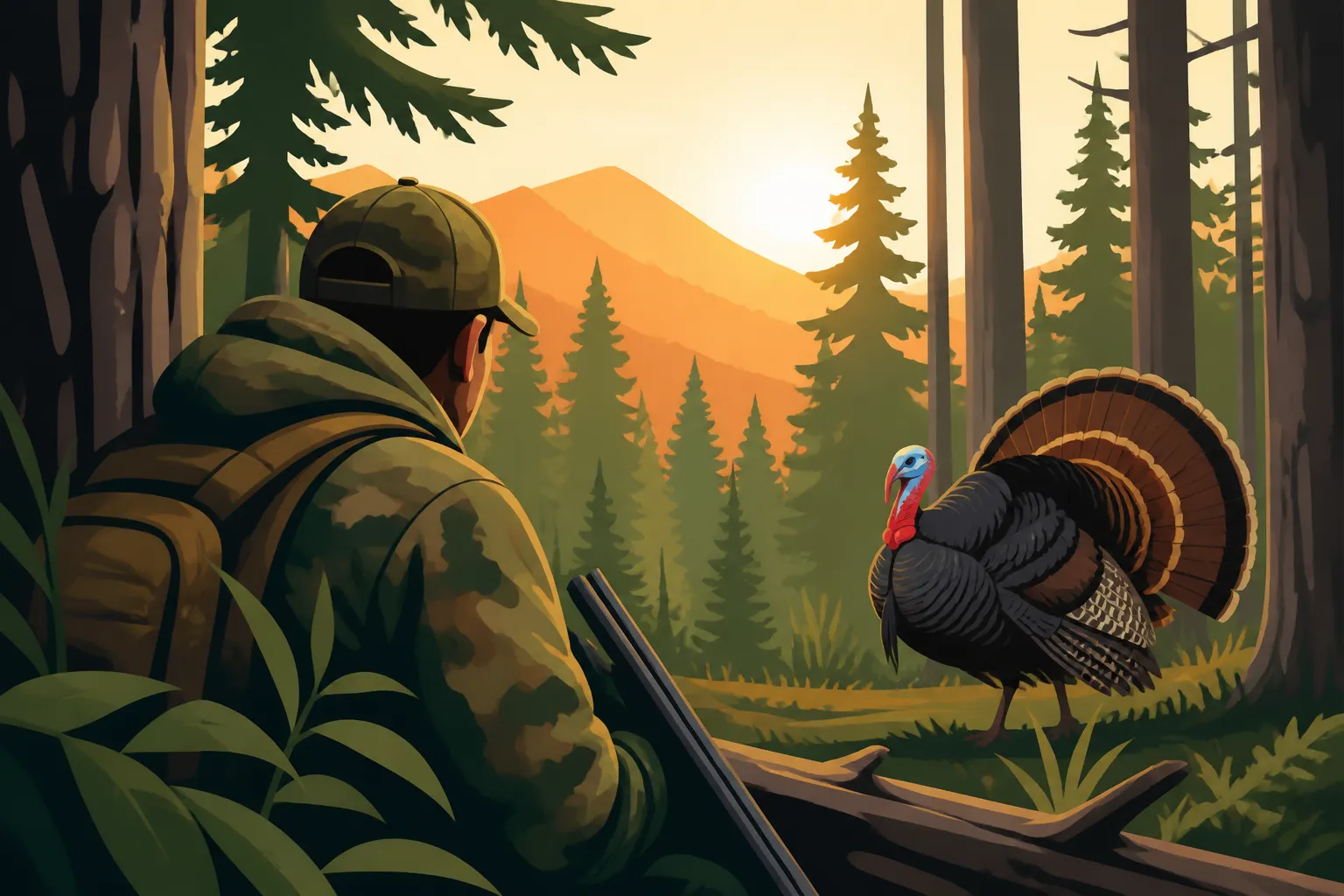
Hunting Merriam's turkeys in northern Idaho's vast timbered country is a challenge unlike any other. You're not dealing with open fields or sparse eastern hardwoods; instead, you're trying to outwit a sharp-eyed bird in dense, steep forests where visibility is limited and sounds play tricks on your ears. It's easy to get frustrated when that gobbler sounds like he's just over the ridge, only to realize he's a quarter-mile away, or worse, he's already moved silently through the thick underbrush. This guide will walk you through the specific behaviors of Merriam's turkeys in this demanding environment, effective scouting strategies, and the hunting tactics you'll need to increase your odds of success in the deep woods.
Understanding Merriam's Turkey Behavior in Northern Idaho
The Merriam's turkey in northern Idaho is a creature of its environment, shaped by the towering pines, steep draws, and sometimes rugged conditions of the high country. Their behaviors are distinctly different from their counterparts in more open, agricultural settings. To successfully hunt them, you first need to understand their daily rhythms and how they interact with the dense timber that defines their home.
Roosting Habits and Preferred Habitat
Merriam's turkeys in northern Idaho often prefer to roost in mature ponderosa pine trees, especially those with large, sturdy limbs that offer both security and a clear flight path. However, in areas where ponderosas are scarce, they will readily use other mixed conifer species like Douglas fir or grand fir, particularly those growing on ridge lines or along steep slopes where they can gain elevation quickly at dusk. The specific elevation they choose can vary greatly depending on the time of year and weather patterns. In early spring, they might be found on lower, south-facing slopes that warm up faster, melting snow and revealing fresh forage. As the season progresses and temperatures rise, they might move to higher, cooler elevations.
Locating these roosts can be one of the biggest hurdles. Unlike turkeys in areas with fewer trees, where a gobbler's call might echo for miles, the dense timber absorbs sound, making it incredibly difficult to pinpoint a roost site. You might hear a faint gobble, only to find yourself walking in circles, straining to triangulate its position. Often, finding a roost involves more detective work on the ground, looking for droppings, shed feathers, and "roost trees" with whitewash on the branches and ground below. These birds typically fly up to roost an hour or two before dark and fly down around first light. Knowing this window is critical for setting up close to them for a morning hunt.
Feeding Patterns and Food Sources
The diet of Merriam's turkeys in the northern timber is diverse and adapts to the changing seasons. In spring, they primarily forage for insects, fresh green shoots, and any remaining mast crops from the previous fall. They'll scratch through leaf litter for grubs, beetles, and spiders. As summer approaches, berries like huckleberries, serviceberries, and chokecherries become a crucial food source. Fall brings a bounty of pine nuts, acorns (if available), and various seeds.
Understanding these food sources is key to predicting their movements. Turkeys are constantly on the move, covering significant ground throughout the day as they search for food. In the timber, this means they often follow old logging roads, game trails, or open benches where foraging is easier. They'll also gravitate towards areas of recent disturbance, such as old burns or clear-cuts, where new vegetation growth provides excellent feeding opportunities. During dry spells, water sources like springs, seeps, or small creeks also become focal points, and you might find birds spending more time in these areas. The constant search for calories dictates where these birds will be, and a good hunter learns to "read" the timber for these signs of sustenance.
Calling and Gobbling Tendencies
Merriam's turkeys, particularly those in heavily timbered environments, can sometimes be a bit more reserved with their gobbling once they've hit the ground compared to their eastern cousins. They'll often gobble vigorously from the roost, especially right at fly-down time, advertising their presence. However, once their feet are on the forest floor, the dense woods can muffle their calls, and they may not gobble as frequently, making them notoriously challenging to locate. This doesn't mean they won't respond to calls, but your approach needs to be nuanced.
Locator calls, such as owl hoots or crow calls, are invaluable for getting a shock gobble from a roosted bird or one already on the ground. However, once you've located a bird, switching to more seductive, softer turkey calls is often the best strategy. Subtle hen yelps, clucks, and purrs can be incredibly effective. Over-calling in timber can quickly spook a bird that might be much closer than you think, especially when sound is distorted by the trees. The goal isn't to make them gobble incessantly, but to convince them a hen is receptive and waiting. Mastering the art of soft, intermittent calling, letting the timber work for you, is essential. Think about how Locator Bugles for Finding Bulls at Dawn are used, but apply that principle with a more subtle touch for turkeys in thick cover.
Scouting Strategies for Merriam's in Idaho's Timber
Successful turkey hunting in Idaho's northern timber hinges on meticulous scouting. You can't just show up and expect birds to be everywhere. The vastness of the landscape demands a strategic approach, blending modern e-scouting tools with old-fashioned boots-on-the-ground effort. This combination will allow you to narrow down productive areas and increase your chances significantly.
E-Scouting and Topographical Map Reading
Before you even step foot in the woods, spend significant time e-scouting. Tools like GoHunt or other detailed mapping applications are your best friends here. Look for key topographical features:
- Ridge Lines: Turkeys often travel along or roost on ridges, offering them visibility and a clear fly-down path.
- South-Facing Slopes: These areas receive more sunlight, melting snow faster in spring and promoting early green-up, which attracts foraging birds.
- Water Sources: Identify springs, seeps, and small drainages. Turkeys need water daily, especially during dry periods.
- Openings: Look for natural clearings, old burns, or past logging activity (indicated by different forest canopy textures on satellite imagery). These create crucial feeding areas.
- Access Points: Pinpoint logging roads, old skid trails, and hiking paths that can get you deep into potential turkey habitat.
- Forest Type: Satellite imagery can often help you distinguish between dense timber and more open ponderosa stands, giving you clues about potential roosting sites.
By marking these features on your digital map, you can create a hit list of areas to investigate in person. Remember, E-Scouting an Idaho Unit Before the Season isn't just for big game; it's invaluable for turkey hunting too. These digital maps help you understand the elevation changes and potential travel corridors, allowing you to visualize how turkeys might move through the landscape.
Boots-on-the-Ground Reconnaissance
Once you've identified promising areas through e-scouting, it's time to hit the ground. This is where you confirm your theories and find the real-time sign. Spend your scouting trips listening for gobblers at dawn and dusk. Drive or walk logging roads and listen for distant calls. Crucially, look for physical evidence of turkeys:
- Tracks: Look for distinct three-toed tracks in soft dirt along trails, logging roads, or near water sources.
- Droppings: Turkey droppings are distinct. Male droppings are J-shaped or spiral, while hen droppings are more coiled or blob-like. Fresh droppings indicate recent activity.
- Feather Dustings: These are areas where turkeys dust bathe, leaving depressions in soft soil and scattered feathers.
- Scratch Marks: Turkeys scratch through leaf litter and duff for food, leaving distinct V-shaped patterns.
- Roost Sign: As mentioned, look for whitewash, droppings, and feathers directly under large trees that could be potential roosts.
Pay close attention to subtle sounds. The rustle of leaves, the quiet cluck, or the soft putt can indicate turkeys nearby, even if they aren't gobbling. Walking quietly and observing the terrain, much like Reading Fresh Elk Sign in Dark Timber, will help you understand turkey patterns. Remember to move slowly and cover ground thoroughly.
Seasonal Movements and Habitat Shifts
Merriam's turkeys in northern Idaho, like all wild animals, adjust their movements based on the season and environmental conditions. Understanding these shifts can give you a significant advantage. In early spring, immediately after snowmelt, turkeys will often concentrate on lower, south-facing slopes and benches where the first green-up occurs and insects become active. These areas offer both food and warmth.
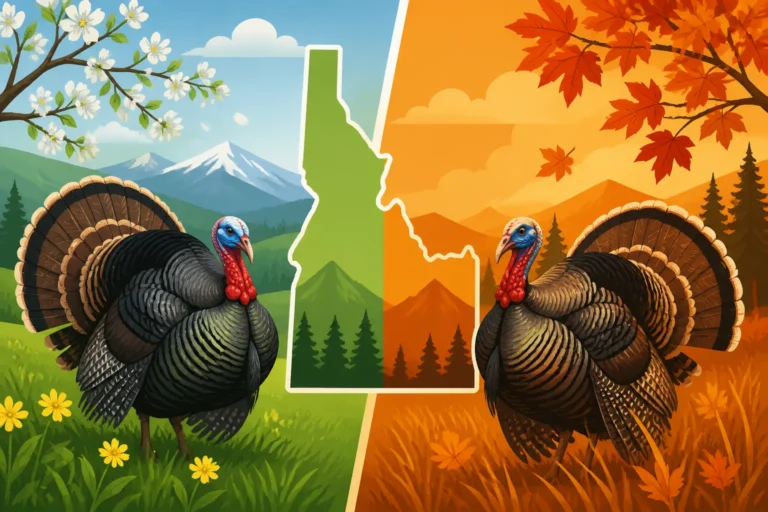
As the snow recedes further and the season progresses, they'll often move higher into the mountains, following the green-up and seeking out new food sources and breeding grounds. The timing of the rut can also influence where birds are found. Hens will be looking for nesting cover, often in thicker, more secluded areas, while gobblers will be strutting in more open spots trying to attract them. Knowing when Spring Against Fall Turkey Seasons in Idaho occur is crucial because the availability of certain food sources and the intensity of breeding activity will differ, influencing where you might find turkeys and how they respond to calling. A late spring might mean birds are still concentrated lower, while an early, warm spring could push them higher faster.
Hunting Tactics for Northern Idaho Merriam's
Once you've done your homework and understand the birds, it's time to put boots on the ground with a plan. Hunting Merriam's in northern Idaho's timber demands adaptability, patience, and a keen awareness of your surroundings. The tactics you employ will often be dictated by the bird's mood, the terrain, and the density of the forest.
Run-and-Gun vs. Sit-and-Wait Approaches
In the expansive northern timber, deciding between a "run-and-gun" and a "sit-and-wait" strategy is crucial.
- Run-and-Gun: This aggressive approach works well when you're covering vast areas of public land where birds might be scattered, or when you've located a hot gobbler that's moving. You'll move quickly, stopping every few hundred yards to send out a series of calls (yelps, cutting) and listen for a response. If you get a gobble, you quickly try to close the distance, set up, and call him in. This is particularly effective in less-pressured areas where turkeys might be more responsive and less wary. The key is to move silently between calling setups and be ready to set up quickly if a bird responds.
- Sit-and-Wait: This more patient approach is often effective near known roost sites at dawn, in areas with heavy sign, or around established travel corridors like old logging roads or benches. You find a good hide, set up with a clear shooting lane, and call sparingly. This strategy minimizes your movement and noise, making it ideal for wary birds or in extremely dense cover where mobility is limited. You might be waiting in one spot for an hour or more, much like Still Hunting Timber for Bedded Mule Deer, relying on the turkey's natural movement to bring it into range. This is often the best tactic if you know birds are in an area but aren't actively gobbling.
The timber presents unique challenges for both. Your run-and-gun requires extra stealth, as visibility is limited. Your sit-and-wait requires finding a spot that offers both cover and a decent view, which can be hard to come by.
Calling Techniques for Timbered Terrain
Calling Merriam's in thick timber requires a delicate touch. The sound doesn't carry as far, and it can be difficult for a gobbler to pinpoint your exact location, which can sometimes lead him to "hang up" just out of sight.
- Soft Calling: Often, less is more. Start with soft, subtle clucks, purrs, and quiet yelps. If a gobbler is close, an aggressive series of calls might spook him or make him suspicious.
- Using Terrain: Call from elevated positions if possible, as sound travels better downhill. If a bird is across a drainage, calling from your side of the drainage might be more effective than trying to cross it immediately. The terrain itself can act as a natural funnel or barrier.
- Patience and Pauses: After calling, wait. And then wait some more. Give the gobbler time to respond or to walk in silently. Merriam's often come in quietly, especially if they've been pressured.
- Change It Up: If a bird isn't responding to one type of call, try another. Sometimes a fly-down cackle or a series of cutting calls can trigger a response when yelps won't. Experiment with different hen voices. Remember, your calling strategy might shift depending on the specific timing within Spring Against Fall Turkey Seasons in Idaho.
Decoy Usage and Setup Challenges
Decoys can be a powerful tool for turkey hunting, but their effectiveness in northern Idaho's dense timber is often limited by visibility.
- When Decoys Shine: Decoys are most effective in more open areas like logging road clearings, old burn areas, or natural forest openings where they can be seen from a distance. If you have a gobbler hanging up just out of range, a decoy might provide the visual confirmation he needs to commit.
- Visibility Issues: In thick timber, a decoy might only be visible for a short distance, rendering it useless unless the turkey walks directly into its line of sight. This makes placement crucial and often difficult.
- Setup: If you do use a decoy, position it so it's visible from the direction you expect the turkey to approach. Place yourself roughly 15-20 yards behind the decoy, using natural cover like a downed log or a cluster of trees as a blind. This puts the bird's attention on the decoy and not on you.
- Avoid Overuse: Don't feel obligated to use a decoy on every hunt. Often, a good calling setup with natural concealment is more effective in the deep woods than fumbling with a decoy that may not be seen.
Gear and Safety Considerations for Northern Timber Turkey Hunts
Hunting Merriam's in northern Idaho's timber means you'll be covering rugged, often steep terrain, sometimes in unpredictable weather. Having the right gear and prioritizing safety are paramount for a successful and enjoyable hunt.
Essential Gear for Mountain Turkeys
Beyond your chosen weapon (shotgun or bow), here's a rundown of essential gear that will make your timber turkey hunt more comfortable and effective:
- Layered Clothing: The weather in northern Idaho can change rapidly, from chilly mornings to warm afternoons. Wear moisture-wicking base layers, a fleece or insulated mid-layer, and a waterproof/windproof outer shell. Camouflage is crucial, breaking up your outline in the dense woods.
- Footwear: Invest in comfortable, waterproof, and supportive hiking boots. You'll be covering miles on uneven ground.
- Navigation Tools: A reliable GPS device or a smartphone app like GoHunt with downloaded maps is non-negotiable. It's incredibly easy to get turned around in the vast, monotonous timber. Always carry a compass and a physical map as a backup.
- Turkey Calls: Carry a variety: mouth calls (diaphragms), pot calls (slate or glass), and a box call. Locator calls (owl, crow, coyote) are also essential.
- Turkey Vest: A good vest will keep your calls, ammo, water, snacks, and other essentials organized and accessible, reducing fumbling when a gobbler is closing in.
- Optics: While not as critical as for big game, a good pair of binoculars (8×42 or 10×42) can help you spot subtle movement or confirm a distant turkey's identity. Consider Binocular Size That Survives an All-Day Session for comfortable all-day glassing.
- Water and Snacks: Stay hydrated and fueled.
- First-Aid Kit: Small but comprehensive for minor cuts, blisters, and emergencies.
Navigating Steep and Dense Terrain
The mountains of northern Idaho are no joke. Expect steep ascents and descents, thick brush, and sometimes slippery conditions.
- Physical Conditioning: The better shape you're in, the more ground you can cover silently and efficiently. Start a workout routine well before your hunt, focusing on cardio and leg strength.
- Trekking Poles: These can be a lifesaver on steep, uneven terrain, providing stability and reducing strain on your knees.
- Silent Movement: Moving quietly through dense timber is an art. Pick up your feet, avoid snapping twigs, and watch where you place your weight. This skill is akin to Playing Wind Direction on a Timbered Stalk for big game, requiring constant awareness.
- Staying Oriented: Constantly check your map and GPS. Look for distinct landmarks, even small ones, to help you maintain your direction of travel. In dense fog or heavy cloud cover, it's easy to get disoriented.
Safety in Bear Country and Other Considerations
Northern Idaho is prime habitat for black bears and, in some areas, grizzly bears. Always be prepared.
- Bear Spray: Carry bear spray on your hip, readily accessible, and know how to use it. This is a non-lethal defense that can be incredibly effective, and often preferred over a firearm, especially when you consider Bear Spray Against a Sidearm in Grizzly Country.
- Make Noise: When moving through thick brush, especially in areas with limited visibility, make some noise to avoid surprising a bear. Clap your hands, talk loudly, or wear a bear bell (though quieter movement is preferred when actively hunting).
- Identify Other Hunters: Turkey hunting often involves camouflage, making it harder to spot other hunters. Assume every sound could be another hunter. If you see another hunter, make your presence known verbally, not by waving. Never shoot at sound or movement without positively identifying your target.
- Weather Preparedness: Carry emergency fire-starting tools, an emergency shelter (like a space blanket or small tarp), and extra layers. The weather can change quickly, especially at higher elevations.
- Communication: A satellite messenger device can be a lifesaver in areas without cell service, allowing you to send emergency messages or check in with family.
By preparing thoroughly, understanding your quarry, and practicing ethical and safe hunting practices, you can enjoy a rewarding Merriam's turkey hunt in the beautiful and challenging northern Idaho timber.
| Feature / Behavior | Merriam's in Open Country (e.g., Eastern ID/MT foothills) | Merriam's in Dense Northern Idaho Timber |
|---|---|---|
| Gobbling Frequency | Often vocal, especially on the ground. | More vocal on roost, can be quiet on ground. |
| Sound Carry | Carries far, easier to pinpoint. | Muffled by trees, difficult to triangulate. |
| Roosting Preference | Mature ponderosa pines with clear understory, often near edges. | Any large conifer offering stout limbs; often in steep, dense areas. |
| Visibility | High, allows for long-range spotting and decoy use. | Extremely limited, close-range encounters. |
| Foraging Strategy | Often in large flocks, moving through fields and forest edges. | Smaller groups, constantly scratching in dense timber, old roads. |
| Response to Calls | May come charging in; visual confirmation (decoy) is key. | More cautious, may hang up; soft, subtle calls often best. |
| Movement | Can be seen crossing open ground. | Moves silently through thick cover. |
| Scouting Focus | Open fields, food plots, clearings. | Ridge lines, south-facing slopes, old logging roads, water. |
| Decoy Effectiveness | Very effective in open setups. | Limited effectiveness due to low visibility. |
| Physical Demands | Moderate, often flatter terrain. | High, steep climbs, thick brush, rugged. |
Disclaimer
This article is for general informational purposes only and does not constitute professional advice. Laws, prices and regulations vary by location and change over time. Consult a qualified professional for guidance on your specific situation.