Locator Bugles for Finding Bulls at Dawn
There’s nothing quite like the feeling of waking up well before dawn, hiking through pitch-black timber or across an open ridge, and settling in, full of anticipation, only to be met with… silence. It’s a common frustration for elk hunters, especially when you know the bulls are out there, but they just aren't giving themselves away. This guide is all about changing that experience, showing you how to strategically use locator bugles at dawn to pinpoint those elusive Idaho bulls and kickstart your hunt with a solid direction.
The Early Morning Challenge and the Locator Bugle's Role
We’ve all been there: you’ve put in the legwork, studied your maps, and arrived in what looks like prime elk country before the sun even thinks about showing its face. Yet, as the sky begins to lighten, the forest remains stubbornly quiet. This is where the locator bugle becomes your best friend, transforming uncertainty into a tangible lead. It's not about trying to call an elk in for a shot right then and there; it's about getting a response, locating a bull, and then making a plan.
Why Bulls Respond to Locator Bugles Early
Elk, especially mature bulls, are creatures of habit and territoriality. As the first hints of dawn paint the eastern horizon, their world stirs. This transition from night to day is a key period for communication.
During the pre-rut and even into the thick of the rut, bulls are often checking in with their cows, establishing their dominance, and assessing other bulls in the area. A locator bugle, particularly one that sounds like an unfamiliar bull asserting itself, can often trigger a response. It’s like ringing a doorbell in their living room; they want to know who’s there. Even outside the peak rut, a bull might simply be curious, or he might respond to a challenge out of sheer instinct. They’re listening for competition, for potential cows, and sometimes, they just can’t resist responding to another bull. They're telling you, "Hey, I'm here, this is my turf." Knowing this behavior is crucial to understanding Bugle and Cow Call Timing Through September and making the most of your early morning efforts.
The Sound Profile of an Effective Locator Bugle
When it comes to throwing out a locator bugle, you're not trying to perfectly mimic a cow in heat or a contented herd bull. Your goal is simply to elicit a response. Think of it as a broad statement, a survey call. A loud, sharp, single-note bugle, or a short, somewhat aggressive challenge, often works best. You want it to cut through the stillness of the morning and demand attention.
Avoid overly complex sequences or drawn-out, breathy calls. You're not looking to seduce; you're looking to provoke a reaction. The volume is key here – you need it to travel. If you're in open country, you can really let it rip. In thick timber, a slightly less aggressive, but still clear, bugle can be more effective as the sound won't travel as far and you don't want to blow them out of the country if they're close. Don't be afraid to experiment a little with the tone, but generally, a clean, strong bugle that sounds like a bull checking in is your best bet.
Reading the Landscape for Calling Success
The terrain in Idaho is incredibly varied, from dense timber to wide-open sagebrush flats and steep, rugged breaks. How sound travels in these environments will dictate where and how you use your locator bugle. In thick timber, sound gets absorbed quickly, meaning your bugle won't carry as far. Here, you might need to move more frequently or use slightly softer, shorter calls if you suspect elk are nearby. The sound from your bugle hitting dense trees will also give you an idea of the acoustics of the area.
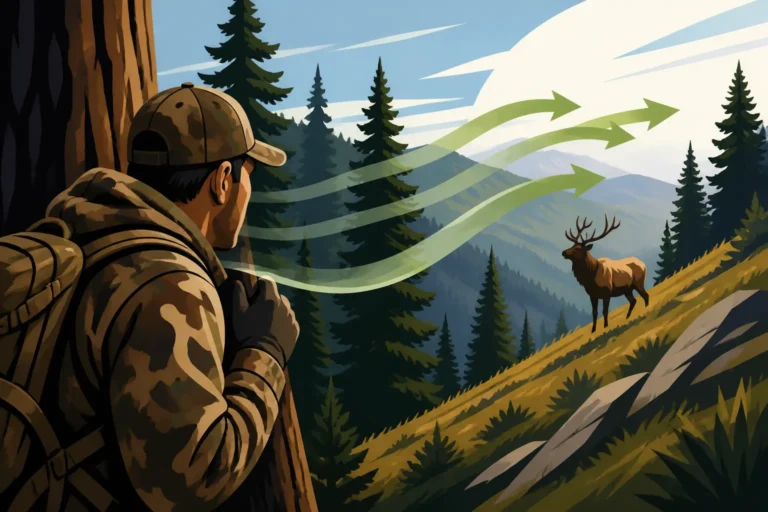
On the flip side, open canyons, bowls, and high ridges are natural amphitheaters. Sound can travel for miles, especially during the quiet, calm air of early morning. Positioning yourself on a ridgetop overlooking a basin, or on a point that juts out into a drainage, will give your bugle the best chance to be heard by distant bulls. Always consider the wind. Even a slight breeze can carry your sound away from the elk or, worse, carry your scent right to them. Try to call into the wind, or perpendicular to it, to maximize sound propagation while minimizing scent dispersion. Utilizing map tools, like those available on GoHunt, can help you identify these topographical advantages before you even step foot in the woods, allowing you to e-scout an Idaho unit before the season.
Executing the Locator Bugle Strategy
Once you understand the 'why' and 'where', it's time to focus on the 'how'. Executing a locator bugle strategy effectively is a delicate dance between patience, projection, and keen listening. It’s not just about making noise; it’s about making smart noise.
Timing Your Bugles for Maximum Impact
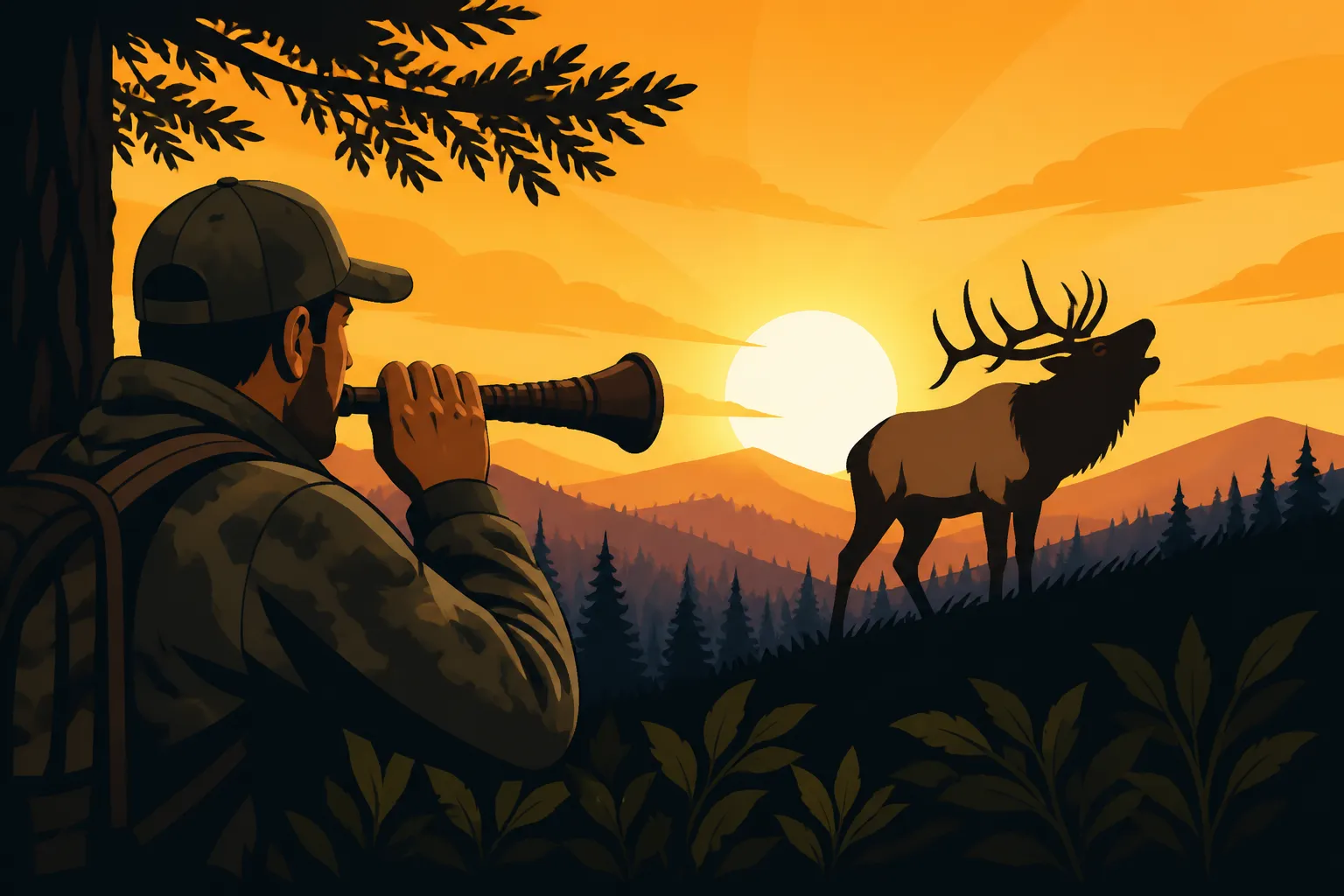
This is perhaps the most crucial element of successful locator bugling. The magic window for locator bugling starts well before sunrise, often in the last hour of darkness, and extends into the first hour or two of actual daylight. During these periods, elk are generally winding down their nocturnal activities and are more likely to be vocal as they transition to bedding areas.
Start with your first bugle when there's just a faint hint of light in the sky – that "grey light" period before the sun crests the horizon. This is often when elk are most responsive. Don't bugle immediately upon arrival; give yourself a few minutes to settle in, listen to the natural sounds of the awakening forest, and let the echoes of your approach die down. Then, send out your first call. If you don't hear anything after a few minutes, move to another vantage point and try again. As the sun gets higher, elk typically become less vocal and start moving towards their bedding grounds, so your window of opportunity shrinks. Understanding The Effective Range of a Muzzleloader on Elk might seem unrelated, but knowing how far sound carries and how far you can ethically shoot helps you judge distances to potential responses.
Strategic Call Sequence and Volume Control
When you decide to bugle, don't just blast away indiscriminately. Start with a single, clear, medium-volume bugle. Wait. Give it at least 5-10 minutes. The forest needs time to settle, and the elk need time to process and respond. Sometimes, a distant bull’s response is so faint you might miss it if you’re not actively listening. If nothing, try a slightly louder, perhaps more aggressive, single bugle.
Resist the urge to over-call. If a bull responds, acknowledge it, but don't immediately blast back. Let him chew on it. Sometimes, waiting a bit will make him bugle again, giving you a better read on his exact location. If you get multiple responses, try to triangulate their positions. A common mistake is to bugle too aggressively or too frequently, which can make wary bulls go silent or even move away. You’re playing a subtle game, trying to convince a bull that another bull is in his area without sounding like a direct, immediate threat.
Interpreting Responses and No-Responses
Receiving a bugle back is exciting, but the real skill lies in interpreting that response. Is it a full, roaring bugle, indicating an aggressive bull that's coming your way? Or a soft, distant chuckle, suggesting a more cautious animal? A faint, distant bugle could mean a bull is a long way off, or it could be a bull that's close but doesn't want to reveal his exact position. Listening closely for direction, volume, and the character of the bugle (is it a deep, mature growl, or a higher-pitched squeal?) will give you crucial intel.
What about no response? Don't despair. Silence doesn't always mean there are no elk. It could mean:
- They're close but wary: A quiet bull might be right under your nose, choosing to remain silent.
- They're far away: Your bugle might not have reached them, or their response was too faint to hear.
- Wind or terrain interference: The elements can play tricks on sound.
- Other hunters: Sadly, other hunters using locator calls can mimic elk, so always be aware and try to distinguish natural elk sounds from human imitations. GoHunt’s mapping features often show recent harvest data and public land access points, helping you anticipate areas of higher hunter density where distinguishing calls might be trickier.
If you don't hear anything after a few tries from different spots, it's time to transition. Maybe start still hunting into the wind, or move to a new area known for Bugling Elk in Idaho's Timbered Zones.
Gear, Safety, and Strategic Integration for Idaho Hunts
Locator bugling isn’t just about making noise; it’s about making smart noise as part of a larger hunting strategy. Having the right tools and understanding how to integrate this technique into your overall plan can make a significant difference in your success.
Choosing Your Bugle Tube and Reeds
There's a wide array of bugle tubes and diaphragm reeds available, and finding what works best for you is often a matter of personal preference and practice.
| Call Type | Description | Pros | Cons | Best For |
|---|---|---|---|---|
| Diaphragm Call | Small, thin latex reed held in the roof of your mouth. Sound is produced by blowing air over it. | Versatile (bugles, cow calls, chirps), hands-free, realistic sounds once mastered. | Steep learning curve, can be uncomfortable, easy to mess up if not positioned correctly. | Experienced callers, close-in calling, situations requiring quick, hands-free transitions between calls. |
| External Reed Call | A plastic barrel with an external reed, blown into like a flute. | Easier to learn than diaphragms, good volume, can produce consistent bugles and cow calls. | Not hands-free, can sound less natural than a well-used diaphragm, sensitive to moisture. | Beginners, loud locator bugles, situations where hands-free operation isn't critical. |
| Bugle Tube Only | A long, plastic tube used to amplify sound, usually in conjunction with a diaphragm or external reed. | Amplifies sound greatly, adds realism and depth to bugles. | Bulky to carry, requires another call for sound production, can be cumbersome in thick cover. | Long-range locator calls, mimicking full-bodied bull bugles, enhancing the realism of any elk call. |
For locator bugles, you primarily want something that can produce a loud, clear, and assertive bugle that carries. Many hunters use a combination: a diaphragm call in their mouth for versatility, paired with a bugle tube to amplify and direct the sound. Brands like Phelps Game Calls, Bugling Bull Game Calls, and Primos offer excellent options that are popular among Idaho elk hunters. Practice at home, not just the sound, but how it feels to hold and project. You want to be confident and consistent when that critical moment arrives in the field.
Positioning for Optimal Sound Travel and Safety
Effective locator bugling means more than just making noise; it means making noise from the right place, considering both sound travel and hunter safety. Always position yourself on a high point, a ridge, or a natural acoustic amplifier in the terrain. This helps your bugle carry further. Just as importantly, think about your backdrop. Standing silhouetted against the skyline is a huge no-no, as it makes you an easy target for other hunters or a clear sight for a watchful bull.
Always stand with some cover behind you, preferably in the shadows or partially obscured by trees. After you bugle, stand absolutely still and listen intently. Any movement can give you away to a nearby bull that might be approaching silently, or to another hunter who heard your call. Be mindful of Reading Wind in Steep Timbered Country, as a swirling wind can betray your position just as easily as a visual mistake.
Integrating Locator Bugles into Your Morning Hunt Plan
A locator bugle is a starting point, not the entire hunt. Once you get a response, the real work begins. Your immediate goal shifts from locating to closing the distance and setting up for a shot. If a bull responds, try to get a better read on his location. A second, perhaps softer, bugle a few minutes later might confirm his position or even get him to move closer.
However, if he goes silent after the first response, assume he’s coming to investigate, or at least he’s now aware of you. This is when you switch gears. Put your bugle away and start a careful, quiet stalk in his direction, always paying attention to the wind and terrain. Use features like draws, benches, and thick timber to conceal your approach. This transition from calling to stalking is critical. If he’s close, you might even consider sending out a soft cow call to pique his interest further, drawing him the last few yards into shooting range. For non-residents, understanding Idaho's Motorized Hunting Rule Keeps You on the Road is also crucial, as you can't rely on vehicles to quickly relocate once you've identified a bull's position. Always have a clear plan for your next move once you hear that return bugle.
Transitioning from Locator Call to the Stalk
Once you've pinpointed a bull with your locator bugle, the game changes. You're no longer broadcasting your presence broadly; you're now trying to become a ghost. The moment a bull responds, you need to quickly assess the situation. Is he moving towards you? Is he stationary? Is his bugle getting louder or fading?
If you suspect he’s moving in, find the best cover you can, get your bow or rifle ready, and prepare for a silent approach. Many times, a bull will circle downwind to get a sniff of the "intruder," so anticipating his movement is key. If he’s stationary or moving away, your goal is to close the distance rapidly but silently. Use every bit of terrain and cover to your advantage. Walk softly, pick your steps, and stop frequently to listen. Wind direction is paramount here; always try to approach from downwind or crosswind. This kind of careful, deliberate movement is exactly what's needed for Still Hunting Timber for Bedded Mule Deer, and the same principles apply to elk. Remember, the locator bugle was the icebreaker; the stalk is where you seal the deal.
Maximizing Your Chances with Information and Practice
Hunting in Idaho offers incredible opportunities, but success often hinges on preparation and refinement of skills. Mastering the locator bugle is just one piece of a larger, rewarding puzzle.
Utilizing Online Resources for Pre-Hunt Scouting
In today’s age, armchair scouting is a powerful tool. Websites and apps like GoHunt provide invaluable data for Idaho hunters, including topographical maps, public/private land boundaries, and even harvest statistics by unit. Before you even leave home, you can use these resources to identify potential elk habitat, pinpoint high-elevation basins where bugles might echo, and locate natural travel corridors.
Look for areas with a mix of dense timber for bedding and open parks or meadows for feeding. Pay attention to water sources. These are the places where elk are most likely to be active and vocal during the dawn hours. Planning your approach routes to these areas, including where you'll stop to make your first bugle, can drastically improve your chances. Understanding the intricacies of Idaho Elk Zones and the A Tag or B Tag Choice can further refine your unit selection based on season dates and tag availability, which in turn influences where and when you’ll be employing your locator bugle strategy.
The Importance of Realistic Practice
You wouldn't go into an archery hunt without shooting your bow, and the same applies to your calling. Practice isn't just about making the sound; it's about making the right sounds, consistently, and with confidence. Practice your locator bugles at home, in your car, and even out in the field before the season begins. Experiment with different calls and volumes. Record yourself and listen back critically.
More importantly, practice the entire sequence: bugle, listen, wait, move. This mental rehearsal helps you react instinctively and effectively when a real bull responds. Don't be afraid to try different calls – some hunters prefer a diaphragm, others an external reed. Find what feels natural and produces a consistent, clear bugle for you. The more confident you are in your calling ability, the more effective you’ll be when it counts. It's about being prepared for that critical moment when a bull answers and your heart jumps.
Disclaimer
The information provided in this guide is for general informational purposes only and does not constitute legal advice or guarantee hunting success. Hunting regulations and conditions can change rapidly. Always consult the most current Idaho Fish and Game regulations before planning any hunt. Ensure you understand and comply with all local, state, and federal laws regarding hunting and firearm safety.