Where California Bighorns Live in Idaho
The thought of chasing bighorn sheep in Idaho conjures images of epic, high-country adventures, but if you're specifically dreaming of pursuing the iconic California bighorns, you need to know exactly where to focus your efforts. Unlike their Rocky Mountain cousins, these hardy sheep have carved out a very particular niche in the Gem State. This guide will meticulously lay out the specific habitats, geographic regions, and unique challenges associated with finding and hunting California bighorn sheep in Idaho, helping you understand their world and the incredible effort required to earn a tag and pursue them.
The Unique World of Idaho's California Bighorn Sheep
California bighorn sheep (Ovis canadensis californiana) are a truly special big game animal, and Idaho is one of the few places in the lower 48 where a hunter might have the chance to pursue them. They're not found just anywhere; their distribution is highly specific, driven by a combination of historical factors, habitat requirements, and intensive conservation efforts. Understanding their preferred environment is the first step in appreciating the rarity and challenge of a California bighorn hunt.
Differentiating California Bighorns from Rocky Mountain Bighorns
It's easy for many to lump all bighorn sheep together, but a true sheep enthusiast knows there are distinct differences, especially between California and Rocky Mountain bighorns. While both are majestic creatures of the mountains, California bighorns typically present a slightly smaller body size and horns that tend to be a bit lighter in color and may have a more open curl, though this can vary. Their coats often appear a lighter, more golden-brown, especially in their preferred arid environments, contrasting with the generally darker, deeper brown of Rocky Mountain bighorns found in timbered, higher elevation zones.
Beyond aesthetics, their most significant differentiator lies in their habitat. Rocky Mountain bighorns are often associated with the classic craggy, timbered peaks and alpine meadows of the central Idaho mountains, like the Frank Church Wilderness. California bighorns, however, thrive in a much more arid, rimrock-and-canyon ecosystem. Their evolution has geared them towards survival in these drier, more open landscapes, which means you won't find them roaming the same mountains as their Rocky Mountain counterparts. It's crucial for hunters to recognize this distinction, not just for identification in the field, but also when researching draw odds and hunt units, as Idaho manages these subspecies separately. In fact, Idaho Fish and Game explicitly details that the Idaho Counts Rocky Mountain and California Bighorns Separately for management and hunting purposes, a critical detail for applicants.
The Landscape They Call Home: Idaho's Owyhee Country
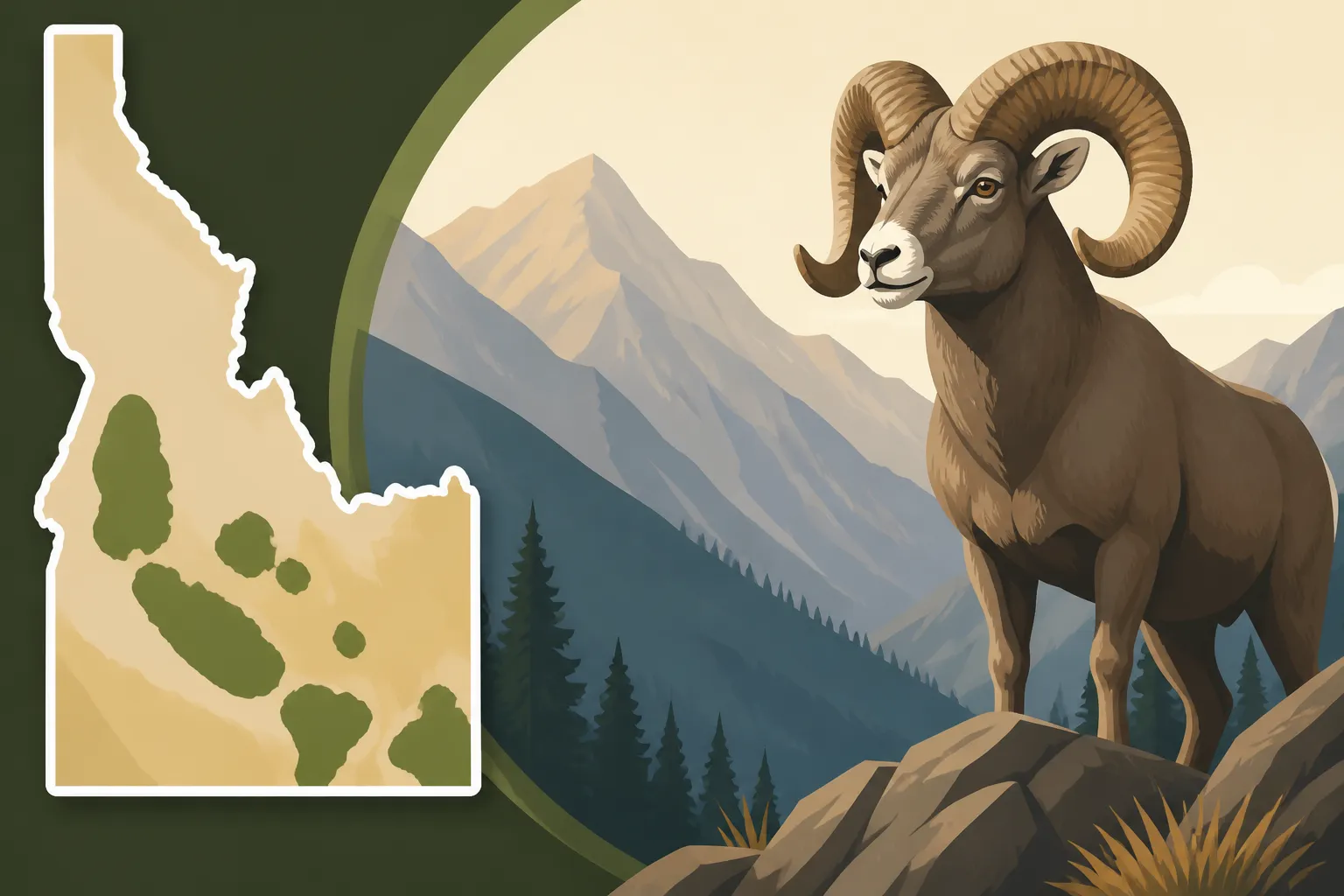
When you talk about California bighorn sheep in Idaho, you are almost exclusively talking about the Owyhee country. This vast, rugged, and breathtakingly remote region in the southwestern corner of Idaho is the heartland of the state's California bighorn population. Think stark, deeply incised canyons carved by ancient rivers, endless stretches of sagebrush steppe, and dramatic basalt rimrock cliffs that plummet hundreds of feet. This isn't the timbered high country you might associate with elk or mule deer; it's a desolate, beautiful, and unforgiving landscape.
The Owyhee region, encompassing parts of Owyhee County, is characterized by its semi-arid climate, limited water sources, and extreme temperatures. Summers are scorching, winters can be harsh, and the terrain is consistently challenging. The Owyhee River drainage, in particular, forms the backbone of their habitat, providing critical water and escape routes within its steep, complex canyon systems. The sheep rely on the steep, broken terrain for protection from predators like mountain lions and coyotes, using the vertical cliffs as unassailable escape routes. Their diet consists primarily of grasses, forbs, and browse found scattered throughout the sagebrush flats and canyon bottoms. Any hunter considering an Owyhee bighorn hunt needs to understand that they're not just hunting a specific animal, but immersing themselves in one of Idaho's wildest and most remote ecosystems, a place where preparation and resilience are paramount.
Why This Habitat is Critical for Their Survival
The Owyhee's unique habitat is not just where California bighorns happen to live; it's intricately linked to their survival and current population health. The steep, rugged canyon walls provide invaluable escape terrain, protecting them from ground predators that cannot follow them into the vertical world. This natural fortress is especially vital for lamb survival, as young bighorns are highly vulnerable. The vast, open nature of the sagebrush steppe, interspersed with the canyons, also means less human encroachment and disturbance compared to more accessible areas. Their relative isolation from domestic livestock helps reduce the risk of disease transmission, a constant threat to bighorn sheep populations nationwide.
Furthermore, the Owyhee provides a mosaic of forage options throughout the year. While water can be scarce, the sheep are adept at finding seasonal seeps and utilizing moisture from vegetation. During harsh winters, the lower elevations of the canyons can offer some relief from deep snow, allowing them to continue foraging. Any changes to this delicate balance – whether through habitat degradation, increased human activity, or disease outbreaks – can have devastating impacts on these fragile populations. Conservation efforts in this region are meticulously focused on preserving these critical habitat features, ensuring the California bighorns have the resources and security they need to thrive. Hunters who draw one of these rare tags contribute directly to these conservation efforts through their license and tag fees, which are funneled back into management and habitat restoration projects.
Key Areas and Units for California Bighorn in Idaho
When the conversation turns to actually finding California bighorn sheep in Idaho, your focus must narrow almost exclusively to the southwestern part of the state. This is not a species with scattered populations across multiple mountain ranges; their stronghold is very specific and dictated by the unique habitat they require.
The Owyhee Region – A Closer Look
The Owyhee region is undoubtedly the epicenter of California bighorn sheep in Idaho. Hunters applying for a California bighorn tag will find their unit choices concentrated within a handful of Game Management Units (GMUs) in Owyhee County. These units, typically those bordering the Owyhee River and its tributaries, offer the only real opportunity. It's here, amidst the dramatic canyon country and sprawling sagebrush, that these magnificent animals roam.
Primary Owyhee GMUs for California Bighorns
| GMU Number | Primary Geographical Feature | Terrain Characteristics | Access Challenge |
|---|---|---|---|
| 10 | Owyhee River Canyon | Deep basalt canyons, rimrock, sage flats | Very High (remote, limited roads, water scarcity) |
| 11 | East Fork Owyhee, South Fork Owyhee | Rugged canyons, high desert plateaus | Very High (extremely remote, difficult access) |
| 13 | Owyhee River, Jarbidge River | Similar to 10/11, includes more volcanic features | High (requires extensive planning) |
Note: Always consult the current Idaho Fish and Game regulations for precise unit boundaries and hunt areas, as they can change.
These units are incredibly remote, often lacking paved roads and even well-maintained gravel paths. Access typically involves high-clearance 4×4 vehicles, and even then, long hikes are the norm to reach the sheep's preferred haunts. Water sources are scarce, making careful planning for hydration crucial, especially during early season hunts. The terrain itself is an extreme physical challenge, with steep ascents and descents, loose rock, and dense sagebrush that can make travel slow and arduous. Scouting for these hunts often involves countless hours behind glass, meticulously picking apart vast landscapes. Websites like GoHunt provide valuable tools for analyzing draw odds, harvest data by unit, and can help in E-Scouting an Idaho Unit Before the Season by allowing you to pour over maps and terrain features from the comfort of your home. However, there's no substitute for getting boots on the ground, even if it's just to understand the scale and difficulty of the country.
Other Potential (Though Limited) Occurrences
While the Owyhee region is unequivocally the primary home for California bighorns in Idaho, there might be historical accounts or very limited, isolated pockets in other areas. However, for all practical hunting purposes, the Owyhee is where Idaho's huntable populations exist. Any mention of California bighorns outside this region typically refers to extremely small, non-huntable populations, or confusion with Rocky Mountain bighorns.
It's critical not to be misled by older maps or general bighorn sheep distribution maps that don't differentiate subspecies. Idaho Fish and Game's current management strategies, and thus hunting opportunities, are heavily weighted towards the Owyhee for California bighorns. Trying to find a California bighorn tag or even a viable population outside of the designated Owyhee units would be an exercise in futility. The state dedicates its limited tags and significant conservation resources to managing the health of these specific Owyhee herds. Therefore, if your goal is to hunt California bighorn in Idaho, your research and application efforts should be 100% focused on the Owyhee units listed in the current regulations.
Using Tools like GoHunt for Scouting
When you're dealing with a species as rare and a landscape as vast and unforgiving as the Owyhee, every advantage helps. This is where modern e-scouting tools become indispensable. Platforms like GoHunt offer a wealth of information that can be critical for planning a California bighorn hunt, even before you submit your application. You can dive into detailed unit maps, overlay public and private land boundaries, and even analyze historical harvest statistics and draw odds for specific units. This allows you to realistically assess your chances and understand the level of competition.
Beyond the application phase, GoHunt’s filtering capabilities allow you to home in on units that have California bighorn sheep populations and then explore the terrain in incredible detail. You can identify potential water sources, escape routes, bedding areas, and glassing knobs. You can use satellite imagery to get a feel for the ruggedness of the canyons and the density of the sagebrush. While these tools don't replace physical scouting, they significantly reduce the amount of blind exploration required. They help you strategize your approach, understand potential access points – remembering that Idaho's Motorized Hunting Rule Keeps You on the Road – and even identify areas to avoid due to private land enclaves or extreme impassibility. Coupling this digital reconnaissance with knowledge of Optics Power for Idaho's Long Canyon Sightlines will ensure you're equipped to make the most of the vast Owyhee landscapes, both on screen and in the field.
Understanding the Controlled Hunt System for California Bighorns
Hunting California bighorn sheep in Idaho is not a general season opportunity; it's exclusively managed through a highly competitive controlled hunt draw. This system is in place for very important reasons, reflecting the precious nature of these animals and the intense conservation efforts required to maintain their populations. If you dream of holding a California bighorn tag, understanding this system is paramount.
Why Tags Are So Limited
The primary reason for the extreme scarcity of California bighorn tags in Idaho stems directly from the relatively small and vulnerable population numbers of this subspecies. Bighorn sheep, in general, face numerous challenges, including disease (particularly pneumonia often transmitted from domestic sheep), predation, and habitat fragmentation. California bighorns in the Owyhee are a unique ecological isolate, and their populations, while stable in some areas, are far from abundant. Idaho Fish and Game carefully monitors these herds, setting conservative quotas to ensure sustainable harvesting that doesn't jeopardize the long-term health and growth of the population.
Issuing too many tags could quickly lead to overharvest and a decline in herd numbers, which would take decades to recover. Instead, the state prioritizes herd health above all else, which means only a handful of tags, often single-digit numbers, are issued each year across all the huntable Owyhee units. This makes drawing a tag an incredibly rare event, often taking many years, or even decades, of consistent application. It's a testament to the dedication of wildlife managers and hunters alike that these tags exist at all, showcasing a commitment to both conservation and providing a very limited, high-quality hunting experience. The value of each tag is immense, both in its contribution to wildlife management and the unparalleled opportunity it represents.
Navigating the Idaho Draw for Bighorns
Applying for an Idaho California bighorn tag requires careful planning and a deep understanding of the Idaho Fish and Game draw process. First and foremost, you'll need to purchase a valid Idaho hunting license to even be eligible to apply. Once that's done, you can submit an application for the controlled hunt. It's important to remember that Idaho operates without a preference point system, meaning every applicant, new or old, theoretically has an equal chance each year they apply. This can be both encouraging and frustrating, as it means consistent application doesn't necessarily build seniority towards a tag.
A critical rule to be aware of is Idaho's "once-in-a-lifetime" policy for bighorn sheep. This means if you successfully draw and harvest a Rocky Mountain bighorn, you cannot apply for another Rocky Mountain bighorn tag in the future. However, and this is where it gets interesting for California bighorn hopefuls, Why Idaho's Once-in-a-Lifetime Rule Is Per Subspecies clarifies that drawing one subspecies (e.g., Rocky Mountain) does NOT preclude you from applying for the other (California) later on. This provides a glimmer of hope for hunters who might have been lucky enough to draw a Rocky Mountain tag in the past. Always check the current regulations for specific application periods, deadlines, and the most up-to-date Idaho Bighorn Sheep Draw Odds Explained, which can often be found on the Idaho Fish and Game website or through services like GoHunt. The application window typically opens in April, with results posted in June, giving successful applicants time to plan for their once-in-a-lifetime adventure.
Planning Your Hunt in Remote Country
Drawing a California bighorn tag is just the beginning of the challenge; the hunt itself demands an extraordinary level of preparation. The Owyhee country is truly remote, often hours from the nearest services. Physical conditioning is absolutely non-negotiable. You'll be navigating extremely steep, broken terrain, often at elevations that, while not alpine, can still tax lungs and muscles. Imagine scaling rimrock ledges, traversing loose scree slopes, and enduring long hikes through dense sagebrush, all while carrying optics, water, and hunting gear. This is not a hunt for the faint of heart or those who haven't put in the work at the gym.
Beyond physical fitness, mental toughness is key. The vastness of the Owyhee can be overwhelming, and spotting a bighorn in such expansive country requires immense patience and skill with your optics. You'll need high-quality binoculars and a spotting scope, mounted on a sturdy tripod, to systematically pick apart the canyons and draws. Water planning is paramount; assume every drop needs to be packed in, or ensure you have a reliable filtration system for any available, often sparse, water sources. Navigation skills, including the use of GPS and detailed topographical maps, are essential, as cell service is non-existent in much of this country. Finally, robust gear, from durable boots to a reliable pack, is critical to withstand the rigors of the Owyhee. This isn't just a hunt; it's an expedition into one of Idaho's last true wilderness areas.
Conservation and the Future of California Bighorns in Idaho
The pursuit of California bighorn sheep in Idaho is intrinsically linked to their conservation. These animals represent a remarkable success story in wildlife management, clawing their way back from historically low numbers. However, their future remains delicately balanced, requiring ongoing vigilance and dedicated resources.
Challenges to Population Growth
Despite significant efforts, California bighorn sheep populations still face considerable hurdles in achieving widespread growth. One of the most persistent and devastating threats is disease, particularly pneumonia. This illness, often traced back to contact with domestic sheep, can sweep through a bighorn herd with catastrophic results, leading to high mortality rates, especially among lambs. The spatial separation of wild and domestic sheep is a constant, complex challenge for wildlife managers. Predation, primarily from mountain lions, also plays a role, especially in smaller, isolated herds or during periods of stress. While a natural part of the ecosystem, intense predation on vulnerable populations can hinder recovery.
Habitat degradation and fragmentation, though less acute in the vast Owyhee, remain long-term concerns. Changes in land use, wildfire patterns, and the availability of crucial water sources can all impact the sheep's ability to thrive. Climate change, with its potential for more extreme droughts or altered forage availability, adds another layer of uncertainty. Monitoring these factors, implementing disease management strategies, and maintaining large, contiguous areas of suitable habitat are ongoing priorities for Idaho Fish and Game. It's a testament to the resilience of the species and the dedication of conservationists that these herds persist and offer limited hunting opportunities.
Role of Hunter Dollars in Conservation
It might seem counterintuitive to some, but hunters play a vital and irreplaceable role in the conservation of California bighorn sheep and other wildlife. The revenue generated from hunting licenses, application fees, and those incredibly expensive bighorn sheep tags directly funds the very conservation programs that ensure these animals have a future. A significant portion of these dollars goes towards habitat improvement projects, disease research and monitoring, population surveys, and law enforcement efforts to prevent poaching. Without this funding, many of these crucial programs simply wouldn't exist or would be severely underfunded.
When a hunter applies for an Idaho bighorn tag, they are contributing to a legacy of wildlife management that has seen bighorn sheep brought back from the brink in many Western states. The limited, controlled hunts ensure that harvest levels are sustainable, and the data collected from successful hunters (such as horn measurements and biological samples) provides valuable information for ongoing population assessments. This system exemplifies the North American Model of Wildlife Conservation, where wildlife is a public trust, managed by science, and funded in large part by hunters. So, for those few lucky individuals who draw a California bighorn tag in Idaho, their hunt is not just a personal adventure but a direct contribution to the continued existence of this magnificent species.
Disclaimer
This article is for general informational purposes only and does not constitute professional advice. Laws, prices and regulations vary by location and change over time. Consult a qualified professional for guidance on your specific situation.