Whitetail Rut Timing in Northern Idaho
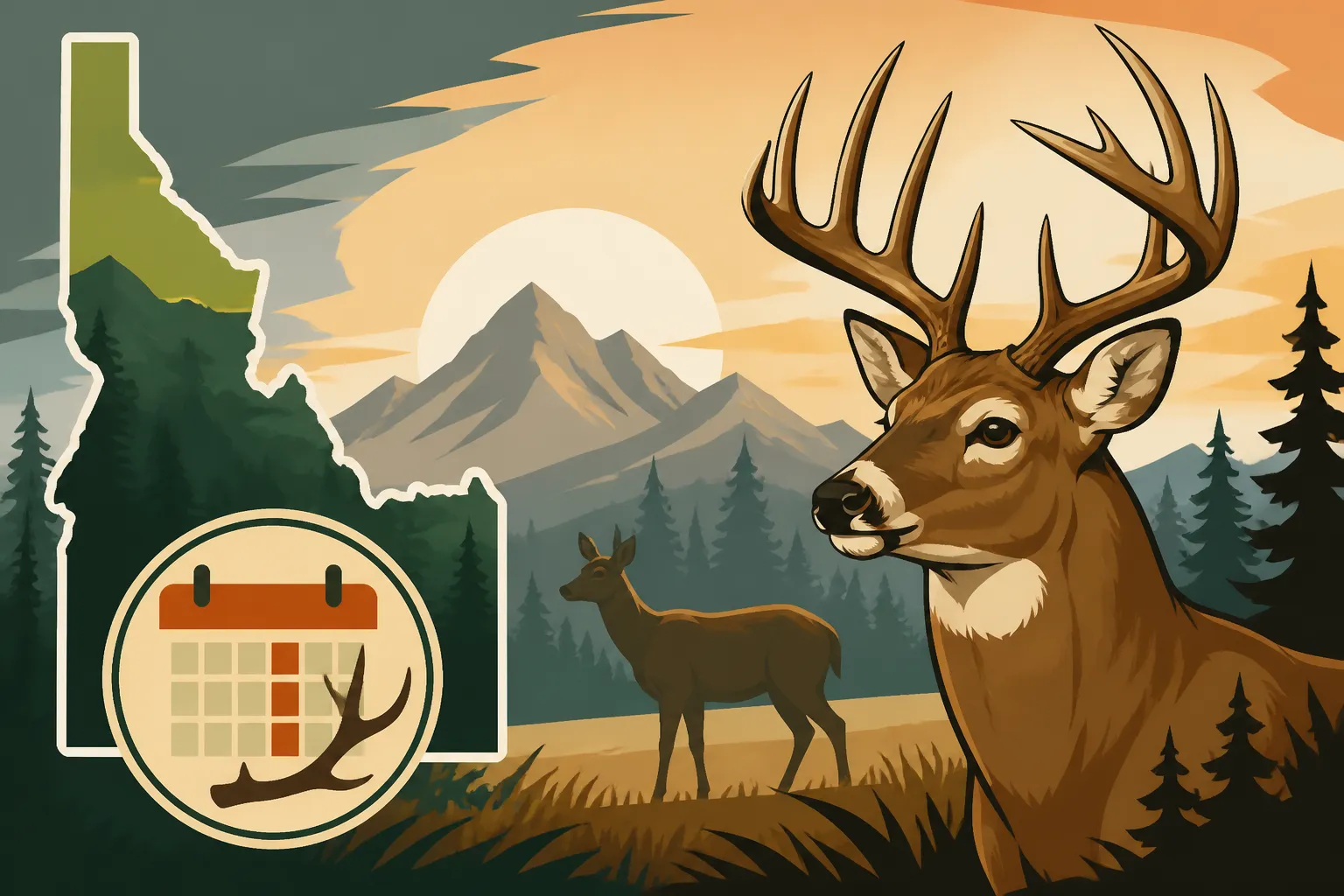
The moment the leaves start to turn and that crisp scent of autumn fills the air, every whitetail hunter in Northern Idaho feels it – that electric anticipation of the rut. But let's be honest, trying to pinpoint the exact week that magical chaos unfolds can feel like chasing a ghost. One year it's early, the next it's late, and it often leaves you wondering if you're timing your precious hunting days perfectly. This guide is going to walk you through the nuances of whitetail rut timing specifically for Northern Idaho, helping you understand the factors at play so you can maximize your time in the timber and on stand.
Understanding the Whitetail Rut Cycle in Northern Idaho
The whitetail rut isn't just a switch that flips; it's a gradual, multi-stage process driven by a combination of biological and environmental factors. In Northern Idaho, where the landscapes are rugged and the seasons pronounced, understanding these stages is crucial for anticipating deer behavior. It's not enough to just know "when the rut is"—you need to know what phase of the rut you're in to adjust your tactics accordingly.
The Phases of the Rut: Pre-Rut to Post-Rut
Let's break down the typical progression of the whitetail rut, keeping in mind that these are general timelines and can shift a bit from year to year.
The pre-rut phase typically kicks off in late October, though you might see early signs even sooner. This is when the bucks, fueled by cooling temperatures and increasing testosterone, really start to shed their velvet and establish their dominance. They’re rubbing trees and making scrapes, leaving behind scent markers that communicate their presence and readiness to breed. You'll see them sparring, pushing each other around, and generally asserting their place in the pecking order. Does are not yet receptive, but their presence is certainly on the bucks' minds. During this time, deer are still often focused on food sources, trying to pack on calories before the exhausting main event. You might catch big bucks moving more during daylight as they stake out their territory and check traditional scrape lines. It's an exciting time, full of anticipation, and a great opportunity to intercept a buck as he checks his signposts.
Next comes the seeking phase, usually hitting its stride in early to mid-November. This is when bucks become less tied to food and more obsessed with finding receptive does. They’re covering a lot of ground, often traveling through areas they wouldn’t normally, sniffing every track, and checking every thicket. You might see younger bucks being run off by older, more dominant ones. The key here is that does are starting to come into estrus, and the bucks know it. They’re still making scrapes and rubs, but their primary focus shifts to actively searching. This is often when daylight activity ramps up significantly, and hunters start seeing more deer on their feet. If you’re hunting in a zone with good public access, like some of the vast tracts of the Panhandle National Forests, you'll want to be mobile and ready to capitalize on a cruising buck. Remember, an unpressured buck will often follow predictable travel corridors.
The chase phase, often the most dramatic and highly anticipated, typically peaks in mid-November in Northern Idaho. This is the classic "run-and-gun" period where bucks are literally chasing does, sometimes for hours, pushing them hard until they stand to breed. It’s chaotic, unpredictable, and can lead to incredible opportunities. Deer are less cautious, their guard lowered by the intensity of the urge to breed. You might see bucks running across open fields in broad daylight or hear them crashing through the timber. This is the time when even the most reclusive mature bucks might make a mistake. It’s a physically demanding time for the deer, and they often lose significant body weight during this intense period. Understanding where these dramatic chases often occur, such as along ridges or in dense creek bottoms, can help you position yourself.
Finally, we transition into the breeding and post-rut phases. The main breeding generally occurs throughout late November, and into early December for some does. Once a buck finds a receptive doe, he'll often "lock down" with her for 24-48 hours, breeding her repeatedly. During this lockdown period, they might not move much, disappearing into dense cover. This can be frustrating for hunters who are expecting constant movement. However, once a doe is bred, the buck is back on the prowl, looking for the next one. As the primary breeding winds down, usually by early December, bucks are exhausted and have depleted much of their fat reserves. They shift their focus back to food and recovery, but a secondary rut or "trickle rut" can occur a few weeks later as any unbred does come into estrus again. This later period can offer some late-season action, especially if severe weather pushes deer towards wintering grounds.
Key Factors Influencing Rut Timing Beyond Calendar Dates
While general calendar dates give us a framework, several other critical factors can subtly—or not so subtly—influence when the rut truly heats up in Northern Idaho. It’s not a one-size-fits-all phenomenon, and being attuned to these environmental cues can give you an edge.
The primary driver, the one that kicks off the whole biological process, is photoperiod, or the amount of daylight hours. As days shorten after the summer solstice, a deer's body begins producing melatonin, which in turn triggers hormonal changes. This is the most consistent and unwavering signal, ensuring the rut generally happens around the same time each year, regardless of temperature fluctuations. It’s why you'll see Whitetail Rut Dates Fall Up North consistently in the November timeframe, year after year. However, within that consistent window, other factors fine-tune the intensity and visible activity.
Weather patterns are arguably the most noticeable short-term influencers. A sudden cold snap after a period of mild weather can ignite buck activity, sending them cruising for does. They seem to sense the change, and it often prompts them to move more during daylight. Conversely, unusually warm weather during what should be peak rut can suppress daylight movement, pushing deer activity more towards dusk and dawn, or even deep into the night. Heavy snow can also impact movement, sometimes concentrating deer in lower elevations or protected cover, making them more visible, but also potentially slowing down the intensity of chases if travel becomes too arduous. Paying close attention to the forecast and adjusting your hunting hours and locations based on temperature drops and rising barometric pressure can be highly effective.
Hunting pressure is another significant, though often overlooked, factor, especially on public lands. If a unit sees heavy pressure on opening weekend, deer, especially mature bucks, will quickly become nocturnal or retreat into the thickest cover. This can make it seem like the rut isn't happening, when in reality, the deer are simply adapting to survival. In areas with high hunter densities, the visible rut activity might be compressed into shorter, less predictable windows. This is why understanding hunting pressure in your chosen unit, perhaps by checking harvest statistics through The Idaho Hunt Planner, can be as important as knowing the weather. When you're Hunting Whitetails in Northern Timber Country, consider areas that are harder to access, as these often hold deer that are less wary of human presence.
Finally, doe-to-buck ratio plays a role in how intense and prolonged the visible rut appears. In areas with a balanced ratio, bucks might have to work harder and search longer to find receptive does, leading to more widespread cruising activity. In areas with an extremely skewed ratio (many more does than bucks), the rut might seem less dramatic, as bucks can quickly find and lock down with does. However, Idaho generally has healthy whitetail populations, particularly in the northern regions.
Northern Idaho's Unique Whitetail Habitat and How it Shapes the Rut
Northern Idaho's landscape is a whitetail hunter's dream, offering vast expanses of timber, dense brush, and winding river bottoms. This isn't your open country mule deer hunting; it's a completely different game where understanding the terrain is paramount to success during the rut. The way deer use this varied cover dictates their movement patterns, especially when they're driven by the urge to breed.
Timbered Country and River Bottoms: Prime Whitetail Havens
When you think of Northern Idaho, towering pines, firs, and cedars immediately come to mind. This timbered country isn't just scenic; it's the lifeblood of the whitetail population. Dense forests provide invaluable security cover, allowing deer to move unseen and feel safe from predators like wolves and mountain lions. During the rut, these thickets become crucial travel corridors for bucks cruising for does. Imagine a buck, head down, following a slight ridge through a stand of dark timber, scent-checking for does. He might be passing within yards of you, completely hidden by the forest canopy until he's practically on top of you.
In these timbered areas, look for natural funnels – saddles between ridges, narrow strips of dense brush connecting larger blocks of timber, or old logging roads that have grown in but still offer an easier path of travel. Bucks will use these to conserve energy while covering ground. Food sources within these forests, such as browse, acorns (if available), or even residual clearcuts that provide new growth, become magnets early in the pre-rut before the chase truly begins. Understanding the nuances of Whitetail Range Through Idaho's Panhandle means recognizing that these deer thrive in areas with diverse vegetation, including pockets of old-growth timber interspersed with younger stands that offer prime bedding.
Then there are the river bottoms and creek drainages, which are often overlooked but are absolute whitetail magnets. Rivers like the St. Joe, Coeur d'Alene, Kootenai, and their countless tributaries create fertile strips of land that are rich in food and cover. These riparian zones often feature dense willows, alders, cottonwoods, and other brushy growth that provides excellent bedding and escape routes. During the rut, these river bottoms act as superhighways for deer. Does often bed in the thick cover near water, and bucks know it. They will systematically cruise these drainages, scent-checking for does, rubbing trees along the banks, and leaving scrapes in the moist soil.
Think of a buck, hot on the trail of a doe, pushing her along a narrow bench above a creek. The sound of the water, combined with the dense vegetation, can make them incredibly hard to spot until they are right there. These areas also offer natural breaks in the topography, which deer use to their advantage. A mature buck might follow a river bend, staying just inside the thick cover, knowing he's protected while still covering ground efficiently. These pockets are often where you'll find significant sign during the rut, indicating heavy deer traffic.
How Terrain and Cover Influence Buck Movement
Northern Idaho's varied terrain, from rolling hills to steep mountainsides, dramatically influences how whitetails move, especially during the rut. It's not just about the trees; it's about how the land lays out and how deer exploit it for safety and efficiency.
Elevation and topography play a huge role. Whitetails, like many animals, prefer to travel along contours and lines of least resistance when possible. They'll use ridge lines, benches, and the sides of draws to move, often staying just below the crest of a ridge to remain concealed from anything above them, yet still able to see down into the draws. During the rut, bucks will often patrol these higher vantage points, allowing them to scent-check a broader area for receptive does without exposing themselves. Imagine a buck walking a bench halfway up a mountain, periodically stopping to sniff the air, his eyes scanning the opposite slope for any movement. These routes are often where you'll find primary scrape lines and heavy rub activity.
Natural funnels and pinch points are critical ambush sites. These are areas where the landscape forces deer into a narrow travel corridor. This could be a saddle between two peaks, a strip of timber between two open fields, a narrow crossing point on a creek, or a thick transition zone between different habitat types. During the rut, bucks on the move will inevitably pass through these funnels as they travel from bedding to feeding areas, or simply as they cruise for does. These are prime locations for setting up a tree stand or planning a still-hunt. The key is to identify these constrictions on a map, then scout them on the ground to confirm deer sign. Using tools like onX or similar mapping applications can help you e-scout an Idaho unit before the season, identifying these features before you even step foot in the woods.
Bedding areas are often found in the densest, most difficult-to-access cover. Think thick regenerating clearcuts, steep north-facing slopes with heavy timber, or impenetrable willow thickets along a river. During the rut, bucks will often approach the edges of these bedding areas, checking for does without fully entering if they sense danger. Understanding the bedding areas and the prevailing wind allows you to plan an approach that keeps your scent out of their core security zone. A buck might stage just downwind of a doe bedding area, waiting for the perfect moment to move in.
The dense cover provides security, but it also creates challenges for hunters. Unlike open country where you might glass deer from miles away, Hunting Whitetails in Northern Timber Country often means getting in close. Your shooting lanes will be tighter, and you'll need to be proficient with your weapon in close quarters. This environment emphasizes keen observation, silent movement, and an intimate understanding of how deer use the available cover for travel, feeding, and breeding throughout the rut.
Pinpointing Peak Rut Activity for Northern Idaho Whitetails
The whitetail rut is like a puzzle, and while biology provides the major pieces, the smaller, more dynamic pieces — like daily weather, moon phases, and ground sign — really help you put it all together for peak hunting success. No hunter wants to miss the prime window, and in Northern Idaho, where seasons can be short and opportunities fleeting, understanding these nuances is critical.
Historical Data and Predictive Tools for Rut Forecasting
While the biological impetus for the rut (photoperiod) remains constant, the intensity of visible rut activity can fluctuate. This is where leaning on historical data and modern predictive tools becomes incredibly useful. You're not trying to guess when the rut starts, but rather when it will be most active during daylight hours.
Historical harvest data from the Idaho Department of Fish and Game (IDFG) is a treasure trove of information. By looking at harvest reports from previous years, you can often discern trends in when the highest number of bucks were taken, especially mature ones. This can provide a general idea of when bucks were most vulnerable and active. You might notice that certain units consistently show peak harvest during the third week of November, for example, giving you a strong indicator for your own planning. This data isn't perfect, as hunter effort and weather also play a role, but it's an excellent starting point.
Modern predictive tools and platforms have taken this a step further. Websites and apps, like GoHunt, analyze photoperiod, historical data, and even current weather forecasts to provide generalized rut predictions for specific regions. While no tool can predict the exact moment a specific buck will stand up, they can give you a high-probability window for when the overall deer population will be most active. GoHunt, for instance, often integrates weather models and lunar cycles into their rut predictions, offering insights into optimal hunting days. These tools can help you strategically plan your vacation days or weekend trips to align with the highest predicted activity. It’s important to remember that these are predictions, not guarantees, but they can significantly refine your approach. Another excellent resource is the IDFG's official website, which often provides weekly deer and elk activity reports from their field biologists during the hunting season. This localized, real-time information can be invaluable for making last-minute adjustments.
Reading the Signs: Rubs, Scrapes, and Doe Activity
Before the advanced tools and historical data, hunters relied on the ground itself to tell the story of the rut. And honestly, there's still no better way to confirm what's happening right now in your hunting area than by reading the signs left by the deer themselves.
Rubs are the torn-up bark on trees, where bucks have rubbed their antlers to remove velvet and later to mark their territory and release scent. In the pre-rut, you'll start seeing smaller rubs as bucks clean their antlers. As the rut progresses, bigger rubs, especially on larger diameter trees, indicate more dominant bucks asserting their presence. A fresh rub, with moist wood exposed, tells you a buck was just there, and likely still in the area. A "rub line" – a series of rubs leading in a specific direction – reveals a buck's travel corridor. If you find a new rub line heading towards a specific ridge or clearcut, you've just been given a detailed map of a buck's preferred route during the rut.
Scrapes are perhaps even more telling. These are patches of disturbed earth, typically about 1-3 feet in diameter, where a buck has pawed away the leaves and dirt, often urinating over a "licking branch" above it. The licking branch itself is crucial – deer will chew, rub, and scent-mark it with glands around their eyes and mouth. Scrapes are communication hubs, signaling a buck's presence and readiness to breed. In the early pre-rut, you'll see "community scrapes" where multiple deer might visit. As the rut heats up, finding fresh scrapes, especially "primary scrapes" along traditional travel routes or near doe bedding areas, is like finding a direct message from a dominant buck. A fresh scrape, often muddy or moist even on a dry day, signals a buck was there within the last 24 hours. The presence of numerous active scrapes, especially those being re-worked, is a strong indicator that you are approaching or are in the peak of the seeking and chase phases.
Doe activity is the ultimate barometer for the rut. Bucks are driven by does, so observing doe behavior is key. In the early pre-rut, does are generally calm, feeding, and moving in family groups. As the seeking phase begins, you might notice does becoming more skittish or agitated, perhaps nervously looking over their shoulders, indicating bucks are starting to pester them. During the chase phase, you'll witness does actively running, sometimes with a buck hot on their heels. Seeing multiple does being pursued is a clear sign that the rut is in full swing. Conversely, if you observe does returning to their regular feeding and bedding patterns, mostly undisturbed, it can signal that the peak breeding activity has passed. Observing these patterns, especially how Whitetail and Mule Deer Tags Are Not Interchangeable, ensures you are focused on the correct species' behavior.
The Role of Weather and Moon Phase
Beyond the obvious ground signs, two environmental factors – weather and moon phase – are constantly debated among hunters for their impact on rut activity. While not primary drivers, they can certainly influence when deer move during the day.
Weather is the more immediate and observable influence. A sudden drop in temperature, especially after a warm spell, often sparks deer movement. Cold, crisp mornings with high pressure are classic "rut days" because deer are more comfortable moving and expending energy. Conversely, unseasonably warm temperatures can suppress daylight movement, pushing deer activity into the cooler hours of darkness. A gentle, steady rain might keep some hunters out of the woods, but deer often move comfortably in light precipitation, especially if it masks their sound. Heavy snow can concentrate deer, but also slow them down. Always check the local forecast for Northern Idaho and adjust your hunt plan accordingly. A front moving in can often trigger increased activity right before or just after it passes.
The moon phase is a more contentious topic. Some hunters swear by its influence, others dismiss it. The theory often goes that certain moon phases, particularly a full moon or specific positions of the moon in the sky, dictate when deer are most active. For example, some believe that a full moon leads to increased nocturnal activity, making daylight hunting tougher. Others argue that the moon's gravitational pull influences deer behavior. While scientific consensus on the moon's direct impact on rut timing (when does come into estrus) is limited, it absolutely can affect movement patterns. On a bright full moon night, deer might feed more after dark, leading to reduced activity at dawn. Conversely, a dark new moon could encourage more daylight movement if deer prefer to feed during illuminated periods. Rather than relying solely on moon phase predictions, consider it as one piece of the puzzle. If you notice a consistent pattern in your specific hunting area during a particular moon phase, that's valuable local knowledge. Combining observations of fresh sign, local weather, and general predictions from sources like GoHunt will give you the most accurate picture for when the rut is truly heating up in your chosen spot.
Hunting Strategies Tailored to Northern Idaho's Whitetail Rut
Hunting Northern Idaho whitetails during the rut isn't just about being in the woods; it's about being in the right spots at the right time, with strategies that capitalize on deer behavior. The timber and terrain demand a different approach than open country, and leveraging rutting behavior is your ticket to success.
Stand Placement and Still Hunting Tactics
The dense cover of Northern Idaho makes visibility a real challenge, which means your approach to finding and hunting whitetails must be deliberate. You can't just sit and glass for miles like you might for a Mule Deer Across Idaho's High Desert and Breaks.
Strategic Stand Placement:
Tree stands, especially in this timbered environment, are often your best bet for intercepting a rut-crazed buck. The key is to place your stand not just where you see sign, but where you anticipate a buck will travel during the rut. Look for natural funnels:
- Saddles and Ridge Crossings: Bucks will often use these elevated points to cross from one drainage to another, scent-checking for does. A stand placed slightly downwind on a dominant travel route can be deadly.
- Bottlenecks between Thick Cover and Food Sources: Even during the rut, deer still need to eat. If you can identify a thick bedding area and a nearby food source (like a clearcut, an old apple orchard, or a patch of browse), the travel corridor between them will be active.
- River and Creek Bottoms: As discussed earlier, these act as highways. Look for pinch points where the dense riparian cover narrows, forcing deer into a tighter path. A stand overlooking a well-used trail along a creek bank can be incredibly effective.
- Near Active Scrapes and Rub Lines: While bucks don't always visit scrapes in daylight, a fresh, active primary scrape line can tell you where a dominant buck is patrolling. Set your stand upwind, allowing you to watch the scrape from a distance, or on a trail leading to it.
When choosing a specific tree, always prioritize cover for your outline. Even if you're high, an exposed silhouette will spook deer. Break up your outline with branches and position yourself to take advantage of the prevailing wind for your chosen setup. Remember to check Tree Stand Rules That Apply on Public Land before you deploy your setup. During the peak chase phase, bucks are less cautious, but they're still deer.
Effective Still Hunting:
Still hunting is an art form in Northern Idaho's timber, perfect for the pre-rut and the seeking phase when bucks are cruising. It involves moving slowly, deliberately, and quietly through the woods, stopping frequently to observe.
- "Stop and Stare": This is the core principle. Take three quiet steps, then stop and stare for several minutes, scanning every shadow and thicket for a horizontal line, an ear twitch, or the flick of a tail. Deer often pick up on movement, not necessarily noise, so remaining motionless is critical.
- Use the Wind: Always hunt into the wind or with a quartering wind. Your scent is your biggest giveaway, especially with a buck's nose tuned into finding does.
- Focus on Cover Edges and Transition Zones: Deer love edges. Still hunt along the transition between dense timber and slightly more open woods, or along the edge of a clearcut. These are areas where deer feel comfortable moving but also have quick access to security.
- Utilize Terrain: Use ridges, draws, and depressions to your advantage. Move slowly over a ridge, peeking over the top, or carefully work your way around a bench. This allows you to survey new ground without exposing yourself.
- Early Mornings and Late Evenings: These are prime times for still hunting as deer are naturally more active. However, during the peak rut, bucks can be moving at any time of day, so don't be afraid to still hunt mid-day, especially if the weather is cool and overcast. When you're Late Season Whitetail Hunting in the Timber, still hunting can be particularly effective as deer seek out remaining food sources and dense cover for warmth.
Calling and Decoying During Different Rut Phases
During the whitetail rut, deer are highly communicative, making calling and decoying incredibly powerful tools if used correctly. Timing and technique are paramount for success in Northern Idaho's unique environment.
Calling Strategies:
- Pre-Rut (Late October): This is a great time for rattling and grunting. Bucks are establishing dominance, and the sound of two bucks fighting can draw them in to investigate. Start with light rattling, simulating a spar, then build to more aggressive crashing, followed by a few grunts. Follow up with soft social grunts or doe bleats if you want to lure in a doe that might attract a buck. Be patient; a buck might circle downwind before appearing.
- Seeking Phase (Early to Mid-November): Grants become very effective. Bucks are actively looking for does. A deep, drawn-out grunt can sound like a buck trailing a doe or a lone buck cruising. Combine grunts with occasional doe bleats using a can call or a mouth call. The key is to sound realistic and not overdo it. You're mimicking natural communication, not screaming into the woods. A soft, pleading doe bleat can sometimes stop a cruising buck or pique the interest of one that is just out of sight.
- Chase Phase (Mid-November Peak): This is when aggressive calling, including loud rattling and aggressive grunts/snort-wheezes, can really work. Bucks are hot on does, and the sound of another buck interfering, or a fight, can pull them away from their current chase. If you see a buck chasing a doe, try a quick, sharp grunt to stop him for a shot, or a more aggressive rattling sequence to draw him off the trail. Be prepared, as bucks can charge in quickly and aggressively during this period.
- Post-Rut (Late November/Early December): Stick to softer, more subtle calls. Doe bleats can still be effective, as unbred does might come into estrus, or exhausted bucks might be looking for a late-season opportunity. Gentle grunts can also work, mimicking a buck that is still looking but less intensely.
Decoying Tactics:
Decoying is a high-risk, high-reward strategy that can work brilliantly during the rut, particularly in more open timber or fields where deer have a decent line of sight.
- Buck Decoy: During the pre-rut and seeking phases, a dominant buck decoy can challenge another buck to come in and investigate or fight. Position the decoy slightly quartering away from you, as if he's about to walk away, to make him look less aggressive and more inviting. Always place the decoy downwind of your position so any approaching buck will circle downwind to scent-check it, bringing him broadside to your stand. The sight of a rival can make a rutting buck throw caution to the wind.
- Doe Decoy: A single doe decoy can work in the seeking and chase phases, especially when combined with soft doe bleats. A buck seeing a lone doe might assume she's receptive and approach. Sometimes placing a small buck decoy near a doe decoy, representing a "pair" of deer, can also draw in other bucks looking for a breeding opportunity.
- Hybrid Decoy: Some hunters combine a doe and a small buck decoy. The small buck represents a subordinate, while the doe is the prize. This can often draw in more dominant bucks who see an opportunity to run off the smaller buck and claim the doe.
Important Considerations for Northern Idaho:
- Visibility: In dense Northern Idaho timber, decoying can be difficult as deer might not see the decoy until they are too close, spooking them. Choose areas with at least 50-75 yards of clear visibility.
- Predators: In areas with active wolf or bear populations, decoys can attract unwanted attention from predators. Be aware of your surroundings. "How Wolf Predation Affects Elk Calf Survival" also applies to whitetail, and their presence can make deer warier.
- Realism: Use high-quality, realistic decoys. The more lifelike, the better your chances.
- Scent Control: Always use impeccable scent control when handling and deploying decoys, as deer will approach them head-on.
- Movement: A slight movement on your decoy, achieved with a string or a motorized tail, can add immense realism.
By combining well-placed stands or strategic still hunting with appropriate calling and decoying, you can significantly increase your chances of intercepting a rutting whitetail buck in Northern Idaho.
Challenges and Considerations for Northern Idaho Whitetail Hunters
Hunting whitetails in Northern Idaho during the rut is an incredible experience, but it comes with its own set of unique challenges that require preparation and adaptation. It's not just about knowing when the deer are active; it's about navigating the environment, managing external pressures, and ensuring a safe and successful hunt.
Dealing with Hunting Pressure and Wolf Predation
While Northern Idaho offers vast public lands, it's also a popular hunting destination, which means you're going to encounter hunting pressure. This is especially true during the whitetail rut, when many hunters are out hoping to capitalize on increased buck activity. Heavy hunting pressure can significantly impact deer behavior, making them more nocturnal and wary.
On public lands, especially those easily accessible by vehicle, deer quickly learn to avoid human activity. They'll gravitate towards the thickest, most impenetrable cover during daylight hours, only emerging under the cloak of darkness. This means that while the biological rut might be raging, visible deer activity might be suppressed in heavily hunted areas. To combat this, you'll need to be willing to hunt harder-to-reach areas. This might involve hiking deeper into the woods, using an e-bike on non-motorized trails, or finding those pockets of dense cover that most hunters overlook. Utilizing online mapping platforms like GoHunt and checking public land percentages on The Idaho Hunt Planner can help you identify areas with less road access, often correlating with less hunter pressure. Be aware of Idaho's Motorized Hunting Rule Runs August Into December, and plan your access accordingly to avoid fines or unintended access violations.
Wolf predation is another significant factor in Northern Idaho, affecting deer populations and behavior. Idaho has a healthy wolf population, and while they primarily target elk, whitetails are certainly on their menu. The presence of wolves makes deer inherently more cautious and can influence their movement patterns. Deer in wolf country are often more vigilant, less likely to linger in open areas, and more prone to using dense cover for escape. This constant threat can make them jumpy and quick to flee at the slightest sign of danger.
For hunters, this means several things:
- Heightened Vigilance: You need to be extra aware of your surroundings. A deer that bolts might not have seen or smelled you, but rather a coyote, bobcat, or wolf.
- Dense Cover Utilization: Expect deer to spend more time in thick cover. This makes still hunting more challenging and stand placement even more critical, focusing on those tight travel corridors within the timber.
- Calling Caution: While calls can be effective, they can also attract predators. If you're using aggressive rattling or grunting, be aware that you might not be the only one responding to those sounds.
- Carcass Management: After a successful harvest, process and remove your deer quickly and efficiently. Leaving a gut pile or carcass unattended for long periods can attract wolves and other scavengers, creating potential conflict.
Understanding and adapting to both hunter pressure and predator presence is crucial for a successful whitetail hunt in Northern Idaho.
Accessing Whitetail Hotspots in Dense Cover
Northern Idaho's whitetail hotspots are often buried deep within its dense, unforgiving cover. Unlike the expansive views you might get glassing Idaho breaks for Mule Deer, whitetail hunting here is a close-quarters affair that requires a commitment to getting into the thick stuff. The challenge isn't just finding the deer, but physically accessing where they live and move.
Navigating the Terrain:
The timber in Northern Idaho can be incredibly thick, often with dense undergrowth, downed timber, and steep draws. Moving silently and efficiently through this environment is a skill developed over time.
- Physical Conditioning: Be prepared for strenuous hiking. Getting into those overlooked pockets often means climbing steep hillsides or navigating through tangles of brush and deadfall. The fitter you are, the deeper you can go, and the longer you can stay.
- Topographic Maps and GPS: These are indispensable. Before you even leave the truck, study the topo maps (physical or digital via apps like onX) to identify promising terrain features: saddles, benches, natural funnels, and dense north-facing slopes. Pinpoint potential bedding areas and the best ways to approach them while staying downwind.
- Utilize Existing Trails (and Abandoned Ones): While main trails see traffic, look for old logging spurs, faint game trails, or even old firebreaks. These can often be easier to navigate and lead you deeper into prime habitat. Just remember to be mindful of Idaho's Motorized Hunting Rule Keeps You on the Road, and respect any closures.
- Scouting is King: Pre-season scouting, hiking into these areas, and looking for rubs, scrapes, and deer sign is vital. This helps you identify those hidden pockets that hold deer and understand how they move through the challenging terrain. It’s during scouting that you confirm whether a trail is truly active or just an old cow path.
Hunting the Thick Stuff:
Once you're in a whitetail hotspot, the hunting strategy needs to adapt to the dense cover.
- Short Shooting Lanes: Your shots will likely be at close range, possibly 50 yards or less, and often through small windows in the trees. Practice shooting accurately in these conditions, perhaps from different angles and positions.
- Still Hunting or Patient Stand Hunting: Both methods work here. If still hunting, move at a snail's pace, stopping constantly. If stand hunting, your stand needs to be positioned for multiple shooting lanes, covering the most likely avenues of approach. Ensure your stand has enough cover to break up your outline, as deer might pop up unexpectedly close.
- Bright Clothing (for Safety): Even during archery seasons when blaze orange isn't mandated, wearing some amount of bright color (like a hat or vest) is a smart safety measure when Hunting Whitetails in Northern Timber Country. You're often moving through thick stuff, and other hunters might be nearby.
- Gear Selection: Lightweight gear that doesn't snag easily is a plus. A compact bow or rifle can be easier to maneuver through dense brush. A reliable headlamp for early mornings and late evenings is non-negotiable.
Accessing and effectively hunting Northern Idaho's whitetail rutting hotspots demands a blend of physical stamina, meticulous planning, and a deep understanding of how deer utilize their challenging environment. Embrace the grind, and you might just find that buck of a lifetime in the thick timber.
Disclaimer
Hunting is an inherently dangerous activity. This guide provides general information and recommendations based on common practices and regulations in Idaho. Hunting laws and regulations can change, and it is the hunter's responsibility to review and comply with all current Idaho Fish and Game rules and statutes before engaging in any hunting activity. Always prioritize safety, respect wildlife, and obtain all necessary licenses and permits. The author and publisher assume no liability for accidents or injuries sustained while hunting or engaging in activities described herein.