The Exposed-Cap Ignition Rule Idaho Enforces
One of the most common headaches for muzzleloader hunters in Idaho is trying to decipher exactly what’s legal when it comes to ignition systems. It feels like every year there’s a new piece of technology that blurs the lines, leaving traditionalists scratching their heads and worrying about inadvertently breaking a rule. This guide is here to untangle the confusion, helping you understand Idaho’s exposed-cap ignition rule so you can hunt with confidence and stay on the right side of the law.
Understanding the Idaho Muzzleloader Landscape
Hunting with a muzzleloader in Idaho is a unique experience, offering extended seasons and often less crowded opportunities. However, with those benefits come specific regulations designed to preserve the traditional nature of these hunts. It’s not just about the projectile; it’s about the entire system, especially how that black powder charge gets ignited.
Why Idaho Has Specific Muzzleloader Rules
Idaho, like many Western states, values the traditional hunting methods associated with muzzleloaders. The regulations aren't arbitrary; they’re crafted to maintain a level of challenge and historical authenticity that sets these seasons apart from modern centerfire rifle hunts. For many, the appeal of a muzzleloader hunt lies in its simplicity and the closer connection it fosters with the historical roots of hunting. When you're out there in the mountains, struggling with a stubborn cap or a wet pan, you can almost feel the presence of the pioneers who relied on these same tools.
These rules also serve to manage game populations by creating a less efficient, and thus more challenging, hunting method. This often translates to longer seasons for muzzleloader hunters, but with equipment restrictions that ensure it remains a primitive weapon experience. It’s a trade-off: more time in the field, but with limitations on the technology you can employ. You’ll find similar constraints on other traditional methods, like why Idaho Muzzleloader-Only Hunts Ban Scopes and Inline Ignition, ensuring the primitive spirit of the hunt is preserved.
The Core Principle: Traditional Hunting Methods
The guiding principle behind Idaho’s muzzleloader regulations, particularly the exposed-cap rule, is a commitment to traditional hunting methods. This means the state is intentionally trying to keep modern advancements that might increase range, accuracy, or reliability out of specific muzzleloader-only seasons. They want hunters to experience the challenge and unique skills required to effectively hunt with a firearm that loads from the muzzle and ignites in a manner consistent with historical designs.
This emphasis on tradition can feel restrictive at times, especially when you see the latest innovations in muzzleloader technology. However, it's about preserving a specific type of hunting experience. For those who embrace it, it's a rewarding challenge. It forces you to get closer to your quarry, understand the wind and terrain intimately, and master your shooting fundamentals without the aid of modern conveniences. This focus on traditional equipment is why you’ll often hear discussions about Open and Peep Sights Only in Muzzleloader-Only Hunts.
The Exposed-Cap Ignition Rule Explained
This is where the rubber meets the road for Idaho muzzleloader hunters. The "exposed-cap" rule is fundamental to understanding what you can and cannot use in muzzleloader-only seasons. It's designed to differentiate traditional percussion and flintlock systems from more modern, enclosed priming systems.
What "Exposed-Cap" Truly Means for Hunters
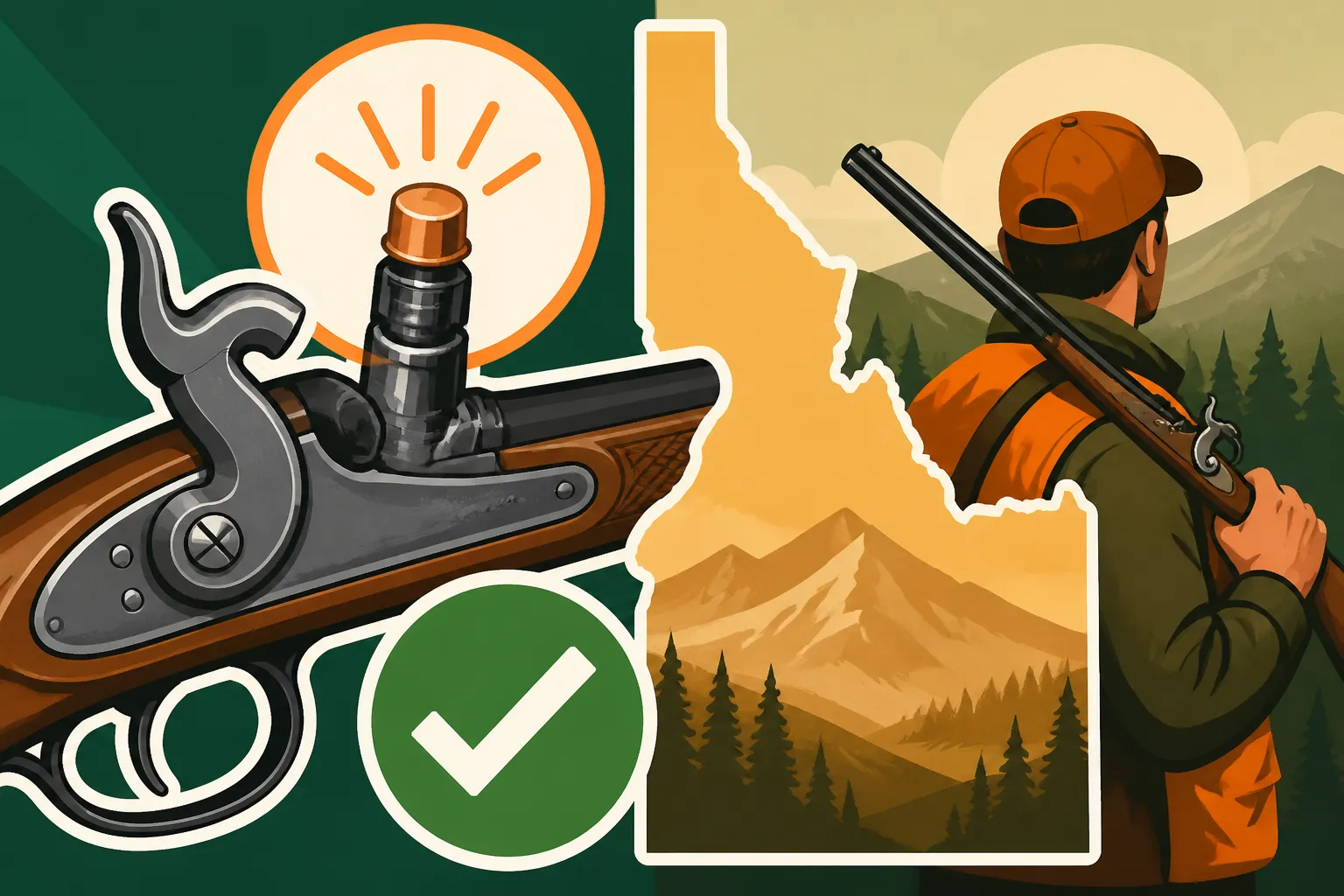
At its heart, the exposed-cap rule dictates that the ignition system of your muzzleloader must be visible and directly exposed to the elements. This means no enclosed breeches or shrouded primers. For a percussion cap system, the cap itself, sitting on the nipple, must be openly visible to the eye and susceptible to moisture or physical impact. If you can see the cap clearly, and it's not hidden within a modern mechanism, you're generally in compliance.
Think of a classic side-hammer rifle or a traditional flintlock. On a percussion cap rifle, the small cap sits on a nipple that protrudes from the side or top of the breech. When the hammer falls, it strikes this exposed cap, detonating the primer and sending a flame down through the nipple into the main powder charge. This direct, open exposure is precisely what Idaho's regulations are trying to uphold. It's a system where the elements—rain, snow, humidity—can directly affect your cap, adding a layer of challenge that modern enclosed systems circumvent.
The Difference Between Percussion Caps and Modern Primers
This is often where confusion arises, especially for hunters new to muzzleloaders or those accustomed to more contemporary firearms. Traditional percussion caps, like No. 11 caps or musket caps, are small, brass or copper cups containing a tiny charge of impact-sensitive explosive. They are designed to fit snugly over a nipple on the rifle’s breech.
Modern primers, particularly those used in inline muzzleloaders, are different. They are often larger, shotgun-style primers (like 209 primers) that are fully enclosed within the breech mechanism. While these systems offer superior weather resistance and reliability, they are explicitly not considered exposed-cap ignition by Idaho Fish and Game. The rule is about the exposure of the primer itself, not just its existence. If the primer is contained within a breach plug or an enclosed system, it fails the "exposed-cap" criteria. This distinction is critical because an inline muzzleloader, even if it loads from the muzzle, will not be legal in Idaho’s muzzleloader-only seasons due to its enclosed 209 primer system.
Visualizing Legal vs. Illegal Setups
To make this clearer, let's paint a picture of what's legal and what's not.
Legal Setups:
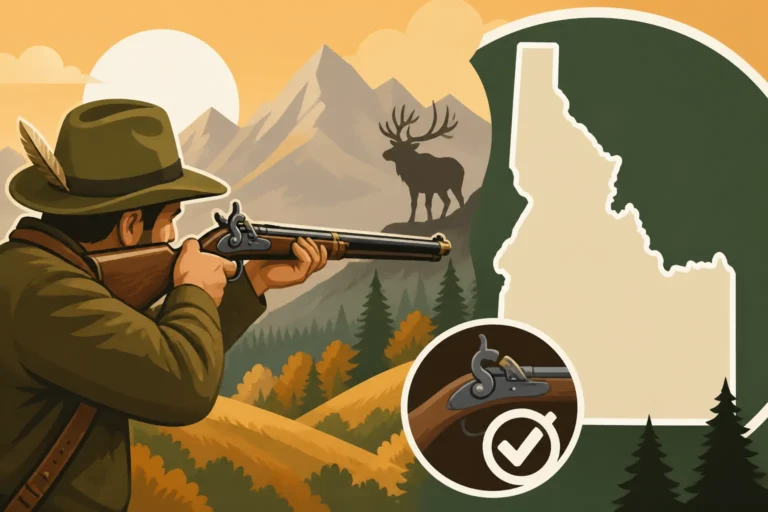
- Traditional Percussion Cap Rifles: Imagine a classic "Hawken" style rifle. It has a long barrel, a side-mounted hammer, and a small nipple protruding from the barrel's side near the breech. A small No. 11 percussion cap is pressed onto this nipple, fully visible. When the hammer falls, it strikes the cap directly. This is the quintessential exposed-cap system.
- Flintlock Rifles: Even more traditional, these rifles use a piece of flint clamped in the hammer (cock) to strike a frizzen (steel plate), creating sparks that ignite a small pan of priming powder, which in turn ignites the main charge. Every step of this ignition is exposed to the elements.
Illegal Setups (for muzzleloader-only seasons):
- Inline Muzzleloaders using 209 Primers: Most modern muzzleloaders fall into this category. They have a more streamlined appearance, often with a firing pin that strikes a 209 shotgun primer fully recessed within a specialized breech plug. The primer is not "exposed" in the way a percussion cap on a nipple is.
- Any System with a Shroud or Enclosed Mechanism: If any part of the ignition system, particularly the primer or cap, is covered or protected by a removable or fixed shroud, housing, or sealed breech, it generally will not meet the exposed-cap requirement. The intent is clear: if it’s not truly open to the elements, it’s not considered traditional enough.
Understanding this distinction is key to a legal and ethical hunt, and a quick glance at your muzzleloader will usually tell you if it's designed with an exposed cap or a more modern enclosed primer.
The Impact on Muzzleloader Technology Choices
The exposed-cap rule has significant implications for the type of muzzleloader you can legally carry during Idaho's special seasons. It steers hunters away from modern conveniences and back towards older, more challenging designs.
Why Inline Ignition Fails Muzzleloader-Only Rules
This is perhaps the most frequent point of contention and confusion for many hunters. Inline muzzleloaders, while loading from the muzzle, utilize a modern 209 shotgun primer that sits inside the breech plug. This setup, by design, keeps the primer protected from moisture and provides a hotter, more reliable ignition than traditional percussion caps. This is precisely why they are so popular in states with less restrictive muzzleloader regulations.
However, in Idaho's muzzleloader-only seasons, this enclosed primer system is a non-starter. The rule specifically targets the exposure of the ignition source. Since the 209 primer is housed within the breech, it fails the exposed-cap criterion. It doesn't matter that you still load powder and bullet from the muzzle; the ignition method disqualifies it. If you choose an inline muzzleloader for its reliability and ease of use, you'll be limited to general any-weapon seasons, or you'll need to confirm that your specific unit or season allows for modern muzzleloader use. This restriction is also why you can't use many modern optical sights in these seasons, reinforcing the traditional approach.
Legal Percussion and Flintlock Systems
So, what is legal for those coveted muzzleloader-only tags? You're looking at traditional percussion cap rifles and flintlock rifles.
- Percussion Cap Rifles: These are typically distinguished by their side-hammer design, where the hammer strikes a nipple on which a percussion cap is seated. Common examples include replica Hawken or Pennsylvania rifles. The No. 11 cap or musket cap is fully exposed. Brands like Traditions and Cabela's have offered models that meet these traditional criteria, providing hunters with options that respect the state’s regulations. These rifles require a bit more attention to detail in the field, especially regarding moisture management for the caps, but they offer that genuine, historic hunting experience.
- Flintlock Rifles: These are the oldest form of muzzleloader, relying on a spark from flint striking steel to ignite an open pan of priming powder. Every component of the ignition is entirely exposed. While less common for big game hunting today due to their learning curve and susceptibility to weather, they are undeniably legal under the exposed-cap rule.
Both types demand a different skill set than modern firearms, emphasizing careful handling, keen awareness of weather conditions, and precise shooting fundamentals. This dedication to traditional methods is what Idaho aims to protect.
The Role of Black Powder Substitutes
Beyond the ignition system, the powder itself is another area where modern technology has introduced confusion. Historically, muzzleloaders used true black powder. However, modern substitutes like Hodgdon Triple Seven, Pyrodex, and Alliant Black MZ have become incredibly popular due to their cleaner burning properties and less corrosive nature.
Idaho regulations generally allow for these black powder substitutes. The key is that they must be loaded from the muzzle, just like traditional black powder. The "exposed-cap" rule primarily governs the ignition mechanism, not the propellant itself. So, while you're constrained by your ignition system, you do have flexibility in your powder choice. When choosing your powder, always remember that Measuring Blackpowder Substitutes by Volume, Not Weight is crucial for safety and accuracy, as their density differs from true black powder. However, it's always wise to double-check the current year's regulations, as rules can sometimes change or be clarified. Using a modern substitute like Pyrodex can make the cleanup much easier after a successful hunt, a welcome relief after a long day in the field.
Navigating Muzzleloader-Only vs. Any-Weapon Seasons
Idaho's regulations can be tricky because your muzzleloader might be legal in one season but not another, purely based on the ignition system. Knowing the difference is paramount to avoid fines and disappointment.
When the Exposed-Cap Rule Applies
The exposed-cap rule is only enforced during designated "muzzleloader-only" seasons. These are the specific hunts where Idaho is explicitly trying to preserve the traditional experience. You’ll see these listed in the Idaho Fish and Game regulations book, often alongside bowhunting-only seasons. These seasons typically offer unique dates or unit opportunities that are unavailable during the general rifle hunts.
For example, many early fall elk hunts might have an archery-only period, followed by a muzzleloader-only period, and then a general rifle season. It's during that muzzleloader-only window that your firearm must adhere to the exposed-cap rule, along with other restrictions like no scopes or inline ignition. This is where hunters need to be extra vigilant about their gear. If you show up to a muzzleloader-only hunt with an inline muzzleloader, even if it's technically a "muzzleloader," you'd be in violation. This also directly ties into when you need a Muzzleloader Validation in Idaho, as it indicates your intent to hunt in these specialized seasons. Checking the Idaho Hunt Planner is always a good idea to confirm weapon restrictions for your chosen unit and season dates.
Using a Muzzleloader in Any-Weapon Season
Here's where things get simpler. If you're hunting during a "general" or "any-weapon" season, your muzzleloader, regardless of its ignition system, is typically legal. This means your modern inline muzzleloader, complete with its 209 primer ignition and even a scope, is perfectly acceptable. These seasons are open to all legal weapon types—rifles, shotguns, handguns, archery equipment, and modern muzzleloaders.
The advantage here is that you can use the more reliable and user-friendly inline systems without worry. You still have to adhere to all other general hunting regulations, such as tag requirements, shooting hours, and unit boundaries, but the specific ignition rules are lifted. So, if you own an inline muzzleloader and aren't keen on investing in a traditional percussion cap model, you can still absolutely hunt Idaho, you just need to pick the appropriate season. This flexibility allows hunters to choose the gear that suits them best, provided they hunt during a season that accommodates it, such as Using a Muzzleloader in Any-Weapon Season.
When No Muzzleloader Validation Is Needed
This is another common point of confusion. A "Muzzleloader Validation" is an additional purchase that allows you to participate in those specific muzzleloader-only seasons. If you plan to hunt only during general any-weapon seasons with your muzzleloader, you typically do not need to purchase this validation.
Think of it this way: the validation is like a special permit for the restricted seasons. If you're not participating in those restricted seasons, you don't need the permit. This saves you a bit of money and simplifies your licensing process. However, if you have any doubt, it’s always best to err on the side of caution and double-check the current Idaho Fish and Game regulations or contact their licensing department directly. Rules can change, and it’s better to be over-prepared than under-prepared. A quick visit to the Idaho Fish and Game website or a call can clear up any ambiguities before you head into the field. GoHunt's online resources can also be a valuable tool for clarifying these nuances.
Practical Tips for Idaho Muzzleloader Hunters
Hunting with an exposed-cap muzzleloader requires a bit more foresight and care than a modern centerfire rifle. Embracing these challenges is part of the experience, but a little preparation goes a long way.
Pre-Hunt Gear Check and Preparation
Before you even leave for the woods, a thorough gear check is essential, especially with an exposed-cap muzzleloader. Your ignition system is the most vulnerable component.
- Nipples and Vents: Inspect your nipple (if using percussion) for any fouling or damage. Ensure the flash channel (the vent hole from the nipple to the powder charge) is completely clear. A clogged vent means a misfire. For flintlocks, check your flint for sharp edges and ensure the frizzen is clean and free of rust. Carry spare nipples and a nipple wrench, and certainly extra flints and a frizzen file for flintlock users.
- Caps/Priming Powder: Always carry a sufficient supply of fresh, dry percussion caps or priming powder. Store them in a waterproof container, separate from your main powder charge. Even a little moisture can render them useless.
- Powder Storage: Your black powder or substitute should also be kept dry. Many hunters use speed loaders or separate powder vials that are waterproof. A damp powder charge is a dead powder charge.
- Tools: Beyond your main rifle, ensure you have a ramrod extension, a powder measure, a bullet starter, and a cleaning jag and patches for quick field cleaning if needed. A good quality cleaning kit, like those offered by Traditions or CVA, is invaluable.
- Ammunition: Make sure your bullets are properly sized for your bore. The Idaho Muzzleloader Caliber Minimums: .45 for Deer, .50 for Elk still apply, so ensure you’re using the correct projectile for your target species.
- Practice: Most importantly, practice, practice, practice! Get comfortable loading and firing your muzzleloader under field conditions. Know your rifle's effective range on elk, and understand how quickly you can reload, especially if a follow-up shot is needed.
Loading and Firing with Traditional Ignition
The loading process itself is a ritual with an exposed-cap muzzleloader. Each step needs attention to detail to ensure reliable ignition and accuracy.
- Safety First: Always ensure the hammer is at half-cock and the rifle is pointed in a safe direction.
- Powder Charge: Measure your powder accurately using a volume-based measure. Pour the charge down the muzzle. Avoid compressing it excessively, but ensure it settles at the bottom of the bore.
- Patch/Wad (if applicable): If using a patched round ball or a separate wad, place it over the powder.
- Bullet: Place your bullet or sabot on top, ensuring it starts straight in the bore.
- Seating the Load: Use your ramrod to firmly, but not excessively, seat the bullet all the way down onto the powder charge. You should feel it "kiss" the powder, leaving no air gap. A mark on your ramrod can help confirm consistent seating depth.
- Priming (Percussion): Carefully place a fresh percussion cap onto the nipple. Ensure it's seated firmly but don't force it. The cap should be fully exposed.
- Priming (Flintlock): Load a small pinch of fine priming powder into the pan, close the frizzen, and make sure your flint is secure and positioned correctly.
- Ready to Fire: Cock the hammer to full cock when ready to shoot. Be mindful of the exposed cap or pan; a snag or accidental bump can dislodge it or cause a misfire.
This detailed process takes time, which is why close shots and patience are hallmarks of successful muzzleloader hunting.
Cleaning and Maintenance for Exposed-Cap Systems
Black powder and its substitutes are corrosive, and traditional ignition systems expose more parts to fouling. Proper cleaning and maintenance are crucial for the longevity and reliability of your muzzleloader.
- Immediate Cleaning: Never let your muzzleloader sit uncleaned after firing, even if it's just a single shot. The fouling will harden and cause corrosion.
- Cleaning Solution: Use a dedicated black powder solvent or even just hot soapy water. Many hunters prefer a mixture of water, rubbing alcohol, and dish soap.
- Barrel Cleaning: Remove the breech plug (if applicable) and clean the barrel thoroughly with a brush and patches until they come out clean. Pay extra attention to the breech end.
- Nipple/Vent/Pan Cleaning: For percussion rifles, remove the nipple and clean the flash channel with a small pick or pipe cleaner. Clean the nipple itself. For flintlocks, scrub the pan and frizzen.
- Metal Protection: After cleaning and drying, apply a protective oil or grease to all metal surfaces, inside and out, to prevent rust. Birchwood Casey Barricade is a popular choice for corrosion prevention.
- Cap/Flint Storage: When storing your rifle, always remove the percussion cap or empty the priming pan. Never store a loaded or primed muzzleloader.
Diligence in cleaning not only ensures your rifle functions flawlessly but also prolongs its life, keeping it ready for many more Idaho hunts. GoHunt’s forums often have detailed discussions on preferred cleaning methods from experienced muzzleloader hunters.
Common Misconceptions and Enforcement
Navigating Idaho's hunting regulations can feel like walking a tightrope. It's easy to make an honest mistake, but understanding common pitfalls can help keep you out of trouble.
Avoiding Accidental Violations
The most common accidental violation usually stems from confusing "muzzleloader" as a blanket term. Many hunters assume if it's a muzzleloader, it's legal in muzzleloader season. Not so in Idaho.
- Ignition is Key: The biggest mistake is bringing an inline muzzleloader with a 209 primer to a muzzleloader-only hunt. Always verify your ignition system meets the "exposed-cap" standard.
- Optics: Don't forget that muzzleloader-only seasons also restrict optics. Scopes are generally prohibited, requiring you to use Open and Peep Sights Only in Muzzleloader-Only Hunts. Attaching a scope, even if your ignition is compliant, is an instant violation.
- Season Dates and Units: Double-check your specific hunt's regulations. Not all muzzleloader seasons have the exact same rules, and unit boundaries matter. A quick cross-reference with the official Idaho Fish and Game regulations or using a tool like GoHunt's mapping features can prevent a costly error.
- Ammunition: While the exposed-cap rule is about ignition, ensure your projectile choice is also legal. For example, some states have rules about sabots or bullet materials during muzzleloader season. Always check your regulations to make sure your choice of bullet, whether a patched round ball or a specific conical, is compliant. The regulations for Fixed Blade Against Mechanical Broadheads on Elk for bowhunters have similar attention to detail regarding equipment.
How Game Wardens Interpret the Rule
Idaho Fish and Game Conservation Officers are highly trained professionals whose job it is to enforce these regulations fairly. When it comes to the exposed-cap rule, their interpretation is usually quite literal and consistent.
They're looking for whether the primer itself is directly exposed to the environment. If it's housed within a breech plug, even if you can see a small portion of it or a cap, it's likely not considered "exposed." They understand the technology, and they know the difference between a traditional percussion cap system and a modern inline 209 primer system. Their goal isn't to trick you but to ensure fair chase and adherence to the spirit of the hunt. If you're ever in doubt, it's better to ask a conservation officer before you hunt, rather than trying to explain yourself afterward. They would much rather educate than cite a violation.
Staying Up-to-Date with Regulations
Hunting regulations are not static; they can and do change. What was legal last year might have a slight modification this year. This is why staying current is incredibly important.
- Annual Regulation Book: Always pick up and thoroughly read the current year's Idaho Big Game Regulations booklet. This is your primary source of truth.
- Idaho Fish and Game Website: The official Idaho Fish and Game website is an excellent resource for real-time updates, news releases, and often answers to frequently asked questions.
- Online Hunt Planning Tools: Websites and apps like GoHunt offer digital tools that integrate regulations with mapping features, making it easier to see unit-specific rules and season dates. This can be invaluable for cross-referencing information and ensuring you're using the correct weapon in the correct place at the correct time.
- Controlled Hunt Calendar: Pay close attention to the Idaho Controlled Hunt Calendar, April Through August, and other important deadlines. These calendars often contain critical information that can affect your weapon choice and season.
By taking a proactive approach to understanding and verifying regulations, you can ensure your Idaho muzzleloader hunt is not only successful but also legal and ethical. The frustration of dealing with complex rules is real, but with a bit of effort, you can navigate them confidently.
Disclaimer
Please remember that hunting regulations can change frequently. This guide is intended for informational purposes only and should not be considered legal advice. Always consult the official Idaho Fish and Game regulations for the current year before planning or embarking on any hunting trip. It is your responsibility as a hunter to know and abide by all applicable laws and regulations.