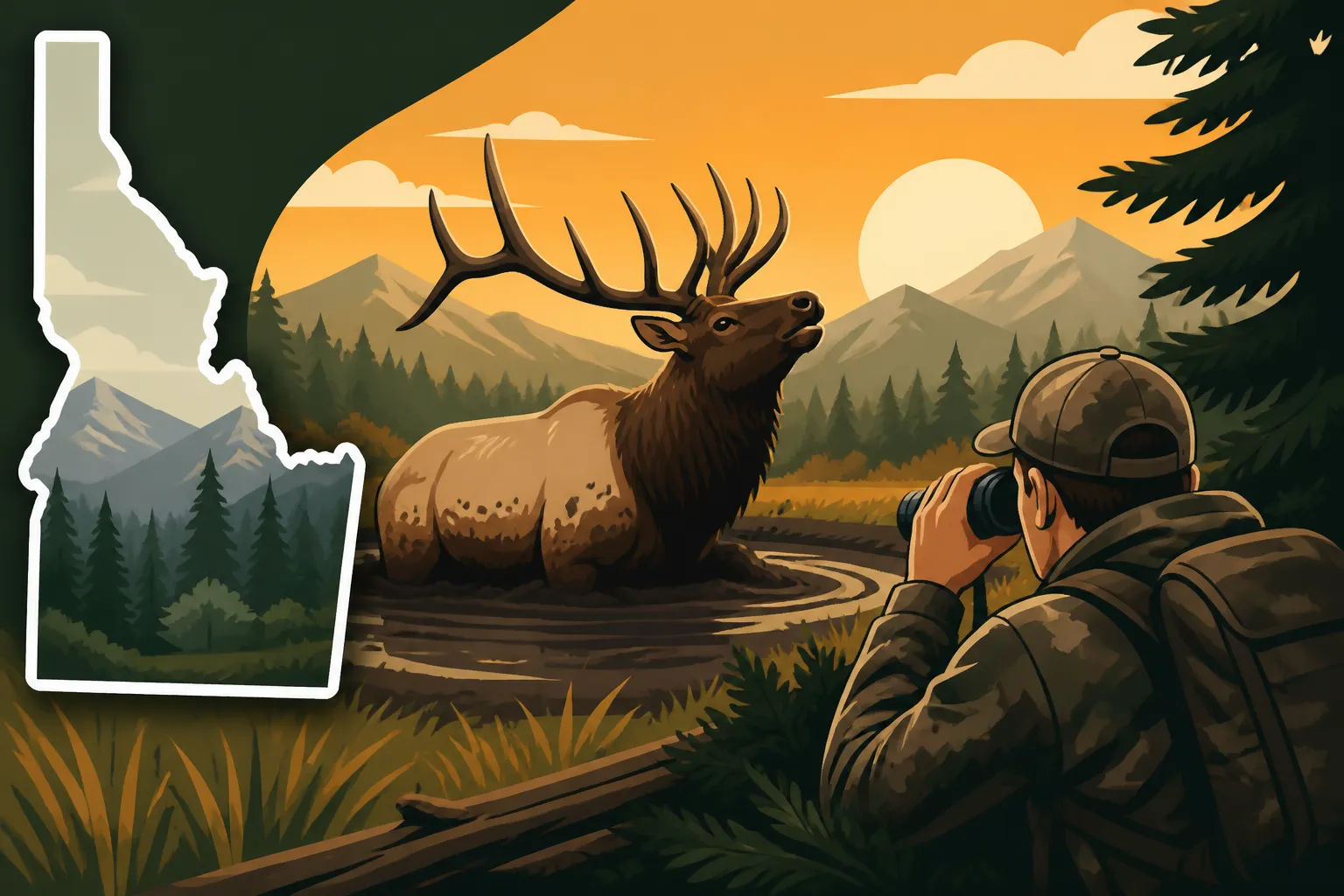
How to Hunt an Elk Wallow in September
The crisp September air in the Idaho backcountry brings with it an undeniable energy, a promise of rutting elk and the thrilling challenge of chasing them. But let's be honest, finding those elusive bulls, especially when they're locked down or moving through dense timber, can be incredibly frustrating. This guide is all about shedding light on a highly effective, yet often overlooked, strategy for connecting with elk during the early to mid-rut: hunting an elk wallow.
Understanding Elk Wallow Behavior in September
Elk wallows are more than just muddy puddles; they are vital social hubs and physiological necessities for elk, especially as September pushes towards the peak of the rut. If you can decode why and when elk use these spots, you've unlocked a significant piece of the puzzle.
Why Elk Use Wallows During the Rut
During the rut, elk bulls become incredibly active, covering vast distances, bugling, and herding cows. This intense activity generates a lot of body heat, and a cool mud bath is an elk's natural air conditioning. It's not just about temperature regulation, though. Wallows serve as a critical defense against irritating insects, coating their hides in mud to deter flies and mosquitos. But for a hunter, the most exciting aspect of a wallow during September is its role in the rut. Bulls will roll in their own urine and the mud, coating themselves in a pungent, musky scent that signals their dominance and readiness to breed. It's a primal advertisement, drawing in cows and warning off rival bulls. They're essentially broadcasting their presence and status, making a fresh wallow an absolute hotspot of activity. You'll often find broken saplings and shrubs around the wallow's edge, rubbed raw from bulls marking their territory and shedding velvet, adding to the visual and olfactory cues.
Prime Times and Conditions for Wallow Activity
Elk are creatures of habit, but their wallowing schedule can be influenced by several factors. In the early to mid-rut of September, you'll often find activity centered around the hotter parts of the day, particularly if temperatures are climbing. A bull that's been pushing cows all morning will be eager to cool off and re-scent himself before continuing his rutting duties in the late afternoon. However, don't rule out early morning or late evening visits, especially as the rut progresses and bulls become more preoccupied with breeding than cooling. Sometimes a bull will hit a wallow right after dark or just before first light, so you need to be prepared for those transitional periods.
Weather plays a huge role here. Hot, dry conditions will drive elk to wallows more frequently. A sudden rain shower, while initially washing away some scent, can also soften the ground and create new wallowing opportunities, invigorating the elk to refresh their scent. High humidity is also a friend to the wallow hunter, as it holds scent longer in the air, allowing that potent elk musk to travel further and indicate recent activity. Pay close attention to the forecast; a string of warm, sunny days after a cool spell can dramatically increase wallow use.
Locating Active Elk Wallows
Finding a wallow is one thing, but finding one that's actively being used is the key to success. This requires a combination of modern scouting techniques and good old-fashioned tracking skills.
Scouting for Wallows Before the Season
Your scouting efforts shouldn't wait until opening day. Start well before the season, even in the summer, to identify potential wallow locations. Tools like GoHunt are invaluable for this. You can use their mapping features to pinpoint areas with water sources—springs, seeps, small ponds, or marshy areas—especially those nestled within dense timber or on north-facing slopes where elk seek thermal cover. Look for natural depressions in the terrain that might collect water or mud. Often, wallows are situated along established game trails that lead between bedding and feeding areas. Pay attention to areas that historically hold elk, which you can often glean from harvest statistics on the Idaho Fish and Game website. These e-scouting missions help narrow down vast areas, making your on-the-ground efforts more efficient. You can layer satellite imagery with topographic maps to identify hidden basins or benches where elk might congregate, increasing your chances of finding a honey hole.
When you do venture out physically, focus on transition zones: where thick timber meets open meadows, or along the edges of steep canyons where thermals are reliable. You're not just looking for mud; you're looking for the perfect spot an elk would choose to relax, re-scent, and potentially challenge other bulls. Think about how deer use bedding areas; elk select wallows with similar careful consideration for safety and efficiency. If you're out earlier in the year, you might find old wallows that are dried up, but mark them down. With early fall rains, they can quickly become active again. Consider also areas described in guides about Elk Herd Distribution by Zone to focus your efforts where elk populations are strong.
Identifying Fresh Wallow Sign
Once you've found a potential wallow, the critical step is determining if it's active. Fresh sign is unmistakable. The mud around the wallow will be churned, soft, and wet, not dried and cracked. You'll see clear, well-defined elk tracks leading into and out of the wallow, often with mud still clinging to them. Look for hair, especially on the edges or on nearby vegetation where an elk might have rubbed after wallowing. This hair will be soft and pliable, not brittle and sun-bleached. You might even find fresh droppings nearby, indicating recent presence. If the wallow itself is urine-soaked, the smell will be potent and musky – a dead giveaway of a bull's visit. This is one of the clearest Reading Fresh Elk Sign in Dark Timber indicators.
Beyond the immediate wallow, look at the surrounding vegetation. Are saplings broken and scarred from rubbing? Is there fresh mud splattered on nearby trees or bushes? These are all puzzle pieces that confirm recent use. The key is distinguishing between old, stale sign and fresh, vibrant evidence. An old wallow might have tracks, but they'll be hard-packed, faded, or covered with debris. The mud will be dry, and any hair will be old and brittle. When you find a wallow radiating that unmistakable elk musk, you know you're in the right place. Don't forget that using your nose is one of the most underrated scouting tools in the woods.
Here’s a quick comparison of active vs. old wallow signs:
| Feature | Active Wallow Sign | Old Wallow Sign |
|---|---|---|
| Mud Condition | Soft, wet, churned, possibly with standing water | Dry, cracked, hard-packed, overgrown with vegetation |
| Tracks | Clear, crisp, fresh; mud clinging to edges | Faded, filled with debris, hard-packed, unclear |
| Hair | Soft, pliable, sometimes still damp | Brittle, faded, sun-bleached, easily breaks |
| Scent | Strong, musky, distinct elk urine odor | Faint, earthy, no strong animal odor |
| Vegetation | Freshly broken saplings, mud splattered on leaves | Old rubs, decaying leaves/debris in the mud |
Strategies for Hunting an Elk Wallow
Hunting an elk wallow effectively requires patience, discipline, and a thorough understanding of wind and terrain. It's often a sit-and-wait game, but one that can pay off handsomely.
Setting Up for a Wallow Ambush
The most crucial factor when setting up on an elk wallow is wind direction. Elk have an incredible sense of smell, and even a slight shift in wind can betray your presence. Always approach and set up downwind of the wallow, ensuring your scent is carried away from where the elk will approach. This often means long, circuitous routes to get into position, sometimes requiring you to circle around entire ridges. Once downwind, find natural cover that breaks up your outline – a cluster of pines, a large downed log, or a rock outcrop. If allowed in your area, a pop-up blind can provide excellent concealment, but natural cover is often sufficient if you're patient and still.
Consider your shot lanes. You want clear shooting windows to the most likely approach routes and, of course, the wallow itself. Trim any small branches that might impede an arrow or bullet, but do so minimally to avoid drawing attention. Position yourself within ethical shooting range for your weapon, keeping in mind How Close a Bowhunter Needs to Get on Elk if you're archery hunting. Often, wallows are in dark, timbered areas, so consider light conditions and how they might change throughout your sit. You might need to adjust your position as the sun moves or clouds roll in. Plan your entry and exit strategy carefully, aiming to get into your stand or blind well before dawn and stay until after dark, minimizing your chances of spooking elk. Remember, Playing Wind Direction on a Timbered Stalk is crucial in all elk hunting scenarios, especially when stationary.
Calling Strategies Near a Wallow
While a wallow acts as a natural attractant, sometimes a little vocal encouragement can seal the deal. The key is to be subtle and realistic. Aggressive bugling might deter a bull already wary of competitors, especially if he’s not the dominant bull in the area. Instead, soft cow calls or contentment chirps can pique a bull's curiosity without putting him on edge. A locator bugle, used sparingly and realistically, might get a response from a distant bull, letting you know he's in the vicinity. However, at the wallow itself, less is usually more. Let the natural draw of the wallow and the prevailing wind do most of the work.
If you hear a bull approaching, resist the urge to over-call. Just a few quiet cow calls might be enough to confirm his suspicions and bring him into range. Sometimes, silence is the most effective calling strategy. If a bull is coming in hot, he's often looking for the source of the calls or another bull to challenge. Using the wallow as a natural funnel, where he expects to find other elk, can be immensely effective. Think about it: if a bull smells a rival's scent at a wallow, and then hears a soft cow call nearby, he's likely to investigate. For more insights on vocalizations, exploring Bugling Against Cow Calling Through September can give you a better grasp of when to use which call. If you hear a bull far off, a Locator Bugles for Finding Bulls at Dawn can confirm his general direction, then you can rely on the wallow's draw.
Common Mistakes and How to Avoid Them
Even the best-laid plans can go awry, and wallow hunting is no exception. Recognizing and avoiding common pitfalls will significantly increase your odds of success.
Ignoring Wind and Scent Control
This cannot be stressed enough: ignoring the wind is the quickest way to ruin a wallow hunt. Elk will bust you every single time if your scent drifts their way. Many hunters make the mistake of setting up without truly understanding the thermal currents in mountain terrain. Mornings generally have thermals rising, carrying scent uphill, while evenings see them dropping, carrying scent downhill. Mid-day can be unpredictable, with swirling winds. Always use a wind checker to confirm the exact wind direction before, during, and after your setup. This is why it's crucial to understand Playing Wind Direction on a Timbered Stalk and apply it even when you're stationary.
Beyond wind, diligent scent control is paramount. Shower with scent-eliminating soaps, wash your hunting clothes in scent-free detergent, and store them in airtight bags. Use scent-eliminating sprays on your clothes, boots, and even your bow or rifle. Pay particular attention to your breath, as human breath carries a strong odor that elk can detect. Chew on scent-free gum or use breath spray. The goal is to be as odorless as possible, becoming a ghost in the woods. Any lapse in scent control, even a minor one, can send a cautious bull bolting.
Impatience and Over-Calling
Wallow hunting often tests your patience more than any other method. Elk move deliberately, and they can linger on the periphery of a wallow for a long time, scent-checking and observing before committing. Many hunters get antsy after an hour or two without action and decide to move. This is a huge mistake. A bull could be bedded just out of sight, waiting for the cover of evening or for competitors to leave. Be prepared to sit for hours, even all day if conditions are right. Bring snacks, water, and enough layers to stay comfortable.
Equally damaging is over-calling. The goal isn't to have a full-blown conversation with an elk; it's to provide just enough realistic vocalization to reassure him or pique his interest. If you constantly blare out bugles or cow calls, a smart bull will quickly become suspicious. He'll expect to see the elk he's hearing, and if he doesn't, he'll know something is wrong. Instead, use soft, infrequent calls. Let the natural sounds of the forest be the soundtrack, punctuated by your subtle calls only when truly necessary. Sometimes, the most effective call is no call at all. Just sitting silently, observing, and allowing the elk to come to you on their own terms, can be the most rewarding strategy. And if you do tag out, remember the challenge of Packing an Elk Out of Steep Country Alone—it's half the hunt!
Disclaimer
Hunting is an inherently dangerous activity. Always prioritize safety, adhere to all local, state, and federal hunting regulations, and ensure you have the necessary licenses and permits. Be prepared for rapidly changing weather conditions and unexpected wildlife encounters in the backcountry. This guide is for informational purposes only and does not endorse any specific hunting practices that may be illegal or unsafe.