Which Idaho Units Border Wyoming
Trying to figure out which specific hunting units in Idaho snuggle right up against the Wyoming border can feel like a real puzzle when you're planning a hunt. It's not just about looking at a state map; you need to understand the nuances of how these boundaries affect your access, game movements, and even local regulations. This guide is here to untangle that map for you, helping you pinpoint those eastern Idaho units that share a fence line with Wyoming and what that means for your next adventure.
Understanding Idaho's Eastern Edge: The Wyoming Border
Idaho's eastern border, particularly where it meets Wyoming, is a fascinating stretch of country for any hunter. It’s not a straight, easy-to-define line in many places; instead, it snakes through national forests, across high desert plains, and skirts some of the most iconic landscapes in the West, like the Yellowstone ecosystem. Knowing these border units is more than just a cartographic exercise; it's a strategic move for successful hunting. The wildlife certainly doesn't recognize state lines, and their movements can be heavily influenced by habitats and pressure from both sides of the border.
Why Border Units Matter for Hunters
For many hunters, understanding which Idaho units directly border Wyoming is critical for several practical reasons. Firstly, it often indicates a specific type of terrain and habitat. These eastern units tend to be characterized by the rugged peaks and dense timber of the Caribou-Targhee National Forest, as well as sagebrush-covered foothills leading into the lower country. This means you might be looking at a mix of high-elevation elk haunts, mule deer winter range, and even moose country. The game populations in these areas can migrate across state lines, following feed, water, and seasonal patterns, which means their numbers and availability might be tied to events happening in Wyoming as well.
Secondly, these border areas often present unique access challenges and opportunities. While Idaho generally boasts vast tracts of public land, understanding where that public land connects directly to Wyoming can influence your scouting strategy. You might find trailheads that serve both states, or roads that weave in and out of jurisdictions. This can also complicate rules around vehicle use, as regulations can differ slightly even on adjacent public lands. Knowing which units share that direct border can also give you a leg up if you're trying to leverage multi-state tags, though that's a whole other level of complexity for another day!
The Overlap of Ecosystems and Wildlife Movements
The Idaho-Wyoming border isn't just a political line on a map; it's a permeable membrane for some of the West's most iconic wildlife. Animals like elk, mule deer, and moose often have expansive home ranges that naturally extend beyond an imaginary line drawn by surveyors. This is particularly true in areas like the Greater Yellowstone Ecosystem, where the national park itself, along with surrounding national forests, forms a massive, interconnected habitat. A bull elk bugling just inside Idaho might have spent the summer grazing in Wyoming, or vice-versa.
This ecological overlap means that hunting pressure on one side of the border can push animals into the other. If Wyoming's general elk season opens a week earlier than Idaho's, for example, those first few days of intense hunting activity can send elk streaming west into the relative safety of Idaho's timbered hills. Conversely, if Idaho experiences a particularly harsh winter, animals might seek out more forgiving winter range further east into Wyoming. Understanding these dynamics is a huge part of being a successful hunter in these border units. It’s not just about what's happening in Idaho, but also what's influencing the game from beyond the border.
Identifying the Idaho Units That Share a Border with Wyoming
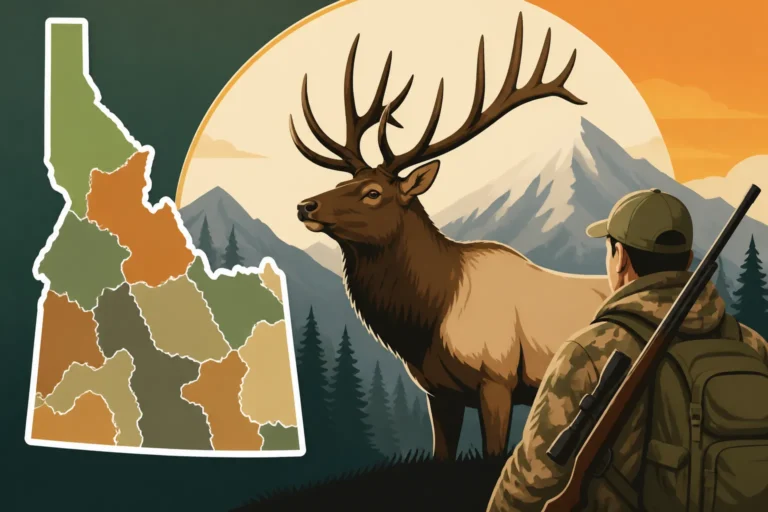
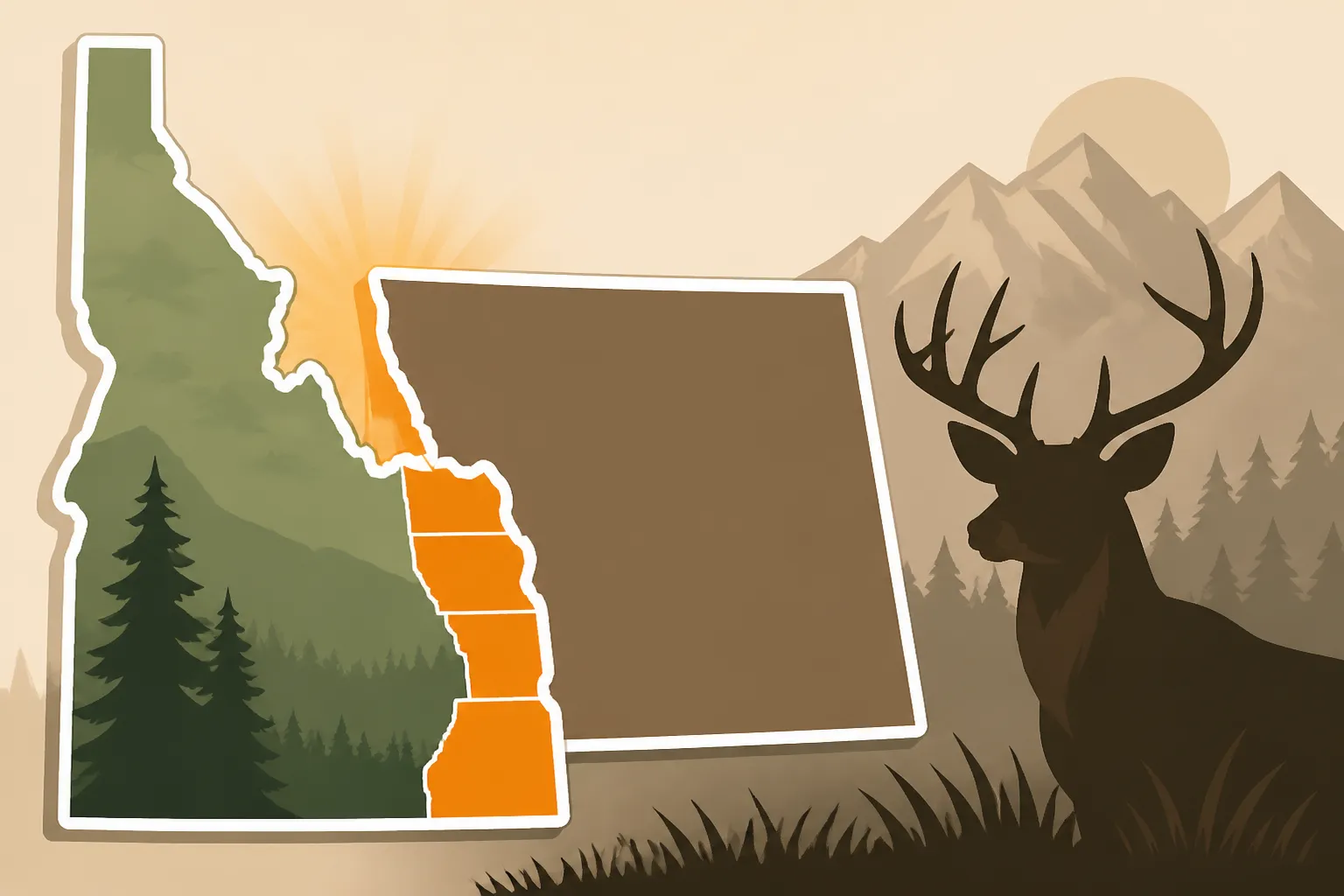
Alright, let's get down to brass tacks: which Idaho Game Management Units (GMUs) actually touch Wyoming? When you look at the map, you'll see a distinct section of eastern Idaho that directly abuts the Cowboy State. These units are predominantly nestled within the Caribou-Targhee National Forest, offering hunters a mix of high-elevation mountains, timbered slopes, and lower sagebrush valleys. Knowing these units by number is the first step in planning any border-area hunt.
The Eastern Front: A Unit-by-Unit Breakdown
Idaho's eastern border with Wyoming primarily involves a string of units that hug the state line. Starting from the north, near the Yellowstone National Park boundary, and working our way south, here are the key units you'll find:
- Unit 60: This unit is situated in the far northeastern corner of Idaho, and a significant portion of its eastern boundary is shared with Wyoming. It's often associated with the Yellowstone ecosystem, known for its high-elevation terrain, dense lodgepole pine forests, and challenging hunting. You'll find elk, mule deer, and even moose here. The access can be rugged, requiring good physical conditioning and reliable navigation.
- Unit 61: Located directly south of Unit 60, Unit 61 also has a substantial border with Wyoming. This unit is part of the same rugged, mountainous landscape, characterized by significant timber and high alpine basins. It's a classic western hunting unit where animals can move freely across the state line, making awareness of adjacent Wyoming units and their season dates quite important.
- Unit 62: As you continue south, Unit 62 picks up the Wyoming border. It encompasses a mix of forested mountains and transitional country that gradually gives way to more open sagebrush flats further west. This unit offers diverse habitat for elk and mule deer, and its proximity to Wyoming means animals might be pushed into or out of it depending on hunting pressure.
- Unit 62A: This unit is another direct border unit, situated slightly to the south and west of Unit 62, and sharing a smaller but still significant boundary with Wyoming. It’s often characterized by a blend of timber and more open country, which can make for interesting hunting scenarios where visibility can vary dramatically.
- Unit 66: Moving further south, Unit 66 has a long stretch of its eastern boundary adjacent to Wyoming. This unit is a mix of high mountains and more accessible terrain, including some agricultural lands as you move towards the Snake River Plain. This varied habitat supports a good mix of deer and elk, and again, the border proximity means cross-state animal movement is a factor.
- Unit 66A: Situated southwest of Unit 66, this unit also touches Wyoming along its eastern edge, though it's a shorter segment. It tends to be characterized by rolling hills, sagebrush, and some pockets of timber, often serving as critical winter range for deer and elk. Understanding the migration patterns here is key.
- Unit 67: This unit forms part of Idaho's southeastern border with Wyoming, encompassing a significant portion of the Caribou Mountain Range. It's a rugged, mountainous unit known for its mule deer and elk populations. The higher elevations provide summer range, while lower areas serve as critical wintering grounds, with animals often moving between Idaho and Wyoming throughout the year.
- Unit 67A: This unit is one of the southernmost Idaho units that share a border with Wyoming. It generally features more open country, sagebrush flats, and foothills, though it still has some mountainous terrain. This area is often good for mule deer, and hunters need to be very aware of land boundaries, including the state line, especially when pursuing animals that might be moving in and out of Wyoming.
These units represent the primary interface between Idaho and Wyoming for big game hunting purposes. Each offers unique challenges and opportunities, but all share the common thread of being directly influenced by what's happening just across that state line.
Tools for Visualizing Border Units and Terrain
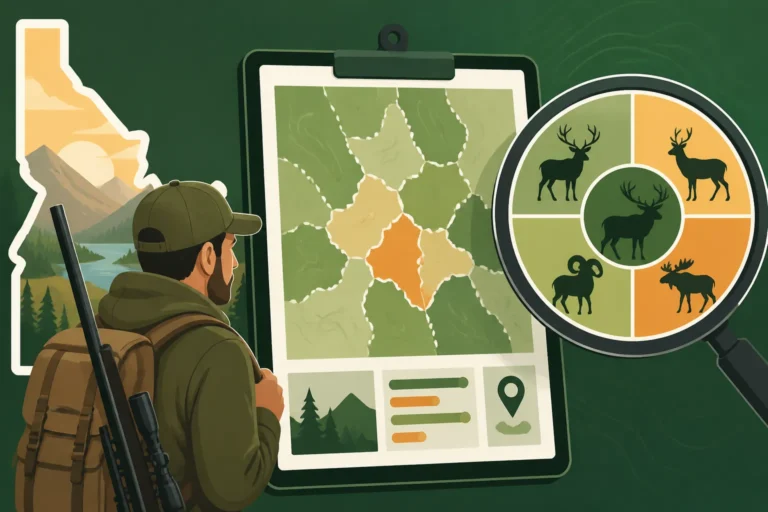
In today's hunting world, you don't have to rely solely on paper maps to understand complex unit boundaries and terrain. Modern mapping applications have revolutionized how we scout and plan hunts, especially in border areas. Tools like onX Hunt and GoHunt are indispensable for visualizing exactly where these Idaho units meet Wyoming, and for understanding the landscape down to the smallest detail.
onX Hunt, for example, allows you to overlay hunting unit boundaries directly onto detailed satellite imagery and topographic maps. This means you can zoom in and see precisely where Unit 60 ends and the Wyoming state line begins. You can identify roads, trails, drainages, and even land ownership (public vs. private) right up to the border. This is incredibly helpful for finding legal access points, understanding potential travel corridors for animals, and ensuring you don't inadvertently cross into another state or onto private land while pursuing game. You can mark waypoints, track your movements, and even download maps for offline use, which is critical in remote border regions where cell service is often nonexistent.
Similarly, GoHunt offers robust tools for e-scouting, including detailed maps with unit boundaries, public land information, and often, historical harvest data and drawing odds. While it might be more focused on draw strategy and planning, its mapping features are excellent for understanding the geography of these border units. By cross-referencing information from these platforms, you can gain a much deeper understanding of the units that border Wyoming, identifying specific features like critical winter range areas, potential pinch points for migrating animals, or even areas that see heavy hunting pressure from both sides of the border. Using these digital tools, hunters can effectively "walk" the state line from their living room, preparing them for the real thing.
| Idaho Game Management Unit | Primary Border State | Key Terrain Features | Common Big Game |
|---|---|---|---|
| 60 | Wyoming | High elevation, dense timber | Elk, Mule Deer, Moose |
| 61 | Wyoming | Rugged mountains, thick forests | Elk, Mule Deer, Moose |
| 62 | Wyoming | Mountains, timber, open foothills | Elk, Mule Deer |
| 62A | Wyoming | Timber, open sagebrush, transitional | Elk, Mule Deer |
| 66 | Wyoming | Mountains, valleys, some agriculture | Elk, Mule Deer |
| 66A | Wyoming | Rolling hills, sagebrush, winter range | Mule Deer, Elk |
| 67 | Wyoming | Caribou Mountains, rugged, high elevation | Mule Deer, Elk |
| 67A | Wyoming | Open sage flats, foothills, some timber | Mule Deer |
Hunting Considerations for Idaho's Wyoming Border Units
Hunting in units that border another state like Wyoming adds a layer of complexity and opportunity to your planning. It's not just about understanding the Idaho regulations; it's about being acutely aware of the invisible line that separates jurisdictions and the potential implications for wildlife movement, access, and even legal compliance. These units offer fantastic hunting, but they demand a bit more homework.
Regulatory Nuances and Cross-State Travel
One of the most critical aspects of hunting near the Idaho-Wyoming border is understanding that the rules can change literally by a matter of feet. While you'll be primarily concerned with Idaho's Motorized Hunting Rule Keeps You on the Road and specific weapon restrictions within Idaho, if you're close to that border, you need to be absolutely sure of your location. A shot taken one side of a fence could be perfectly legal, while a few yards over in Wyoming, it might be out of season, a different tag type, or even illegal.
This is especially true for nonresidents. While Idaho has its own nonresident draw system, you might find yourself applying for tags in both states to increase your odds or extend your season. If you do happen to draw tags in both states for adjacent units, you'll need to meticulously plan your hunt to ensure you are always compliant with the regulations of the state you are actively hunting in. This includes understanding differing shooting hours, blaze orange requirements, tagging procedures, and even weapon legalities. For example, if you harvest an animal near the border, you need to be very clear about where it fell for proper tagging and reporting. Tools like onX Hunt with GPS capabilities become your best friend in these situations, providing real-time location data to prevent accidental border crossings while hunting.
Access and Terrain Challenges in Border Regions
The units bordering Wyoming often share similar rugged terrain and diverse landscapes, primarily defined by the Caribou-Targhee National Forest. This means you can expect everything from vast expanses of dark timber and steep, rocky slopes to open sagebrush hillsides and river bottoms. Hunting Idaho's National Forests and BLM Ground is a common strategy here. Access can range from easily drivable gravel roads to remote trailheads that require significant hiking or even horseback travel to reach prime hunting grounds. Some of these areas may also be subject to Seasonal Road Closures Across Idaho Forests, particularly in the late fall or early winter, which can limit vehicle access and force longer walks.
The terrain itself presents its own set of challenges. Steep ascents and descents are common, requiring good physical conditioning, especially if you're planning a multi-day backcountry hunt. Snowfall can occur early in the higher elevations, making travel difficult and quickly changing hunting conditions. Understanding the topography, including drainages, ridges, and natural travel corridors, is essential for effective scouting and executing a stalk. Many animals in these areas, particularly elk and mule deer, will utilize the vastness of the national forest to evade pressure, often moving into the densest timber or the most remote basins when hunting season heats up. Being prepared for varying weather, elevation changes, and potentially long retrieves is part and parcel of hunting these eastern Idaho units.
Planning Your Hunt in Idaho's Eastern Units
Embarking on a hunt in Idaho's eastern units, particularly those that kiss the Wyoming border, requires a thoughtful and strategic approach. You're not just hunting a piece of Idaho; you're hunting an ecosystem that transcends political lines. Your preparation, from detailed scouting to understanding animal behavior, will be critical to your success in this unique and often challenging landscape.
Scouting and E-Scouting Near the Border
Before you even set foot in the field, extensive e-scouting is your first line of attack when tackling border units. Utilizing platforms like onX Hunt and GoHunt allows you to meticulously study the terrain, identify potential bedding areas, feeding zones, water sources, and most importantly, animal migration routes that might cross the state line. You can switch between satellite imagery, topographic maps, and even 3D views to get a comprehensive understanding of the landscape. Look for natural funnels, saddlebacks, and benches that provide easy travel for animals. Pay close attention to areas of dense timber adjacent to more open feeding grounds, as these are classic elk and deer hangouts.
When you transition to in-person scouting, focus on these identified areas. Hike into those remote basins, check out the north-facing slopes with residual snow, and glass the far ridges, looking for fresh sign like tracks, droppings, and rubs. If you're physically scouting during the off-season, you can also observe how animals move across the landscape and identify pinch points or crossings right along the border. Remember that game movements can change rapidly due to pressure, weather, and food availability, so fresh sign is always king. Always carry your mapping device and ensure you have downloaded offline maps, as cell service can be spotty to non-existent in these rugged areas. Checking Public Land Percentage by Idaho Unit is also a good idea before you go, ensuring you know exactly where you're allowed to roam.
What to Expect from Wildlife in Border Regions
Hunting in units that border Wyoming means you're often dealing with animals that are highly migratory and potentially more pressured due to a larger pool of hunters across two states. Elk, especially, are known to travel significant distances. You might find yourself Bugling Elk in Idaho's Timbered Zones only to realize the herd has been pushed over from Wyoming. Expect these animals to be keenly aware of hunting pressure. They'll often seek refuge in the thickest timber, the steepest canyons, or the most remote high-country basins. Understanding Elk Herd Distribution by Zone can give you a starting point, but always be prepared for them to deviate from typical patterns when seasons open.
Mule deer in these eastern units will also follow seasonal patterns, often moving from high summer ranges in the mountains to lower elevations and sagebrush flats for winter. Mule Deer Across Idaho's High Desert and Breaks are a common sight, but their movements can be influenced by early snows or heavy hunting pressure. During the rut, bucks might travel widely, making them a challenging but rewarding target. Moose are also present in many of these eastern units, particularly in areas with good willow and riparian habitat. Drawing a Idaho Moose Is a Controlled Hunt You Wait Years For tag here is a true trophy. Be prepared for a physically demanding hunt, and remember that patience and persistence are your greatest assets in these wild and beautiful borderlands.
Disclaimer
This article is for general informational purposes only and does not constitute professional advice. Laws, prices and regulations vary by location and change over time. Consult a qualified professional for guidance on your specific situation.