Which Idaho Units Border Montana
Planning a hunting adventure in Idaho often involves looking at vast, wild landscapes, and for many, that includes the incredible opportunities found along the state's eastern border with Montana. But figuring out exactly which Idaho Game Management Units (GMUs) actually touch the Treasure State can feel like navigating a maze if you're just staring at a generic map. This guide is designed to cut through that confusion, giving you a clear picture of Idaho's border units and how to best prepare for a hunt in these often rugged and rewarding territories.
Understanding Idaho's Game Management Units Along the Montana Border
When you're eyeing a hunt in Idaho, especially one that hugs the Montana border, you're looking at some seriously wild country. These aren't just arbitrary lines on a map; they represent distinct ecosystems, diverse game populations, and unique challenges that can make or break your hunting plan. Knowing which units share that boundary isn't just trivia; it's foundational to smart scouting and successful hunting.
Why Border Units Matter for Your Hunt Plan
Hunting along a state border introduces a whole layer of considerations you might not think about when hunting smack-dab in the middle of Idaho. For starters, game animals, like elk and deer, don't carry passports. They roam wherever the feed, water, and security take them, and that often means crossing back and forth between Idaho and Montana. This cross-border movement can significantly influence animal densities, migration patterns, and where you might encounter them at different times of the season.
Imagine a scenario: you're hunting elk in an Idaho unit, and it's getting pressured pretty hard. Those elk might just slip right over into Montana for a breather, only to return when the pressure eases or conditions change. Conversely, if Montana's season opened earlier or has different weapon restrictions, their hunting pressure could push animals into Idaho. Understanding these dynamics is crucial for predicting game movement. It also highlights why staying aware of the regulations on both sides of the border is smart, even if you only have an Idaho tag. You need to be sure you're always on the correct side of the line, not just for ethical reasons, but for legal ones.
The Lay of the Land: Topography and Terrain
The geography along the Idaho-Montana border is nothing short of spectacular, but it's also incredibly rugged, and that defines the hunting experience. Much of this border country is dominated by the Bitterroot Mountains and the sprawling Lolo and Clearwater National Forests. We're talking about incredibly steep, timbered slopes, deep canyon systems carved by rivers like the Selway and Lochsa, and high-alpine basins.
This kind of topography dictates everything. Access can be extremely challenging, with many areas requiring extensive hiking, horseback travel, or even flying into remote airstrips. The dense timber provides excellent cover for elk, particularly for mature bulls, but it also makes glassing difficult and forces hunters to work harder for every opportunity. Reading Wind in Steep Timbered Country becomes absolutely vital here, as unpredictable thermals can swirl and betray your position in an instant. For mule deer, you might find them higher up in the open basins or on south-facing slopes, while whitetails often stick to the dense creek bottoms and lower elevations of the northern panhandle. The sheer scale of the landscape means physical fitness is paramount, and your navigation skills will be put to the test.
Specific Idaho Units That Share a Boundary with Montana
Idaho's eastern flank is a long one, running hundreds of miles north to south against Montana. As such, the units bordering Montana vary wildly in character, from the dense, wet forests of the Panhandle to the high, dry mountains of the Salmon-Lemhi country, and the heavily trafficked areas near Yellowstone.
Northern Panhandle Units
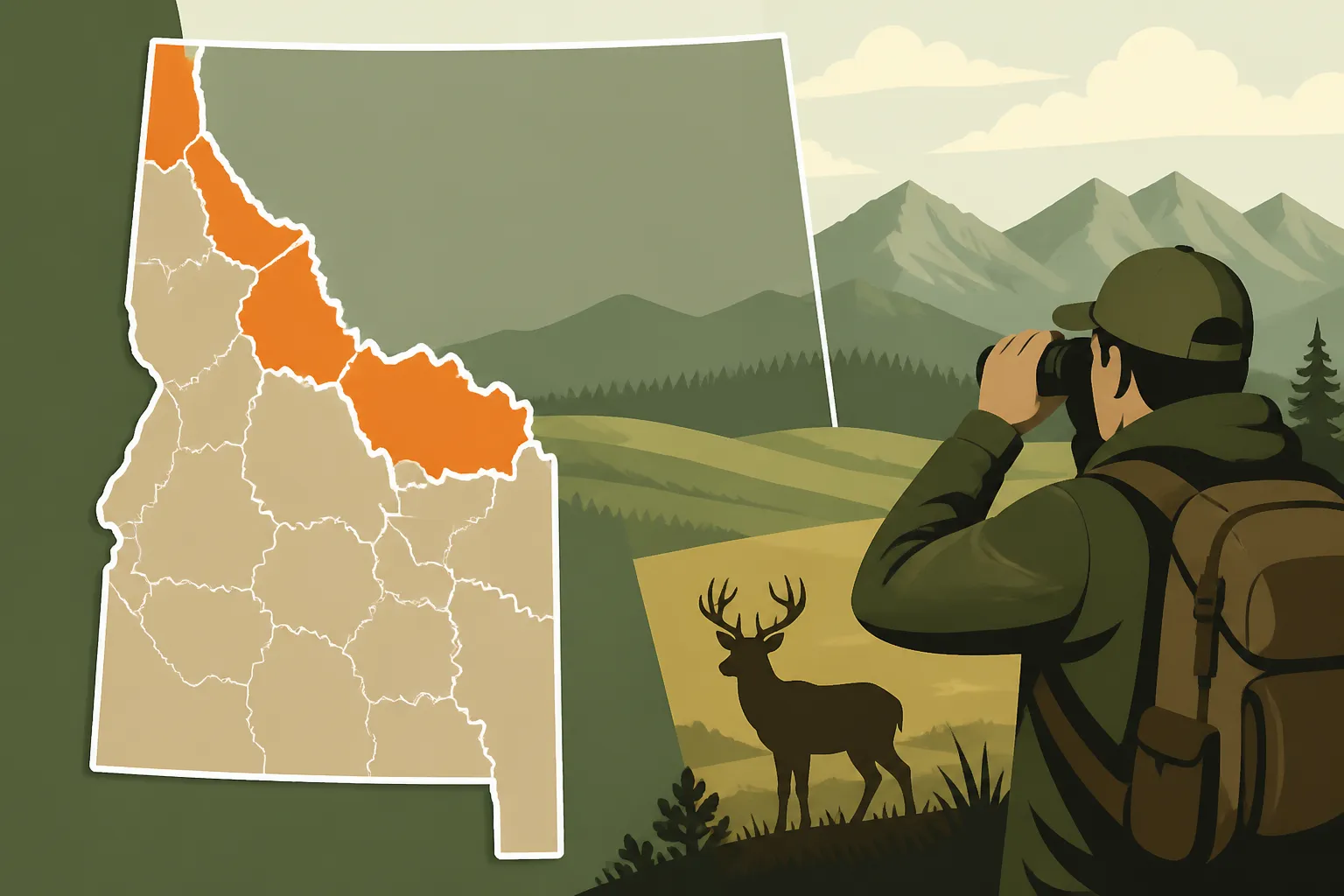
Starting way up north, where Idaho is at its narrowest, you'll find a cluster of units that press right up against Montana. These are typically characterized by thick timber, dense undergrowth, and a lot of water. Units like 1, 2, 3, 4, 5, 7, and 9 are all situated in this geographic area.
Unit 1: This is the extreme northern tip, bordering both Montana and Canada. It's often very thick and can be challenging to hunt, but it holds whitetail deer and elk.
Units 2, 3, 4, 5, 7, 9: These units continue south through the northern Panhandle. They are heavily forested with a mix of national forest and some private timberland. These units are well-known for their strong populations of Whitetail Deer Hold Idaho's Northern Panhandle, often providing excellent opportunities for hunters willing to brave the thick stuff. Elk are also present, but they can be incredibly elusive in this dense cover. Access here is often via logging roads, many of which are seasonally closed, so always check local forest service maps. Hunting here often involves still-hunting through timber or setting up ambush points near natural funnels.
Clearwater and Lochsa Region Units
Moving south, we enter the heart of Idaho's vast wilderness complex. This region is home to some of the most remote and rugged units in the state, with large portions falling within designated wilderness areas.
Units 10, 12, 14, 15, 16, 17, 20: These units form a formidable border with Montana, often encompassing vast stretches of the Selway-Bitterroot Wilderness and parts of the Frank Church River of No Return Wilderness. Units like 10, 12, and 16 are particularly renowned for their elk populations, though hunting them requires a serious commitment to backcountry travel. Idaho Forces Nonresidents to Hire a Guide for Wilderness Elk is a critical regulation to remember if you're considering these areas as a nonresident, as many of these units contain designated wilderness. Access to these units is limited, often involving long hikes from trailheads, horseback packing, or even flying into remote airstrips like those found in the Selway-Bitterroot. This is prime country for Bugling Elk in Idaho's Timbered Zones, but you'll be earning every mile. For those who embrace the challenge, these units offer an unparalleled wilderness hunting experience, far from roads and crowds.
Salmon and Lemhi River Valley Units
Further south along the border, the landscape begins to transition from the dense, wet forests to more arid, high-desert mountains, albeit still incredibly rugged. This is the Salmon and Lemhi River country, defined by deep canyons, sagebrush flats, and towering peaks.
Units 21, 21A, 28, 30, 30A, 36B, 37, 37A: These units span a diverse range of terrain as they follow the Salmon and Lemhi mountain ranges. Units such as 21, 21A, and 28 offer a mix of mule deer and elk hunting. Unit 30 and 30A can be particularly good for Mule Deer Across Idaho's High Desert and Breaks, with some areas also holding bighorn sheep (controlled hunt only, of course!). Units 36B, 37, and 37A are further south and east, blending into the Beaverhead-Deerlodge National Forest on the Montana side. These units often feature steep, rocky slopes, open sagebrush hillsides, and scattered timber patches. Access might include national forest roads, but many areas are still remote and require foot or horseback travel. Glassing is a key strategy here, with hunters spending hours on vantage points Glassing Idaho Breaks for Mule Deer and elk. The Idaho Moose Is a Controlled Hunt You Wait Years For can also be found in some of these units, though tags are incredibly difficult to draw.
Eastern Idaho Units Near Yellowstone
Finally, as we swing to the southeast, Idaho's border units with Montana begin to approach the unique ecosystem surrounding Yellowstone National Park, with Wyoming also in the mix.
Units 60, 61, 62, 62A, 63, 64, 65, 66, 66A, 67: These units are generally found in the Caribou-Targhee National Forest area and are directly adjacent to Montana, and in some cases, very close to Yellowstone National Park. Units like 60, 61, and 62 are notable for their proximity to the park. Hunting Boundaries Around Yellowstone in Idaho are critical to understand here, as specific regulations may apply, and wildlife movement can be influenced by the park itself. Elk and mule deer are the primary big game species. These units are often popular, meaning you'll likely encounter more hunting pressure than in the remote wilderness units. The terrain here can be a mix of dense timber, open parks, and high-elevation plateaus. It's also worth noting that this area is known grizzly country, so Grizzly Identification for Idaho Bear Hunters and carrying bear spray are absolute necessities.
Leveraging Technology for Border Unit Scouting
In today's hunting world, digital tools are an absolute game-changer, especially when you're trying to dissect complex border units. Gone are the days of just relying on paper maps (though they still have their place!). Modern mapping and planning apps can give you an edge that makes all the difference.
Using Mapping Apps for Boundary Identification
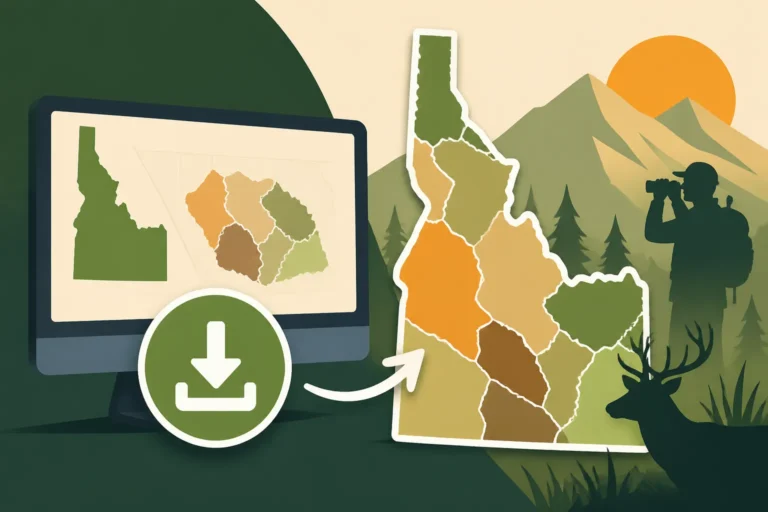
When you're dealing with state lines and unit boundaries, precision is everything. Tools like onX Hunt are invaluable for this exact purpose. I can't stress enough how much easier it makes life. You can open the app, zoom into the Idaho-Montana border, and immediately see the exact unit lines overlaid on satellite imagery or topographic maps. No more guessing if that drainage is in Unit 15 or 16, or more importantly, if you're still in Idaho or if you've accidentally stepped into Montana.
Here’s a practical example: Let's say you're looking at a remote ridge in Unit 12. With onX Hunt, you can overlay the Idaho hunting unit boundaries, and then toggle on the private/public land layers. You can see precisely where the Idaho state land ends and Montana begins. This allows you to plan your approach, identify potential access points, and avoid any accidental trespass or boundary violations. You can drop waypoints on water sources, glassing spots, or areas of heavy game sign, and know that your coordinates are tied to the correct unit and state. It’s also incredibly helpful for identifying legal access routes, ensuring you stay on public ground or clearly marked easements.
Accessing Hunt Planner Resources
Beyond just seeing the lines on a map, understanding the hunting statistics and characteristics of these border units is paramount. The Idaho Fish and Game website's A Walkthrough of the Idaho Hunt Planner is a treasure trove of information. You can plug in specific unit numbers and pull up detailed data on harvest success rates, game populations, and even public land percentages for that exact unit. This is critical because some border units might have lower public land access, or perhaps higher hunting pressure due to ease of access from a Montana highway.
Platforms like GoHunt also consolidate a ton of this information, often providing drawing odds, historical harvest data, and expert analysis for Idaho's controlled hunts and general seasons. You can delve into Reading an Idaho Harvest Statistics Report for a specific border unit and see if the mule deer harvest trends are upward or downward, or if elk success rates align with your expectations for that area. This deep dive into the data, combined with visual scouting on mapping apps, gives you a comprehensive understanding of what you're getting into before you even tie on your boots. It’s like having a crystal ball for your hunt, offering insights into animal behavior, past success, and potential challenges.
Unique Considerations for Hunting Idaho's Border Units
Hunting along a state line isn't just about knowing where one state ends and another begins; it's about anticipating the unique dynamics that come with that proximity. There are factors that will directly impact your strategy, from how animals move to the regulations you must absolutely follow.
Cross-State Game Movement and Hunting Pressure
As we touched on earlier, animals don't recognize state borders. This means that a herd of elk might spend part of its day grazing in Idaho and the other part in Montana, especially if there's a good feed source, less pressure, or a safe bedding area just across the line. This movement is often dictated by hunting pressure. If a general rifle season in Montana opens a week earlier than Idaho's, you might see animals pushed over into the Idaho side, looking for sanctuary. Conversely, heavy pressure on the Idaho side could send them into Montana.
This dynamic requires you to be adaptable and observant. Knowing when the seasons open in neighboring Montana units can be a huge asset. It might influence your timing for a hunt, or even where you choose to focus your efforts within your chosen Idaho unit. For example, hunting close to the border but slightly away from obvious crossings might yield results if you anticipate animals moving into Idaho from heavy Montana pressure. Understanding the prevailing winds and terrain features that facilitate such movement is also key. Animals will often use natural corridors like saddles, river bottoms, or dense timber patches to cross.
Regulations and License Requirements
This is perhaps the most critical consideration: never assume the rules are the same on both sides of the border. Idaho's hunting regulations are specific to Idaho, and you are bound by them the moment you step foot within the state's boundaries with a weapon. Even if you're standing five feet from the Montana line, you must adhere to Idaho's laws. This applies to everything from legal shooting hours and weapon restrictions to tagging requirements and carcass transport.
For nonresidents, The Idaho Nonresident Hunting License Price is a necessary first step, followed by securing the appropriate tags. You need to be acutely aware of specific season dates, weapon types allowed, and bag limits for your chosen Idaho unit. For example, certain muzzleloader-only hunts might have strict rules about scopes or inline ignition, which could differ from Montana's regulations. When Idaho Nonresident Applications Open in December is a date you absolutely cannot miss if you plan to hunt a controlled unit. Always carry a copy of the current Idaho regulations booklet, and double-check any specific rules for your unit. There's nothing worse than getting into a tricky legal situation because you assumed something was legal based on a neighboring state's rules.
Logistics and Access Challenges
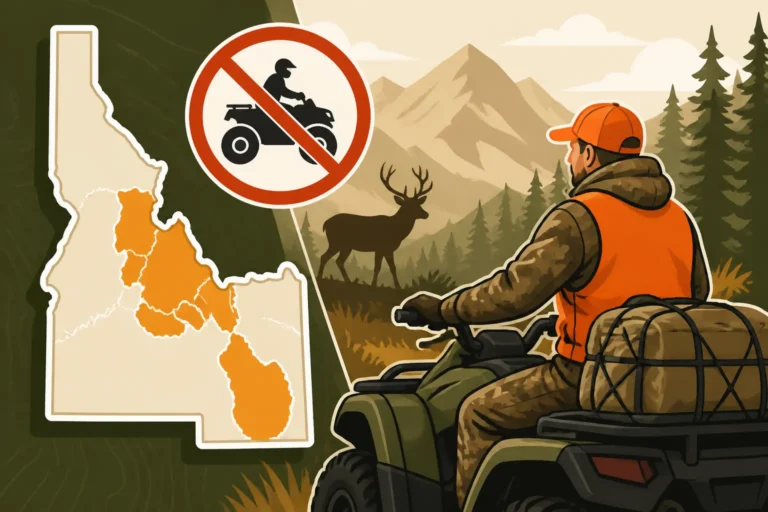
The remote nature of many Idaho border units, particularly those in the central wilderness areas, presents significant logistical and access challenges. Many of the roads in these regions are unpaved, prone to washouts, and subject to seasonal closures due to snow or mud. Idaho's Motorized Hunting Rule Keeps You on the Road is a regulation that restricts motorized travel off designated roads, meaning you can't just drive wherever you want, even to retrieve downed game. Driving Off Established Roads Is Prohibited in Idaho emphasizes this point, ensuring that your vehicle stays on open routes.
Planning your access route is paramount. Will you be hiking in for miles from a trailhead? Will you need a high-clearance vehicle for rough forest service roads? Are you considering a horseback pack-in? Camping on Idaho Forest Ground While Hunting is generally allowed, but you'll need to be self-sufficient and prepared for whatever the Idaho wilderness throws at you. For the more remote units, this might even involve budgeting for flying into a backcountry airstrip or hiring an outfitter for a drop camp. Always check the current road status with the relevant forest service or Idaho Fish and Game office before you head out. A simple gate closure can turn a short drive into a multi-day hike.
| Idaho Border Units with Montana | Primary Game Species | General Terrain | Special Considerations |
|---|---|---|---|
| Units 1, 2, 3, 4, 5, 7, 9 | Whitetail, Elk, Bear | Dense Timber, River Bottoms | Northern Panhandle, high density whitetail |
| Units 10, 12, 14, 15, 16, 17, 20 | Elk, Mule Deer, Bear | Rugged Wilderness, Deep Canyons | Remote, Nonresident Wilderness Guide Rule |
| Units 21, 21A, 28, 30, 30A, 36B, 37, 37A | Mule Deer, Elk, Bighorn | Mountains, Sagebrush, Timber Pockets | Salmon/Lemhi region, high elevation |
| Units 60, 61, 62, 62A, 63, 64, 65, 66, 66A, 67 | Elk, Mule Deer, Bear | Mountain Forests, Open Parks | Near Yellowstone, Grizzly Country |
Hunting Idaho's units along the Montana border offers an incredible challenge and immense reward for those willing to put in the work. From the thick timber of the Panhandle to the rugged wilderness of the Clearwater and the high-desert mountains of the Salmon-Lemhi, each unit presents its own unique character. By thoroughly researching your chosen unit, leveraging modern scouting tools, and understanding the specific regulations and logistical demands, you can significantly increase your chances of a successful and memorable hunt in the Gem State. Always plan ahead, stay safe, and enjoy the wild beauty that Idaho shares with its eastern neighbor.
Disclaimer
This article is for general informational purposes only and does not constitute professional advice. Laws, prices and regulations vary by location and change over time. Consult a qualified professional for guidance on your specific situation.