Hells Canyon Wilderness Access for Hunters
Hells Canyon, with its sheer cliffs, roaring river, and vast, untamed expanse, often feels like a mythical place rather than a real hunting ground. For many hunters, especially those new to Idaho or the rugged Western landscape, the idea of accessing this formidable wilderness can be incredibly daunting, leading to frustration and confusion about where to even begin. This guide is designed to demystify Hells Canyon, providing clear, actionable insights into how hunters can gain access, navigate its challenges, and understand the crucial regulations that govern hunting within this iconic wilderness area.
Understanding the Beast: What Hells Canyon Wilderness Means for Hunters
Before you even dream of packing a rifle or bow into Hells Canyon, it’s vital to grasp the unique nature of this place. It’s not just a big canyon; it’s a designated wilderness area, and that carries significant implications for every aspect of your hunt, from planning to execution. Many folks underestimate the sheer scale and the rules that come with it, leading to wasted time and even legal trouble.
The Scale and Terrain of Hells Canyon
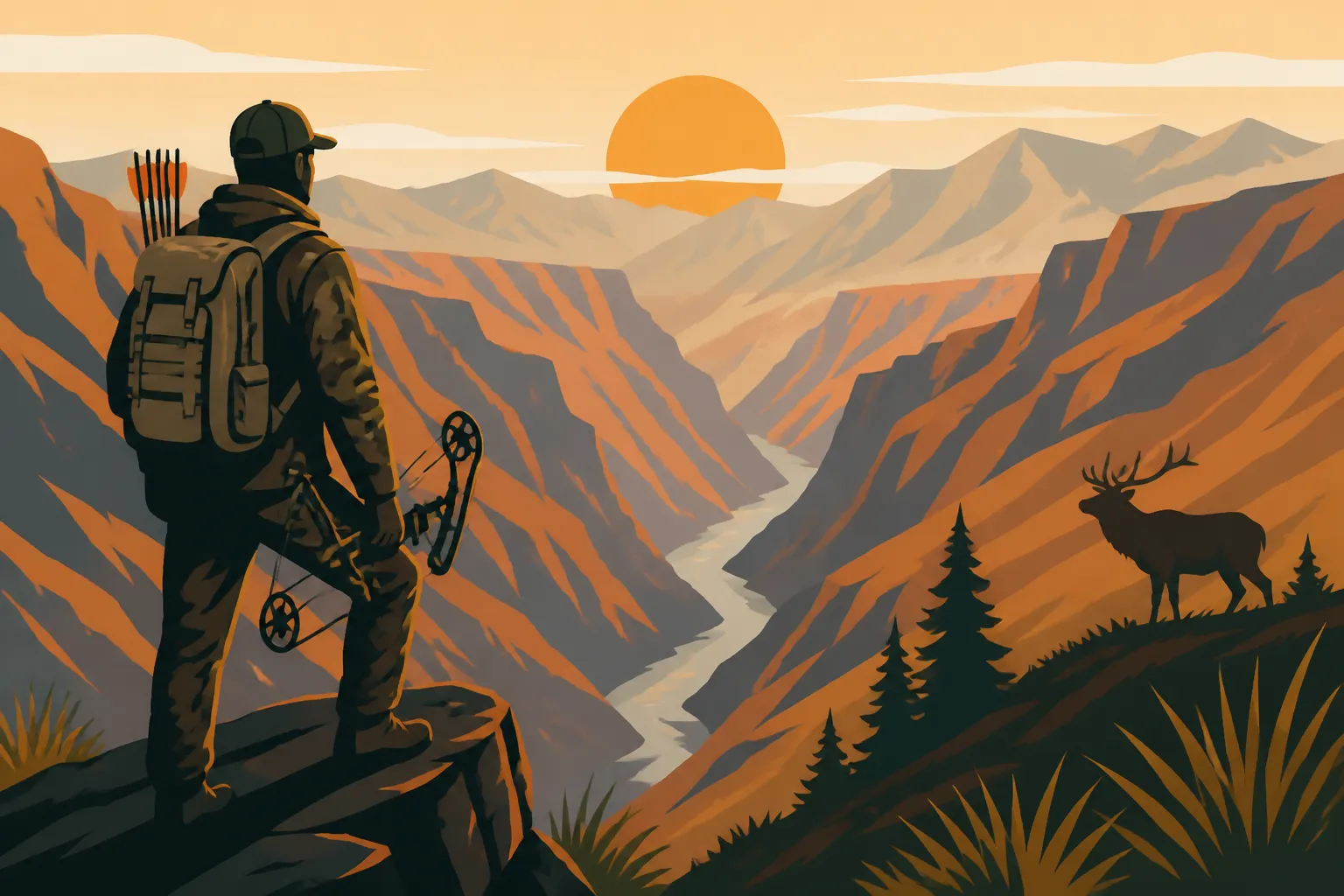
Imagine the deepest river gorge in North America, deeper even than the Grand Canyon, carved by the mighty Snake River. That's Hells Canyon. We're talking about a place where canyon walls plunge thousands of feet from rim to river, often at near-vertical angles. The scale here is truly immense, stretching across parts of Idaho, Oregon, and Washington, though we'll focus on the Idaho side for our purposes. This isn't rolling hills or gentle timber; it's a land of jagged rock, sparse but tenacious vegetation, and sudden, dramatic elevation changes.
The terrain varies from hot, dry sagebrush breaks at lower elevations to pockets of timber higher up, but the consistent theme is steep. Every step is a climb or a descent, and trails are often narrow, rocky, and exposed. Water sources can be scarce and far between, especially away from the main river. This unforgiving landscape means that traditional access routes are few and far between, and once you're in, getting around takes a monumental effort. Hunters often find themselves staring across a canyon at what looks like easy country, only to realize that getting there involves an all-day, gut-busting ordeal.
Wilderness Designation and Its Implications
The Hells Canyon Wilderness, managed by the U.S. Forest Service and Bureau of Land Management, is part of the National Wilderness Preservation System. What this means, first and foremost, is a commitment to keeping the area "untrammeled by man" – essentially, preserving its wild character. This isn't just a fancy phrase; it translates into very specific rules designed to minimize human impact and ensure a primitive experience.
For hunters, this means you can forget about ATVs, e-bikes, or any other motorized vehicles once you cross that wilderness boundary. There are no roads, no permanent structures, and even mechanical transport like mountain bikes is generally prohibited. This designation fundamentally shapes how you can scout, access your hunting grounds, and, most critically, retrieve your game. It’s a place that demands respect for its wildness and requires a hunter to truly be self-sufficient and prepared for a raw, untamed experience. Understanding these restrictions early is key to successful planning; trying to skirt them will only lead to frustration or worse. For a broader understanding of how these designations impact hunting, it's worth reading up on Designated Wilderness Changes the Rules for Idaho Nonresidents.
Navigating the Canyon: Primary Access Points and Methods
Getting into Hells Canyon is half the battle, and it requires a different mindset than hunting most other public lands. You won't just pull off a highway and be in prime elk country. Access is limited, challenging, and often requires significant pre-planning and specialized equipment or services.
Road Access to the Rim and Trailheads
While you can't drive into the wilderness, you can drive to the wilderness. On the Idaho side, primary road access often means navigating winding, sometimes gravel, roads that lead to trailheads along the rim. Towns like Riggins, White Bird, and Grangeville serve as launching pads. From Riggins, for example, roads like the Forest Service Road 517 (also known as the Pittsburg Landing Road) can take you down to the Snake River, where some boat access points exist. Other roads might take you to higher elevation trailheads that plunge down into the canyon itself.
These roads, while allowing you to get close, are rarely straightforward. They can be narrow, exposed, and prone to washouts or snow closures, especially in the early and late seasons. A good 4×4 vehicle with decent ground clearance is often a necessity, and even then, some spots will test your nerves. Hunters often spend hours just getting to a trailhead, adding significant travel time to their overall trip. Before heading out, always check road conditions with the local Forest Service or BLM office, as what looks like a solid road on a map can quickly become impassable. Using mapping tools like onX Hunt to layer road information, including private roads and seasonal closures, is absolutely critical for identifying viable access points and avoiding unpleasant surprises.
River Access: Jet Boats and Rafts
For many, the Snake River itself offers the most direct and, in some ways, easiest access deep into the heart of Hells Canyon. This is where outfitters truly shine. They operate powerful jet boats that can navigate the swift currents and rapids of the Snake, taking hunters far upstream from launch points like Pittsburg Landing or Hells Canyon Creek. A jet boat drop-off means you and your gear can be placed miles into the wilderness in a fraction of the time it would take to hike.
Rafts are another option, typically for hunters seeking a float trip experience, combining hunting with the adventure of floating the river. This usually requires significant logistical planning or hiring an outfitter. While river access can be highly efficient for getting in, remember the challenge of getting out with a harvested animal. Outfitters often offer retrieval services, but these come at a cost. Without a boat booked, you're looking at a serious pack-out challenge. This type of access, while different in scale, shares logistical considerations with Jet Boat Access on the Salmon River.
Foot and Pack Animal Access: The True Wilderness Experience
Once you're off the main roads or out of the boat, your own two feet or the hooves of a pack animal are your only means of propulsion. This is the essence of wilderness hunting in Hells Canyon. For day hunts, packing light and being in exceptional physical condition are non-negotiable. The trails are grueling, with steep ascents and descents that will test even the fittest hunter.
For multi-day hunts, especially if you plan to go deep or hunt larger game like elk, pack animals become almost essential. Horses or mules allow you to carry more gear, water, and food, extending your stay and reach. They also provide the crucial means to pack out meat and trophies. Many hunters rely on outfitters for pack string services, either for fully guided hunts or for drop camps where the outfitter packs you in and out. If you're going the DIY route with your own stock, be prepared for the challenges of backcountry animal care in rugged terrain. It’s a steep learning curve if you're not experienced. Understanding Pack Stock Rules Inside Designated Wilderness is critical for this type of trip.
Rules of Engagement: Key Regulations for Hells Canyon Hunters
Hunting in Hells Canyon isn't just about finding the animals; it's about playing by a very specific set of rules. Ignoring these can turn an otherwise successful hunt into a costly, or even illegal, ordeal. Two regulations, in particular, stand out as major considerations for anyone planning a Hells Canyon hunt.
Motorized Vehicle Restrictions in Wilderness
This is perhaps the most fundamental rule of wilderness hunting: no motorized vehicles, period. This means no trucks, no ATVs, no dirt bikes, and no e-bikes within the designated wilderness boundary. The intent is to preserve the primitive character of the area, ensuring that human-powered travel is the only way to experience its depths.
For hunters, this has huge implications. Scouting must be done on foot or horseback. More importantly, retrieving a downed animal, especially a large one like an elk, becomes an enormous physical challenge. You cannot drive a vehicle off-road, even a few yards, to pick up your game. Everything must be packed out on your back, by pack animal, or by boat if you're close enough to the Snake River. This often means making multiple trips, carrying heavy loads over steep, unforgiving terrain. Planning for game retrieval is just as important as planning your stalk. You can learn more about general rules in Motorized Vehicles Inside Wilderness Boundaries.
Nonresident Outfitter Rule for Big Game
This rule catches many nonresident hunters by surprise and can be a significant financial and logistical hurdle. For nonresidents, Idaho law requires that if you are hunting elk, bighorn sheep, or mountain goat within a designated wilderness area, you must hire an Idaho-licensed outfitter or be accompanied by an Idaho resident who is acting as your guide. This isn't just a recommendation; it's a legal requirement.
This rule is designed to ensure safety and responsible wilderness use by those less familiar with the extreme conditions and regulations. For a nonresident hoping to tackle Hells Canyon for elk, this means factoring in the substantial cost of a guided trip or finding a willing and experienced resident hunting partner. Deer and bear are generally exempt from this specific wilderness guide rule, which is a key distinction for nonresidents targeting those species. This is a critical point that merits deep understanding, and you can delve further into Idaho Forces Nonresidents to Hire a Guide for Wilderness Elk, Which Species Trigger Idaho's Wilderness Guide Rule, and Why Elk Requires an Idaho Outfitter in Wilderness for more detail.
Here's a quick reference for the nonresident outfitter rule in Idaho's designated wilderness areas:
| Species | Nonresident Outfitter/Resident Guide Required in Wilderness |
|---|---|
| Elk | Yes |
| Bighorn Sheep | Yes |
| Mountain Goat | Yes |
| Mule Deer | No |
| Whitetail Deer | No |
| Black Bear | No |
| Mountain Lion | No |
| Moose | Yes |
| Pronghorn | No |
Note: Always verify current regulations as they can change. "Resident guide" implies an uncompensated resident partner accompanying the nonresident.
Camping and Campfire Regulations
Camping in Hells Canyon Wilderness follows strict Leave No Trace principles. This means packing out everything you pack in, including all trash, food scraps, and even human waste in some sensitive areas (especially near the river). Campsites should be chosen carefully to minimize impact, ideally on durable surfaces away from water sources.
Campfires are generally allowed unless specific restrictions are in place (e.g., during high fire danger), but they must be small, contained, and completely extinguished. Bringing a small stove for cooking is often a more reliable and less impactful option. Water sources must be treated, as giardia and other contaminants are always a risk. Always be prepared to carry enough water for your trip, or have a reliable filtration system. For more general guidance on setting up camp, consult Camping on Idaho Forest Ground While Hunting. The extreme terrain and remoteness mean that any impact you make will linger, and help is a long way off if you get into trouble.
Planning Your Hells Canyon Hunt: Strategies for Success
Okay, you understand the canyon, you know the access methods, and you're aware of the rules. Now, how do you actually plan a hunt that stands a chance of success in this challenging environment? It comes down to meticulous preparation, physical readiness, and smart strategy.
Essential Gear and Physical Preparedness
Hunting Hells Canyon is not for the faint of heart or the poorly equipped. Your gear needs to be light, durable, and reliable. This means investing in a solid backpack that can comfortably carry heavy loads, high-quality hiking boots broken in well before the hunt, and appropriate layered clothing for rapidly changing weather conditions. Navigation is paramount: a reliable GPS unit, a satellite communication device (like a Garmin inReach or Zoleo), and a detailed map set (physical and digital, like onX Hunt) are non-negotiable. Expect to lose cell service almost immediately upon entering the canyon.
Perhaps even more important than your gear is your physical conditioning. Hells Canyon demands an extraordinary level of fitness. Start training months in advance: focus on steep ascents and descents with a weighted pack, core strength, and endurance. Simulating hunting conditions by hiking uneven terrain will pay dividends. Many hunts here are cut short not by lack of game, but by physical exhaustion or injury. Neglecting this aspect of your preparation is a recipe for a miserable, unsuccessful, and potentially dangerous trip. Seriously, read up on Physical Conditioning for Idaho Backcountry before you commit.
Scouting and Intelligence Gathering
Since you can't drive deep into the wilderness, e-scouting becomes your best friend. Spend countless hours poring over satellite imagery on platforms like onX Hunt or GoHunt. Look for benches, saddles, water sources, and potential bedding areas. Identify possible routes, but always remember that what looks easy on a screen can be incredibly tough on the ground. GoHunt offers excellent tools for breaking down units and understanding historical harvest data and draw odds, which can help narrow down specific areas to focus on within the canyon.
Even with extensive e-scouting, ground-truthing is invaluable. If possible, make a scouting trip in the off-season. Hike into potential areas, check water sources, and learn the terrain firsthand. Pay attention to game trails, rubs, and droppings. Understand the elevation bands the animals prefer during the season you'll be hunting. This intelligence gathering is crucial for creating a realistic hunt plan and avoiding dead ends or impassable terrain once you have a tag in hand. For a comprehensive guide, check out E-Scouting an Idaho Unit Before the Season and Reading Terrain Before You Pick a Camp.
Understanding Wildlife Behavior in Extreme Terrain
The animals in Hells Canyon are tough, wild, and incredibly adapted to their environment. Elk and mule deer, for instance, are masters of using the steep, broken terrain to their advantage. They'll often bed on benches with commanding views, utilizing thermals to detect danger. When pressured, they can quickly disappear into deep draws, thick timber pockets, or over a seemingly impossible ridge.
Hunting these animals requires patience and a deep understanding of their habits. Glassing from afar across the vast breaks, especially in the early morning and late evening, is often the most effective way to locate animals. Platforms like GoHunt provide valuable harvest data that can give you insights into historical success rates and species distribution within various units touching Hells Canyon. Once an animal is spotted, a well-executed, often physically demanding, stalk is necessary. Being proficient at Glassing Idaho Breaks for Mule Deer and understanding elk behavior, like Bugling Elk in Idaho's Timbered Zones, will be huge assets here. Don't expect to just stumble upon animals; you'll need to work for every opportunity.
Disclaimer
This article is for general informational purposes only and does not constitute professional advice. Laws, prices and regulations vary by location and change over time. Consult a qualified professional for guidance on your specific situation.